
Aryna Sabalenka doesn’t need a lot of tattoos for one design to feel like part of her identity. The Belarusian tennis star has a bold tiger on her left forearm, and it has become almost as recognisable as her scream, powerful serve and tour nickname: “The Tiger.”
The choice makes sense. Sabalenka plays with force, but the tattoo is more than tough-looking artwork. She was born in 1998, the Year of the Tiger in the Chinese zodiac, and got the design at 18. She has said it represents strength and determination, linking her birth year to the way she sees herself on court.
Public coverage focuses on one reliably documented permanent piece: the tiger on her left forearm. Temporary tiger tattoos have appeared on her team after big wins, but that’s a separate bit of tennis fun, not extra permanent ink to add to her collection.
The tiger on her left forearm is Sabalenka’s signature ink
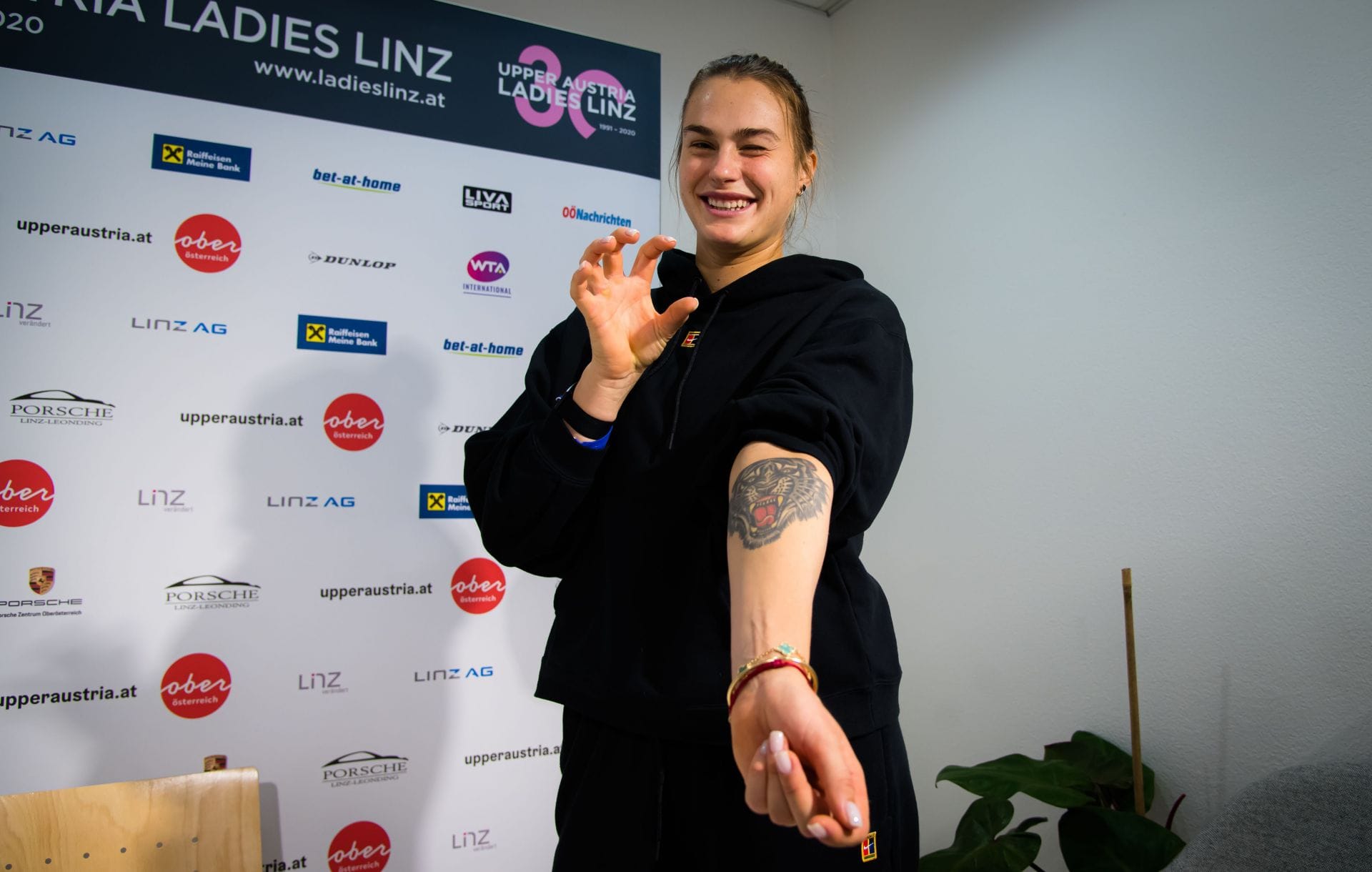
Sabalenka’s main tattoo is a tiger’s head on her left forearm. It’s black and grey, with a fierce expression, and shows whenever she raises her racket, tosses the ball or celebrates a big point. That visibility has made it part of her sporting image without feeling like a logo or a branding exercise.
She has explained that the tiger connects to her Chinese zodiac sign. Born in 1998, she shares the year with the animal. She got the tattoo at 18, at a time when she was becoming an adult and shaping the identity that would eventually take her to the top of women’s tennis.
Her parents weren’t entirely ready for the decision. Reports say her father laughed when he saw the tattoo, while her mother stayed quiet for about a week. That makes the story feel real: this wasn’t rolled out as part of a polished image campaign. A young Sabalenka made a permanent choice, then waited to see how her family would react.
Why the tiger suits her tennis game
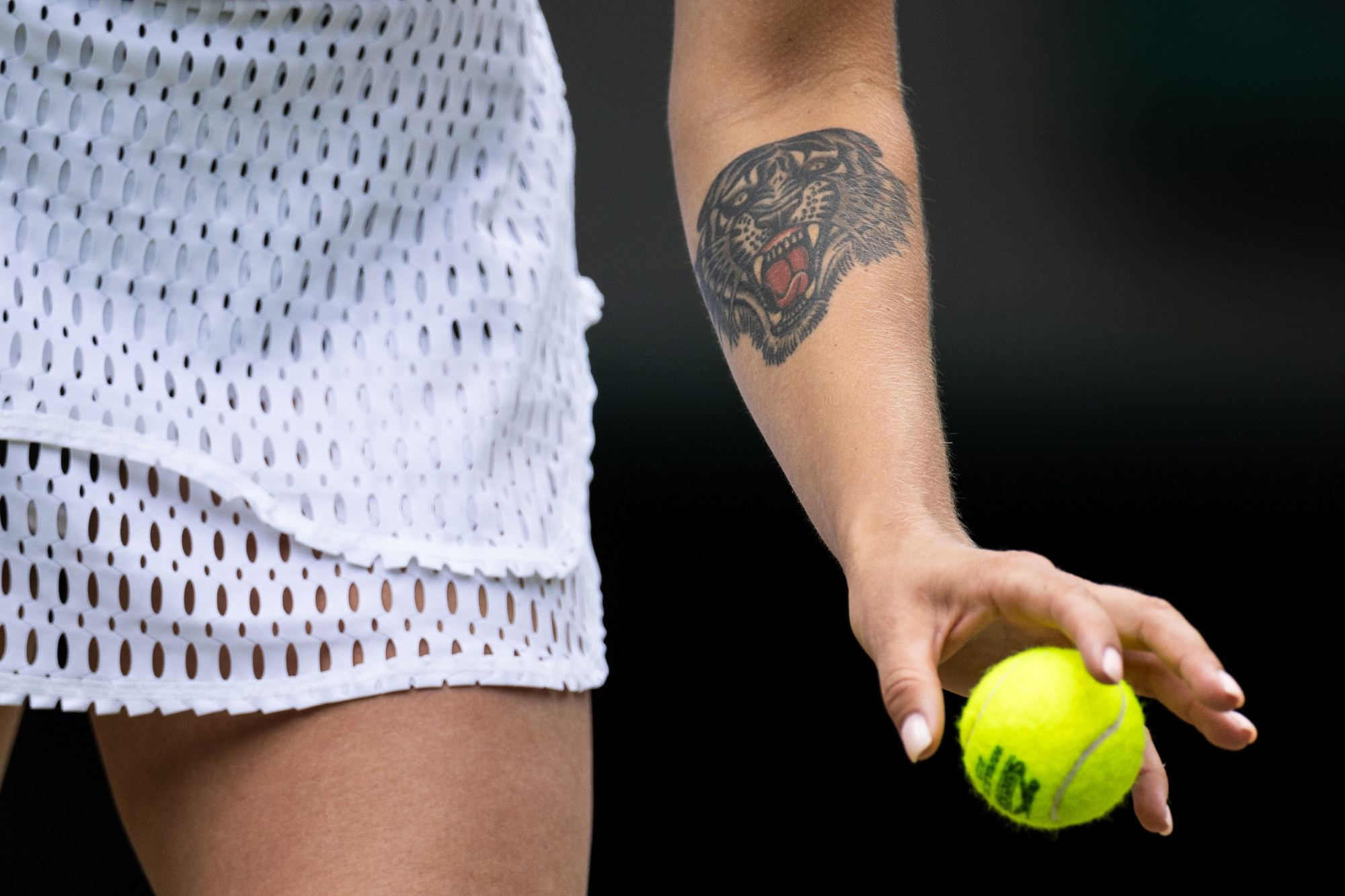
Sabalenka’s game is built around aggression. She hits hard, takes risks and often tries to turn a rally into a test of nerve. That’s why the tattoo gets noticed: tigers are known for speed, power and danger, qualities people also bring up when they talk about her tennis.
The tiger has appeared in interviews and coverage for years, becoming a nickname as well as a tattoo reference. It doesn’t explain every side of Sabalenka—off court she can be playful and warm—but in a tight match it gives fans and commentators an easy image for the player who refuses to back away.
The forearm is a visible choice. The design stays in view through warm-ups, serves and the moments when she has to reset after a mistake. Whether she actively thinks about it or not, it’s always there. It can look like a warning to an opponent, but just as easily serve as a reminder to herself.
The tattoo became part of her “Tiger” nickname
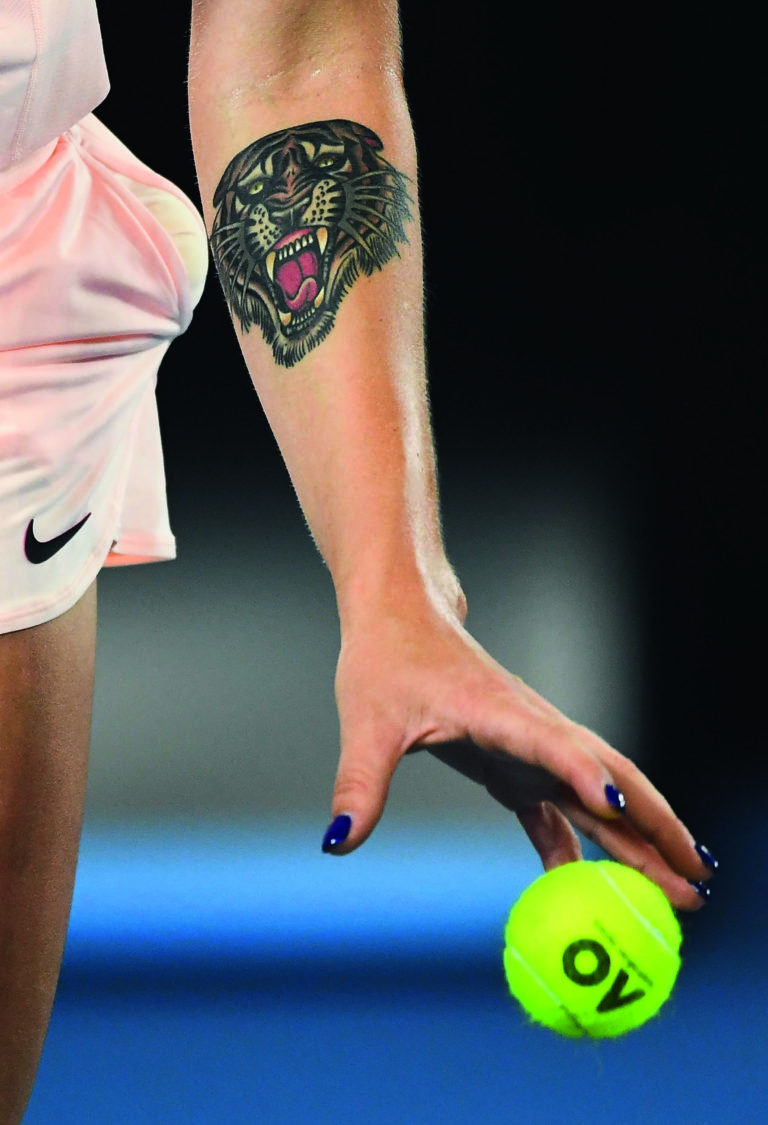
Sabalenka’s “Tiger” nickname didn’t come from a marketing team inventing a character. It grew out of the tattoo, her birth year and the way she plays. The WTA has referred to the design in player material, and tennis coverage often points it out when the cameras catch her left arm.
The details make it specific: a tiger tied to 1998, to a choice she made at 18 and to the way she has learned to compete. The tattoo now belongs to the story people tell about her, but its origin was personal rather than purely theatrical.
It also gives her a visual constant across the tour. Tennis takes her to different countries, surfaces and uniforms, but the tiger remains the same. It shows up at Wimbledon, Roland-Garros, the Australian Open and the US Open. Even as the scene changes, that piece on her forearm stays familiar.
Sabalenka got the tattoo when she was 18
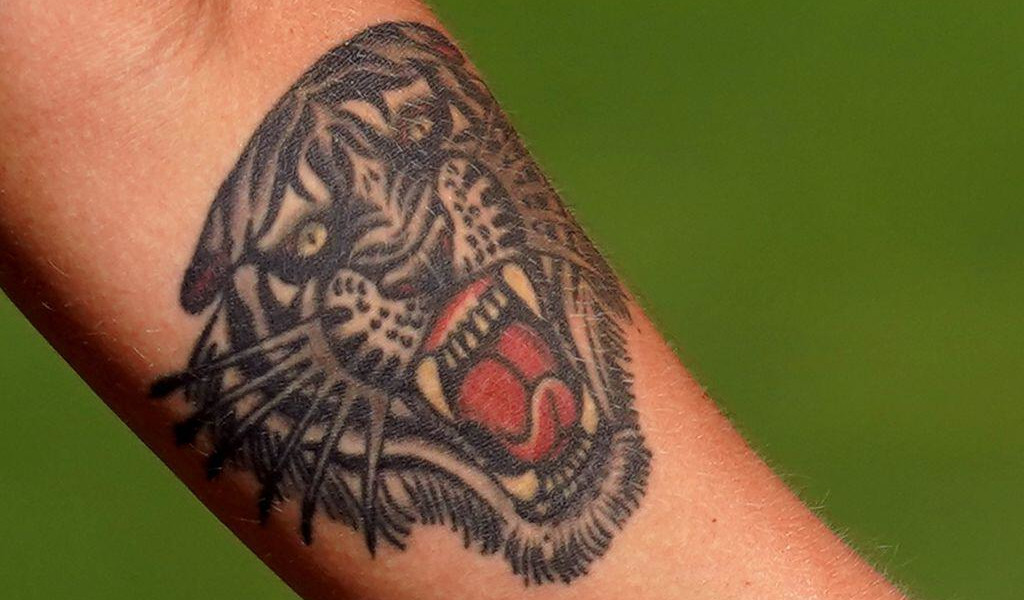
The timing matters. Sabalenka got the tiger at 18, before she had become a Grand Slam champion or a fixture at the top of the world rankings. She was still working her way through professional tennis, and the tattoo became an early statement about who she hoped to be.
It would be too neat to rewrite the story as if the tiger predicted everything. The tattoo didn’t make her powerful or guarantee later wins. It gave her a symbol she could grow into. As her career developed, the design gathered more context.
That’s often how a tattoo works: the picture stays fixed while the person changes around it. The tiger Sabalenka chose at 18 is the same one she wears now, but it has lived through junior matches, Grand Slam wins, hard losses and the pressure to dominate. Its meaning has had time to gather new layers.
The temporary tiger tattoos are a different story

After Sabalenka won the 2024 US Open, members of her team got tiger tattoos too. Her fitness trainer, Jason Stacy, wore one on his forehead after promising to do it if she reached the final. Sabalenka later clarified that the design was temporary, and said other team members wore smaller versions.
It’s worth keeping that separate from her permanent forearm piece. The team tattoos were a celebration and a joke after a major win, not a new batch of permanent ink for Sabalenka. The temporary versions were funny in part because they borrowed the symbol people already associate with her.
Sabalenka even joked that the tiger should have been lower on Jason’s forehead. It says something about how she treats the image: she takes it seriously as a symbol of her game, but can laugh when friends turn it into an over-the-top group ritual.
What is actually documented in Aryna Sabalenka’s tattoo collection?
The safest inventory is short: one prominent permanent tiger on her left forearm. It appears consistently in match photos, interviews, tennis profiles and close-ups. Other posts may suggest additional small designs, but there isn’t the same reliable, repeated documentation for a larger permanent collection.
That distinction matters. A player might wear temporary art, body paint, tape or jewelry, or a design that shows up in only one photo. None should automatically be treated as a permanent tattoo. Sabalenka’s tiger is well established, as are the team’s temporary tigers; anything else needs stronger evidence before it can be stated as fact.
If you’re expecting a full sleeve-by-sleeve breakdown, there isn’t one to catalogue. Her tiger does a lot on its own: it connects her to her birth year, her family’s reaction, her nickname and the aggressive style that made her one of tennis’s most recognisable players.
The tiger is still the whole point
Sabalenka’s forearm tattoo is memorable because it doesn’t need a dozen other pieces around it. It’s clear, easy to recognise and attached to a story she has carried from her late teens into the biggest matches of her career. The animal represents the strength she wants on court, while the birth-year connection keeps it personal.
That balance is probably why it has stayed so visible. It’s bold without being complicated. The tiger can look intimidating during a serve, funny when a teammate copies it, and personal when you remember Sabalenka chose it long before the trophies piled up. One tiger, one arm, and a good explanation for why the nickname stuck.
It also sidesteps a familiar problem with sports tattoos: trying to fit an entire career into one crowded collage. Sabalenka’s tiger is open-ended. It can stand for the teenager who chose it, the player who pushed through tough matches or the champion now defending the reputation that came with it. The image has stayed the same as the pressure around it has changed.