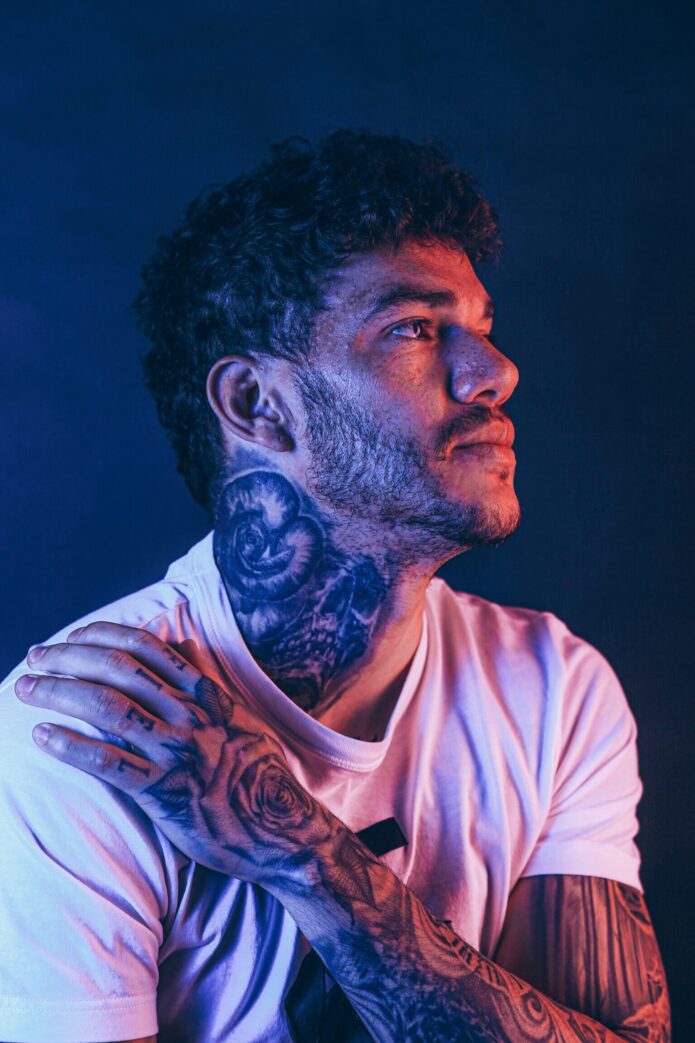
With his goalkeeper shirt off, Ederson’s tattoos cover his back, chest, neck, arms and legs. The Manchester City and Brazil goalkeeper has built a large black-and-grey collection that brings together faith, football, family names and animal imagery.
Ederson tattoos are tied closely to his life. The back combines a lion, eagle, Christ imagery, a football and goalkeeper gloves. Family lettering and a dove appear on his chest; the neck piece has a darker feel, while his leg tattoos include reminders of trophies and his time in Portugal.
Ederson has said he enjoys tattoos and wants more. In a Manchester City interview, he spoke about the smiley behind his ear. That interest shows in a collection that has grown across several parts of his body, with each area carrying a different subject.
Here are the main designs and a few practical points to consider if you’re drawn to the scale and detail of his work.
Ederson’s back tattoo brings together a lion, eagle and football
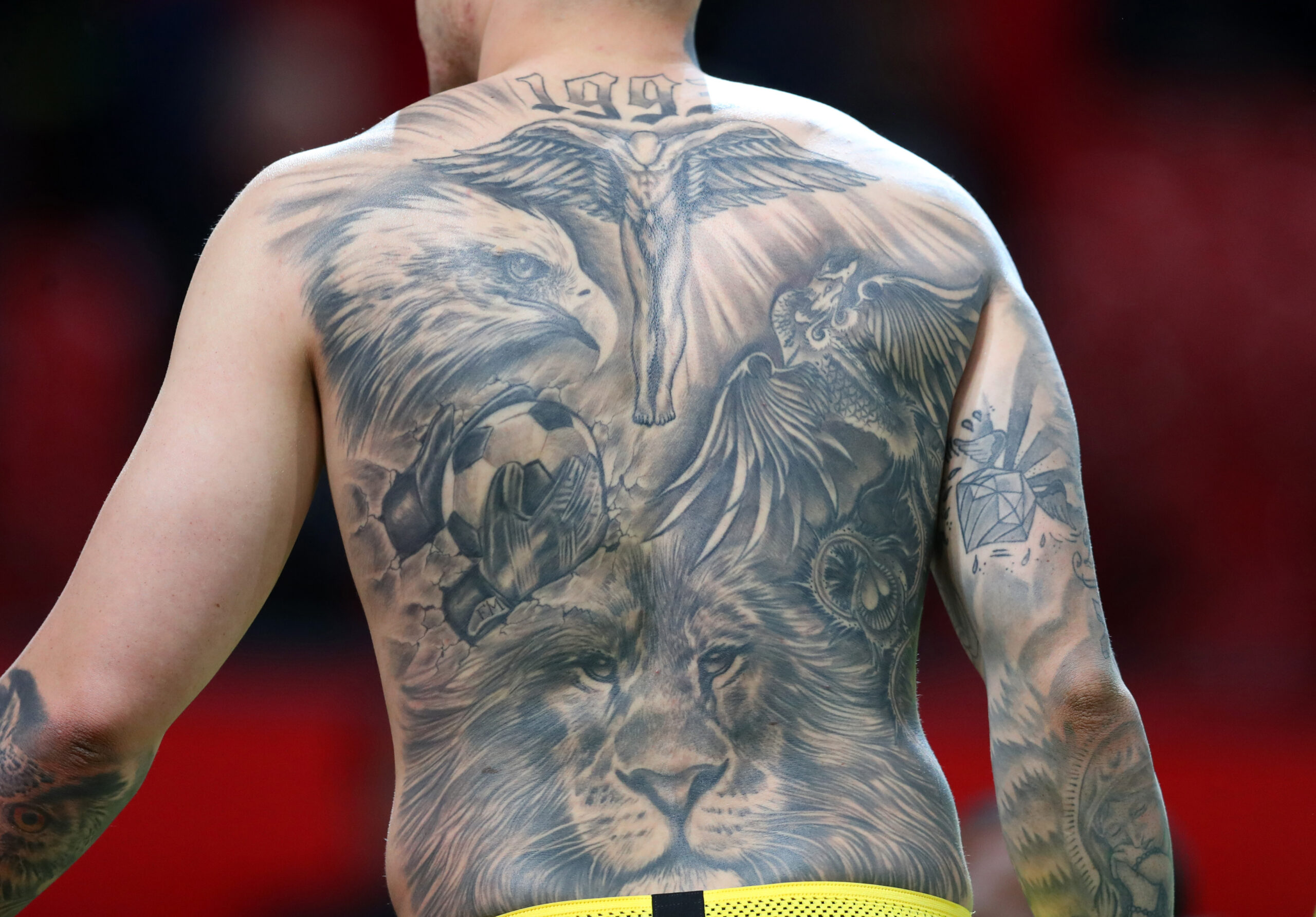
Ederson’s back is the largest single piece in his collection. A lion fills the lower section, while an eagle spreads across the upper back. Between them, gloved hands hold a football, and a religious figure with outstretched wings sits above. The images are arranged as one mural, rather than separate small tattoos.
The lion carries much of the visual weight. Ederson has said it represents focus and determination, qualities he connects with goalkeeping. The ball and gloves bring the rest of the design back to his position.
A back piece this large needs one image to lead. If you’re planning something similar, choose that first, then use wings, smoke, clouds or lettering to guide the eye around it. The best full-back tattoos have a clear focal point, with enough open space that the details don’t run together.
The newer back work adds close-up detail to the main piece
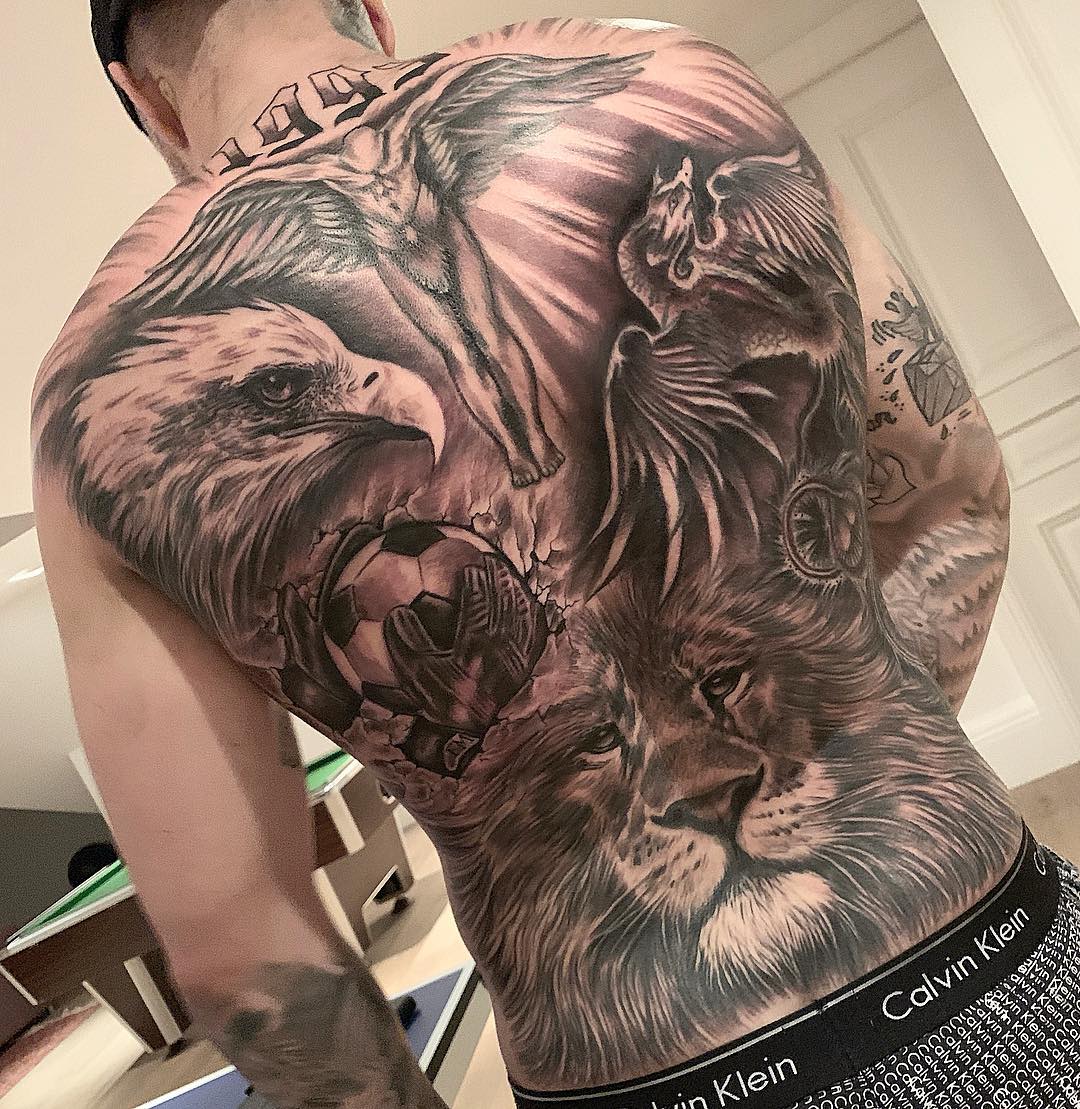
The close-up views show the layers of shading in Ederson’s back tattoo. Dark and light strokes give the lion’s mane its texture; sharper feather lines carry the eagle across his shoulders. The football appears to push forward from the skin, giving the composition a sense of movement.
The upper section also shows the year 1993 and a religious figure. From a distance, the lion and eagle draw the eye first. Closer in, the numbers, hands, ball and smaller symbols become easier to pick out.
That scale works well for realistic back tattoos: keep the main shapes large enough to read across a room, then leave some finer detail for a closer look. Realistic work needs breathing space; too many tight lines can blur as the tattoo heals.
His chest tattoos focus on faith and family

The chest has a more personal feel than the back. I belong to Jesus is written across the upper chest, above a dove and other shaded imagery. Family names, including his children’s, are also visible across the front. The words make the subject clear before you take in the rest of the artwork.
The contrast gives the two areas different jobs. The back brings together large figures and football imagery; the chest uses words and symbols tied to faith and family. The dove may suggest peace or faith, while the lettering spells out what matters to him.
Chest lettering needs to sit well as the body moves. Check the words while standing naturally, breathing, bending and lifting your arms, not just lying flat for the stencil. Choose lettering thick enough to stay clear and leave room between names so the design sits evenly across the body.
The rose and skull neck tattoo gives Ederson a darker edge
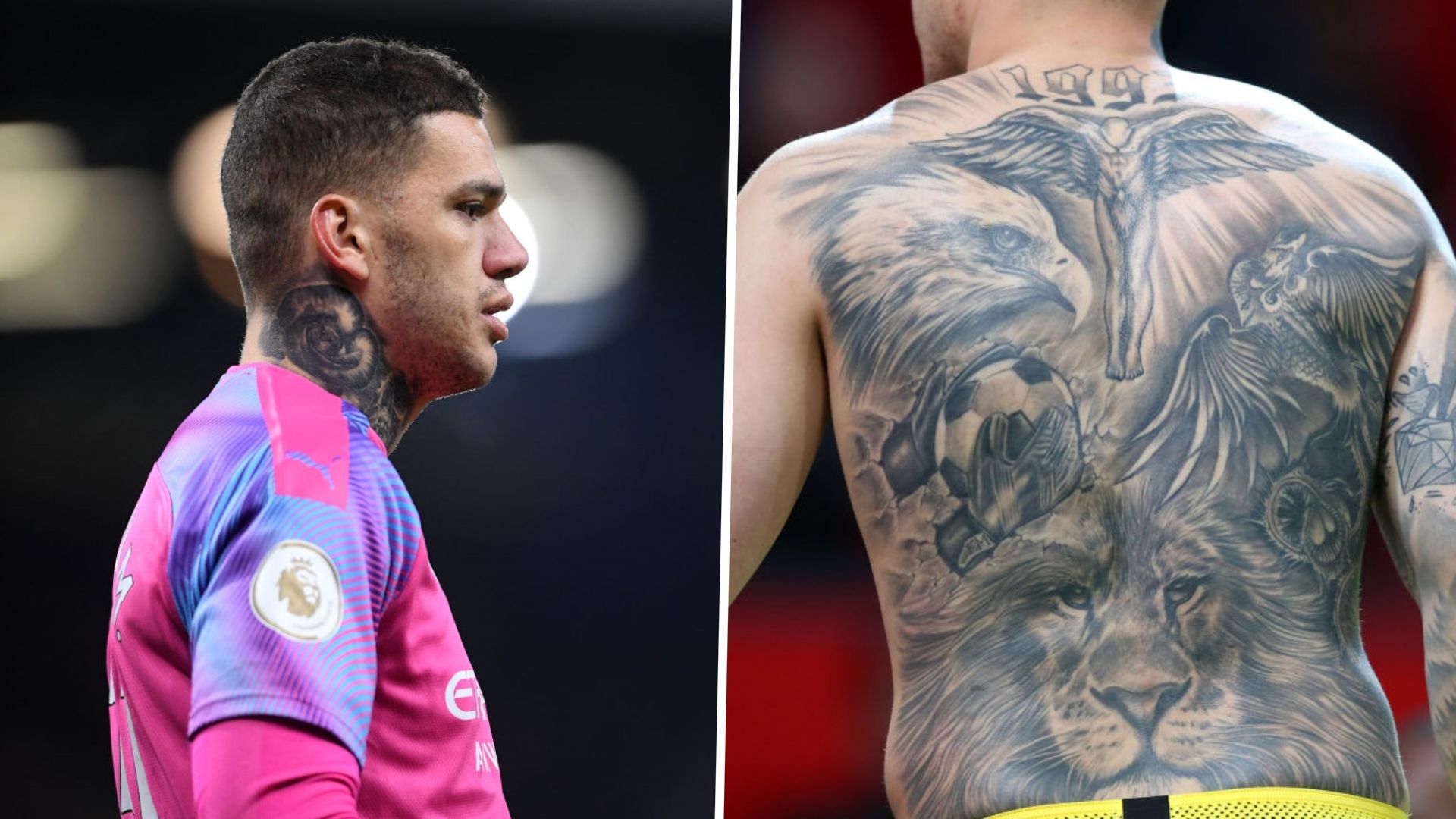
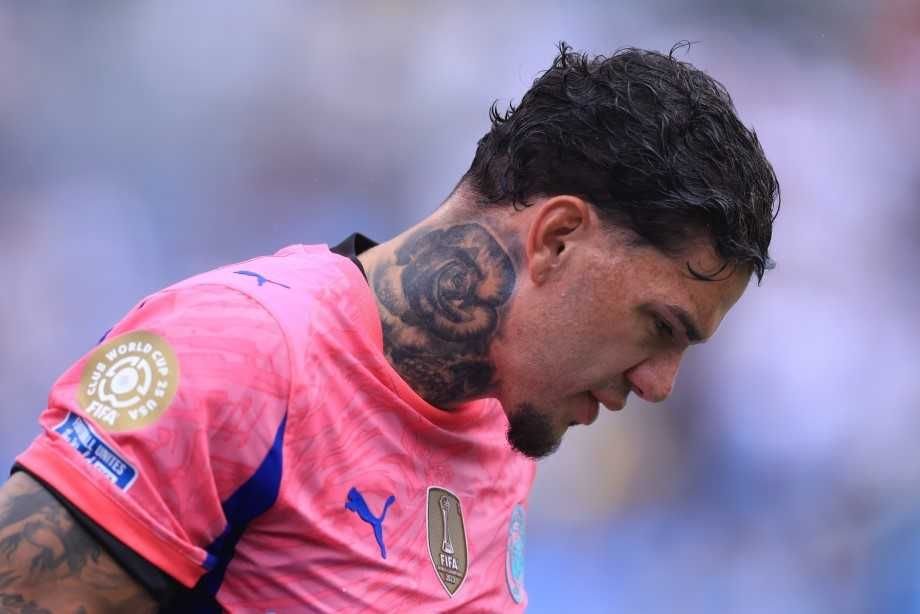
The rose and skull on Ederson’s neck is one of his more recognisable smaller pieces. Dark, portrait-style shading wraps around the side of the neck and continues toward the back. It’s far smaller than the back mural, but its placement catches the eye when he turns his head.
A neck tattoo has to work across a curved, moving surface. Ederson’s uses heavy shading and a clear outline, so its main shapes remain readable as the angle changes.
If you’re considering a neck piece, find an artist who plans for how the image wraps around the throat. A rose that looks right from the front may sit awkwardly from the side if its leaves aren’t placed carefully. Ask for the stencil from every angle, especially if the design includes a face, skull or lettering.
His arms and hands carry the smaller pieces
Smaller designs cover Ederson’s arms and hands, filling in around the larger chest and back tattoos. There are shaded figures, script, symbols and geometric details on his arms; the compact hand pieces show when he holds the ball or raises his gloves. The mix makes the collection feel added over time instead of planned as one matching sleeve.
The subjects and styles vary. Some tattoos are realistic, others more graphic, and a few read quickly from a distance. Similar shading and considered placement can help varied pieces sit together; every tattoo doesn’t need the same subject.
Hands and fingers take more wear than the forearm. Keep small lettering simple, use clear outlines and plan for possible touch-ups. The forearm has room for finer work; on the hand, a clean symbol usually lasts better than a crowded illustration.
Leg tattoos connect football, trophies and time in Portugal
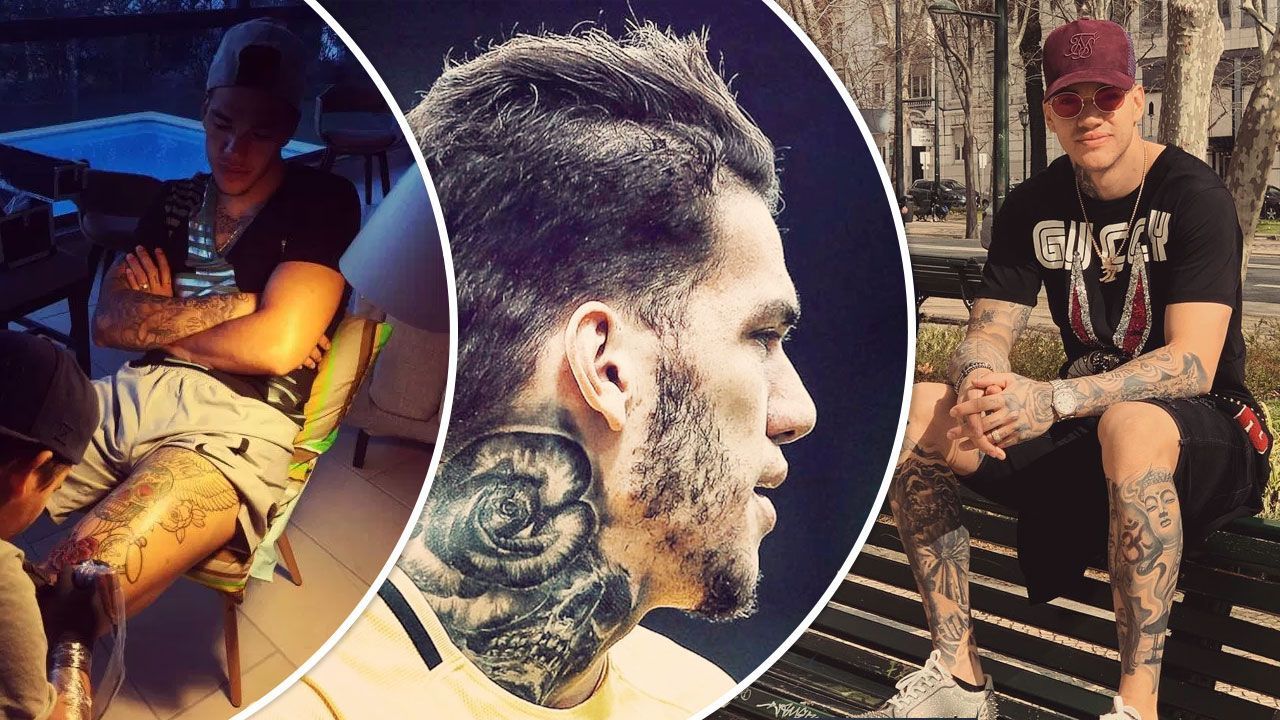
Ederson has spoken about a Portuguese League trophy tattoo and the number 35 on the back of his leg, a reference to his Benfica years. Photos also show shaded work across his thigh and lower leg, including faces and football images that use the black-and-grey style seen on his torso.
The leg gives a career tribute room to grow vertically. A trophy, date or club reference can sit beside a portrait without competing with the chest work. The placement also keeps the tattoo covered by many everyday clothes.
For a football tattoo that feels personal, start with a memory rather than a badge. A trophy, shirt number, stadium or date can sit inside a larger scene. Specific memories make sports tattoos feel less disposable, even after a career moves on or the kit changes.
Large collections take time. Leaving skin around a trophy or portrait gives each piece space and makes later additions easier to place. If you’re combining several football memories, repeat a visual element across them so the leg reads as one area, not a row of separate stickers.
Check a lower-leg stencil while walking, sitting and flexing your calf. The skin shifts, and a straight line can bend around the muscle. Photos from the front, side and back can show how the design will look in different positions.
Ederson’s tattoos bring together the back mural, the chest lettering and family names, and smaller work on his neck, hands and legs. If you like the scale of his collection, choose the memory or person you’d give the most space to, then add other pieces gradually so each one stays legible.