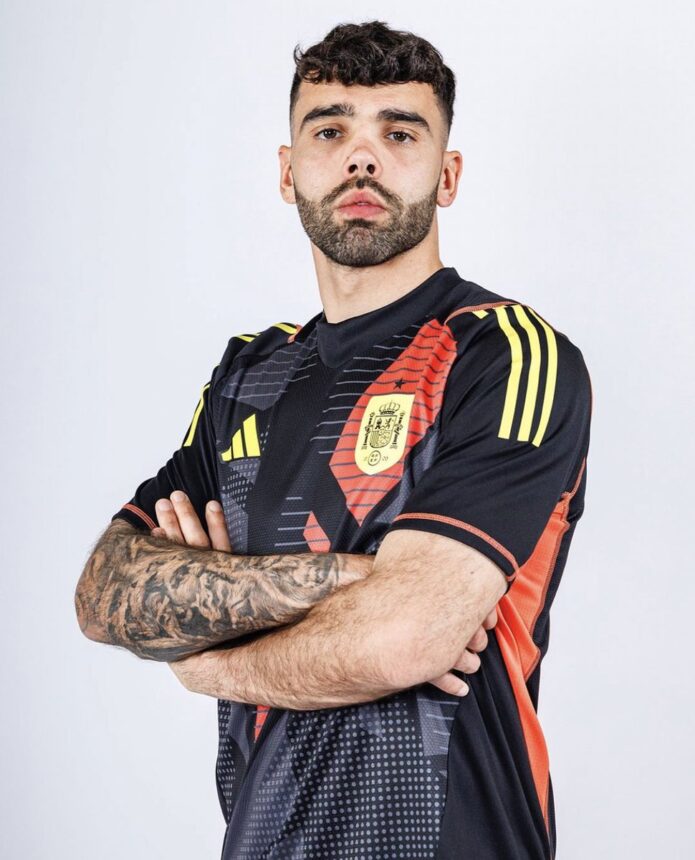
David Raya’s tattoo collection is built around dates, family references and dense black-and-grey work. The most recognisable mark is the date 13-08-21 on the back of his neck, a permanent reference to the Premier League debut that began his top-flight story. Photographs also show a heavily tattooed arm, lettering and smaller hand details, while newer reporting describes additional leg pieces connected with Arsenal and Spain.
Raya has explained that his tattoos carry personal meaning. La Vanguardia reported that the designs relate to his grandparents, parents, friends and debut rather than being random additions. That explanation gives the collection a clear emotional structure, but it does not identify every visible mark. The strongest descriptions stay with the tattoos that can be seen clearly and the meanings that Raya or a credible report actually connects to them.
David Raya’s tattooed arm work
The clearest arm image shows Raya in a Spain goalkeeper shirt with a large black-and-grey sleeve running along the forearm. The work contains layered figures, heavy shading and several changes in texture. It is not a single small emblem placed on otherwise clear skin. The ink occupies enough of the forearm to remain visible even when the arm is crossed over the body and the shirt covers the upper edge of the design.
The portrait also shows how the sleeve is arranged around the shape of the arm. Dark passages gather around the lower and outer forearm, while lighter areas break up the surface and keep the separate forms readable. The camera does not provide enough detail to name every image inside the sleeve, so the reliable description is a substantial black-and-grey composition with portrait-like and figurative passages.
Raya’s arm work is photographed against a purple background, which increases the contrast between the black shirt, the skin and the shaded ink. The backdrop makes the lines easier to see, but it does not change the underlying design. The same visual pattern appears in other photographs: a dense sleeve, exposed hand details and a collection that continues beyond the one neck date most often mentioned in football coverage.
The 13-08-21 neck tattoo
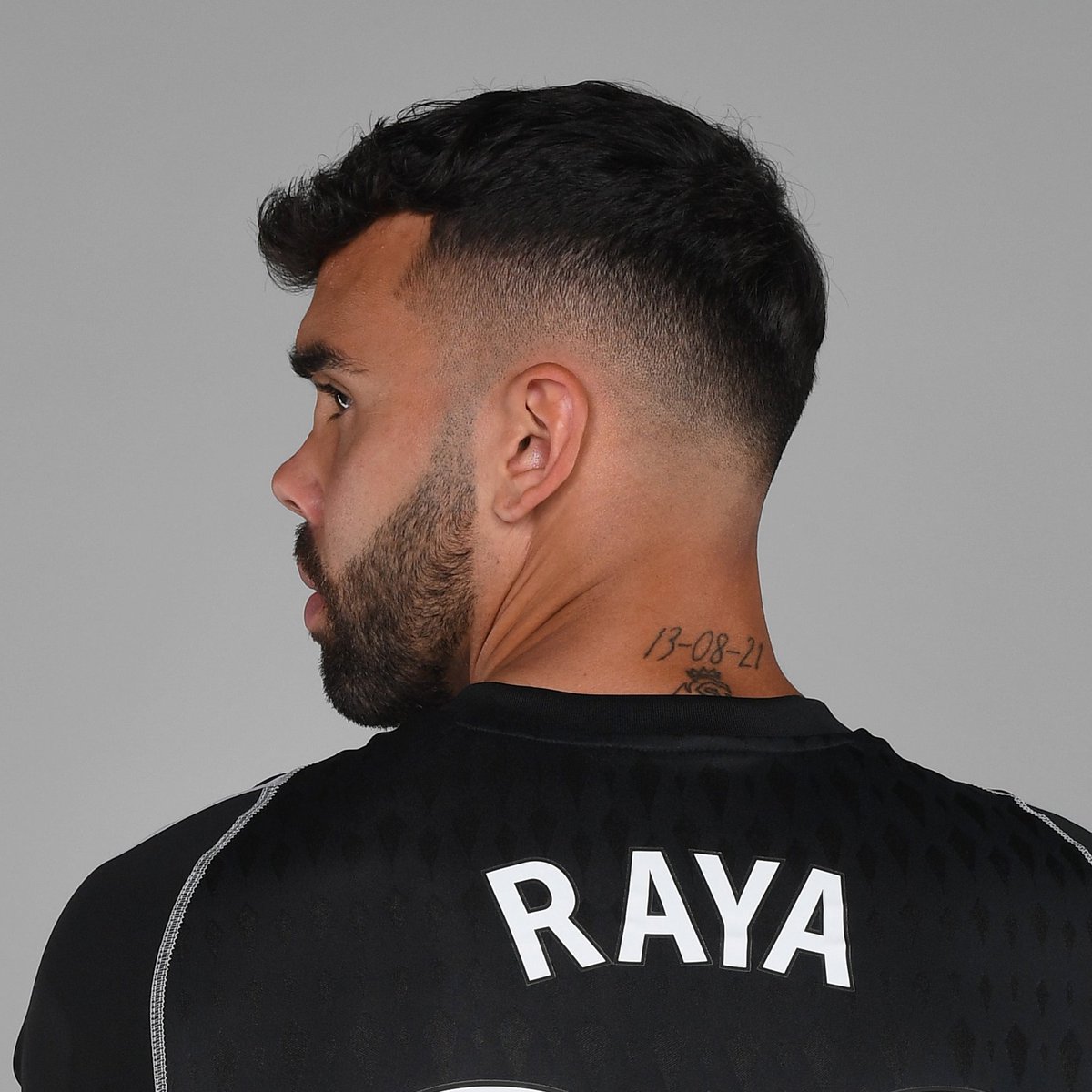
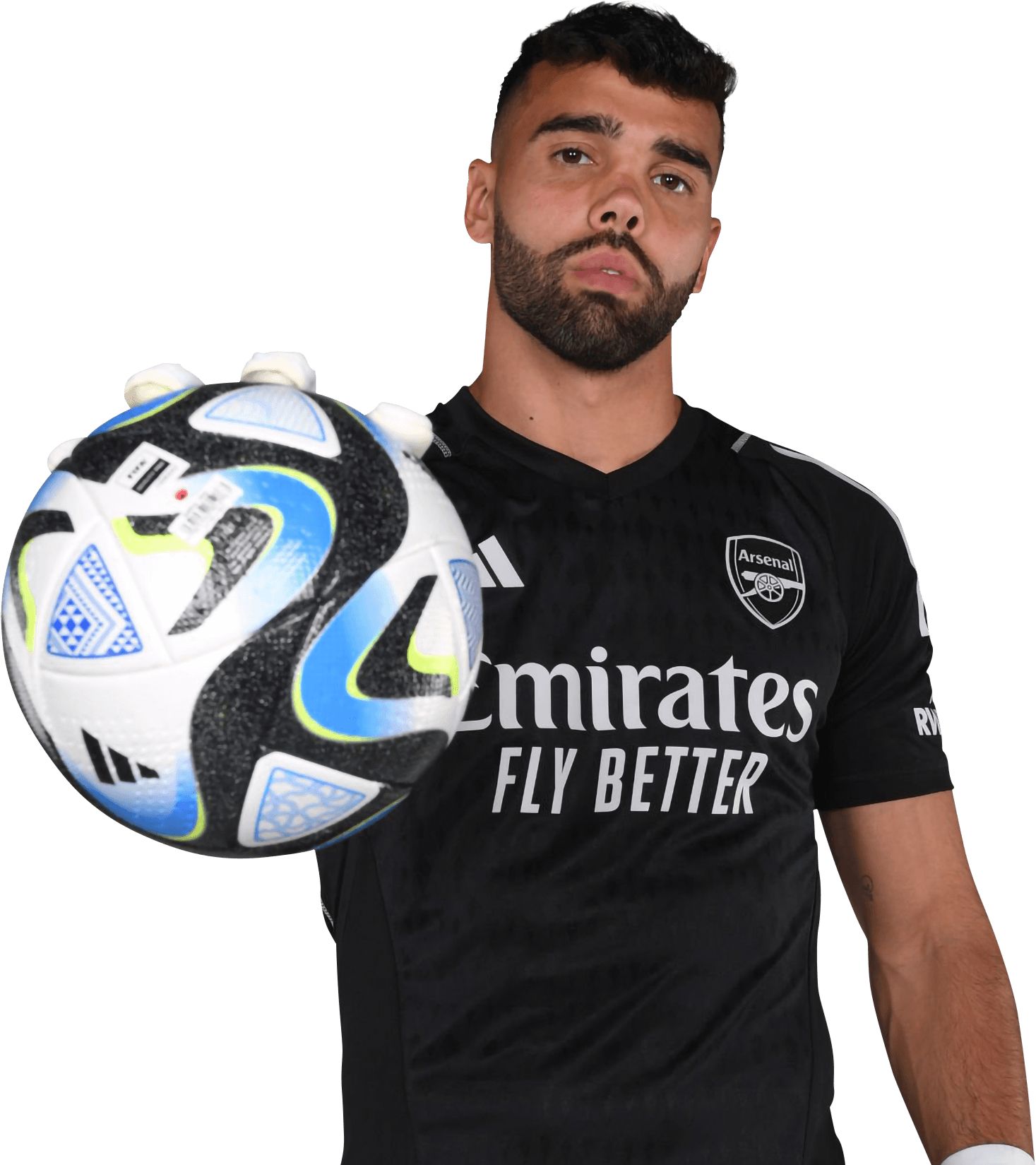
The back-of-neck tattoo is the most specific documented design in Raya’s public photographs. It reads 13-08-21 and sits just above a second small mark at the base of the neck. The date is visible when Raya turns away from the camera, especially in the Arsenal jersey reveal photographs that show his surname across the shoulders.
Multiple reports connect the date with Raya’s Premier League debut for Brentford. The match took place on 13 August 2021 and ended in a 2-0 win over Arsenal. The date therefore carries an unusual dual connection: it marks the beginning of Raya’s top-flight career and also records a match that Arsenal supporters remember as a difficult result. The tattoo’s meaning is not guessed from the numbers because the football reports explain the connection directly.
The placement makes the tattoo easy to hide under a collar and easy to reveal when the back of the shirt drops below the hairline. That is why several images show the same design from slightly different distances. The date remains the stable feature, while the small mark underneath is less consistently visible and should not be assigned a meaning that the available reporting does not establish.
The date tattoo on Raya’s hand
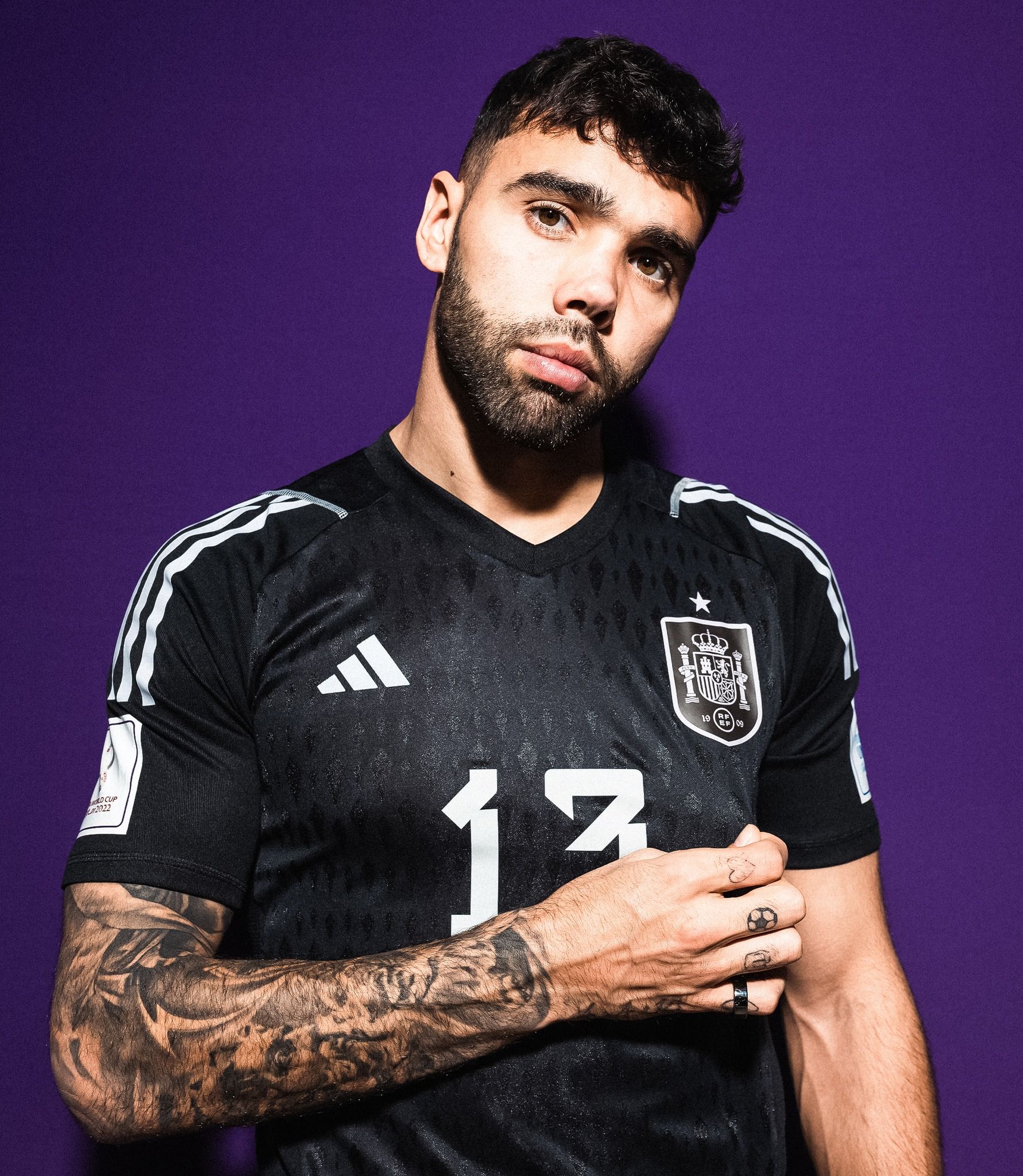
Raya’s hand and knuckle tattoos appear in the close arm photograph, where his fingers rest across the front of the shirt. Small marks can be seen on the fingers and hand, while the larger forearm sleeve continues behind them. Body Art Guru identifies a date tattoo on the hand alongside the arm work, but the available image is more useful for showing the placement than for proving a complete list of every small character.
The hand details have a different visual scale from the forearm sleeve. They are compact, separated by the joints and affected by the position of the fingers. A mark that looks sharp when the hand is open can become difficult to read when the fingers bend. The photograph still supports a clear statement: Raya has visible hand and knuckle ink in addition to the larger black-and-grey work on his arm.
The small date references fit with the way Raya describes his collection as a record of people and moments. That does not mean every hand mark is a confirmed milestone. The safe distinction is between the documented general meaning of his tattoos and the limited detail available for each individual finger. The visible hand pieces are part of the collection, but they are not expanded into invented stories.
The black-and-grey forearm sleeve
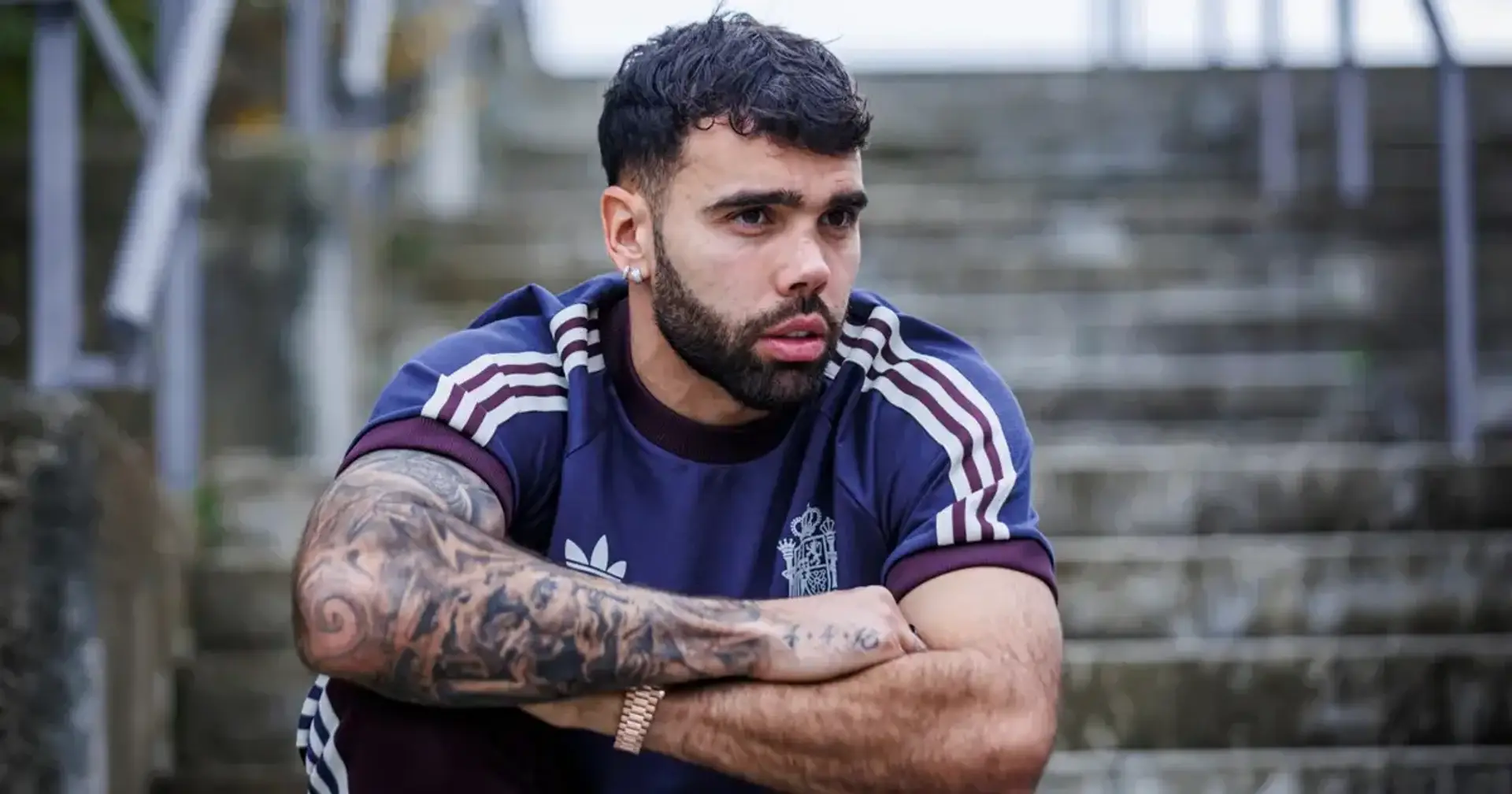
A training photograph gives a wider view of the sleeve while Raya sits with his arms crossed. The forearm is covered by a connected field of black-and-grey images, with dark outlines and pale shading visible across the skin. A circular face-like form and other figures appear within the work, but the image does not establish names for all of them. The useful visual point is the contrast between the large shaded areas and the smaller line details around them.
The sleeve reads differently when the arm is extended and when it is folded across the body. In the wider training frame, the elbow and wrist provide landmarks that show how much of the arm is covered. The pose compresses some of the forms, yet the overall arrangement remains obvious. That change of perspective is why a close portrait and a wider public photograph work together rather than competing with each other.
Raya’s tattoos also include lettering and smaller symbols around the arm and hand. The photographs show that the collection is not a uniform blackout and not one continuous picture. Open skin, lighter grey passages and separated motifs keep the sleeve varied. The overall style remains cohesive because the shading is predominantly dark and the pieces sit close together across the visible arm.
The newer leg tattoos
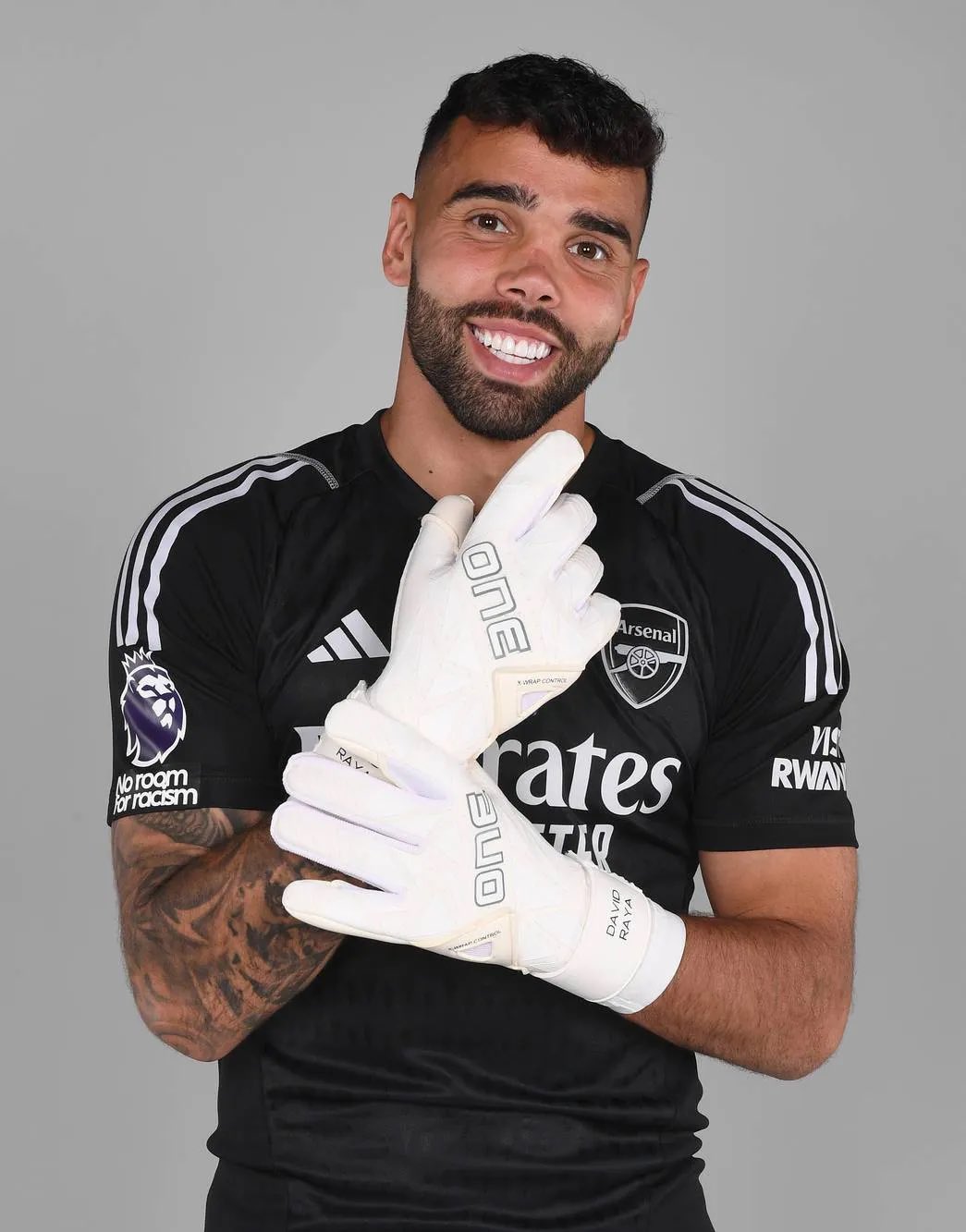
Recent reporting describes additional tattoos on Raya’s legs connected with two football milestones. Tribuna reported that the designs mark Arsenal’s title and Spain’s 2026 World Cup win, presenting them as trophy-related additions to the collection. Those pieces are discussed separately from the photographed arm and neck work because the supplied close images do not show the legs clearly enough to describe their exact lettering or dimensions.
The reported leg tattoos extend the timeline of Raya’s ink beyond the 13-08-21 date. The neck design records the beginning of his Premier League career, while the newer pieces record later achievements with club and country. That does not make the designs identical. It shows a repeated interest in using tattoos to hold onto important football moments.
The distinction between a reported design and a photographed design matters here. The sources support the existence and broad football connection of the newer leg pieces, while the visual evidence in this article carries the more detailed descriptions of the forearm, hand and neck tattoos. No arm photograph is presented as proof of a calf or thigh design that it does not actually show.
What the sources establish
Raya’s own comments, reported football coverage and the inspected photographs create a consistent picture of a personal collection. He has described tattoos connected with grandparents, parents, friends and his debut. The neck date can be read directly, and the reports identify the match that it commemorates. The arm photographs show extensive black-and-grey work, while the newer football coverage adds leg pieces associated with later team achievements.
The meaning of the collection is therefore clearer at the level of themes than at the level of every individual line. Family, friendship and football milestones are documented subjects. The exact meaning of a small symbol inside the sleeve may remain private, and the camera cannot turn an indistinct shape into a confirmed character or portrait. That boundary keeps the descriptions specific without overstating what the images prove.
The neck tattoo is especially easy to verify because several unrelated sports reports identify the same date and the same placement. The arm work is equally visible, though its many details require more caution. Photographs taken in a studio, in training and during a kit presentation show the sleeve from different angles. Those views confirm the broader coverage while leaving the smallest motifs undescribed.
13-08-21 is the collection’s clearest dated mark. It anchors the tattoo history to a Premier League debut and gives the surrounding arm work a documented timeline. The hand tattoos add smaller points of detail, and the newer leg reports show that football milestones remain part of the collection. Raya’s ink is personal first and decorative second, but the public evidence is strongest when it stays with the visible placements and stated connections.
How the photographs fit together
The image sequence moves from a broad identity portrait to closer views of the arm and neck. The first arm image shows the scale of the sleeve, the neck image isolates the dated lettering, and the training photograph returns to the way the ink looks on a moving footballer’s body. The kit-reveal image adds another clear view of the forearm while the separate Spain portrait keeps Raya recognisable in the featured position.
Lighting changes the apparent weight of black-and-grey tattoo work. Purple studio light makes the arm contrast strongly with the background, while outdoor training light softens the grey passages. A bent elbow can also make one section look smaller or darker. These are photographic changes, not evidence that the tattoo has been altered between appearances.
The same principle applies to the neck date. A profile photograph makes the numbers readable, but a front portrait may hide them completely. That is why the article gives the date its own section rather than treating it as a minor detail in an arm discussion. The placement and the reported meaning remain stable even when the camera angle changes.
Taken together, the images show an extensive collection with a consistent black-and-grey foundation, smaller hand and neck details, and a later group of reported football tattoos on the legs. They do not pretend to catalogue every piece hidden by clothing or every private reason behind the ink. The strongest account is the one that keeps each claim attached to the view or report that supports it.