
Gabriel Magalhaes has a heavily tattooed visual identity that changes depending on the camera angle. His arms carry dense black-and-grey work, while lettering and smaller marks appear around the neck and upper body. The clearest recent addition is a calf tattoo reported by the Premier League: a replica of the league trophy with 2026 placed underneath it. The public photographs do not show every part of the collection equally well, so the useful distinction is between details visible in the supplied images and details reported by a named source.
The photographs also show why a single portrait is not enough to describe his ink. A close front view brings out the contrast in the forearms, a side view makes the neck script easier to see, and wider match-day images show how the work sits across both arms when the body is moving. Gabriel Magalhaes’ tattooed arms are therefore the main visual subject here, with the reported trophy piece providing a dated point in the collection.
Gabriel Magalhaes’ tattooed forearms
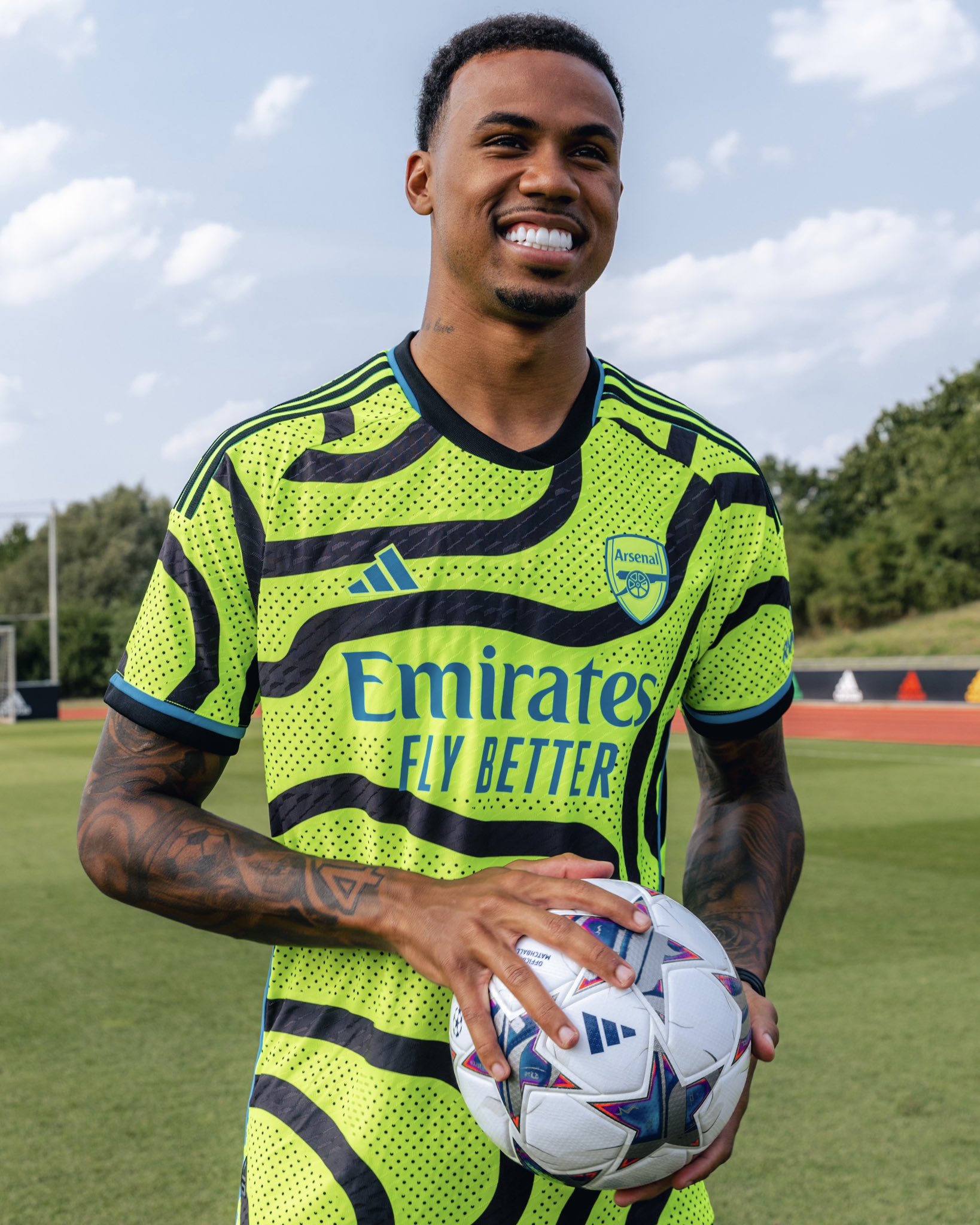
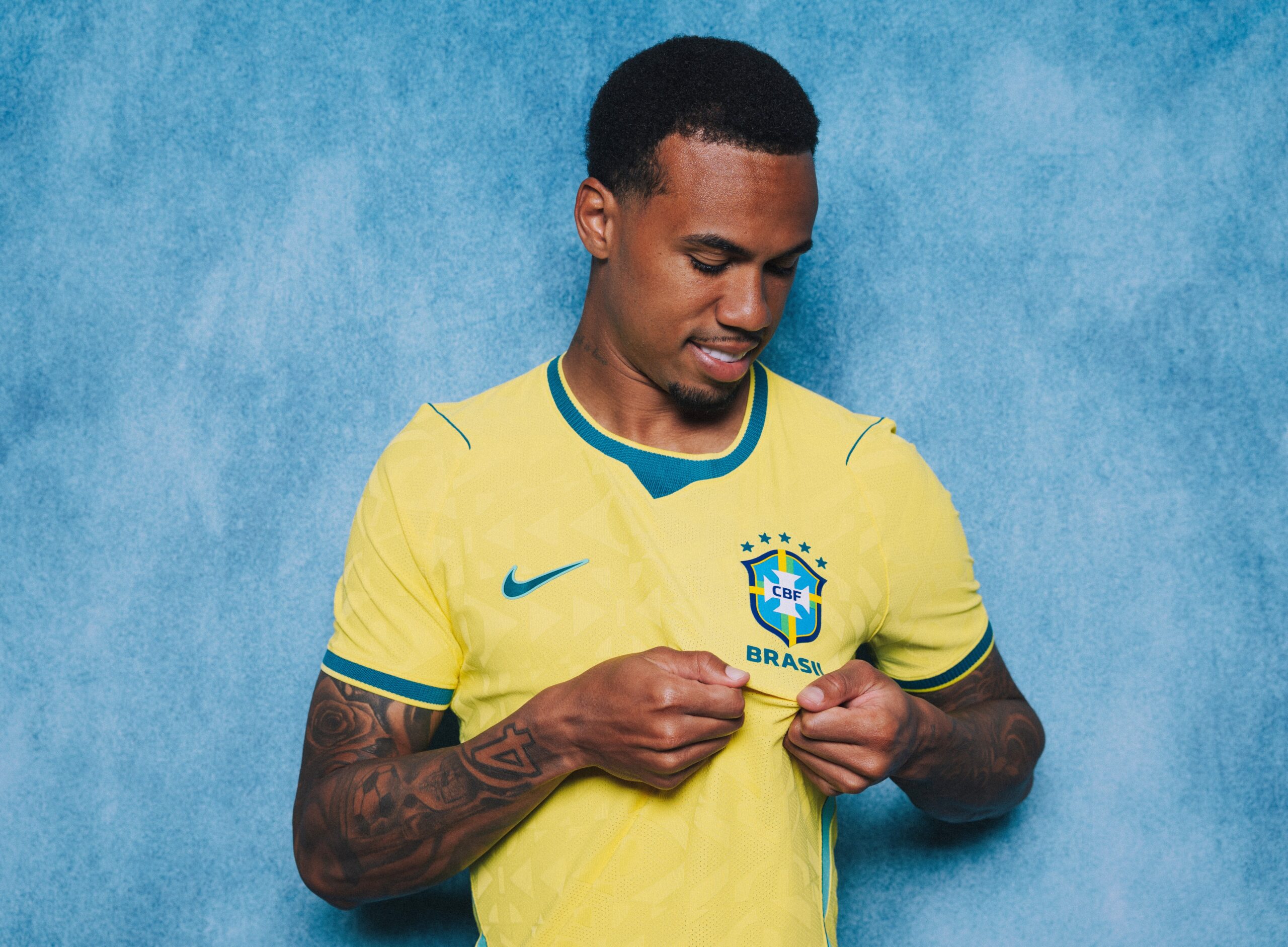
The close portrait in the Arsenal away kit gives the strongest view of Gabriel Magalhaes’ forearms. Both arms contain substantial black-and-grey coverage rather than one isolated emblem. The visible work runs through the forearm areas in layered shapes, with dark blocks beside lighter shading and smaller details that become clearer near the wrists. The framing keeps his face, neck and arms in one image, which makes the scale of the work easier to understand.
The photograph does not establish the private meaning of every mark, and it does not show the reported calf tattoo. What it does establish is the density of the arm work and the contrast between filled areas and lighter skin around them. The lower arms are not presented as a single matching design. They read as separate passages of ink that connect visually because of their dark tonal range.
Gabriel’s forearm tattoos also have a strong vertical quality. The darker sections follow the length of each arm, while smaller line details interrupt the larger areas. That arrangement is especially noticeable when the hands are below the frame and the arms become the strongest visual line in the portrait. The result is a collection that looks substantial even when the details of individual motifs are softened by distance.
The neck script in Gabriel Magalhaes’ profile
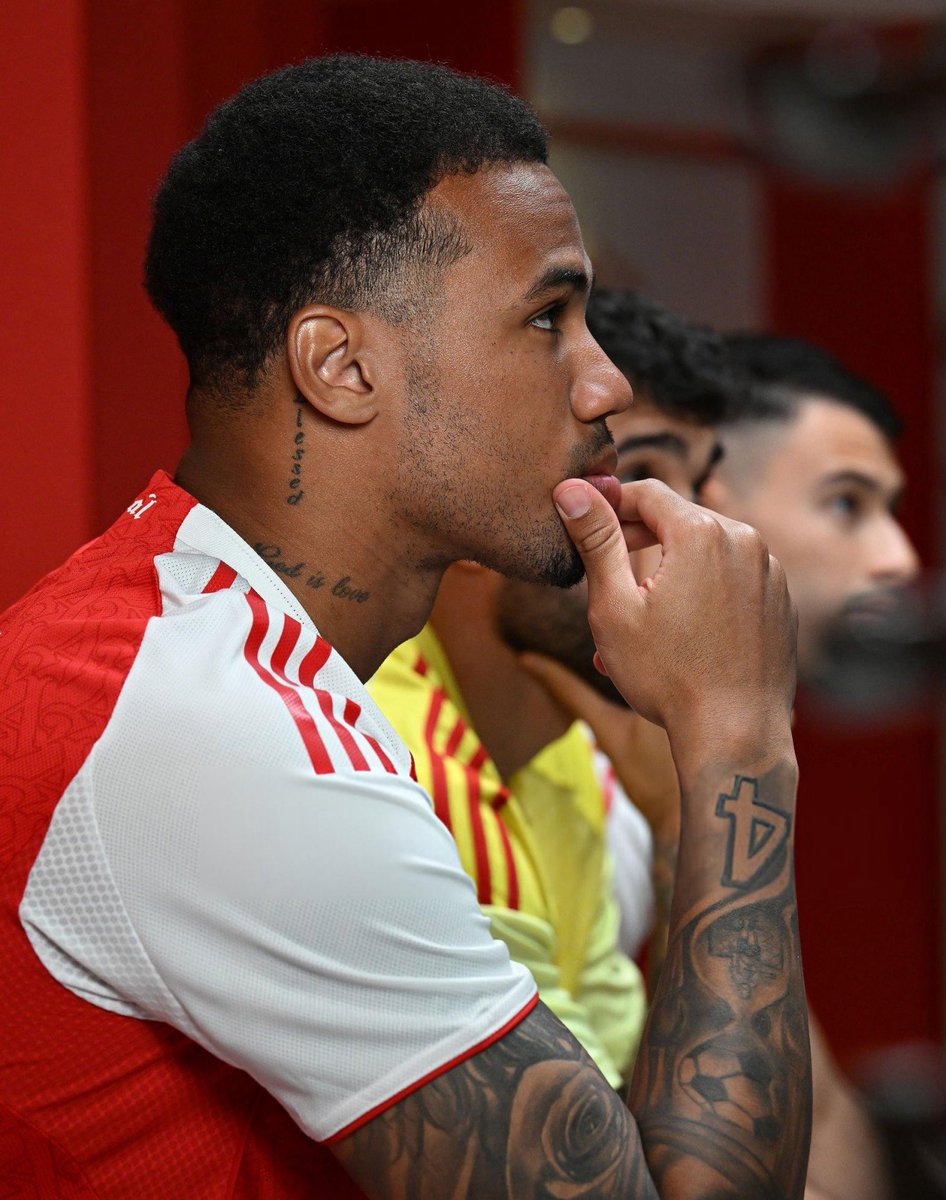
The locker-room side photograph changes the emphasis from the arms to the neck. A script-style mark is visible along the side of the neck, with the letters following the contour beneath the ear and toward the upper shoulder. The angle is important because the writing is much less prominent in a straight-on image. It sits above the larger arm work and gives the upper part of the collection its own focal point.
There is enough detail to describe the placement and lettering style, but not enough to assign a complete personal explanation to every word. That boundary matters with neck tattoos because shadow, hair and the turn of the head can hide parts of the design. The safe description is a visible neck script recorded in profile, supported by the inspected photograph rather than by an imagined translation.
The side view also shows how the neck mark relates to the shoulder and forearm coverage. The script is comparatively narrow, while the arm work below it is broader and darker. That difference creates a visual step from the head toward the elbow. The tattooed surface therefore changes in scale as it moves down the body, with fine lettering near the neck and more compressed shading on the arm.
Black-and-grey coverage across both arms
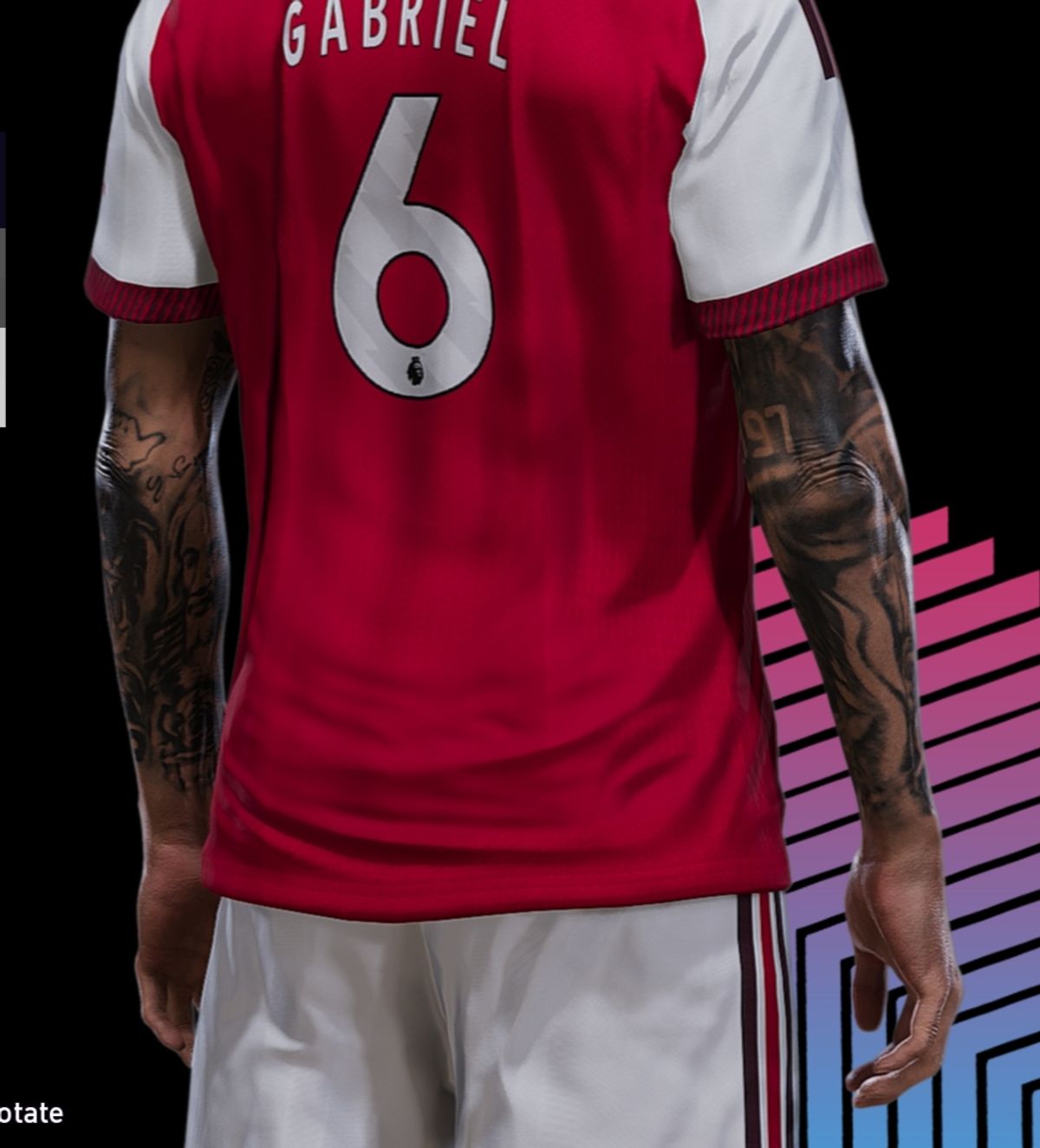
A front portrait in an Arsenal shirt shows the two arms together. The ink is visible on both forearms, with one side appearing darker because of the light and the angle of the fabric. That does not mean the two arms contain identical work. It simply shows how contrast changes when a football shirt and natural shadows sit beside the skin.
The arm tattoos contain several layers of line and shade. Some sections have a portrait-like or figurative quality, while other areas are built from compact dark shapes and lighter gaps. Because the photograph is a medium-distance view, it is more reliable for describing the overall distribution than for naming every small symbol. The image confirms a broad, developed collection rather than a recently started single-piece design.
The visible forearms are also significant because they remain exposed in ordinary football photographs. When Gabriel raises his arms or turns toward the camera, the tattoo coverage becomes part of the silhouette. In the inspected portrait, the work sits between the short sleeve and the wrist, creating a continuous band of visual detail without requiring the image to be cropped into a close-up.
Lettering, symbols and heavier shaded passages
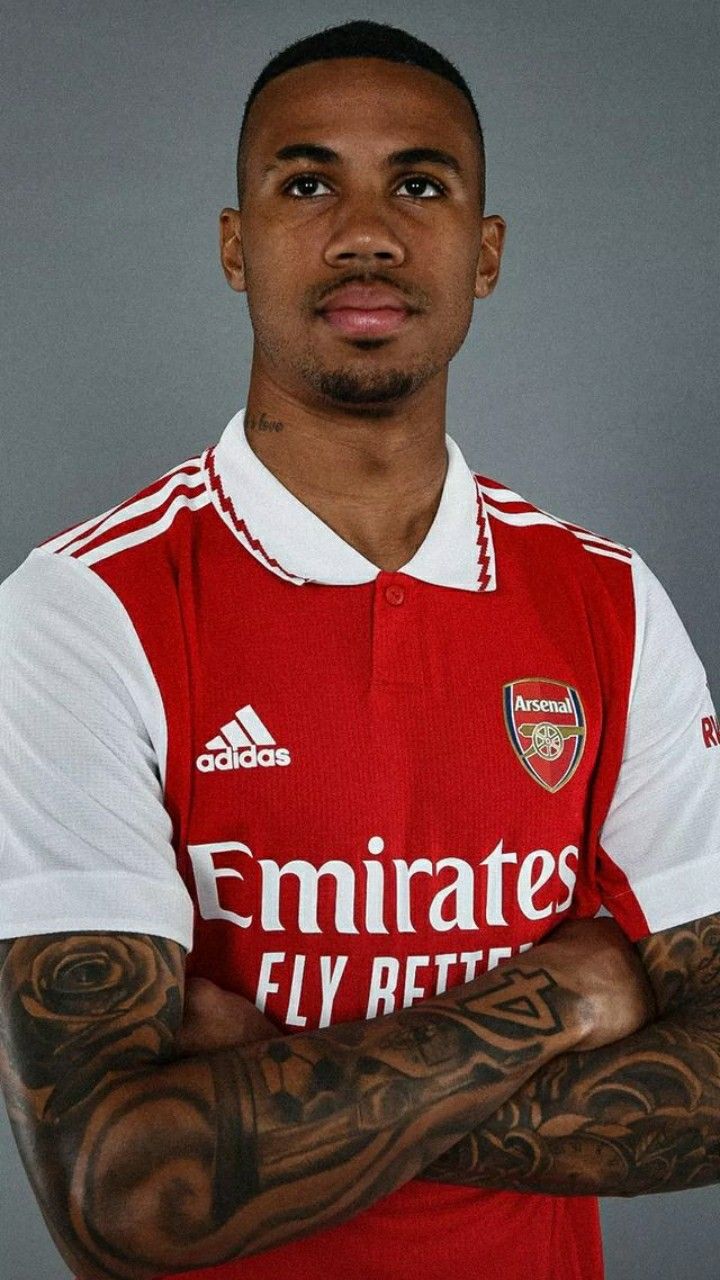
The front kit photograph gives a wider reading of the shapes that sit inside Gabriel Magalhaes’ arm collection. The forearms show dark shaded passages beside more open sections, and the upper body contains additional marks that are partly covered by the shirt. A few shapes appear figurative, but the available angle does not justify turning those shapes into a precise list of named portraits or symbols.
That restraint does not make the image less useful. The broad frame shows the relationship between line work and negative space. Heavier areas hold the eye near the centre of each forearm, while lighter gaps separate adjacent pieces. The tattooed arms therefore retain visible structure even when the camera is too far away for the smallest details.
The same photograph also shows that Gabriel’s tattoos are not limited to one narrow band around the lower arm. The visible work occupies enough surface to change the appearance of the arms in a short-sleeved kit. At the same time, the design is not presented as a uniform blackout. The variation in shade, texture and open skin is part of what makes the collection readable from a distance.
The newer Premier League trophy tattoo
The Premier League’s official briefing reported a newer tattoo on Gabriel’s calf after Arsenal’s title win. The reported design is a replica of the Premier League trophy with the year 2026 underneath. The article identifies tattoo artist Diego Santos through an Instagram embed and presents the piece as a celebration connected to the club’s achievement. This is the clearest dated account of a specific recent addition to Gabriel’s collection.
The trophy design should be kept separate from the arm photographs because none of the supplied arm portraits is a close view of the calf. The photographs establish the older or otherwise visible arm and neck work, while the official football report establishes the calf design and its year. Combining those two kinds of evidence gives a fuller chronology without pretending that one frame shows the entire body.
The number beneath the trophy is visually significant because it fixes the reported piece to 2026 rather than leaving it as an undated football symbol. The source also connects the tattoo to the title celebration, but it does not provide a complete explanation for every element of the image. The documented claim is therefore precise: a Premier League trophy replica, 2026 below it, placed on Gabriel’s calf and reported after Arsenal’s victory.
What the photographs reveal
Across the five tattoo photographs, the most consistent detail is the amount of visible work on the arms. The close portrait supplies line and shade, the side image supplies the neck placement, and the wider kit photographs supply scale. None of those views should be treated as a substitute for the others. Each one answers a different visual question about where the ink sits and how it appears under changing light.
Football photography can make tattoos look different from one frame to the next. A dark shirt may increase the apparent contrast of black ink, while bright stadium light can flatten grey shading. A turned elbow can also compress a design, making an area seem smaller than it is. Those changes affect the photograph, not necessarily the tattoo itself.
The images support a description of dense black-and-grey arm work, visible neck lettering and a collection that extends beyond one isolated piece. They do not support an exact inventory of every small mark. That is why the reported calf trophy is discussed through the official football source, while the arm and neck sections stay with the features visible in the inspected photographs.
The record that can be checked
Gabriel Magalhaes’ tattoos have a clear visual thread even where personal explanations are private. His arms carry the largest visible concentration, the neck adds a narrower script element, and the reported 2026 trophy piece adds a dated football milestone to the collection. The combination connects everyday match photographs with one specific account of a newer tattoo.
The Premier League report is the strongest source for the recent calf design because it names the trophy, the year and the tattoo artist’s Instagram presentation. The inspected photographs from football coverage are strongest for the arm and neck placements. Together they keep the article focused on Gabriel’s documented ink rather than on generic tattoo advice or speculation about designs that cannot be verified.
What remains private should stay private. A visible symbol does not automatically come with a confirmed meaning, and a partial photograph does not prove that an uncertain shape is a particular portrait or phrase. The reliable picture is still substantial: Gabriel has extensive tattoo work on both arms, visible neck lettering, and a reported Premier League trophy tattoo marked 2026 on his calf.
The 2026 trophy is the dated addition, while the arm and neck work provide the strongest photographic record of his wider collection. The neck script changes the profile, and the forearm shading changes the silhouette in short-sleeved football photographs. Those details are enough to describe the collection accurately without inventing meanings for marks that Gabriel has not publicly explained.
Viewed together, the photographs show a footballer whose tattoos have become part of his public visual identity. The collection is varied in scale, with narrow lettering near the neck, heavier shaded passages across the arms and a separately reported trophy design on the calf. The most dependable account keeps each detail attached to the evidence that actually shows or reports it.