
Davey Havok’s tattoos have changed over time. Older photos show illustrative sleeves with dark characters and horror imagery; newer portraits show broad blackout sections, geometric bands and narrow gaps of open skin. His chest has an anatomical heart, and a large wing design covers his back.
The photos show the shift more clearly than generic AFI portraits, where his arms are often hidden. Compare how the older sleeve work and later blackout look across different angles. The amount of black, the open skin and the shapes that remain visible all change when he moves onstage.
The Davey Havok blackout look starts with strong shapes
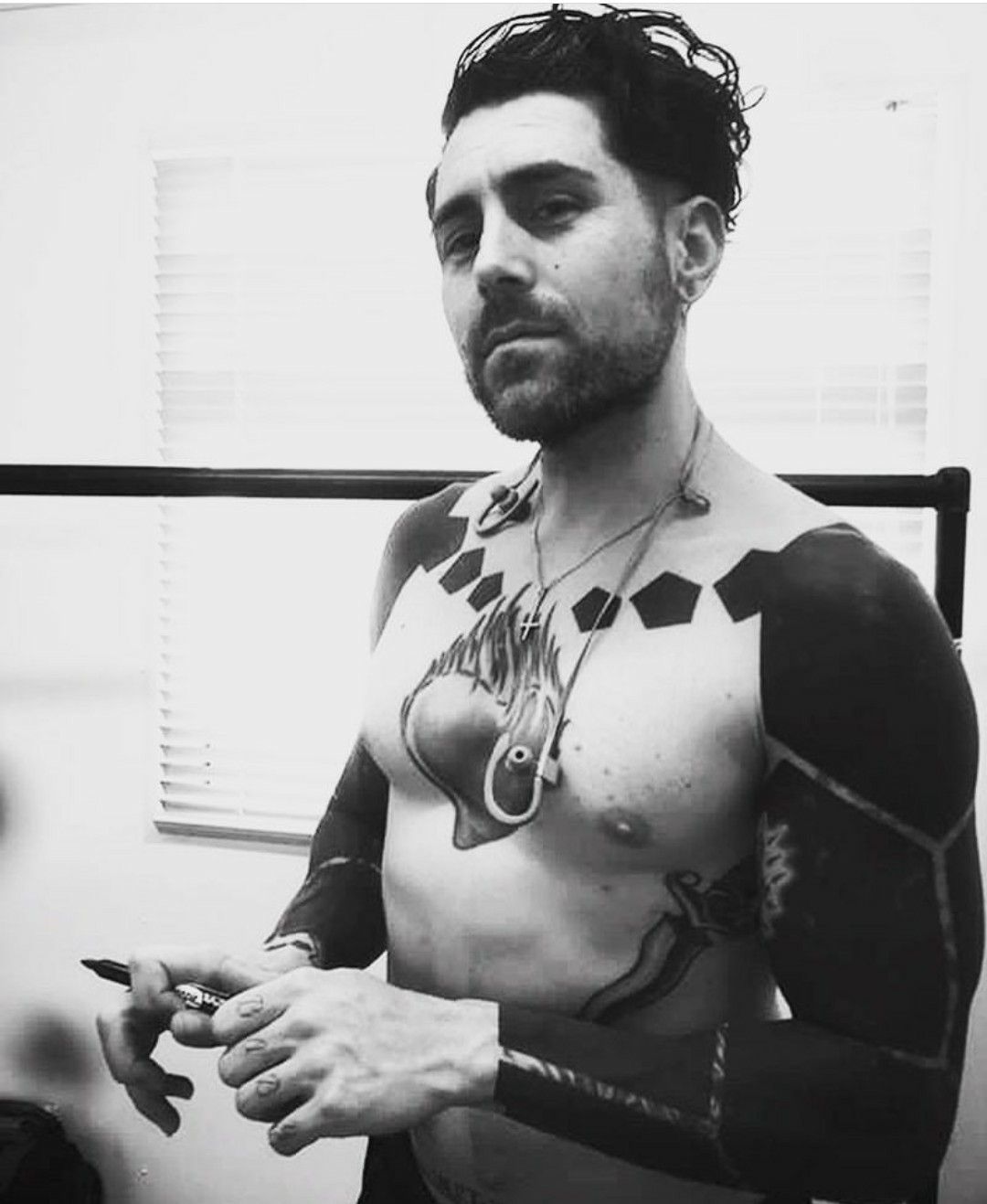
The first photo puts the chest and arms in view. An anatomical heart gives the chest a clear center, while the dark coverage on both arms frames it. The two areas do different jobs, so the image does not collapse into one flat block of black.
Big shapes remain visible in a performance photo, even when the singer is moving or holding a microphone. Havok’s earlier sleeves used distinct subjects and plenty of texture; the overall outline stayed clear when smaller details were hard to make out.
The heart tattoo also shows why contrast matters. A detailed center needs some room, even when the surrounding arms are dense. Lighter lines and open skin let the eye settle on the chest before it moves to the sleeves.
If you are planning a large design, decide what the main subject is first. Then look at how the arm work can frame it. Useful reference photos show how the design is divided across the body, not only the individual images.
The sleeves use blackout ink and controlled negative space
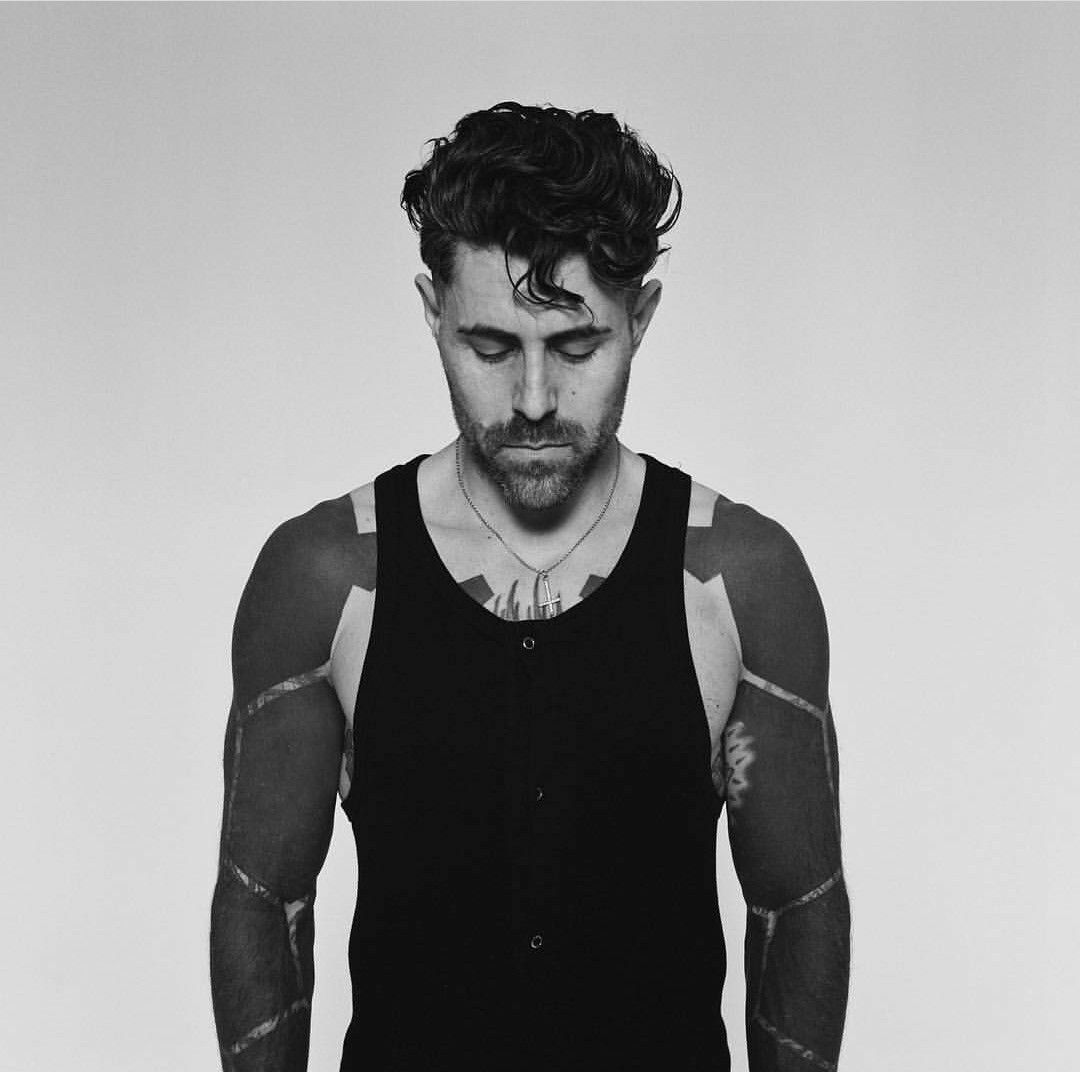
This studio portrait makes the blackout sections easier to see. Large areas are filled with black, but narrow bands, cracks and open skin interrupt the dark surface. Those breaks make a pattern without taking away the heavy feel.
Blackout is a major commitment. It changes the whole surface of an arm. It can cover older tattoos, but the new design has to work on its own too. Havok’s sleeves show that blackout does not have to be featureless; lines of open skin can read like drawing against the dark fill.
The bands wrap around the arm, so their angle changes when it turns. A line that looks horizontal from the front may curve around the biceps. That is why a sleeve needs to be considered from several angles before it is tattooed.
If full blackout is too much, the same contrast can be used in a smaller area: a dark field behind a portrait, a black panel around a flower or a few geometric shapes. The black should have a clear purpose rather than fill space at random.
The blacked-out sleeves changed the mood of the collection
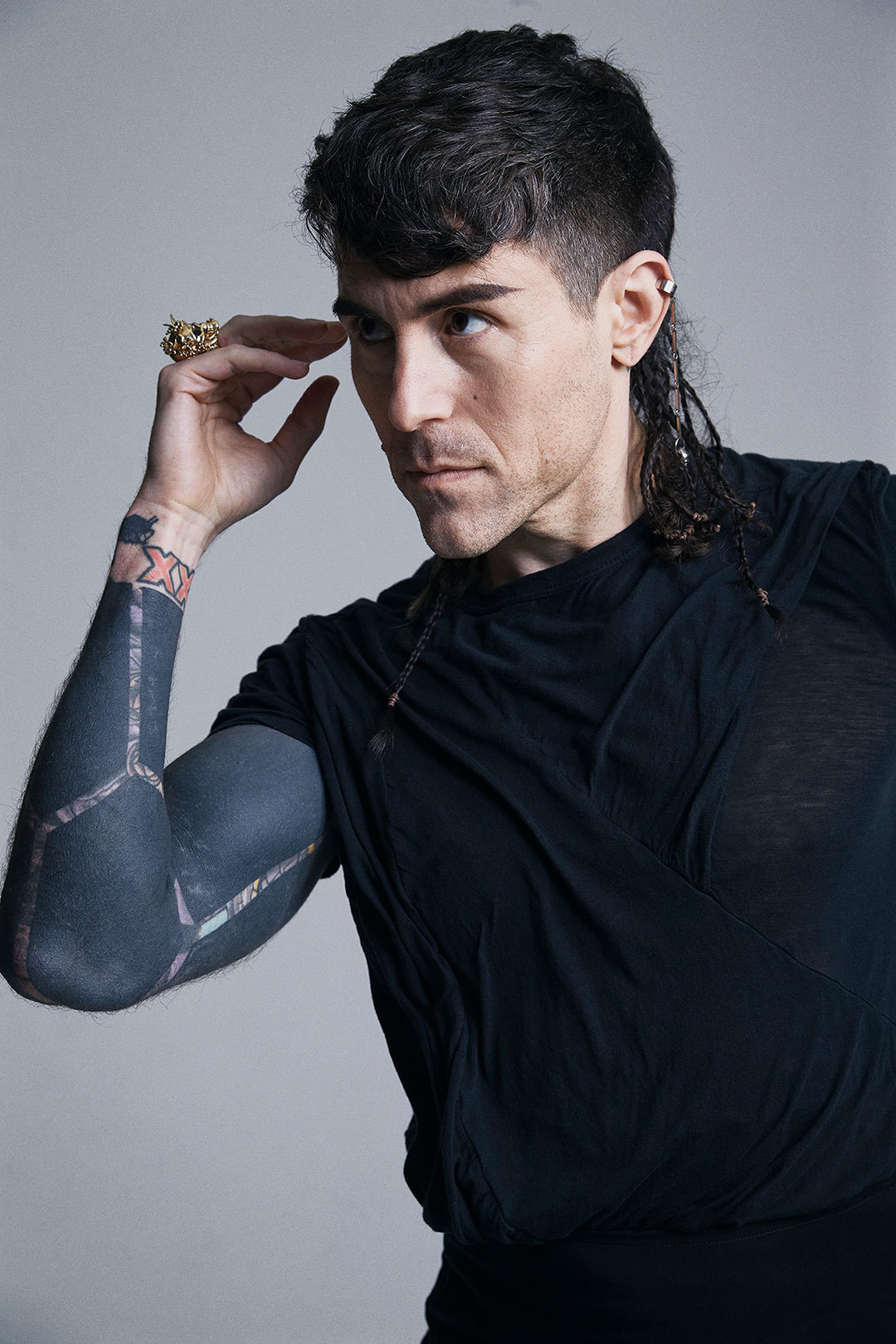
The newer portrait shows how blackout changed the feel of Havok’s collection. The older designs remain part of its history, while the solid black gives his arms a more graphic outline. From a distance the tattoos look simpler; close up, the bands and gaps add detail.
A cover-up does not have to hide every trace of what came before. Open lines can leave some of an older shape visible while giving the new surface a deliberate pattern. That may be useful if an old tattoo no longer works for you but you do not want to erase all of its outline.
Clothes and background also change how the sleeves read. A black top can blend with the ink; a pale background makes the arms stand out. It helps to compare references in both dark and light settings before deciding on a large black piece.
The shoulder contour matters as well. Solid black can make an arm look square if the design does not follow the shoulder. Havok’s bands and open cracks soften the edge and help the sleeve follow the body.
The live photographs show how the ink moves with the performance
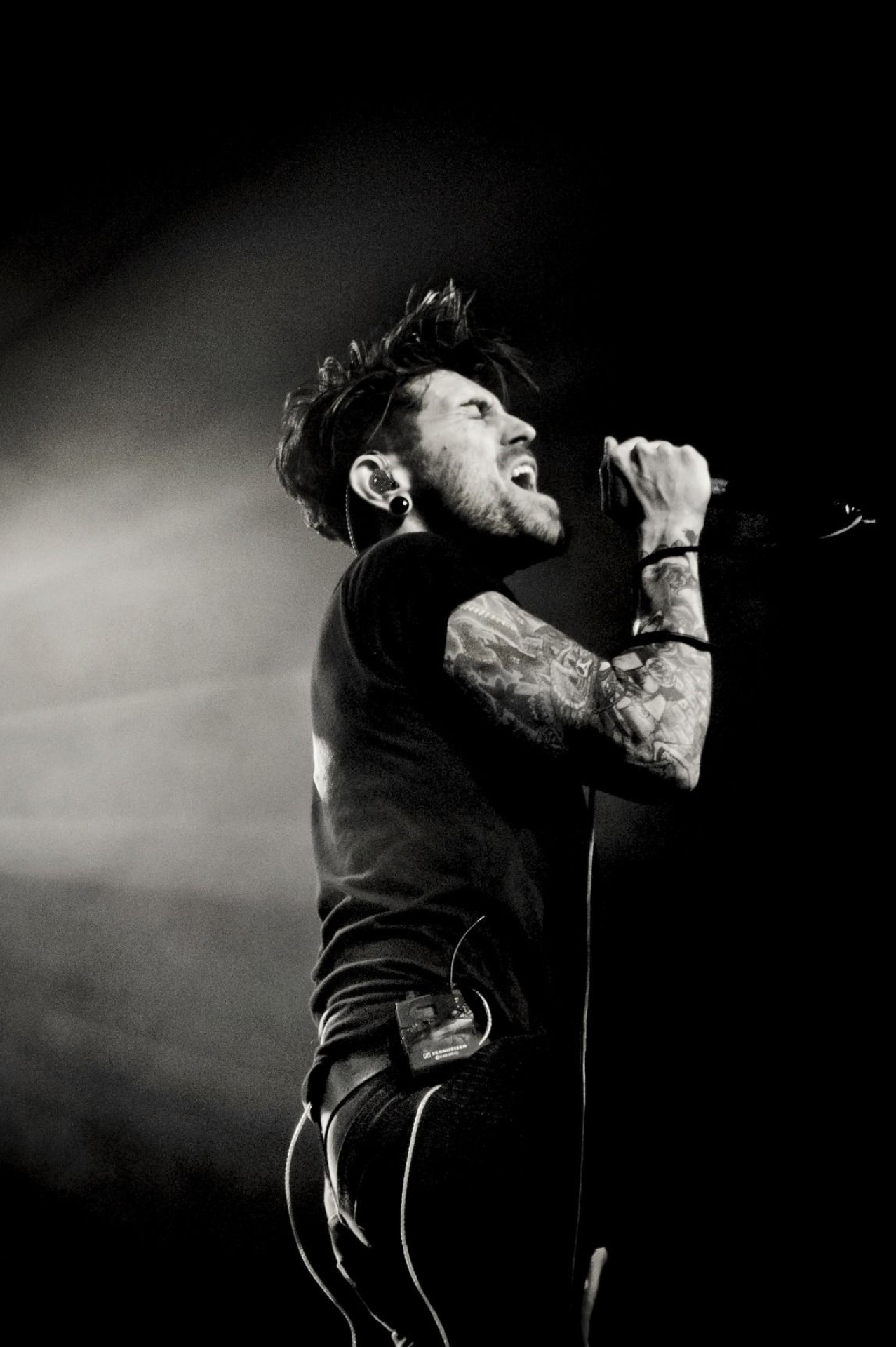
Live photos show what studio portraits cannot: Havok singing, leaning and raising his arms while holding a microphone. The ink bends over the elbow, and the wrist comes in and out of view as his hands move.
That matters with any sleeve. Arms turn, bend and reach. A design that looks balanced with the palm down may feel crowded when the hand turns up. Check how the main lines sit around the elbow and wrist, especially if the design uses bands that need to stay even.
Stage light can wash out color or flatten dark work. Havok’s tattoos still read because the outlines and shifts in value are strong. A design that relies only on fine detail may be harder to see in a moving photo.
For a smaller tattoo, the same idea can be applied to one feature: a curved line around the forearm, a dark shape that follows the triceps or a symbol near the wrist. Placement can connect a design to the body without adding more images.
What Davey Havok tattoos can teach a design brief
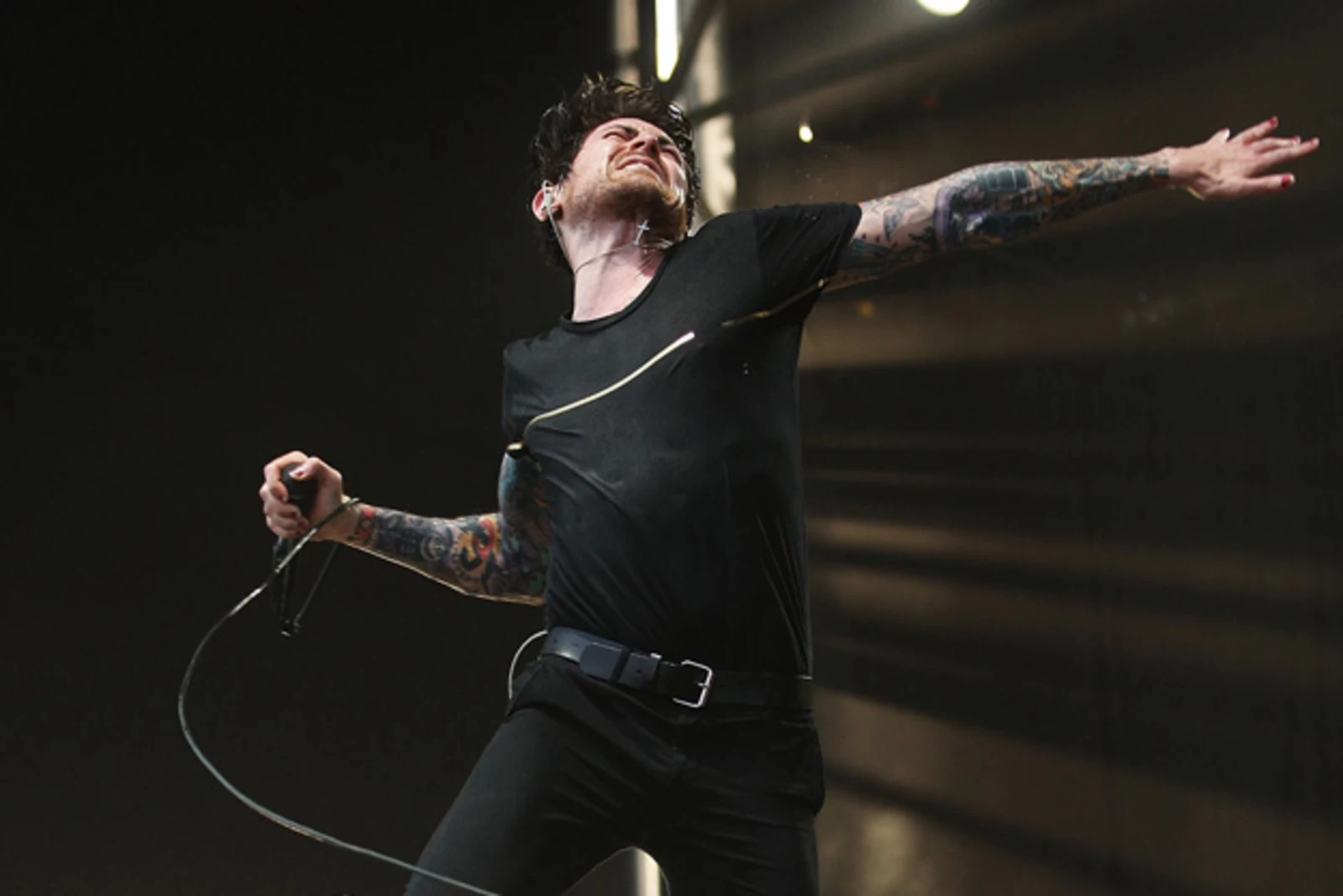
This performance photo shows how the main arm shapes hold up while Havok reaches, sings and turns away from the camera. Smaller details come and go, but the overall coverage remains clear. That is a useful test for a design brief: will the tattoo still read when the body is moving?
If you prefer the older sleeves, describe the subjects and mood rather than asking for an exact copy: horror imagery, an anatomical center, dark illustrative lines and a few lighter areas. For the blackout look, talk about solid fill, controlled open skin and how the outer edge should follow your shoulder and elbow.
Think about the overall effect. Colorful sleeves can feel busy or theatrical; blackout is more severe and graphic. Neither is automatically better. Decide whether you want the tattoo to be the first thing people see or a dark frame around another subject.
Cover-ups need an in-person plan. Very dark ink cannot be hidden by placing a thin line over it, and old colors affect what an artist can do. An experienced tattooer can assess the existing work and explain what is realistic.
For more musician references, compare the blackout approach here with the colorful sleeves in our Nikki Sixx tattoos guide and the heavier arm coverage in our M. Shadows tattoos guide. The useful part is how black, open skin, repeated shapes and movement can make a large collection feel connected.
After watching the AFI performance below, look at the photos from more than one angle. Choose the placement and contrast you want, then leave room for the artist to draw around your body. A good brief gives direction without asking the artist to copy someone else’s proportions.
One view can make a sleeve look solid; another may show open skin, bands or older imagery underneath. Bring several references, explain what you want to keep or change, and ask how the design may age as the black settles into the skin. Good planning leaves room for a better drawing.