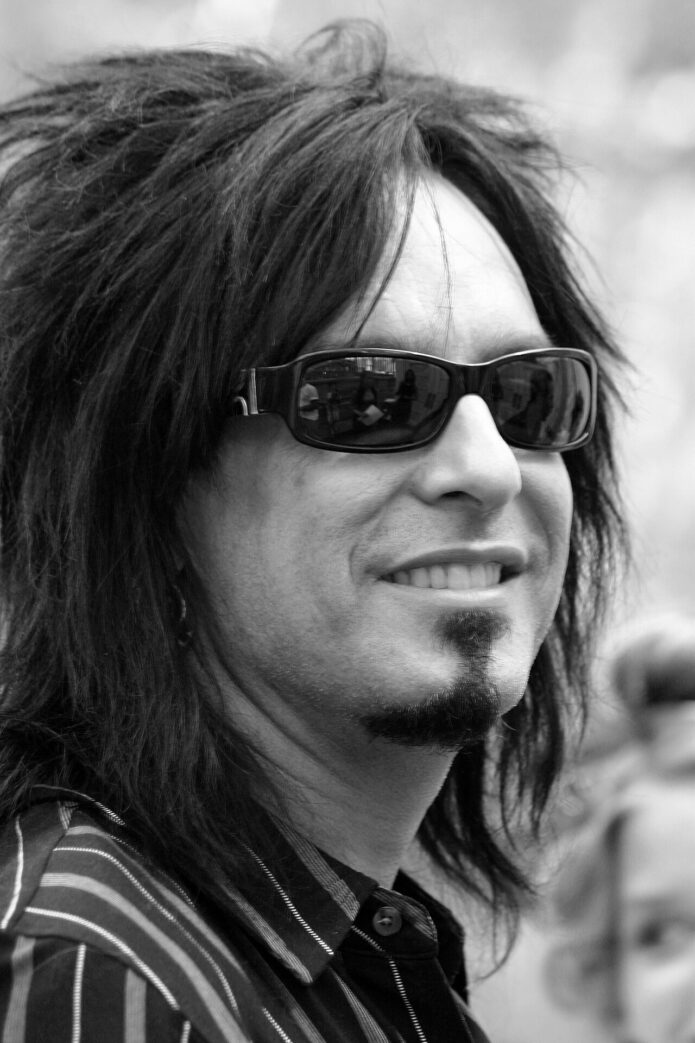
Nikki Sixx’s arms are covered in color, lettering, and old-school designs. His back tattoo is harder to see under clothes, so it draws questions too. Photos and interviews show a collection that has changed over the years he has played with Mötley Crüe and Sixx:A.M.
Some details are confirmed in interviews, including the 1958 tattoo and the existence of a back piece. Many sleeve designs are hard to name from stage photos, and Sixx hasn’t published a full list. This guide sticks to what’s visible and marks fan interpretations as uncertain.
The colourful sleeves that define his look
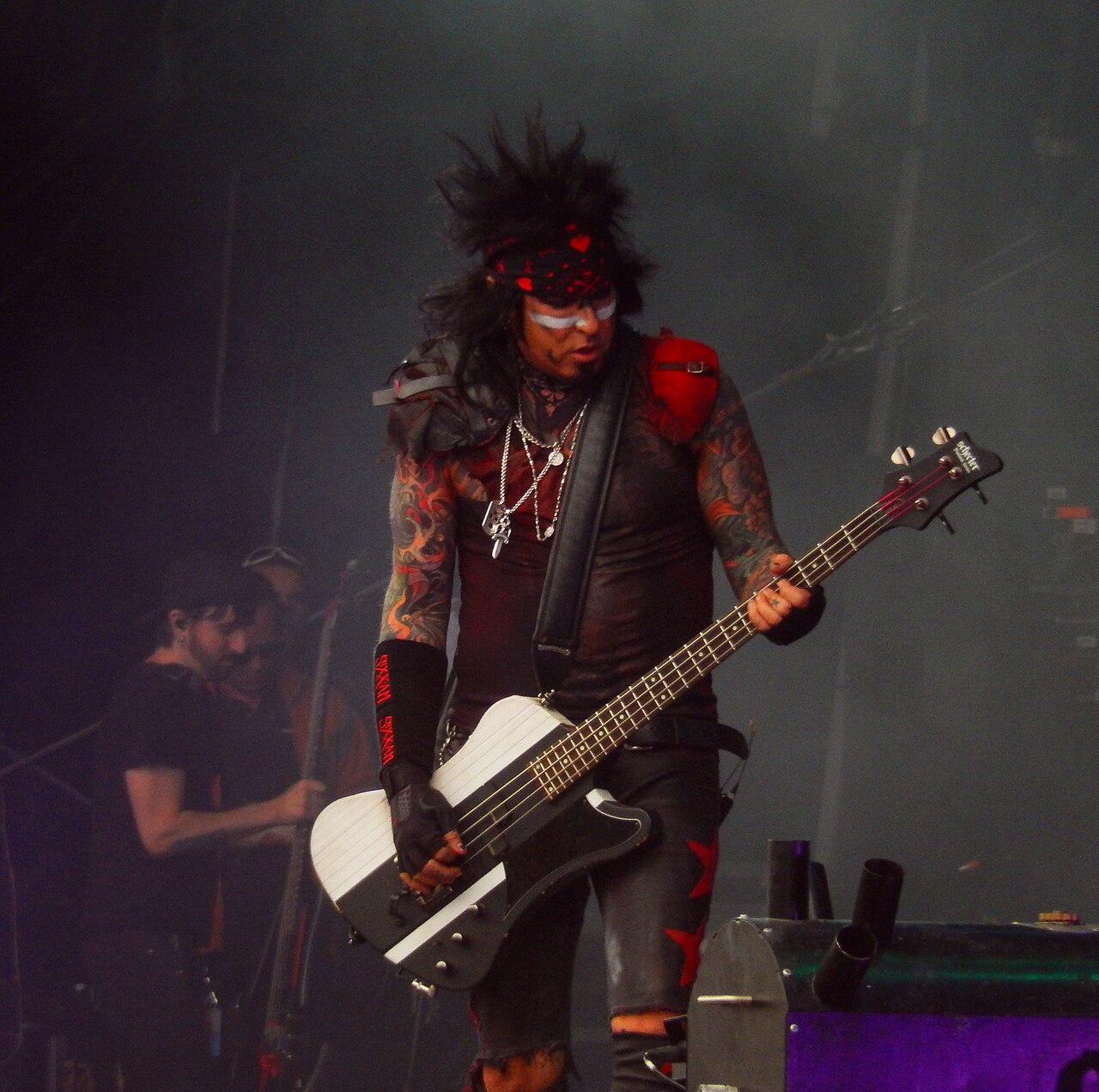
The most visible feature is the pair of dense sleeves from shoulder to wrist. They combine red, blue, green, and black traditional-style color with faces, lettering, skull-like shapes, and filler. Clothing can hide some of the edges, but the full coverage is clear.
Stage photos show several designs across each sleeve: a portrait beside a skull, with smaller marks around the elbow. His leather, chains, patches, and hardware add to the busy look.
Sixx has talked about tattoos as part of his personal history. The sleeves appear in photos from the Mötley Crüe years and later Sixx:A.M. performances. The designs have accumulated across different periods of his life.
The 1958 tattoo and the meaning fans can actually confirm
One tattoo repeatedly identified in coverage is 1958, Sixx’s birth year. The numerals can be easy to miss among the sleeve designs, but close photos show them clearly.
The date is straightforward, unlike some of the surrounding images. It refers to Sixx himself, without needing a more complicated explanation.
A clear date is easier to identify than a shape half-hidden by stage lights. The 1958 tattoo is one of the details that can be included with confidence.
The skulls, faces and traditional flash imagery
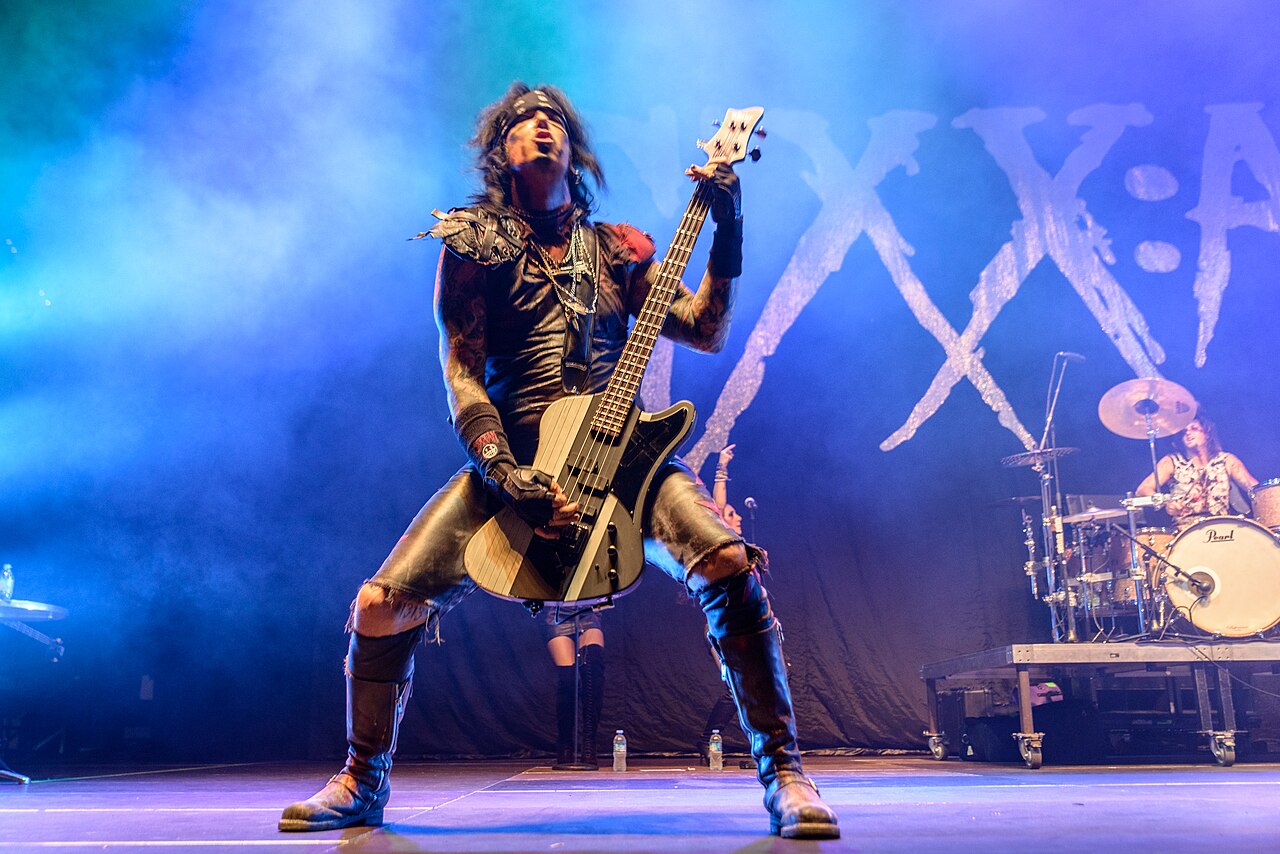
Skulls and faces recur across the sleeves. Some photos show rounded skull shapes, others portrait-like faces, and some designs have a theatrical look. Stage lighting can change their color; daylight reveals blue and green shading that gets lost in a club.
It’s more accurate to describe the overall mix than to name every panel: skulls, faces, lettering, and saturated traditional color. Sixx hasn’t published a full catalogue of the designs.
The skulls, faces, and bold color fit Mötley Crüe’s glam-and-horror image. The sleeves also appear in interviews and everyday photos, not only onstage.
The hidden back piece
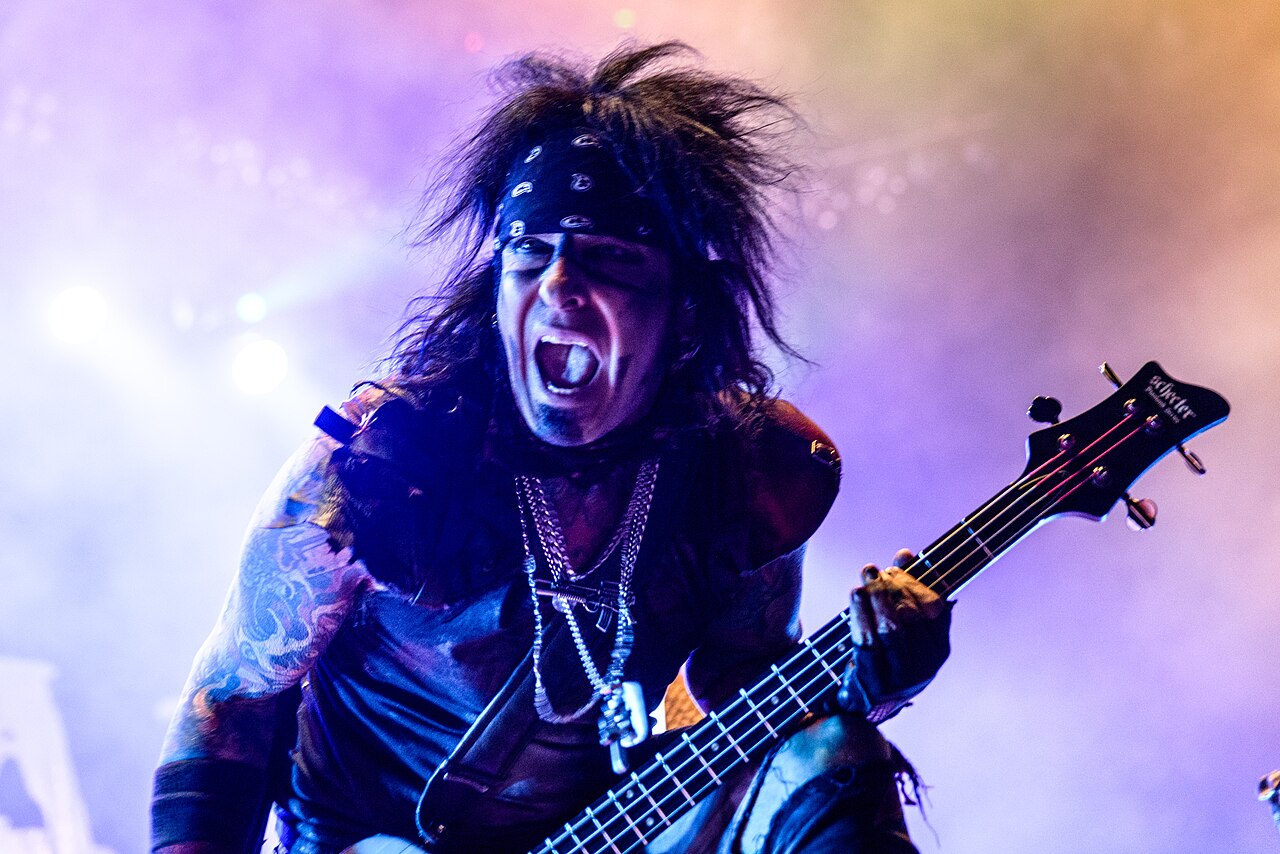
Sixx has pointed out that many people never see his back tattoo. Sleeveless stage clothes reveal his arms but usually leave the back covered. Some photos show an edge of the design; a complete view is rare.
Public photos suggest a large design in the same dark, illustrative style as the sleeves, but they don’t show the full image clearly. Fans have called it a skull wave or gothic scene; those are interpretations, not confirmed titles.
The sleeves are part of Sixx’s stage look; the back piece stays mostly covered and appears less often. It is seen on his terms.
How the tattoos look during a Mötley Crüe set
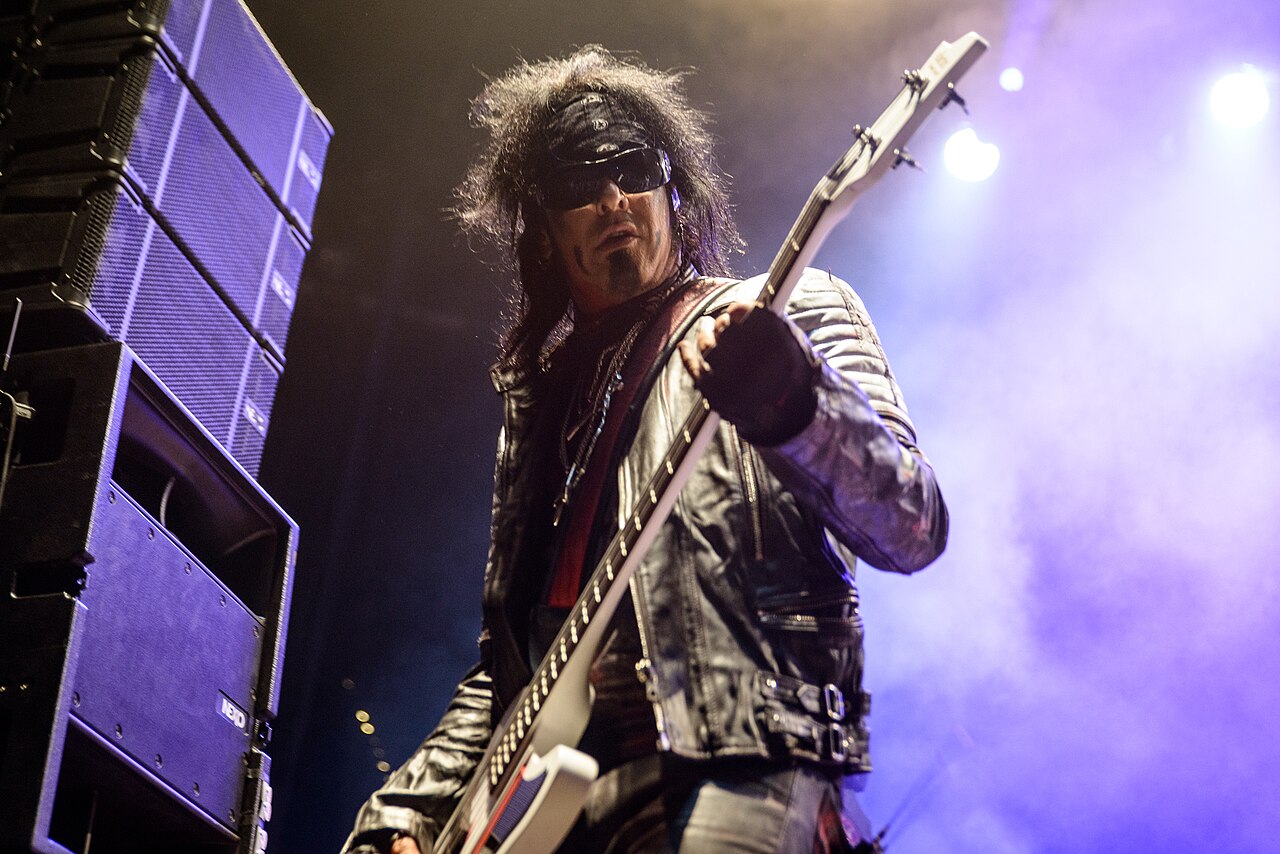
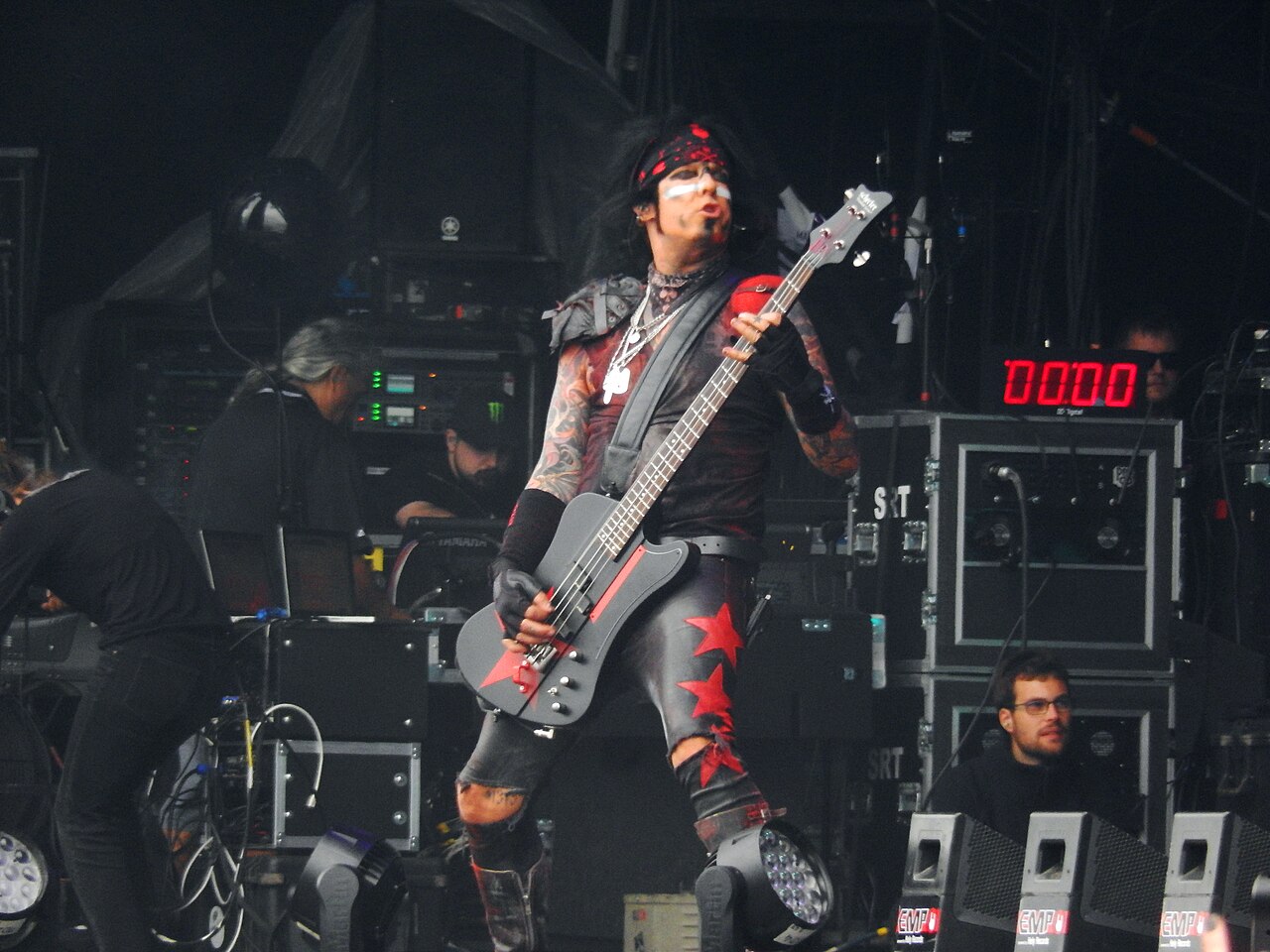
Different live photos reveal different parts of the tattoos. His bass may cover his torso while the sleeves are visible; a close crop can show lettering lost in a full-body shot.
Wristbands, gloves, straps, and the bass can cover parts of his lower arms. A different outfit doesn’t mean a new tattoo has appeared; it may simply reveal a section that was hidden before.
The coverage stays dense. Both arms read as full sleeves, with little bare skin in the visible sections. Older concert photos still show the contrast between dark outlines and red and blue color.
Sixx:A.M. photos reveal different details
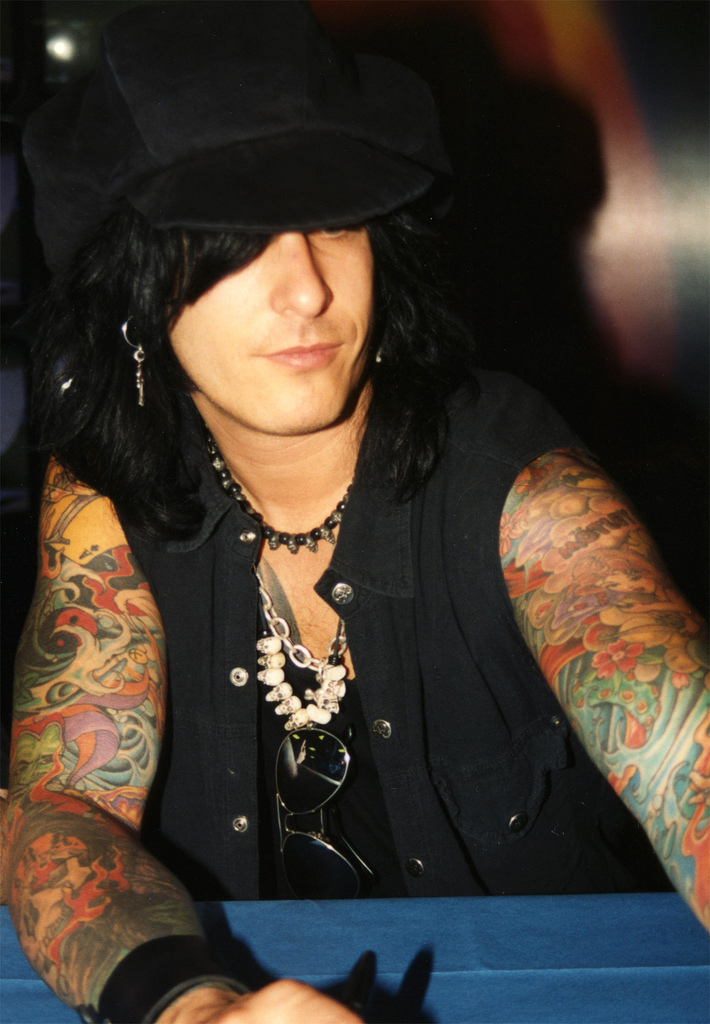
Sixx:A.M. photos show the same sleeves in a different setting. The camera often gets closer, making the lower arms easier to see. The designs aren’t new; the angle just reveals more of them.
Closer views reveal smaller symbols and narrow lettering between the larger color panels. They could be dates, words, or decoration. Unless Sixx has explained a mark, its shape and placement are all we can identify.
The photos also show that the tattoos stayed with Sixx across bands and decades. They are part of his look beyond Mötley Crüe.
What the interviews add to the picture
In the Billboard interview, Sixx and his Sixx:A.M. bandmates talk about choosing tattoos and how childhood, identity, and difficult periods can shape what people keep.
The interview offers context for why a sleeve can mix bold images with smaller personal references. The 1958 is clear; the back design remains harder to identify. Not every tattoo is explained publicly.
Fan tattoos also appear in searches for Sixx’s ink. Those tributes aren’t part of his collection. It’s important to distinguish the musician’s tattoos from designs fans have copied.
What is confirmed and what is still uncertain
The visible sleeves, the 1958 date, skull and face imagery, and a substantial back tattoo are well supported. The names of every sleeve panel, the full back design, and many small symbols remain uncertain.
Photos from different years show the sleeves as a dense, colorful part of Sixx’s life in music. Where a design’s meaning isn’t documented, its appearance is still clear.
The tattoos continue to change, and each photo shows a different section. Together, the sleeves show the music and style Sixx has carried across his career.
Watch Sixx:A.M. talk tattoos
In this Billboard interview, Nikki Sixx discusses his tattoos with his Sixx:A.M. bandmates.
One thought on “Nikki Sixx Wears His Life Across Both Sleeves”