
Cleo’s newest documented tattoo is a forearm portrait of Carlo Conti, shown in close photographs after Bambole di Pezza’s Sanremo Top appearance. It sits within an older black-and-grey sleeve, so the view changes with the camera distance.
The portrait and the visible 76 and 13 numerals can be described from the photos. The meaning of the numbers and the details of every older mark have not been publicly established.
Cleo’s arm is the starting point
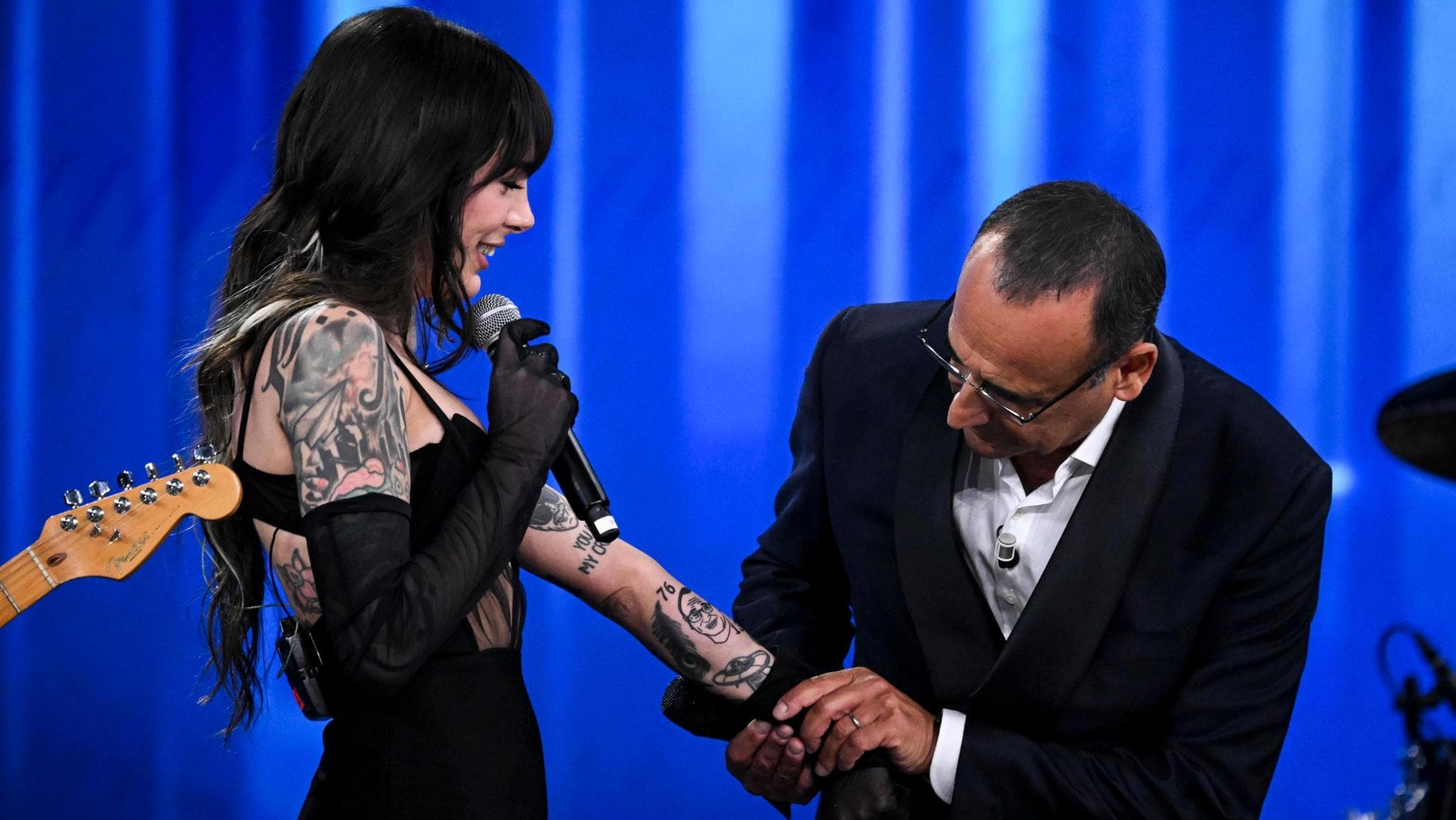
A wider photograph shows the arm as part of Cleo’s overall look. Black-and-grey shading runs across the sleeve and forearm; stage lighting and clothing hide some edges, but the coverage is clear.
The Carlo Conti portrait isn’t on an empty forearm. It shares space with older ink, which makes it stand out in a close crop and blend into the sleeve from farther away.
The new tattoo is a portrait of Carlo Conti
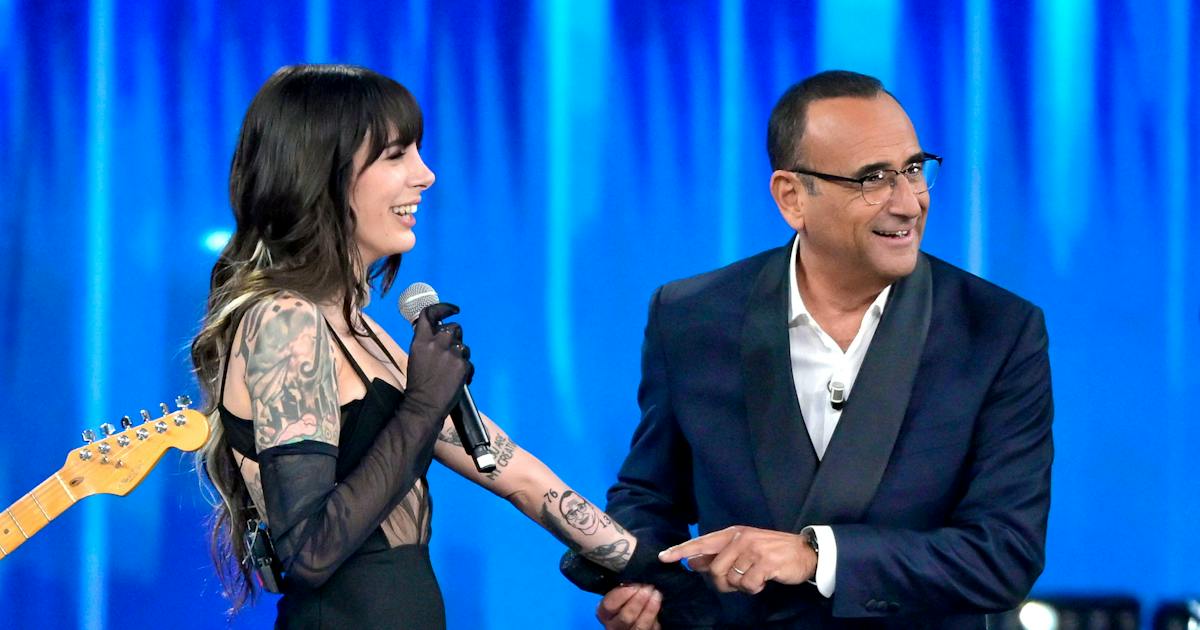
Reports around Bambole di Pezza’s Sanremo Top appearance identified the portrait as a new tattoo. The close photo shows a face rendered as a portrait, rather than a simple outline or symbol.
Up close, the face is the arm’s focal point. At a wider distance it merges with the surrounding black-and-grey work. Both views help explain how the portrait sits in the sleeve.
The visible 76 and 13 numerals
The visible numbers 76 and 13 frame the portrait. They are part of the design, but the photos and reporting don’t establish what they refer to.
A number can look personal without its meaning being public. The grounded description is that 76 and 13 appear beside the portrait; a birthday, date or private code would be speculation.
One new tattoo, several photographic views
The images show the same arm at different distances and in different settings. Compare the portrait, numerals and sleeve edge to follow one tattoo across the views, rather than counting each angle as another piece.
Older black-and-grey tattoos surround the portrait. Some shapes remain visible, but the photos don’t show enough to name every motif with confidence.
The older black-and-grey sleeve around it
The new portrait draws attention because it sits against a substantial existing sleeve. That context affects both its contrast and the amount of open skin around it.
Cleo, whose full name is Martina Cleo Ungarelli, is the lead vocalist of the Italian band Bambole di Pezza. The tattoo appeared in performance and interview coverage, not just a posed studio shot.
Cleo away from the close-up

A contextual image helps identify Cleo and the setting; it isn’t evidence of another tattoo. The ink details come from the close and wider arm photos.
The Sanremo Top appearance brought the portrait into wider view. Reports said Cleo revealed the fresh piece after a pre-show promise connected to Carlo Conti; that explains the timing without adding a private motive.
Why the Sanremo Top appearance matters

Stage lights flatten some shading, movement changes the forearm angle, and clothing covers parts of the sleeve. A close frame is best for the portrait; a performance shot shows the occasion.
Wider photographs confirm that the portrait belongs to a heavily tattooed arm. They show its scale within the sleeve, not a complete catalogue of Cleo’s ink.
What the wider photographs actually confirm
Distance softens smaller details and some parts are covered. The photos support a clear account of the portrait and surrounding coverage, rather than a name for every mark.
On stage, movement and uneven light make the sleeve read as a field of dark and light before individual details stand out. The portrait is clearer when the camera moves closer.
How the sleeve reads on stage

The performance photos help with placement and scale, but they don’t show another tattoo. They show the same arm in motion and alongside Cleo’s stage clothes.
The available record confirms the Carlo Conti portrait, 76 and 13, and older black-and-grey work. It doesn’t identify the artist, the date of each earlier piece or a private meaning for every shape.
What remains unknown about the older ink
Those gaps are normal when tattoos are documented through scattered performance photos. A close angle may clarify one design while hiding another; a full inventory would need clearer images.
The forearm gives a portrait room to read while keeping it connected to the sleeve. The close view isolates the face; the wider view shows how it sits in the surrounding shading.
What the placement says about the composition
That balance can be useful when planning a portrait tattoo: it can remain legible without looking separate from older work. In Cleo’s photos, the contrast makes the face stand out while the sleeve ties it in.
For inspiration, focus on the relationship between the portrait and existing ink rather than copying the exact design. Its visibility changes with distance, but the placement works in both close and wide views.
The cleanest way to read Cleo’s tattoos
Start with the sharpest photo to identify the portrait and numbers. Then use a wider arm view to see how they meet the old sleeve, and performance images for setting rather than extra tattoo claims.
That sequence keeps the evidence straight: close views show detail, wider views show placement, and contextual images show the event where the tattoo became public.
The short version
The clearest account is a Carlo Conti forearm portrait framed by visible 76 and 13 numerals, added to Cleo’s older black-and-grey sleeve. The photos show how the piece reads at different distances.
The numbers’ meaning and the finer details of earlier tattoos remain unexplained in the available record. The guide can leave those questions open and still show how the portrait fits the arm.