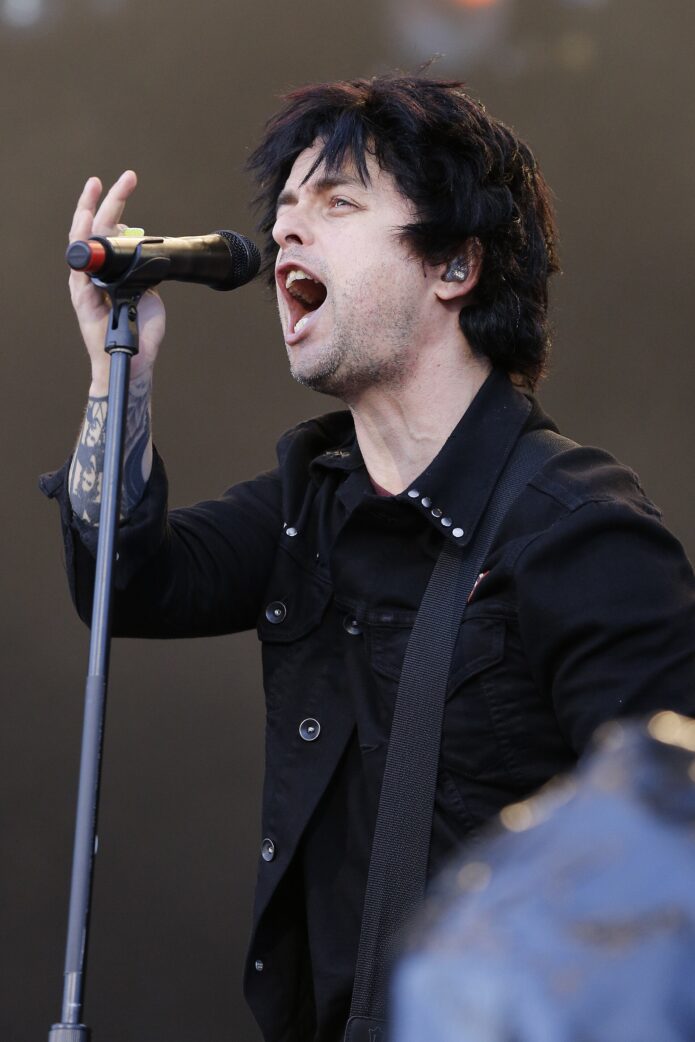
Billie Joe Armstrong’s tattoos feel like a punk-rock scrapbook. They don’t form one carefully matched sleeve. The designs range from band history and family to East Bay identity, old-school flash and Green Day imagery. A vintage car sits alongside skulls and cards; names and initials share space with stars, portraits and smaller symbols. The collection looks lived in, not planned for one photo shoot.
Armstrong has talked about his tattoos in interviews, which makes it easier to trace how they accumulated. Some came when he was young; others were added with bandmates or to mark people and places that shaped him. Each one points to a song, a friend, a neighborhood or an earlier version of himself.
Lists sometimes put the total at forty or more, but the number depends on whether small symbols and matching designs are counted separately. This guide focuses on tattoos that are documented and the stories attached to them, without treating every repeated photo as a new piece.
The chest pieces set the tone
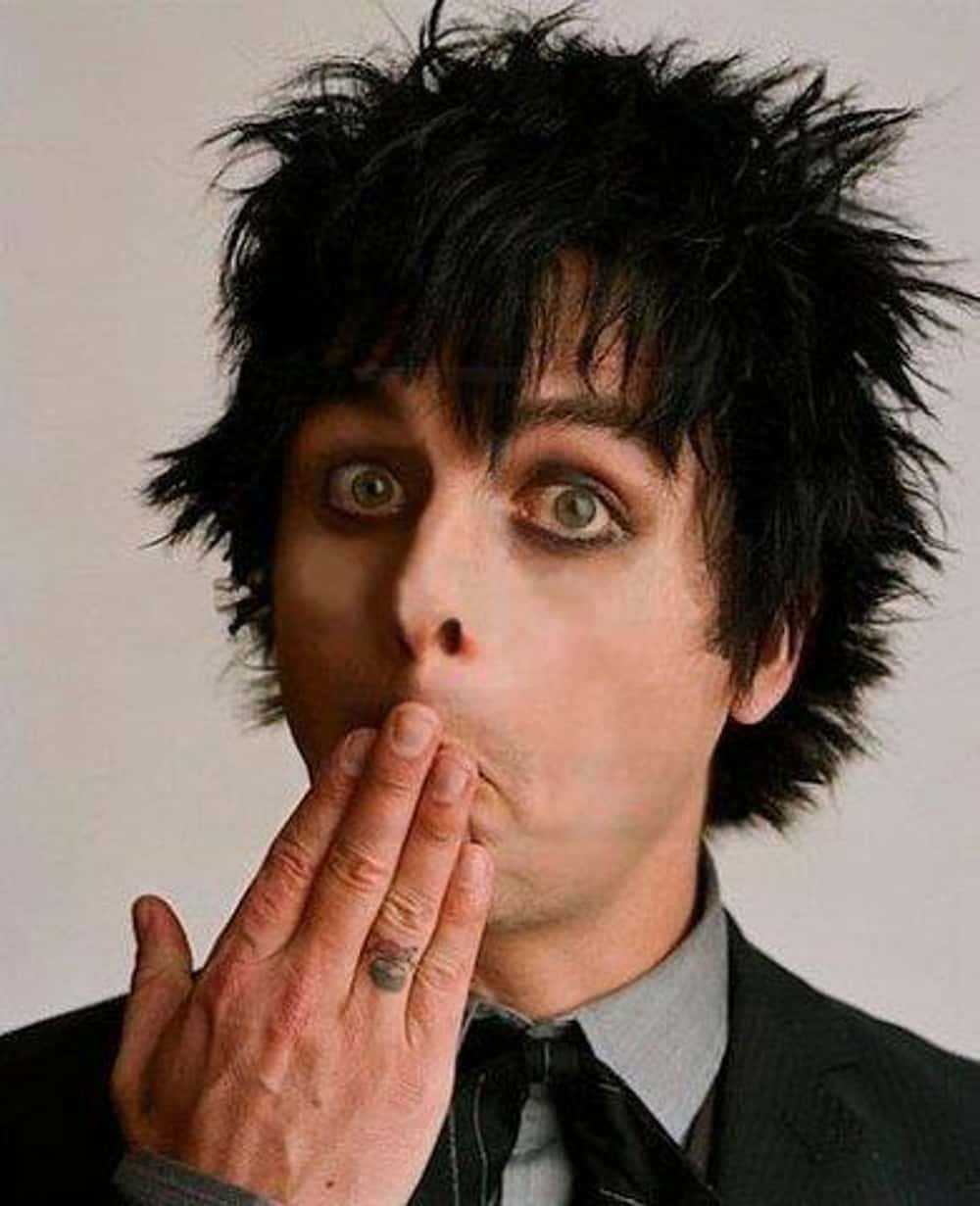
Some of the designs that define Armstrong’s collection sit on his chest. One photograph shows a skull and playing cards, a classic pairing with an old-school, restless feel. A vintage car is another prominent image, fitting the collection’s interest in Americana, movement and rockabilly art.
These are larger and more illustrative than the names and small symbols on his arms. They give his torso a focal point, with room for other pieces around them. The chest tattoos can stay covered under a shirt, then become part of the stage image when it opens or comes off during a show.
The skull and cards suggest risk, chance and punk attitude, though the available reporting doesn’t give one official explanation for every detail. A tattoo can carry a mood without a formal meaning for each line. This design leans into the vintage, slightly dangerous side of Armstrong’s style.
The car has a different feel, bringing to mind travel, speed and American music imagery. Together, the chest pieces feel like two parts of the same collection: one dark and theatrical, the other nostalgic.
East Bay punk identity is written on the skin
An important part of Armstrong’s tattoo story is his connection to the East Bay punk scene. Interviews and other coverage identify an “EBPM” tattoo, commonly understood as East Bay Punk Mafia. Armstrong has said he got it with people in his circle because the phrase stood for the local punk community that shaped him.
That’s more than a place name. The East Bay gave Green Day a musical scene and a network of relationships. Tattooing that identity on his body makes it part of the foundation, not a chapter left behind when the band became famous.
Other scene-related designs point back to a time when bands, venues and friends were linked by proximity and shared energy. To someone outside the scene, a tattoo may look like lettering or a small logo; to Armstrong, it can function like a map.
There’s a difference between getting a brand and keeping a memory. His best-known punk tattoos lean toward the latter, preserving a community that existed before the arenas and stadiums.
Adeline Street and the band’s visual world
Armstrong has tattoos associated with Adeline Street, the clothing and lifestyle brand connected to the Green Day circle. Its logo appears in lists of tattoos on his right arm, alongside other designs tied to the band’s creative world. Like the East Bay lettering, it says something about belonging as well as appearance.
Adeline fits at the crossing of fashion, music and neighborhood culture, where much of Green Day’s visual world has lived. The tattoo can be read as a marker of the people and ideas around the band, not just commercial branding.
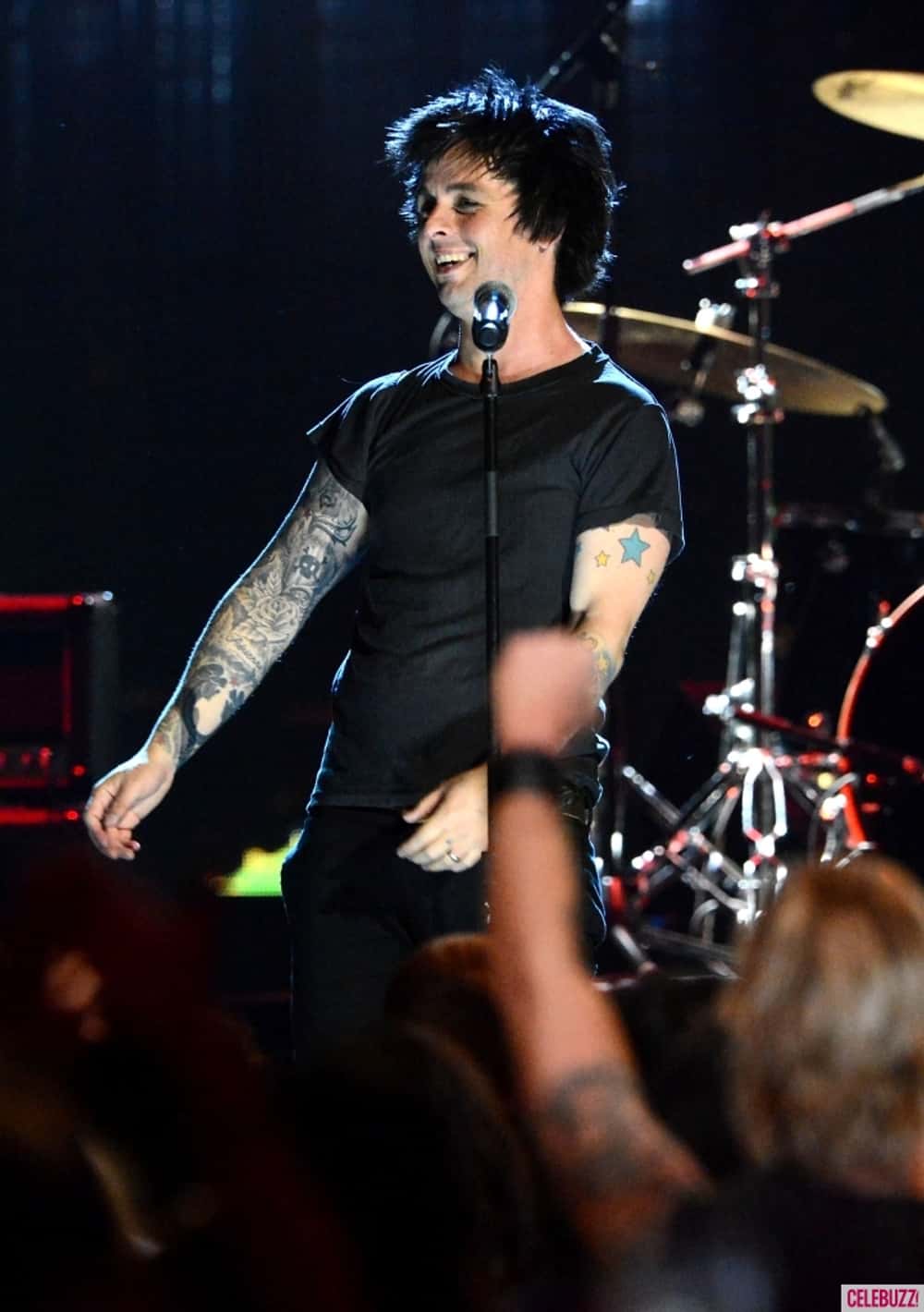
Colored stars also appear in photos. Stars are a familiar motif, but on Armstrong they add a bright note to the black line work, lettering and darker images. They can suggest performance, ambition or luck, though there’s no need to give every star its own secret meaning.
Together, the logo, stars and smaller marks give his arm a layered look. It’s less a single statement than a wall of gig posters, stickers and old photographs, with each piece pointing to a different part of his story.
Names, portraits and family references
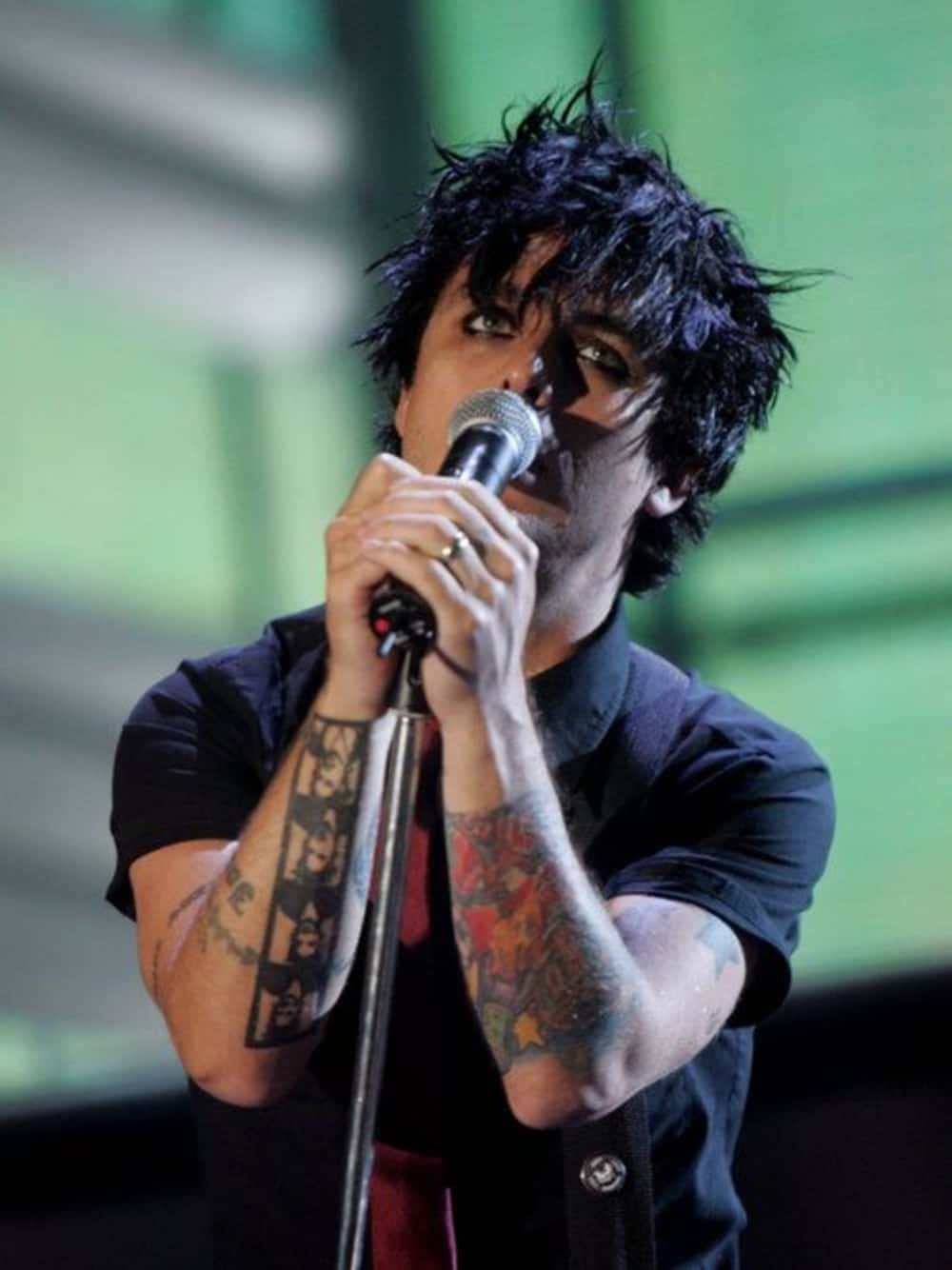
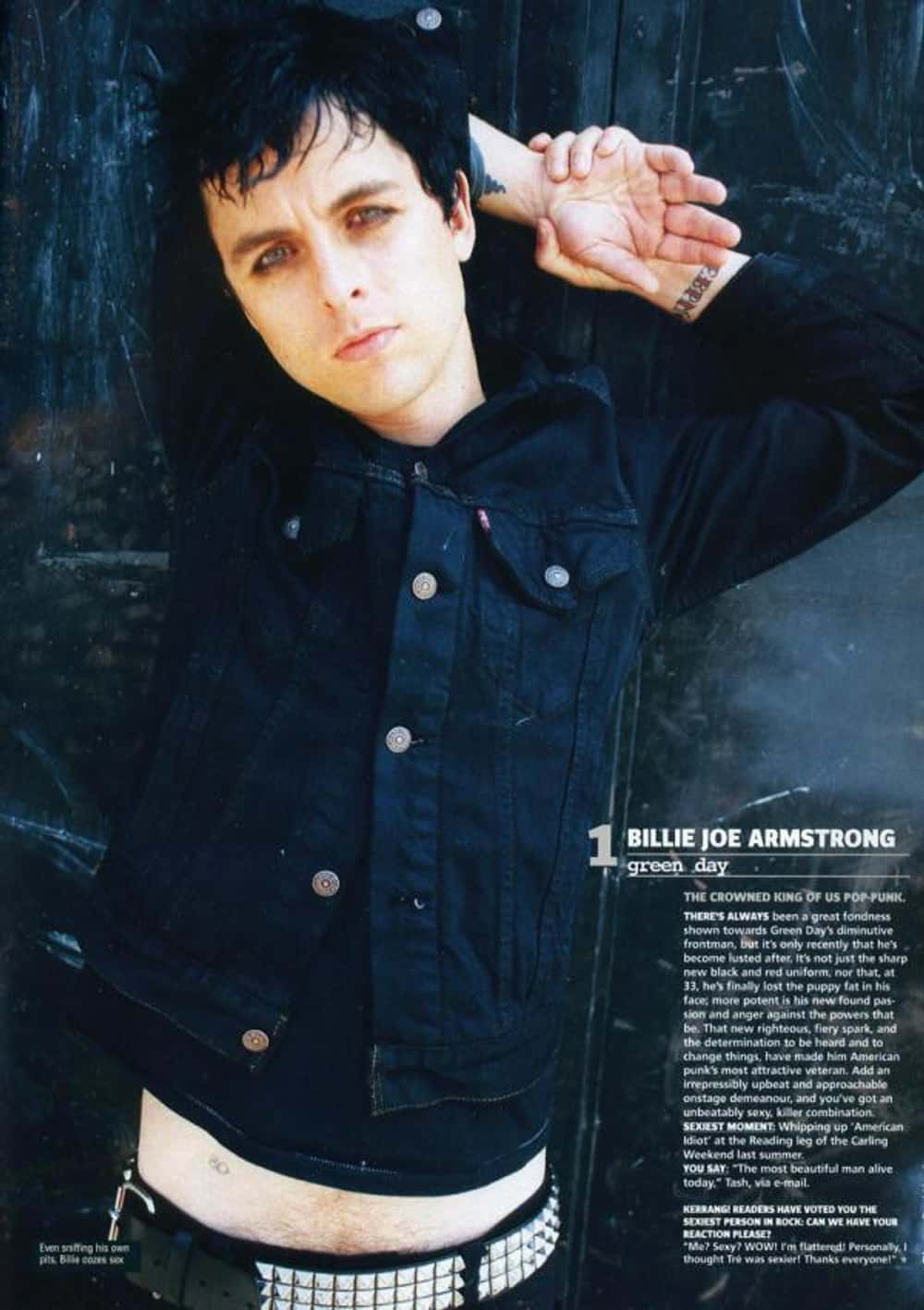
Armstrong’s collection includes names and portraits linked to family and close relationships. Tattoo lists mention Adrienne’s portrait, the name Joseph and an image of Jesus among the work on his right arm and upper body. Some details are clearer in certain photos, but the pattern is plain: people matter alongside logos and symbols.
Names are direct tattoos. “Joseph” can be read immediately, while a portrait depends on the viewer recognizing the person. Both fit Armstrong’s preference for designs with a personal anchor.
Portrait tattoos can also change meaning over time. A face on the arm can serve as a daily reminder of a relationship or influence. For a musician whose work returns to memory, anger, friendship and growing older, that feels consistent with the songs.
The arms and hands are also where the collection looks most crowded. The chest can hold a few larger images; smaller pieces accumulate on the arms. The result feels more like a journal than a poster.
PUNX, 80 and the small marks that fans recognize
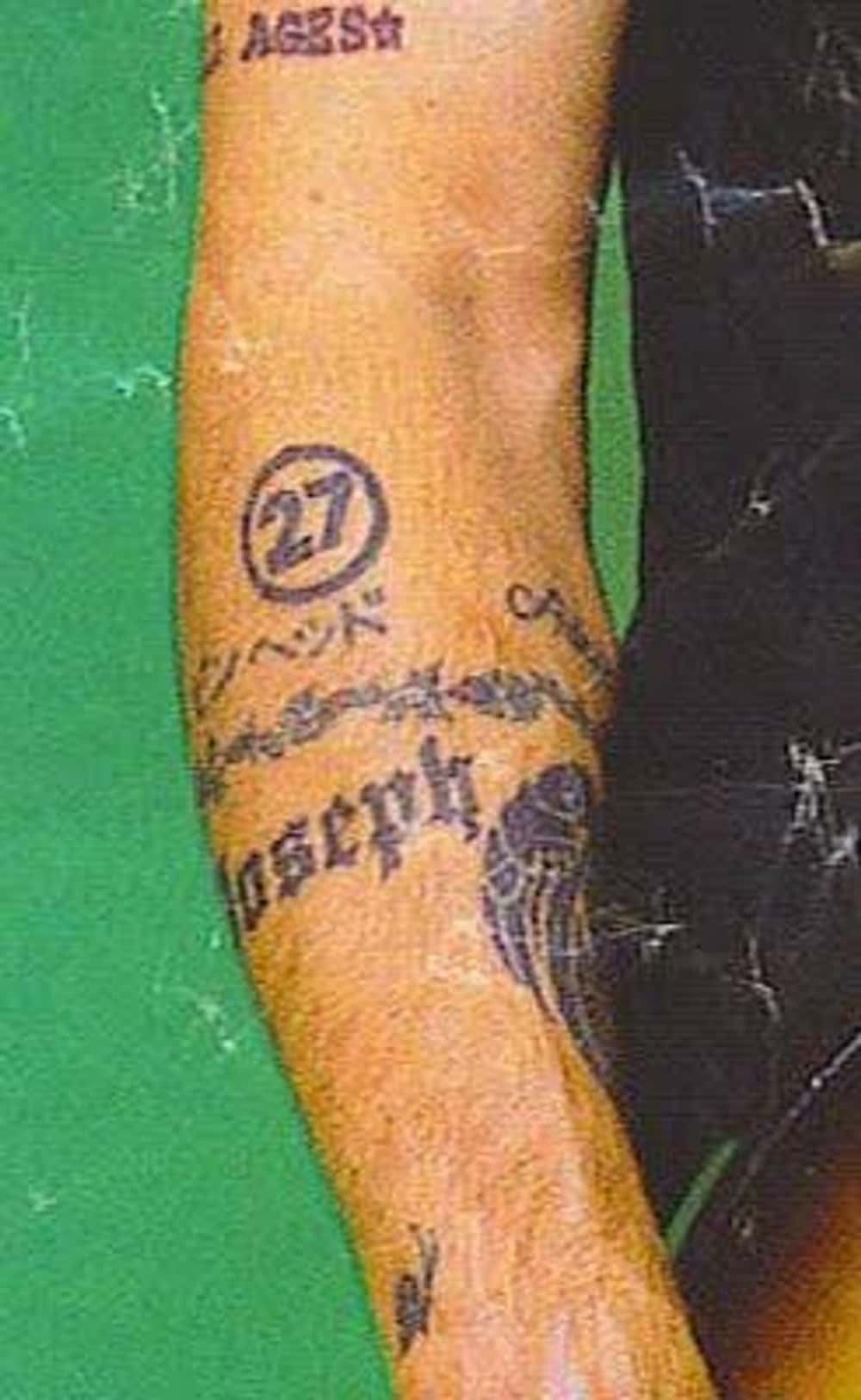
Close-ups and tattoo inventories identify lettering such as PUNX and 80. Short words and numbers are common in punk culture because they can work like code: a few characters can signal a set of values without spelling everything out.
“PUNX” is plain and defiant. “80” is sometimes connected to the early punk era, though sources vary in how confidently they explain the number. It’s safer to identify what’s visible and label the reported connection than to turn a short number into a biography without a clear quote.
These small designs help explain why the total is hard to settle. A portrait is easy to count. A number, a pair of stars or a logo may disappear under a wristband, then show up in another photo. Different galleries group the tattoos differently.
For fans, that leaves something to look for. A new photo can reveal lettering that wasn’t visible onstage or show how two separate designs sit beside each other.
From first tattoos to a full punk archive
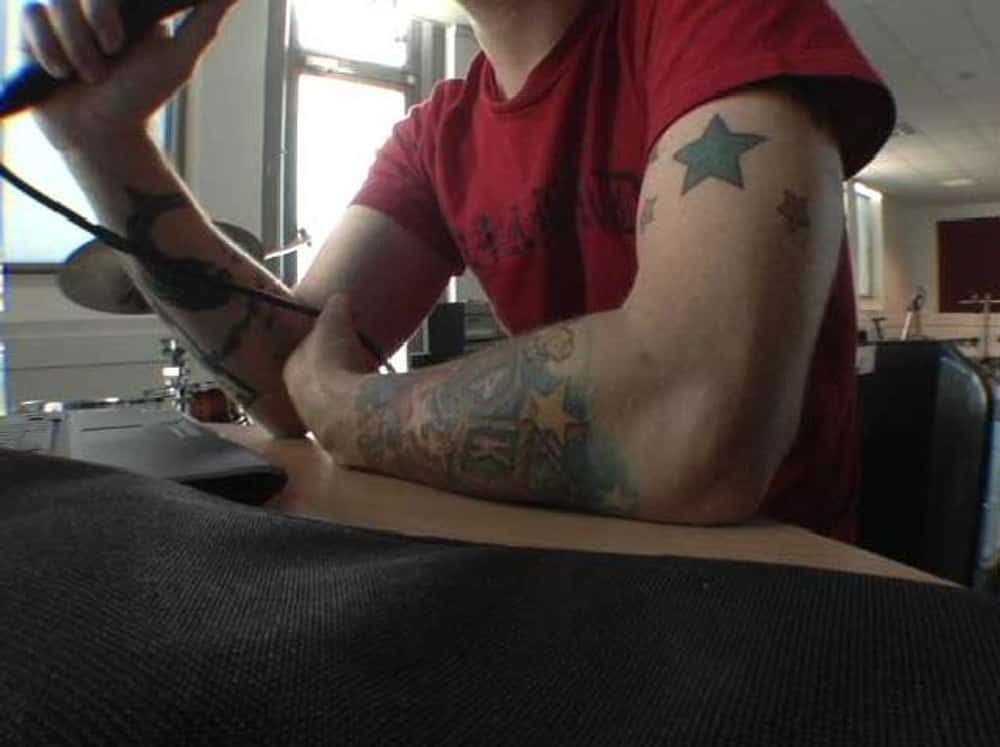
Armstrong has said he started getting tattooed young, including an early Madball-related design in Memphis when he was eighteen. That gives the rest of the collection a starting point: the tattoos were part of the punk life he was building, not an image he adopted after becoming famous.
The early context helps the later designs feel connected. Chest imagery, East Bay lettering, the Adeline logo, names and small symbols all belong to a visual language that grew over time. Some pieces are personal, some communal, and some are simply art he liked, but they sit in the same world.
Adding tattoos for decades also means taste changes. Old flash sits beside newer line work; a band reference shares space with a family detail; a bright star can sit next to a dark skull. The collection doesn’t need to be perfectly consistent, because a life isn’t perfectly consistent either.
That is what gives Armstrong’s tattoos their character. They aren’t a trend board. They’re a visible archive of the people, communities and styles that stayed with him.
How to read Billie Joe Armstrong’s tattoo collection:
The clearest documented pieces include the vintage car and skull-and-cards chest work, East Bay Punk Mafia lettering, Adeline Street imagery, colored stars, PUNX and 80, portraits and names linked to family and close relationships, and smaller symbols visible in arm and hand photos.
Some guides identify individual designs such as Jesus, Joseph, 27 and other short references. Check those against clear photos: small lettering can be misread in mirrored or heavily edited images. It helps to distinguish a tattoo that appears repeatedly from a detail seen once in a low-resolution crop.
That care doesn’t flatten the story. It shows how Armstrong’s tattoos connect Green Day’s public history with familiar things: a local scene, friends and family, a favorite style, and memories of being young in a band.
His ink is punk history made personal. Some designs are loud, some stay covered, and some make the most sense when you know the people and places behind them. Together they show why he keeps adding to the collection.
Watch Billie Joe Armstrong get tattooed
This short video offers a look at Armstrong getting inked and complements the photo guide with a bit of his own perspective.