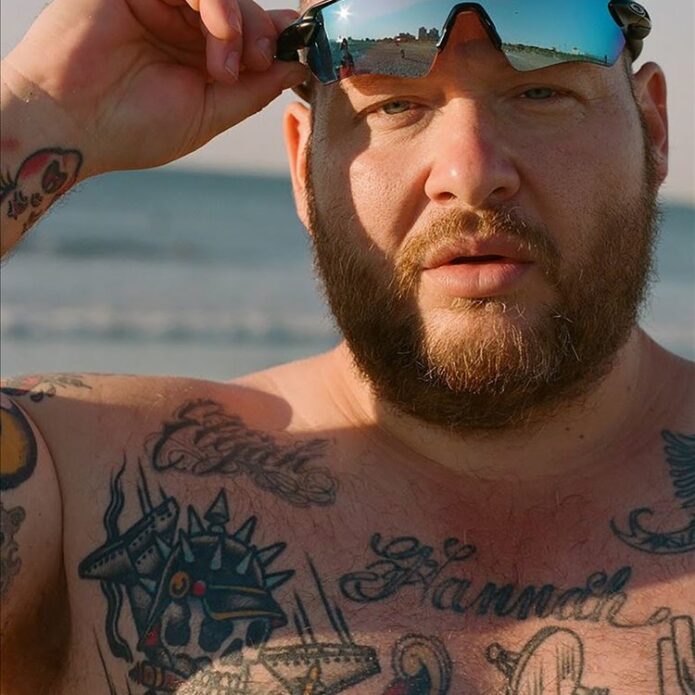
Action Bronson’s tattoo collection is hard to take in from a single photo. His daughter’s name crosses his chest, a 1995 BMW sits on his forearm, a huge castle covers the back of his head, and his legs hold a mix of animals, sports references and jokes. He has also spoken candidly about designs he loves, ones he covered and tattoos he considers bad decisions.
GQ’s tattoo tour gives the clearest personal detail. XXL repeats some of those stories and adds context around the head tattoo and gorilla cover-up, while an older GQ.co.uk interview identifies the BMW and smaller hand pieces. The descriptions below stick to those sources: a visible tattoo does not automatically come with a meaning Bronson has never given it.
His daughter’s name was the first tattoo
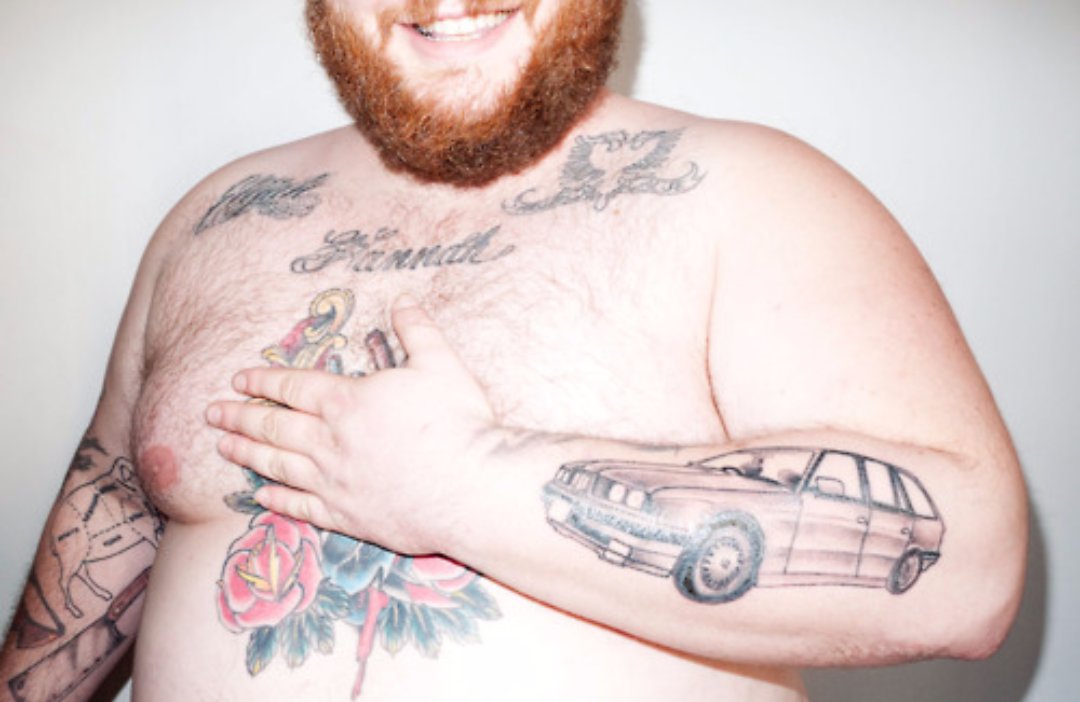
His daughter’s name was the first tattoo Bronson chose, giving his chest a clear starting point. It is a direct family reference rather than an abstract symbol. The name sits where it can be seen in a shirtless photo, while later work has grown around it. That first choice was personal before the skulls, flowers and traditional designs filled out his torso.
Bronson has said he waited several years after getting his daughter’s name before he began collecting more tattoos. The timing is useful: the chest lettering was not the start of a carefully planned bodysuit. It came first, and the larger collection followed through different interests, artists and stages of his life.
The chest is also a good example of why the tattoos deserve separate descriptions. Roses, hearts, skulls and animals can sit close together without sharing one meaning. Bronson explained the story behind his daughter’s name; the nearby designs can be described by their appearance and location without assigning them a private message.
The BMW 5 Series keeps a career milestone on his forearm
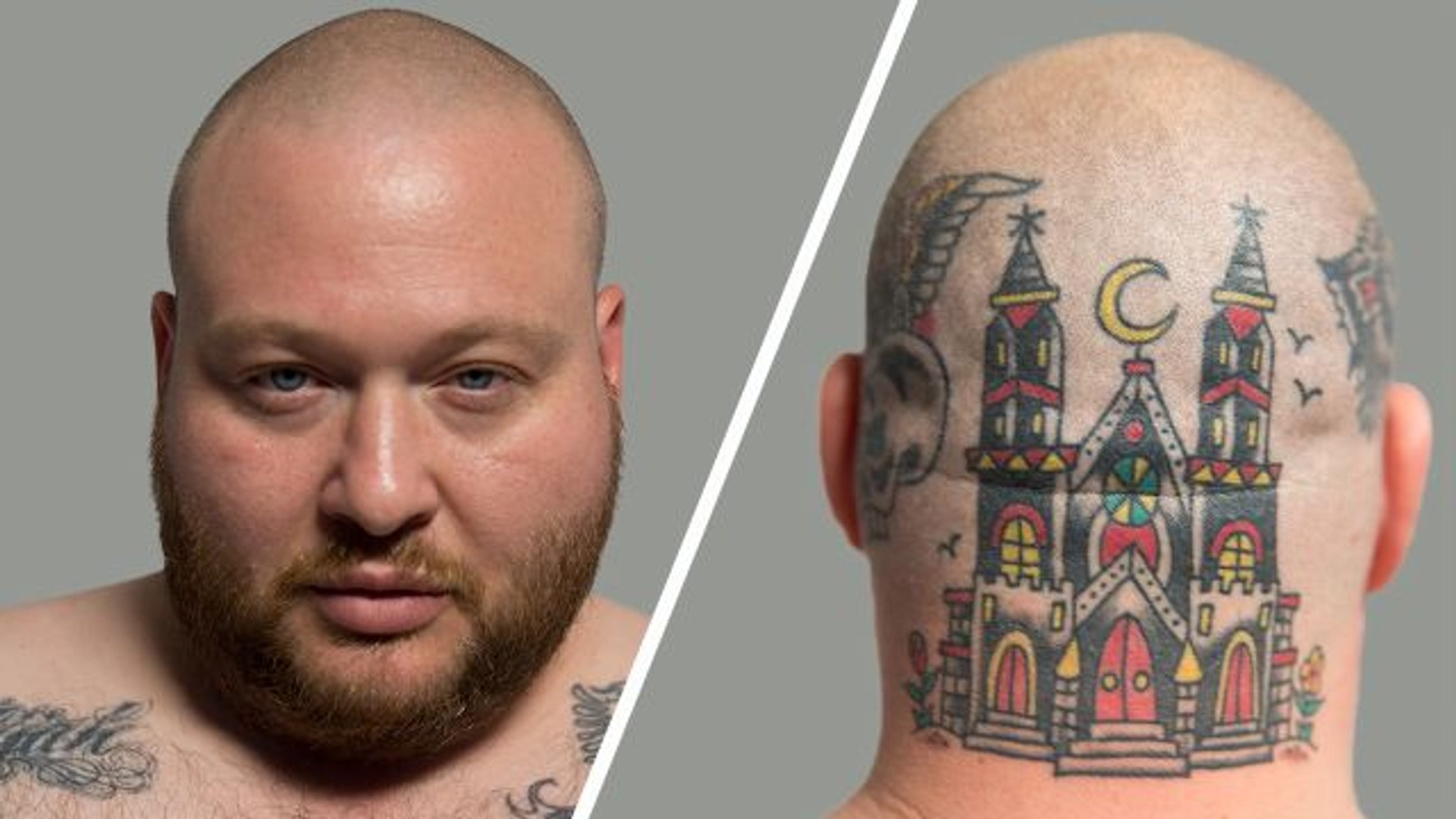
The BMW 5 Series on the forearm is one of the most specific tattoos in Bronson’s collection. He has connected it to the first car he bought with money from rap. It marks a real point in his career, when music let him buy and modify a car he had long been interested in.
The forearm is a practical spot for the design: it can be seen without taking off a shirt and appears while Bronson performs, cooks or speaks to a camera. A close photo makes the outline easier to read than a full-body shot. His explanation tells us why this model matters; the image shows where it is and what can be seen.
Bronson often talks about engines, suspension and older cars, adding context to this tattoo. That does not mean every other automotive detail on his body has the same origin. It is best to keep this design tied to the explanation he gave rather than turn it into a theory about the whole collection.
The castle and skull designs cover the head and neck
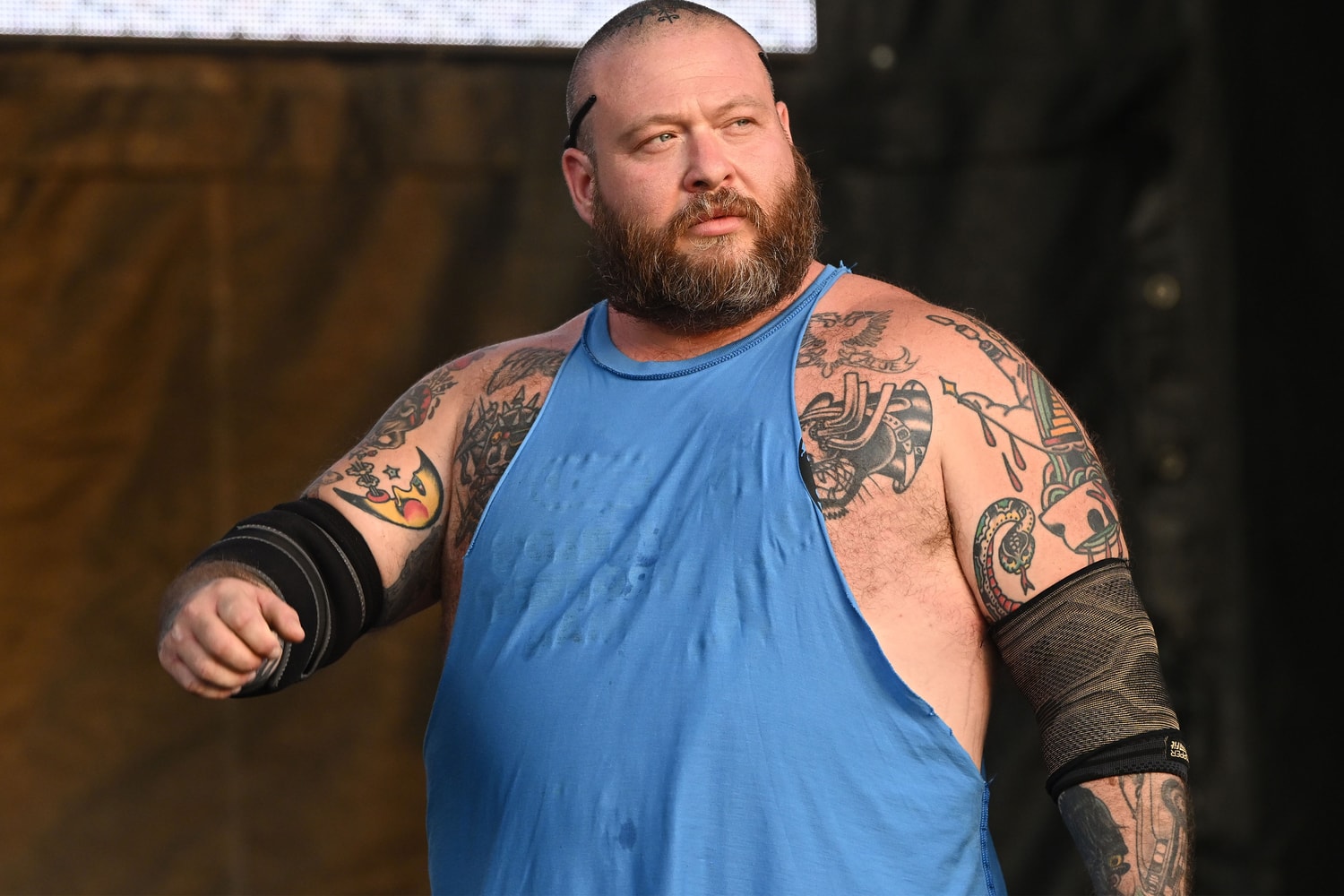
The castle on the back of his head is his most dramatic tattoo by placement. Video coverage shows a large, colourful structure across his scalp and neck, with towers, windows and a moon-like shape. It reads like a fantasy scene rather than a small emblem. A rear view is essential because the design disappears when Bronson faces the camera.
Head tattoos change what a photo can show. A front-facing image may capture Bronson’s face and chest but miss the castle; a rear shot reveals the castle while hiding his hand tattoos. The eagle, skull and wolf mentioned in coverage should be described as separate pieces, not rolled into one vague head design.
The eagle has been discussed as a symbol of freedom, while the skull and wolf are mostly supported by visual descriptions. That distinction matters. Bronson’s own explanation is the best guide to a design’s meaning, but a clear photo can still show the colour, outline and placement of a piece he has not discussed at length.
Gorilla, Arabic lettering and hand tattoos tell smaller stories
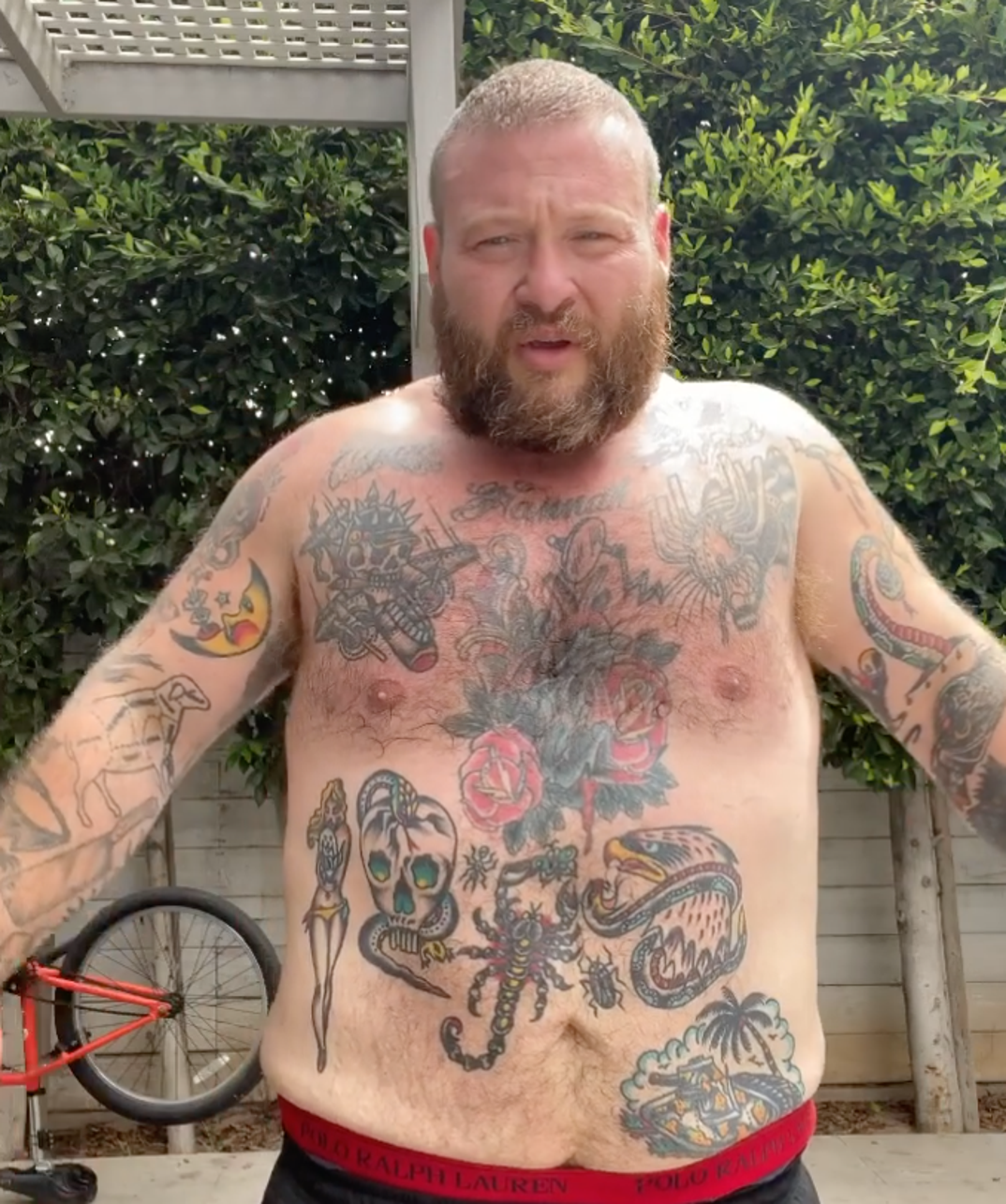
The gorilla is a cover-up, and Bronson has been candid about it. He disliked the tattoo beneath it enough to cover the spot with a gorilla. That history gives the design two parts: the original choice and the later decision to hide it. A cover-up should not be described as untouched original work.
His hands have smaller designs, including an alligator or crocodile and a Zeus. An older interview also mentions Arabic lettering and a tiny moustache on one finger. The marks can disappear when Bronson moves his hands or wears gloves, so a sharp close-up is more helpful than a stage photo. They also show that he has kept imperfect tattoos instead of making the collection fit a polished theme.
The hand tattoos are hard to date precisely. Bronson has added, changed and covered designs over the years. If a mark is missing from one photo, that does not prove it was removed; a dark spot near a knuckle is not enough to confirm a new design. The safest account sticks to what a clear photo or interview supports.
The leg tattoos carry dragons, wolves, eagles and a strange pizza tribute
Bronson’s legs are where the collection gets especially playful. Reports describe a DMT-style archer, a traditional dragon, a wolf, a bat with a skull, and an eagle on his knee that he jokes about as “Kneagle.” There is also a Godzilla-versus-Barkley tattoo tied to a poster he kept at home. The subjects draw from fantasy, sports, movies and humour.
A pin-up holding his dog Coco has also been described as a personal design. The relationship behind the image is the useful detail, rather than some universal meaning attached to pin-up tattoos. The photo shows the pose and placement; Bronson’s comments connect it with his girlfriend and dog.
The pizza tattoo is a different sort of joke. It combines Bronson’s face and his love of food in a deliberately silly design, pairing his likeness with a slice of pizza. It is easy to dismiss as a novelty, but it also fits the way he mixes cooking, rap, cars and humour in public.
Each tattoo works best as its own decision. Bronson’s ink ranges across family, cars, animals, music history and jokes. The clearest descriptions name a design, identify its location and use a source when explaining why it is there.
The variety comes through most clearly in the photos. His daughter’s name is legible, the BMW can be recognised as a specific model, and the head tattoo changes the outline of a portrait. The smaller hand marks and leg pieces call for closer views, especially when clothes or stage lighting hide part of them.
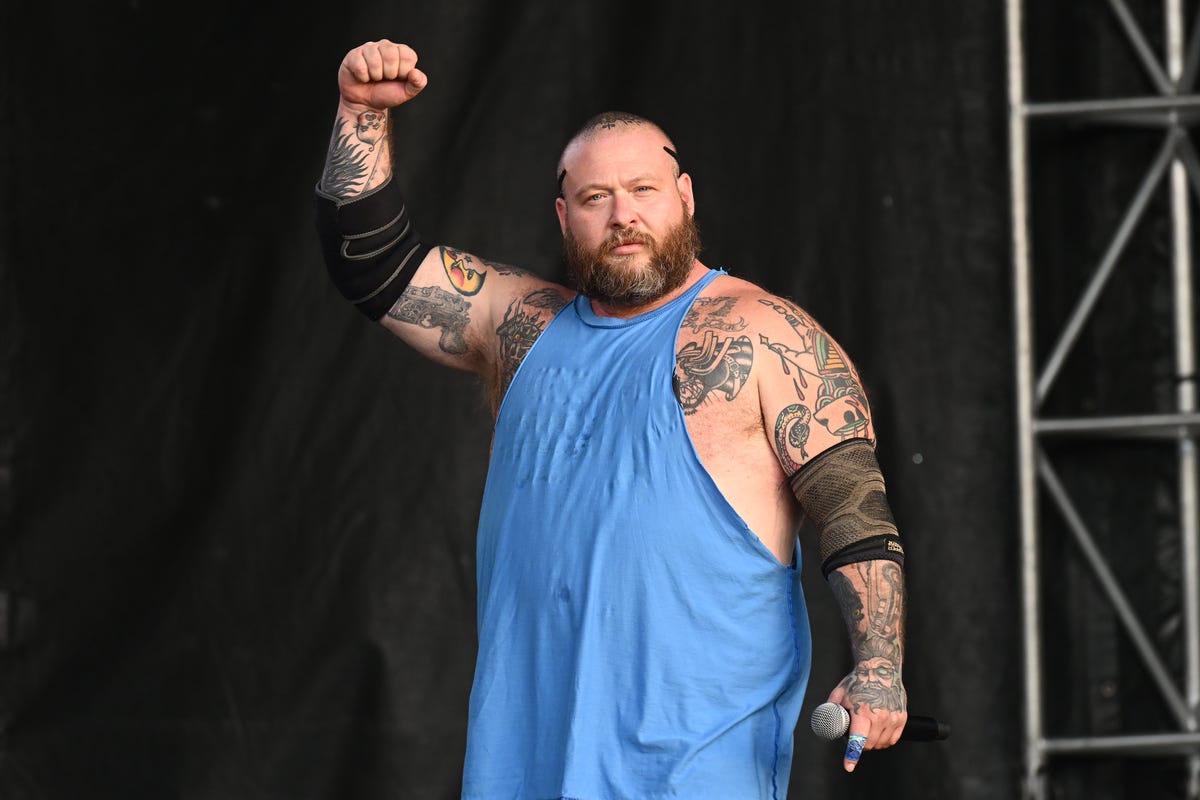
That is why there is no single permanent count here. Bronson’s tattoos span his chest, forearms, hands, head, stomach and legs, and photos from different years show different stages. A later cover-up can change what is visible without erasing the fact that an earlier design was there.
The most useful descriptions stay concrete: name the tattoo, say where it sits, include the documented reason and show a genuinely different photograph. That keeps the writing lively without turning uncertain details into confident claims. Bronson’s own humour brings enough personality.
A tattoo can matter to Bronson and still be difficult to photograph. The daughter’s name matters because he has explained it; the model of the car is easy to identify. A tiny moustache or hand symbol might be visible without a confirmed backstory. That does not make it irrelevant; it just calls for a visual description.
The older interview is useful for the same reason. Bronson jokes about designs he regrets, while also confirming that a cover-up happened and that he remembers the original tattoo. The timeline can stay accurate without losing the humour; readers get both the funny detail and the factual one.
His tattoos reflect how he moves between different worlds. Bronson is a rapper, cook, television host and car enthusiast, and his designs borrow from all of those interests. They do not need to fit a single genre. Their variety is the story.
The page is easiest to follow by moving from chest to forearm, head, hands and legs. Each area adds a different side of Bronson, and each photo gives readers a better chance to see a real design rather than a generic portrait.
4 thoughts on “Action Bronson Tattoos: Daughter’s Name, Cars, Castles and Chaos”