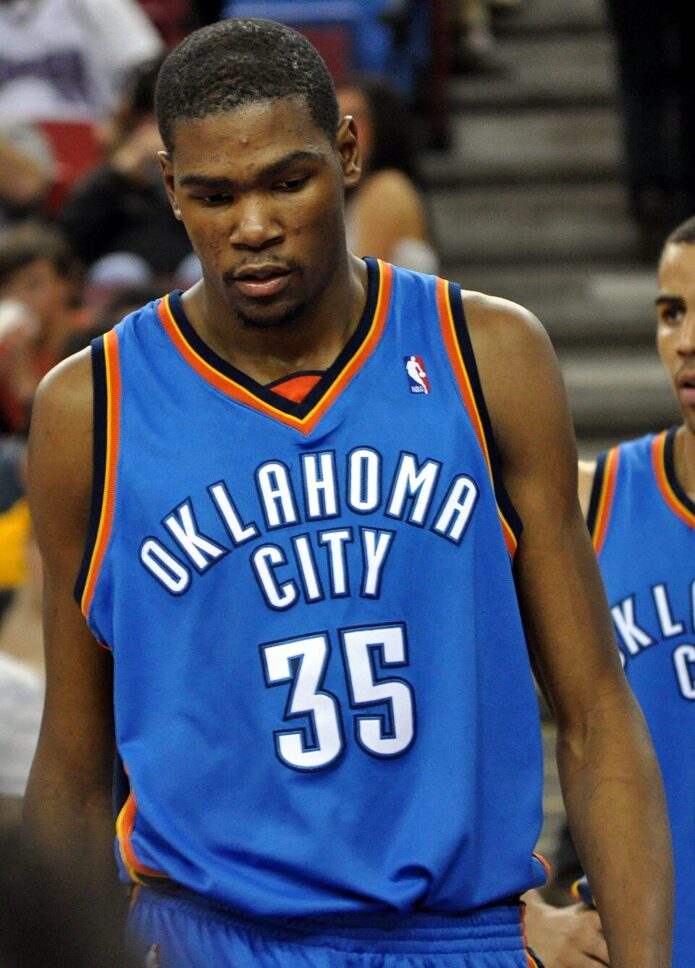
Kevin Durant’s tattoos cover his chest, back, legs and arms, with designs tied to faith, family, music and basketball. Some are easy to spot during a game; others appear in photos away from the court.
The collection has grown over time, so it brings together different styles rather than one matching design. The best-known pieces include a large religious back tattoo and portraits of Tupac and Rick James on his legs. Smaller marks and lettering fill the spaces between them.
Here is a guide to the tattoos that have been documented, while keeping the less certain details in perspective.
The huge biblical back tattoo is the centrepiece
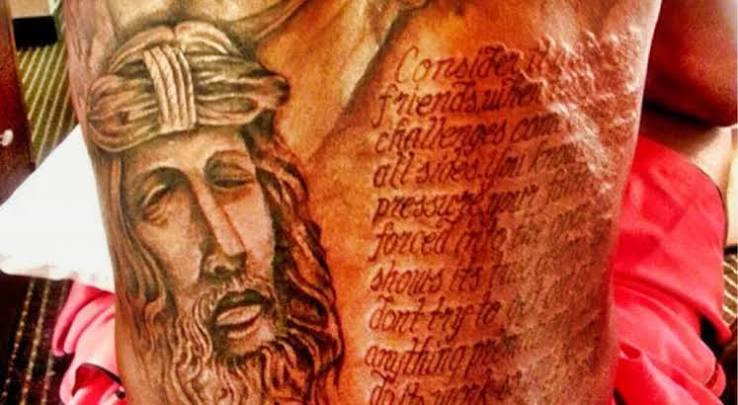
The largest piece in Durant’s collection is a biblical scene across his back, with a prominent religious figure, wings and a long section of script. The design reads as one image from a distance, while the smaller details are easier to see up close.
Its size gives the tattoo real presence. Depending on the angle and light, the portrait or lettering may stand out first. Reports have also pointed out a misspelling in part of the text, which drew attention beyond basketball coverage.
The back piece fits with the importance Durant has given to faith and family. It is bold, but its place in the collection goes beyond appearance.
His chest ink mixes words, numbers and smaller symbols
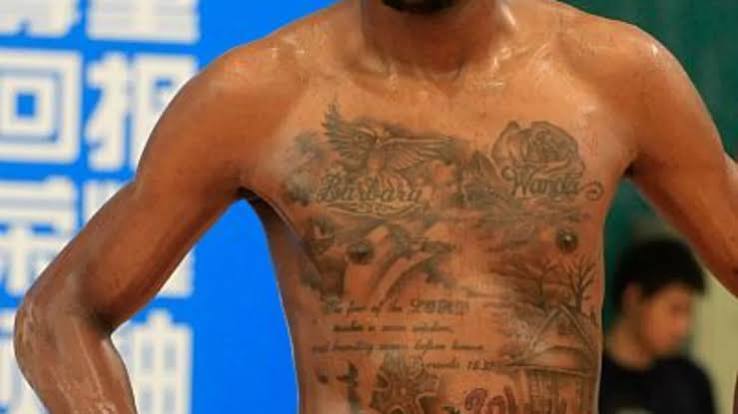
Durant’s chest has lettering, numbers and smaller symbols placed alongside one another. The result feels layered: rather than one large image, separate designs fill the area.
Number references appear across his collection, including the jersey number that became part of his identity in basketball. Some of the chest lettering is difficult to read in a game photo, so closer images show more detail.
There are religious elements around the chest and stomach too. The tattoos were added over time, and not every small mark has a public explanation. Photos can also make the work look different as clothing, sweat, shadows and camera quality obscure the finer lines.
The Tupac tattoo puts music on his leg
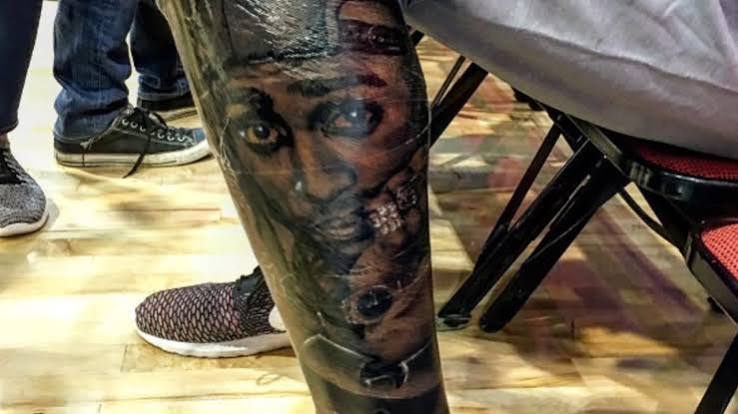
The portrait of Tupac Shakur on Durant’s leg is one of his best-known tattoos outside basketball. It is a detailed portrait rather than a small reference, and it is easy to see when he wears shorts.
The tattoo has appeared in GQ, sports coverage and tattoo features. The shading gives the portrait depth and makes it feel like a tribute rather than a quick likeness.
Durant has spoken about his connection to hip-hop, and the tattoo brings that interest into view. The placement also gives him some choice over when it shows: it is usually covered during games, but appears in off-court photos and interviews.
Rick James gives the other leg a completely different feel
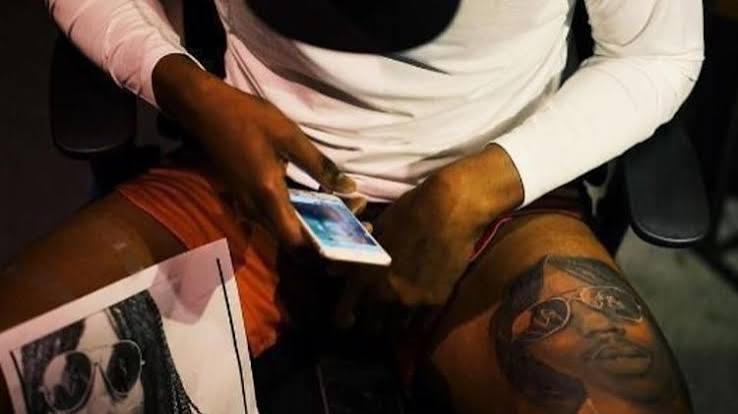
Durant’s Rick James portrait adds another music reference to the collection. It has a different feel from Tupac’s image and points to funk and soul.
The portrait is large, with the face at the centre. Photos show detailed shading in the hair and features, much like the Tupac tattoo.
Durant has described the two portraits as connected to his taste in music. Together, they show influences that are separate from his career in basketball. Both are realistic, prominent pieces, giving his legs a story of their own.
The hidden torso ink fills in the spaces around the main pieces
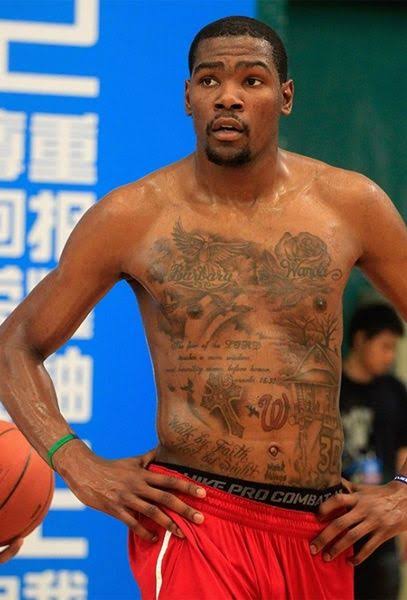
Alongside the better-known pieces, Durant has smaller tattoos across his torso and sides. They are easiest to spot when he lifts his jersey or in older photos from his early NBA years.
Some sit between the larger designs; others use lettering or small images. The collection includes references to faith, music and his personal background, though not every mark has been explained publicly. A tattoo can matter to its wearer without becoming a story for the press.
Much of this work stays covered by a jersey or shorts during games. That is why interviews, training photos and off-court images reveal more of the collection than a standard game photo.
The smaller torso designs connect the larger pieces. Alongside the back scene and leg portraits, they make the collection more than just a few headline tattoos.

What Kevin Durant’s tattoos say about his style
Durant’s collection combines realistic portraits, religious imagery, script, numbers and smaller symbols. The styles do not all match, but they reflect different parts of his life rather than a single planned theme.
Faith, family, music and basketball recur throughout the collection. The large back piece carries the religious imagery; the chest and torso have words and other personal marks; Tupac and Rick James represent music; basketball remains part of the wider story.
Reports of the misspelling in the back tattoo became part of the conversation too. The detail did not erase the care in the rest of the design, but it gave fans another reason to look closely.
The collection has grown like a personal record rather than a finished catalogue. Some meanings are public and others remain private. The larger tattoos draw attention, while smaller numbers, script and symbols reward a closer look.
Together, the back piece, music portraits and torso tattoos show interests that do not always come through in game highlights.
Watch Kevin Durant explain the Tupac tattoo
One thought on “Kevin Durant Tattoos: Tupac, Rick James and His Biblical Back Piece”