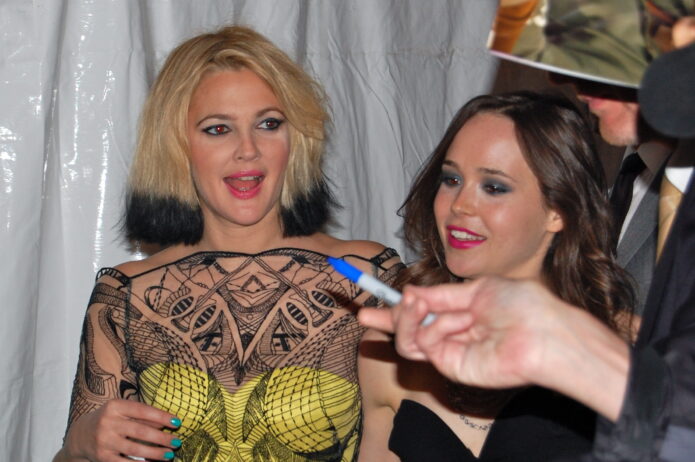
Drew Barrymore’s tattoos vary in size and style. Some are easy to spot; others show only when she moves her wrist or changes clothes. They record family, recovery, old friendships and choices she made when she was younger.
The record isn’t always consistent. Reports differ about which wrist carries one design, and Barrymore has said some early tattoos no longer feel like her. Here’s what’s been shown or described publicly, with uncertain details kept that way.
Olive and Frankie are written on her inner wrist
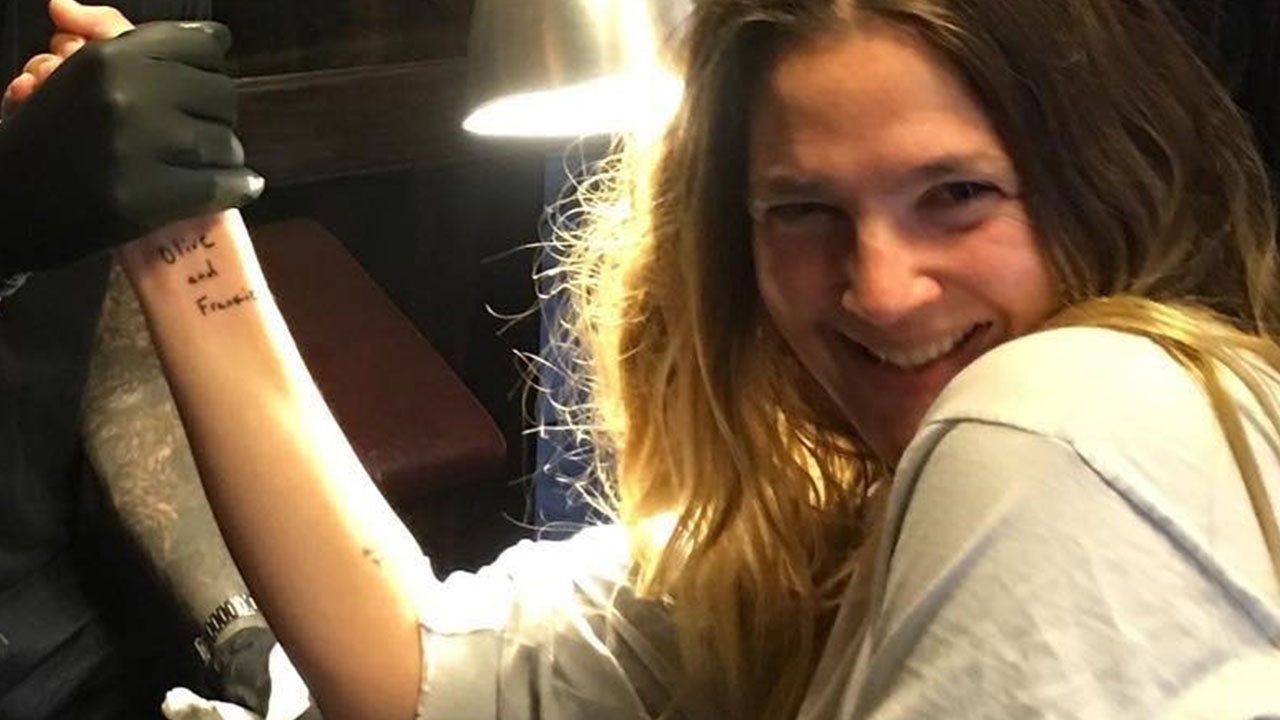
One of Barrymore’s clearest recent tattoos is the names “Olive and Frankie” in simple script. They’re her two daughters’ names, written without an elaborate frame or other decoration.
Reports place the names on the inside of her wrist. Inked says it’s the right inner wrist, while some later coverage and social posts say the left. The side isn’t settled, but the names are consistently identified. Barrymore shares Olive and Frankie with Will Kopelman.
There’s no symbol to decode here. The names keep her daughters close in an ordinary way. The placement lets her see them without putting the tattoo front and centre.
The design is small, but it carries a family connection Barrymore has spoken about publicly. It sits on the wrist, where she can see it during the day.
The cross and angels on her back point back to her mother
Barrymore has also been linked to a more ornate cross surrounded by angels on her lower back, connected in coverage to her mother, Jaid. The design is more traditional than the wrist names, with a religious symbol at the centre and figures around it.
Barrymore’s relationship with her mother has been publicly described as complicated. Some accounts read the tattoo as a tribute, but the exact dedication and original artist aren’t consistently documented. A tattoo can hold several feelings at once; the public account doesn’t spell out all of hers.
It’s safest to say that reports connect the angels-and-cross design to Jaid, without claiming a more detailed story than Barrymore has shared. The image has a memorial quality, but its full meaning is personal.
The lower-back placement is easy to conceal and can be shown when Barrymore chooses. That discretion is also part of how some of her other tattoos appear in public.
Birds, a butterfly and flowers fill out the collection
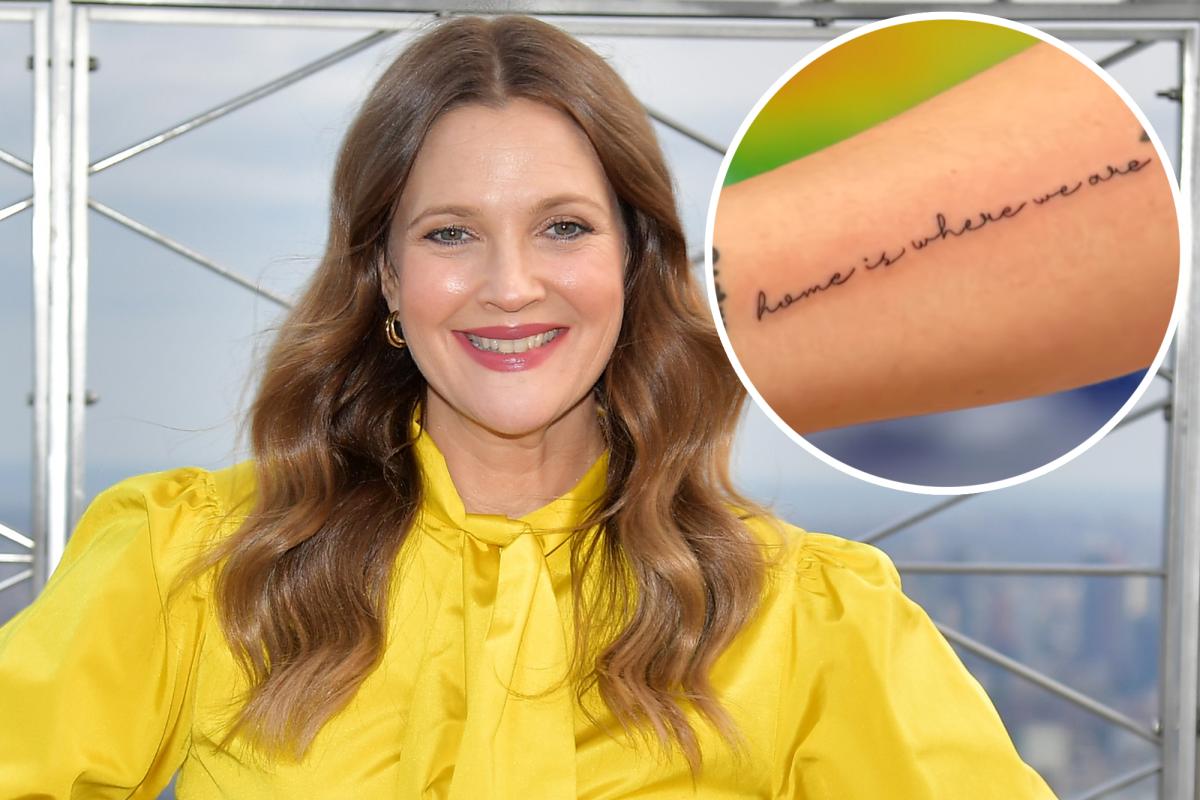
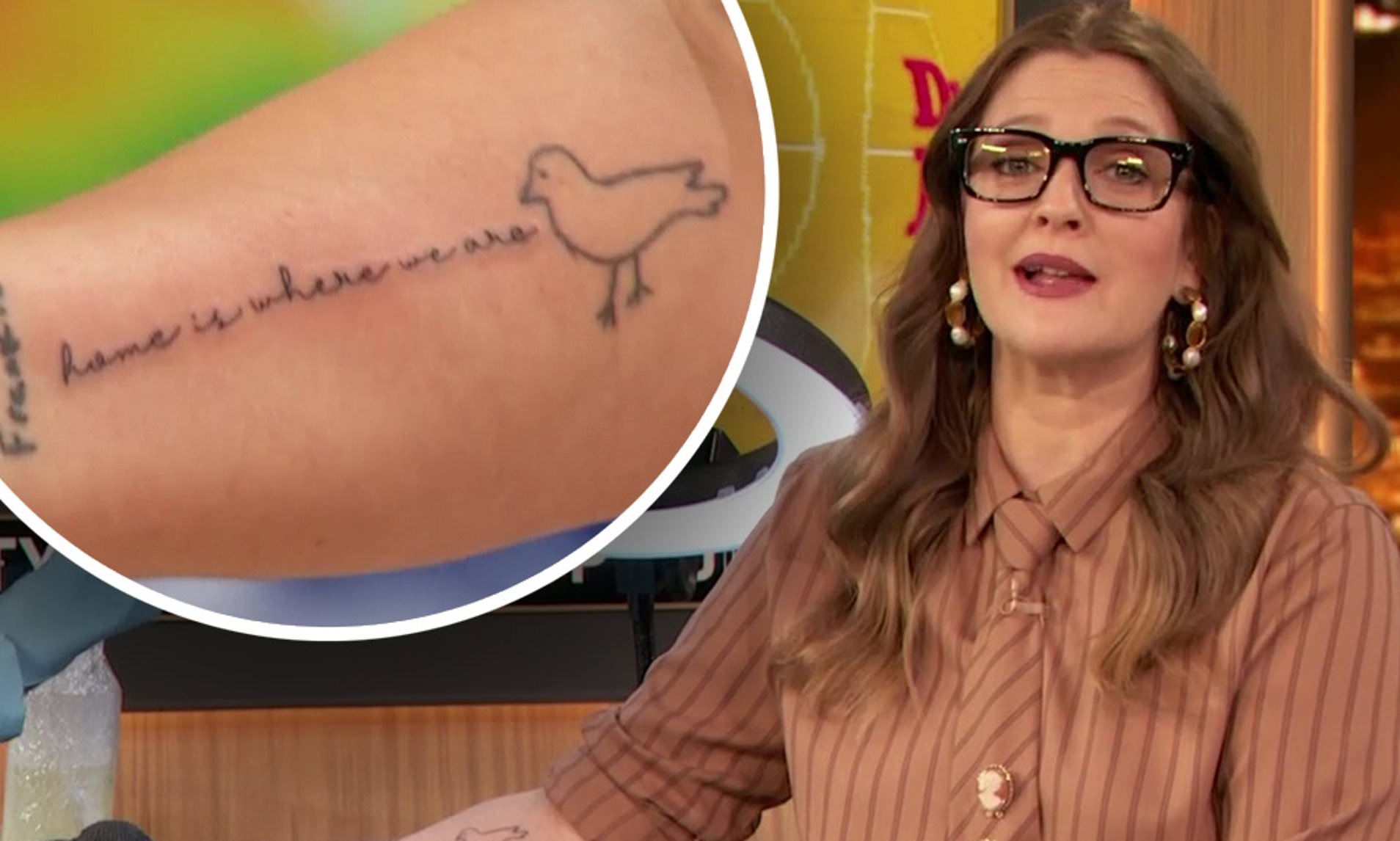
Public photos and tattoo roundups identify a light-outline bird on her right forearm, a butterfly below her navel and a flower bouquet on her left hip. They’re different designs from different periods, and photos of them are often brief.
The bird is usually described as an outline rather than a dense, realistic image. People often read freedom or movement into bird tattoos, but Barrymore hasn’t given a definitive explanation for this one. The butterfly is small and placed below her navel; public descriptions sometimes group it with the flowers.
The bouquet sits on her left hip. It’s a softer, more decorative design. The placements are worth keeping straight: flowers on the left hip, a bird on the right forearm and a butterfly below the navel.
Older descriptions also mention a crescent moon. It’s harder to see in recent photos than the wrist names or ankle cross, so its current condition is unclear. It may be a small standalone tattoo or part of her earlier collection.
The designs don’t need to share one theme. Some may simply be pieces Barrymore liked at the time. Her tattoos show changing tastes rather than a single planned set.
The smaller marks carry their own private history
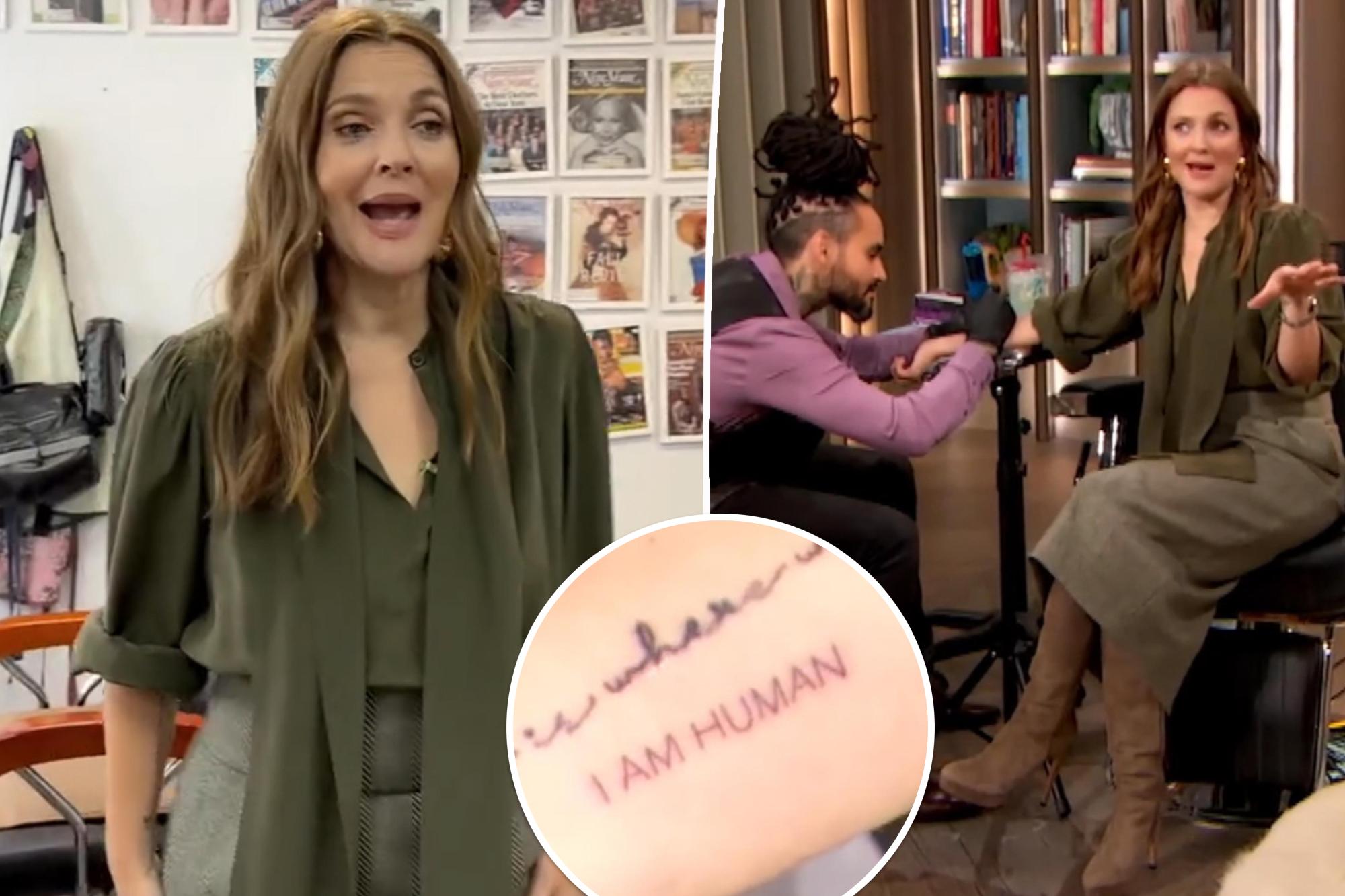
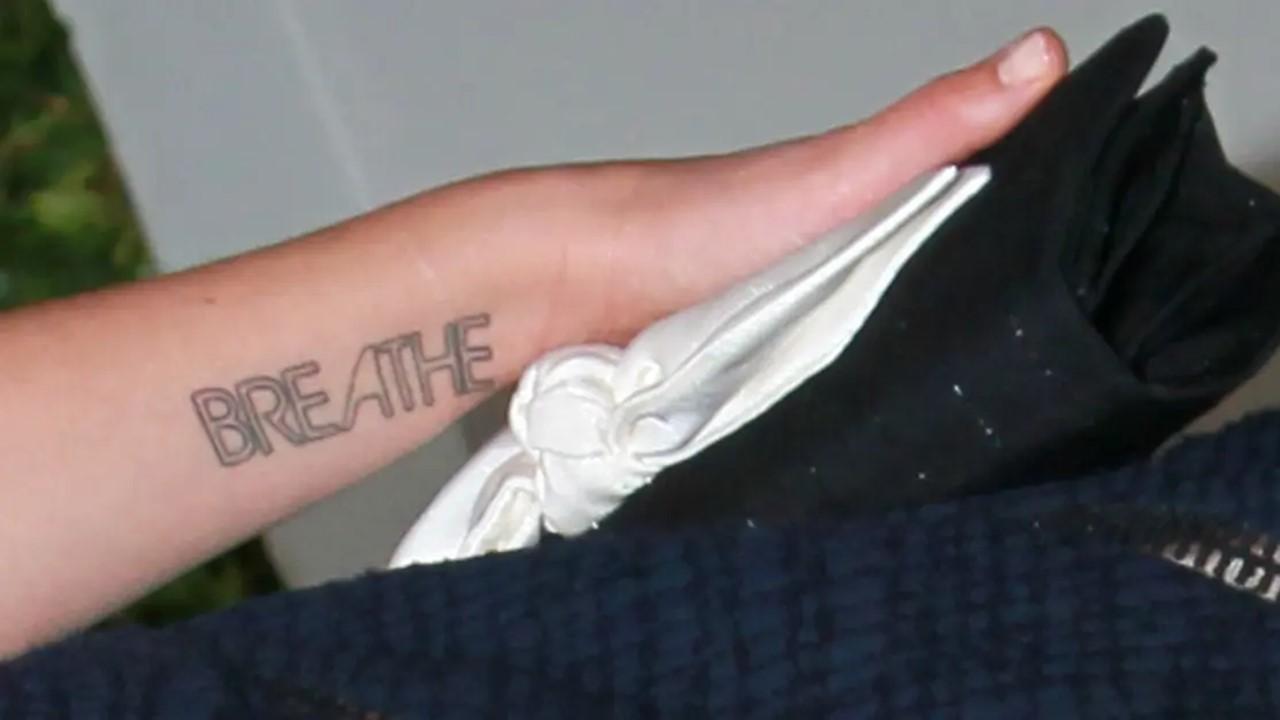
A word tattooed on Barrymore’s left forearm reads BREATHE. She has described it as a reminder to slow down and stay calm, and has joked that she can forget to do exactly that. It’s a prompt, not a promise that everything is always easy.
BREATHE and the Olive and Frankie names are sometimes discussed together because both are on her arm or wrist. They’re separate tattoos: one is a personal reminder, the other names her daughters.
Her cross on the right ankle is another long-running piece. Older coverage describes an ornate cross wrapped in flowered vines. Some reports connect it to her role in Poison Ivy; the details of that story vary, but the right-ankle placement appears consistently.
The ankle cross is more decorative than the simple wrist lettering. It can show with bare feet or cropped trousers, though it’s less visible than the names on her arm.
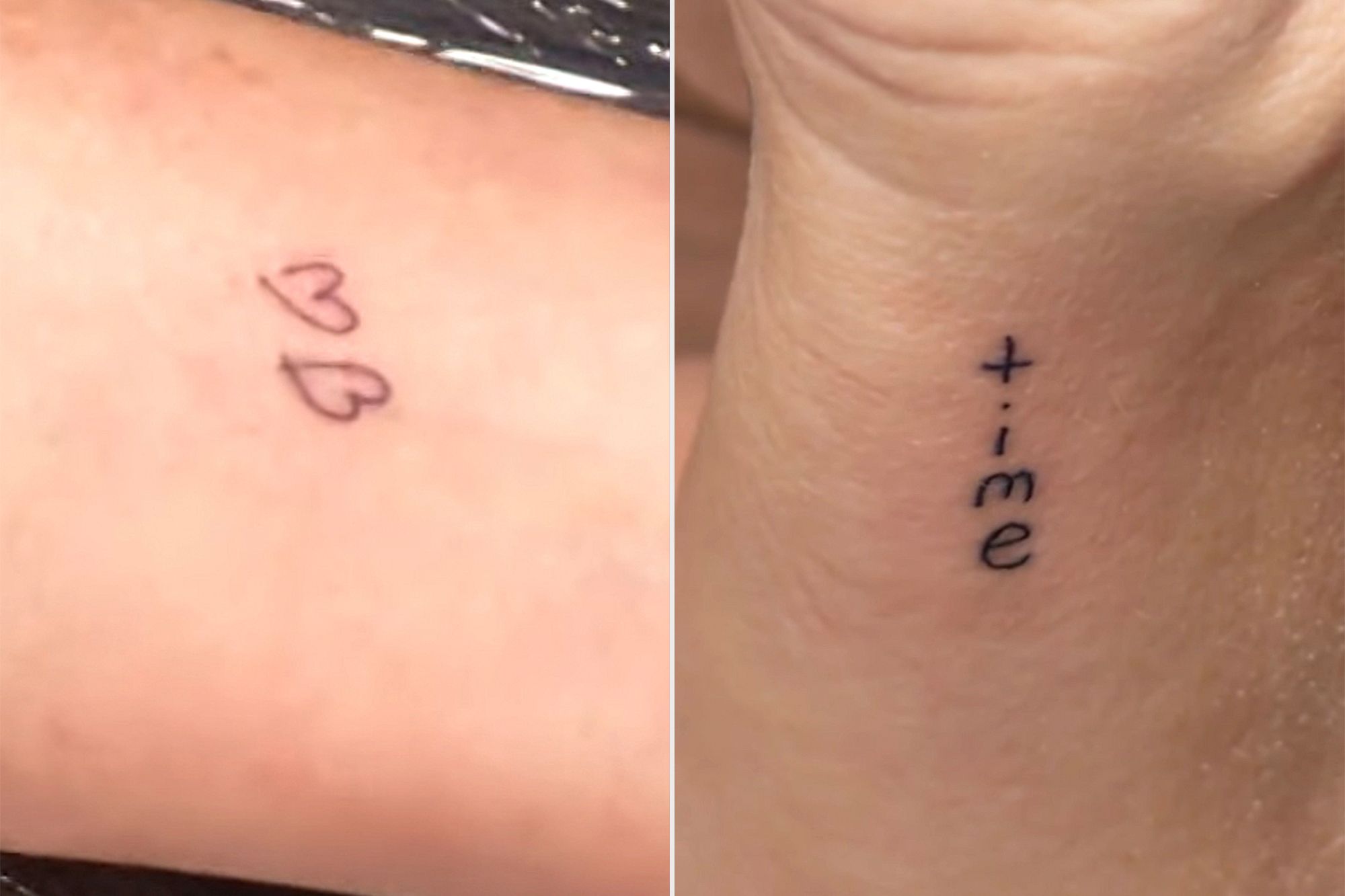
Older tattoo roundups also mention a design connected to the word time and other small tattoos from Barrymore’s youth. Photos don’t always make those marks legible, so those entries are less certain.
The collection includes names, a breathing reminder, crosses, angels, a bird, butterfly, flowers and moon imagery. Some pieces have a clear family connection; others are harder to place. They reflect different moments in her life.
Why Drew Barrymore’s ink feels so personal
Barrymore’s tattoos don’t follow one style. The lettering is simple, the flowers are softer, and the crosses are more ornate. The pieces come from different periods of her life.
Some of the newer tattoos have a clearer emotional connection, but that doesn’t make the older ones disposable. A design can feel right at one age and later become a marker of who you were.
The family pieces are the most direct: Olive and Frankie in script, the angels-and-cross design linked to her mother, and BREATHE as a personal reminder. The bird, butterfly, flowers, moon and ankle cross fill out the rest of the collection.
Keeping the details separate makes the inventory more useful: a daughter’s name on the wrist, a religious image on the back, a flower bouquet on the hip and a cross at the ankle. The designs are small, but their placements and stories differ.
Watch Drew Barrymore get a new tattoo
Barrymore has discussed tattoos on her daytime show and added new ink on camera. This behind-the-scenes segment from The Drew Barrymore Show shows that process.
One thought on “Drew Barrymore keeps her family story close in Tattoos”