Quilindschy Hartman has described his tattoos as a record of childhood memories, football and people close to him. He has said he has around 50, including references to films, games and television, alongside ink tied to important moments in his career. The photos here show a championship design, lettering on his neck and dense work across his arms and hands.
In an interview with AS, Hartman said he began getting tattoos at around age ten with a tattoo friend. He named Super Mario, Harry Potter, Rick and Morty, Family Guy, Spider-Man, Fortnite and Ratatouille as some of the references. He has also said he doesn’t plan to add more. That’s what he says now, not a promise about what he’ll decide later.
The childhood collection is built from memories rather than one style
Hartman’s collection doesn’t follow one visual style. The photos show lettering, shaded images and small details layered across his neck, forearms and hands. Most of the ink reads as black and gray, with dark areas set against finer lines. A few individual marks are easier to pick out in close views, but none of these photos gives a full catalogue of all the designs.
That mix fits the way Hartman has described the tattoos. He said he started getting them to hold on to good memories from childhood, and the pop-culture references point to things he watched or played. The common thread is personal history rather than a matching set of symbols or a single design style.
His interview also gives a limit to what can be said: he has spoken about broad themes and a few specific pieces, but hasn’t explained every mark in the photos. It’s possible to describe where the tattoos sit and what the images show without guessing at the story behind each one.
The championship tattoo turns a team season into a permanent marker
After Feyenoord won the Dutch championship in 2022–23, Hartman said he wanted the title marked on his body. Feyenoord’s coverage pairs a close view of the tattoo with a celebration photo, connecting the design to that season.
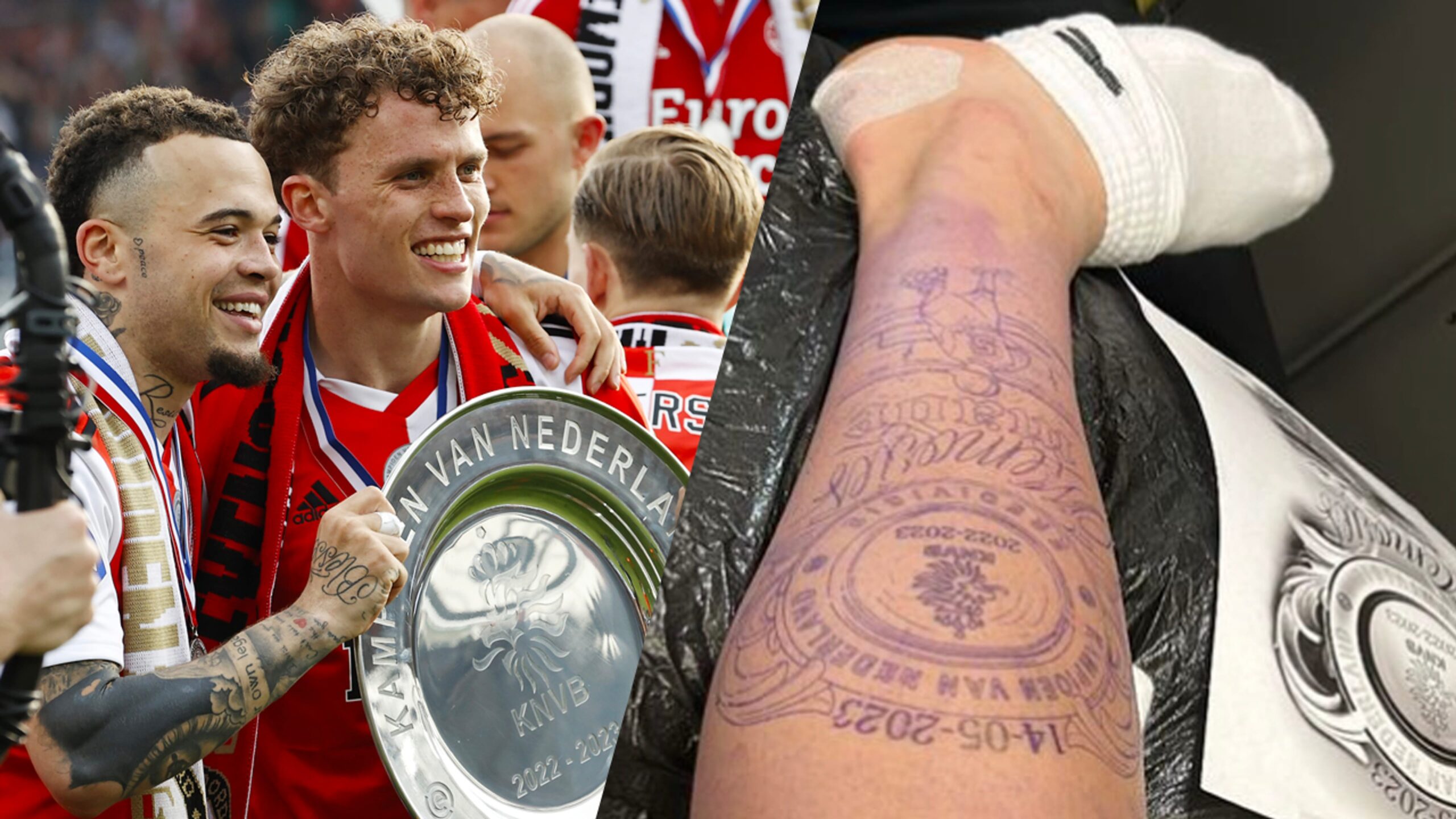
The close-up shows a large forearm composition with lettering, a circular emblem and the date 14-05-2023. The design is photographed next to the title celebration, so the date and championship account sit together in the source. Hartman, rather than a caption writer, supplies the connection between the tattoo and Feyenoord’s win.
That makes this photo different from the match and training images below. It shows the specific design and its reported story; the other frames show how his wider collection looks while he is playing, returning to training or celebrating with supporters.
The neck and forearm tattoos stay visible in everyday football images
A Voetbal International photo shows Hartman applauding in Feyenoord’s away kit. Script is visible across the front of his neck, and dense shading covers much of his forearm. The pose and kit make this an ordinary match-day view rather than a staged tattoo reveal.
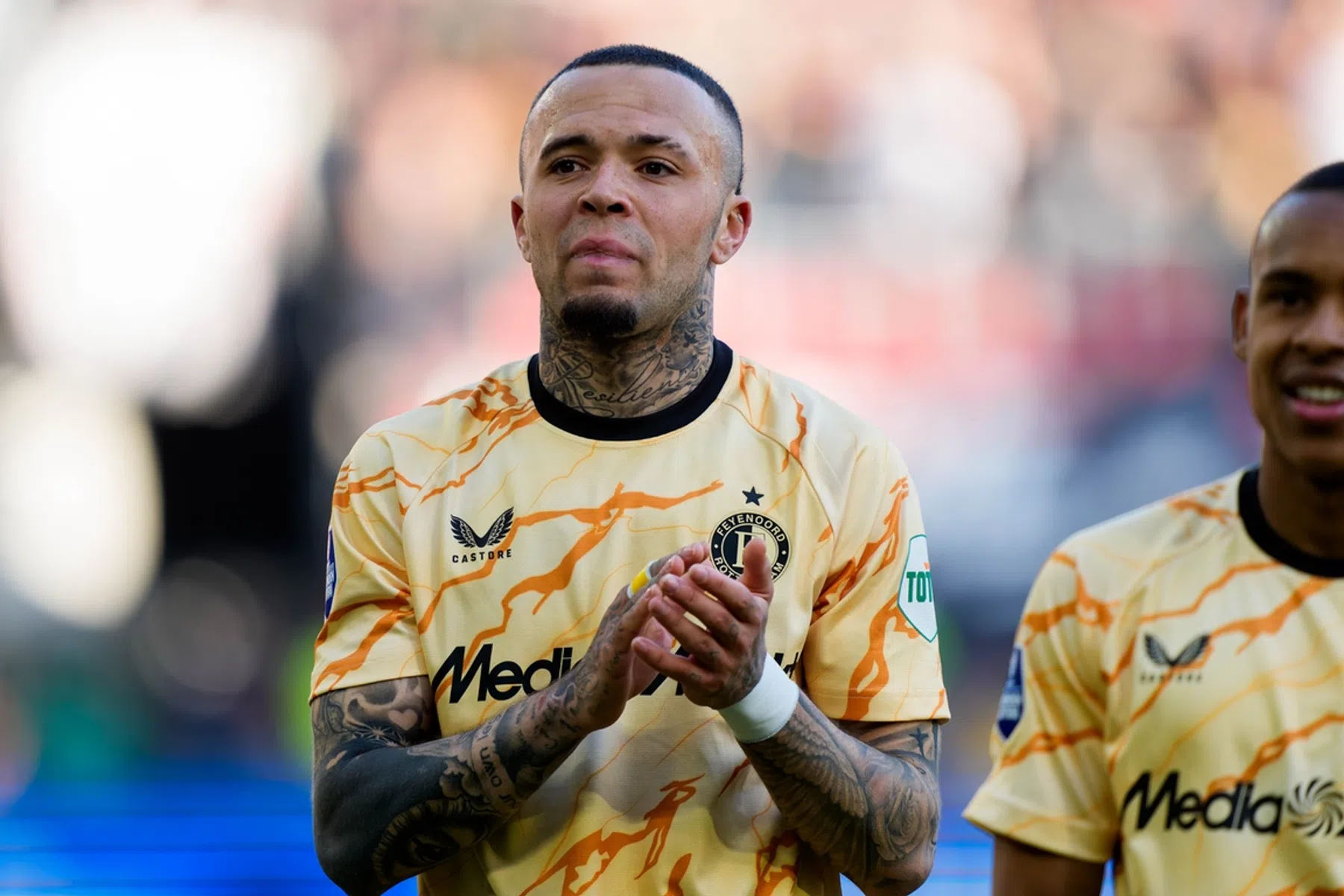
The lettering is easier to see than the smaller arm details. Other pieces sit close together along the forearm, though this distance doesn’t make every design clear. The photo shows how much of the visible arm is tattooed; it doesn’t tell us what each piece means.
Hartman’s tattoos are personal, but they’re also visible in club photos, interviews and stadium settings. This image shows that overlap without explaining more than the source does. The same ink appears in the training and documentary frames, each with a different angle and amount of detail.
The training return shows how much of the arm is covered
A separate VoetbalPrimeur photograph shows Hartman at Feyenoord training after his recovery. His red-and-white shirt leaves both arms and his neck visible. The wider view shows a dense spread of tattoos on both arms, with darker shaded areas beside finer linework and script.
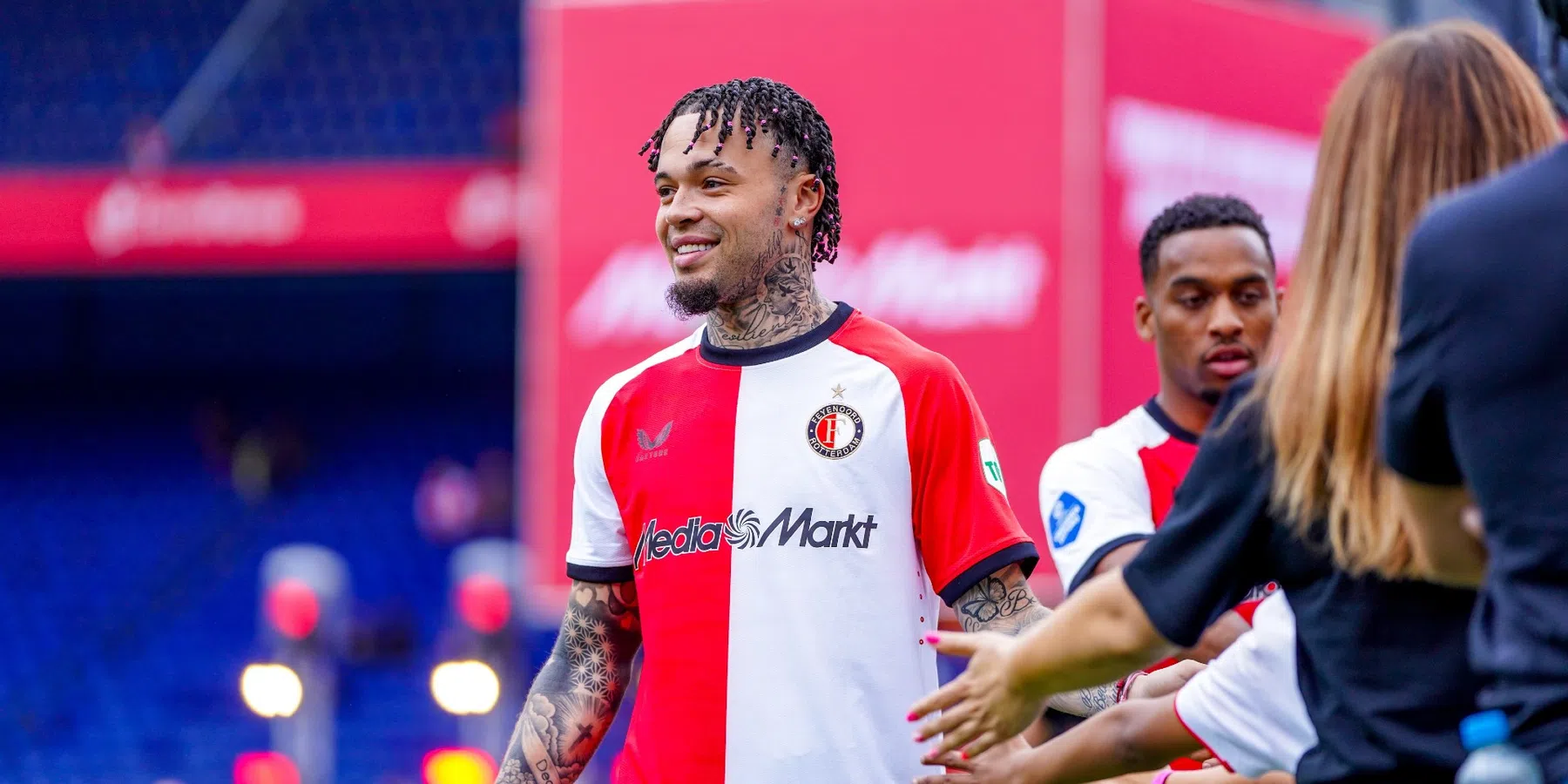
The photo adds a broad look that the match-day frame doesn’t provide. His arms hang at his sides, making more of the forearm coverage visible, while the neck lettering stands out against the collar. The tattoos are mostly dark in this image, though smaller marks are difficult to distinguish from one another.
The setting also places the image in his return to football after recovery. It shows Hartman back at training in Feyenoord colors; it doesn’t say when any particular tattoo was added. The recovery context belongs to the photo and the documentary coverage, while the tattoo meanings should come from his own comments or a report that names them.
The championship celebration shows the tattoos in motion
In a Sportnieuws photo from Feyenoord’s title celebration, Hartman stands near supporters behind the goal with his arms raised. Fans, banners and netting fill the background. Script across his hand and the tattoos on his forearm remain visible even as he moves toward the crowd.
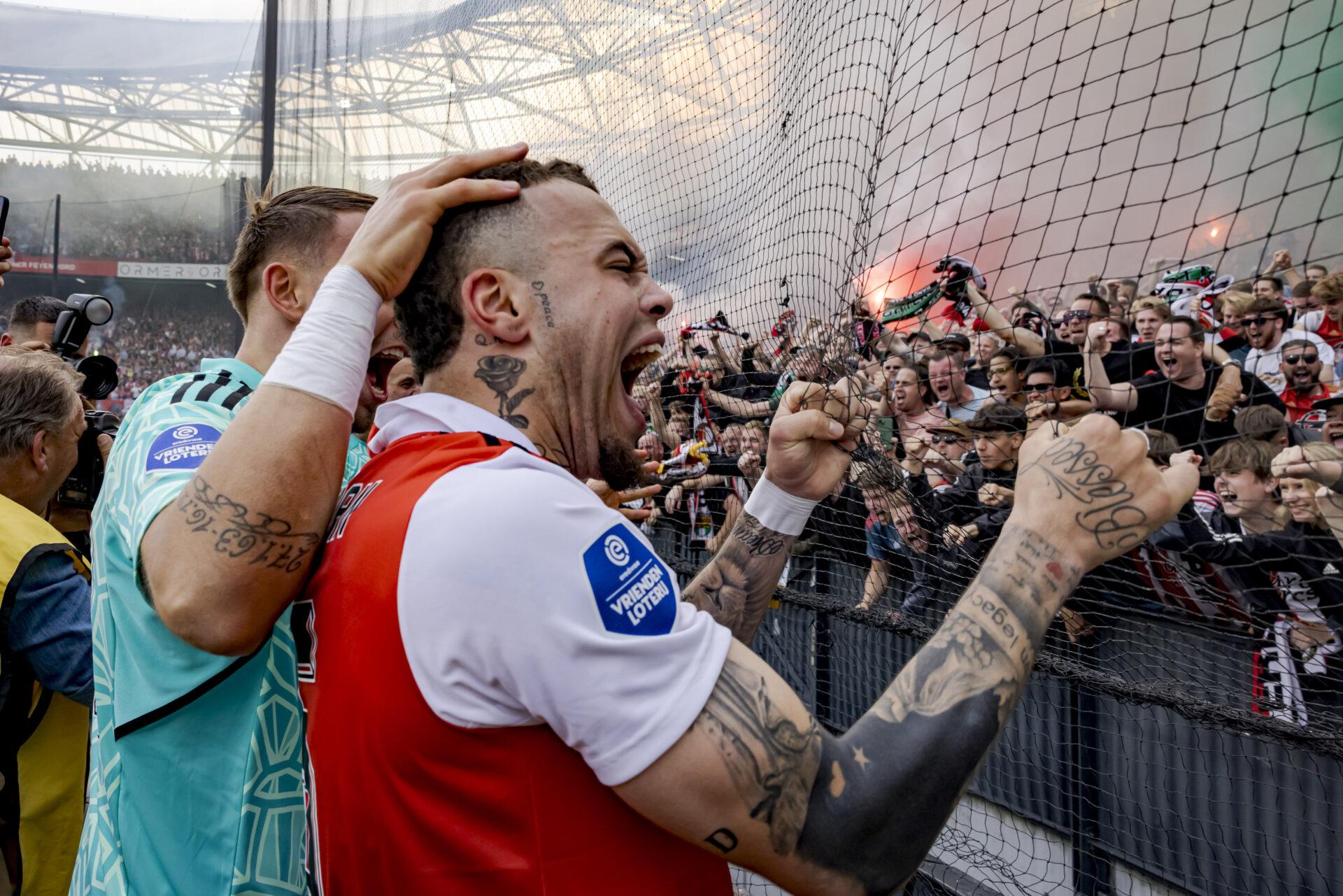
This frame has a different feel from the close-up of the championship design. The tattoo photo shows the date and emblem; this one catches Hartman celebrating with fans. It makes clear that the arm and hand tattoos form part of his visible look in the middle of a club moment, but it doesn’t identify every mark as part of the title design.
The raised arms also change what can be seen. The hands and forearms face the camera, while the rest of the collection falls partly out of view. It’s a useful view of the ink in motion, not a substitute for a close photo of any one tattoo.
The documentary still brings the collection back to the face and neck
A Feyenoord documentary still shows Hartman smiling on a sofa, his arms folded beneath his chin. The word “Blessed” can be read across his arm, with more lettering and shaded work around it. Neck tattoos sit close to his face in this crop, giving the image a quieter feel than the match and celebration photos.
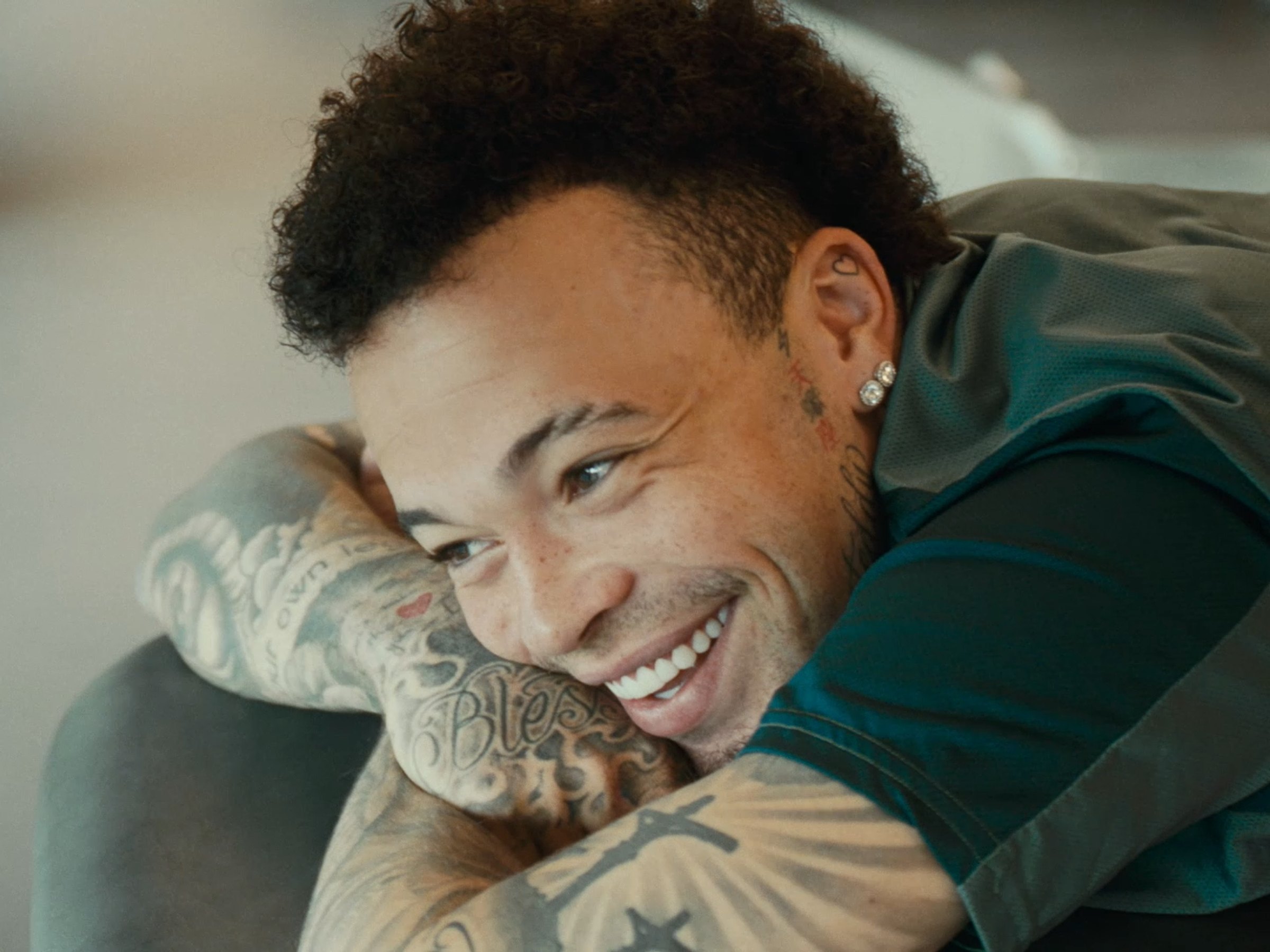
The documentary follows Hartman’s rehabilitation and return to football. That context explains why the frame appears alongside a recovery story, but it doesn’t tell us when he got “Blessed” or what he meant by it. The word is visible; its personal meaning hasn’t been supplied in the material cited here.
The photo also shows how the same tattoos read differently in a relaxed setting. In the stadium, they share the frame with movement and supporters. Here the lettering sits near his smile and folded arms. The ink hasn’t changed; the moment around it has.
Identity context for the article
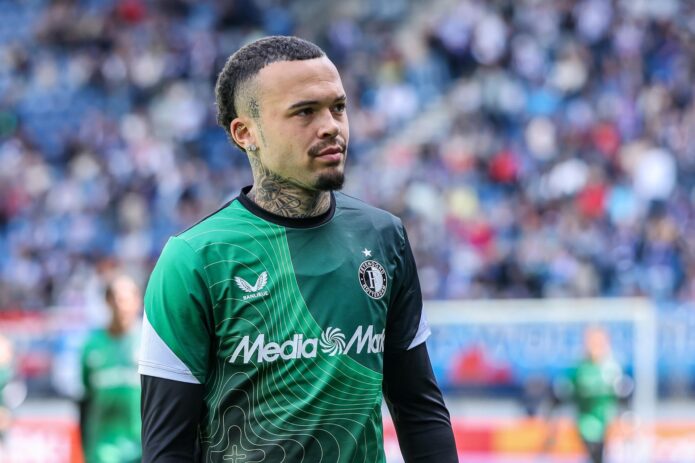
The featured portrait shows Hartman in a Feyenoord shirt, with his face and some neck ink visible. It identifies him, while the five inline photos show the championship design and tattoos at his neck, arms and hands. Keeping those roles separate makes clear which images support tattoo details and which simply provide a portrait.
The collection is varied in both scale and treatment. Neck script, small hand lettering and larger shaded areas sit alongside references to childhood characters and a football title. Most of the ink appears dark in these photographs, but the images don’t show every piece clearly enough to describe a full color palette or exact motif list.
Closing context for the published images
The five photos come from different moments: the championship design and celebration, a match-day frame, Hartman’s return to training, the title celebration with supporters, and a documentary still. Together they show more of the collection than any one portrait could, from a close view of a named tattoo to the broad coverage across his arms and neck.
Hartman has connected many tattoos to childhood memories, and Feyenoord’s coverage links one to the 2022–23 championship. The AS interview supplies his comments about the collection and the characters that inspired some of it. The photographs show the placements and visible lettering, but don’t explain every tattoo or provide a full inventory of his roughly 50 designs.
That leaves a useful distinction: the championship tattoo has a reported story, “Blessed” is readable in the documentary still, and the other visible marks can be described by placement and appearance. Anything beyond those sources is still Hartman’s to explain.