Adèle Exarchopoulos’s back tattoo is easy to miss in ordinary portraits. It sits high near a shoulder blade, where hair, clothing and a turn of the body can hide it. Backless festival looks have made it easier to see.
Photos from the 2025 Venice Film Festival and 2026 Cannes show the same vertical design from different angles. Vogue France described the Venice look as a backless black dress revealing a hand holding a dagger. The images support a description of its placement and visible motif; they do not establish a personal meaning.
The tattoo at the Venice Film Festival
The clearest Venice view places the tattoo high on the back, close to the shoulder blade and slightly toward the side. Its narrow, upright form is a hand gripping a dagger, not a large back piece.
The placement helps explain why the tattoo is absent from many photos. It sits below the neck, where hair, fabric and the angle of her shoulders can cover it. From a distance, its exact linework is harder to make out than its position and main shape.
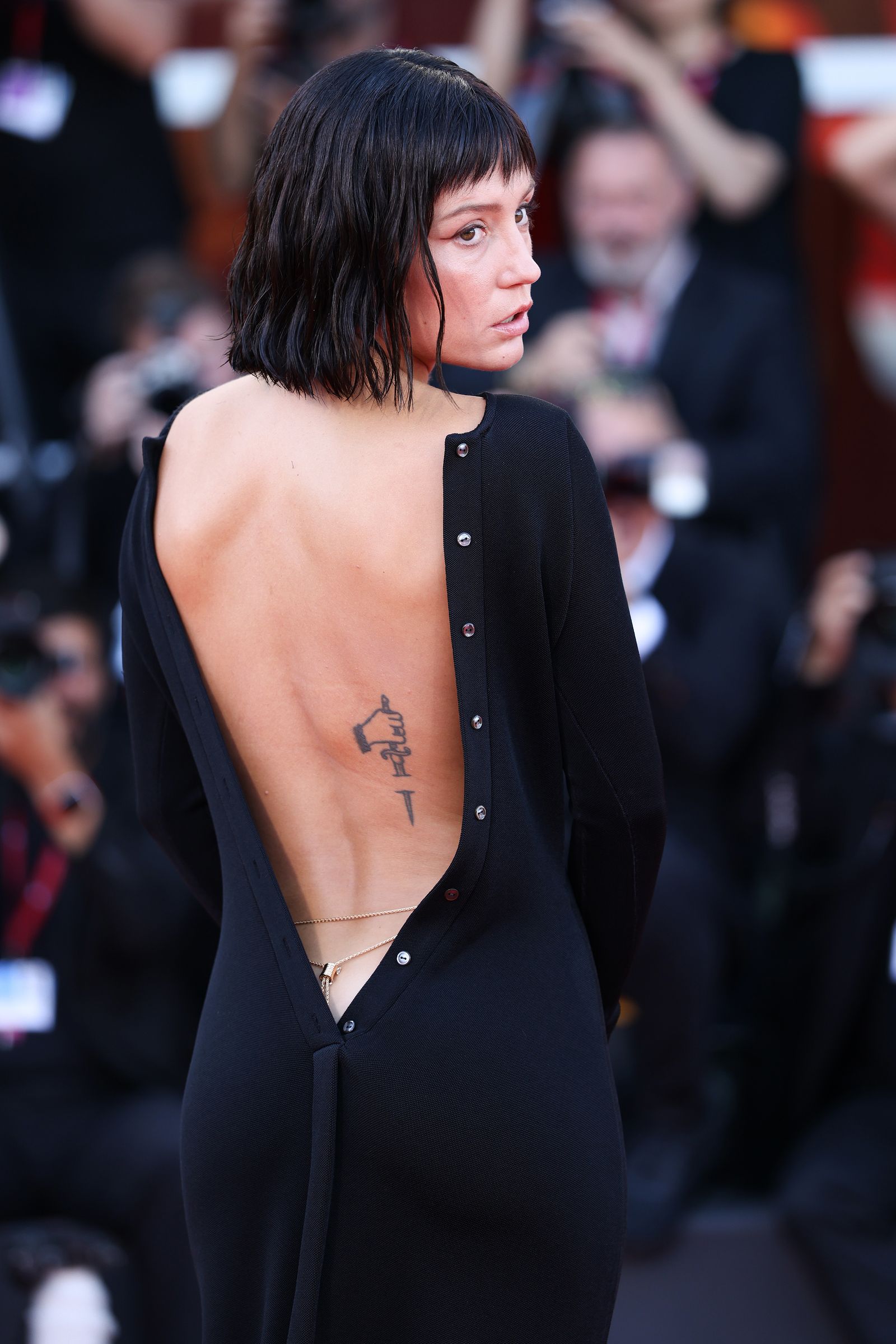
Here, the black dress leaves open skin around the tattoo, and her side-on pose makes the vertical design easier to read. This credited festival image shows ink on her skin, not a temporary graphic added for the event.
The tattoo in the 2026 Cannes photographs
The 2026 Cannes photographs show the same area in a different festival setting. Steps, photographers and the movement of the event remain in view, making this a red-carpet frame rather than a close-up.
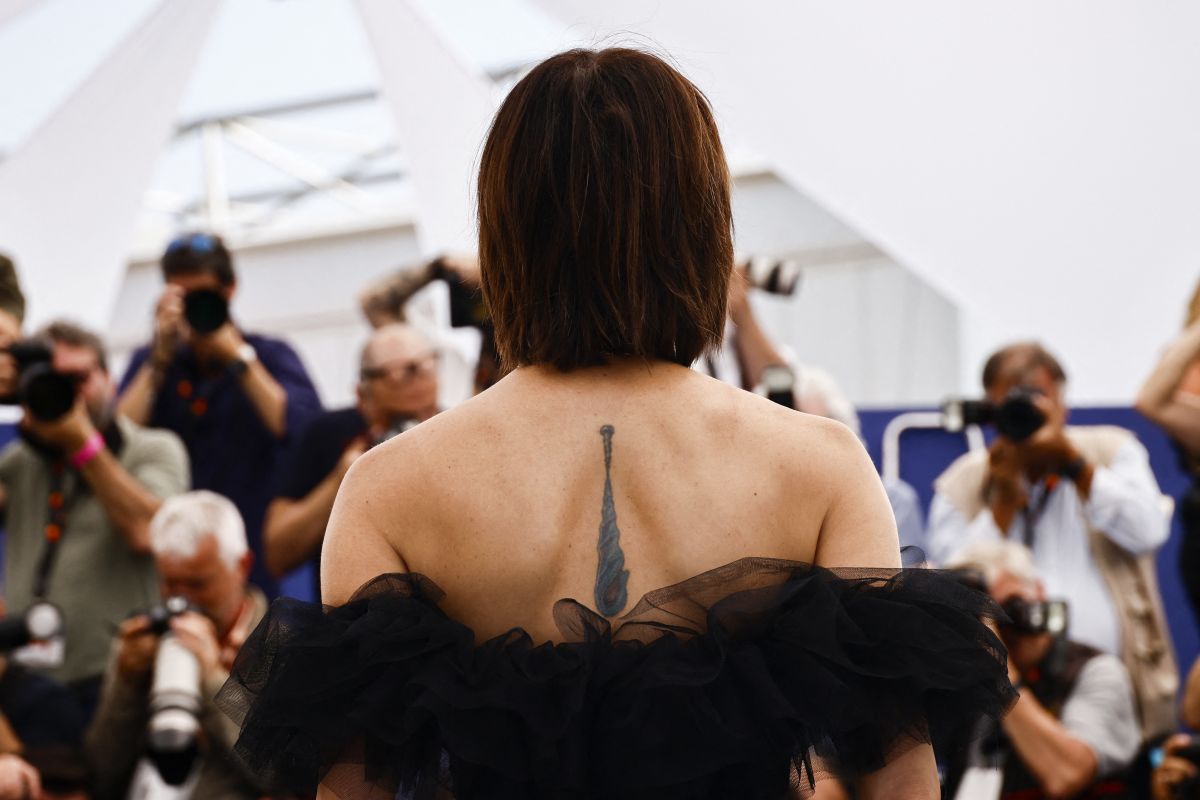
The changed angle gives another look at the vertical design as she turns away from the cameras. It is the same back tattoo; these photographs do not show that she added a second piece.
The Cannes look around the reveal
The tattoo appears in fashion coverage, not in a dedicated tattoo interview. At Cannes, polished hair and a dramatic backless silhouette placed it within a larger red-carpet look.
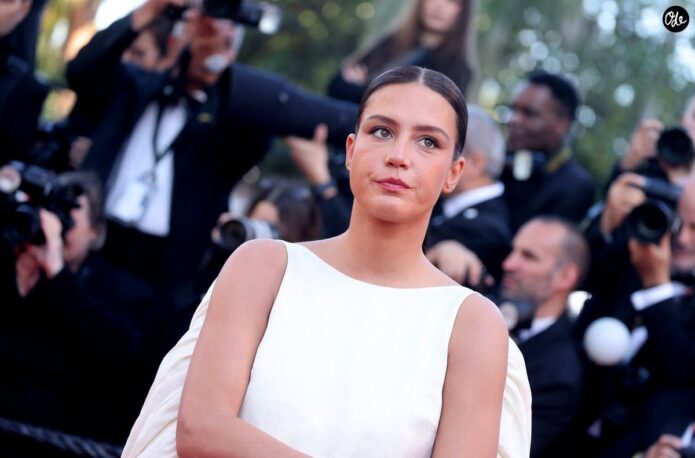
A front-facing image from the same festival shows her face, neckline and the press line, but not the tattoo. It identifies the subject and setting; it is not evidence of the design.

This portrait is useful for the event context. The tattoo is not clear in the frame.
A second Cannes look
A separate portrait from a Paris awards photocall shows another public appearance, with her face visible and a more restrained look. It adds identity and event context, but no tattoo detail.
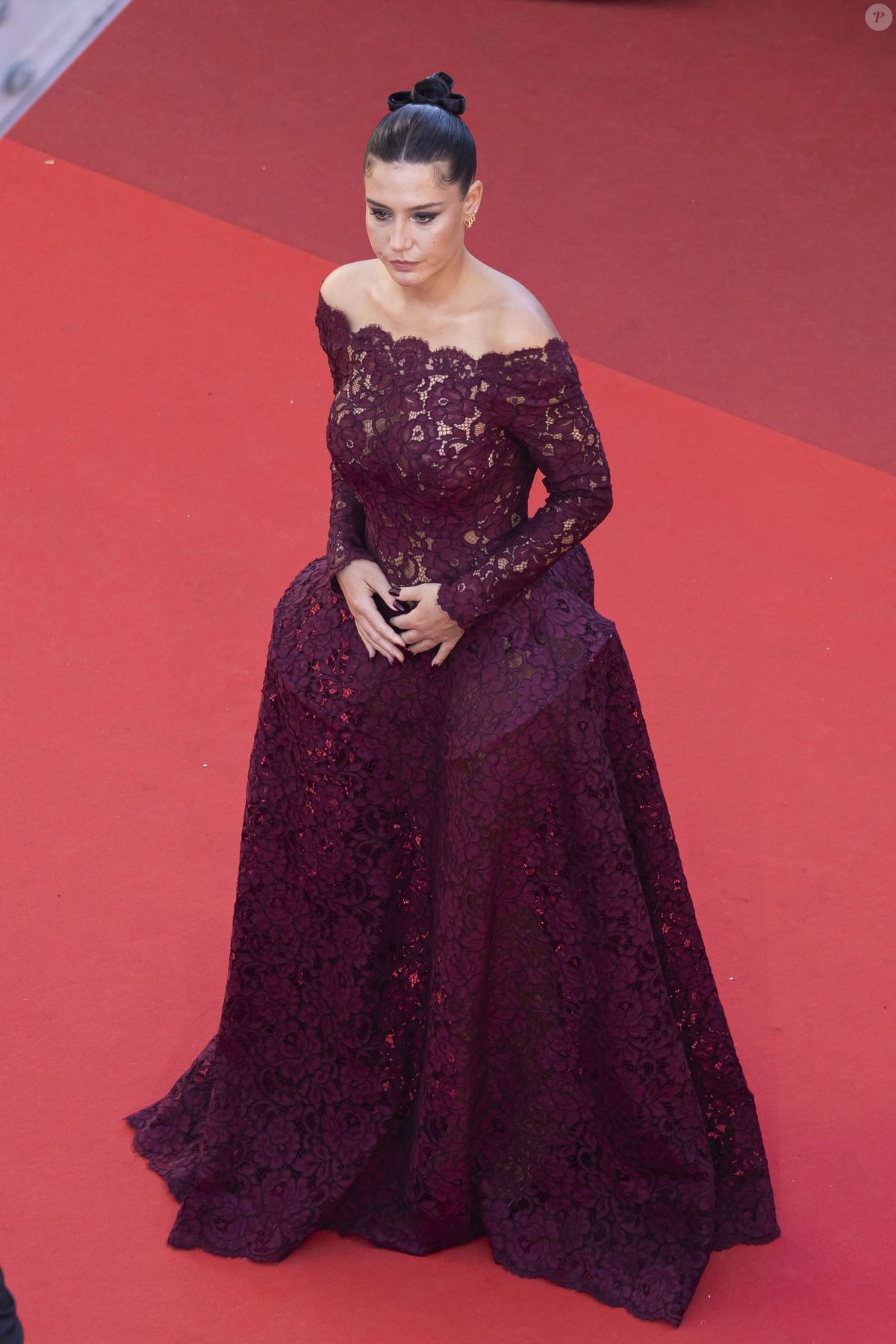
Keeping that distinction clear avoids treating every photograph as proof of ink. This face-visible portrait provides context; the back views document the tattoo.
Why the image became a fashion story
Back tattoos appear in event photos when clothing and pose leave them uncovered. At Cannes, an open-backed gown gave photographers a view that front-facing portraits usually miss.
The image drew attention because it combines Exarchopoulos, a recognizable festival appearance and a design rarely seen in ordinary portraits. That explains the interest without suggesting the tattoo itself changed.
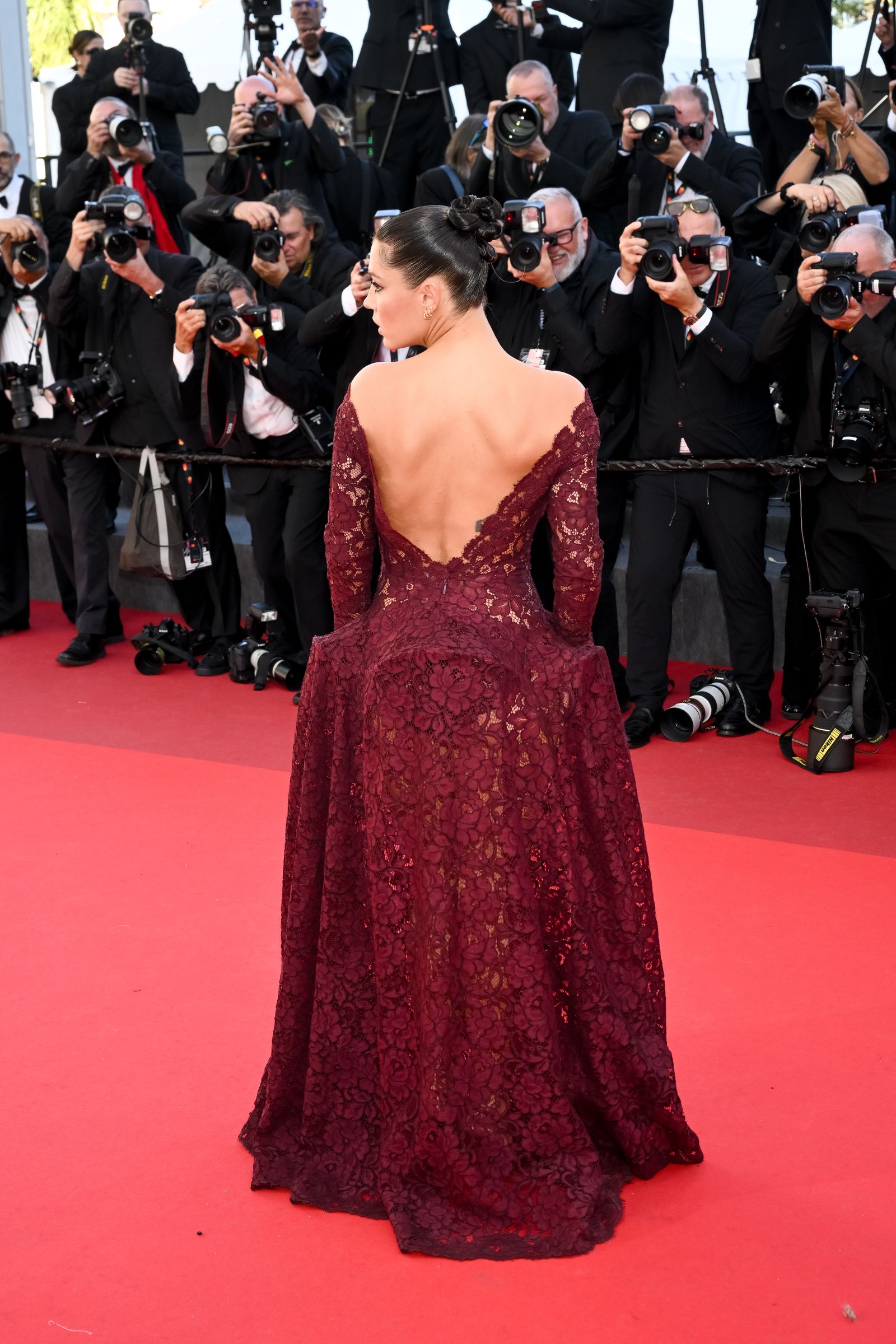
This separate back view shows the Cannes fashion setting. It is another photograph of the same design, not an additional tattoo.
A question of personal meaning
The visible motif is a hand with a dagger, set high on the back. The available coverage establishes what the photographs show, but it does not give a confirmed personal explanation from Exarchopoulos. Any meaning beyond that should be left open.
The tattoo can appear when she wears an open-backed look and disappear beneath everyday clothing. That describes when it is visible, not why she chose it.
How to read the photographs
Photos can establish approximate placement and visible shape; publication credits and event coverage supply dates and setting. Images alone cannot explain personal meaning. An interview can add that context only if she discusses it herself.
The Venice and Cannes frames show different angles of one tattoo. The face-forward portraits identify the subject and setting, but do not document the design. Keeping those roles separate avoids mistaking extra photographs for extra tattoos.
Adèle Exarchopoulos in context
Exarchopoulos’s back tattoo is documented at film events as a vertical hand-and-dagger design near the shoulder blade. The Venice and Cannes photos show when it is visible and how clothing and pose affect what the camera captures.
Those images support its placement and visible form, but do not establish a larger personal meaning. The credited Vogue France and festival galleries provide the event context, and the interview below offers another source to compare.