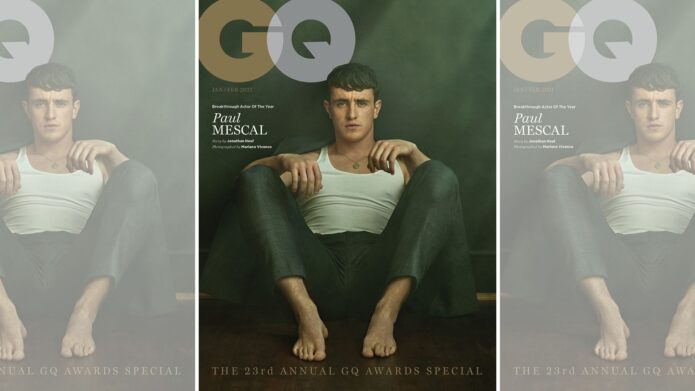
Paul Mescal’s tattoos fit the rest of his style: quiet at first glance, then more interesting the longer you look. He does not have the kind of ink that takes over every red-carpet photograph. Most of his designs are small, fine-lined and placed where a sleeve, short-sleeved shirt or relaxed pose can reveal them without turning the whole look into a display.
That makes the details easy to miss, which is probably why online tattoo lists sometimes mix confirmed facts with guesses. The reliable picture is more specific. Mescal has spoken about a swallow on his upper left arm, a deer or stag on the opposite arm and a small design inside his left elbow. He has also been photographed with newer forearm lettering under fresh second skin.
What is actually documented
The strongest source is Mescal’s British GQ interview, where he physically showed the interviewer several tattoos and explained two of them. That matters because a clear photograph can establish that ink exists, but it cannot automatically establish a private meaning. Mescal said the swallow connects to springtime memories with his father. He linked the stag to Normal People but stopped short of giving a full explanation.
He described the design inside his elbow as something he simply liked. That answer is useful because it cuts against the assumption that every celebrity tattoo must be a coded biography. Sometimes the reason is taste, timing or the feeling that a shape belongs on the skin. The collection works because not every mark is forced into a grand explanation.
The swallow on his upper left arm
The swallow is the easiest Mescal tattoo to understand because he gave the meaning himself. He told GQ that he and his father used to go into the garden around March to spot the first swallows of spring. The bird is tied to home, family and a particular seasonal ritual rather than a vague idea of freedom. It is small, simple and drawn with a light line, which keeps the design personal without making it visually heavy.
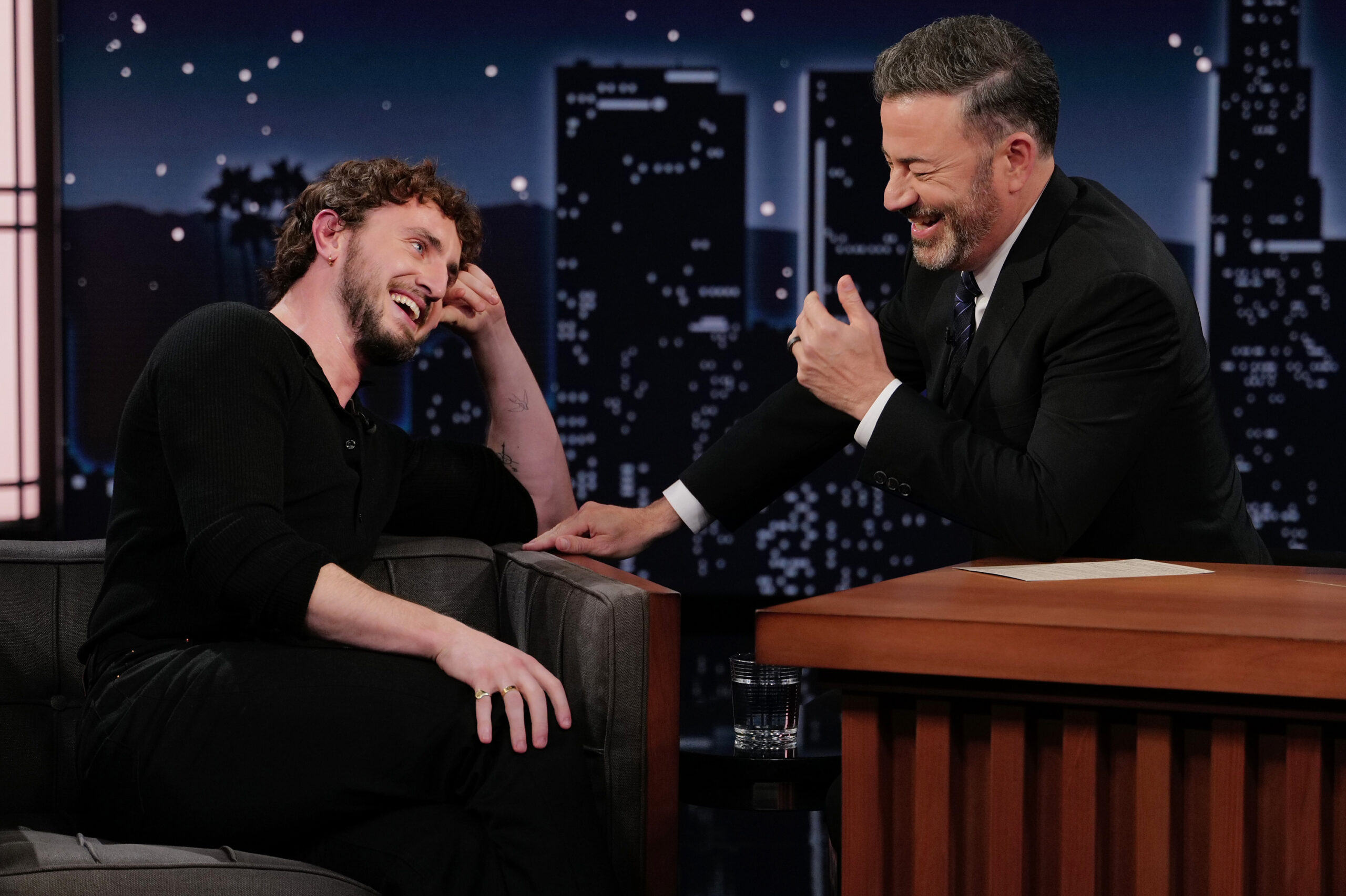
For a tattoo artist, the appeal is in the restraint. A swallow can be rendered as traditional flash, but Mescal’s version sits closer to a quick line drawing. The silhouette needs to stay readable at a small scale, so the wing shape and tail do most of the work. If you are borrowing the idea, think about the memory first and the symbol second. A bird chosen for a real shared ritual will feel more grounded than a generic bird selected from a search page.
The stag linked to Normal People
On the opposite arm, Mescal has a deer or stag design that he connected to Normal People. He did not explain the full reference, and that unfinished answer is part of the fact. The design has often been discussed alongside the stag imagery and deer passage in Sally Rooney’s novel, but that interpretation should remain an interpretation rather than a confirmed caption.

The safe description is a stag-related tattoo with a connection to the role and story that made Mescal internationally known. Visually, a small deer design gives more room for variation than the swallow. Antlers can be reduced to a few branching lines, while the body can be kept almost emblematic. That makes it a good reference for fine-line work that feels literary without copying a film prop.
The small design inside his left elbow
Mescal also pointed out a recent tattoo sunk into the inside of his left elbow. When the GQ interviewer guessed at a possible symbol, Mescal corrected him and said the piece did not have a particular meaning; he simply liked the design. That is a refreshingly plain explanation. A tattoo can be chosen because its proportions feel right, not because it has to summarize a decade of someone’s life.
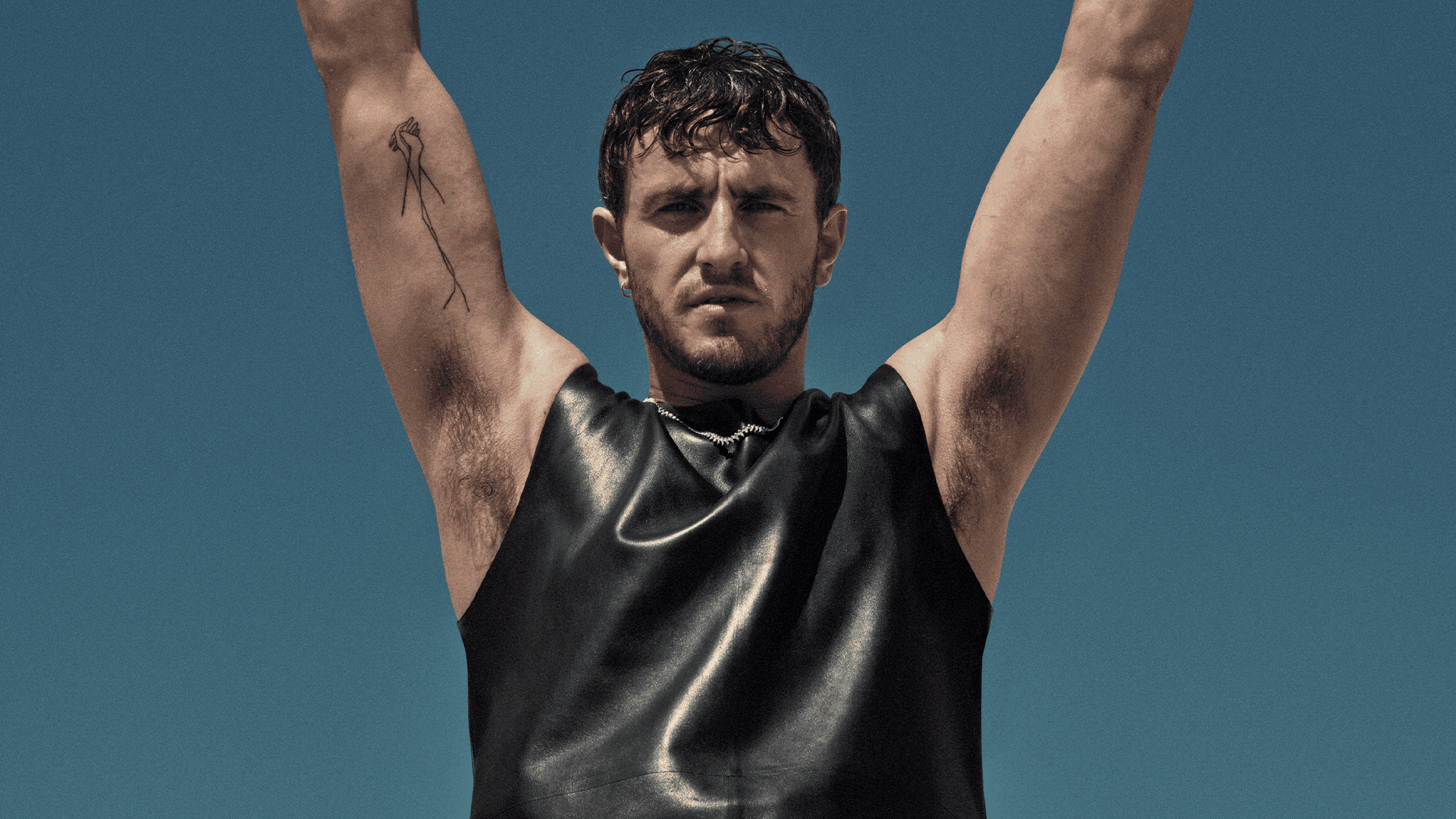
The inner elbow is a tricky spot. It bends, stretches and changes shape when the arm moves, so a tattoo there needs a design that can survive distortion. Fine lines can work well, but the artist has to think about spacing and how the piece will sit when the arm is relaxed. Mescal’s example is a reminder to judge the design on the body, not only as a flat drawing on a screen.
The newer forearm lettering
In 2024, Capital reported a fresh forearm tattoo visible beneath second skin after Mescal appeared on Capital Breakfast. The outlet read the lettering as “Meet me at Montauk”, a phrase associated with Eternal Sunshine of the Spotless Mind. The wording was presented as an observation, not as a confirmed statement from Mescal about the tattoo’s meaning.
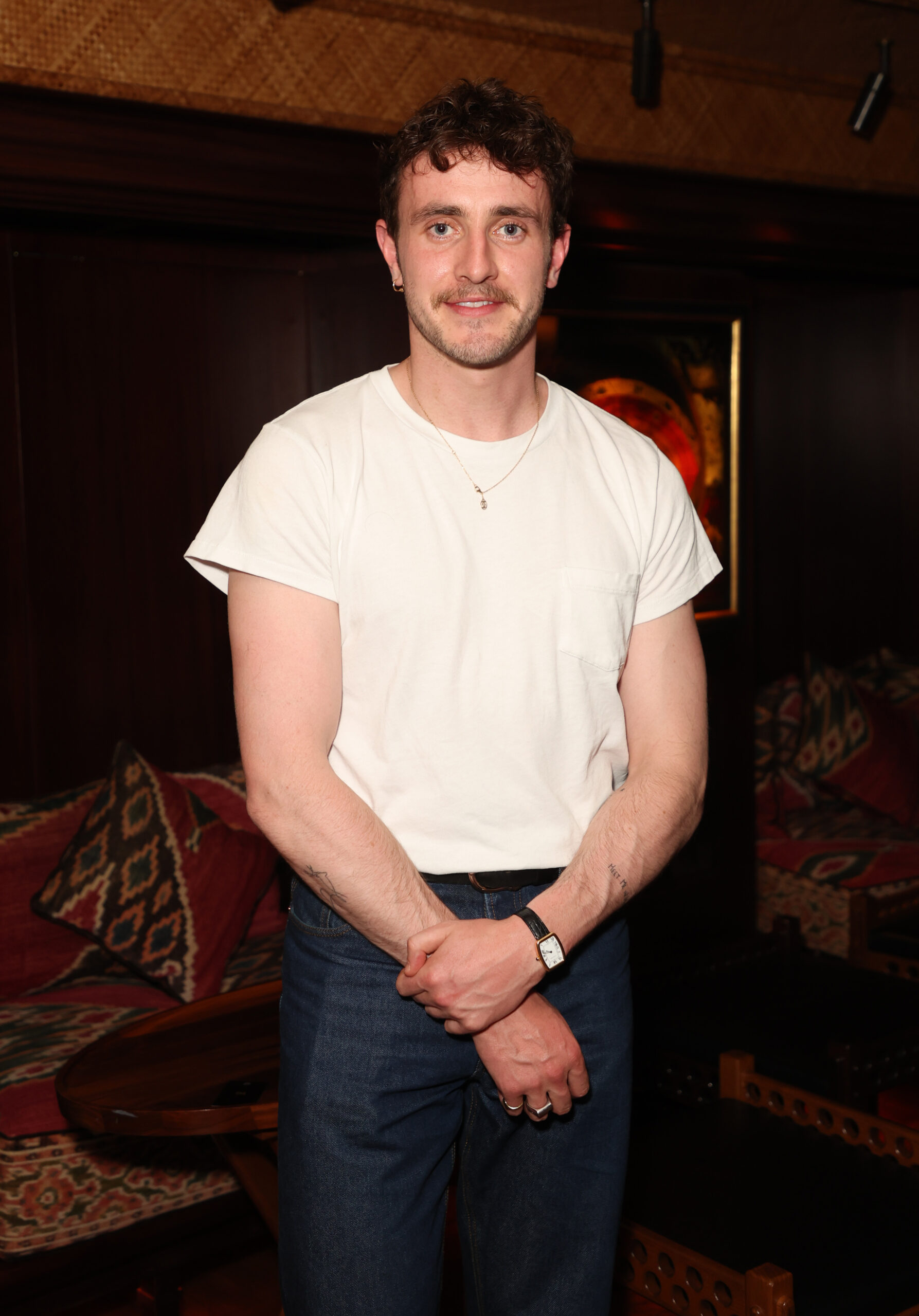
Fresh ink can be swollen, partly covered or photographed at an angle, and lettering that looks obvious in one frame can be harder to read in another. As a design, the reported phrase shows a different side of the collection. It is longer and more text-driven than the swallow or the stag. A short line of film dialogue can work on the forearm if the typeface and spacing are given enough room.
What the photographs really show
Photography is useful here, but it has limits. A sleeveless portrait may reveal several marks at once while hiding the angle needed to identify them. A close-up can make a fine line look darker than it is. Light, distance, skin tension and the age of the tattoo all change the appearance. That is why this guide separates genuine tattoo photographs from clearly labelled contextual portraits.
Comparing different views is more useful than counting every mark as a separate tattoo. The same small line can appear on the arm in a radio-studio photograph, a fashion portrait and a red-carpet shot. Treating each appearance as a different design would inflate the collection and make the article less accurate. Mescal’s tattoos are interesting precisely because they reward a slower look.
Why the collection feels understated
There is a consistent visual mood across the documented pieces. The swallow and stag are recognizable subjects, but neither is rendered as a large traditional composition. The elbow design is intentionally open-ended, and the newer lettering is narrow enough to sit alongside the minimal arm work. Together, the tattoos feel more like small private notes than a planned sleeve.

That is a useful lesson if you are building a similar collection. You do not need every tattoo to match perfectly, and you do not need to fill every visible patch of skin. A few separate designs can share a line weight, a scale or a preference for open space. The result looks collected rather than manufactured, and it gives each new tattoo room to be noticed on its own.
Design ideas without copying the tattoos
The swallow can inspire a small bird tied to a family habit, a place or a date that actually belongs to you. The stag can point toward an animal from a book, film or childhood memory, but it is stronger when the reference is specific. The elbow design suggests choosing a shape because you like its balance, not because an explanation makes it sound profound.

That photograph shows real visible arm ink in a different setting, but the point is not to pretend it proves a brand-new design. It simply shows how small tattoos can sit inside a wider look. Bring your tattooer a clear story, a few visual references and an honest sense of how visible you want the result to be. Then let the design be redrawn for your body.
Placement, scale and ageing
Small fine-line tattoos need sensible expectations. Lines can soften over time, especially when a design is packed with tiny details or placed where skin moves constantly. The inside arm and elbow also experience friction from sleeves and daily movement. That does not make the placements bad; it just means the artist should leave enough breathing room for the design to age without turning into a dark spot.
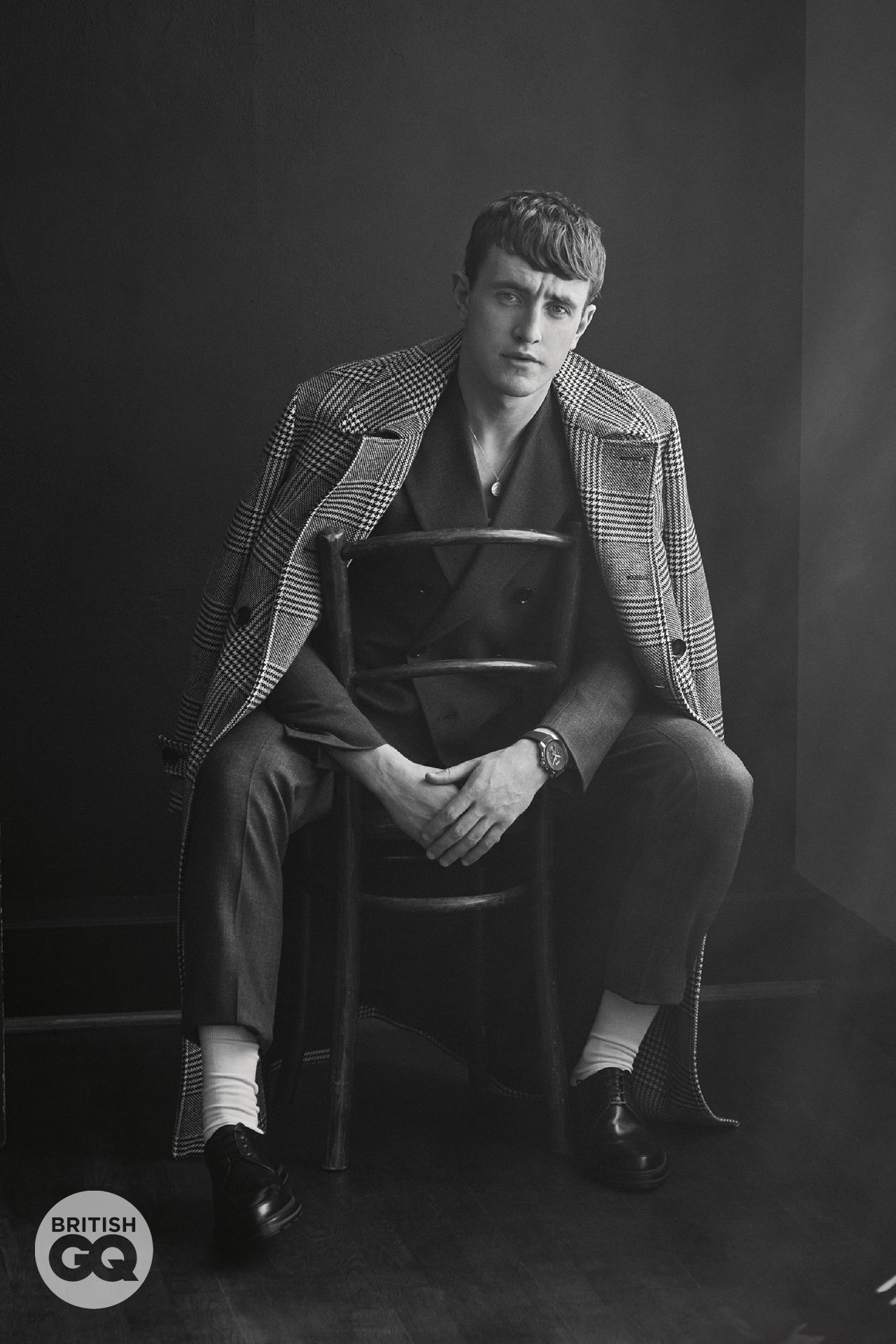
Mescal’s photographs are helpful because they show how tattoos behave in ordinary situations: under rolled sleeves, at events and in relaxed portraits. The pieces are not always perfectly visible, and that is normal. Ask for a design that reads at the intended size, choose a placement you can live with when the novelty fades, and follow the aftercare instructions while the skin heals.
How to keep the reference personal
The best part of Mescal’s collection is not a particular bird or animal. It is the way each mark seems to have a reason that belongs to him, even when the reason is simply liking the design. That is a better starting point than collecting symbols because they look good on somebody famous. A family ritual, a film that genuinely stayed with you or a shape you keep returning to will give the tattoo a stronger foundation.
Keep the reference open enough for the tattooer to make it work on your body. A copied celebrity tattoo may look right in a screenshot and wrong on your arm, while an original version built from the same restraint can feel natural. The goal is not to recreate Mescal’s skin. It is to understand why the small scale, open spacing and selective visibility work.
The honest takeaway
Paul Mescal’s tattoos are a good example of how a small collection can still have range. There is a family memory in the swallow, a carefully guarded connection to Normal People in the stag, a design chosen simply because it looked right, and a newer text piece whose exact reading should stay qualified.
The common thread is not a single theme. These are small, personal marks rather than a loud matching set. It is a preference for restrained work that can sit quietly on the body. If you want that feeling, start with a real reference from your own life and keep the design open enough to breathe. Use photographs to study scale and placement, not to invent facts. The best Paul Mescal tattoo ideas are not exact copies; they are small, personal marks with enough room for the wearer to make them their own.