Adèle Exarchopoulos has a back tattoo that comes into view when her clothes and pose leave the skin exposed. It sits high on her back near a shoulder blade, so many portraits do not show it at all. Backless looks at film festivals have made the design easier to see, including a 2025 Venice appearance and photographs from Cannes in 2026.
The clearest descriptions call it a hand gripping a dagger. The photos show a compact, upright mark, but they do not settle every line or explain what the image means to her. They do show how a tattoo in this position can remain private under most clothing and become part of an event photograph for a moment.
The tattoo at the Venice Film Festival
The Venice photographs place the design on the upper back, close to the shoulder blade and slightly toward the side of the torso. Vogue France described the backless black look as revealing a hand holding a dagger. In the image, the tattoo reads as a narrow vertical piece rather than a large back composition or a sleeve.
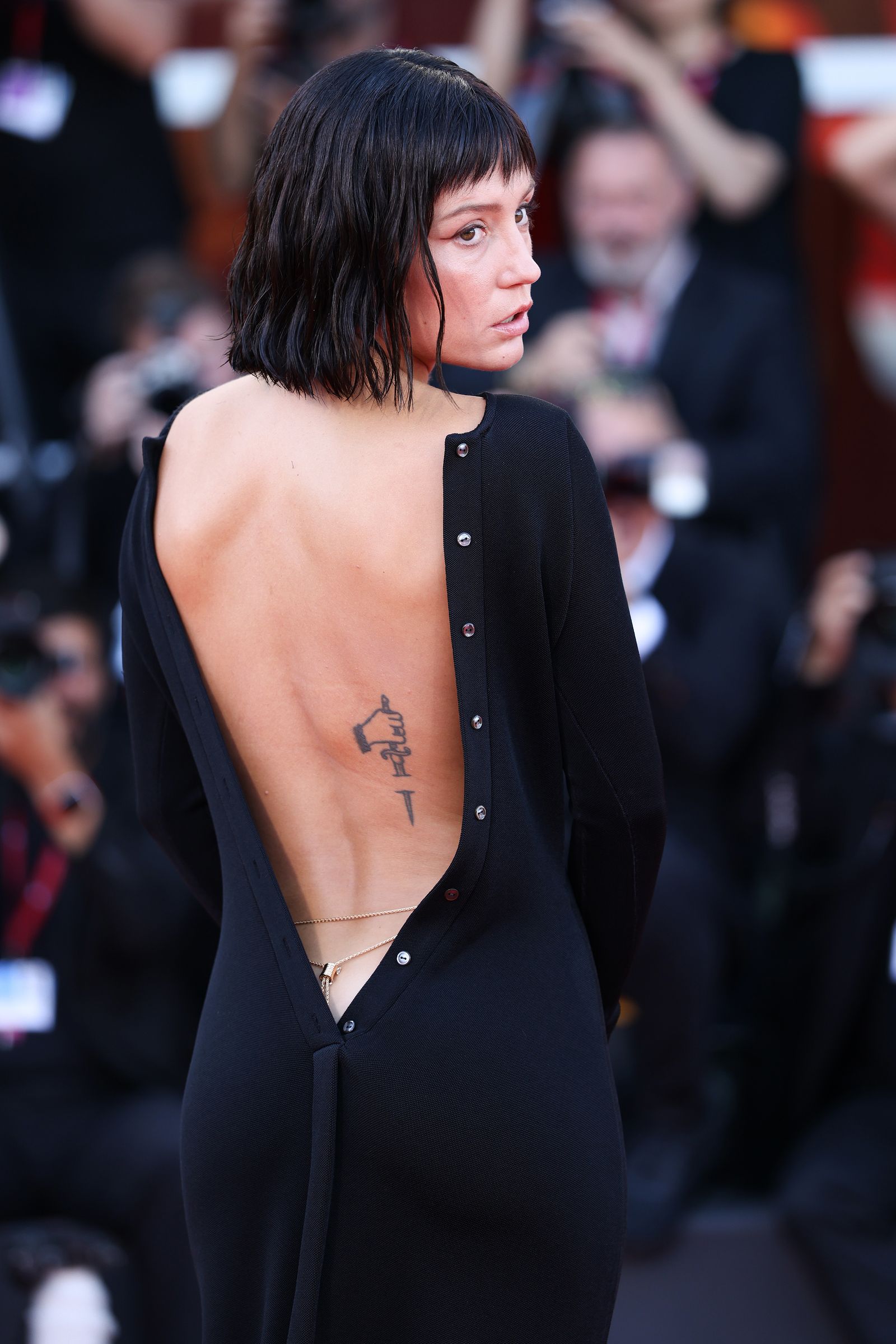
The exact contours are hard to read at event-photo distance. Hair, fabric and the angle of Exarchopoulos’s shoulders can cover part of the design, so it is more accurate to describe its position and overall shape than to name details that are not clear. The photos show dark linework against the skin; they do not establish the tattoo’s original ink colors.
The black dress gives the exposed area a clean backdrop, and her side-on pose makes the upright shape easier to notice. This is a credited festival photograph with the tattoo visible on her skin, rather than a styling graphic or an image from a character she played.
The tattoo in the 2026 Cannes photographs
A Cannes photograph from 2026 offers another view of the same back area. The frame includes the event around her—photographers, steps and movement—so it feels different from the closer Venice image. The tattoo appears when her open-backed outfit and turned pose leave a strip of skin visible.
The second angle does not establish a new tattoo. It shows the same slender, upright design from a different event and distance. The visible evidence supports its existence and approximate placement, but not a more detailed inventory than the photos allow.
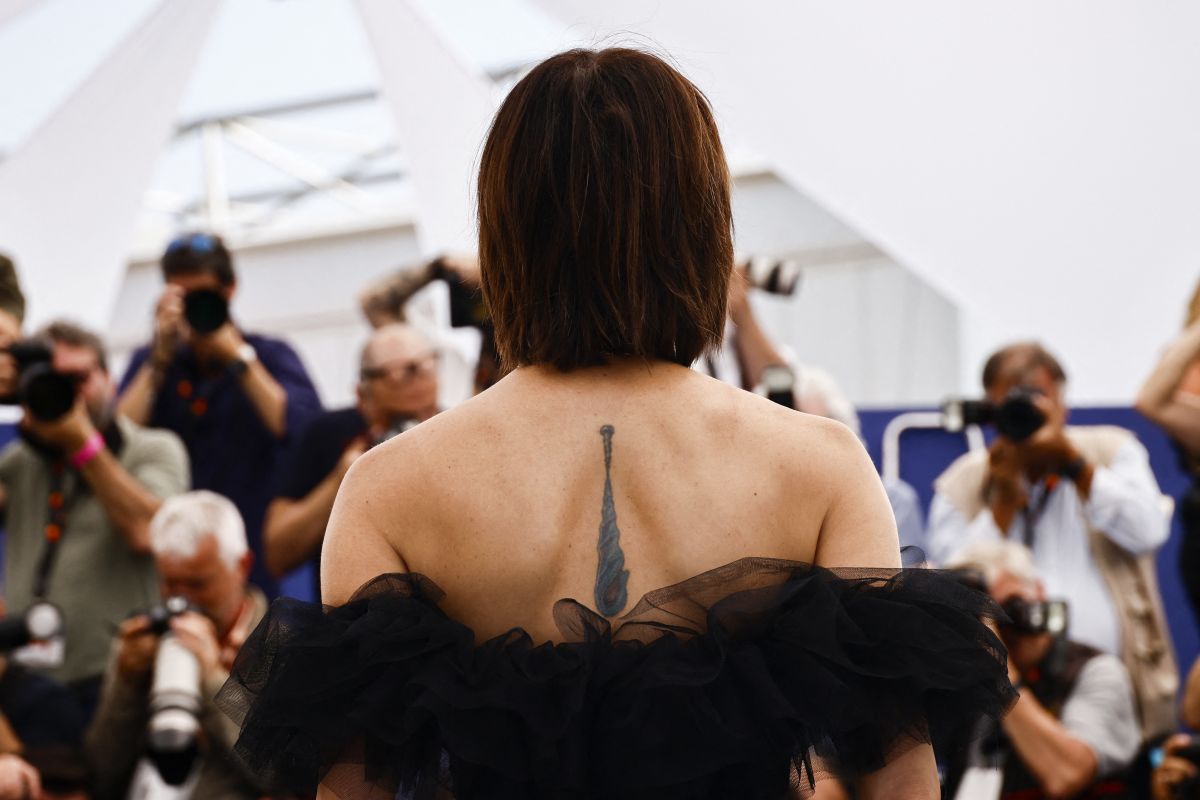
That makes the Cannes picture useful alongside Venice: both document the same tattoo, but neither should be presented as proof of a second piece. The event image also shows how the dark vertical mark sits when her back is turned away from the cameras and the dress leaves only part of the area uncovered.
The Cannes look around the reveal
The tattoo appeared as part of Exarchopoulos’s festival wardrobe, not during a dedicated tattoo interview. Her Cannes styling brought together a dramatic silhouette, polished hair and a controlled pose. In that larger look, the back design is one detail among the dress, the press line and the event itself.
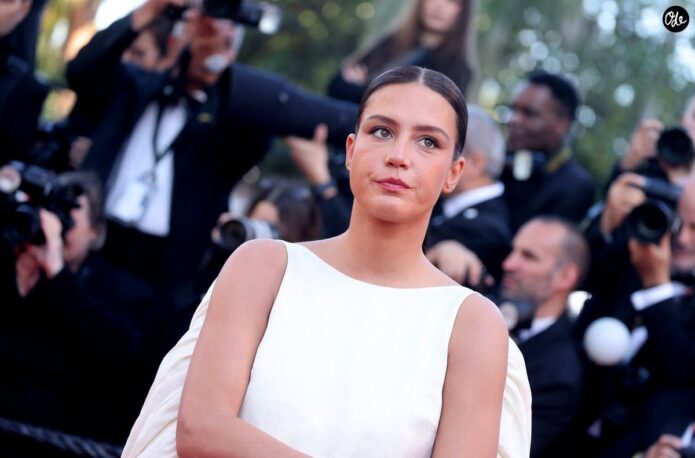
A face-visible Cannes portrait makes the contrast clear. From the front, the face, neckline and press setting identify the appearance, but the tattoo cannot be seen. That image is useful for context; the open-back views are the ones that show the ink.

Keeping those roles separate matters. A portrait can establish who is pictured and what she wore without becoming evidence of a tattoo it does not show. This front-facing frame is kept as event context, while the article’s tattoo descriptions stay tied to the photos where the design is visible.
A second Cannes look
Exarchopoulos appears in different kinds of public photographs: close portraits, full-length gowns and candid frames from premieres or press lines. Each gives a different view of the occasion. The tattoo is one personal detail that sometimes enters those images, rather than the reason every photograph was taken.
Another face-visible portrait in the gallery gives a quieter view of her public appearances. Its styling and awards-photocall setting offer identity context, but there is no clear view of the back tattoo. It should not be used to claim that the design is visible.
That distinction keeps the photo set useful without stretching what it proves. A clear portrait can be included for the reader while remaining neutral about body art. The back views show the tattoo; the face-visible frames establish the subject and the public setting.
Why the image became a fashion story
Clothing determines when a back tattoo can be seen. A jacket, high neckline or loose hair may cover it through an entire evening. An open-backed gown changes the view, making a personal piece visible in a photograph without changing the tattoo itself.
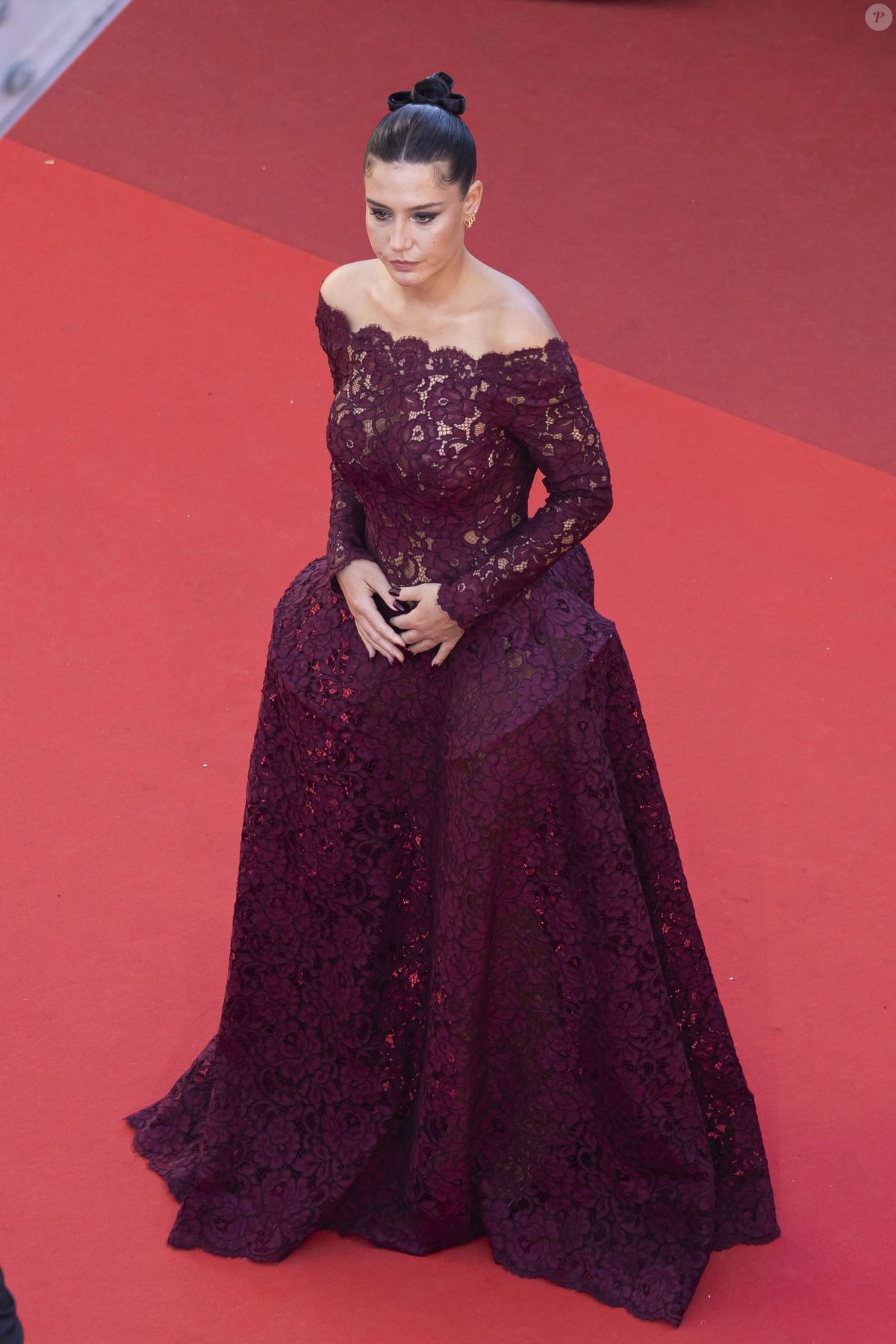
That is what the festival pictures captured. Photographers were documenting the dress and the event, but the opening at the back gave viewers something else to notice. The image spread because it paired a recognisable actress and a high-profile film festival with a design that is absent from most front-facing portraits.
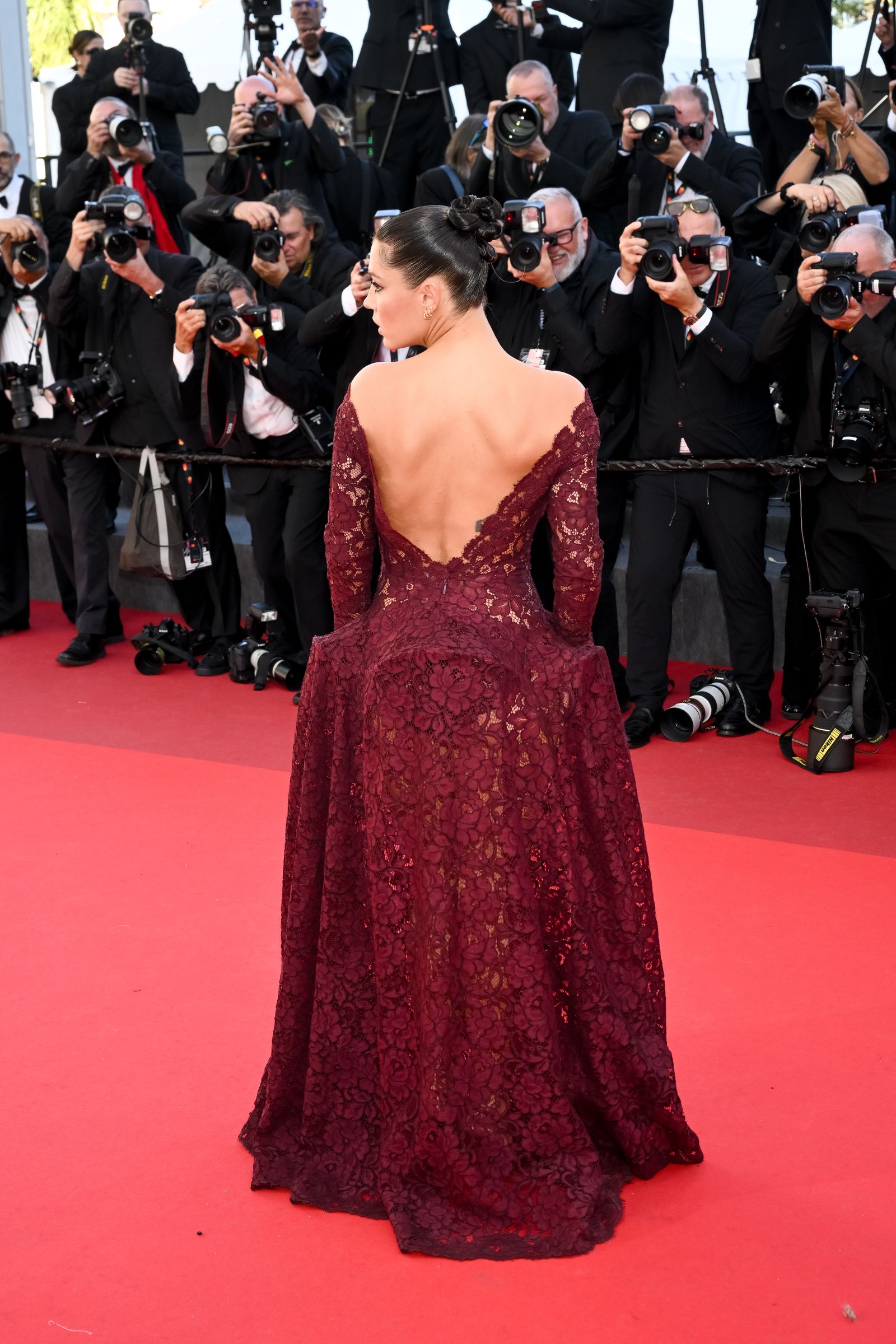
This final portrait adds another view of the event, not another tattoo claim. It is a back-view image used for the fashion setting; the two tattoo-specific photos remain the clearest evidence of the design. Together the set gives readers the subject, the clothing and the ink without treating every frame as interchangeable.
A question of personal meaning
The public descriptions focus on the visible motif: a hand holding a dagger, placed high on the back near the shoulder blade. The available festival photographs do not explain why Exarchopoulos chose it. Without a first-person account, it is better to leave the meaning open than to turn the image into a story she has not shared.
The placement itself affects how the tattoo is seen. It can be covered in ordinary clothing and revealed by a particular neckline or pose. That visibility is part of the public photo record, but it does not tell us what the design means privately.
How to read the photographs
The camera can show the approximate location and the shape visible in each frame. The publication and credit provide the event context and date. Neither an outfit nor a photograph supplies a personal explanation. Here, the Venice and Cannes images document the tattoo’s appearance; the face-visible portraits identify the actress and the setting.
They are different photographs of the same confirmed tattoo area, not evidence of two separate designs. Keeping that clear avoids repeating one claim under several headings. The close views show the dark hand-and-dagger form; the other portraits add context without being labelled tattoo evidence.
Adèle Exarchopoulos in context
Exarchopoulos’s back tattoo is selectively visible. It appears when an open-backed outfit and the angle of her shoulders expose the area, and disappears in many other portraits. The Venice and Cannes photographs are useful because they show the design in public while preserving the difference between a clear tattoo view and a general event image.
The available record supports a genuine tattoo near the shoulder blade with a hand-and-dagger form. It does not provide a fuller personal meaning or establish the ink colors. Vogue France’s credited gallery and the separate festival photographs supply the event views used here, while the Marie Claire interview clip provides a point of comparison for readers looking at the surrounding coverage.