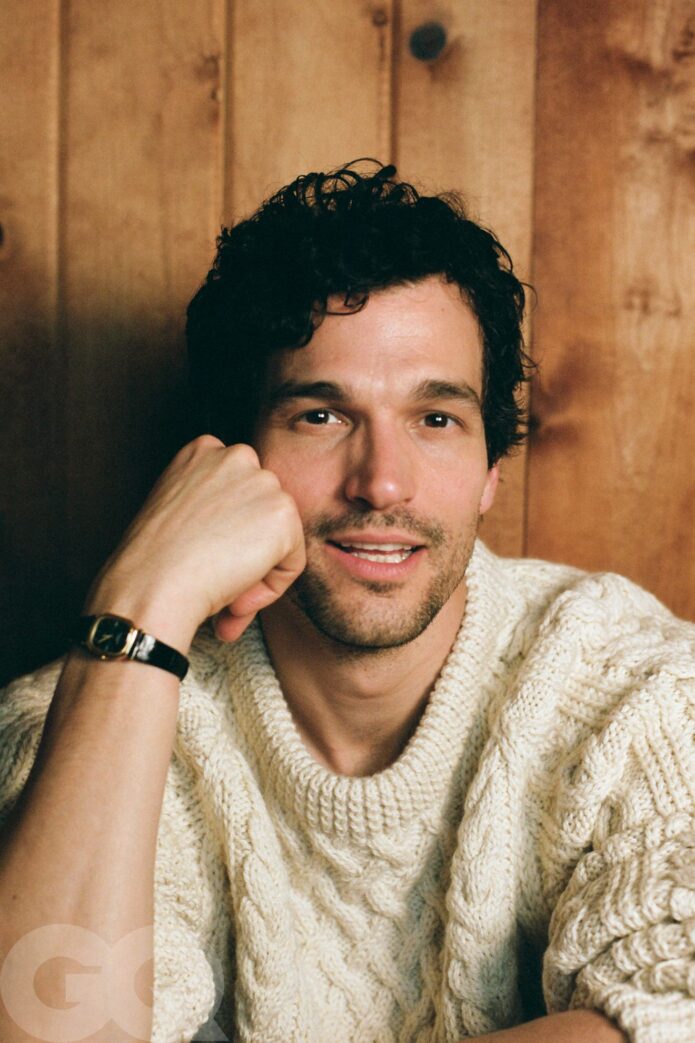
Paul Anthony Kelly has the kind of tattoo collection that disappears when he puts on a suit. That’s part of what made his breakout as John F. Kennedy Jr. in Love Story such a funny visual surprise. On screen, the look is polished and very old-school. Off screen, Kelly has around 30 tattoos spread across his body, including pieces he calls aggressive, pieces he regrets, and at least one tattoo he knows he’ll never remove.
That contrast is the useful part if you’re looking for Paul Anthony Kelly tattoo ideas. His ink isn’t presented as one perfectly planned sleeve or a matching set designed in a single afternoon. It grew through different eras: punk music, modeling, travel, relationships, and the need to push back against a narrow image of what he was supposed to look like. Some of it is bold. Some is easy to hide. Some of it only makes sense if you know the reference.
The quick version
GQ reports that Kelly has about 30 tattoos. The clearest detail from that profile is a “138” tattoo tied to the Misfits song of the same name. Kelly has said he’s keeping that one. He has also admitted that a few of his tattoos feel too aggressive for who he is now and that he has considered removal. That’s a more realistic way to look at celebrity ink than pretending every old tattoo still represents the person wearing it.
The available photos show two especially useful parts of the collection. One close portrait gives a clear look at the chest tattoo tucked above his robe. Another face-visible portrait in a white tank top shows larger work running over both arms. Those photographs don’t prove the design or meaning of every tattoo on Kelly’s body, so the rest of the collection should be treated carefully. His own comments give us the broad picture; the images let us study specific placement and style.
The chest tattoo that peeks out of the robe
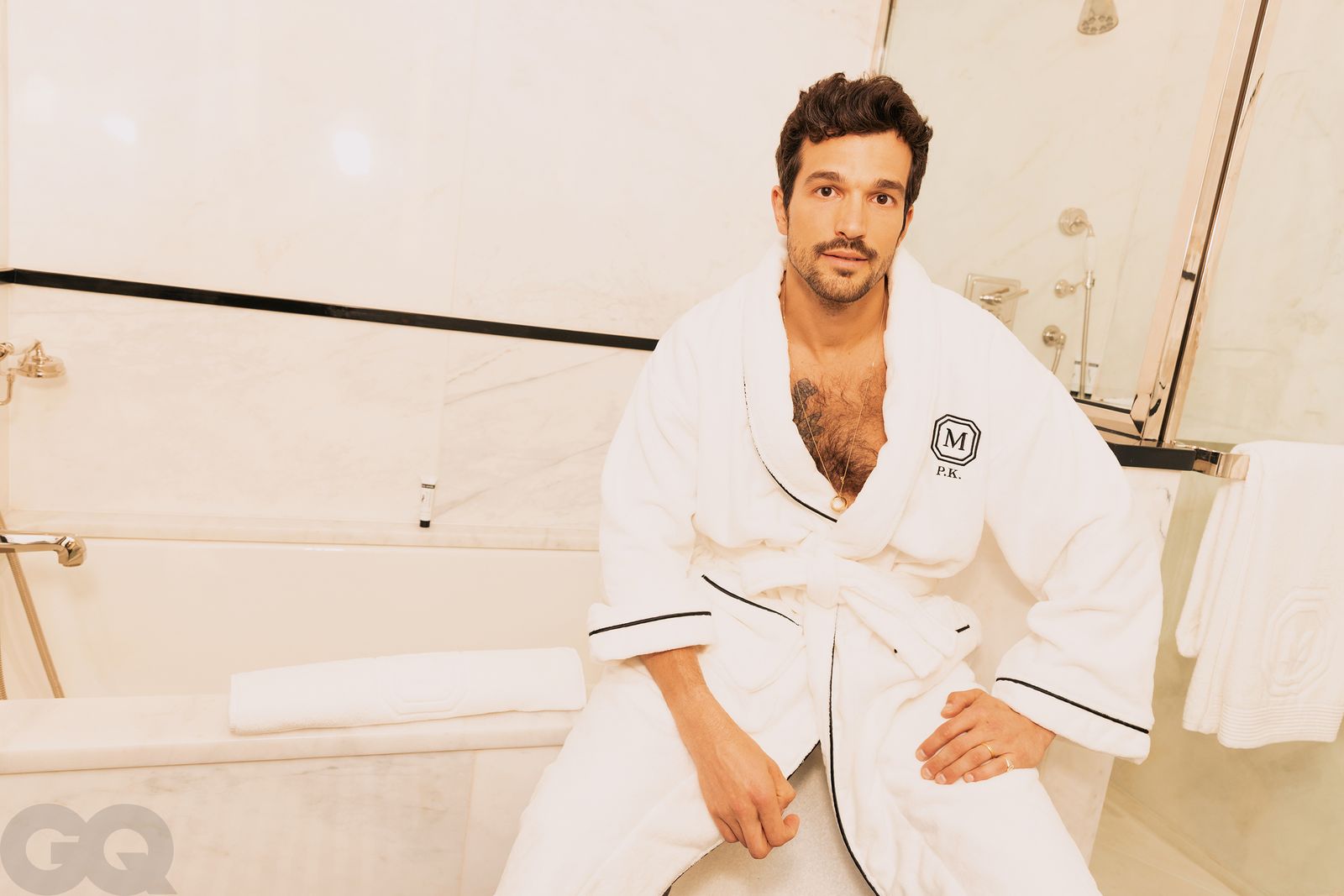
The GQ Italia portrait is a great example of how Kelly’s tattoos can stay almost invisible under regular clothes. He’s sitting in a white robe, and the open neckline gives just enough room for a dark chest design to show. It isn’t a full shirtfront shot, so you can’t honestly identify every part of the piece. What you can see is the placement: the tattoo sits high on the chest, close to the collarbone and sternum, with the black linework breaking through the pale robe and chest hair.
That placement has a particular advantage. It can read as private most of the time, then become visible when the wearer chooses an open shirt, a tank top, or a loose sweater. If you want a tattoo that feels personal without being the first thing people notice, the upper chest gives you that control. It also gives the artist a broad, relatively stable surface, although the center chest can be a rough spot for anyone who isn’t used to tattoo pain.
Kelly’s chest ink also fits the larger idea behind his collection: the tattoos can be part of his identity without needing to dominate his appearance. A clean-cut haircut and a tailored jacket don’t cancel out the punk references underneath. They just change how quickly you see them.
The arm tattoos are where the collection gets louder
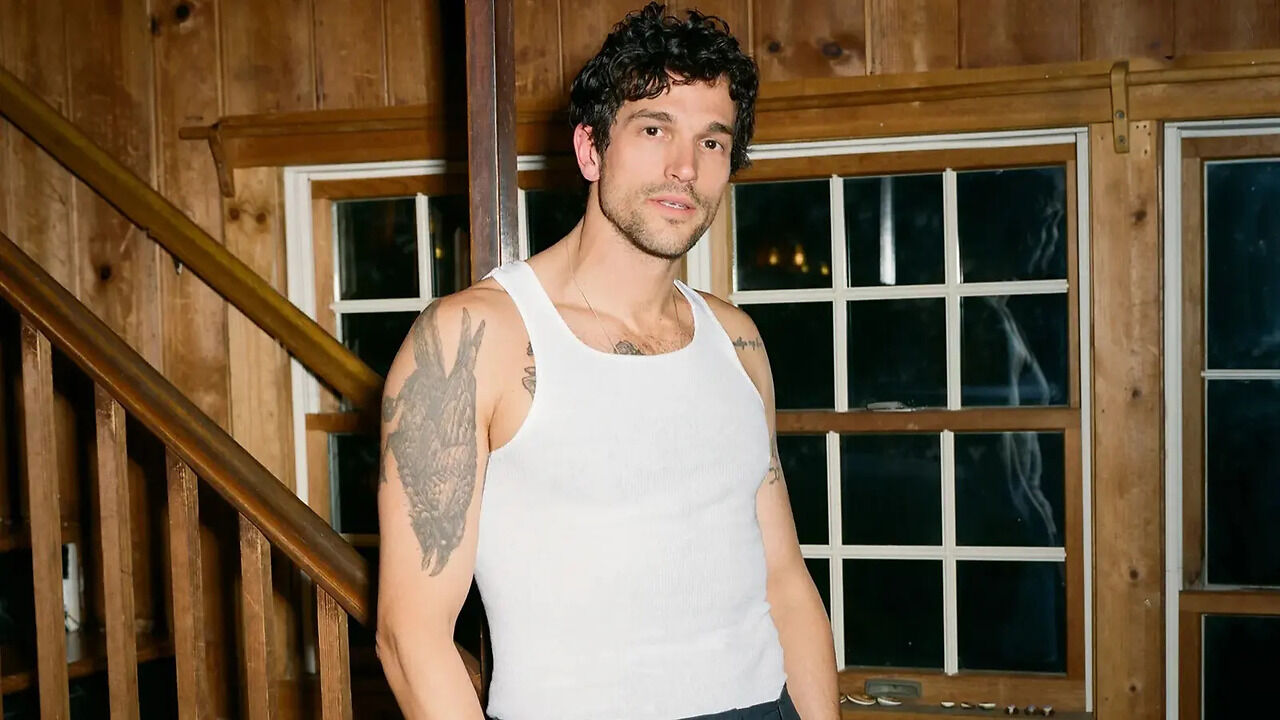
The Zoom TV portrait gives a much better view of Kelly’s arm work. He’s wearing a white tank top, and the image shows a large, shaded design covering much of one upper arm, along with additional ink across the opposite arm and upper chest. The main arm piece has a dense, graphic feel rather than the tiny fine-line look that’s popular in current flash sheets. It has enough weight to hold up from a distance, which is exactly what you want from a large upper-arm tattoo.
The photo also shows why a tattoo collection can feel cohesive even when the designs don’t match. Kelly’s work uses scale and contrast as the common thread. Some tattoos are smaller and more hidden, while the upper-arm piece gives the whole collection a visual anchor. You don’t need every tattoo to share a subject. Repeating a little black ink, strong outlines, or a similar level of shading can be enough to make separate sessions feel like they belong to the same body.
If you’re thinking about an arm tattoo with this kind of presence, pay attention to how it wraps around the muscle. A design can look great in a straight-on reference photo and lose its shape when it crosses the shoulder cap or disappears toward the tricep. Ask the artist to show you the stencil from the front, side, and back before the needle starts. The best placement follows the body instead of fighting it.
What “138” means to Kelly
Kelly’s “138” tattoo is the one piece he has singled out by name. It refers to the Misfits song “We Are 138,” a title that makes sense inside his goth-punk background. He has talked about growing up with a love of punk, and the reference is a better clue to his personality than the polished Kennedy styling of Love Story.
Number tattoos can look mysterious when the owner doesn’t explain them. That’s also why they can work so well. A date, jersey number, song reference, room number, or private code can carry a lot of meaning without spelling it out to everyone else. Kelly’s example shows the difference between a number chosen because it looks clean and a number tied to a real piece of your history.
If you’re borrowing the idea, don’t choose a number just because it has a nice shape. Start with something you already repeat in your life. Maybe it’s the number on an old apartment, a track that got you through a difficult year, or the page where a family note was written. The explanation can stay private, but the source should be real.
The television role and the makeup chair
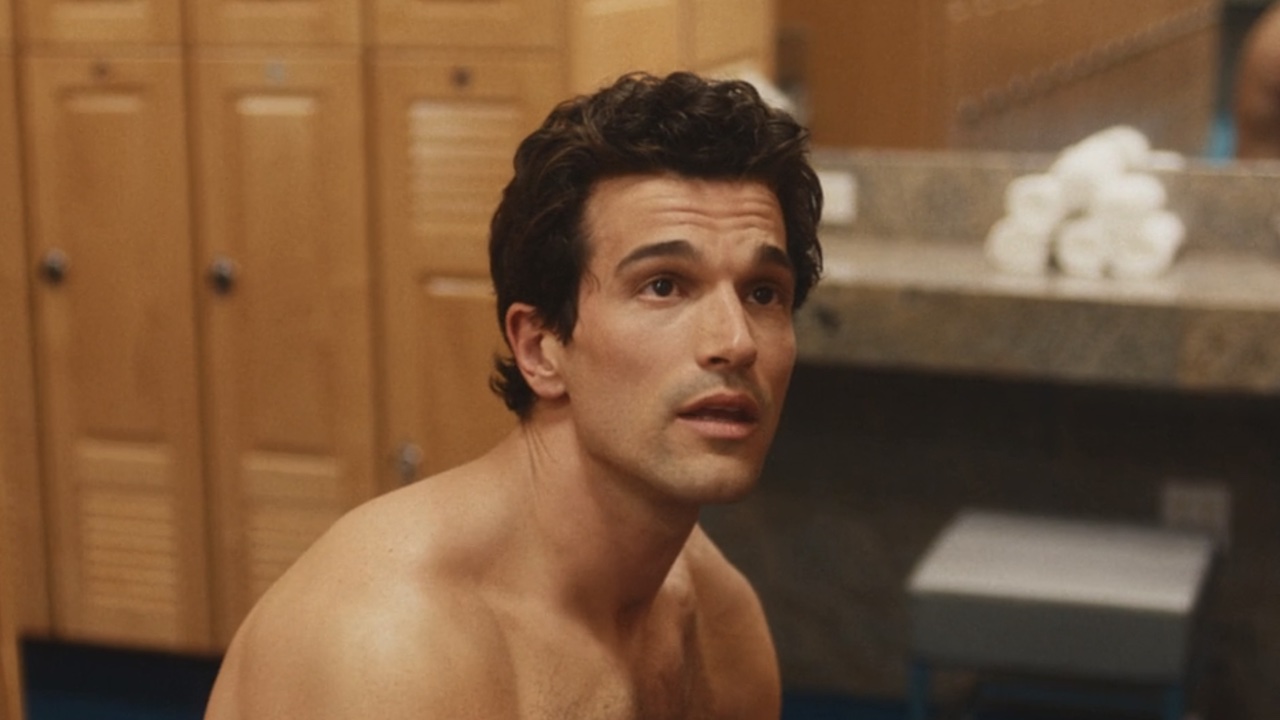
This shirtless Love Story still is useful context, but it isn’t tattoo evidence. The crop and lighting don’t give a clear enough view of the ink to identify individual designs. What it does show is the kind of visual problem the makeup department had to solve: Kelly’s body art had to disappear when he played JFK Jr.
Covering tattoos for a period drama is a slow, technical job. The goal isn’t simply to paint over black ink with a skin-colored product. Artists have to neutralize dark pigment, match the actor’s changing skin tone, blend the edges, and make sure the cover-up survives lights, movement, sweat, and repeated takes. Kelly has described tattoo cover-up as a major part of his time in the makeup chair.
That contrast gives his collection another layer. The tattoos are a visible part of Kelly’s real style, but acting sometimes requires the opposite: making all of that personality vanish so the audience sees the character first. It’s a good reminder that placement matters if your job, sport, or family life sometimes demands a more conservative look.
The career behind the look

Kelly had already spent years working as a model before becoming widely known as an actor. A tailored suit, a clean editorial portrait, and a polished red-carpet look can make the tattoos seem like a surprise. The GQ profile makes the connection clearer. He has talked about a goth-punk side, tight jeans, eyeliner, and the pressure to fit the image other people wanted from him.
That history matters when you look at the ink. Tattoos were part of a way to push back against being boxed in. He has also been honest that some choices belonged to an older version of himself. Both things can be true. A tattoo can mark a real period in your life and still become something you no longer identify with completely.
There’s no reason to force a deep explanation onto every piece. Sometimes a tattoo came from a bad relationship, a touring phase, a friend’s idea, or a night when the decision felt obvious. The useful lesson is to think about how much permanence you’re comfortable with before copying the impulsive part of someone else’s story.
Directions worth borrowing
Kelly’s collection is a good starting point for a few different directions:
- A hidden chest tattoo: choose a placement that shows with an open shirt but stays private under everyday clothes.
- A bold upper-arm piece: pick one design with enough weight and contrast to become the visual anchor for future tattoos.
- A number with a real backstory: use a song, date, address, or private reference instead of a random string of digits.
- A punk or music reference: borrow the feeling of a favorite band without copying an album graphic or someone else’s exact tattoo.
- A collection that can change: leave space for later pieces and accept that your taste may move in a different direction.
The strongest idea here is the last one. You don’t need to pretend your tattoo collection was planned perfectly from the beginning. Kelly’s tattoos have different moods, and that’s part of what makes them believable. The collection records a person changing their mind, finding new references, and carrying a few old decisions forward.
What to ask for at the studio
Bring the artist a clear idea of the subject and the placement, but don’t expect a screenshot to do all the work. A good artist will adjust the design to your anatomy, the direction of the muscle, and the amount of detail the skin can hold. That matters even more for upper-arm work and chest pieces, where curves can distort straight lettering or symmetrical shapes.
Ask how the tattoo will age. Heavy black work can stay readable, but tight detail can merge as the lines soften. Fine lettering needs enough breathing room. A large design may need to wrap around the arm rather than sit like a flat sticker. If you’re planning a cover-up, be upfront about what is underneath and show the artist healed photos if you have them.
Most of all, be honest about why you want the tattoo. Kelly’s “138” works because it belongs to his music history. His bigger arm pieces work because he was willing to let them become part of how people see him. You can take the same approach without copying a single design. Find the reference that is yours, then let the artist turn it into something that fits your skin.
Room for contradiction
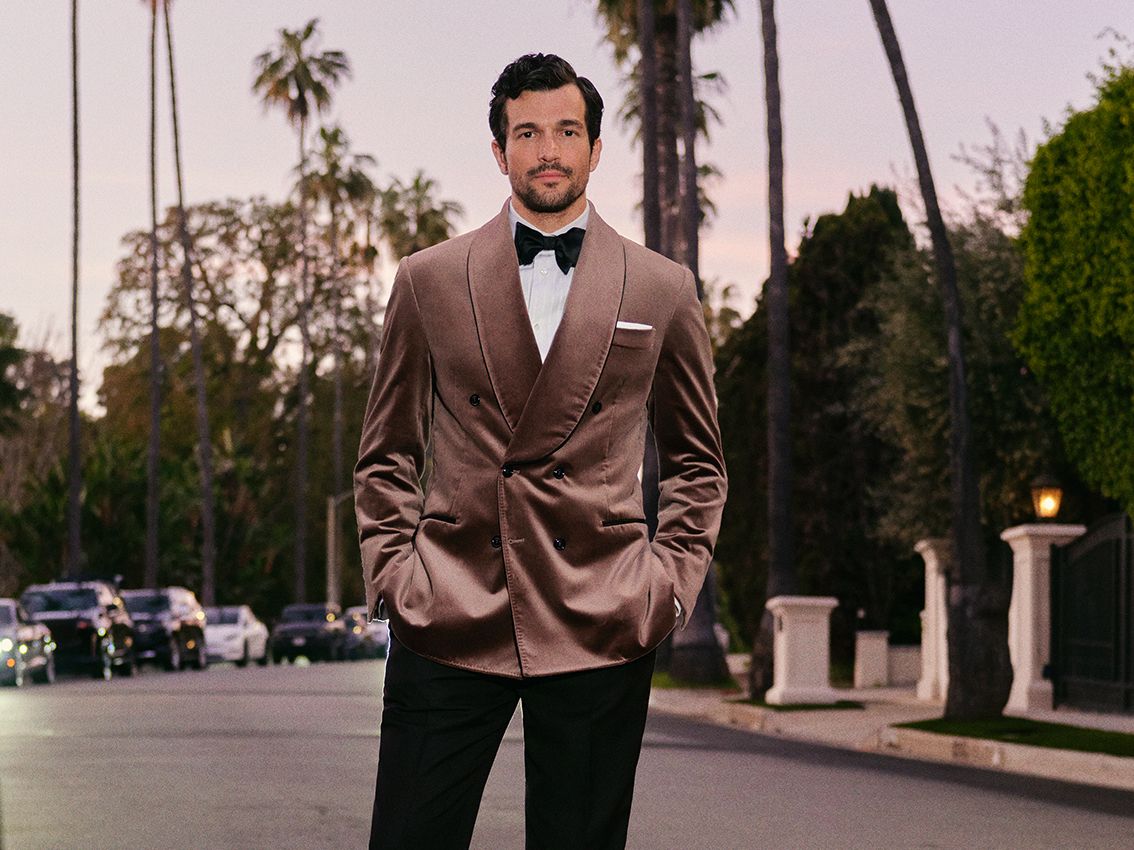
Paul Anthony Kelly’s tattoos don’t line up neatly with his public image, and that’s exactly why they’re interesting. The face-visible portraits show an actor who can look completely at home in a tuxedo, a sweater, or a period costume. The tattoo photos show a different layer: black ink across the arms, a chest piece that appears when the robe opens, and a collection built through years of changing taste.
There’s also a practical lesson in the way the collection is talked about. We know Kelly has around 30 tattoos and that “138” is tied to the Misfits. We know he has regrets about some of the more aggressive pieces and has considered removal. We don’t need to invent a meaning for every shape visible in a photo. Leaving a little mystery is more accurate, and it keeps the article useful for anyone who wants design ideas without being handed a made-up story.
Use the visible details as references: hidden chest placement, strong arm coverage, dark linework, and the confidence to let different chapters sit together. Then make the final design personal. That’s the part of Kelly’s tattoo story worth keeping.