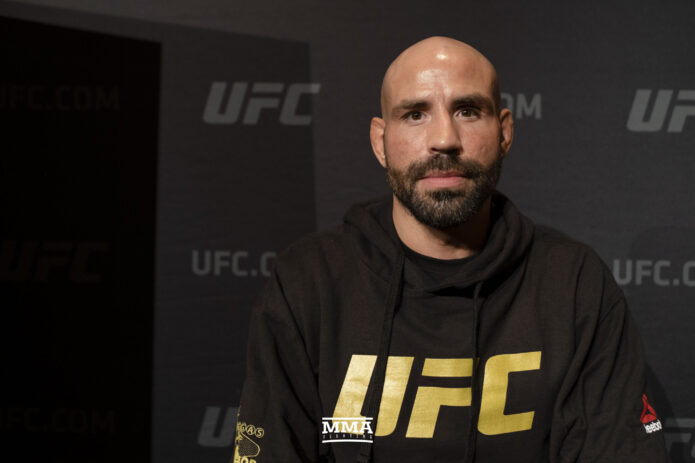
Ben Saunders’ tattoos are easiest to recognize by the dragon. It crosses his left shoulder, works down the upper arm and brings its face onto his chest. Even in a busy fight photograph, that stretch of black-and-gray ink is hard to miss. The smaller work on his other arm takes a closer look, but it belongs in the conversation too.
This is Ben “Killa B” Saunders, the MMA fighter, not the Dutch singer and tattoo artist with the same name. His ink sits alongside a career that includes The Ultimate Fighter, UFC appearances and Bellator tournaments. You don’t need to know every result to appreciate the tattoos, though. The interesting bit is how a few large designs occupy the body, rather than how many separate pieces can be squeezed onto a list.
There’s also some real personal background behind the imagery. Saunders discussed his tattoos in a February 2013 Inked profile, including his early connection to Gracie jiu-jitsu and his interest in warrior principles. That gives us more to work with than a dragon-equals-strength guess. The photographs below show the shapes; his interview helps explain why martial arts belongs in the discussion.
The dragon across his left shoulder and upper arm
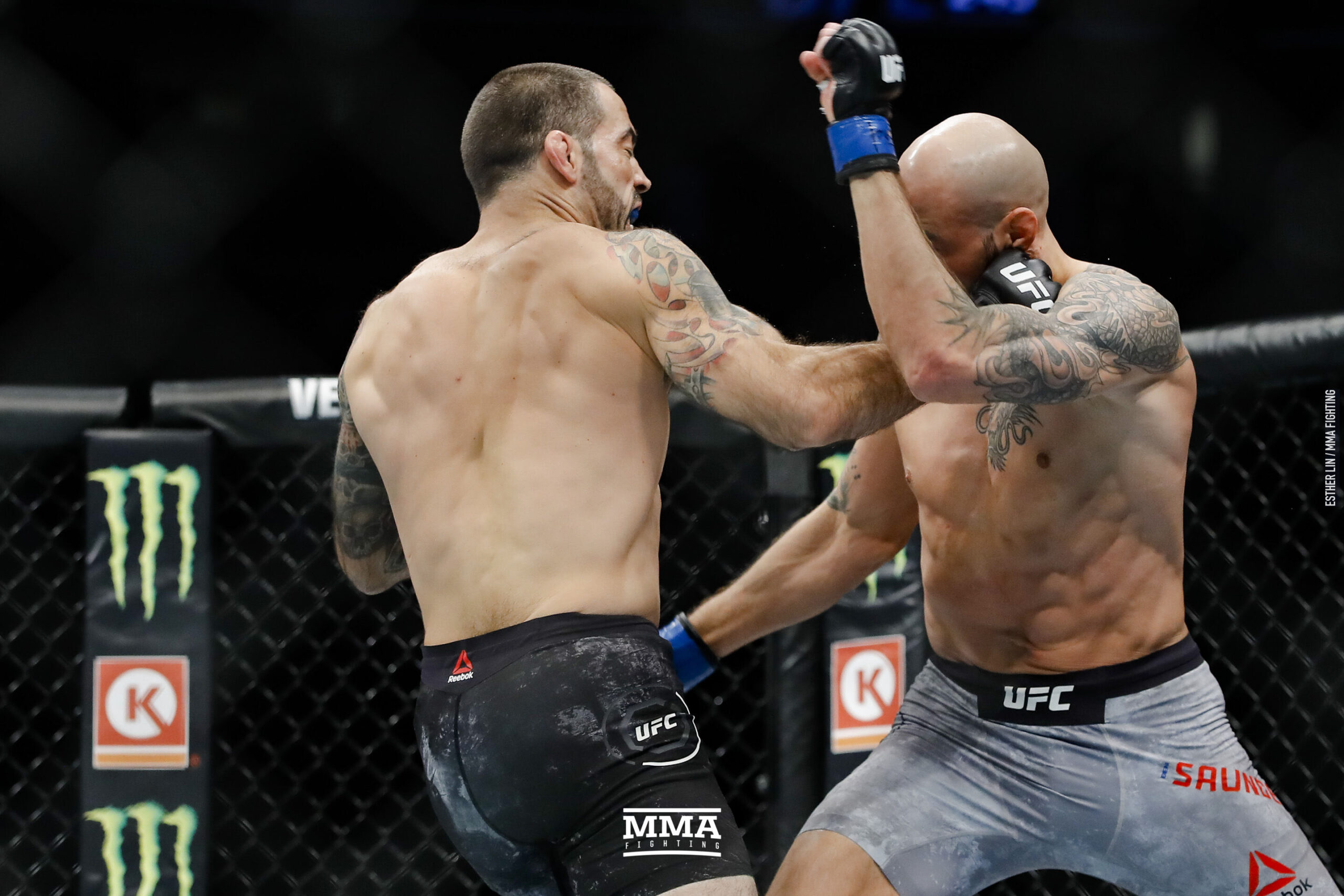
The broadest part of Saunders’ dragon tattoo sits over his left shoulder. Its body bends around the rounded muscle instead of running straight down the arm. Rows of scales give that curve a recognizable surface, while darker shading breaks up the outline. It has a lot going on, but the large shape remains readable before you pick out the smaller marks.
Look at the fight photograph with Saunders on the right. His raised arm changes the angle of the shoulder, yet you can still follow the dragon around it. That’s a useful view of the placement: this isn’t a flat drawing sitting on a flat patch of skin. The design wraps, disappears around the side and comes back into view as he turns.
The lighter gaps matter as much as the dark areas. Without them, the scales and curling shapes could merge into one heavy patch in an action shot. Here, pale skin between sections gives the eye somewhere to land. It makes the shoulder feel layered rather than uniformly shaded.
The arm and chest should be read together. They aren’t two unrelated dragon tattoos just because a list could split them into two entries. The shoulder supplies the sweep of the body, while the front of his torso gives the face more room. Looking at only one angle leaves out a good part of the composition.
There’s a Japanese-inspired feel to the long, coiling creature and its treatment across the shoulder. That’s a visual description, not a claim about a particular tattoo school, artist or traditional rulebook. The available interview doesn’t identify the person who tattooed it, and the pictures don’t supply that missing credit.
The dragon’s face on his chest
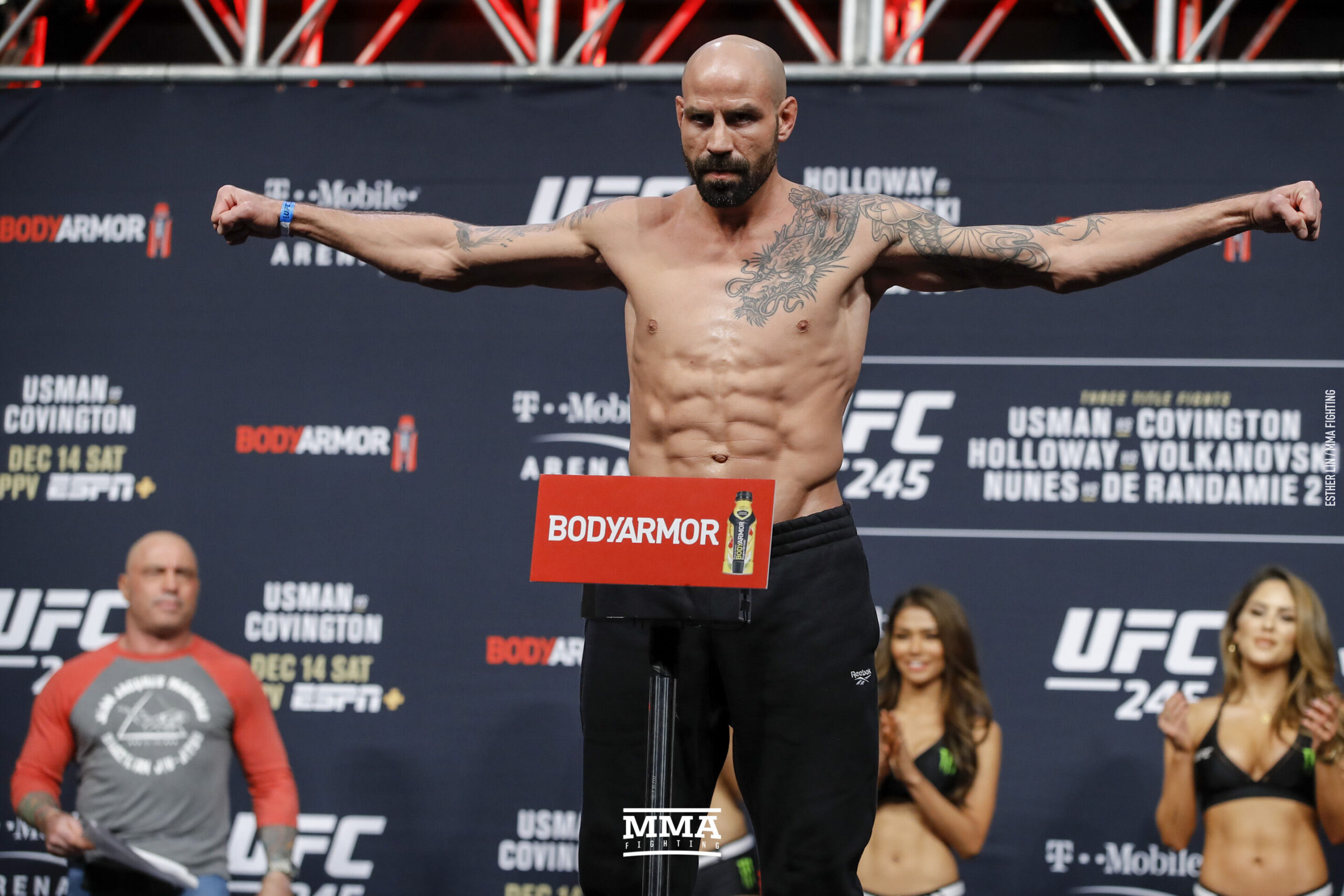
The front-facing weigh-in photograph makes the chest section much easier to read. With Saunders’ arms stretched out, the dragon’s head sits on the left side of his chest, attached visually to the work on the shoulder. The mouth is open, and the pointed features and whisker-like lines give it a restless, snarling look.
That position changes the balance of the whole tattoo. A shoulder-only dragon can be mostly about a winding body. Putting the head on the chest gives this one a clear focal point when Saunders faces the camera. You can follow the face outward toward the arm, rather than having to hunt for it somewhere around the back of the shoulder.
The head also has enough open space around it to stay separate from his chest and abdominal contours. His torso isn’t covered edge to edge. That contrast is part of why the dragon is so noticeable: the surrounding bare skin lets the face stand on its own, even though it belongs to a much larger piece.
It would be easy to attach a long menu of meanings to the creature. Saunders’ own account is more useful. In the 2013 Inked profile, the dragon and samurai were connected to the warrior principles he wanted to live by. That supports a martial-arts connection, but it doesn’t establish a separate personal meaning for every horn, scale or curl.
The placement is worth noticing without turning it into a biography. The face looks outward from his chest, while the body moves around the arm. Those are visible design choices. Claims that it represents a specific victory, family member or stage of his career would need something more than the photographs.
The samurai imagery on his right forearm
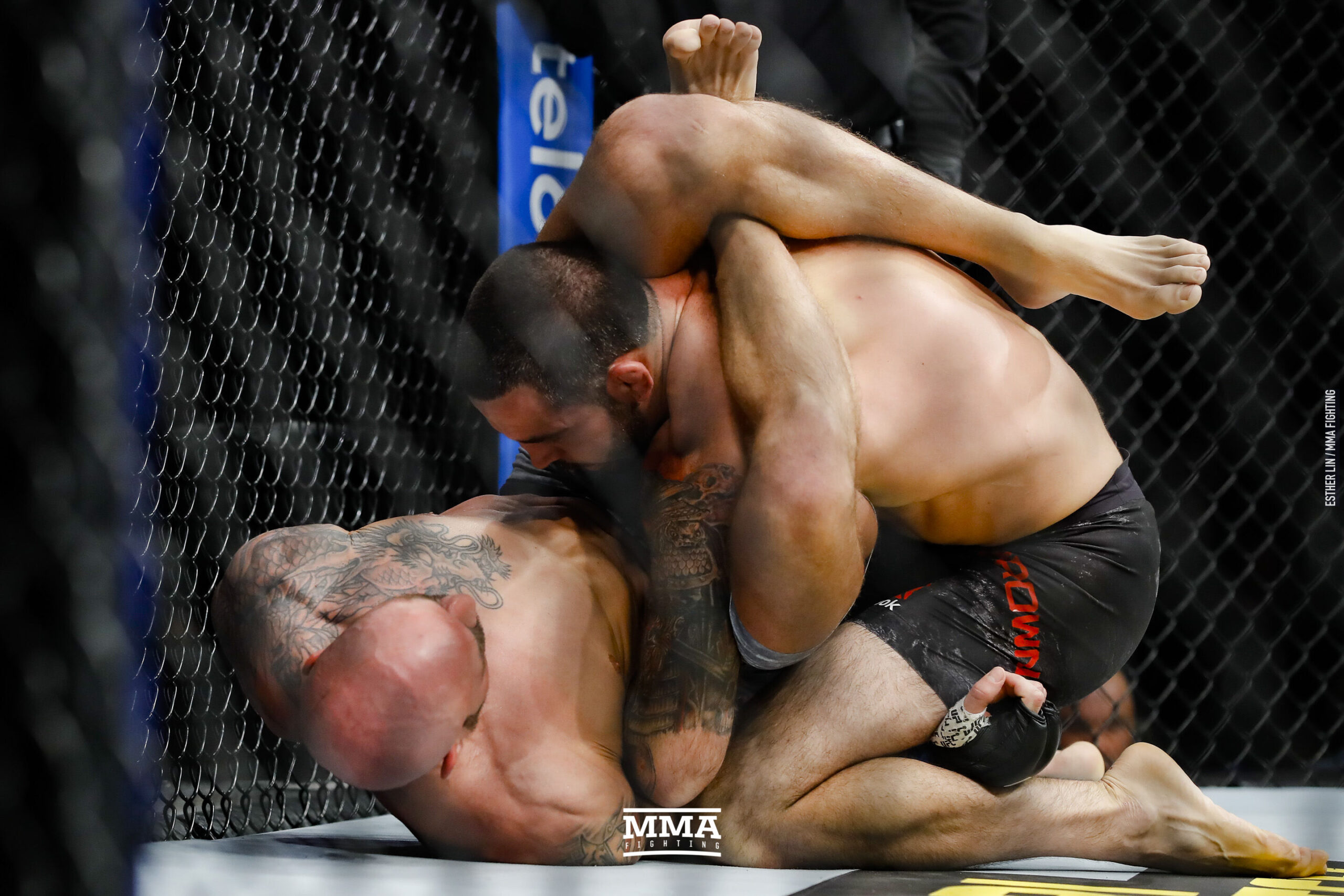
Saunders’ right forearm offers a different kind of detail. In the ground exchange pictured here, the arm is turned toward the camera and a dark, helmeted figure is visible along its length. The layered, armored appearance fits the samurai imagery documented in his Inked interview. It’s a tighter, more vertical design than the broad dragon on the opposite side.
The contrast between the two is appealing. The dragon uses a big curve across a shoulder and chest; the forearm work has a narrower space and a more compact subject. You don’t get a mirrored pair of sleeves. Instead, the arms carry different silhouettes, with the left drawing attention first and the right rewarding a closer look.
It’s also a reminder of how much the camera angle matters. A glove, a bent elbow or another fighter’s leg can hide part of the image. This photograph catches enough of the inner forearm to show the armored forms, but it isn’t a perfectly posed tattoo close-up. Tiny features shouldn’t be assigned names on the strength of a blurred fight clip.
There’s no need to turn the figure into a specific historical samurai, either. The reporting supports samurai imagery; it doesn’t name an individual warrior or a particular armor reference. Keeping that distinction makes the description more useful, especially if you’re comparing the piece with other black-and-gray work.
The personal connection is to Saunders’ stated interest in a warrior’s principles, not a claim that the tattoo records a fight result. That difference gives the design some breathing room. A martial artist can choose martial imagery without each piece being a trophy for one night in the cage.
At the UFC 245 weigh-in
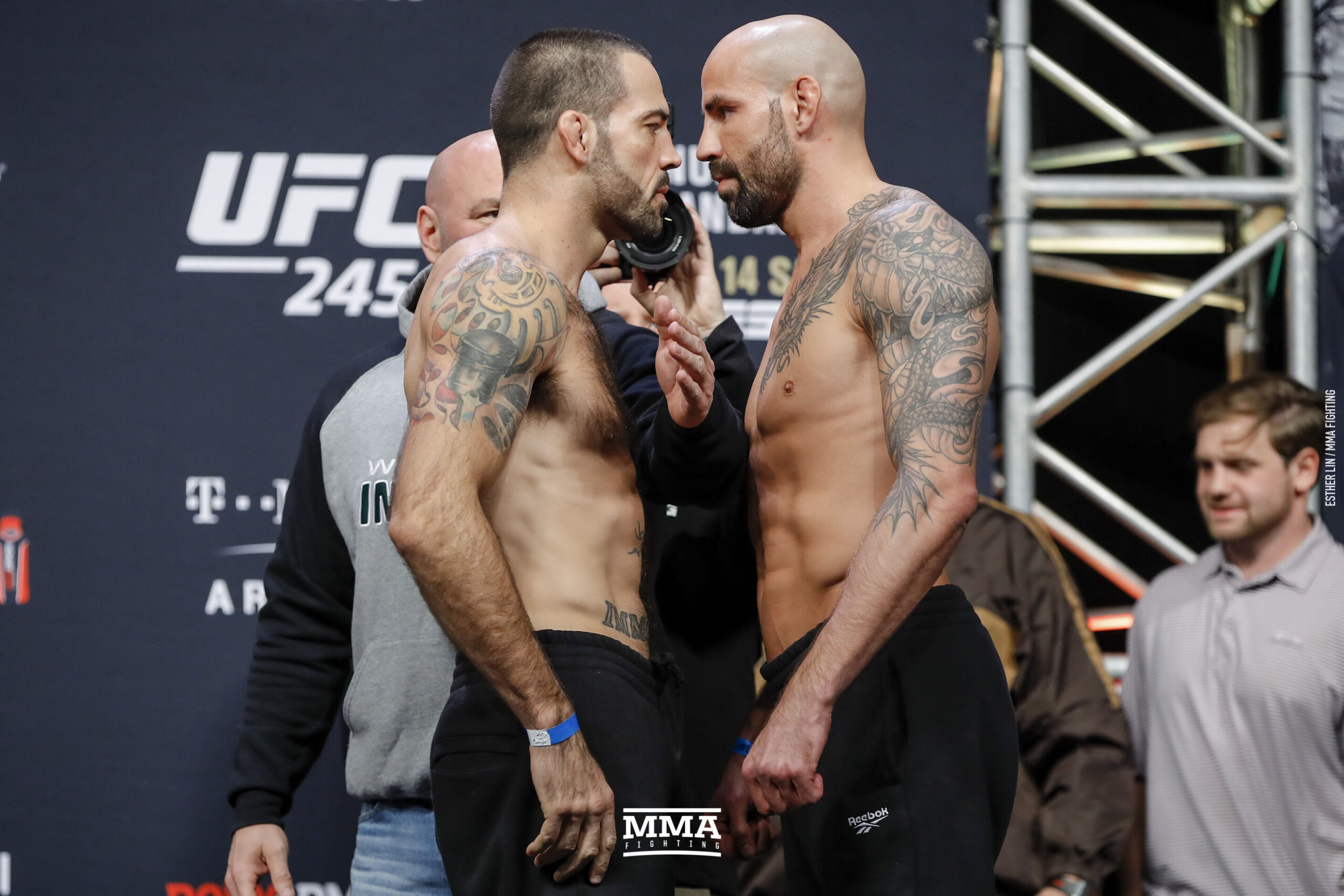
The weigh-in faceoff above is a contextual photograph, not evidence for an additional tattoo. It places Saunders opposite Matt Brown ahead of UFC 245 and gives a wider sense of the fighter behind the artwork. The tattoos were already part of his public appearance by that December 2019 event.
His connection to martial arts goes back much further. UFC’s 2014 return profile looked back at his time on season six of The Ultimate Fighter and his first UFC run, which began in 2007. Saunders was known for his striking, including the knees he used against Marcus Davis, but his career wasn’t limited to standing exchanges.
His earlier tattoo interview adds a more personal detail. While training with Gracie Barra at the start of his MMA career, he spent his first fight purse on a Gracie Jiu-Jitsu “G” tattoo on his right arm. He later left that gym on friendly terms. He described the logo as a reminder of his beginnings and the local MMA scene in Orlando.
That account is more specific than the broad warrior theme. The logo marked an actual training connection and an early paycheck. It also explains why an old gym reference could remain relevant after a fighter moved on. A tattoo doesn’t automatically become meaningless when someone’s training address changes.
The faceoff picture isn’t a close-up of that logo, so it shouldn’t be used to pin down its finer details. The history comes from Saunders’ interview. The photograph supplies the wider sporting context, and those are two different jobs.
His jiu-jitsu game
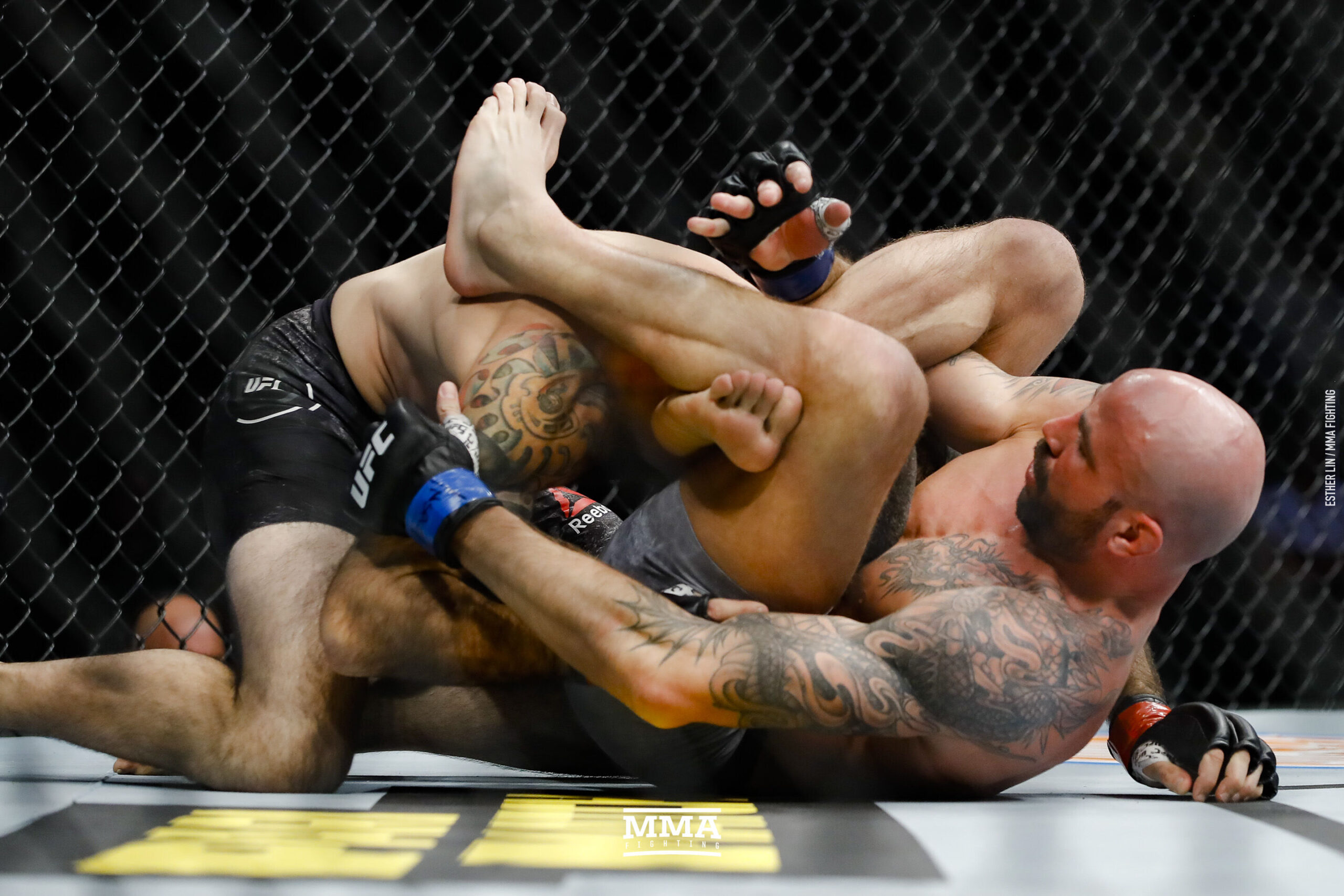
This ground-fighting photograph is another contextual image, not a new tattoo entry. Saunders is on his back with his legs high around Brown. It captures a part of his game that can get lost when people remember only his height, reach and clinch striking.
In August 2014, Saunders returned to the UFC against Chris Heatherly and finished with an omoplata in the opening round. UFC’s event report recorded it as the first submission finish by that technique in the promotion’s history. It’s a concrete reason that the jiu-jitsu background matters when talking about him, rather than just a theme inferred from an arm tattoo.
The photograph here comes from the later Brown fight, not the Heatherly finish. Keeping those nights separate matters. A dramatic grappling shot shouldn’t be presented as a historic submission just because it fits the paragraph. You can appreciate the connection between his training and his fighting without changing what the image actually shows.
For tattoo placement, the same shot offers a practical observation: bodies fold, shoulders turn and forearms overlap. A piece that looks perfectly centered in a standing portrait can become a partial curve during a scramble. That’s why a clear weigh-in view and a live-action view can feel so different without the ink itself having changed.
What the fight photographs leave out
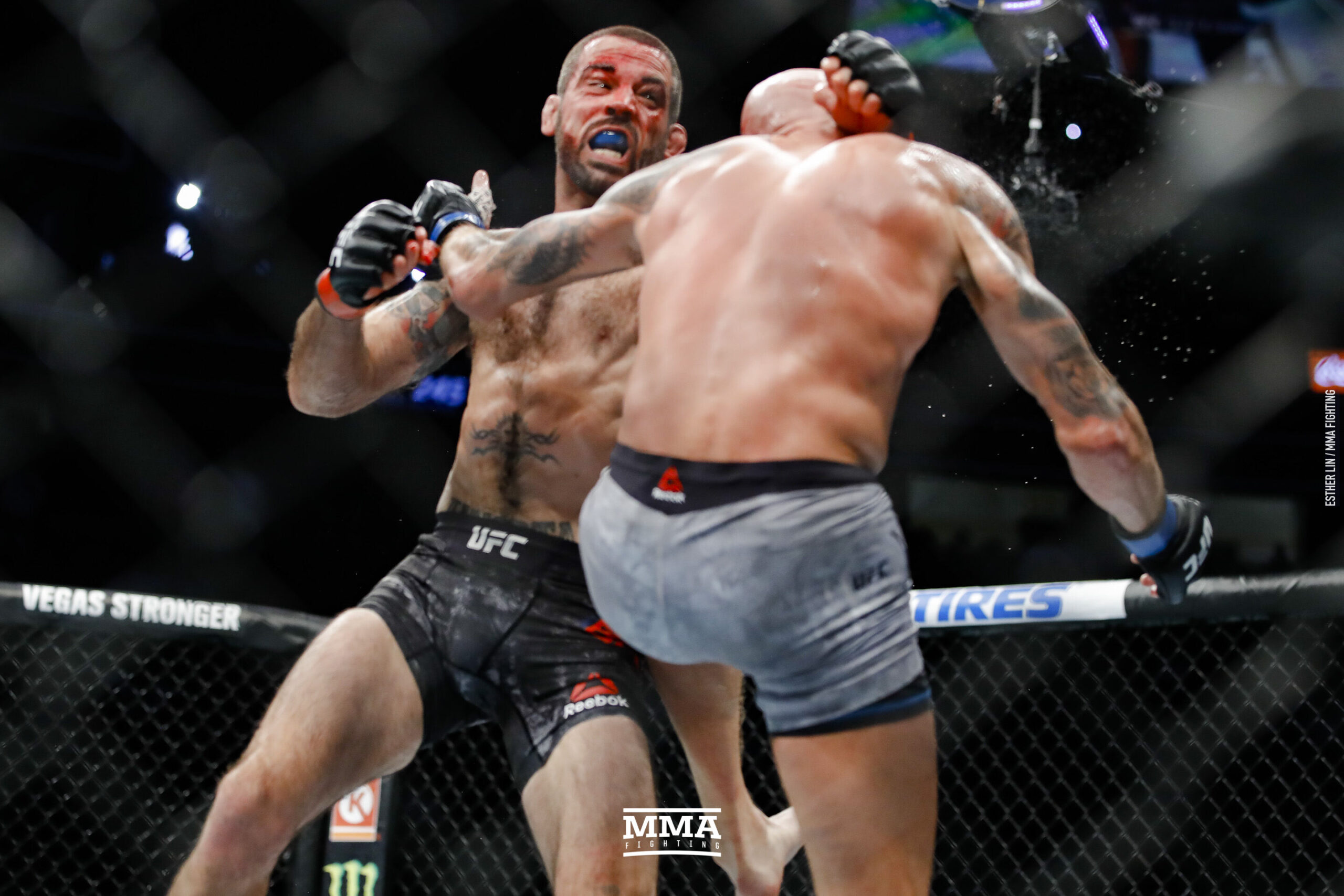
The standing exchange above is included for context, not to identify another design. Saunders is turned away from the camera, and much of the familiar chest-and-shoulder composition is out of sight. It shows why one still from a broadcast is a poor basis for a complete tattoo inventory.
Lighting can flatten gray shading, sweat can add bright highlights, and an arm held in front of the torso can make two separate areas of ink appear connected. Those aren’t reasons to dismiss fight photographs. They’re reasons to use more than one view and to resist filling the gaps with a confident-sounding story.
There’s no reliable artist credit or complete session timeline in the reporting used here. There’s also no basis for calling every visible area a separate new addition. The useful facts are narrower: a large connected dragon composition, documented samurai imagery, and a reported Gracie logo tied to Saunders’ early training.
If the appeal is the way a fighter uses large areas of the body, Alessio Sakara’s tattoos make an interesting comparison. His Roman-themed work takes the imagery in a different direction. The point isn’t to rank them; it’s to see how different subjects can give a heavily tattooed athlete a recognizable visual identity.
With Saunders, the dragon remains the clearest starting point. Follow its chest-to-shoulder connection, then look at the narrower right-arm work. That gives a better sense of the tattoos than counting each photographed fragment as a separate piece. For a little more of Saunders himself, the UFC interview below covers his inspirations and memories ahead of UFC 245.