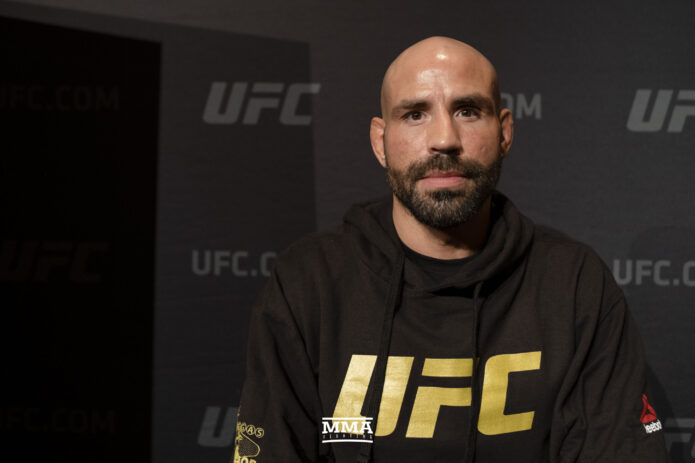
Ben “Killa B” Saunders is the MMA fighter, not the Dutch singer and tattoo artist who shares his name. His largest tattoo is a dragon that crosses his left shoulder and upper arm, with its face on his chest; samurai imagery and a Gracie Jiu-Jitsu logo sit on his right arm.
A February 2013 Inked profile gives the clearest account of the martial arts behind some of the imagery. The photos help show where the tattoos sit, but the interview is what connects them to Saunders’ own training and interests.
The dragon across his left shoulder and upper arm
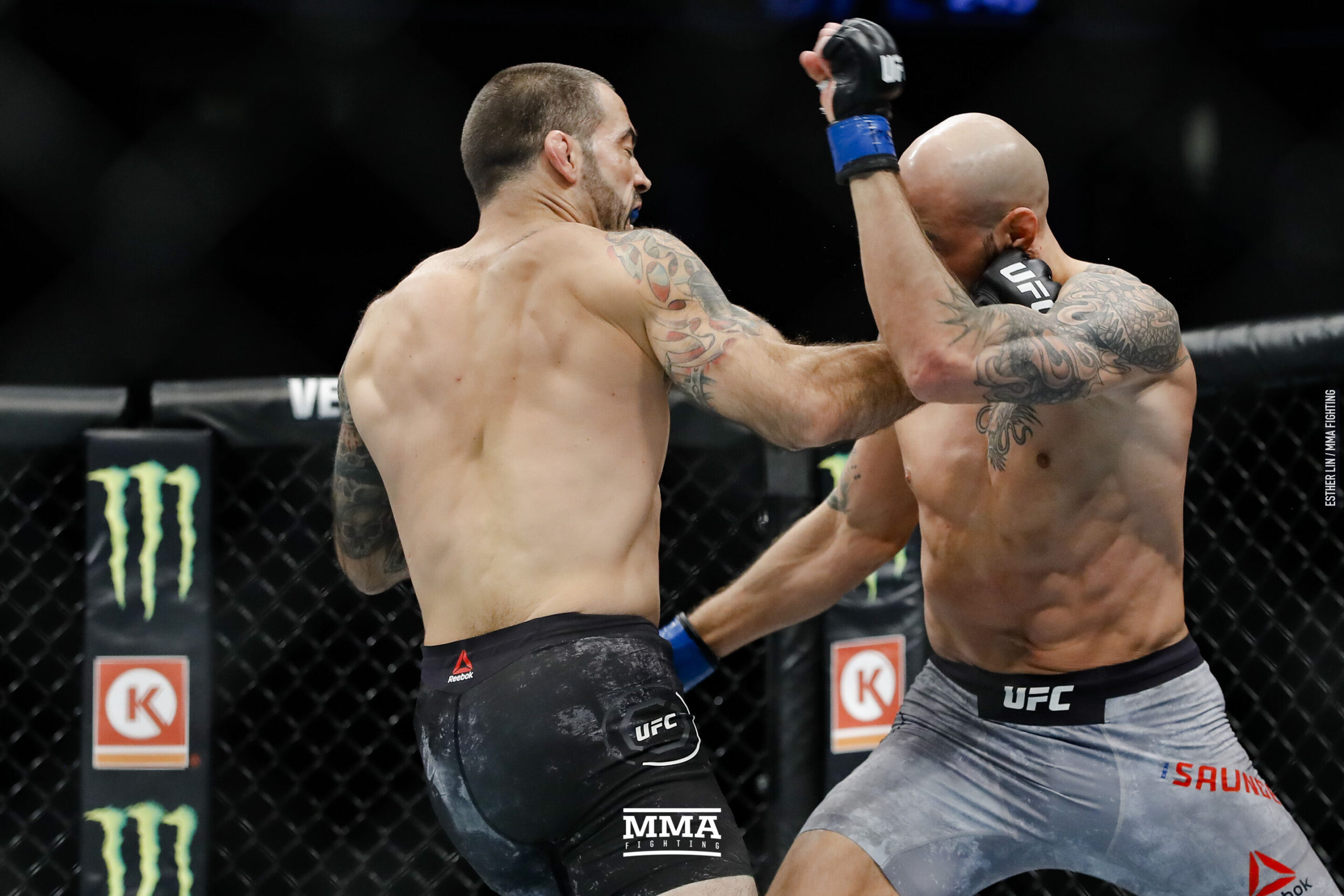
The dragon’s body bends over Saunders’ left shoulder and coils down the upper arm. Rows of scales and darker shading give it texture, while the lighter gaps keep the forms from collapsing into one dark patch. In a fight photo with his arm raised, the design wraps out of sight and comes back into view as he turns.
The long, coiling creature has a Japanese-inspired look, but the available account doesn’t name the tattooer or identify a particular school. It’s more accurate to describe the style visible in the photos than to claim a specific traditional source.
The dragon’s face on his chest
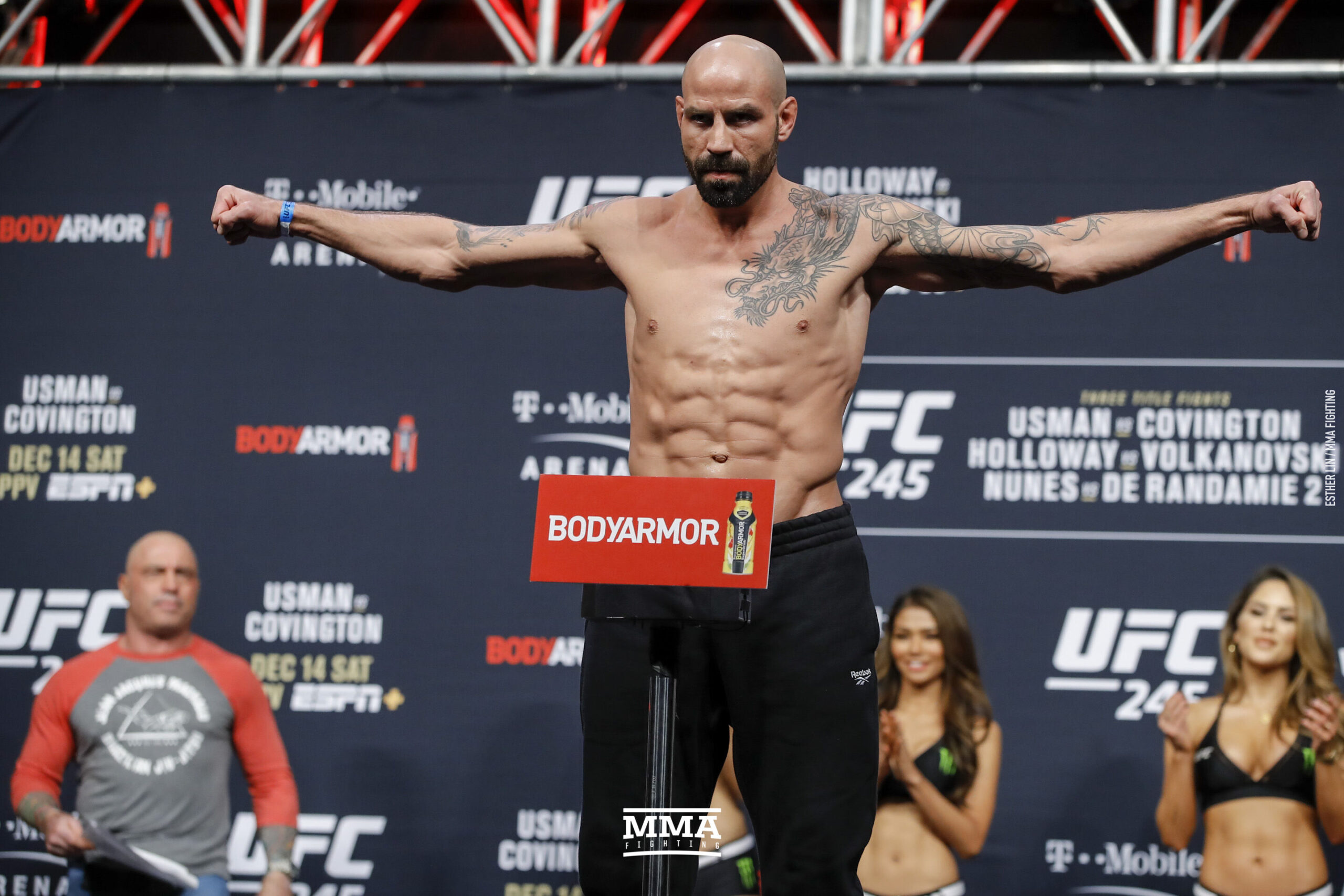
A front-facing weigh-in photo shows the dragon’s head on the left side of Saunders’ chest, connected to the shoulder piece. Its open mouth, pointed features and whisker-like lines give the face a restless look. The head becomes the focal point when he faces the camera, while the body leads the eye toward his arm.
In the Inked profile, Saunders linked the dragon and samurai imagery to warrior principles he wanted to live by. That supports a connection to martial arts, but it doesn’t tell us what each horn, scale or curl means to him.
The samurai imagery on his right forearm
On Saunders’ right forearm, a dark, helmeted figure runs lengthwise along the arm. The layered armor fits the samurai imagery described in the Inked interview, and it gives the narrower space a different silhouette from the broad dragon on the other side.
The photo catches enough of the inner forearm to show the armored figure, though gloves and movement hide parts of it. The reporting doesn’t identify a particular historical samurai or armor reference, so the design is best described as samurai imagery rather than a portrait of a named warrior.
At the UFC 245 weigh-in
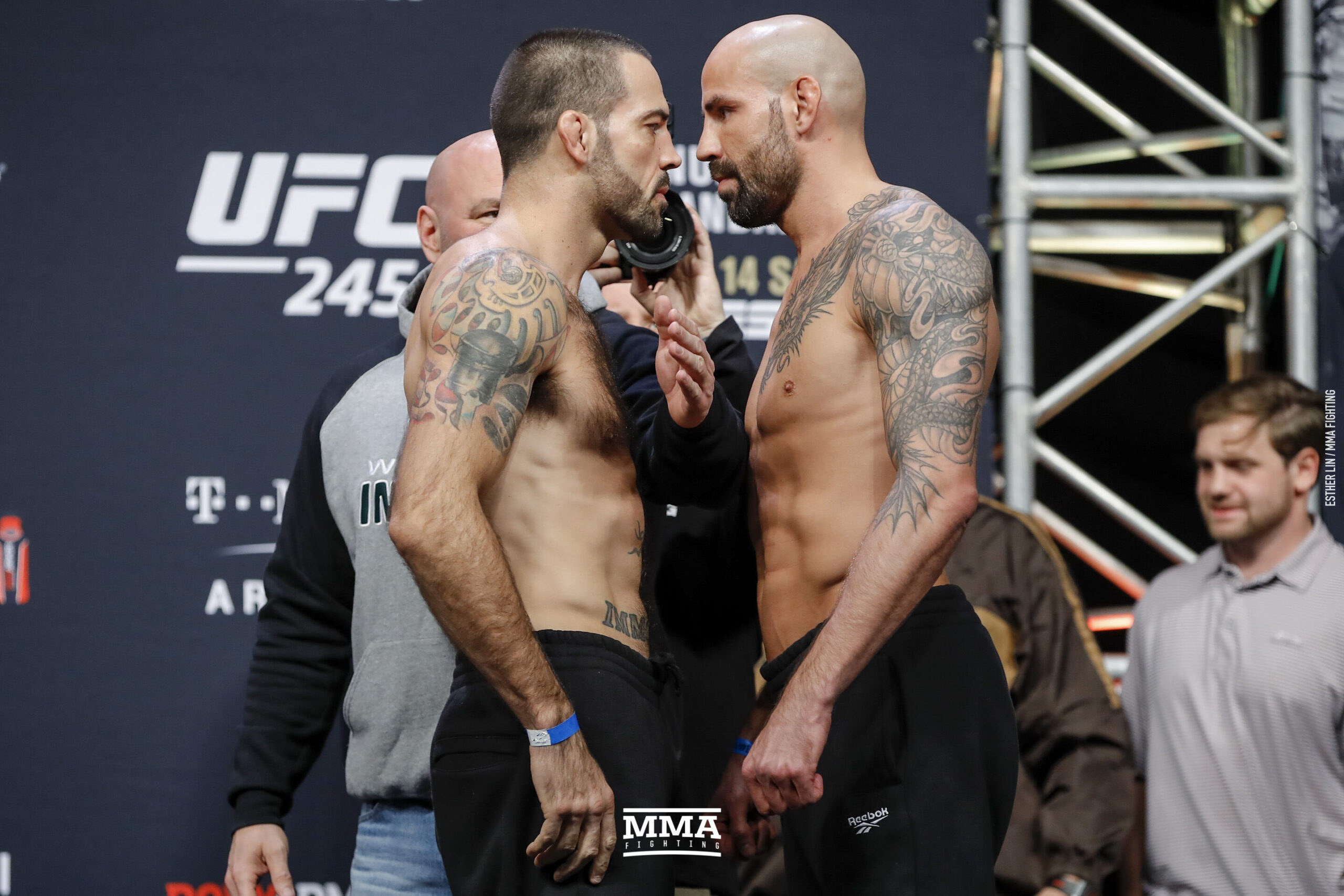
The weigh-in photo shows Saunders facing Matt Brown before UFC 245 in December 2019. It provides context for the fighter, but it isn’t evidence of another tattoo. UFC’s 2014 profile traced his career to season six of The Ultimate Fighter and his first UFC run in 2007; it also noted his striking, including the knees he used against Marcus Davis.
Saunders told Inked that, early in his MMA career, he spent his first fight purse on a Gracie Jiu-Jitsu “G” tattoo while training with Gracie Barra. He later left the gym on friendly terms and described the logo as a reminder of his beginnings and the local MMA scene in Orlando. The faceoff photo doesn’t show the logo clearly, so its story comes from his account.
His jiu-jitsu game
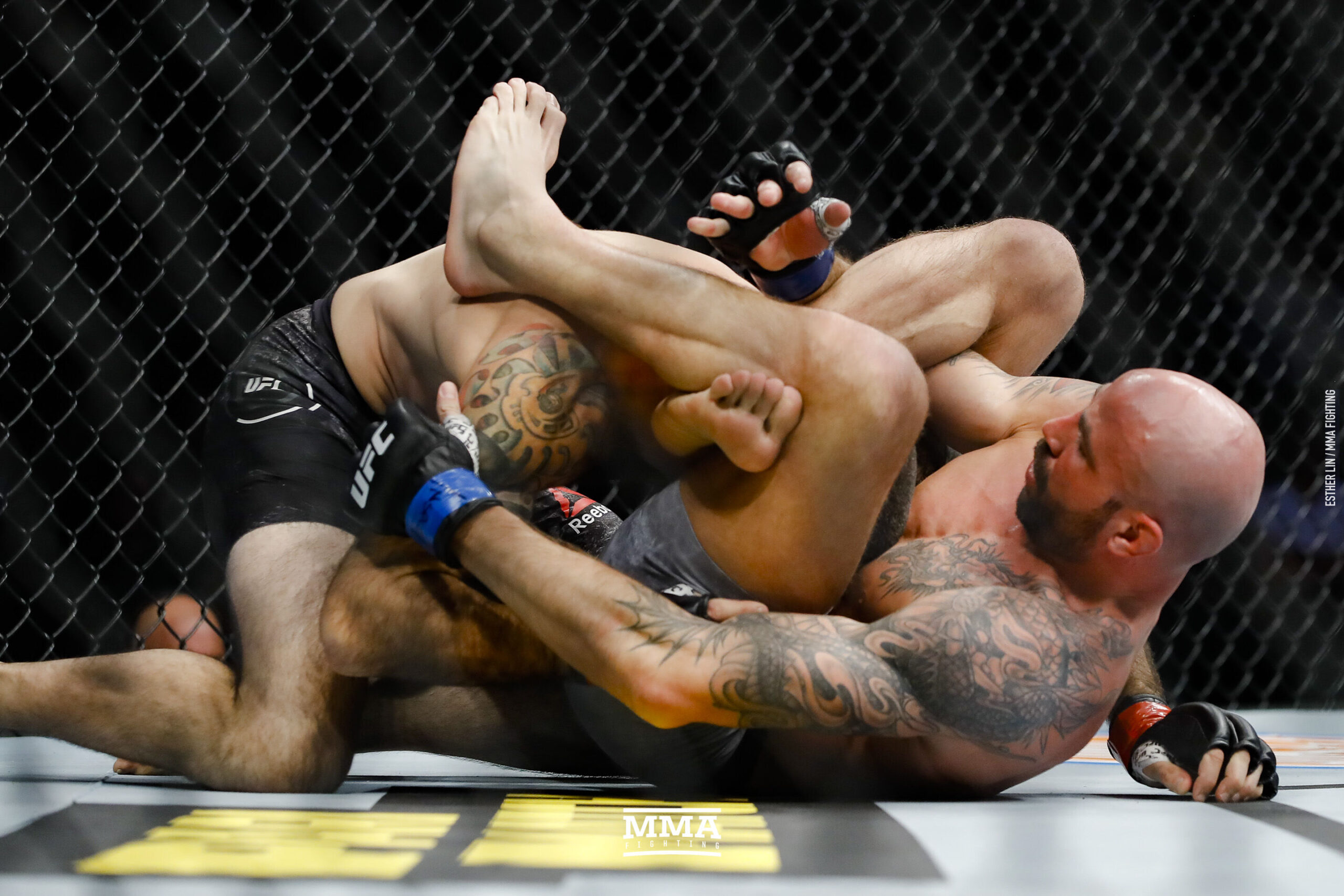
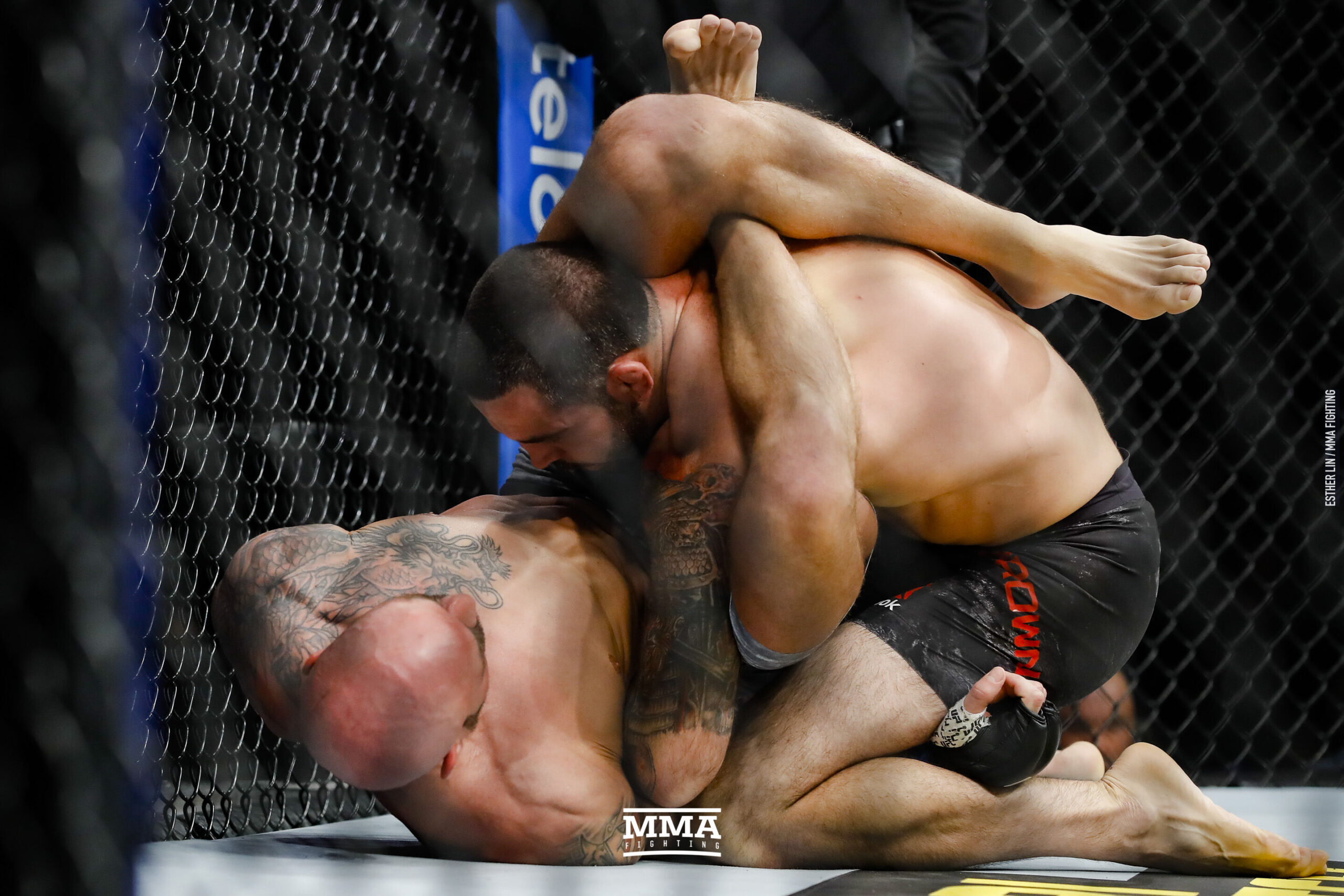
This ground-fighting photo was taken during the later Brown fight, not Saunders’ bout with Chris Heatherly. In August 2014, Saunders finished Heatherly with an omoplata in the opening round. UFC’s event report called it the first finish by that technique in the promotion’s history; the image here shows a different night.
The photo still shows how a grappling position changes the view of a tattoo: shoulders turn, arms overlap and skin folds. That helps explain why a standing portrait and a fight still can look so different without the ink changing.
What the fight photographs leave out
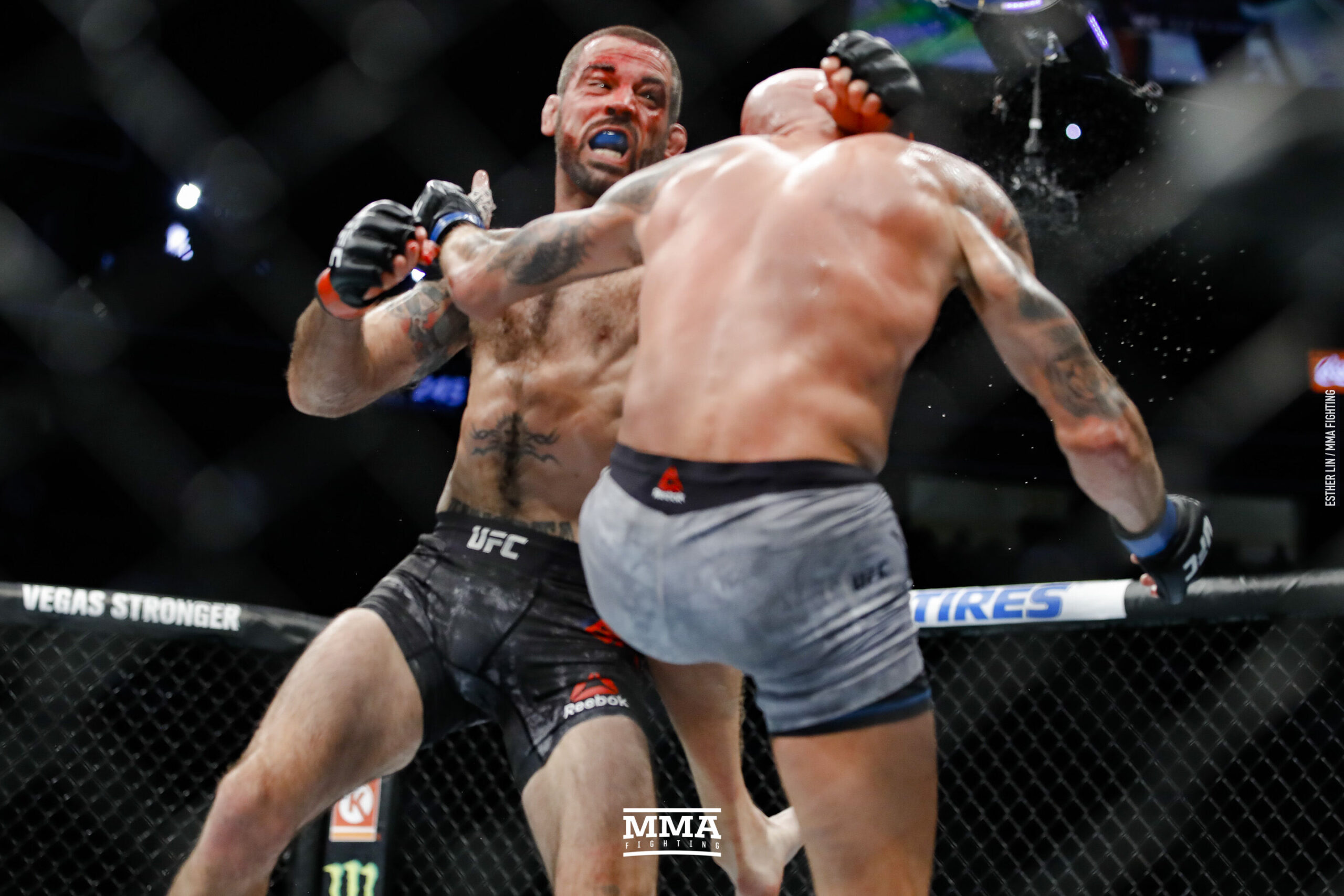
The standing exchange in the final photo is also contextual, not a close-up of another design. Saunders is turned away, and the chest-and-shoulder dragon is mostly hidden. Fight lighting and movement can obscure gray shading, so a single frame can’t provide a full inventory. The available reporting also gives no reliable artist credit or complete timeline.
For a different take on large-scale athlete tattoos, see Alessio Sakara’s tattoos. Sakara’s Roman-themed work uses different imagery. The comparison is useful for seeing how subject and placement create distinct looks; it doesn’t tell us anything further about Saunders’ pieces.