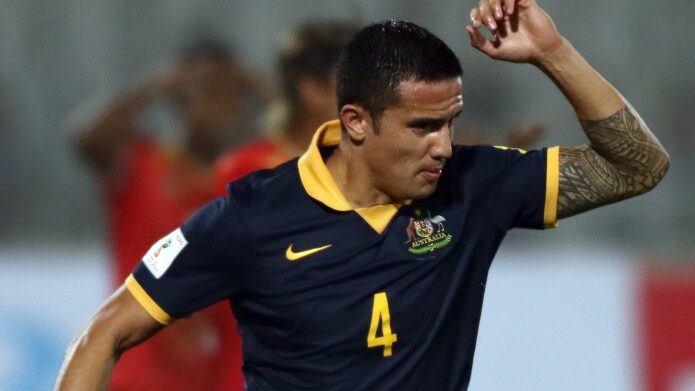
Tim Cahill’s left-arm tattoo is more than a sleeve of bold geometric pattern. He has described it as a family timeline, a tribute to his Samoan roots and a record of the people and football clubs that shaped his life. The design is striking in match photos, but the clearest explanation comes from Cahill himself: its patterns connect his grandmother to his parents, children and wider family.
That story gives the tattoo a rare kind of clarity without pretending every line has a public translation. Cahill has shared what the sleeve means to him, and that is more useful than guessing at the individual shapes.
A Samoan family timeline, carried on his left arm
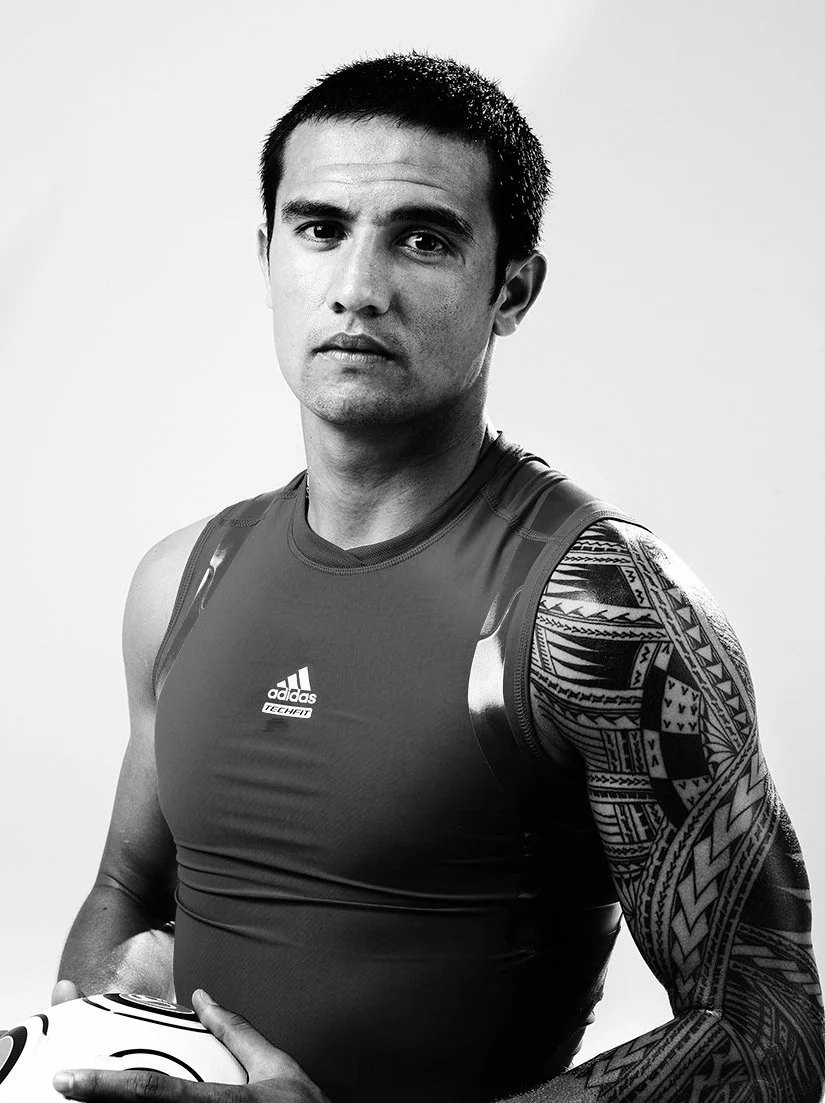
Cahill has said the full sleeve on his left arm followed the death of his maternal grandmother. In a 2024 interview with ABC Pacific, he called the pattern a kind of lifeline running from her to his parents, his children and the rest of the family. He said it helps him feel protected, safe and grounded. That is the heart of the tattoo: not a generic badge of identity, but a personal way to keep family close.
He has spoken about his Samoan heritage on his mother’s side and the importance of family in his upbringing. The sleeve brings those two things together. Cahill has described family as central to his beliefs, and said his Samoan upbringing taught him discipline and to stay close to the people who matter. The tattoo makes that connection visible on the arm he has carried through a long football career.
A contemporary report from 2010 described the piece as a Samoan family timeline that runs from the shoulder to below the elbow. It dated the work to the summer of 2008, when Cahill was recovering from a foot injury. That gives the sleeve a useful place in time, but the later interviews are more important for understanding why he chose it. The date explains when the tattoo appeared; Cahill’s own words explain why it stayed meaningful.
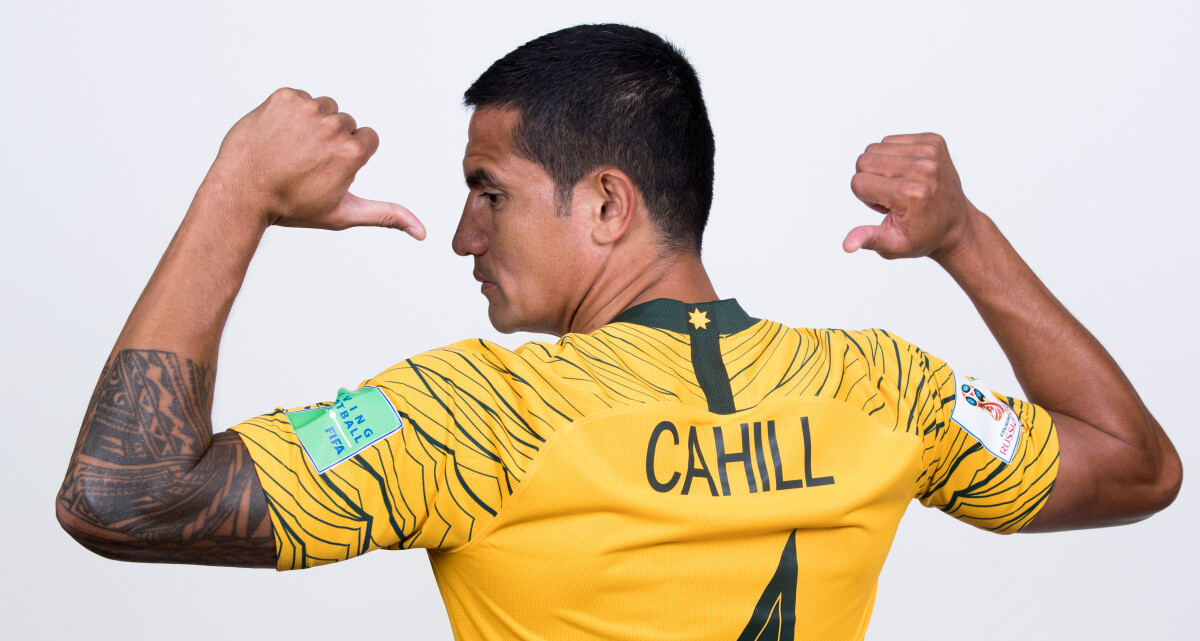
There is a temptation with a large patterned tattoo to treat every repeated line or motif as a code to be decoded. Cahill has not offered that kind of catalogue. His description is about a family line and the feeling of being protected, not a public key assigning one meaning to every shape. It is worth leaving the design some privacy rather than turning visual guesses into facts.
That restraint also makes the sleeve feel more personal. In photographs, the pattern moves across the shoulder and down the arm as one connected piece. Cahill’s explanation suggests a similar continuity in the story: his grandmother, parents, siblings and children are not separate symbols arranged for display. They belong to the same family history, and the sleeve holds that history together.
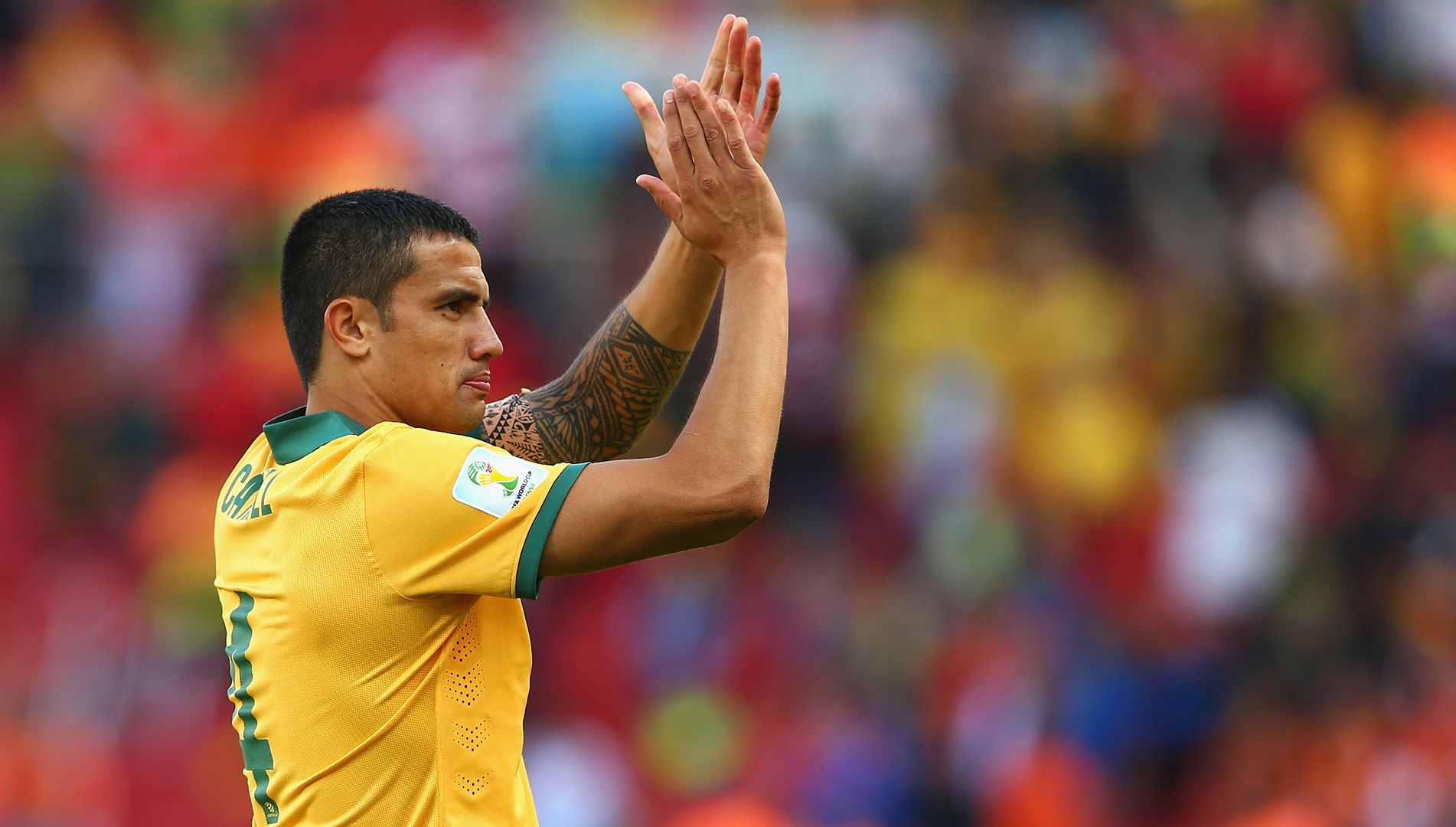
The design is often described as Samoan or Polynesian in style, and Cahill has called it an expression of his Samoan roots. That does not mean every Samoan tattoo tradition can be mapped onto his particular sleeve. The reporting identifies his work as a family tribute, but does not establish that it is a ceremonial tatau or explain an artist-led traditional process. Keeping that distinction clear respects both Cahill’s story and the broader cultural practice.
In the ABC interview, Cahill also spoke about representing Samoans and Pacific communities in Australian football. He said he was proud of his mother’s heritage and wanted children from the islands to stay close to their traditions and beliefs about family. That context helps explain why the tattoo matters beyond its appearance: it gives a visible place to a heritage he has repeatedly said he carries with pride.
The sleeve’s placement makes that connection part of everyday life. It is not a small mark hidden beneath a collar or reserved for a formal portrait. It travels from shoulder down the arm, visible in the short-sleeved kit Cahill wore on the field. That visibility does not mean the tattoo was made for an audience; it simply means a private family story became part of how the public sees him. The meaning still comes from Cahill’s own account, not from a viewer trying to decode the pattern.
It also matters that he speaks of the tattoo as something that makes him feel grounded. A family memorial can work as a reminder in two directions: it looks back to the grandmother he lost and keeps his attention on the relatives still around him. Cahill’s description of a lifeline captures both. The image is not just a tribute to one person, but a chain of relationships that continues through generations.
The 2008 date reported at the time places the work during a pause caused by injury, but it should not overshadow the personal reason he later gave. The tattoo is not simply a story about a footballer filling time while sidelined. Cahill has consistently connected it to bereavement, family and cultural identity. The contemporaneous date is useful context; it is not a substitute for his own explanation.
Nor should the word “Samoan” be treated as a complete explanation of the artwork. Cahill’s heritage is part of his stated meaning, but the available interviews do not give a full account of who designed each element or how the session was carried out. Without that information, it is better to describe what is visible and what Cahill has said than to assign a traditional meaning to every band, curve or repeated mark.
The Millwall and Everton marks in Cahill’s tattoo

The sleeve is not only about relatives. In a 2009 Guardian interview, Cahill was asked about the initials MFC and EFC on his arm. He explained that Millwall and Everton were the only two clubs that meant a lot to him, and that the marks were a sign of appreciation for what those clubs had given him. He described the tattoo as a family tree with his life in football woven into it.
That answer is a useful corrective to the idea that a football tattoo has to be a simple team logo. Cahill linked club loyalty to the people around him and to the path he had taken. The initials sit inside a larger personal record, not outside it. His words make clear why those two names were important enough to carry permanently.
That distinction between a club badge and a personal mark is worth keeping. Cahill did not say he had copied a crest or wanted a conventional supporter’s tattoo. He spoke about appreciation for the clubs and about the role they played in forming him. The initials are therefore part of his own biography, but they sit inside the family story rather than replacing it. His explanation gives them emotional weight without requiring a fan to know the details of every season he played.
The two clubs also represent different parts of the life he described. Millwall was a place he later called home, while Everton was the club where he spent a major stretch of his playing years. The interviews do not rank one above the other. Cahill’s point was that both mattered, and the tattoo gives them room beside family rather than forcing a choice between football identity and heritage.
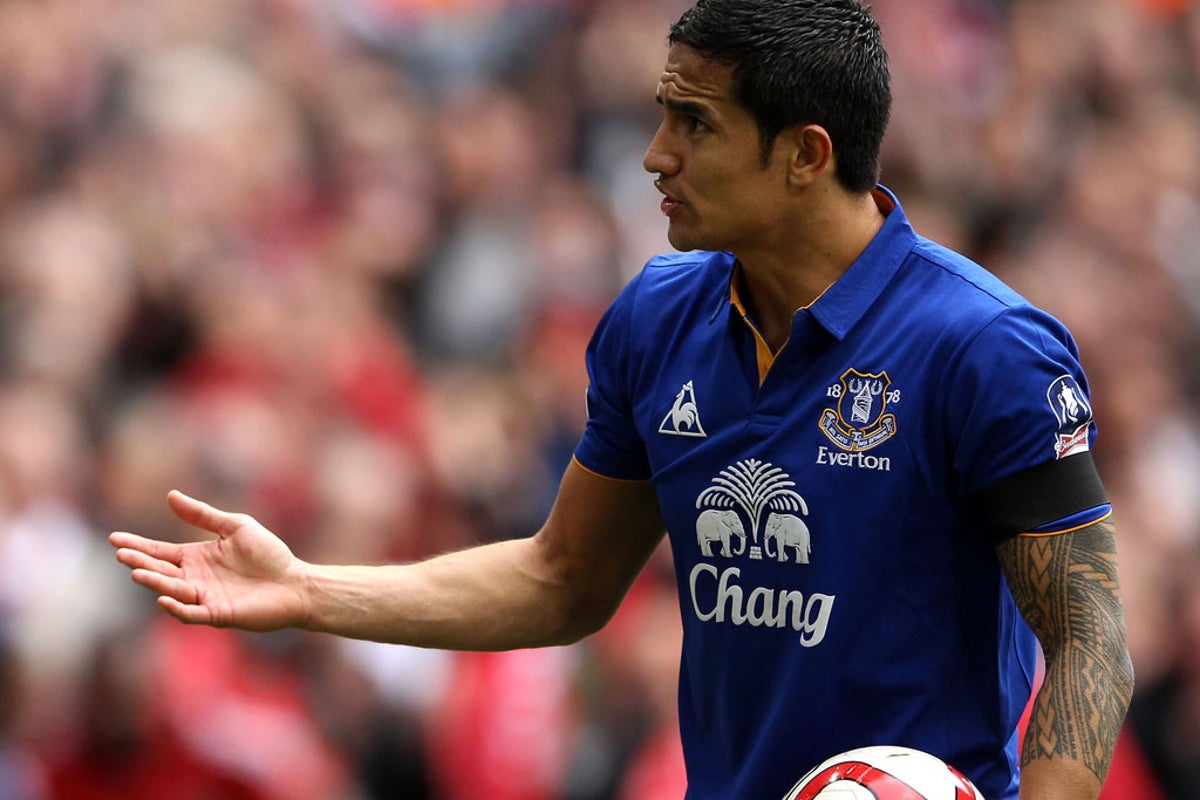
He returned to the subject in 2018 while speaking about Millwall. Pointing to the marks on his left arm, Cahill said the clubs were part of his life and had helped mould him. The comments came as he returned to Millwall after years playing in different countries, which makes the tattoo feel less like a souvenir and more like a record of home. He did not describe it as a complete career timeline, and the public details do not support reading every element that way. What he did say is enough: family, Millwall and Everton all belong on the same arm because each helped shape his life.
The timing also connects the club marks to the sleeve’s original explanation. In 2009, while still playing for Everton, Cahill said the story was not finished. In 2018, he was still speaking about Millwall and Everton as formative parts of his life. The tattoo’s meaning could grow as his life changed, without needing a new design to replace the old one.
That is why Cahill’s sleeve reads so clearly even from a distance. The bold pattern catches the eye, but its story is specific: a grandmother remembered after her death, family relationships carried forward, Samoan heritage kept close, and two clubs acknowledged for what they meant to him. Cahill has explained those connections across interviews years apart, and the details fit together without needing invented symbolism.
His tattoo does not ask viewers to know the meaning of every line. It asks them to understand the people and places Cahill chose to remember. The sleeve is both a visible piece of Samoan identity and a personal family record, with football folded into the same design. That blend is what makes the arm distinctive: it tells a life story without reducing it to one team, one moment or one label.
For readers looking closely at the photographs, the safest way to read the sleeve is to hold those two levels together. There is the visible work: a connected pattern running over the left arm, with club initials identifiable because Cahill himself named them. Then there is the story he attached to it: family, remembrance, protection, heritage and gratitude. The first invites attention; the second keeps interpretation grounded. Anything more specific about individual motifs would go beyond what he has publicly explained.
Across the interviews, one theme stays steady while the details expand. The 2009 account connects relatives and football; the 2018 comments underscore the clubs’ influence; the 2024 conversation returns to his grandmother, his children and the feeling of being rooted. That consistency is why the sleeve can be understood as a continuing personal record rather than a design with one fixed caption. Its story remains tied to the people Cahill says matter.