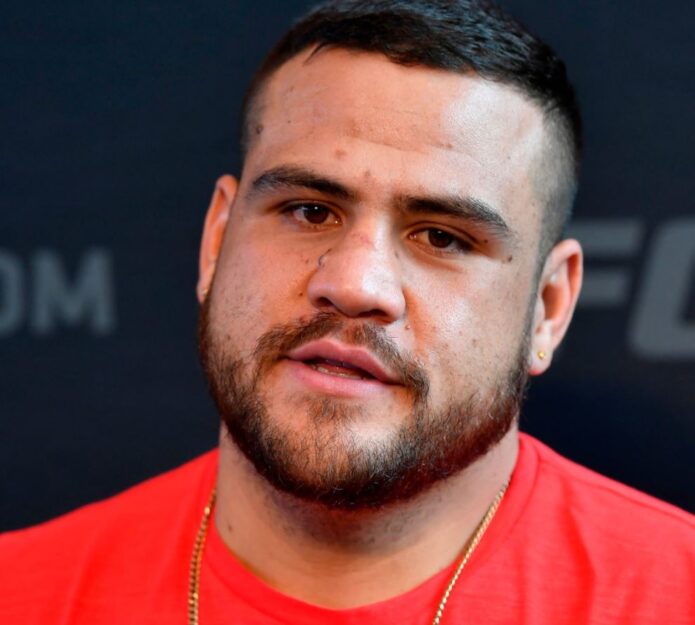
Tai Tuivasa’s tattoos tell a bigger story than a quick look at his fight photos might suggest. The UFC heavyweight’s most obvious ink is a traditional Samoan pe’a that wraps from his lower back around his hips, stomach, and thighs. It is bold, dark, geometric, and impossible to miss when he walks into the cage.
There are also smaller pieces that sit inside that larger design. The navel detail, the lines running down the stomach, the repeated thigh bands, and the little mark inside his lower lip all add to a collection that feels connected instead of random. Tuivasa has spoken about the pain of receiving his pe’a and about doing it for his Samoan mum, so the tattoos carry family, heritage, and responsibility alongside the visual impact.
This guide breaks down the main parts of Tai Tuivasa tattoos, what can be seen clearly in public photos, and why his body art has such a strong identity. Some meanings are documented, while others are best described by placement and design rather than guessed at.
Tai Tuivasa’s pe’a tattoo covers the lower back and hips
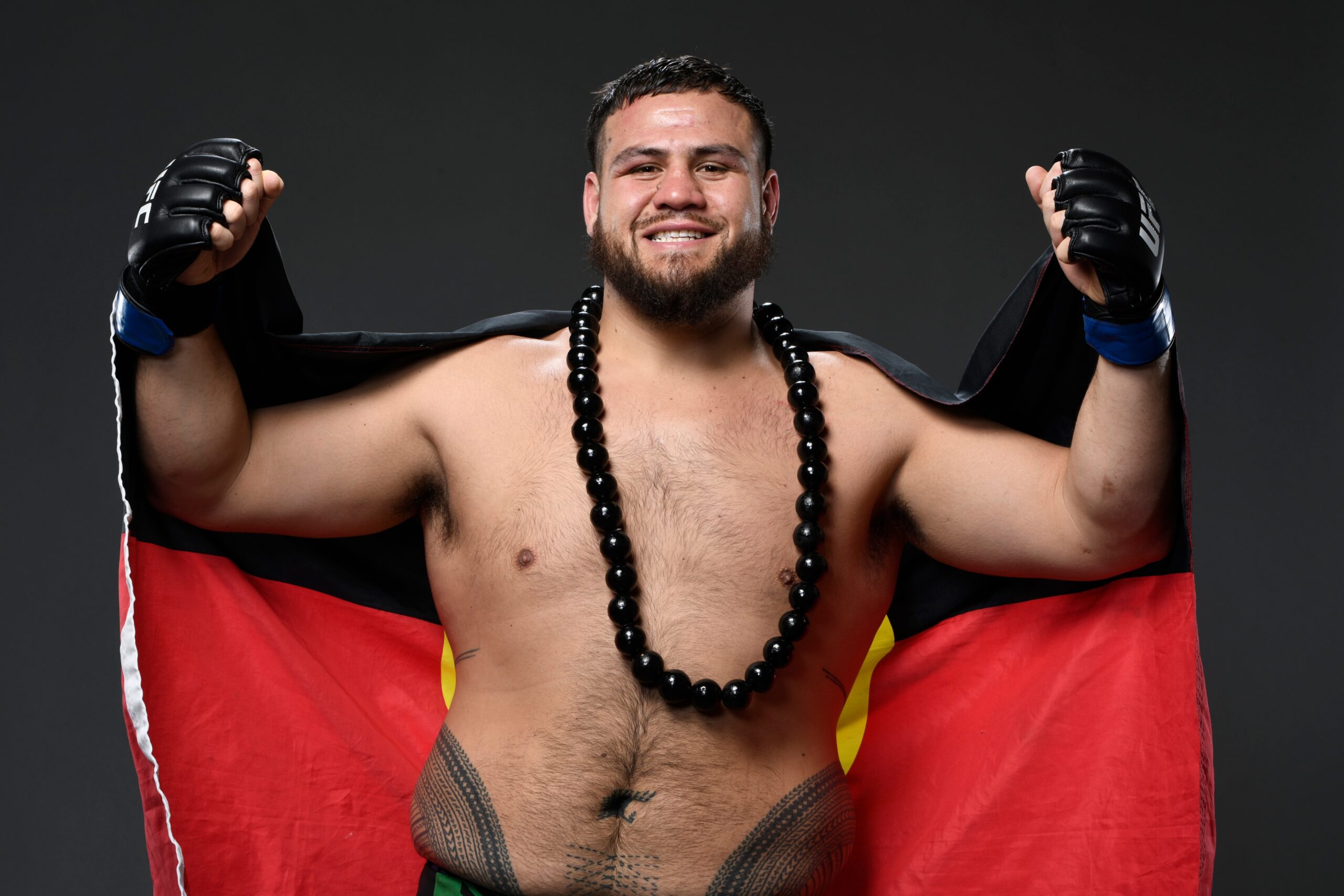
The centerpiece of Tai Tuivasa’s tattoos is the wide Samoan pattern that crosses his lower back and wraps around both sides of his waist. In close-up photos, the piece is built from heavy black fields, narrow bands, repeated dots, and clean geometric breaks. The design is not a single flat stripe. It has several layers that move across the body and change direction around the hips.
That shape matters. Instead of sitting on one easy-to-see area like a chest graphic, this work follows the natural curve of the lower body. It becomes visible in different ways depending on whether Tuivasa is standing, crouching, turning away from the camera, or lifting his arms after a win. The back view shows the broad central section, while side views reveal how the pattern continues around the waist.
The pe’a is a traditional Samoan male tatau, so it should not be treated as just another tribal tattoo idea. Its patterns belong to a cultural practice with its own process, history, and responsibilities. Tuivasa has described the work as a painful journey that connected him to his ancestors. That background gives the tattoo a depth that a copied pattern on a flash sheet would not have.
Visually, this is the part of his collection that sets the tone. The solid black sections make the surrounding skin breaks look sharper, and the repeated bands create a steady rhythm. It is strong without needing lettering, portraits, or decorative color. The design works because it is tied to his body and his story.
The back bands show how the pattern moves around his waist
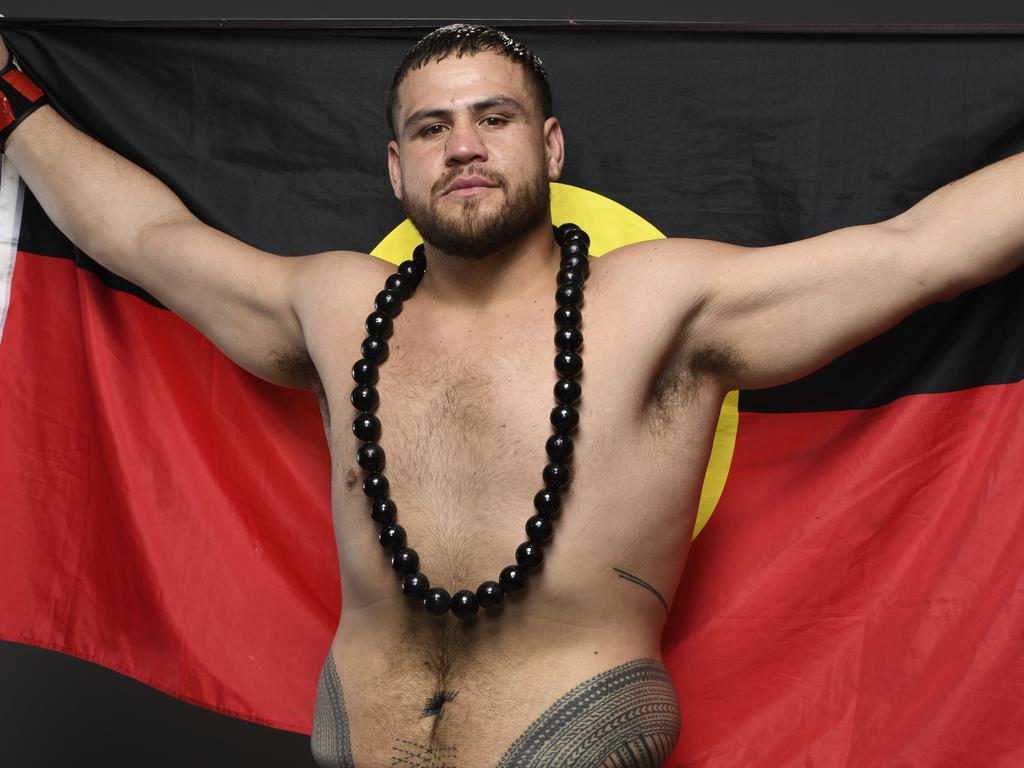
A second view of the back makes the structure easier to understand. From this angle, the bands look almost architectural. Long lines run across the lower back, then angle into smaller sections near the sides. There are panels that resemble steps, arrows, and woven shapes, but the overall effect stays balanced and deliberate.
This is also where you can see why a full pe’a is hard to capture in one photograph. A front-facing shot might show the stomach and upper thighs while hiding the back. A back-facing shot can show the center of the piece but lose the way it travels toward the front. Tuivasa’s photos work best as a set because each angle fills in another part of the same design.
The tattoo has a traditional visual language, yet it also looks very personal because it is fitted to his frame. The lines do not simply stop at the edge of a rectangle. They bend with the waist and leave selected spaces open around the ribs and hips. That makes the piece feel like it belongs to him rather than being placed on top of him.
For anyone studying the style, the useful takeaway is the way the design uses repetition. Small motifs sit beside larger dark fields, and the negative space keeps the tattoo readable from a distance. It is a good example of how a large cultural tattoo can stay visually organized even when it covers a wide area.
His thigh tattoos use repeated bands and open skin
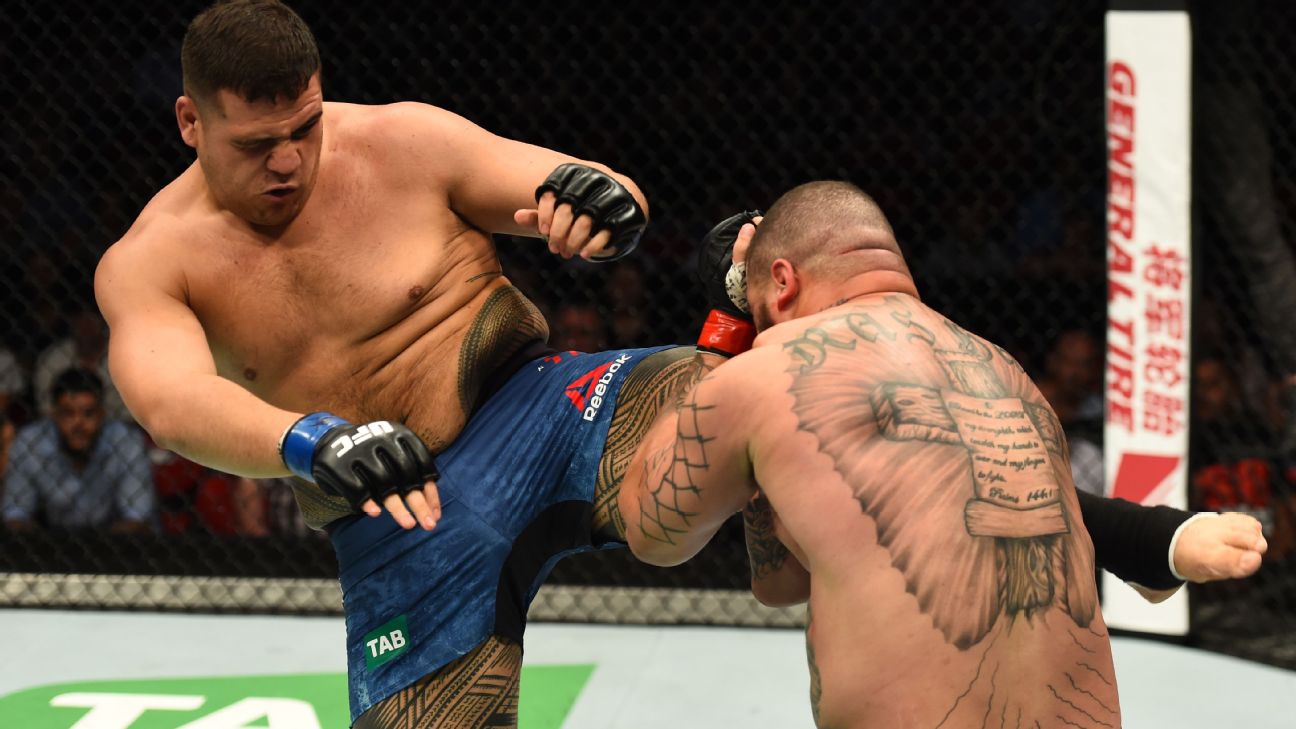
Tuivasa’s upper legs carry the lower half of the same visual system. The thigh sections use thick black areas, patterned strips, and narrow lines that create contrast as they move toward the knees. In fight photos, the designs can look almost like armor because they sit beneath the shorts and appear whenever he steps, kicks, or drops into a stance.
Look closely and the two legs are not just mirror images. The shapes repeat enough to feel connected, but the panels and angles vary as the pattern follows each leg. That gives the tattoo movement. It also helps the work stay legible when the muscles are flexed or the skin is bent during training.
The open skin is just as important as the ink. Those lighter channels keep the black sections from turning into one solid block. They create edges that the eye can follow and make the smaller repeated marks stand out. This is a classic strength of traditional geometric tattooing: the design can look dense while still having a clear visual order.
Tuivasa often wears shorts that reveal only part of the leg work, which adds to the sense that the pe’a is larger than the audience first realizes. When more of the thighs are visible, the design reads as a continuous path from the waist down rather than a separate pair of leg tattoos.
Tai Tuivasa’s chest tattoos add another layer
The navel area is one of the most specific details in Tai Tuivasa’s tattoos. A small, dark motif sits at the center of the stomach, with rows of marks extending above and below it. It is easy to miss in a wide portrait, but a close view shows that the front of the pe’a has its own focal point.
Traditional Samoan tattooing has an established order and meaning around placement, so the navel should not be treated as a random spot chosen to fill empty skin. Accounts of Tuivasa’s tattoo journey describe the stomach and navel as part of the larger cultural design. That makes the detail feel more like a central hinge in the composition than a standalone logo.
From a design point of view, the small central mark gives the eye somewhere to land. The surrounding hip panels are wide and bold, while the navel detail is tighter and more delicate. That change in scale keeps the front from looking flat. It also shows how small pieces can matter inside a very large tattoo.
This is the kind of detail that looks best in a properly framed close-up. A low-resolution crowd photo will turn it into a dark blur. In a clear image, you can see the spacing, the short rows, and the way the lines relate to the wider stomach panels.
The front stomach tattoo panels connect the hips to the thighs
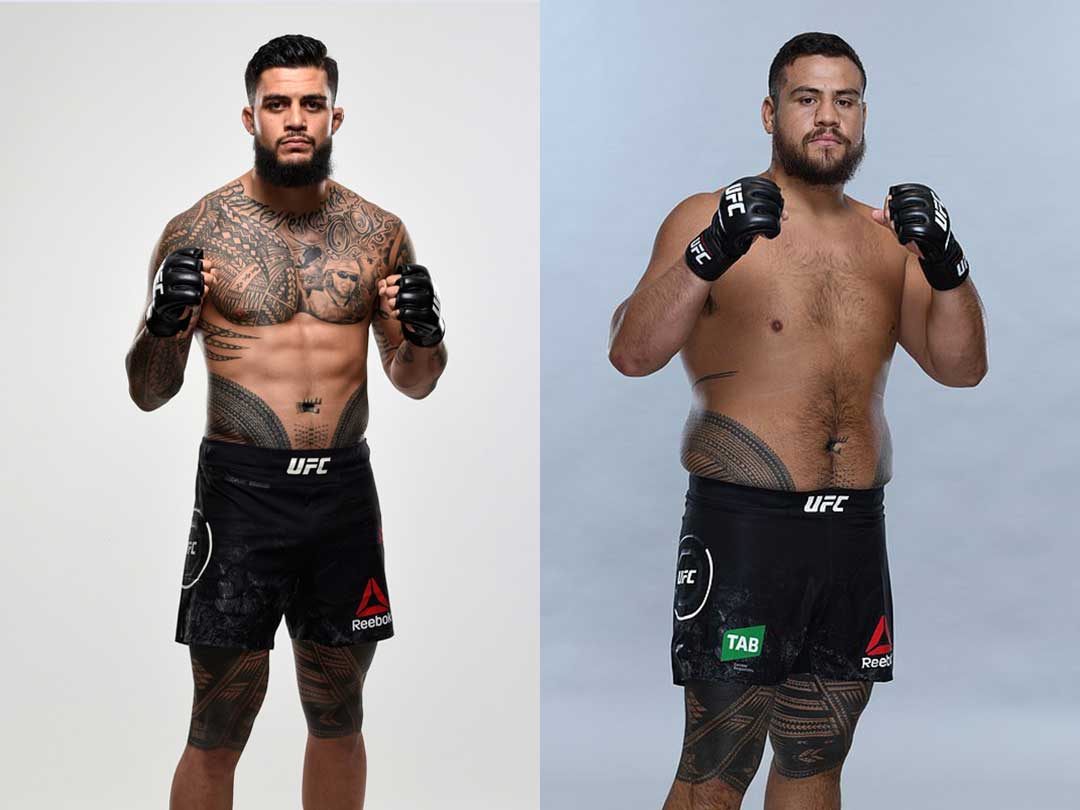
On the front, the tattoo spreads out from the navel toward the hips in two strong panels. The design is heavier at the sides, then breaks into finer marks as it moves inward. This gives the stomach a natural frame and makes the waist look wider without relying on color or shading.
The front view also shows the relationship between the pe’a and Tuivasa’s presence as a fighter. He is often photographed wearing a kukui nut necklace or holding a flag, but the tattoo remains the lasting element. The necklace and clothing change from event to event. The black geometric work stays with him and carries the visual link to his Samoan heritage.
There is a relaxed confidence to the way he shows it. Tuivasa has never seemed interested in making the tattoo look delicate or hidden. It is practical, bold, and built to be seen in motion. Even when the photo is not posed as a tattoo portrait, the patterns hold their shape under the arena lights.
For tattoo inspiration, the strongest lesson here is restraint. The front does not need extra color to compete with the existing pattern. The power comes from consistent line weight, carefully spaced negative areas, and the way the panels meet at the center.
A small lower-lip tattoo adds a surprising detail
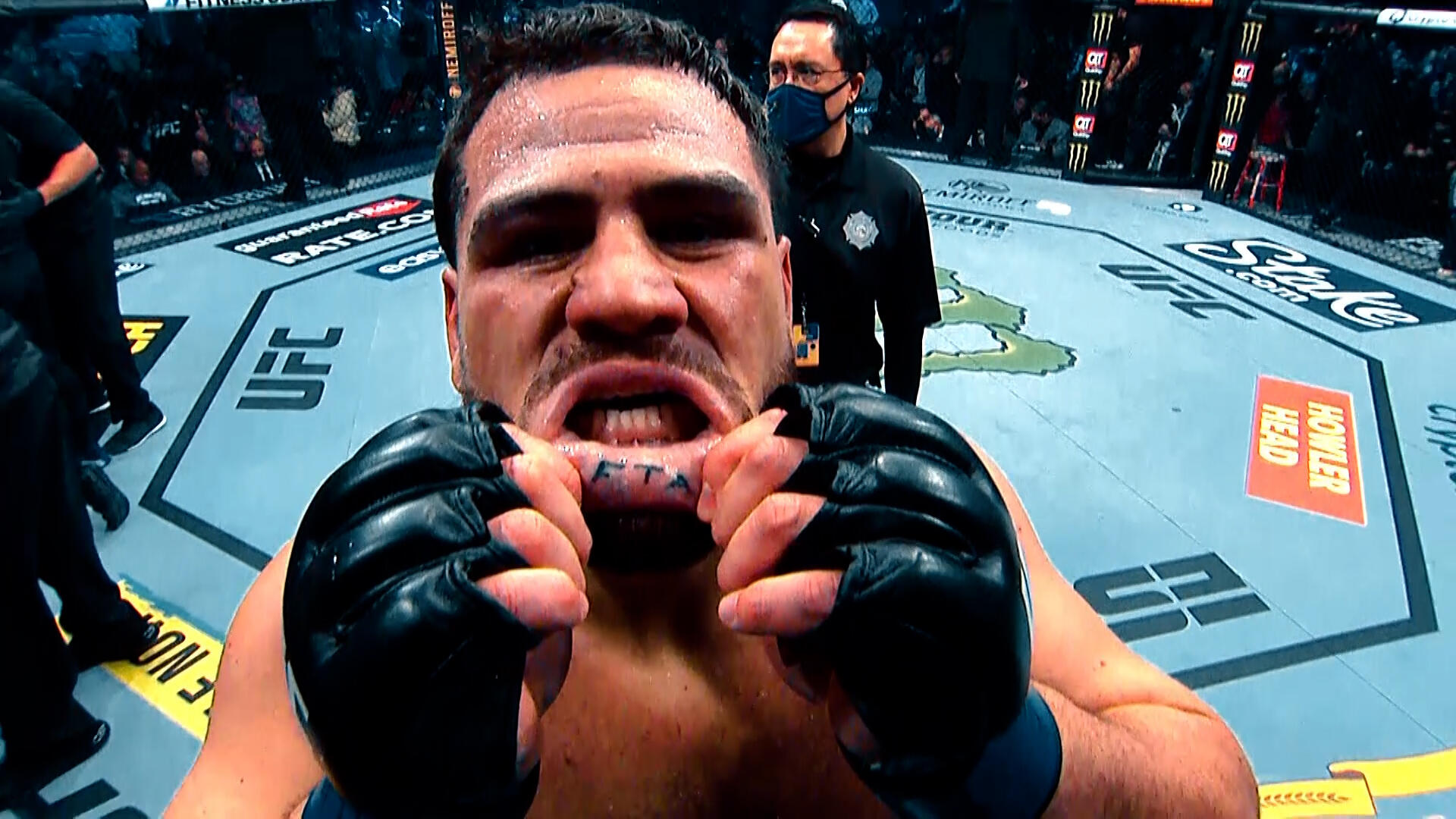
Alongside the large Samoan work, Tuivasa has a much smaller tattoo inside his lower lip. It is a quick flash of ink rather than a major body piece, but it fits his playful, unpredictable public image. He has shown it by pulling down his lip after a fight, turning a tiny mark into a memorable part of his tattoo story.
The contrast is fun. Most of his visible tattoo coverage is traditional, structured, and connected to family and culture. The lip tattoo is hidden until he decides to reveal it. One design carries history across his body, while the other works almost like an inside joke.
That difference also keeps the collection from feeling too serious. Tuivasa’s personality has always been loose and entertaining, even when his fights are brutal. The little lower-lip detail matches that side of him without competing with the pe’a.
It is a reminder that a tattoo collection does not have to follow one mood from head to toe. Large meaningful work and small spontaneous pieces can live together as long as each one has a place in the person’s story.
In the end
What makes Tai Tuivasa tattoos memorable is the mix of cultural weight and plain visual confidence. The pe’a takes up most of the attention, but it does not feel like a costume. Tuivasa has connected it to his Samoan family and to the experience of sitting through a traditional process that lasted across many sessions.
The design is also easy to recognize. You can spot the wide black bands, the repeated geometric panels, and the way the ink wraps from the back to the front. Even when the photo is grainy or the fighter is moving, the overall shape reads clearly. That is a sign of strong composition.
Most importantly, the tattoos are not just decoration added after the fact. They sit alongside the story he tells about growing up between cultures, becoming a father, and finding a way to represent the people who shaped him. Family is part of the meaning, and so is the responsibility that comes with carrying a traditional tatau.
If you are drawn to the look, study the structure instead of copying a random motif. Pay attention to placement, spacing, cultural context, and the skill of the artist. A Samoan pe’a is not a generic tribal sleeve. It belongs to a living tradition and should be approached with respect.
Tuivasa’s collection works because it feels honest. The big tattoo shows where he comes from, the small pieces show his personality, and together they look like part of the same life rather than a collection assembled for attention.
One thing is clear: the strongest detail in this collection is not a single symbol. It is the way every section points back to heritage, family, and the kind of identity he carries into the cage.
Watch a related look at traditional Samoan tatau and the craft behind the style: