
Tai Tuivasa’s largest tattoo is a traditional Samoan pe’a that wraps from his lower back around his hips, stomach and thighs. The dark geometric pattern is easy to see in fight photos, especially when he enters the cage.
Smaller details sit within the larger design: the navel motif, lines down the stomach, repeated thigh bands and a small mark inside his lower lip. Tuivasa has spoken about the pain of getting the pe’a and said he did it for his Samoan mum. The tattoos bring together family, heritage and personal style.
This guide looks at what can be seen in public photos and at the meanings Tuivasa has discussed. Where his explanation isn’t public, the description stays with the placement and design.
Tai Tuivasa’s pe’a tattoo covers the lower back and hips
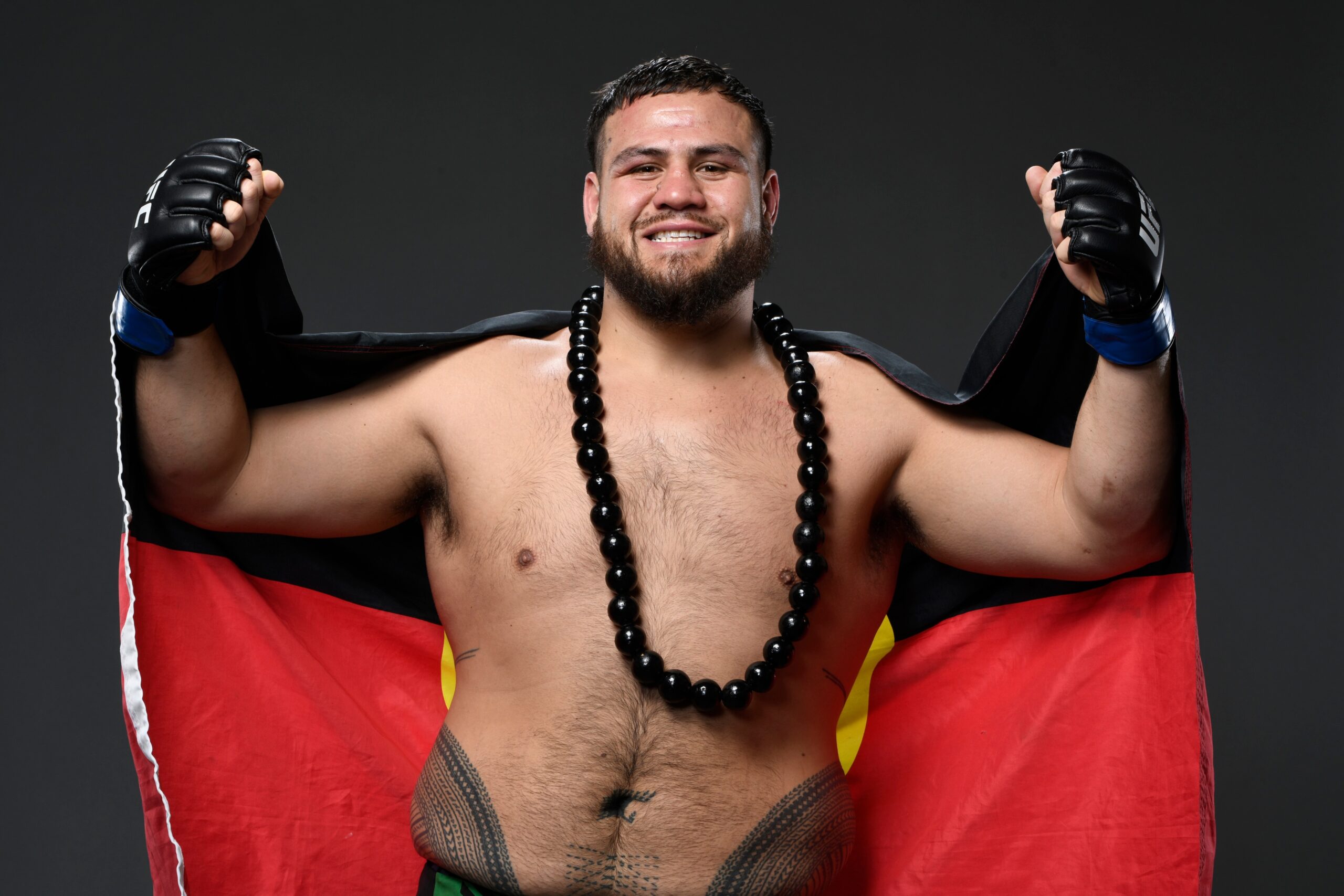
The pe’a crosses Tuivasa’s lower back and wraps around both sides of his waist. Close photos show broad black areas, narrow bands, repeated dots and geometric breaks. The pattern changes direction as it follows the hips; it isn’t one flat stripe.
That curve makes the tattoo look different from each angle. A back view shows the wide center section, while a side view shows how the lines continue toward the front. The design shifts as Tuivasa stands, crouches or turns.
The pe’a is a traditional Samoan tatau, with its own cultural history and responsibilities. Tuivasa has described the process as painful and connected it to his ancestors. That context matters; the design shouldn’t be treated as a generic pattern to copy.
The repeated bands and open skin give the black shapes a steady rhythm. The piece relies on pattern and placement rather than lettering or bright color, and it follows Tuivasa’s body instead of sitting inside a rectangular frame.
The back bands show how the pattern moves around his waist
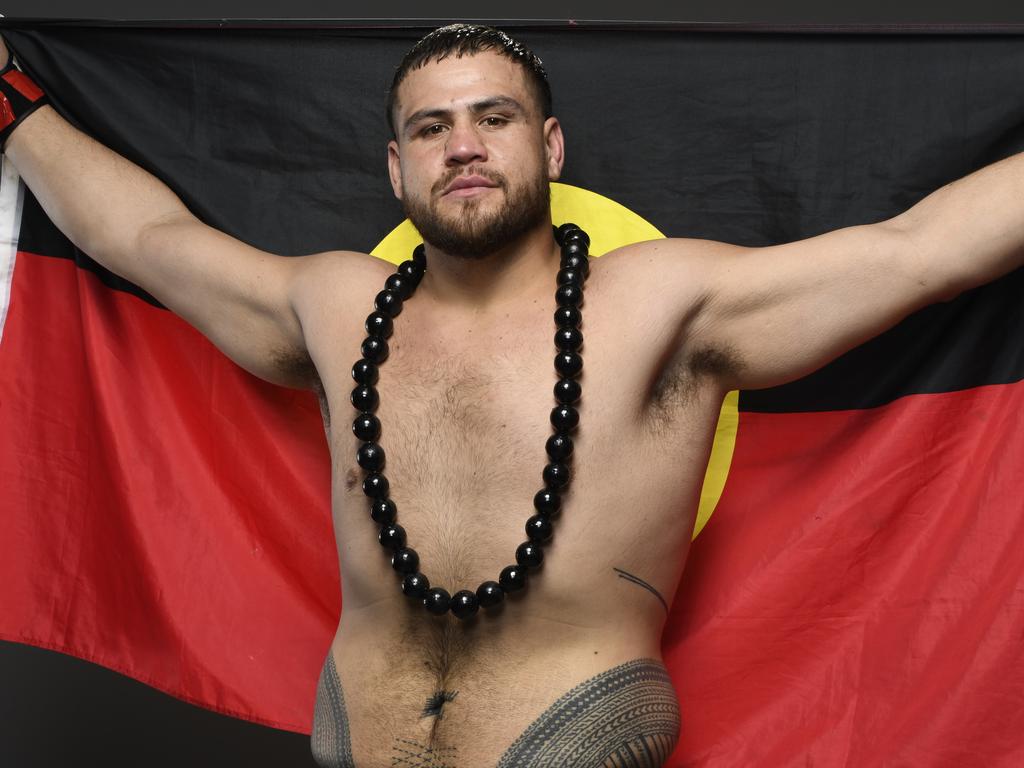
From another angle, long bands run across the lower back and break into smaller sections at the sides. Some shapes resemble steps, arrows and woven forms, though the whole design stays balanced.
No single photo shows the full pe’a. A front view captures the stomach and thighs but hides the back; a back view shows the center while missing the lines that continue around the waist. Several angles make the layout easier to follow.
The pattern bends with Tuivasa’s waist and leaves open areas around the ribs and hips. That fit is part of why it reads as a design made for his body, rather than a panel placed on top of it.
Repeated motifs sit beside larger dark shapes, and open skin helps separate them. This is a useful visual detail, though the pe’a itself belongs to a specific Samoan tradition and isn’t a generic design reference.
His thigh tattoos use repeated bands and open skin
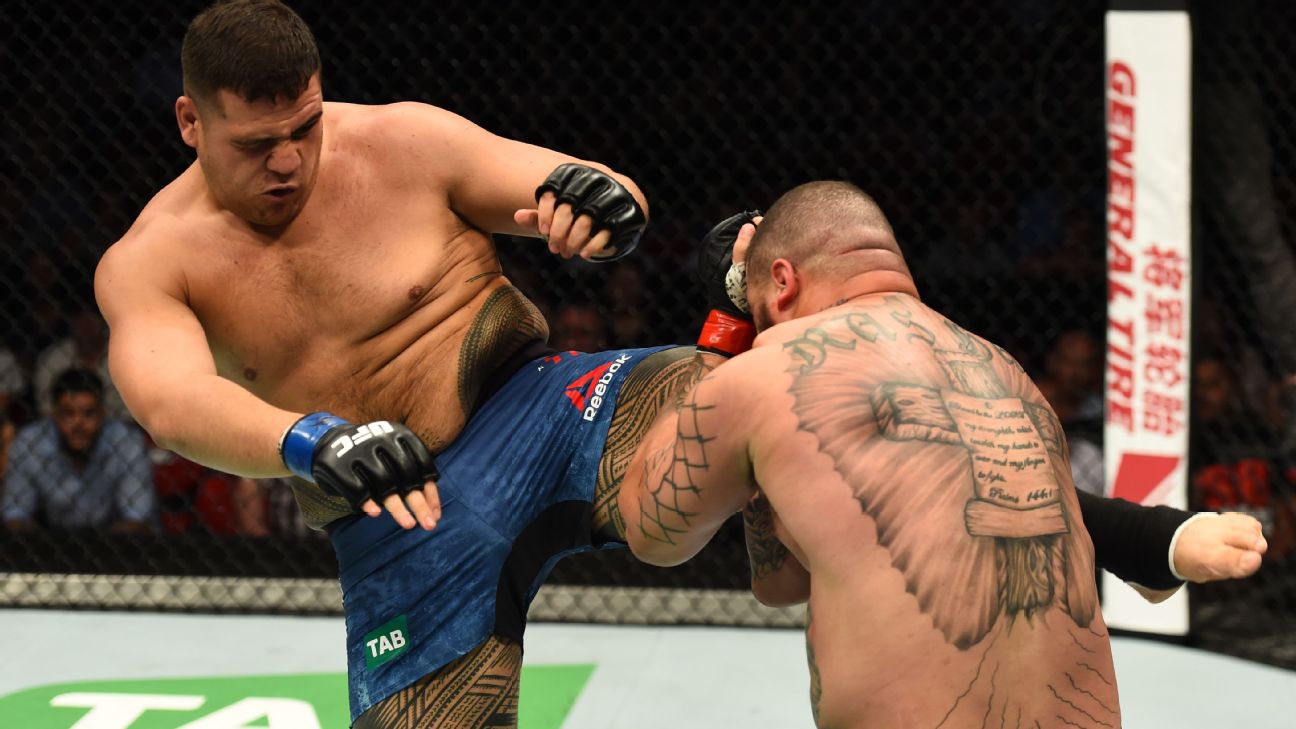
The upper thighs continue the pattern, with thick black areas, patterned strips and narrow lines running toward the knees. In fight photos, the bands appear beneath his shorts as he steps, kicks or changes stance.
The two legs aren’t exact mirror images. Some shapes repeat, but the panels and angles change as they follow each leg. The design shifts as the muscles flex or the skin bends in training.
Open skin separates the darker areas and gives the eye a path through the pattern. That contrast keeps the tattoo from becoming one solid block, even where the coverage is dense.
Shorts often hide part of the thigh work. When more of the legs are visible, the pattern reads as a continuation from the waist rather than a separate pair of tattoos.
Tai Tuivasa’s chest tattoos add another layer
The navel is one of the smaller details in Tuivasa’s tattoos. A dark motif sits at the center of the stomach, with rows of marks above and below it. It’s easy to miss in a wide shot, but close photos show it as a focal point in the front of the pe’a.
Accounts of Tuivasa’s tattoo journey describe the stomach and navel as part of the larger cultural design. In that context, the mark is part of the composition, not a separate logo added to fill a space.
Its smaller scale gives the eye a place to land among the broad hip panels. The surrounding marks are larger and heavier, so this central detail changes the rhythm of the front design.
A clear close-up shows the short rows and spacing around the navel. In a distant or blurry photo, those lines can merge into a dark patch.
The front stomach tattoo panels connect the hips to the thighs
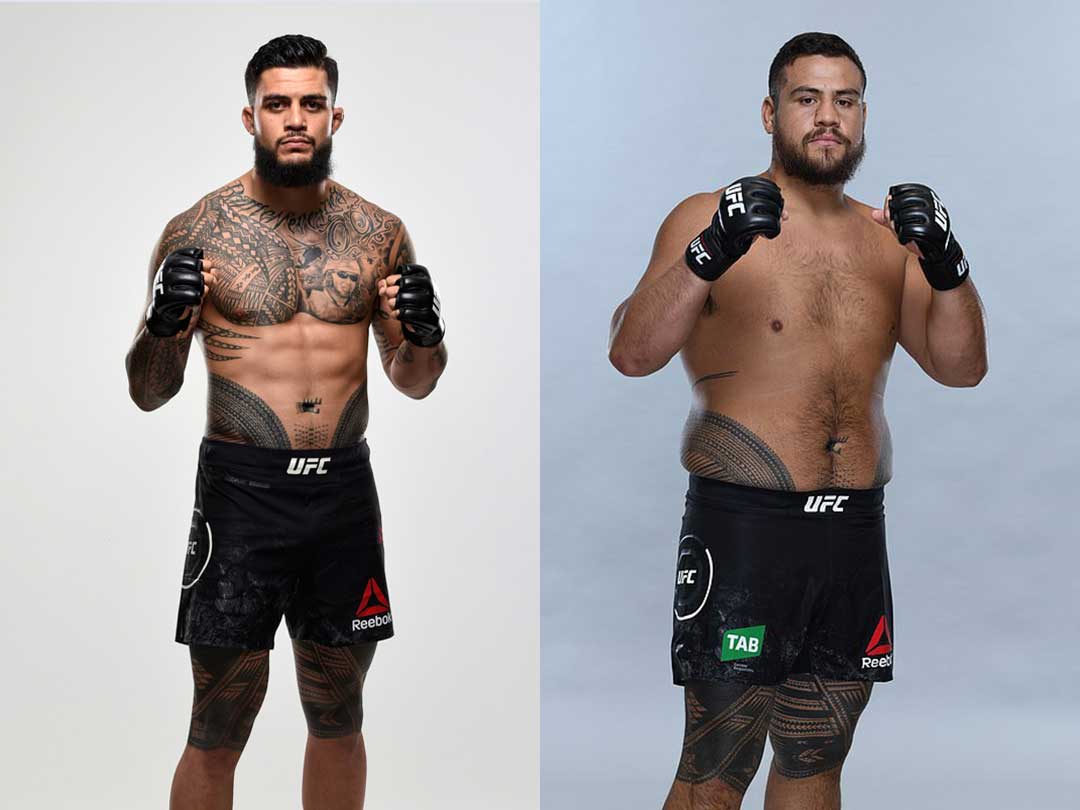
From the front, two bold panels spread from the navel toward the hips. They are heavier at the sides and break into finer marks near the center, framing the stomach without color or soft shading.
Tuivasa is often photographed wearing a kukui nut necklace or holding a flag. Those details change from one event to another; the geometric ink stays in place and carries the link to his Samoan heritage.
The pattern is built to be seen in motion. Even in an unposed fight photo, the dark bands keep their shape under arena lights.
The front panels rely on repeated lines, consistent weight and open space. They don’t need extra color to compete with the rest of the pe’a.
A small lower-lip tattoo adds a surprising detail
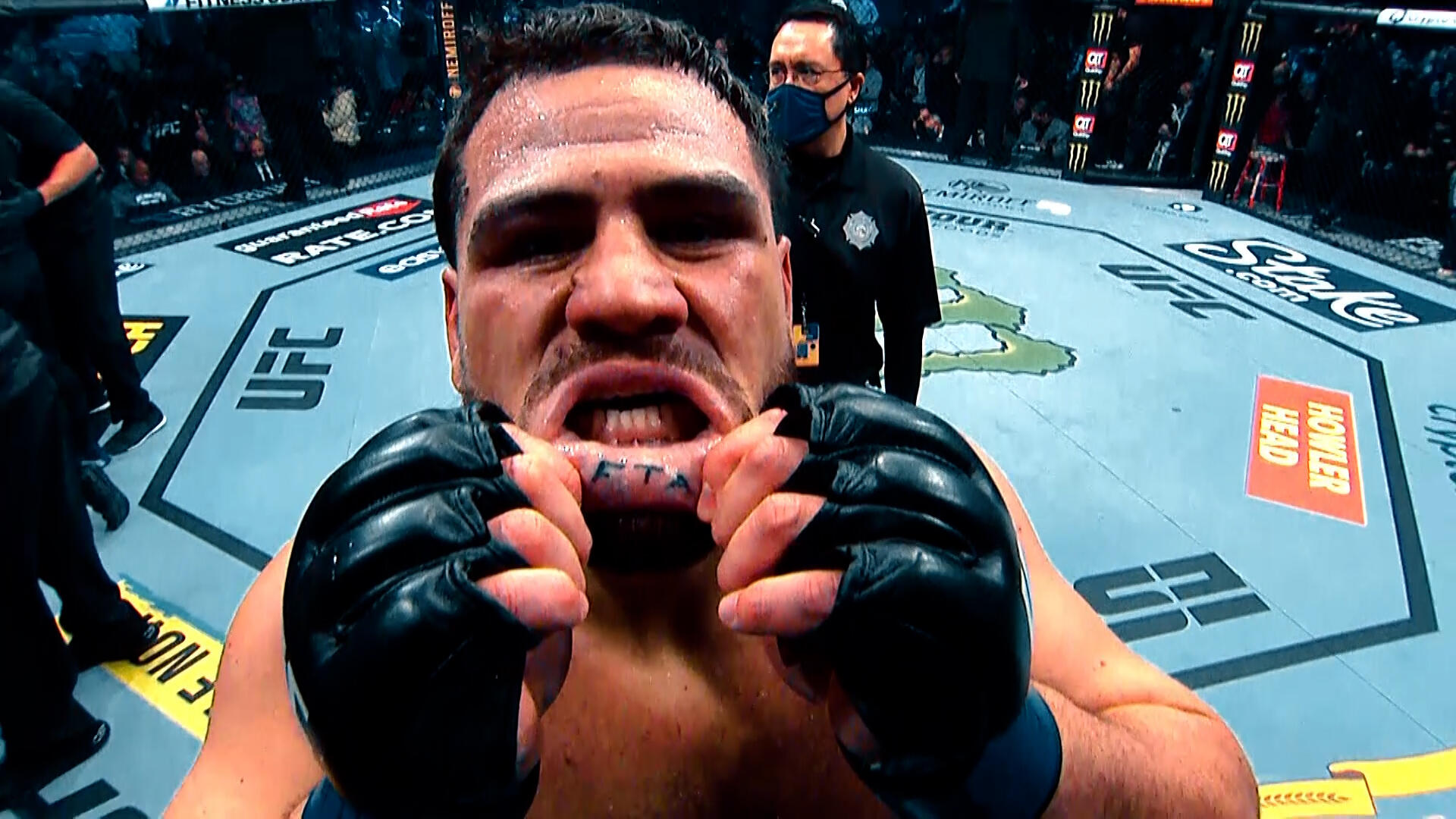
Alongside the large Samoan tattoo, Tuivasa has a small mark inside his lower lip. He has shown it by pulling his lip down after a fight, turning a tiny tattoo into a memorable part of the collection.
The contrast is striking: most of the visible work is structured and tied to heritage, while the lip tattoo stays hidden until he chooses to reveal it.
That small piece adds a playful note beside the large, serious composition. It doesn’t need to match the pe’a to make sense in Tuivasa’s collection.
A group of tattoos can hold more than one mood. Large cultural work and a small, spontaneous mark can sit together when both belong to the person wearing them.
In the end
The pe’a is the part of Tuivasa’s collection that draws the most attention, but its meaning comes from more than its size. He has connected it to his Samoan family and to the experience of a traditional process that took many sessions.
The broad black bands and geometric panels are easy to recognize, even in a grainy photo or while he’s moving. The pattern wraps from the back to the front and down the thighs, so the shape holds across different views.
Tuivasa has also spoken about representing the people who shaped him. Family and the responsibility attached to carrying a traditional tatau are part of the story he has shared.
If the design interests you, study the placement and craftsmanship without copying its motifs. A Samoan pe’a is part of a living tradition, not a generic tribal sleeve. Approach it with respect for its cultural context and the artist’s knowledge.
The large tattoo and the smaller pieces show different sides of Tuivasa. One connects him to heritage and family; the lower-lip mark adds a more playful detail.
The strongest feature is how the sections fit together while still carrying different meanings.
Watch the related video below for a look at traditional Samoan tatau and the craft behind it: