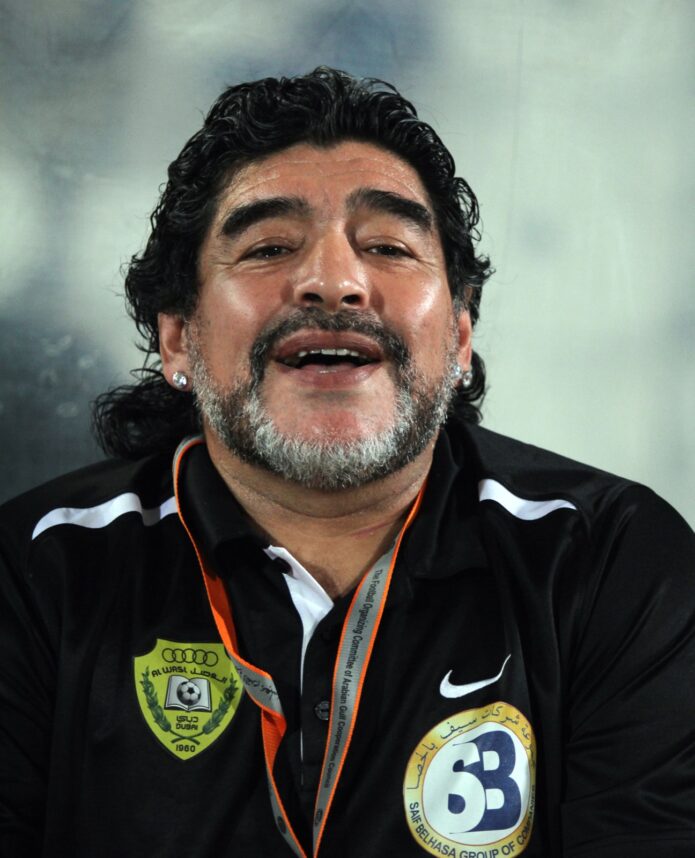
Diego Maradona’s tattoos are unusually direct. They name his daughters, honour two political figures he admired and connect his public identity to the relationships that shaped his life away from football. The strongest entries are not based on a vague celebrity list. They are supported by photographs, interviews and reports from the periods when the designs were visible.
The two portraits dominate the collection. Ernesto Che Guevara appears on Maradona’s right arm, while Fidel Castro is shown on the left calf he associated with his famous left foot. Family lettering has a different scale and tone: Dalma and Gianinna appear on his forearms, and reports also describe a heart tattoo shared with Claudia Villafane and their daughters. The images establish the designs, while Maradona’s own comments explain why some of them mattered to him.
Che Guevara’s portrait sits on Maradona’s right arm
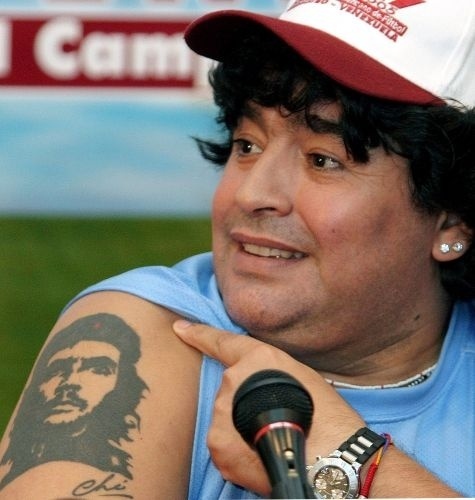
The Che Guevara portrait on Maradona’s right arm is the tattoo most often associated with his political identity. Photographs from interviews and football events show the black portrait when Maradona lifts a sleeve or wears a sleeveless shirt. UOL’s reproduced Reuters image is useful because he points directly to the design, making the location and subject easier to identify than they would be in a distant event photograph.
Reports place the tattoo on the right arm or shoulder area. The wording varies because the portrait extends across a part of the arm that can be described differently depending on the camera angle. The safe entry is the portrait of Guevara on the right arm, with the exact boundary left open when the photograph does not show the whole design.
Maradona did not describe the portrait as a random political decoration. Coverage from El Pais and the Los Angeles Times connects it to his admiration for Guevara and to the broader relationship between Maradona, Cuba and revolutionary history. In one reported statement, he said, “I carry him on my arm and in my heart.” That line gives the image a clear personal context without requiring a writer to assign a new meaning to every feature in the portrait.
The tattoo also shows why a close photograph is necessary. Guevara’s face is recognisable in the UOL image, but a compressed stadium photograph can turn the eyes, hair and hat into a dark patch. Readers comparing pictures should allow for ageing ink, sleeve position and lighting before deciding that the design has changed. The subject remains well documented even when individual details are soft.
Fidel Castro’s portrait covers the left calf linked to his famous foot
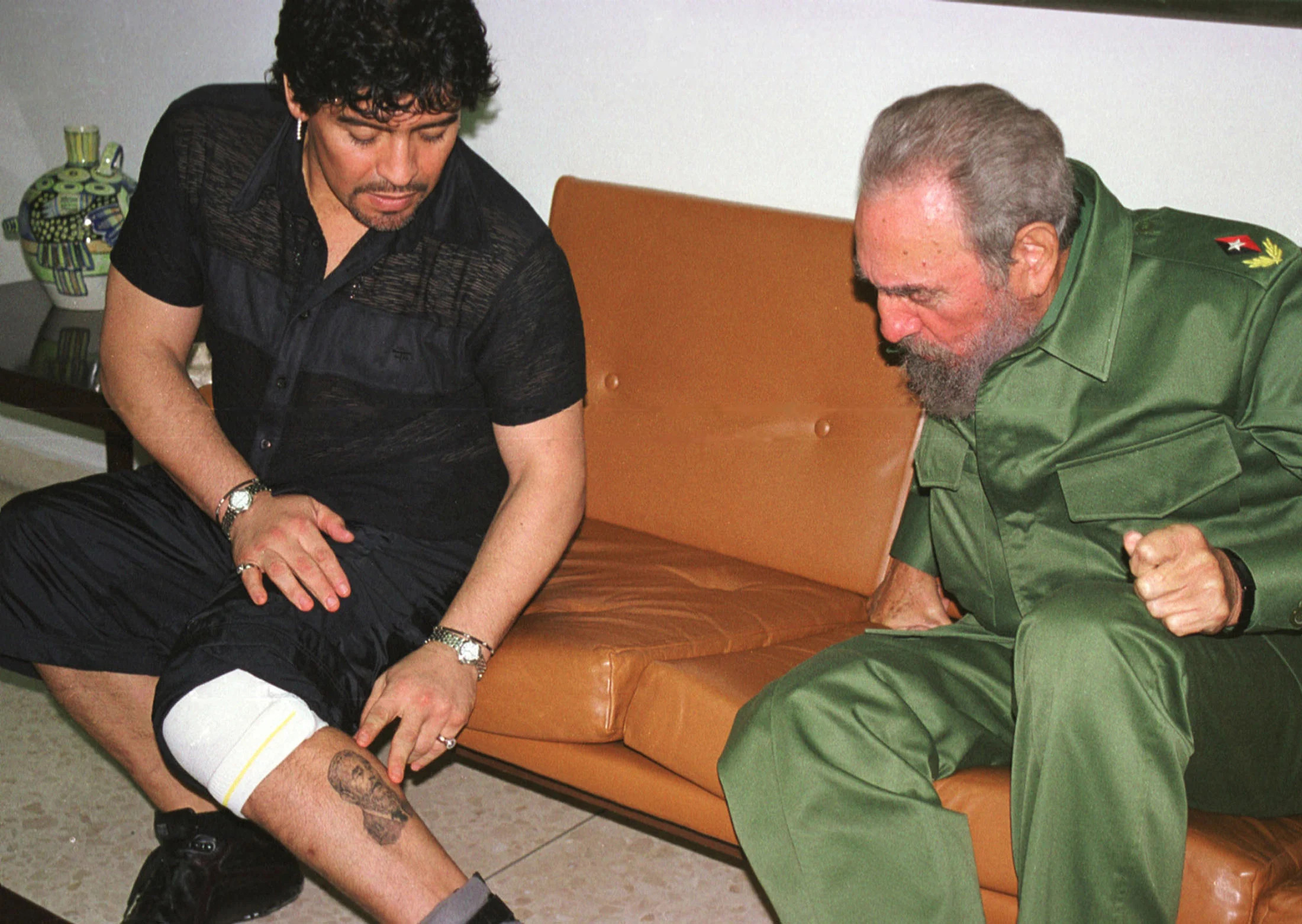
Fidel Castro’s portrait appears on Maradona’s left calf, the leg he associated with the left foot that made him famous. El Pais reported that Maradona received treatment in Cuba and later had Castro’s image placed on the leg. Other coverage describes the portrait together with Castro’s signature, making it more than a generic face tattoo.
The placement carries a practical connection to Maradona’s football identity. Castro is on the leg that Maradona regarded as his most important sporting instrument, so the location became part of the way the tattoo was discussed. That does not mean the design was chosen only for football symbolism. Maradona’s friendship with Castro and his admiration for the Cuban leader are the stronger documented explanations.
A photograph reproduced by Yahoo Noticias shows Maradona lifting his trouser leg while Castro looks toward the tattoo. The image establishes the portrait’s scale and calf placement better than a written list can. It also keeps the subject grounded in a real moment between the two men rather than presenting the tattoo as a detached political graphic.
Maradona spoke about Castro with language that went beyond ordinary celebrity acquaintance. Reports quote him calling Fidel a second father and describe their relationship during and after his time in Cuba. Those statements support the tribute’s emotional importance, but they should remain attributed to Maradona and the cited reporting. The tattoo does not prove every political position later attached to his name.
The calf portrait is also a reminder that tattoo photographs can become historical evidence. The image records the design and the friendship in the same frame, while later articles add the timing and context. A careful entry keeps those jobs separate: the photograph proves what is visible, and the reporting explains why the portrait was there.
Dalma and Gianinna are written across Maradona’s forearms
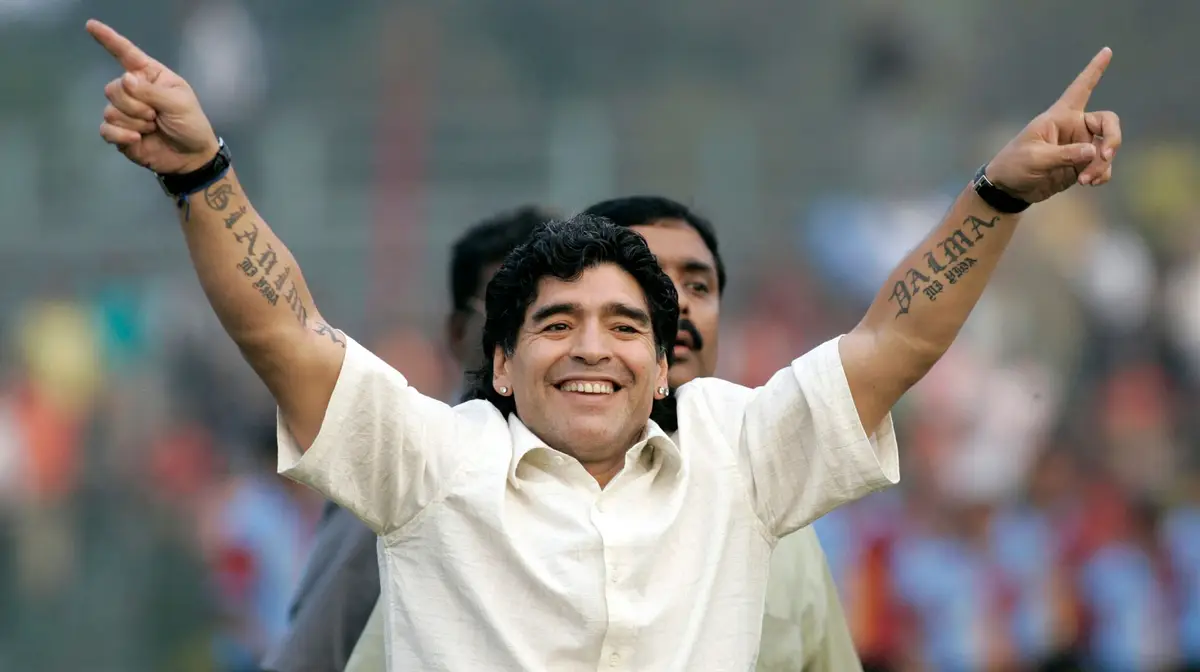
Dalma and Gianinna’s names on Maradona’s forearms form the most plainly familial section of his tattoo map. Photo coverage shows the names when he raises both arms, and reports from Infobae describe longer dedications including “Dalma mi vida” and “Gianinna mi vida.” The exact crop changes from photograph to photograph, but the connection to his daughters is clear.
The lettering differs from the two portraits because it does not ask the viewer to recognise a public figure. It uses names and a short phrase to identify family members directly. The forearm placement also makes the tattoos easier to display during a football celebration or interview, which is why more public photographs exist for these designs than for some of his smaller marks.
Infobae’s account links the family lettering to work done in Cuba and places it beside reports of the Che and Fidel tattoos. The timing matters, but the guide should not suggest that every tattoo was made in one session. A tattoo map can show the designs together while keeping their individual histories separate.
SIC Noticias carries a photograph in which Maradona raises his arms and the names are visible on the forearms. It is valuable visual evidence because both sides of the body appear at once. Even so, the image is not sharp enough to support a complete transcription of every flourish. The names and their general positions are reliable; the fine details should be read from a close image when one is available.
Reports also describe a small heart shared with Claudia Villafane and their daughters. That design belongs beside the forearm names because it is another family reference, but it should not be confused with the lettering. One is a shared symbol shown in family photographs; the others are direct name dedications placed on Maradona’s arms.
What the photographs establish about Maradona’s tattoo collection
Maradona’s public tattoo record is substantial but not perfectly complete. The best-supported pieces are the Che portrait on the right arm, the Fidel portrait on the left calf and the names of Dalma and Gianinna across the forearms. The heart design and other reported marks can be included with clear source labels, while uncertain details should not be presented as confirmed biography.
That approach keeps the footballer’s tattoos readable without flattening them into one political message. The portraits record admiration and friendship. The lettering records family. The photographs show how each design sat on the body, and the interviews explain the relationships that gave those images their importance.
One thought on “Diego Maradona’s Tattoos Put Football, Family and Cuba on His Skin”