The Enigma is the stage name of Paul Lawrence, a sideshow artist, musician and tattooer. His signature design is a blue jigsaw pattern that runs from his scalp and face across his neck, torso, arms, hands and legs. The photographs show how it covers the body; they don’t explain the meaning of every piece.
Guinness World Records counted 2,123 puzzle pieces in 2011, using pieces with clear borders. That is a count from that year, not a current inventory or a key to the design.
The Enigma’s head and torso puzzle tattoos
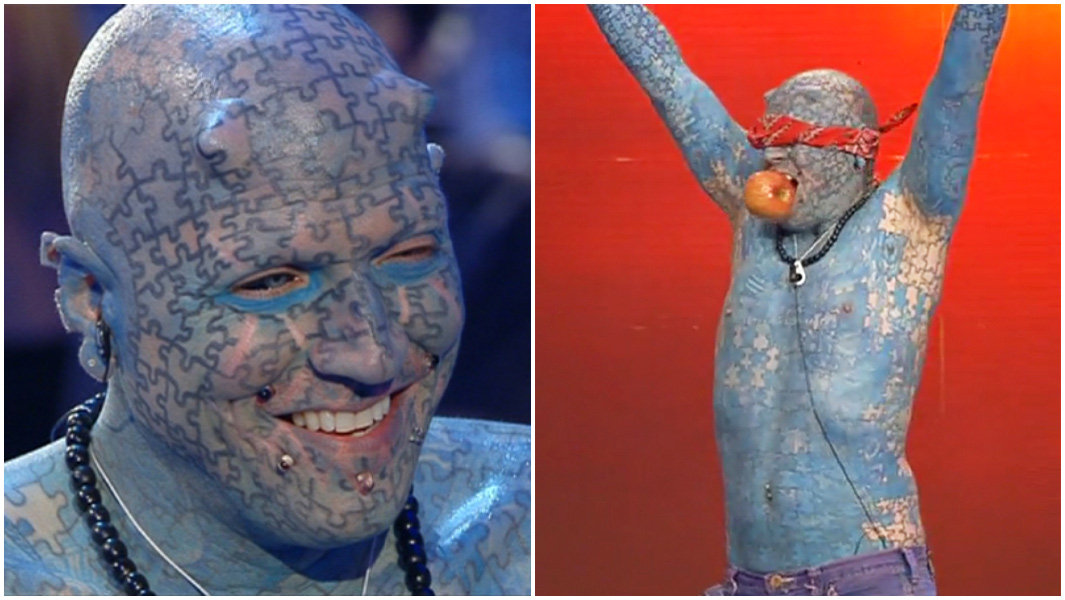
The split Guinness photograph shows the pattern at two scales. In the close portrait, the outlines cross the scalp, forehead, cheeks, nose, lips and chin. The blue fill changes with lighting and the condition of the skin, while the darker edges keep the separate shapes visible.
The second panel opens onto the chest and raised arms. The same pieces continue down the torso, making the work read as a body suit rather than a face tattoo copied across a larger area. The wider frame also makes the repeated pattern easier to see.
The Enigma’s body suit in a wider portrait
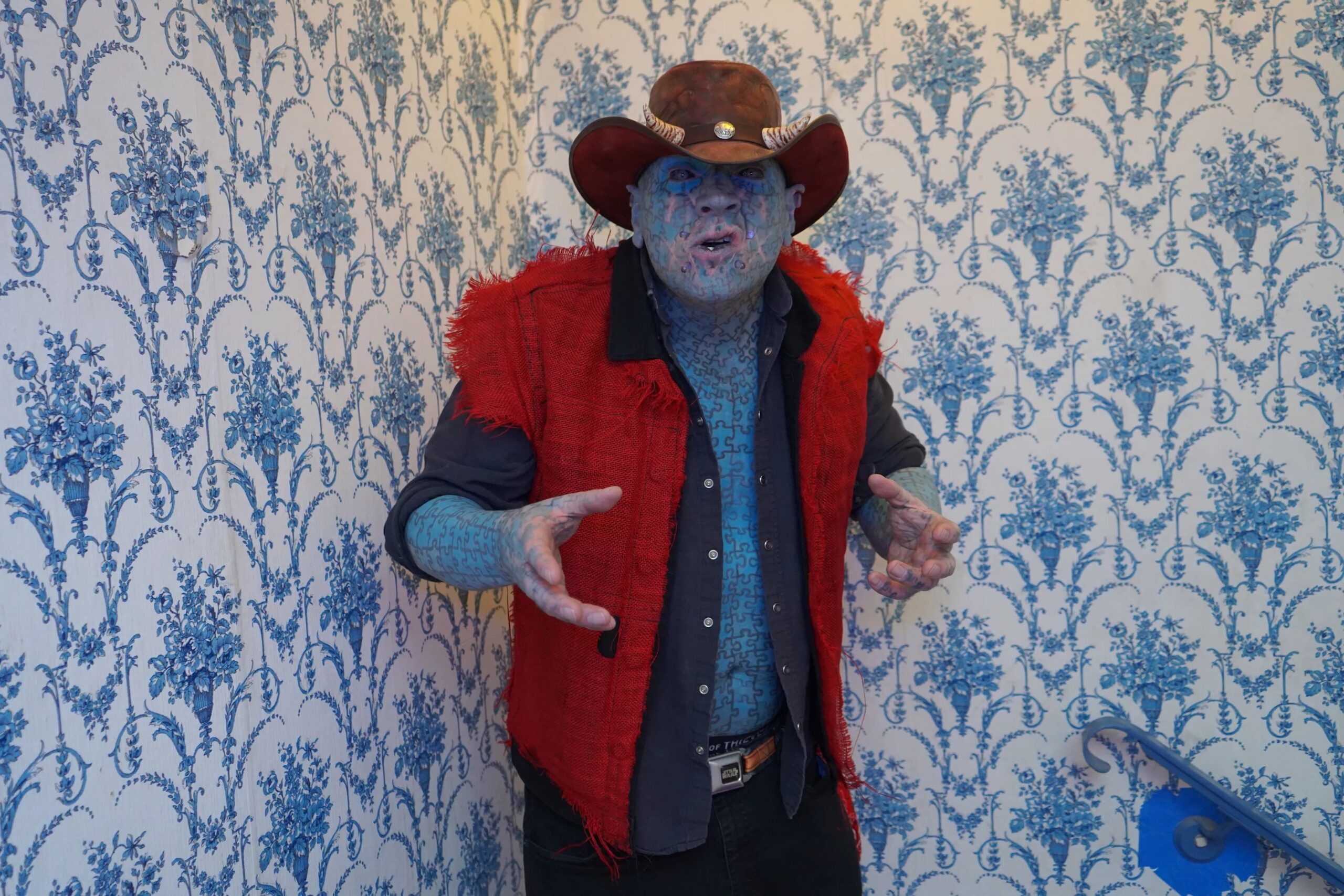
A Westword portrait shows the suit with a red vest and dark shirt. The face draws attention first, but the exposed neck, fingers, hands, forearms and chest carry the pattern across the frame. The pieces have irregular edges, so they don’t form a conventional geometric sleeve.
Because the clothing covers parts of the body, this photograph is useful for seeing how the blue field connects the visible areas. It isn’t a complete map of the tattoo.
The Enigma forearm and hand puzzle tattoos
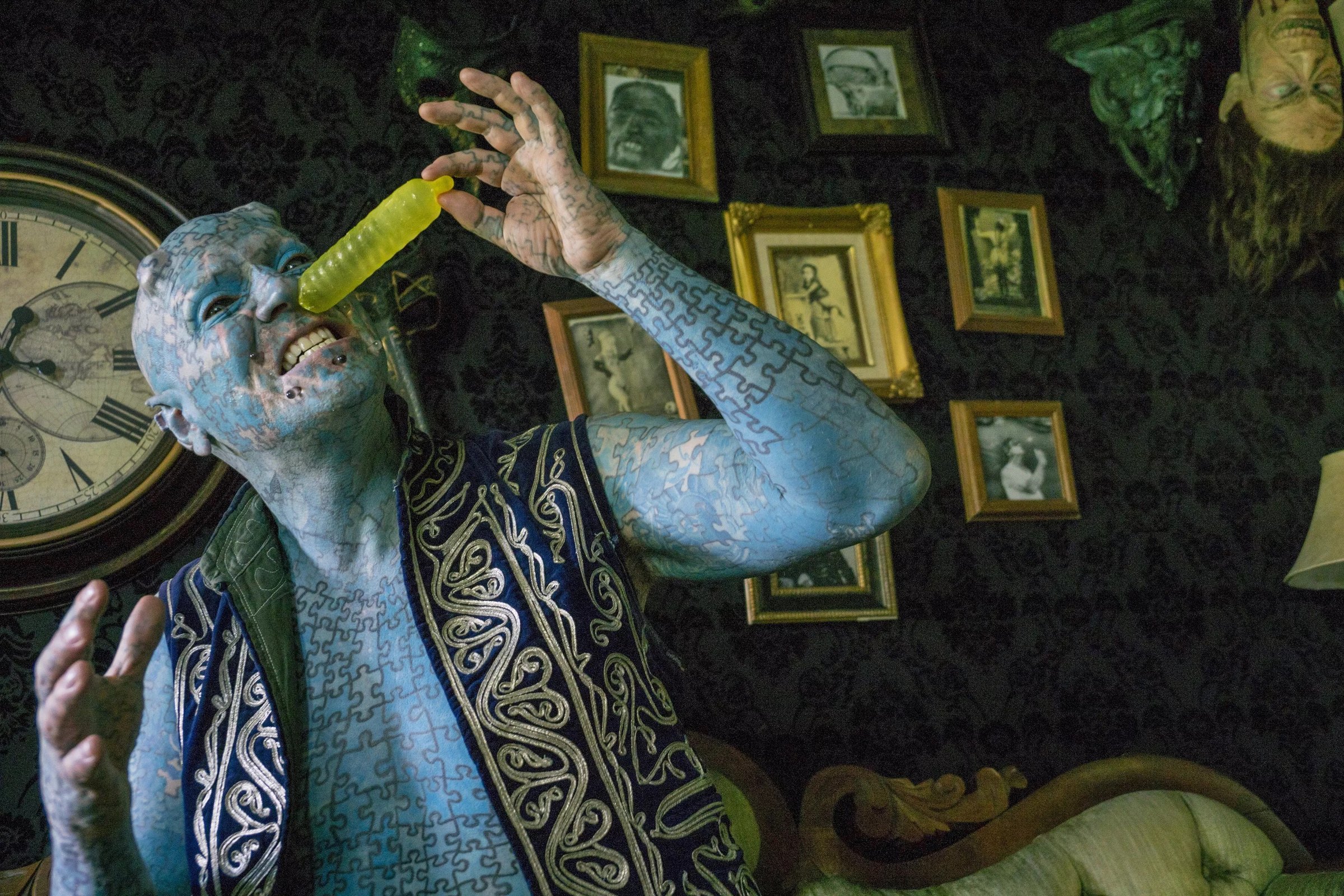
In the reclining Westword photograph, the forearm and hand are close enough to see how the lines cross the wrist and joints. The shapes turn as the hand bends; the pattern follows the body instead of stopping at a framed border.
The close view also shows how many small pieces can create a dense surface without a separate emblem in every gap. The outlines and the skin between them keep the hand from reading as one solid blue patch.
The Enigma face and neck puzzle tattoos
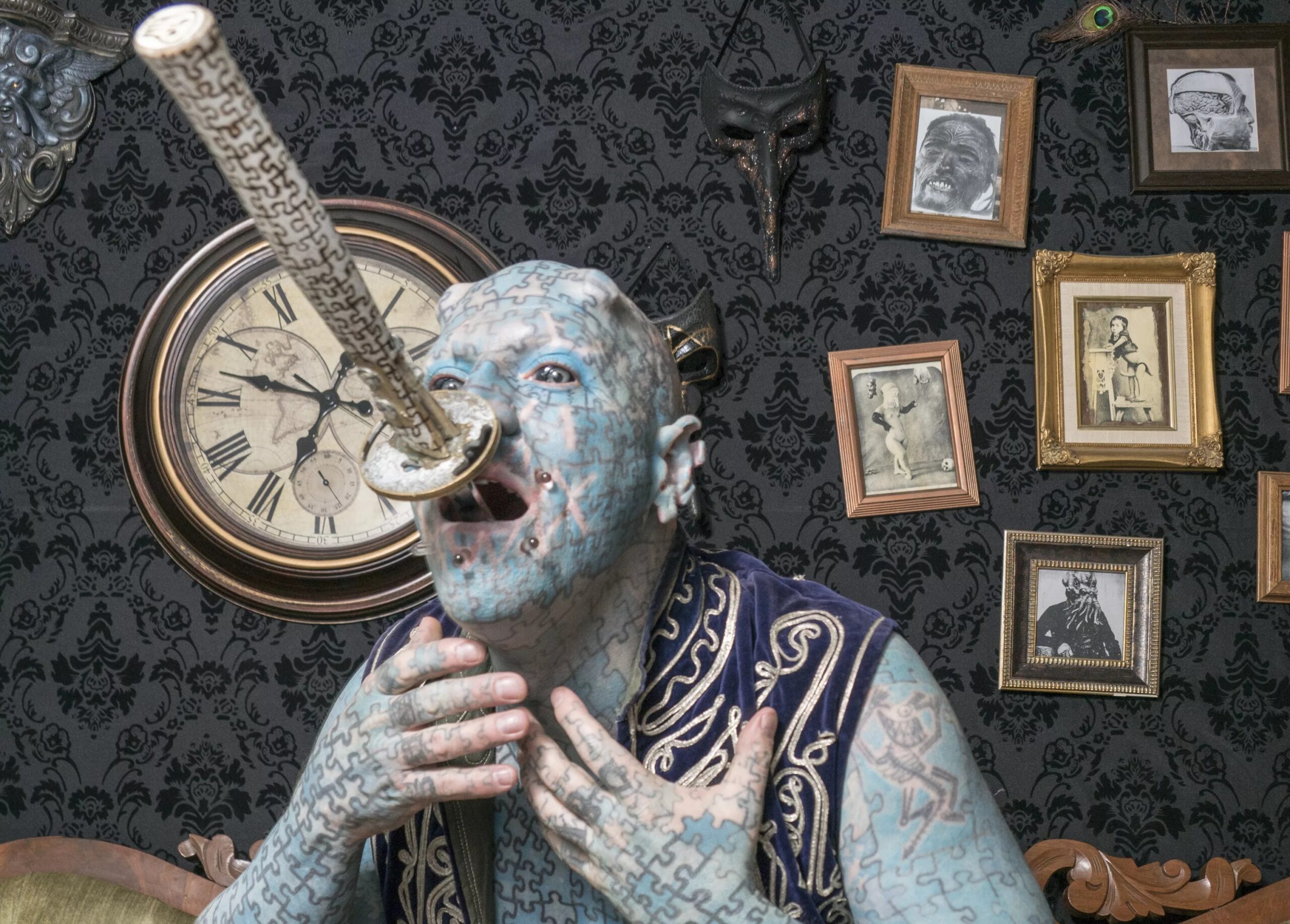
The sword photograph brings the face and neck forward. A little of the shoulder and upper chest remains in frame, showing the pattern continuing below the jaw. The blackened eyes and facial piercings are body modifications, separate from the jigsaw tattoos.
“The art is on the inside,” The Enigma told Guinness when he described the idea. The quote speaks to the project as a whole; it doesn’t provide a separate explanation for each piece.
A puzzle line across the cheek is read at close range, while the same kind of line on an arm works across a larger area. The face and body photographs show different placements, so one isn’t a substitute for the other.
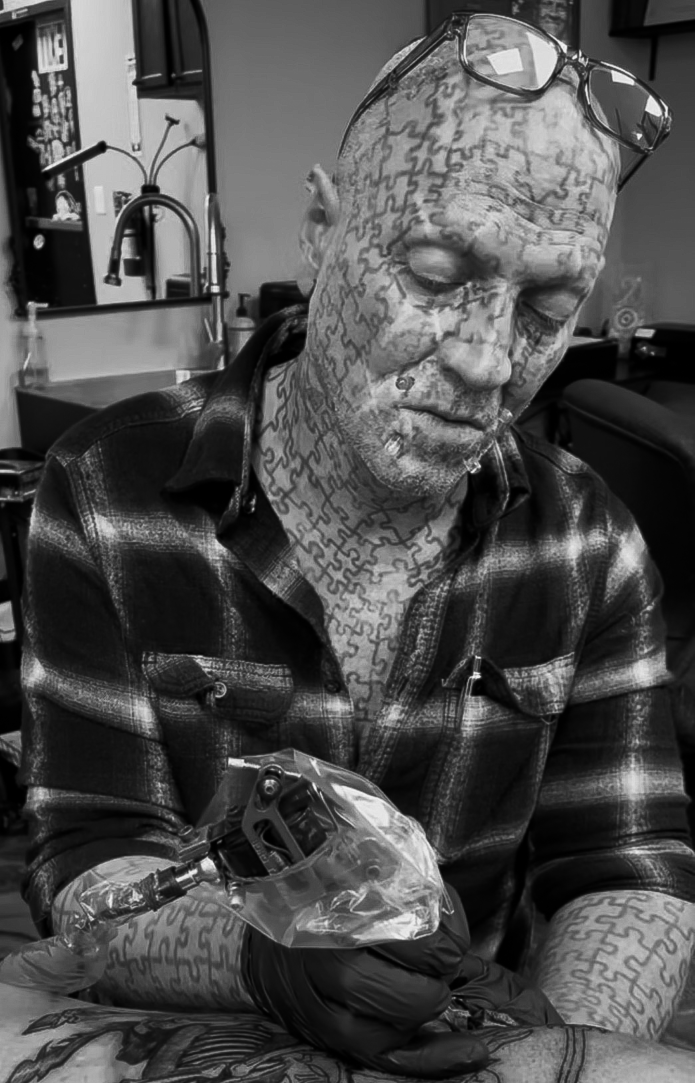
The Enigma tattooing a guest
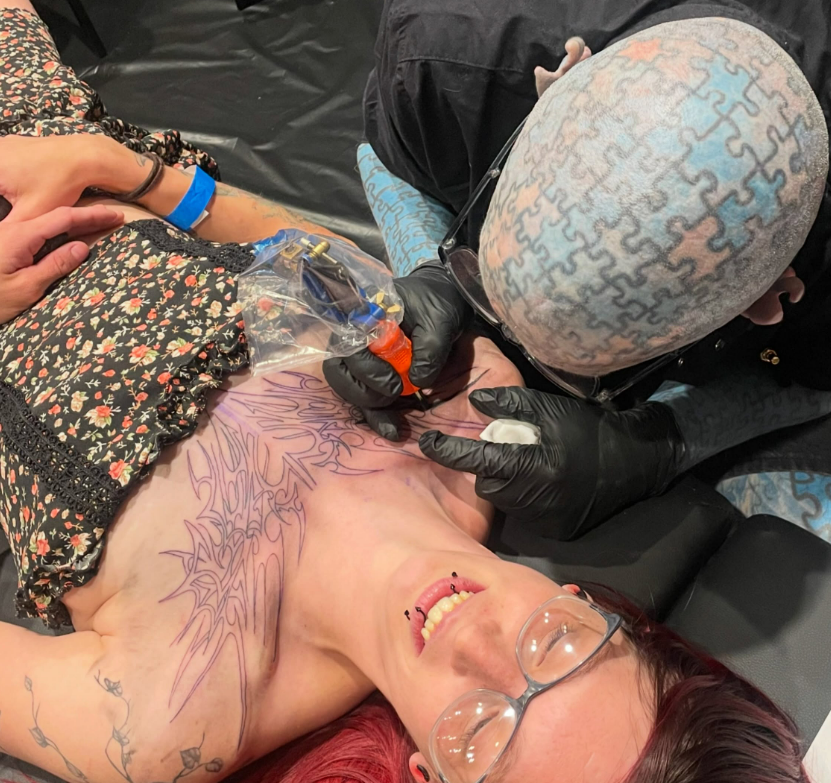
The Parlour Tricks photograph shows The Enigma tattooing a guest, with his own puzzle-covered scalp and arm in view. He is both the subject of the photographs and a working tattooer who has put puzzle designs on other people; he also works as a guest artist.
The machine, gloves and client place the familiar blue pattern in a studio setting. The image documents his work as a tattooer alongside the performance identity built around his own tattoos.
The ear, eyes and the limits of the record
The close photograph of the ear shows puzzle pieces inside it, extending the tattoo beyond the larger, flatter areas of the body. Guinness also records tattooed sclerae, horn-shaped implants and flesh tunnels around the mouth. Those are parts of his broader body-modification history; the ear image is direct evidence of tattooing in that specific area.
The sources show different moments and views. The Guinness image gives a clear face-and-torso portrait; Westword’s photographs show later poses; Parlour Tricks shows the ear and a tattooing session. Taken together, they document the project, but none is a complete current map.
Images from different years can look different as color softens, outlines fade, or a pose reveals more skin. Each photograph records the tattoo at a particular time. A visible map of the scalp, chest, arms or ear is separate from a personal history, which should rely on what Lawrence has said about his choices.
A performance identity built over time
Lawrence conceived the jigsaw idea in the early 1990s and began the main transformation in January 1993. Guinness describes it as a full-body jigsaw tattoo, and Lawrence has said that more than 200 artists have worked on it. That timeline explains why the tattoo developed across years and studios; the consistent blue outlines make the different areas read as one project.
How to use the reference responsibly
If you’re using The Enigma’s tattoos as a reference, look at the continuous outlines, the limited blue color and the way the shapes follow the body’s contours. A smaller design can use a few connected pieces or a patch of color without copying his full-body map. Keep the design idea separate from claims about meanings that the available sources don’t give.
One thought on “The Enigma Tattoos: Blue Puzzle Pieces from Head to Hand”