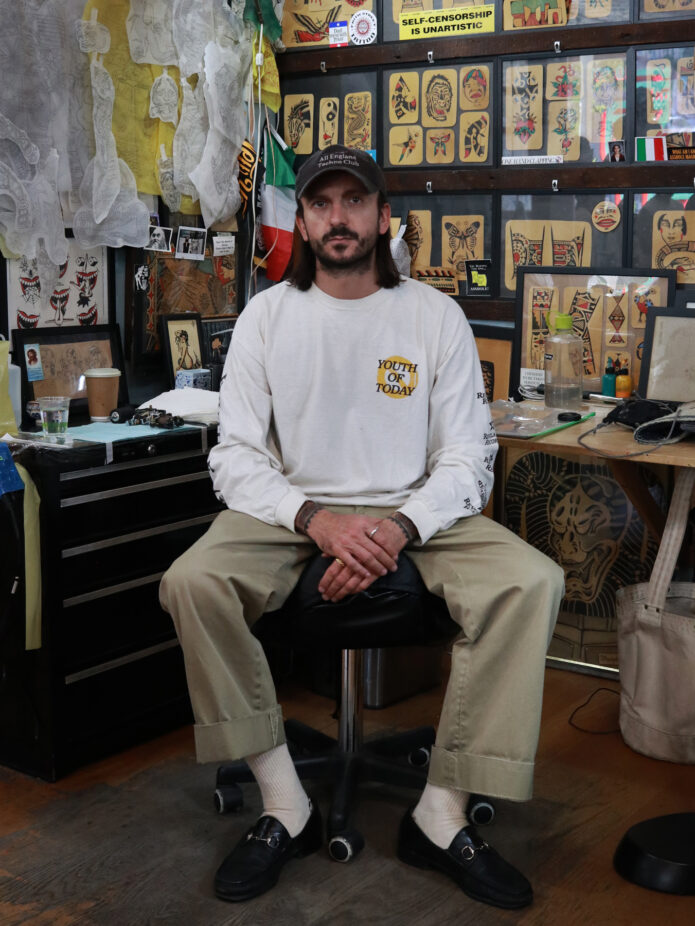
Henry Big tattoos are easy to recognize because they carry the confidence of traditional tattooing without looking trapped in the past. Enrico Grosso, known professionally as Henry Big, works from Greenpoint Tattoo in Brooklyn after building his career across Italy, the United Kingdom and the United States. His collection and his portfolio share the same visual language: bold outlines, direct silhouettes, strong black areas and classic subjects that still read clearly years later.
The photographs from his iNKPPL interview show more than isolated flash designs. They show how a tattoo artist can wear a large collection as a living reference library. Dragons, women, birds, masks, flowers and geometric ornaments sit across the back, chest and arms. The subjects differ, but the line weight and rhythm give them a shared home. The most useful design lesson is that consistency comes from decisions about structure, not from repeating one exact image.
This guide focuses on the visible tattoos and the structural choices behind them. It is not a claim that every symbol has one fixed private meaning. Instead, it looks at placement, scale, contrast and the traditional approach Henry Big describes in his interviews. His work offers a clear way to think about a sleeve, a back piece or a first large tattoo as a connected canvas.
Henry Big’s back pieces show why traditional tattooing still rewards scale
A large back tattoo needs a shape that can hold attention from a distance. Henry Big’s photographed back pieces use sweeping creatures and framed ornaments to occupy the broadest part of the body without becoming a flat poster. The central image carries the story, while the decorative edges keep the composition from dissolving near the shoulders and waist.
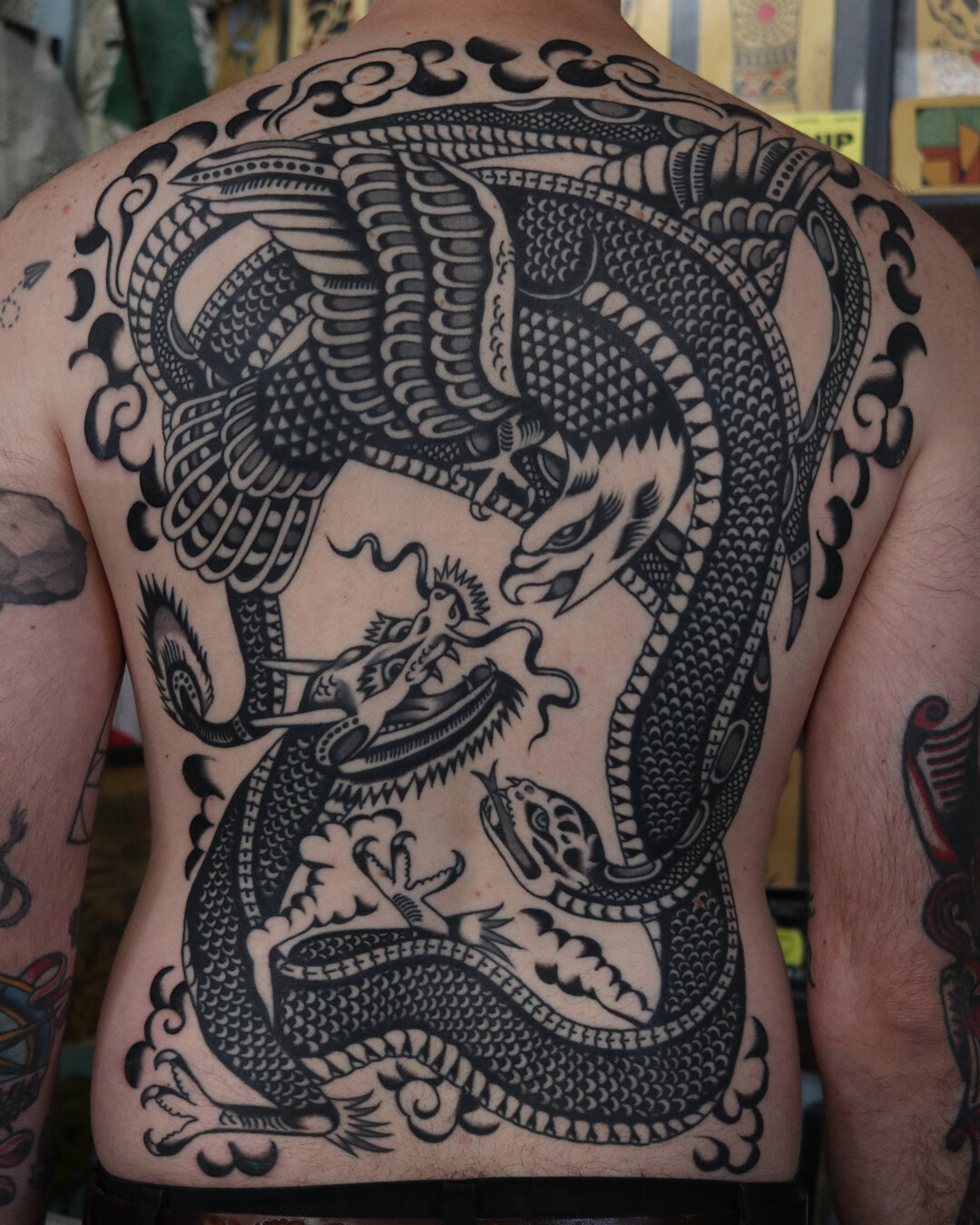
The dragon in the close-up is a useful example. Its body curves across the back, so the design follows the natural movement of the torso instead of fighting it. The scales create texture, but the outer contour remains decisive. That balance is what lets a viewer read the creature first and notice the smaller details second.
Back pieces also benefit from a deliberate hierarchy. Pick the main subject before choosing every filler mark. A dragon, skull, mermaid or large bird can establish the direction of the composition. Border work, clouds and flowers can then support that subject. Traditional tattooing becomes powerful when the big shape is allowed to stay big. Shrinking everything to fit too many ideas usually makes the finished tattoo less memorable.
Henry Big dragon tattoos give the collection a strong visual spine
Dragons appear repeatedly in Henry Big’s work because they solve several design problems at once. They have long bodies that can wrap around an arm or stretch across a back, recognizable heads that create a focal point and repeating scales that add movement without requiring photorealistic detail. The same logic works for snakes, tigers, eagles and other traditional subjects.
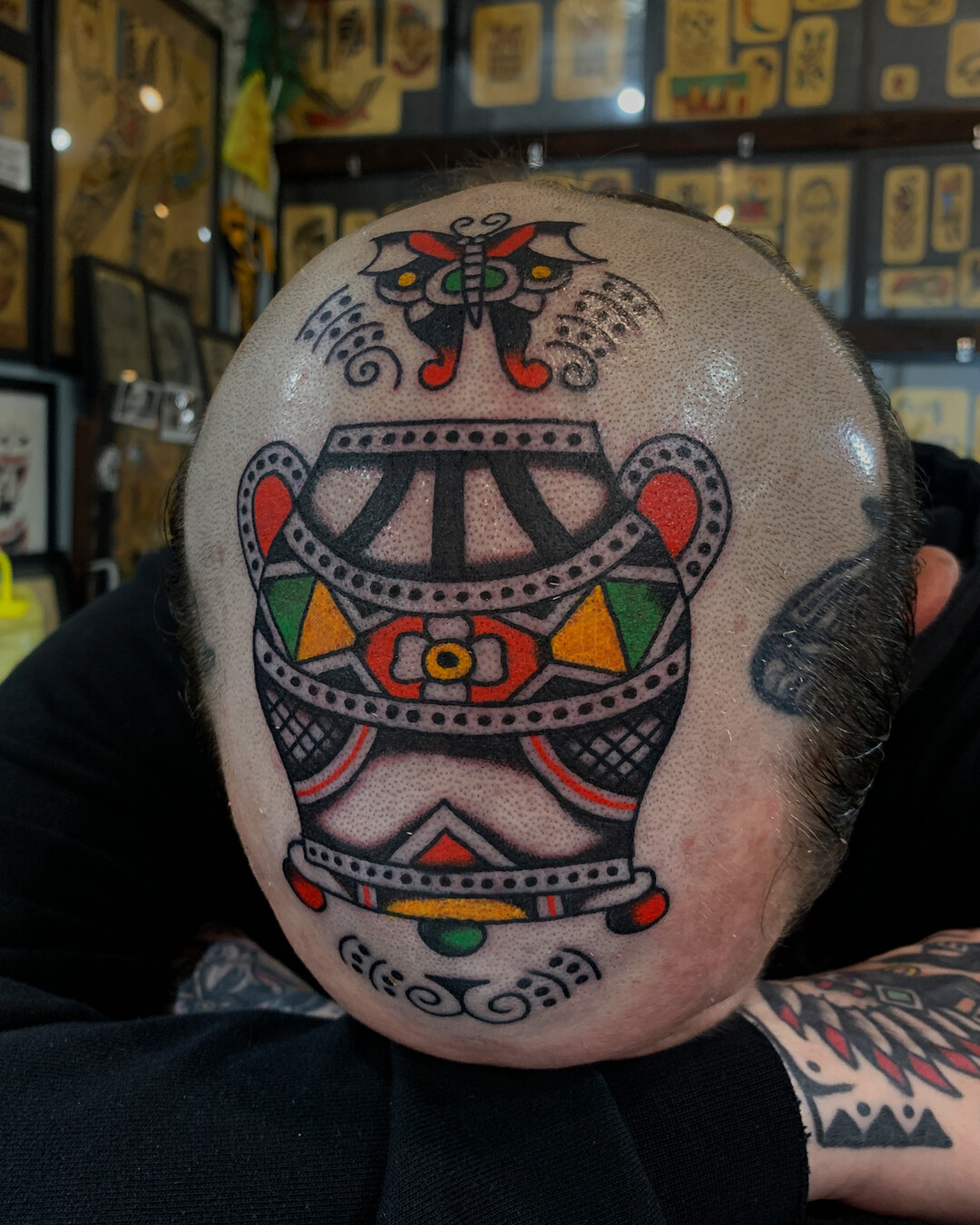
In the tattoo photographs, the creature is not reduced to a generic outline. The expression, teeth, claws and curve of the body give it personality. Yet the image remains readable because the design does not depend on hundreds of tiny lines. Heavy contours and measured interior marks do most of the work.
For a creature tattoo in this direction, visibility from across a room is the first design question. A clean profile and a strong gesture often matter more than extra decoration. The artist can decide how the animal turns around the body, where the head faces and which areas need open skin. A creature that follows the body’s movement will feel more alive than one placed as if the skin were a sheet of paper.
Henry Big’s approach also shows why references should be treated as a vocabulary, not a tracing exercise. Traditional dragons have a history, but an artist can change the face, posture, color balance and surrounding motifs so the final piece has its own identity.
The sleeves use repeat borders to make a large body map feel connected
The arms in Henry Big’s tattoo collection are packed, but they do not read as random stickers. Repeating borders, dots, loops and curved ornaments create a visual thread from the shoulder toward the wrist. Those elements act like punctuation between larger images. They give the eye somewhere to rest and help separate one subject from the next.
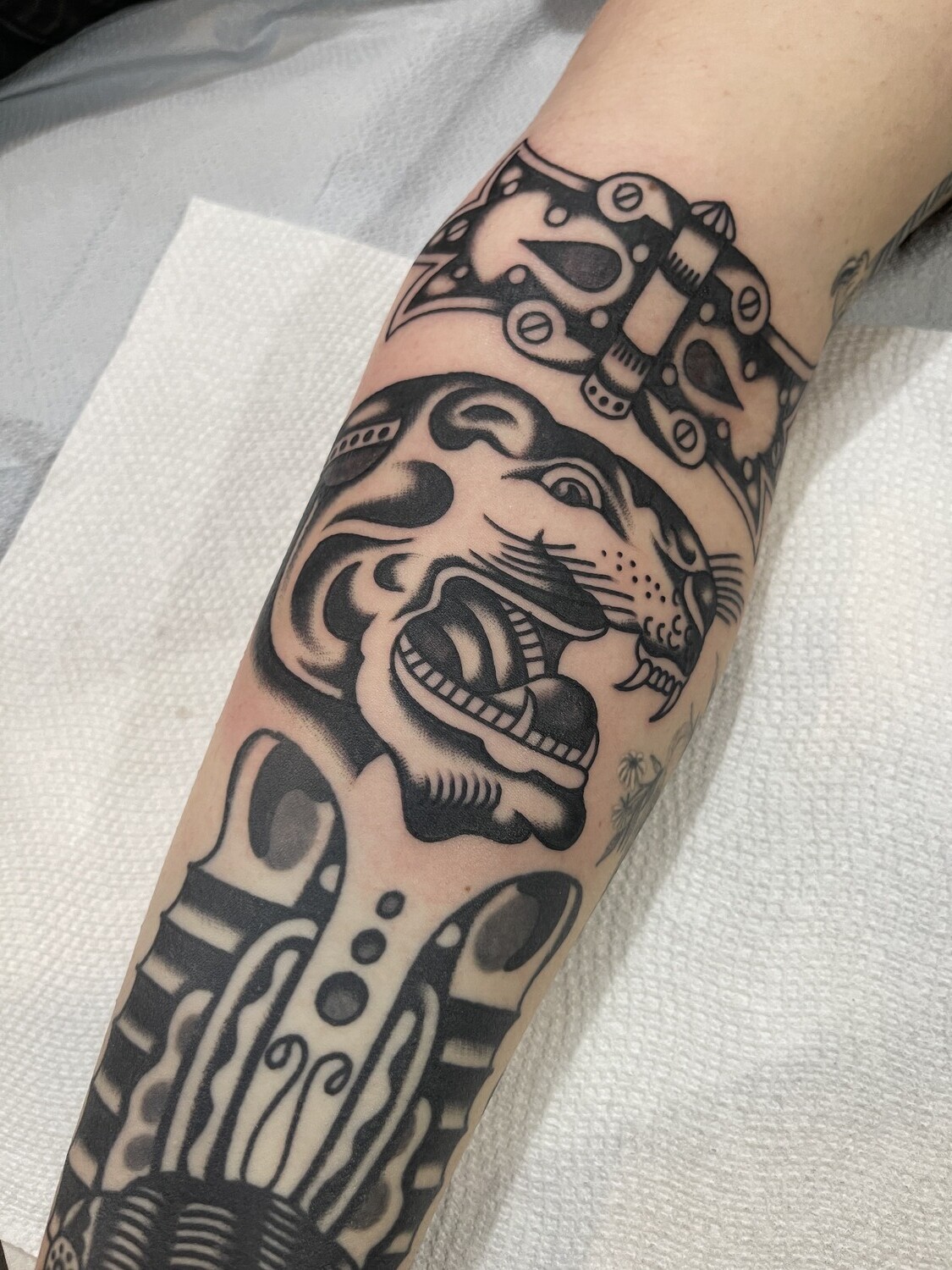
This is especially useful when an arm has been built over many appointments. A sleeve rarely begins with a complete blueprint. One person may start with a favorite animal, return for a figure, then discover that the negative space needs a border or a small flower. Repeated motifs can join those decisions without hiding the age of the collection.
Planning still matters. A new addition can be assessed against photographs of the arm from the front, side and back. The places where existing designs carry the most black become visible in that body map. The next piece can either balance that weight or intentionally create a darker anchor. Good filler is not decoration added at the end; it is the spacing system that lets every major tattoo keep its voice.
Henry Big’s borders also offer a practical lesson for people who dislike the look of a fully packed sleeve. A repeated ornament can define the flow while leaving small windows of skin open. The result feels complete without turning every inch into the same level of visual noise.
Color accents keep old-school designs readable without softening the linework
Traditional tattoo color works best when it supports the outline. In Henry Big’s photographed pieces, small areas of red, yellow and green give a design a spark without replacing the black structure. The color is placed inside shapes that already read clearly, so the image remains legible even when the pigments settle and soften with age.
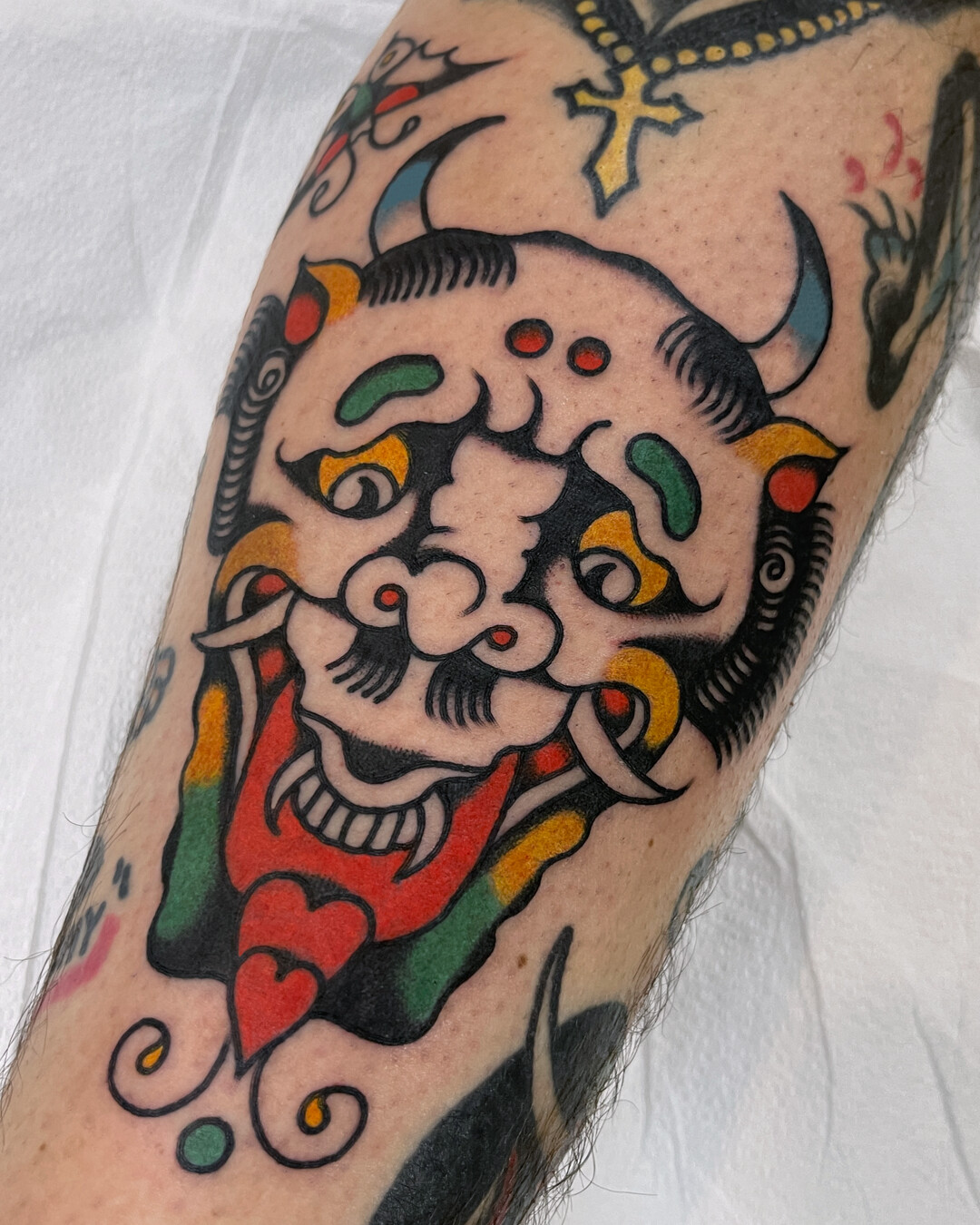
This approach suits a quieter color sleeve rather than a bright illustrative treatment. A limited palette repeated across the body keeps the collection unified. Red can draw attention to a face or flower, yellow can open a warm center and green can give leaves or small details a clear role. Every available color is not needed to make a tattoo feel lively.
Color planning is also a way to connect tattoos made at different times. A new piece can borrow one accent from an older piece, even if the subjects are unrelated. That small echo can make a collection feel intentional. At the same time, leaving some designs black and gray gives the color pieces more importance.
The linework should remain the first decision. If the tattoo only works because of its fresh color, the design may lose its identity as it heals. Healed examples from the artist reveal how much contrast remains after the skin settles. Henry Big’s work shows how a strong outline gives color a durable frame.
Small motifs and bold outlines make traditional tattoos age with purpose
Not every tattoo in a large collection needs to be a back piece. Small flowers, ornaments, stars, masks and compact animals can fill narrow spaces or mark a moment without competing with the main work. Henry Big’s images show how those smaller ideas gain strength from simple shapes and confident outlines.
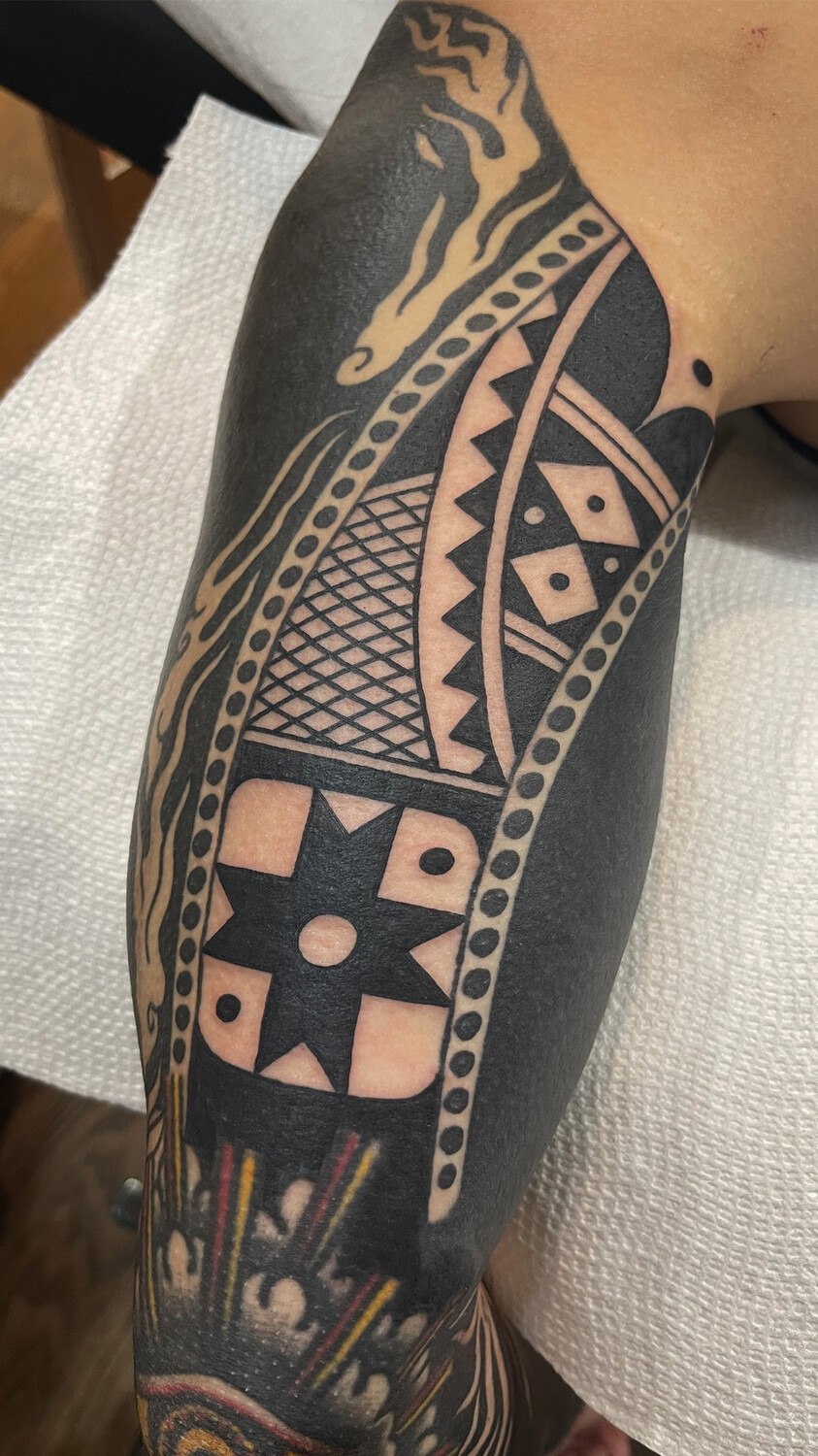
Placement changes the character of a small tattoo. A flower near the elbow can soften a heavy sleeve. A compact symbol near the wrist can act as a visual stop. A small face or creature can become a detail that people discover after seeing the larger composition. The design does not need to explain itself from across the street to be successful.
Bold outlines are particularly helpful on areas that move or receive more exposure. Hands, wrists and elbows need designs that can survive daily use. Fine detail can be beautiful, but it should be chosen with the placement and future touch-up needs in mind. Leave enough breathing room around small marks so they do not merge into neighboring tattoos over time.
There is also a personal advantage to keeping some pieces small. A collection can grow without every appointment becoming a major commitment. A full sleeve can grow gradually while individual tattoos continue to represent separate stories. A large collection feels human when it includes both landmarks and quiet details.
The working setting keeps the history visible
The studio portrait of Henry Big places the artist inside the same visual world as the tattoos. Flash sheets, framed drawings and working tools surround him, while the ink on his hands and wrists makes the connection between drawing and wearing impossible to miss. The image feels less like a formal headshot than a record of a working environment.
That relationship matters because traditional tattooing is more than a catalogue of motifs. It is a method built on repetition, editing and trust. The artist studies old references, redraws them and adapts the image to a particular body. The final tattoo carries the history of the style, but it also carries the decisions made in one room with one client.
Henry Big’s public work keeps that process visible. Large pieces can look timeless without pretending they appeared fully formed. Their confidence comes from accumulated practice, clear outlines and a willingness to let the design grow through several sessions.
A collection built on patience and scale
The clearest lesson from Henry Big tattoos is patience. His interview describes large projects that take multiple sessions, and the photographs make that scale visible. A back piece or connected sleeve asks for time not only because the tattooing is physically demanding, but because the composition has to be solved in stages.
A body map defines which areas need a focal image, which should remain open and which can carry filler. The artist should have a portfolio that demonstrates the required scale and linework. A great portrait artist may not be the right person for a traditional dragon, and a specialist in tiny fineline work may not enjoy building a bold back piece.
References work best when they describe mood, subject and movement rather than asking for an exact copy. A clear brief can identify dense black, open skin, limited color, old-school ornament or a rougher hand-drawn feeling, leaving room for the artist to fit the design to the anatomy.
Healing and sequencing matter too. Large projects need recovery time between appointments, and some areas may be easier to tattoo before others are filled. The artist can divide the work across appointments, and the client benefits from understanding that plan before the first session. The best large tattoo is not merely impressive on appointment day; it is a design you can still read, wear and live with years later.
Henry Big’s collection makes traditional tattooing feel current because it is grounded in use. The images are not just polished drawings. They are marks placed on moving bodies, built through relationships, repeat decisions and a willingness to let a project take the time it needs. That is the idea worth borrowing. Choose strong shapes, let the body guide the composition and give each new tattoo enough room to become part of the story.