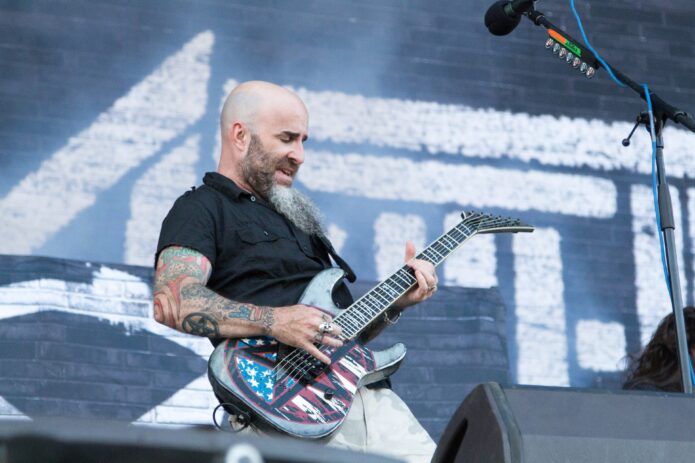
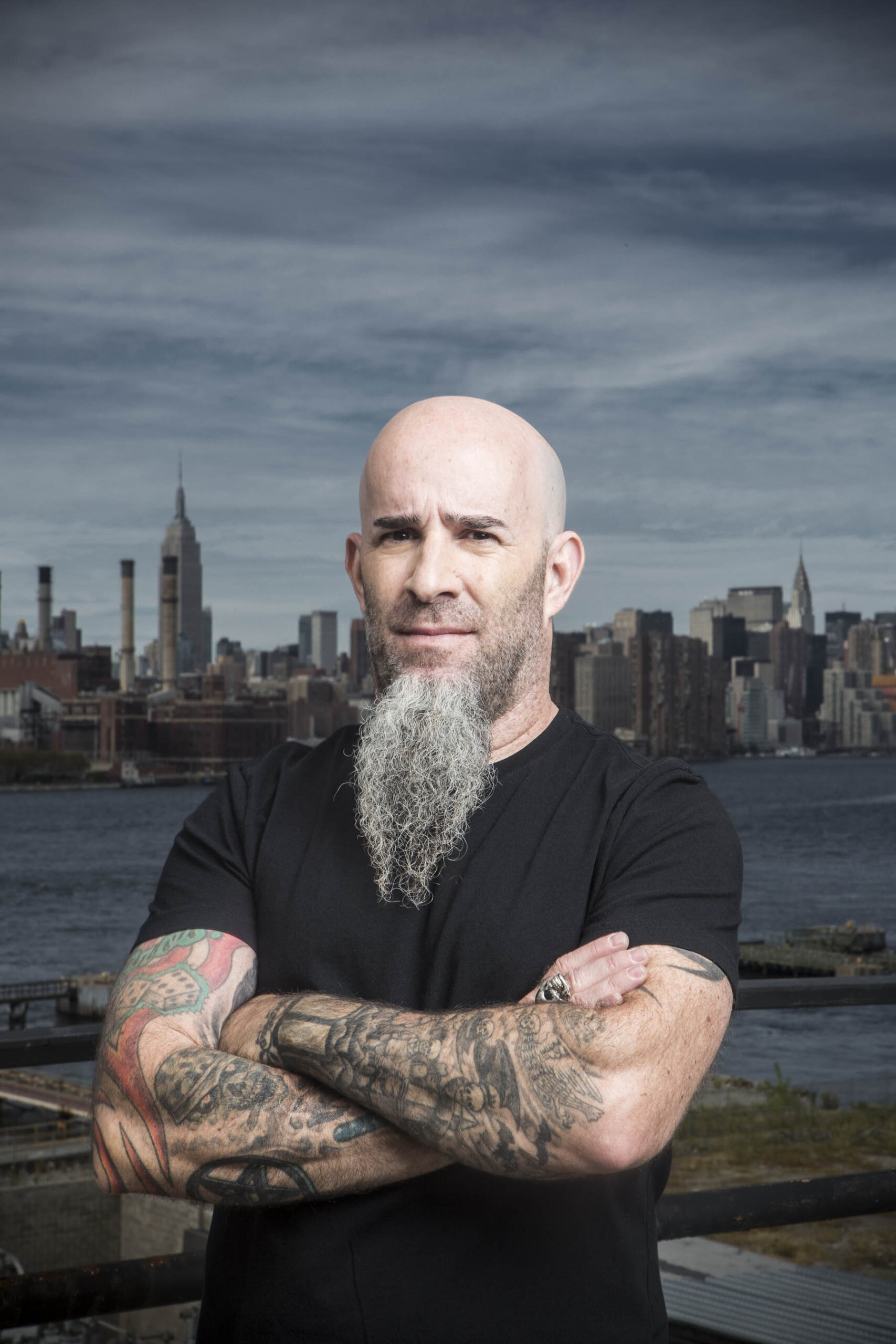
Scott Ian’s tattoos trace his years in heavy music. His arms carry portraits of AC/DC’s Angus and Malcolm Young, a Gene Simmons demon, a Dimebag Darrell tribute, the American metal horns symbol, Japanese kanji and smaller designs with their own stories.
Ian has discussed the tattoos in interviews, so there’s more to go on than appearance alone. The photos below focus on his arms and hands, while the text separates his explanations from details that are only visible.
The short version of Scott Ian’s tattoo story
Ian’s largest tattoos honor musical heroes. Kat Von D created the Angus and Malcolm Young portraits, Paul Booth worked on the Gene Simmons demon, and Bob Tyrrell did the Black Tooth tribute after Dimebag Darrell was killed. Ian has also mentioned a small 666 on his knuckle, kanji for patience from a trip to Tokyo, and an American metal horns design on his picking hand.
The pieces point to hard rock, thrash, friendship and the people who made Ian want to play guitar. They aren’t a matching set; they cover his arms and hands in different styles, added over time.
Angus and Malcolm Young on his biceps
The color portraits of Angus and Malcolm Young are among Ian’s best-known tattoos. He has said Angus was a major inspiration when Anthrax was starting, and Malcolm’s rhythm playing helped shape how he thought about guitar. Angus is on the right biceps and Malcolm on the left.
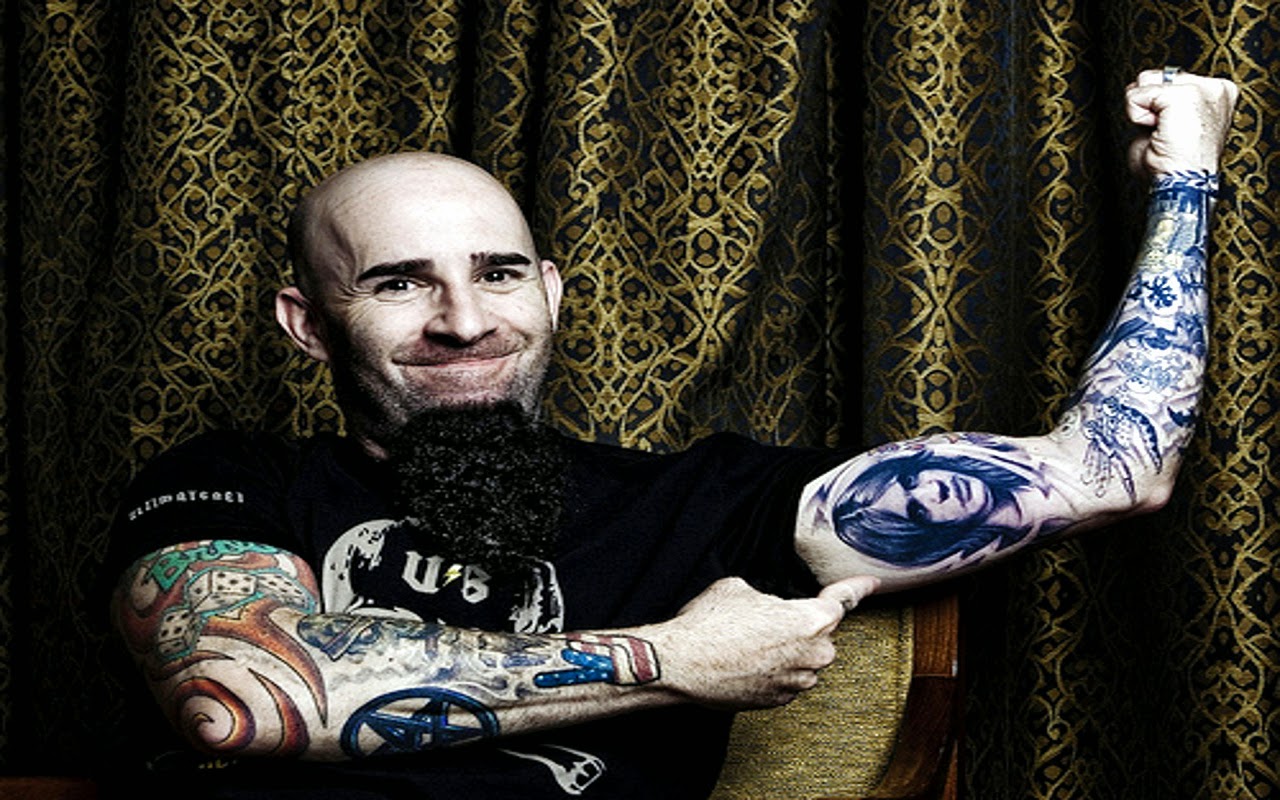
This stage photo shows how much of the upper arm the portraits cover. It isn’t a close-up, but the image is sharp enough to make out the color and placement. At a smaller size, a portrait can blur into a dark patch; here, the faces remain readable.
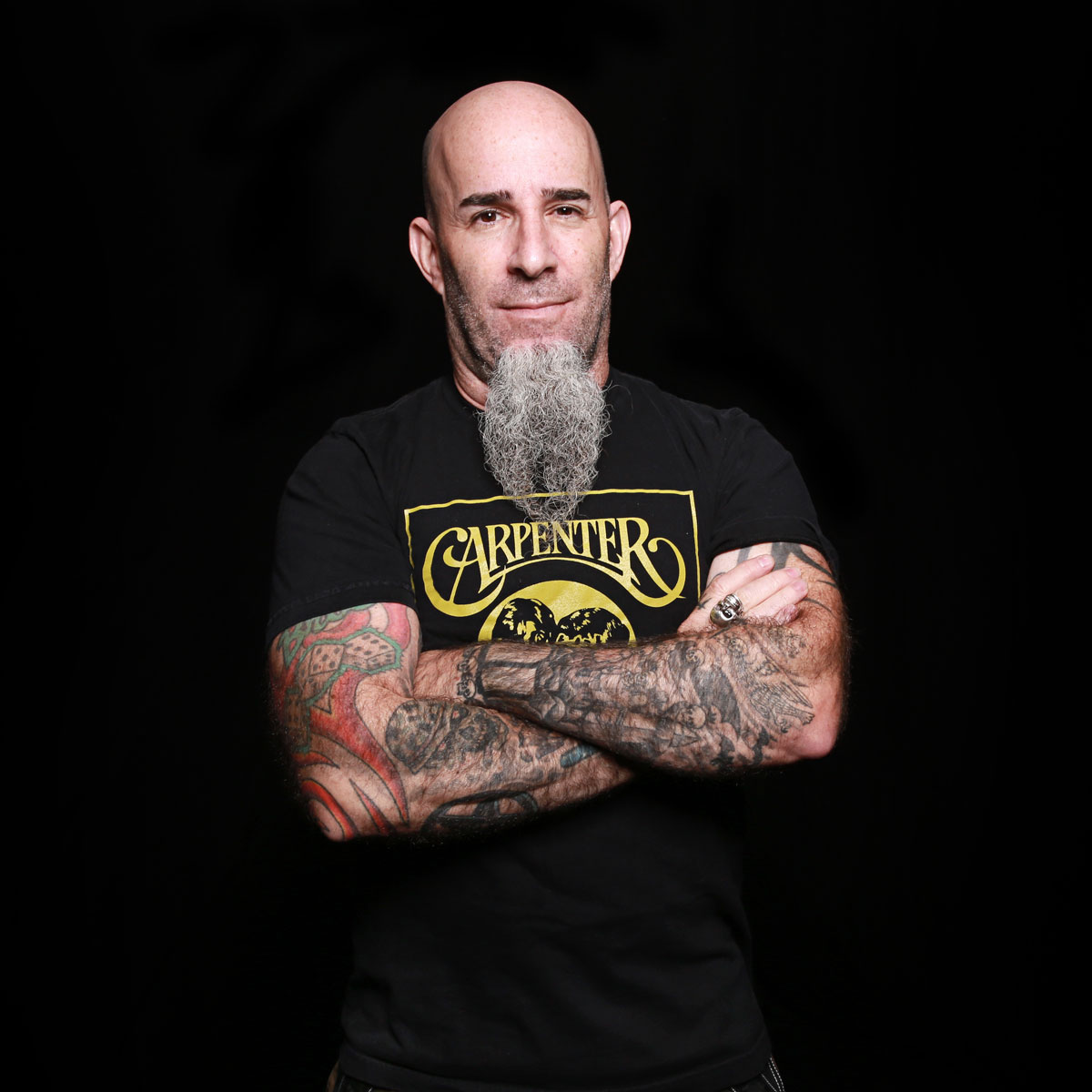
Ian got the Angus portrait on L.A. Ink, and Kat Von D made both Young portraits. Ian wanted the tattoos to reflect the familiar Angus look, including the devil-horned stage image associated with AC/DC’s Highway to Hell era.
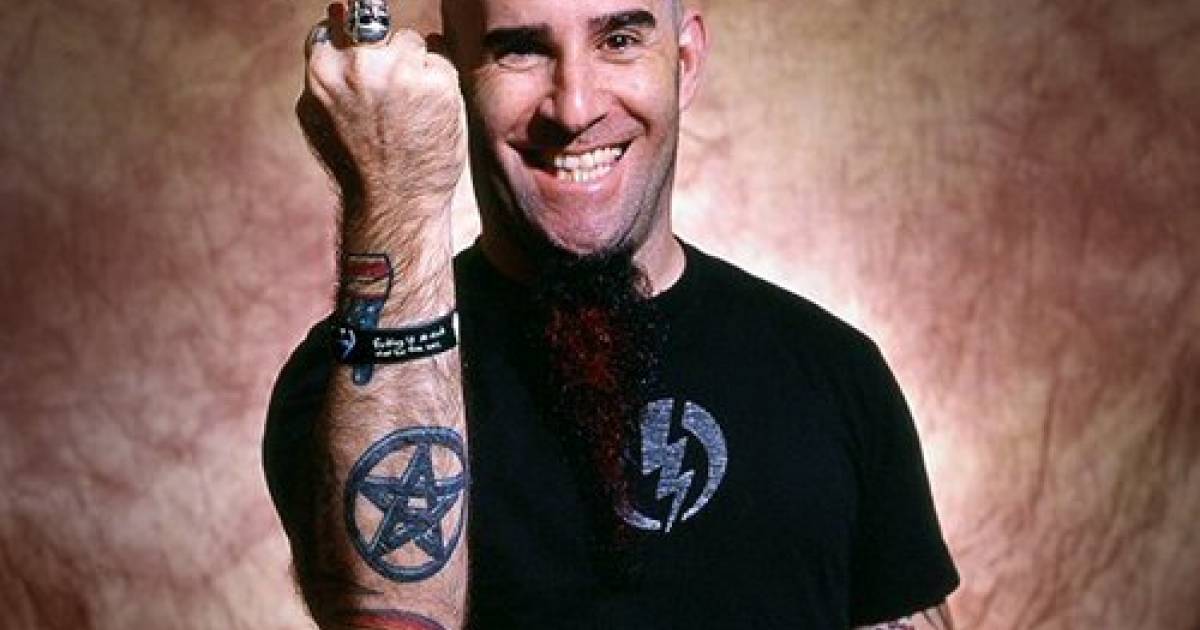
The biceps give the portraits a rounded surface, while the surrounding sleeve work connects them to the rest of the arm. They remain visible when Ian bends his arms or plays guitar, without needing a band logo or large lettering.
The Gene Simmons demon piece
Ian asked Paul Booth to imagine Gene Simmons with his makeup stolen by a real demon. The result leans toward horror art rather than a straightforward portrait. At the time of the interview, it was described as unfinished, with more shading still needed on a snake head running down toward the foot.
Ian has said KISS was one of the reasons he wanted to be in a band. He saw them as a teenager and left the show with a clearer idea of the life he wanted. The tattoo turns that influence into a dark, theatrical image rather than a simple portrait.
Black Tooth and the Dimebag Darrell tribute
The Black Tooth tattoo is a tribute to Dimebag Darrell. Ian got it after Darrell was killed, and Bob Tyrrell did the piece. The name refers to the Black Tooth Grin drink associated with metal culture and Dimebag’s Pantera years.
Ian has said that he got the tattoo alongside other people as a tribute. It marks a shared loss, which gives it a different feeling from a portrait of a personal hero.
This Rock im Park photo shows Ian playing guitar with the ink visible around his forearms. The designs wrap around the arms instead of ending on one flat surface, so the full coverage is easier to see as he moves.
American metal horns on the picking hand
Ian also has an American metal horns design tied to Erik Brunetti, the artist and founder of Fuct. Ian has said the symbol began as a T-shirt design and that he told Brunetti he would get it tattooed. He placed it on his right picking hand, which he describes as the source of his playing power.
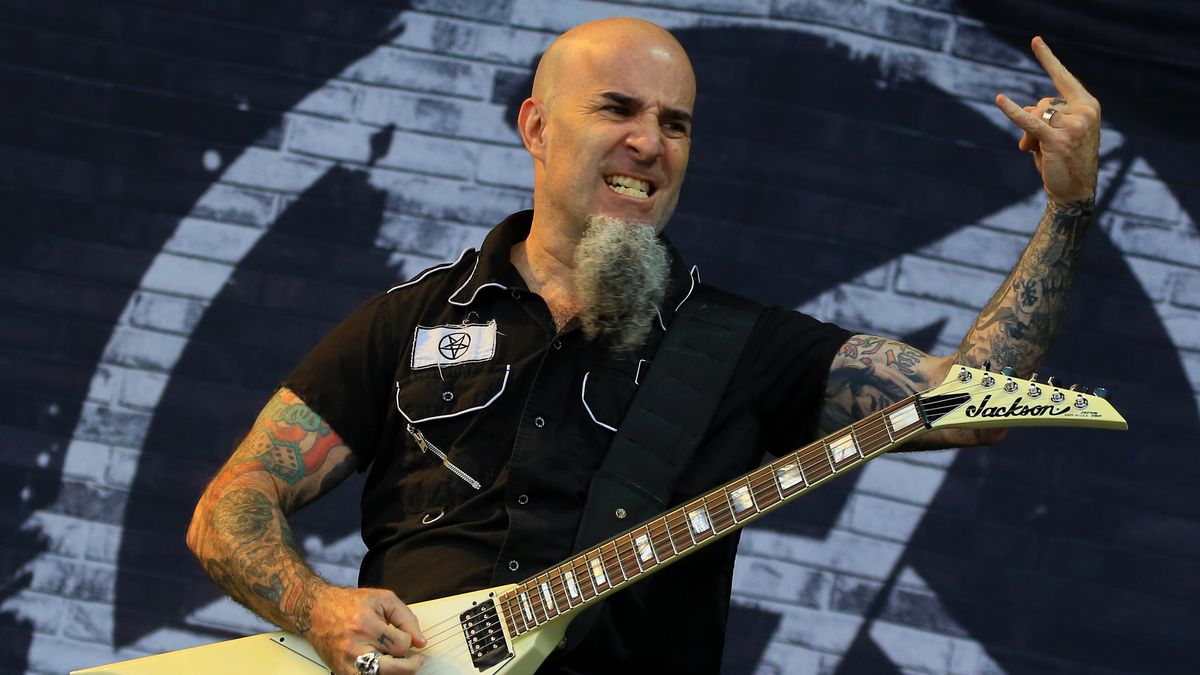
Hand tattoos are easiest to see in live photos, when Ian reaches across the guitar. Here, the hand and forearm ink sit beside the instrument and appear as part of the performance.
Kanji, the 666 knuckle tattoo and smaller details
Ian got kanji symbols meaning patience while he was in Tokyo. He has joked that he doesn’t have much patience for the pain of getting tattooed. He has also mentioned a 666 on his knuckle, one of the earlier late-night tattoos Kat Von D did for him.
Those small pieces sit beside the larger portraits and sleeves. Some came from travel or friends; others were quick ideas that stuck. Together they show that the collection grew over time.
The Mr. Bungle bunny logo
In 2021, Ian showed a new Mr. Bungle bunny logo on the back of his upper left arm. Sara Lou Tattoo did the piece in Los Angeles. It connects to another band he has been involved with, beyond the better-known Anthrax and AC/DC references.
The design also fits the wider pattern: many of Ian’s tattoos point back to music, friends and the scenes that shaped him. Even the playful bunny has a specific place in that history.
What the concert photos show best
Different photos show different parts of Ian’s collection. One may catch the outside of an upper arm, another the inside forearm or picking hand. The set here uses several moments onstage so the views aren’t all the same.
The portraits stand out for their realistic color, while the surrounding work uses rougher black and gray. The variety makes the arms look lived in, fitting Ian’s stage style without tying everything to a single trend.
Why his ink still feels personal
The tattoos point to influences and relationships Ian had before he got them. AC/DC shaped his ideas about rhythm guitar and stage energy; KISS helped him imagine life in a band; the Dimebag tribute marks friendship and loss. Smaller designs hold onto travel, humor and the people he chose to trust with the work.
The range includes a portrait for an influence, a symbol connected to playing guitar and small pieces with their own histories. Ian’s arms bring those choices together without making them look like one design.
For another heavily tattooed musician, compare the Andy Biersack tattoos guide. Chad Smith’s tattoos offer a different stage-focused collection.
Watch Scott Ian talk about his tattoos
This L.A. Ink video shows the story behind Ian’s Angus Young portrait.
Final take
The Angus and Malcolm Young portraits lead the collection, with the Gene Simmons demon, Black Tooth tribute, American metal horns, kanji, 666 knuckle mark and Mr. Bungle bunny filling in the story. Each design points to a band, friend, place or period that mattered to Ian. That gives the tattoos a personal history beyond their size or style.