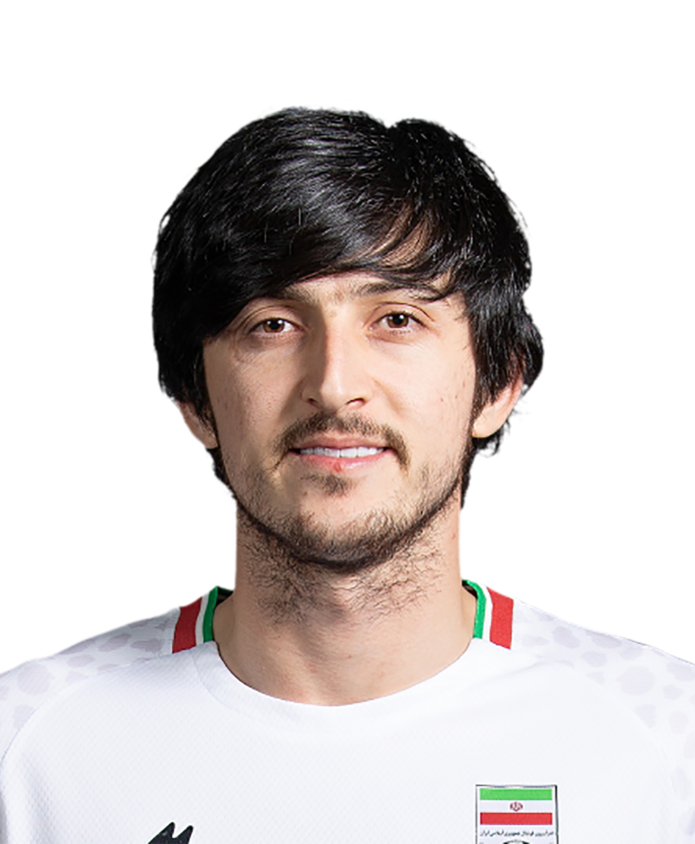
Sardar Azmoun’s tattoo record is unusually easy to connect to photographs because the most recognisable phrase on his arm appears in several different football images. The Iranian striker has been pictured with the lettering visible on his forearm, and UEFA’s profile of him also identifies the two English-language lines that have been associated with his left arm. The clearest wording is Love me for what I am, while a second line reads If people are trying to bring you down it only means you are above them. This page follows those documented details without turning every photograph of Azmoun into proof of another design.
Sardar Azmoun’s arm lettering
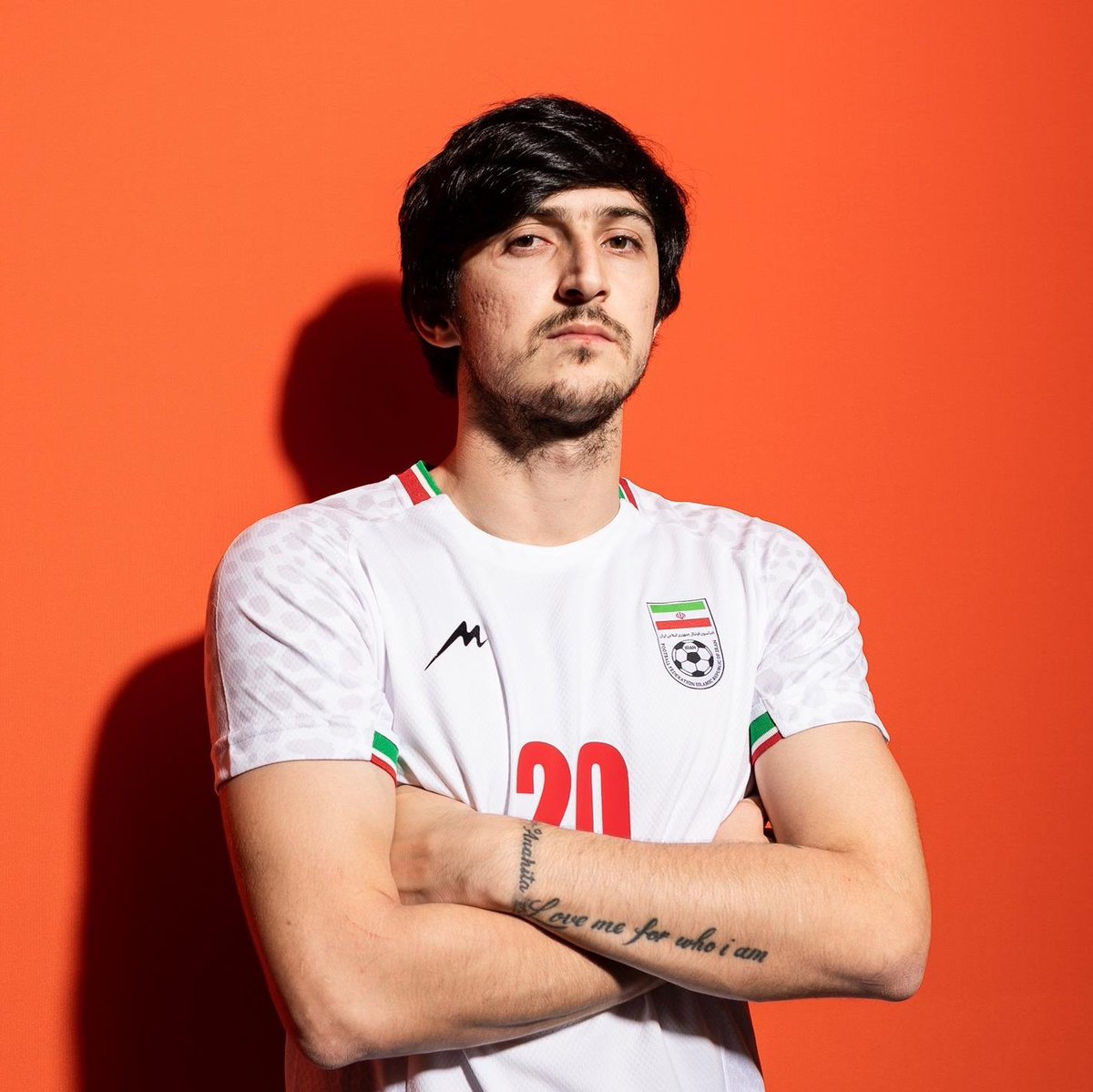
The strongest starting point is the high-resolution Iran portrait in which Azmoun crosses his arms against a vivid orange background. The lettering on the lower forearm is readable enough to identify the words, and the frame also establishes the wearer clearly through his face, jersey and pose. The design is presented as script rather than block lettering. Its long, dark strokes follow the length of the forearm, so the phrase reads as a flowing band instead of a compact emblem.
The same photograph helps separate description from interpretation. It shows black or dark lettering, a horizontal placement along the forearm and a second line nearer the wrist. It does not establish the exact tattoo artist, the date of the appointment or whether every mark on the arm was completed at one sitting. The visible phrase is the firmest detail. The shape, direction and spacing can be discussed because they are in the frame, while private backstory should stay connected to a named interview or report.
The forearm phrase Love me for what I am

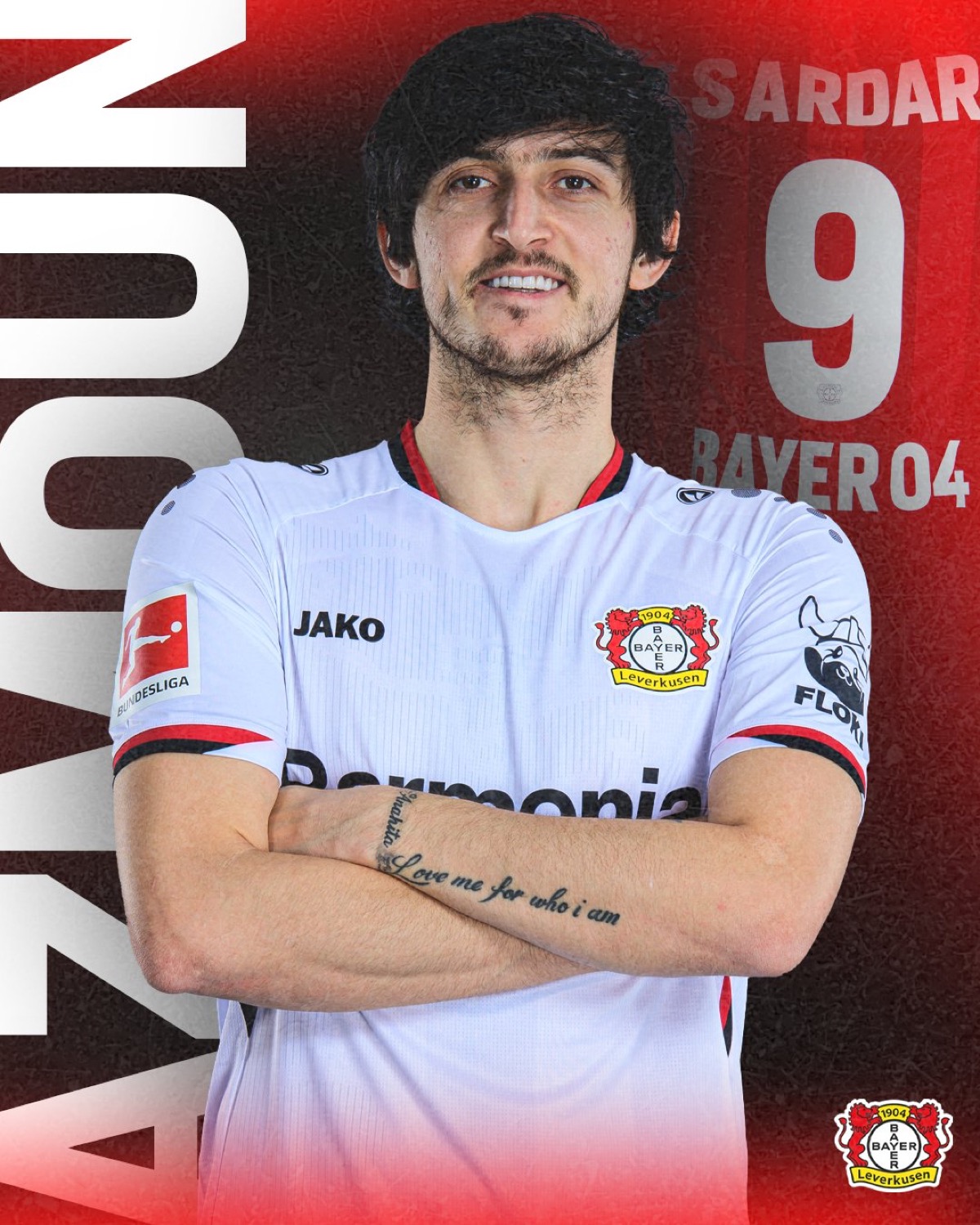
A second photograph from a Foot Mercato report shows the same central idea in a different setting. Azmoun wears a Bayer Leverkusen shirt and turns his forearm toward the camera, making the words easier to recognise even though the body position is not identical to the orange-background portrait. The repeated appearance of the lettering matters. It shows that the phrase is not a mark created by a temporary graphic, a shirt design or a one-off celebration. It is part of the player’s genuine tattoo record.
The phrase is also the most personal part of the collection that has been publicly explained. Match TV’s long interview quoted Azmoun discussing the words and connecting them with the wish to be seen as a person rather than only as a footballer. That explanation gives the lettering a documented emotional context without requiring a reader to guess at symbolism. Meaning belongs to the interview, while the photograph supplies the visual information about line, scale and placement.
The second sentence on the forearm
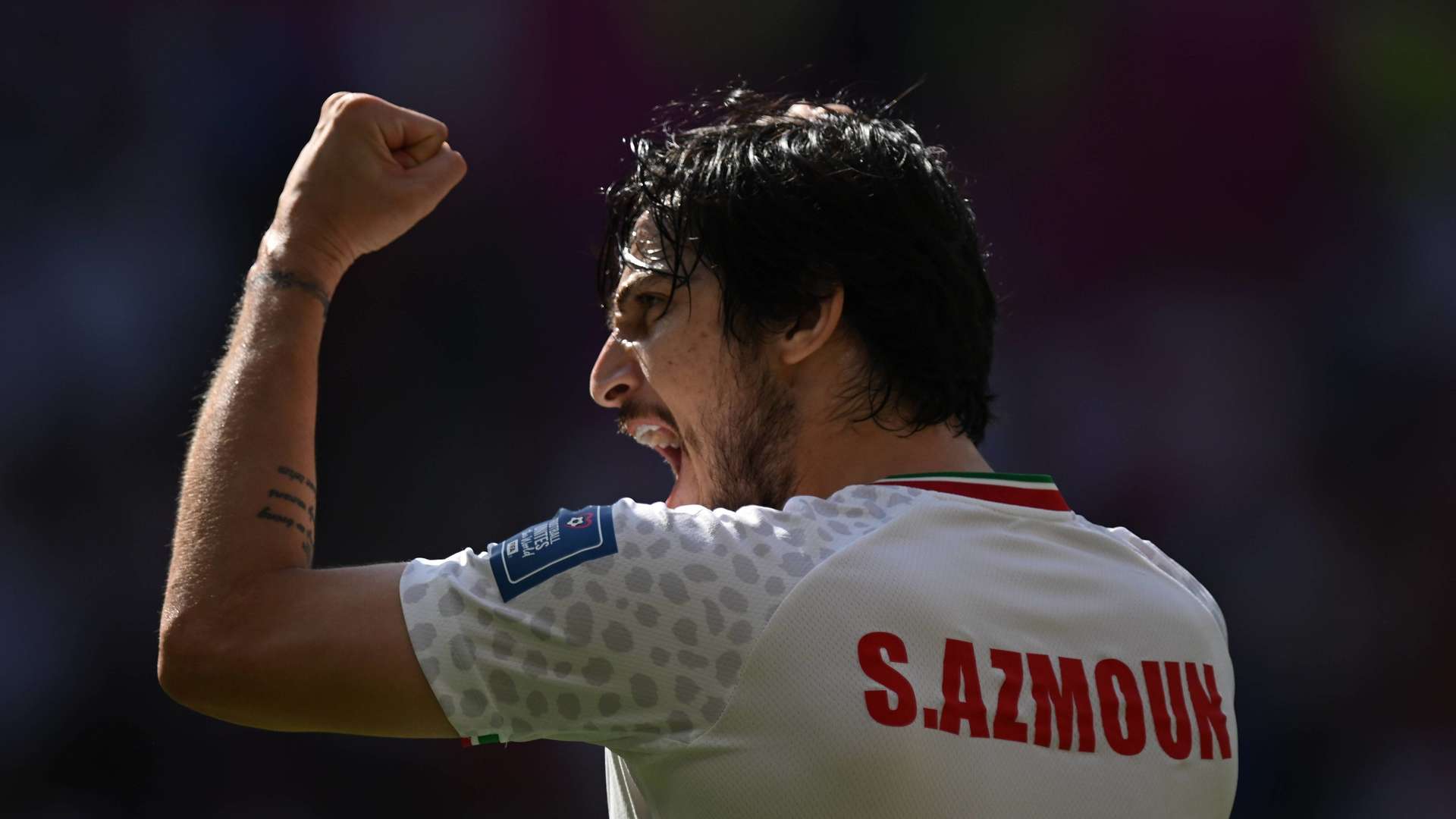
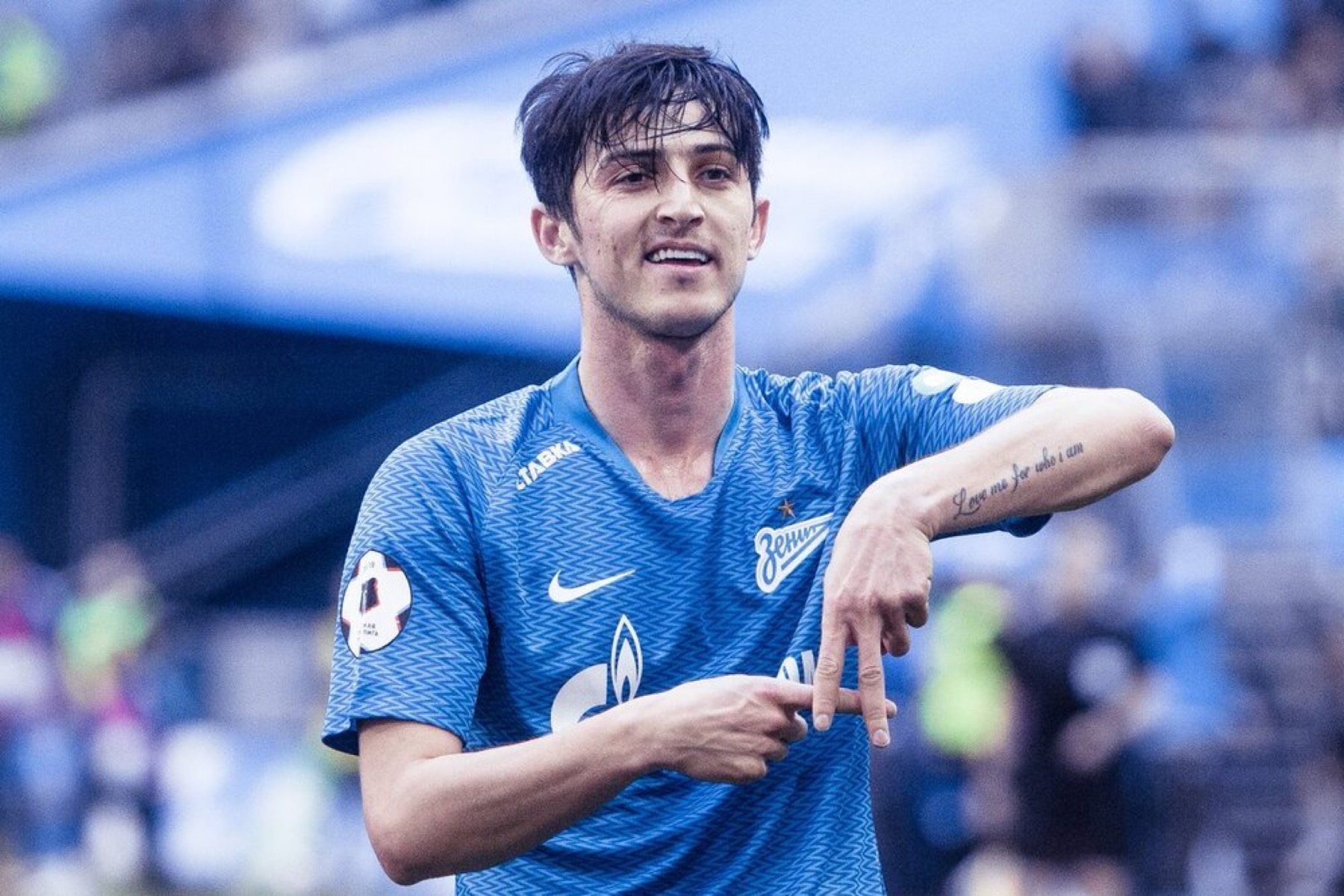
A third photograph, published in a sports report from Azmoun’s Zenit period, shows the phrase from a more open matchday angle. The arm is extended and the script can be followed across the skin. This is useful because the design is not framed like a studio close-up. The surrounding kit, stadium light and movement are part of the image, yet the lettering remains visible enough to support a careful description.
UEFA’s profile gives the second sentence as If people are trying to bring you down it only means you are above them. The wording is longer than the first phrase, which explains why it travels across the forearm in a narrow script. The sentence works visually as a continuous line, with the eye moving from the hand-side of the arm toward the elbow. The photograph does not justify a precise claim about the font family, but it does show a handwritten or calligraphic character rather than a geometric symbol.
What the UEFA profile establishes
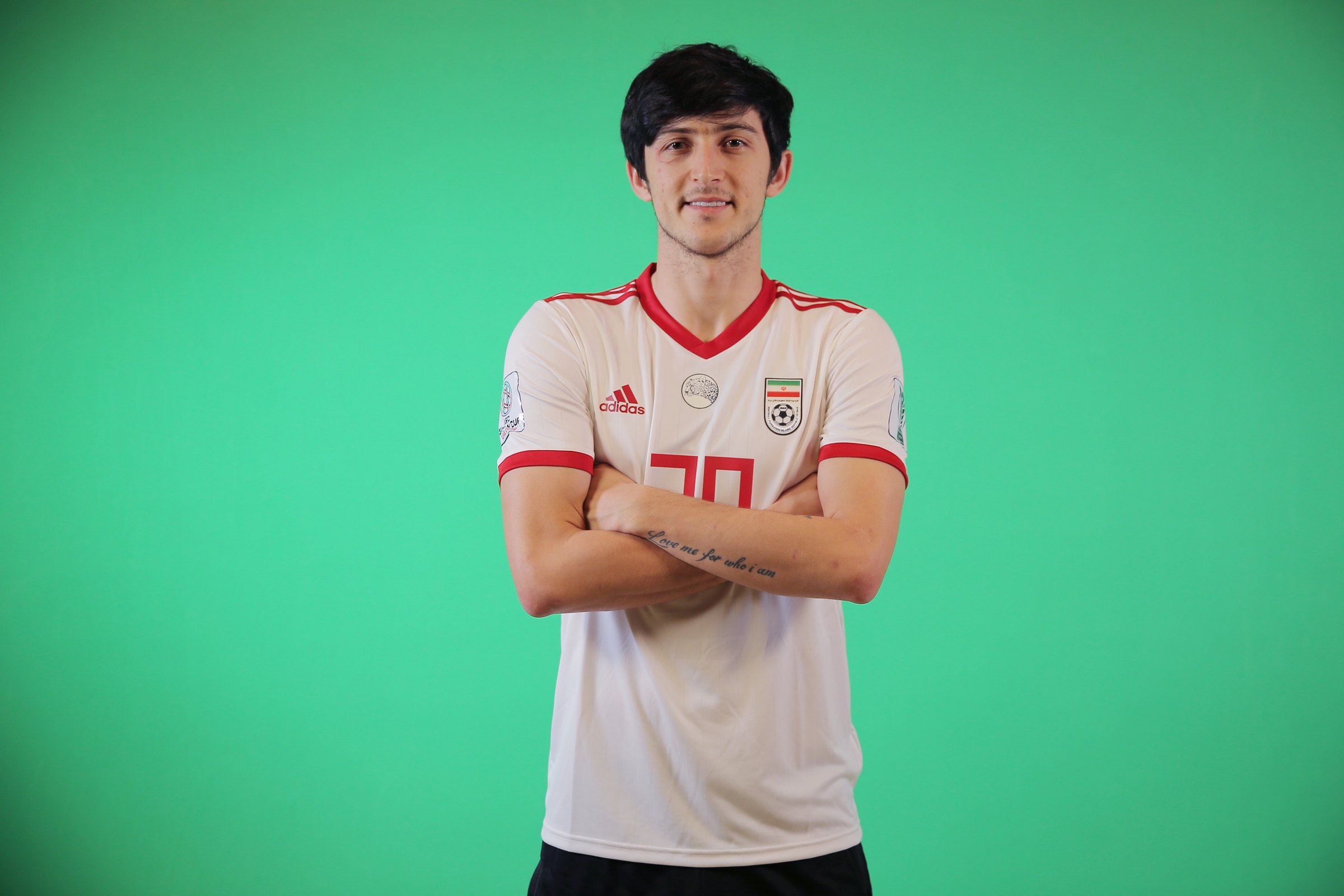
The UEFA Europa League profile is the most useful named source for the tattoo details. It identifies Azmoun as a Zenit forward, describes the two English phrases on his left arm and places them inside a wider account of his career and family background. Its accompanying football photograph shows him in Iran colours with tattooed arms visible. The profile therefore links a written description to a recognisable subject and a period of his career, instead of leaving the wording to an anonymous social-media caption.
That source still has limits. It does not provide a complete catalogue of every mark Azmoun may have received later. It does not prove an exact total, and it cannot make a partially hidden symbol legible. The careful conclusion is that the two English phrases are documented elements of his arm tattoos. A partial image should remain partial. Treating the UEFA description as a complete inventory would add certainty that the source itself does not claim.
How the lettering sits on the arm
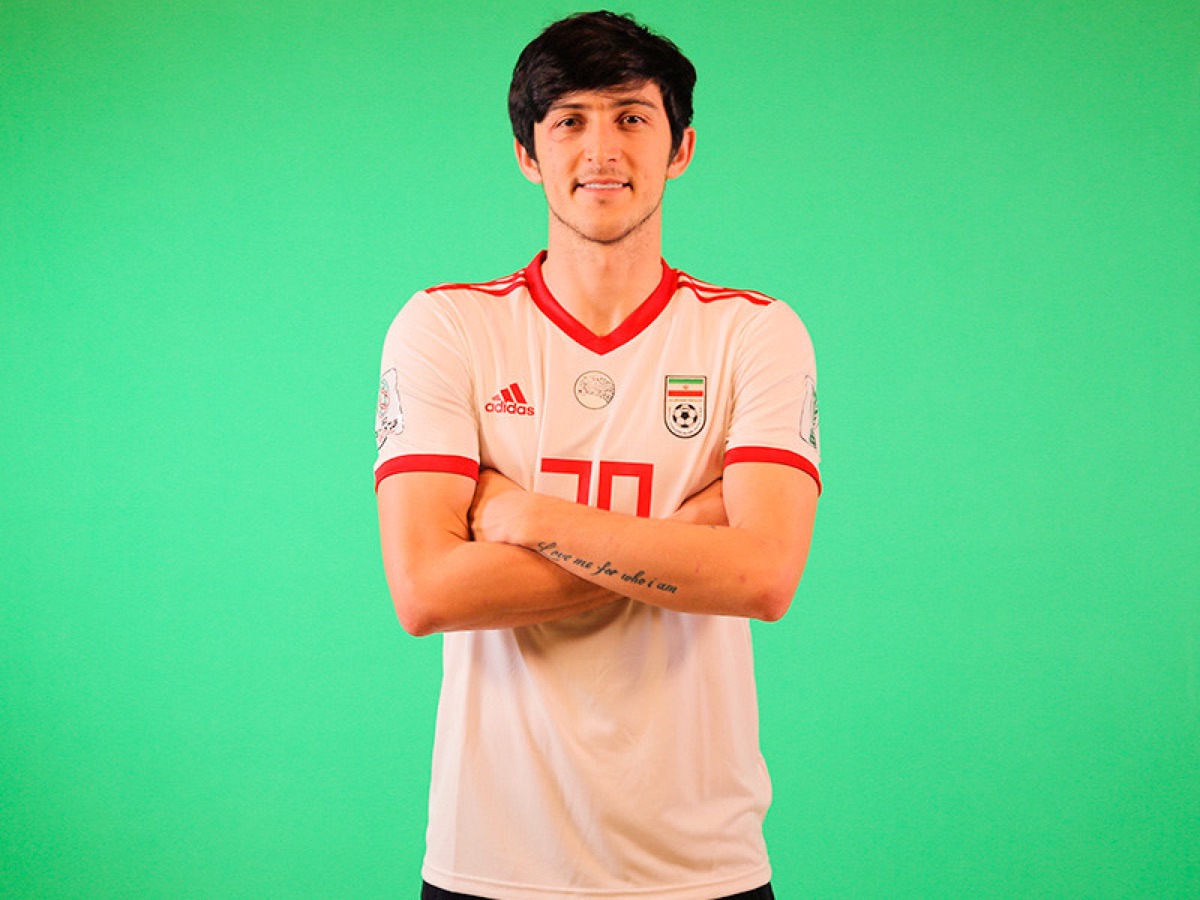
The arm placement gives both phrases a natural visual relationship. Long text requires a surface that can carry a sentence without forcing the words into a tight circle or a small rectangle. Azmoun’s forearm provides that space. The lettering sits lengthwise and becomes most legible when the arm is extended or crossed toward the camera. When the wrist bends, parts of the sentence compress visually, which is why one image may reveal the first words while another makes the remaining line easier to follow.
The script also creates movement. A phrase that follows the forearm can look different in a still portrait, a celebration photograph and an in-game frame, even though the ink has not changed. Shadows, muscle tension and the angle of the wrist alter the apparent spacing. The photographs support a reading of dark, flowing text, but they do not support a measurement of each letter or a claim about the exact ink shade. Placement is visible; private design history is not automatically visible.
Sardar Azmoun on the pitch
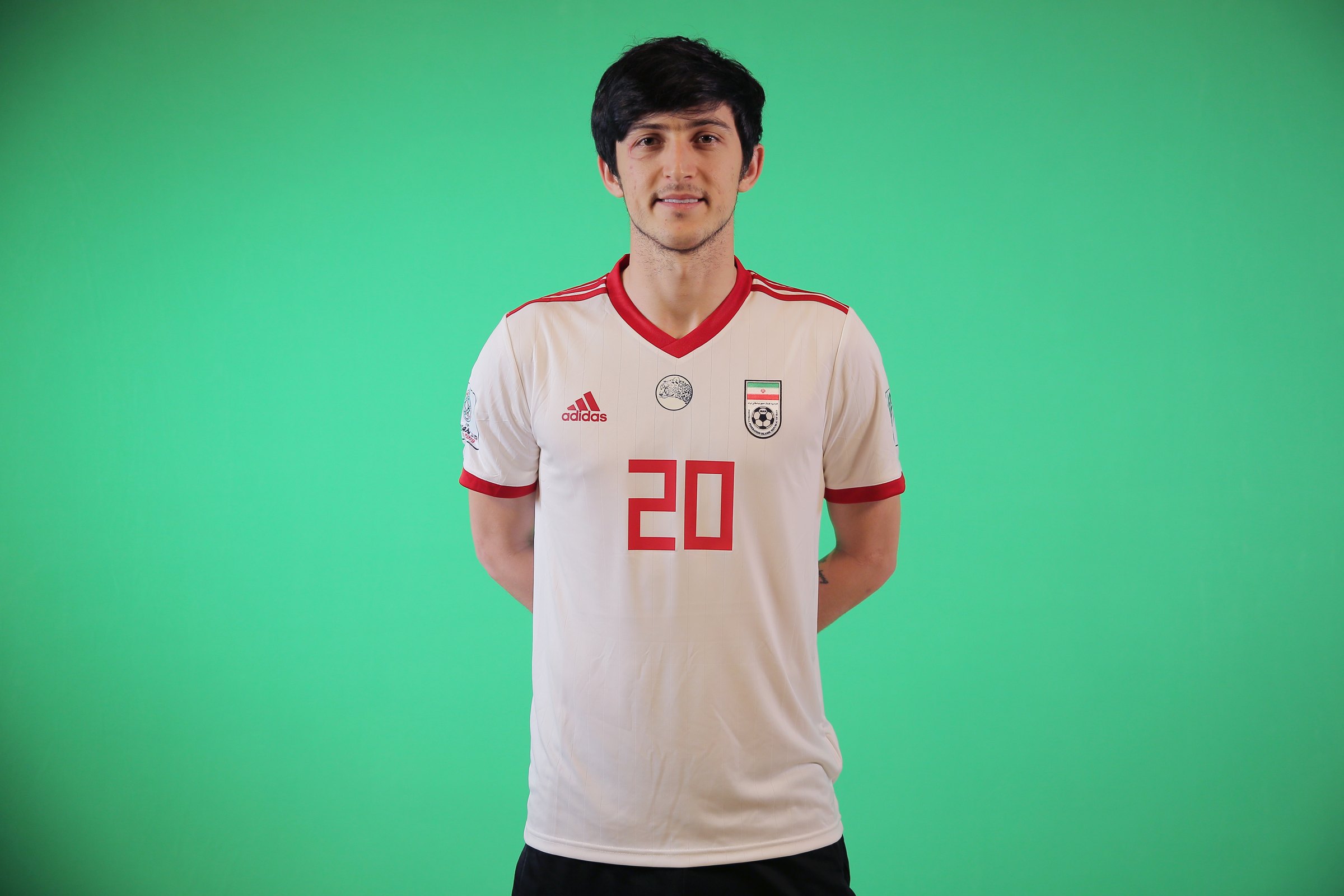
Azmoun’s public image often arrives through football portraits, so the tattoo photographs sit inside a wider visual story about international competition and club football. The orange-background portrait presents him as an individual, while the Leverkusen and Zenit frames place the same body art inside team settings. A supplemental Eurosport portrait shows his face and upper body in a composed editorial frame without making the tattoo the subject. That contrast is useful because it keeps identity and tattoo description from collapsing into one claim.
The portrait context also helps explain why the arm lettering can appear prominent in one frame and secondary in another. A posed image can turn the forearm toward the camera, while a match photograph may show the player from a distance. Neither composition should be treated as a ranking of importance. They simply give different access to the same visible area. The face remains important for identification, but a face-visible portrait is not a substitute for a close photograph in which the ink can actually be seen.
The horses, football and the limits of the record
Azmoun’s career has included a strong public connection to horses as well as football. UEFA’s profile notes his interest in horses and traces the path that took him from Iran into European competition. Those details provide useful biography around the tattoo story, but they should not be converted into claims about a horse tattoo unless a clear source and photograph show one. A subject’s interests are not automatically designs on the skin.
The same discipline applies to political and personal context. Azmoun has spoken publicly about being understood as a person rather than reduced to his profession, and later reporting has discussed his public statements and social-media activity. Those facts can explain why the phrase has resonance, but they do not establish a new tattoo. The written record is strongest when a sentence is attributed to the source that actually carries it. Biography can illuminate a phrase without inventing another image.
Reading the visual differences between photographs
The four tattoo photographs are not interchangeable copies. The orange-background portrait gives the clearest full-arm view. The Bayer Leverkusen frame brings the script into a club-football setting and shows how the forearm turns with the body. The Zenit photograph gives a wider celebration composition, with the words visible across the arm as part of a moving gesture. The UEFA image supplies another period and another kit, helping establish that the lettering was not tied to one particular club.
These differences also explain why a tattoo page can use several photographs even when the documented design is one connected set of phrases. Each frame answers a different visual question. One makes the words readable. Another clarifies the direction of the lettering. A third shows how the ink appears during a public sporting moment. A fourth connects the photograph to a trusted editorial description. Repetition here is not filler. It is a way of checking the same visible design across different poses and dates.
What can be said about the design language
Azmoun’s arm lettering has a direct, text-led design language. It relies on words rather than a crest, animal, portrait or large ornamental composition. The phrases are personal statements, but their visual character is also clear: dark script, elongated placement and a scale large enough to be read across the forearm. The line is expressive without needing a heavy background. That makes the tattoos visually different from dense sleeves that depend on many separate symbols.
The two sentences also create a balance between vulnerability and defiance. Love me for what I am asks to be understood beyond public status. The longer sentence answers pressure with confidence. That contrast is documented through Azmoun’s interview and supported by the visible text, not imposed by a generic idea about athletes and tattoos. The words carry the meaning because Azmoun explained them. The page does not need to attach an invented story to every line or claim that the collection represents a complete philosophy.
Why the image record remains useful
A useful tattoo profile is built from the points where the record is strongest. Here, the strongest points are the readable forearm phrases, the repeated photographic views and the named sources that connect those views to Azmoun. The result is specific without pretending to know everything. Readers can see the script, follow its placement and understand why the first phrase matters to the footballer. They can also see the boundary around the claim: other marks may be present, but they are not added to the inventory without comparable documentation.
The YouTube interview included with this profile offers another piece of subject-specific context. It is an interview with Sardar Azmoun rather than a generic football compilation, so it belongs beside the written sources as a way to keep the player’s own voice in view. It does not turn the video thumbnail into tattoo proof. The visual claims still rest on the inspected photographs and the written reports that identify the phrases. The page stays credible by matching each claim to the right kind of source.
Sardar Azmoun’s tattoos in a careful timeline
The timeline begins with the arm phrases being visible during Azmoun’s rise from Iranian football into European competition. UEFA’s 2019 profile records the English wording and describes the tattoos on his left arm while discussing his status with Zenit. Later football photographs show the lettering continuing to appear as he moved through clubs and national-team settings. Match TV’s interview adds the explanation for the first phrase, making the written record more personal than a caption that merely says he is tattooed.
That timeline should not be stretched beyond the evidence. A later photograph can show that the lettering remains on the arm, but it cannot by itself date the original appointment. A new mark mentioned in a recent report should be treated as a separate development unless a clear photograph connects it to the older phrases. The reliable story is therefore a focused one: two documented English sentences, repeated forearm visibility and a personal explanation for the phrase that asks to be understood beyond fame.
The lasting impression of the forearm phrases
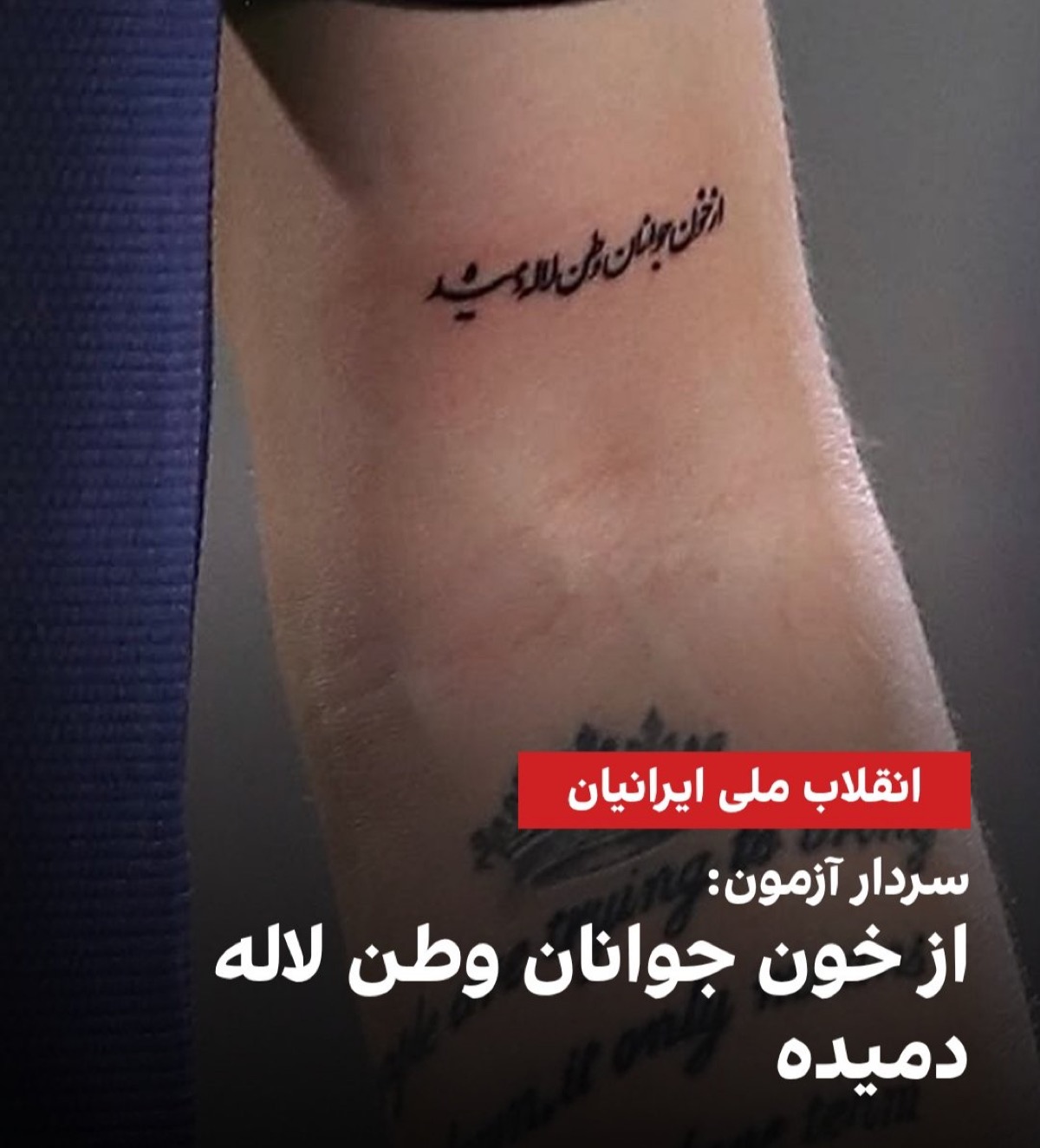
Sardar Azmoun’s tattoos stand out because their message and their placement work together. The words are long enough to occupy the forearm, but the script keeps them personal rather than monumental. The first phrase is compact and direct. The second expands into a longer response to criticism. In photographs, the pair creates a visual rhythm that follows the arm instead of sitting as a small isolated mark.
The final impression is not a claim that the public has seen every tattoo Azmoun owns. It is a clear record of what reliable sources and visible photographs establish. His forearm carries the phrases Love me for what I am and If people are trying to bring you down it only means you are above them. The words are associated with his own explanation, the photographs show their placement, and the surrounding football portraits help identify the person wearing them. That combination of image, source and restraint is what makes the record useful.