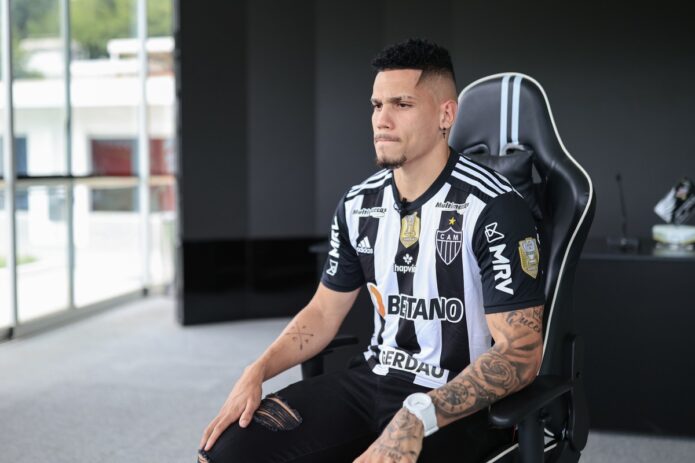
Paulinho here is the younger Brazilian forward Paulo Henrique Sampaio Filho, not the older midfielder who shares his nickname. He came through Vasco da Gama, played for Bayer Leverkusen and Atlético Mineiro, and later joined Palmeiras. His public tattoo record includes Àṣẹ lettering across his abdomen, a rose on his neck and visible arm work.
Five different football photographs show the ink in a goal celebration, an Atlético match, Palmeiras training and club portraits. Each frame has a different job; the separate featured image identifies the player.
The Àṣẹ tattoo turns a goal celebration into a statement of faith
In the first photo, a black-and-white match frame, Paulinho lifts his shirt after a goal. Large letters reading “Àṣẹ” stretch across his abdomen, with his face and tattooed arms also visible. The scene is the same kind of public celebration discussed in the reporting.
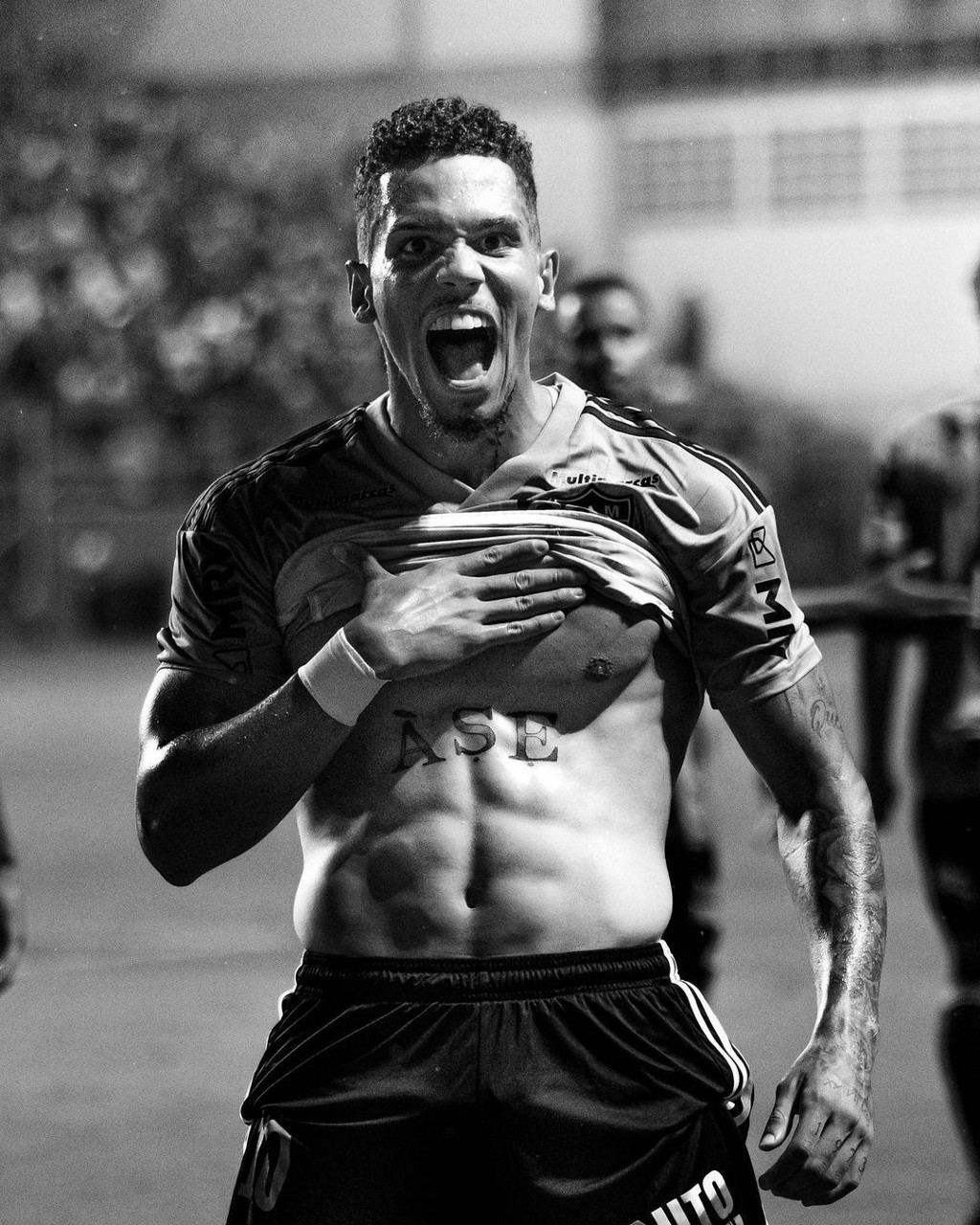
The photograph shows the lettering but cannot explain the faith context or date the tattoo. AP’s reporting connects Paulinho’s arrow-like celebration to Oxóssi, a figure in his Candomblé faith.
The rose neck tattoo is the clearest recurring marker
A high-resolution Goal image shows a rose-shaped tattoo along the side of Paulinho’s neck. He is wearing a Palmeiras kit, and the close crop makes the mark’s position beside his jaw and collar easy to see while keeping his face in frame.
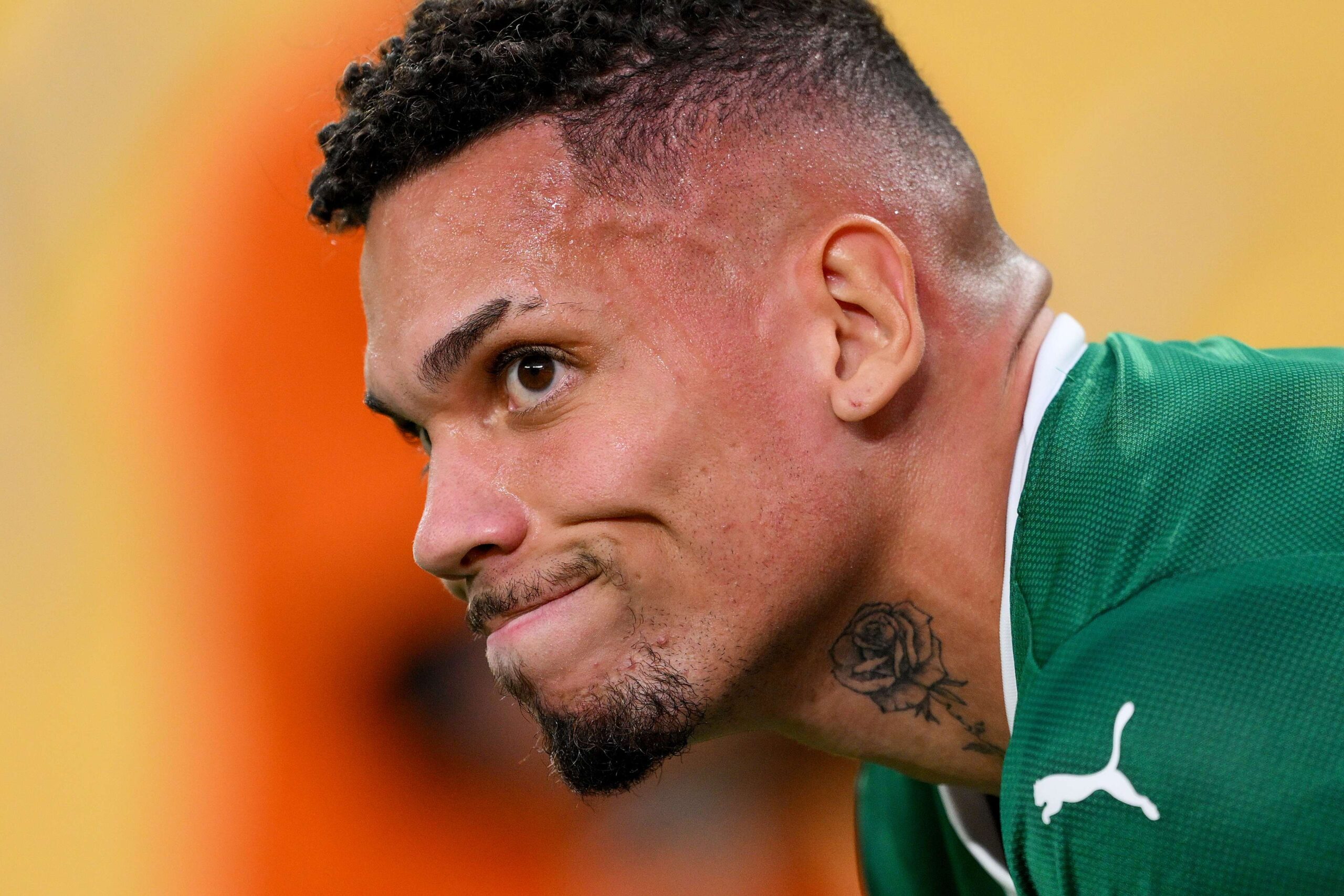
The sources support identifying a rose on his neck, but they do not explain the petals or its personal meaning. A later Palmeiras training photo shows the same general marker from farther away.
The Atlético years show a wider field of arm tattoos
A wide Atlético Mineiro celebration photo shows Paulinho moving across the pitch with both arms exposed. It gives a sense of the coverage beyond his neck and abdomen, though the camera is too far away to identify small symbols. The club setting also places this image in a different part of his career from the Palmeiras photographs.

AP’s account discusses the religious gesture while Paulinho was an Atlético Mineiro player. The image documents his arm work in that period, but it does not show when each tattoo was added.
The Palmeiras training image shows the neck tattoo’s continuity
A vertical photo from a Palmeiras training report shows Paulinho facing the camera. The rose is visible above his collar, and his tattooed forearms extend below the short sleeves. Compared with the Atlético celebration, this calmer frame makes it easier to see how the neck and arm ink sit against the kit.
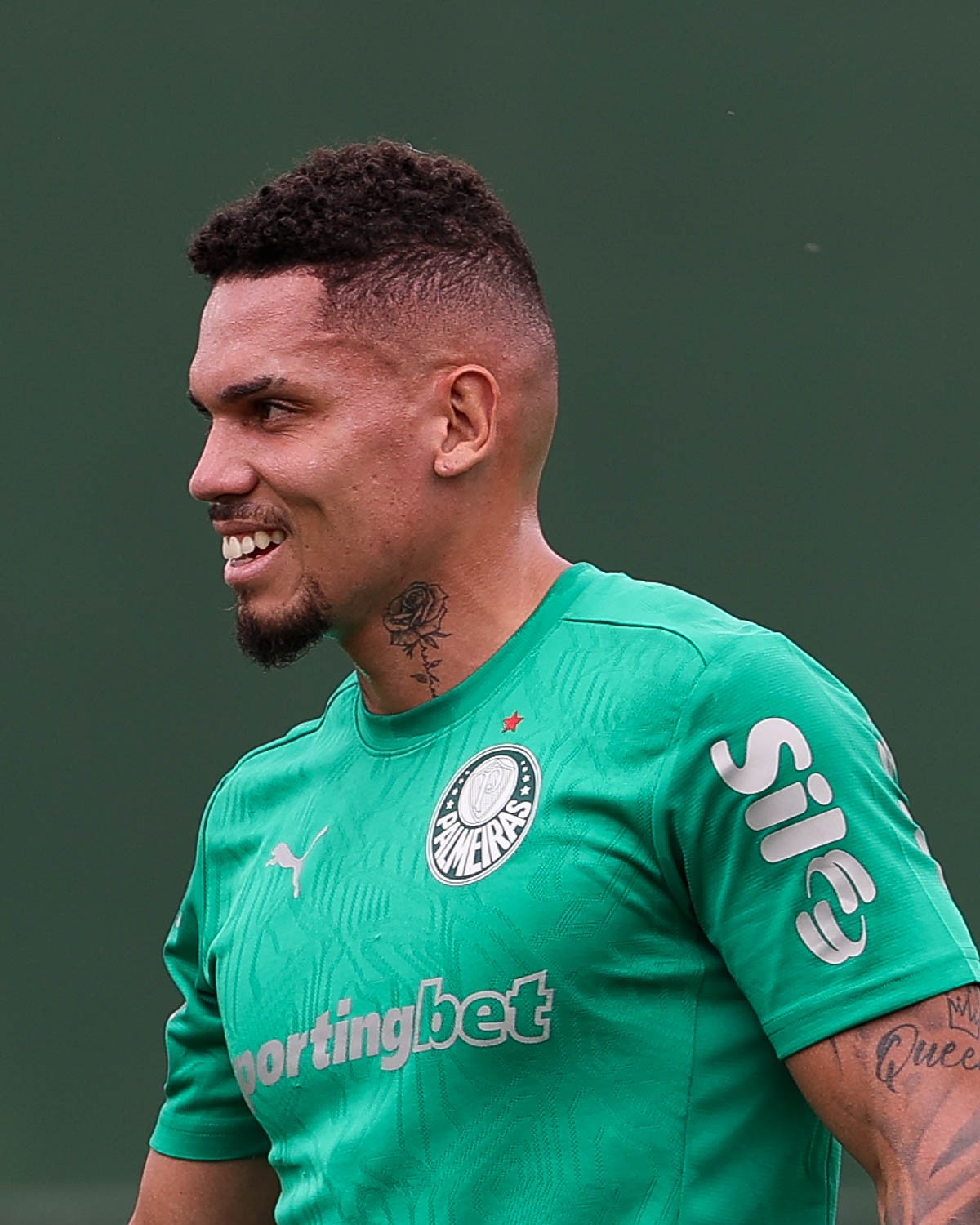
The repeated neck view supports the rose’s placement across two Palmeiras settings. The photo shows only the neck and forearms; his shirt covers the rest, so it cannot establish a full body map or a new tattoo date.
The public portrait separates identity from tattoo evidence
The fifth inline image is a horizontal Palmeiras portrait from a separate sports outlet. Paulinho’s face, neck rose and arm work are visible under green lighting. Its crop and background differ from the match and training photographs, giving a separate club portrait of the correct player.
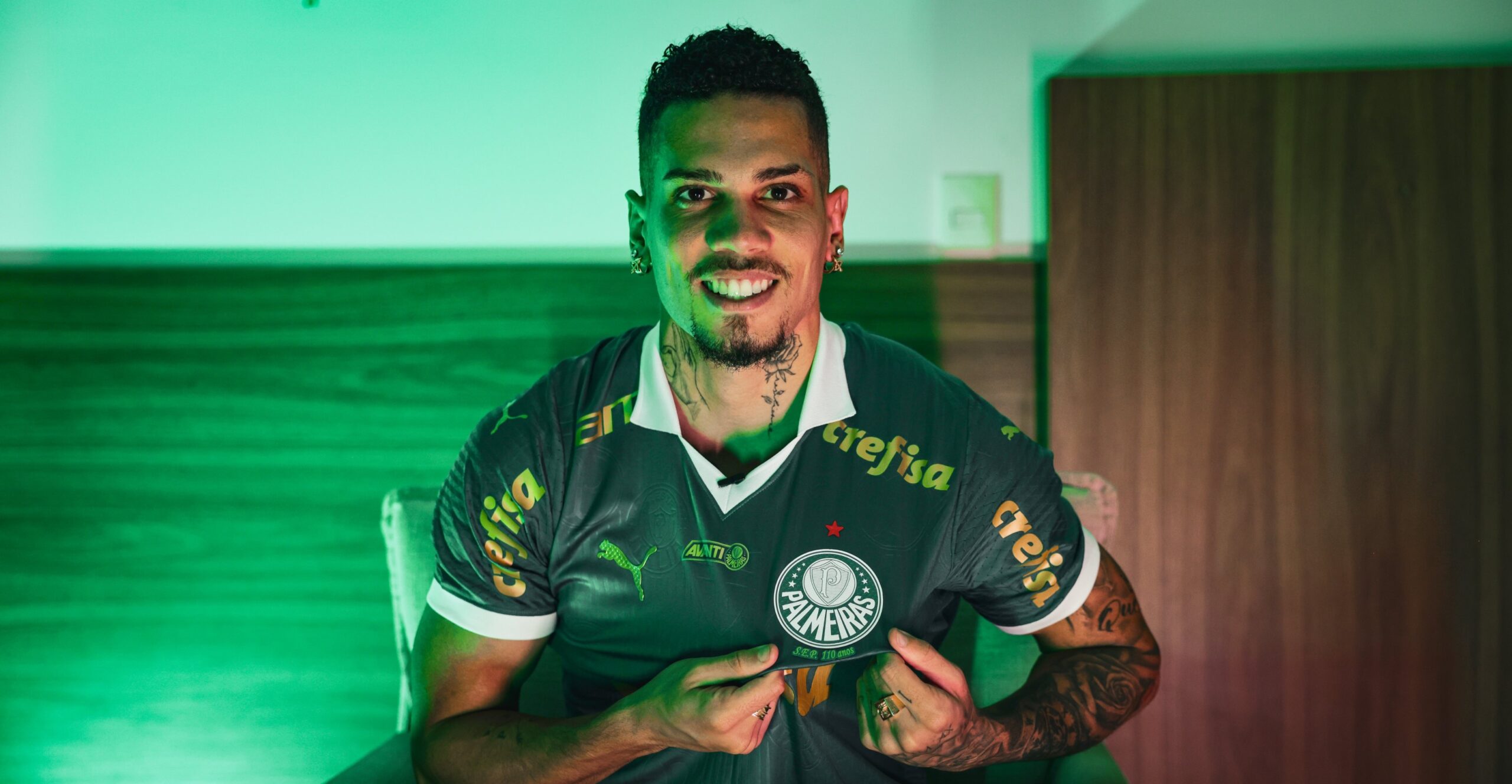
The face and kit help distinguish him from other footballers called Paulinho. The image also shows the tattoos, but much of his body is outside the frame, and the lighting changes how dark the ink appears.
What the reporting confirms about identity and faith
AP reports that Paulinho’s arrow-like celebration references Oxóssi, an archer associated with hunting and feeding the hungry in Candomblé. The report also describes religious prejudice he has faced, including losing social-media followers after the gesture, and his decision to speak openly about his faith.
That account gives the celebration and Àṣẹ lettering a documented religious context. It does not explain every tattoo in the photos. The reporting connects the gesture to Candomblé; the rose can be described by its visible design and placement.
Why different photographs matter in a visual record
The five images show different parts of the record: abdomen lettering during a goal celebration, a close view of the neck rose, arm coverage in an Atlético match, and the forearms and neck in two Palmeiras settings. Those angles make comparisons possible without treating a low-resolution or distant view as a detailed catalogue.
The photographs also come from separate originals and club moments. Together they show how the ink appears in motion, under a collar or in a posed frame; no single image substitutes for the others.
Paulinho’s visual story in football context
Football settings affect which tattoos can be seen. The abdomen lettering appears when Paulinho lifts his shirt; the rose remains visible above a closed collar; short sleeves expose the forearms. The photos show those placements during match action, training and portraits, rather than in a studio session.
That is useful context for reading the images, but it does not turn them into design plans or explain why he chose each mark. The clearest claims remain the ones supported by Paulinho’s reporting or by repeated, visible placements.
What remains unconfirmed
The sources do not provide a complete list of Paulinho’s tattoo artists, a verified date for each design or an explanation of every arm mark. They document the Àṣẹ lettering, the rose on his neck and broader arm coverage. Smaller details remain unidentified unless Paulinho or a reliable report explains them.
The article draws on AP, O Tempo, Goal Brasil, ge.globo sports coverage and a regional Palmeiras portrait source. Each inline image is a separate original, used for the setting and tattoo details visible in that frame.