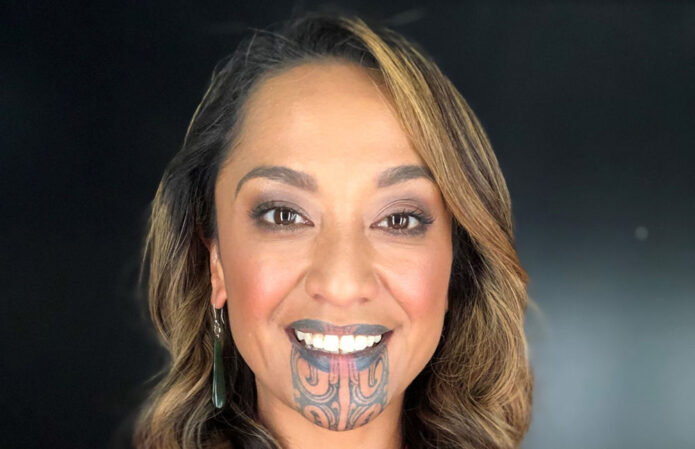
Oriini Kaipara is best known for the moko kauae across her chin, just beneath the lower lip. Its dark central lines and curved forms are visible in portraits and broadcast images. Coverage has discussed the marking alongside her work as a bilingual broadcaster.
This article follows what the images and reporting document: the moko’s placement, a smaller hand tattoo seen in one portrait, and the public setting in which Kaipara wears it. Her own account and Māori sources are the right place for its cultural and personal meaning.
The moko kauae covers Oriini Kaipara’s lower face
The opening portrait shows the moko running from beneath Kaipara’s lower lip across her chin. The dark lines and curved forms remain clear in a head-and-shoulders crop. News coverage identifies the marking as moko kauae, the traditional Māori chin tattoo; “face tattoo” alone would miss that specific form and context.
The central chin tattoo pattern and mouth framing
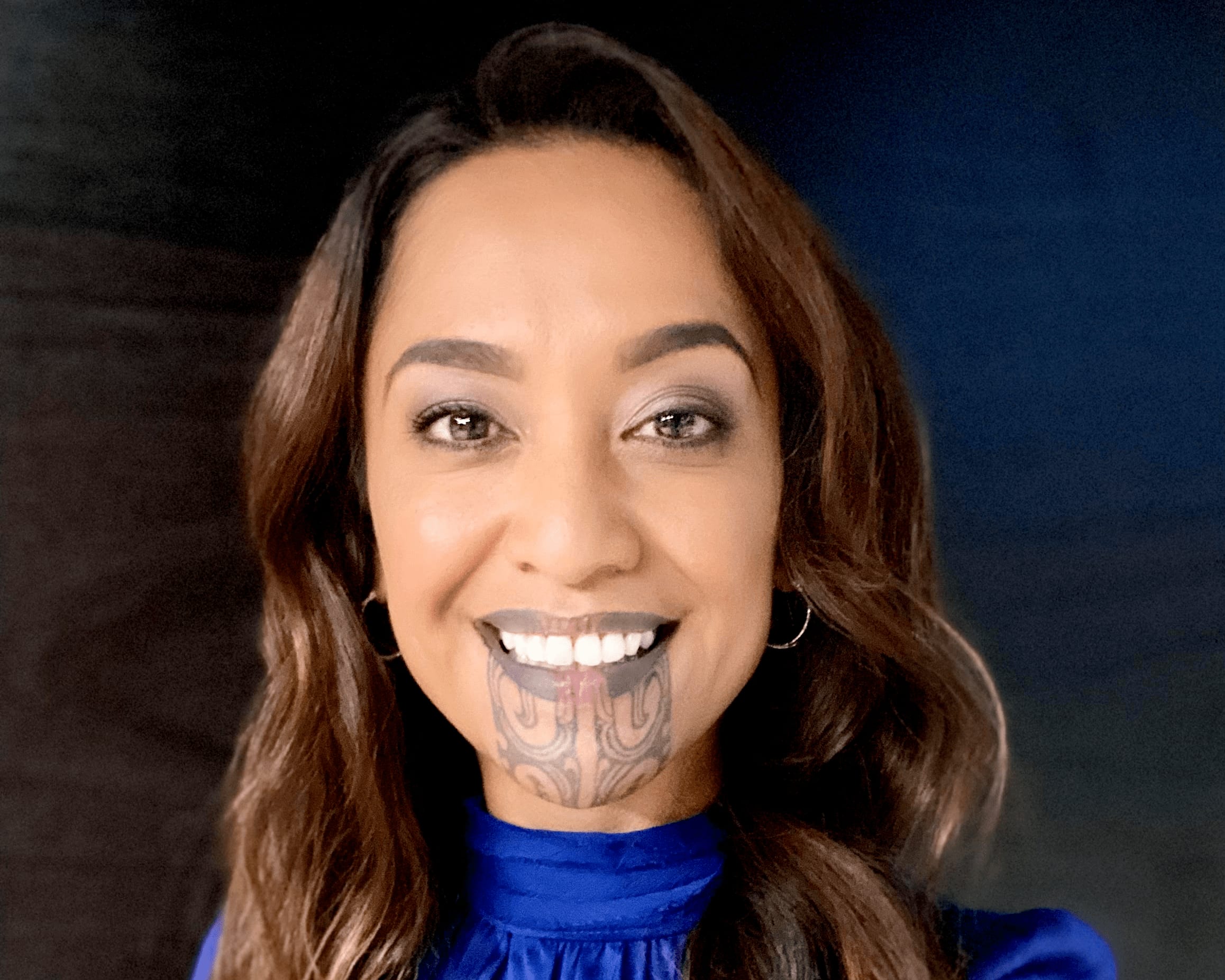
The close portrait brings the pattern into view. Curves sit to either side of the chin’s centre, with darker lines just below the lower lip. They follow the face rather than sitting apart from the mouth as a separate graphic.
Kaipara’s smile changes how much of the upper edge is visible, but the design remains legible. The photograph captures one expression and angle; it cannot show how the tattoo was made.
Curved tattoo lines define the lower-lip field
In this floral portrait, the lighting picks out the tattoo against Kaipara’s skin, while the wider frame includes more of her clothing and setting. It offers a different photographic view of the same moko rather than evidence of another design.
Oriini’s moko appears in a full portrait

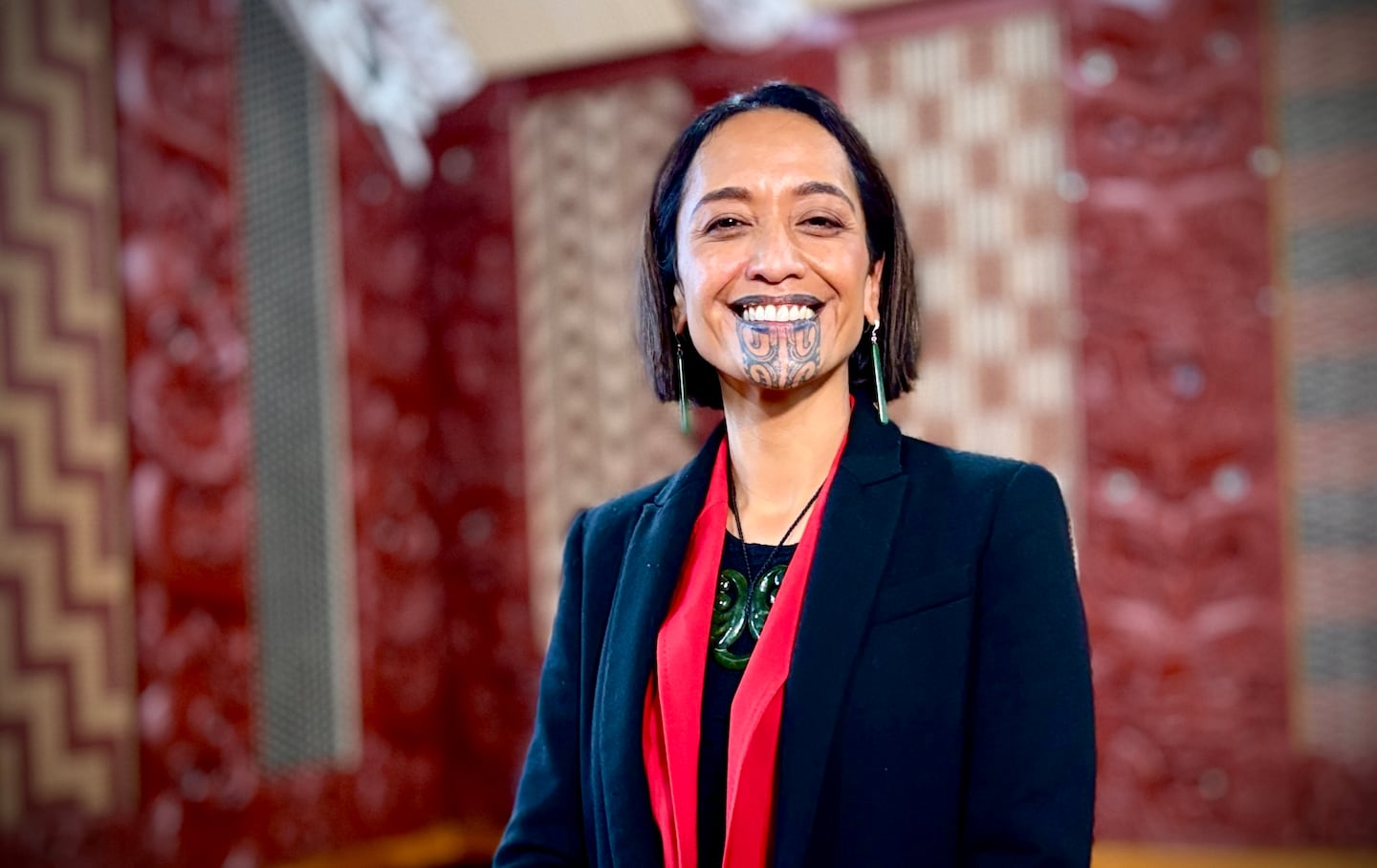
This full portrait shows Kaipara in a red coat before a carved Māori meeting house. It also reveals a smaller tattoo on her hand, which the tighter portraits do not show. The hand mark is a separate part of the visible record, though the image does not identify it.
The tattoo remains visible in broadcast portraits
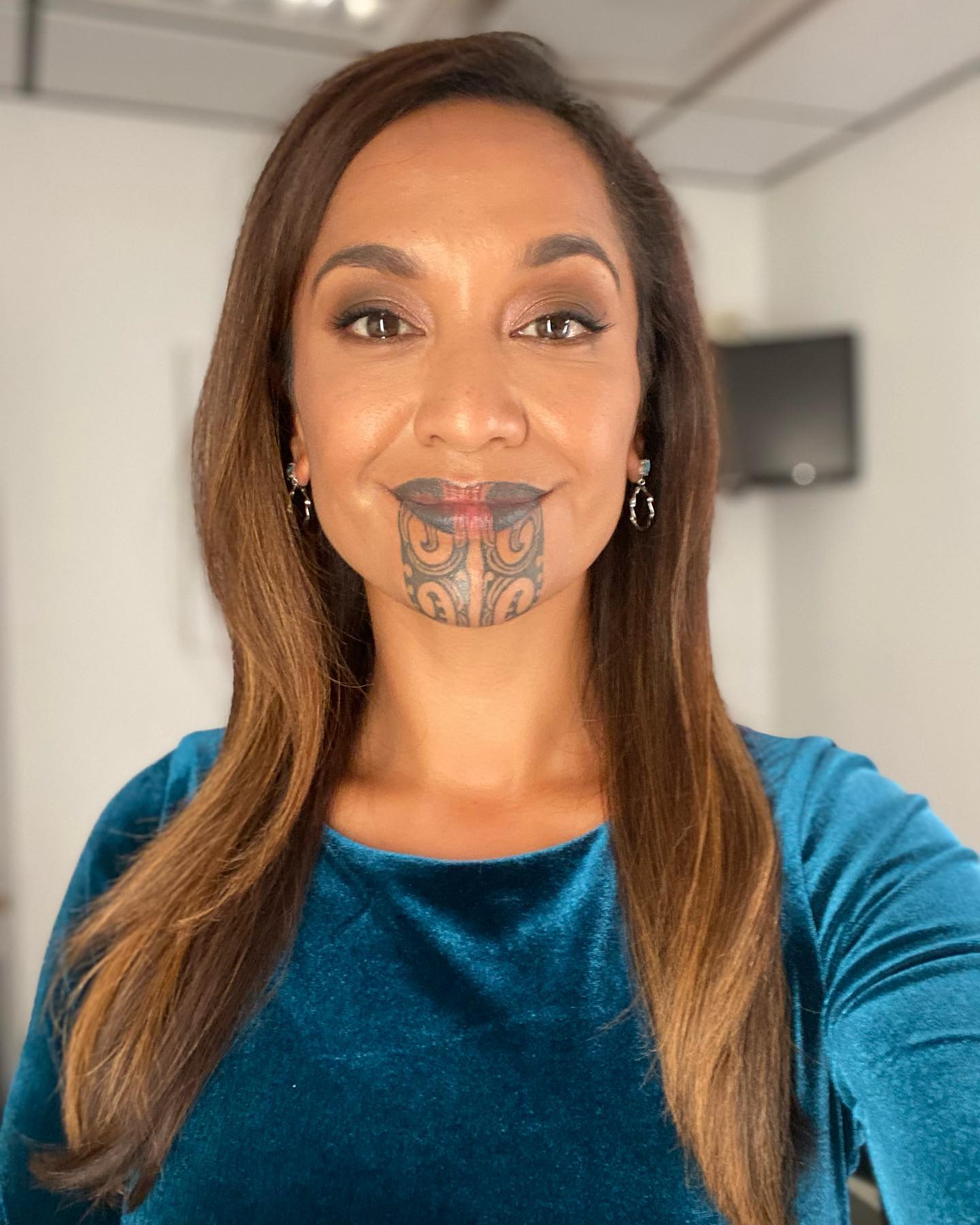
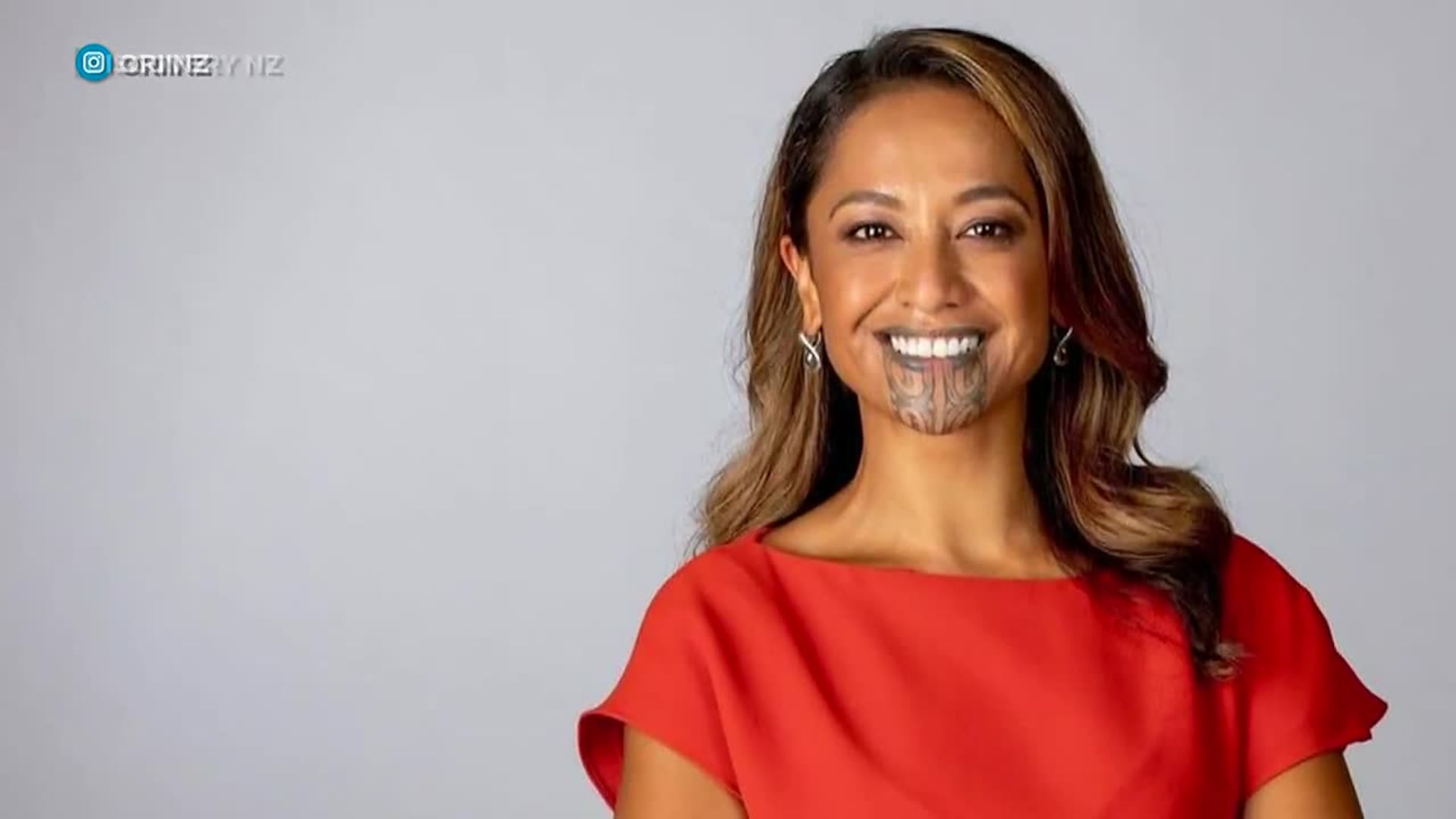
This bright, frontal portrait leaves the full chin in view and makes the lower-lip edge easy to see. Across the image set, the clothes and lighting change, while the moko stays visible in close, full-face and broadcast-related portraits.
How the moko became part of Kaipara’s public image
Kaipara has worn her moko while presenting on mainstream New Zealand television. Outlets including 1News and Now to Love have discussed it alongside her work as a bilingual broadcaster. Reporting has recorded both supportive responses to that visibility and complaints about her appearance.
Those reactions describe the public discussion, not the meaning of the tattoo. In the video below, Kaipara speaks about the history and meaning of moko kauae, offering her own account beyond what a photograph can show.
The documented record in context
The published portraits show one central tattoo, the moko kauae, across Kaipara’s lower face and a smaller hand mark in the wider portrait. Reporting places the moko in the context of her broadcasting career; the embedded interview provides further cultural and personal context.
That is what this record can establish. The photographs show placement and appearance; they do not tell the full story of either tattoo.