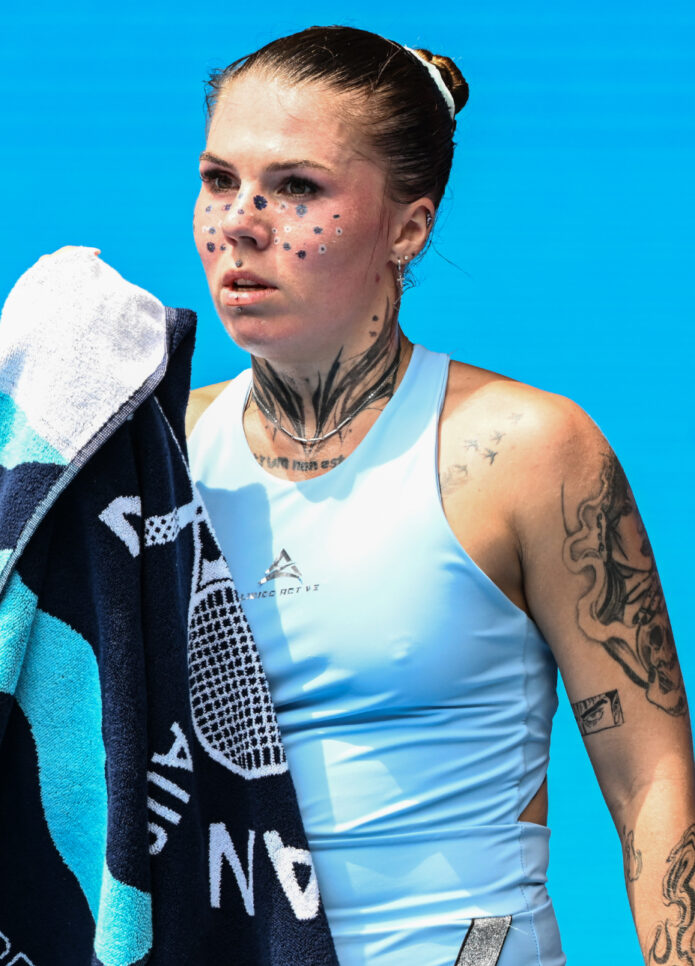
On court, Oleksandra Oliynykova wears two kinds of tattoo: permanent dark work across much of her left arm and neck, and temporary designs around her eyes and cheeks. The face tattoos can change between tournaments and come off after a match.
She got her first permanent tattoo at 16 and chose the abstract neck piece because she liked its look. She has said some tattoos are decorative while others hold memories. Photographs show how much of her arm and neck they cover; interviews explain a few of the choices.
Why Oleksandra Oliynykova’s tattoos stand out
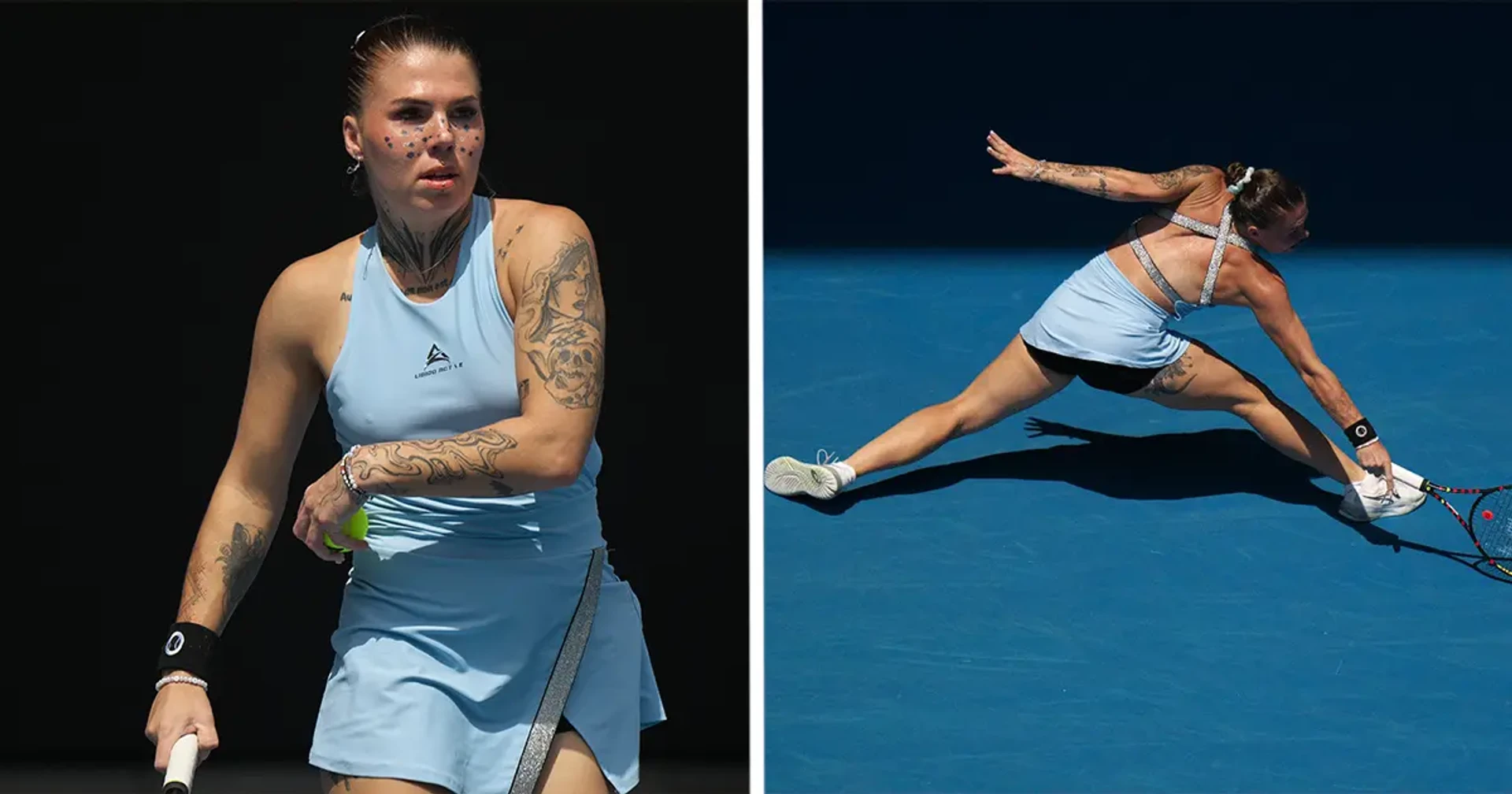
Her match look can change from one event to the next. The arm and neck tattoos remain in place, while the face designs bring in a different motif or color. In photographs, dark lines run from shoulder to forearm; a cluster of flowers or stars around her eyes catches the light. Tennis clothes and the court add their own color, so the same tattoos can read differently in another setting.
The face designs change from one event to another. Oliynykova has said they have no deeper, fixed meaning. Her permanent tattoos have a longer history, and she has described some as decoration and others as memories.
Match photos show broad shapes near the shoulder, with tighter lines and smaller marks lower down. Her neck and arm ink appear together in some shots; in others, the arm turns toward the camera as she reaches for the ball. The designs vary in scale across the visible coverage.
The permanent arm and shoulder tattoos
Athlon Sports reported that Oliynykova’s left arm is almost entirely tattooed. The dark work travels over the upper arm and forearm, with flowing forms, outlined shapes and lettering set among smaller details. The sleeve mixes broad shaded areas with finer lines.
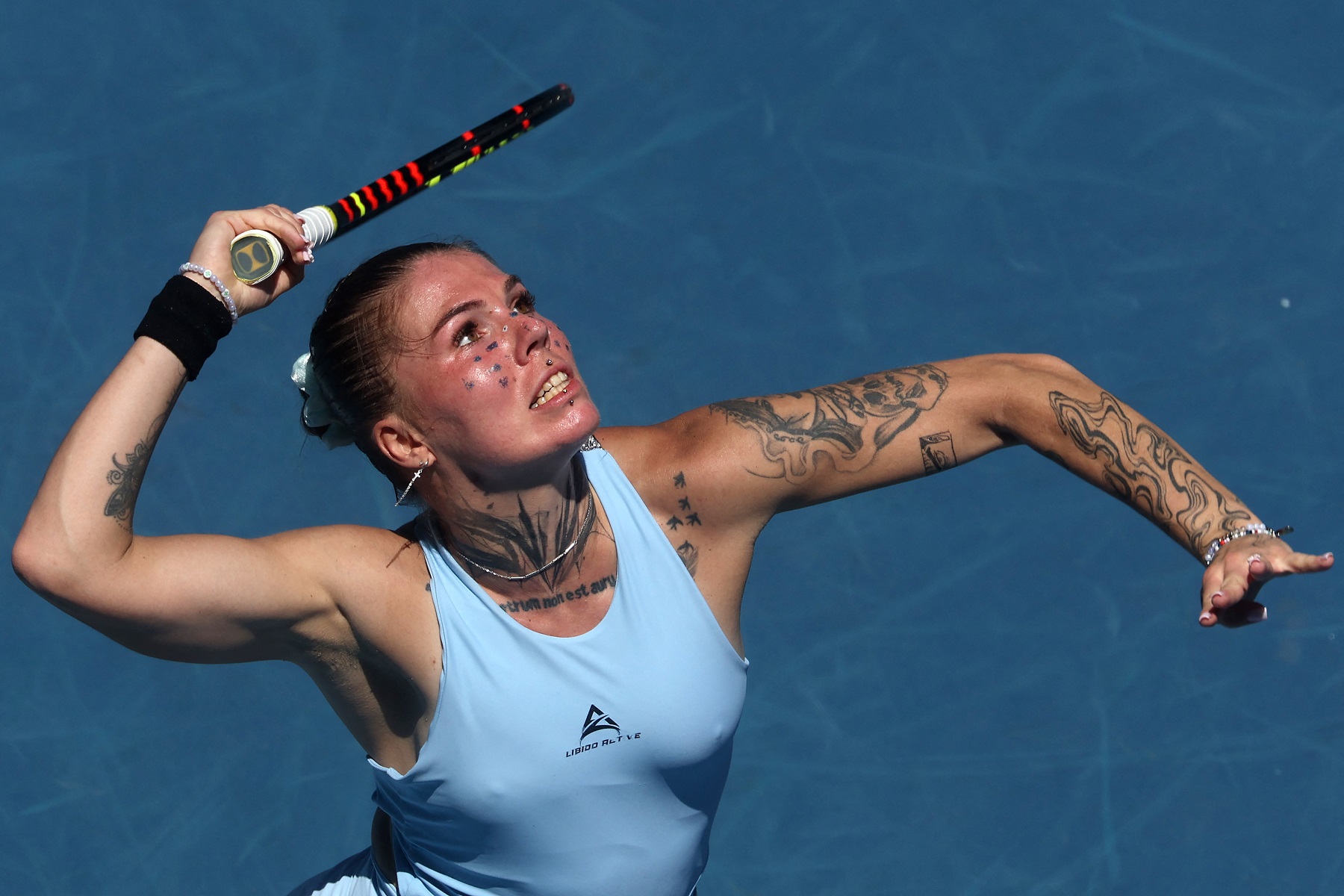
The shoulder shows some of the larger shapes. Lower on the arm, the marks look more closely spaced, and the line weights change from one piece to the next. When Oliynykova serves or bends her elbow, the arm rotates and a different section faces the camera. Each still catches a different section, with the coverage running over the upper arm and forearm.
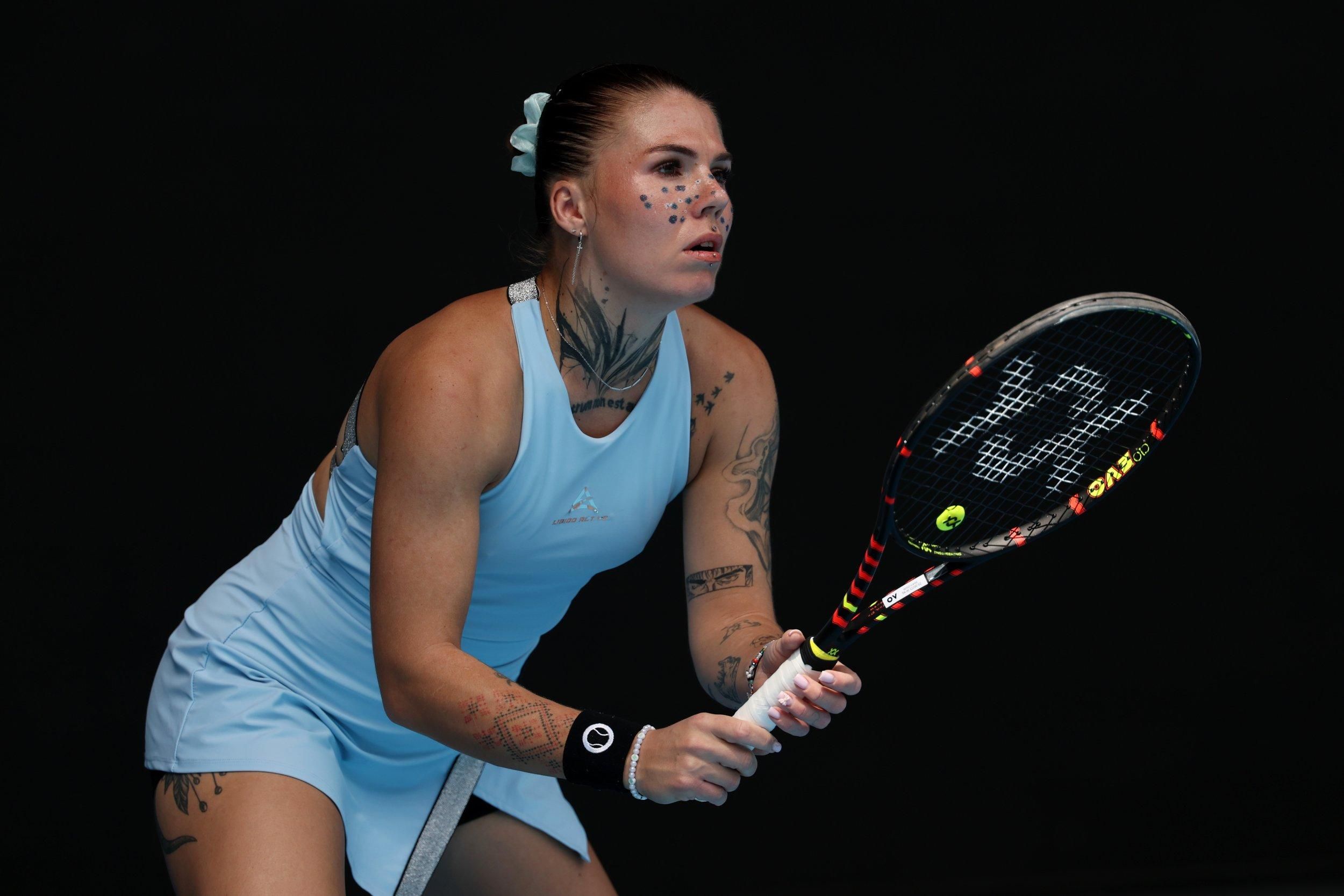
Her tennis tops often leave the shoulder and upper arm uncovered, while the sleeve continues down toward the forearm. That creates a moving view of the tattoos during play: the shoulder turns, the elbow folds and the hand reaches forward. The photographs show how the sleeve sits when she plays.
The abstract neck tattoo and visible lettering
Oliynykova has described her neck tattoo as abstract. She chose it because it looked cool, she said, and it was not the most painful tattoo she had received. That is the explanation she gave in the interview. The design itself can be seen from the upper chest to just below the jaw, where dark pointed shapes meet the line of the neck.
Photos also show small lettering near her collarbone. The words are hard to read consistently; shadows, clothing and the camera angle cover parts of the area. It is clearer to describe where the lettering sits than to guess at the text. The neck work connects with the shoulder pieces in some views, making a dense patch of ink between her throat and upper arm.
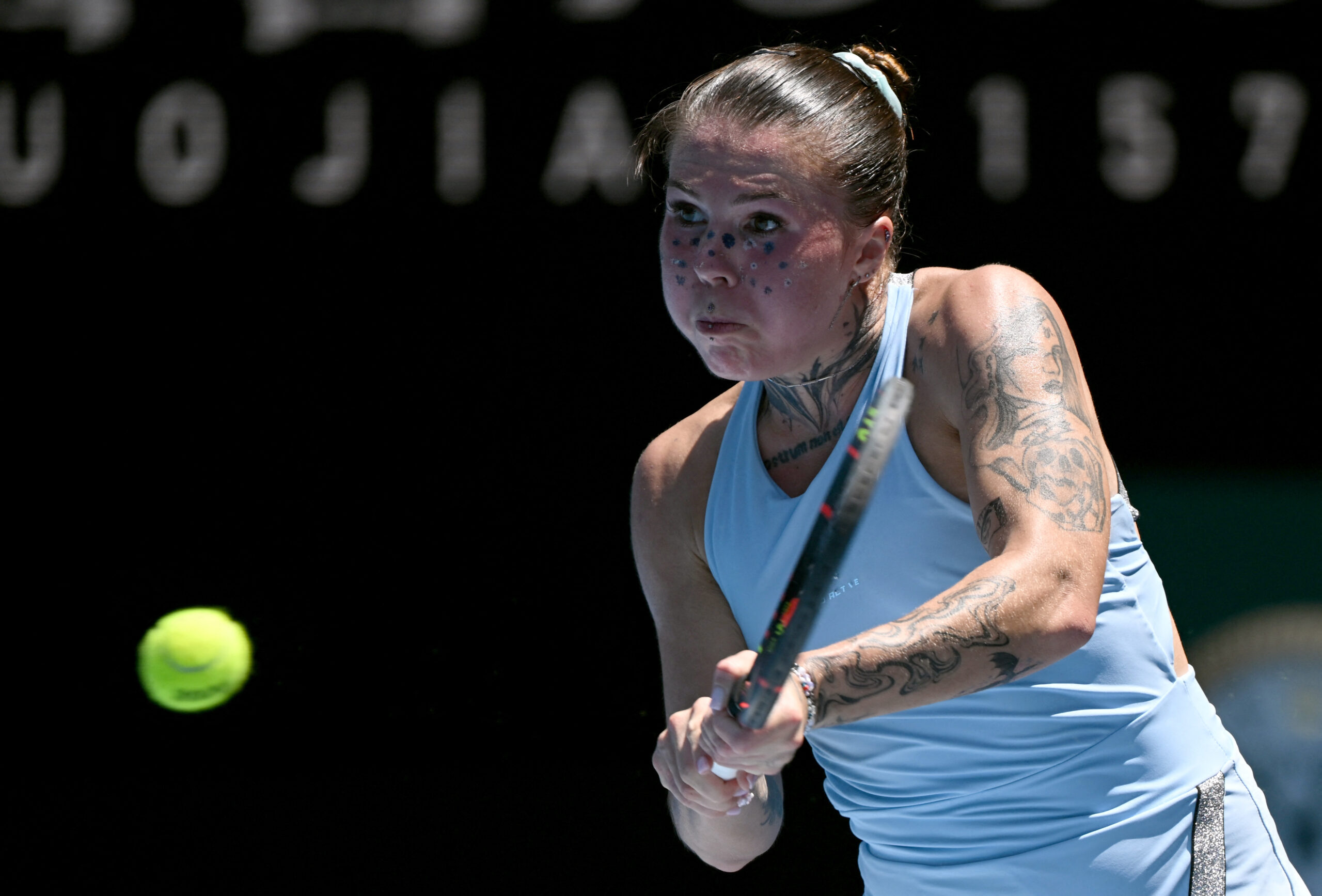
In match photos, the dark neck design frames her jaw and draws the inked shoulder into view. Oliynykova’s own explanation is simple: she liked the design.
What Oleksandra has said about her first tattoo
In an interview with Ben Rothenberg, Oliynykova said she got her first tattoo at 16. She described that choice as part of a broader teenage interest in alternative style. Tattoos came alongside piercings, changing hair colors and rock music. She has also spoken about Ukrainian post-punk as an important influence on her musical taste.
In an interview with a Romanian publication, she said some tattoos were decorative and others were tied to memories. She also noticed that certain motifs on her arm reminded her of traditional Romanian designs. Those comments offer different reasons for different pieces: some are there because she likes their appearance, while others recall something from her life.
The temporary face tattoos and their changing motifs
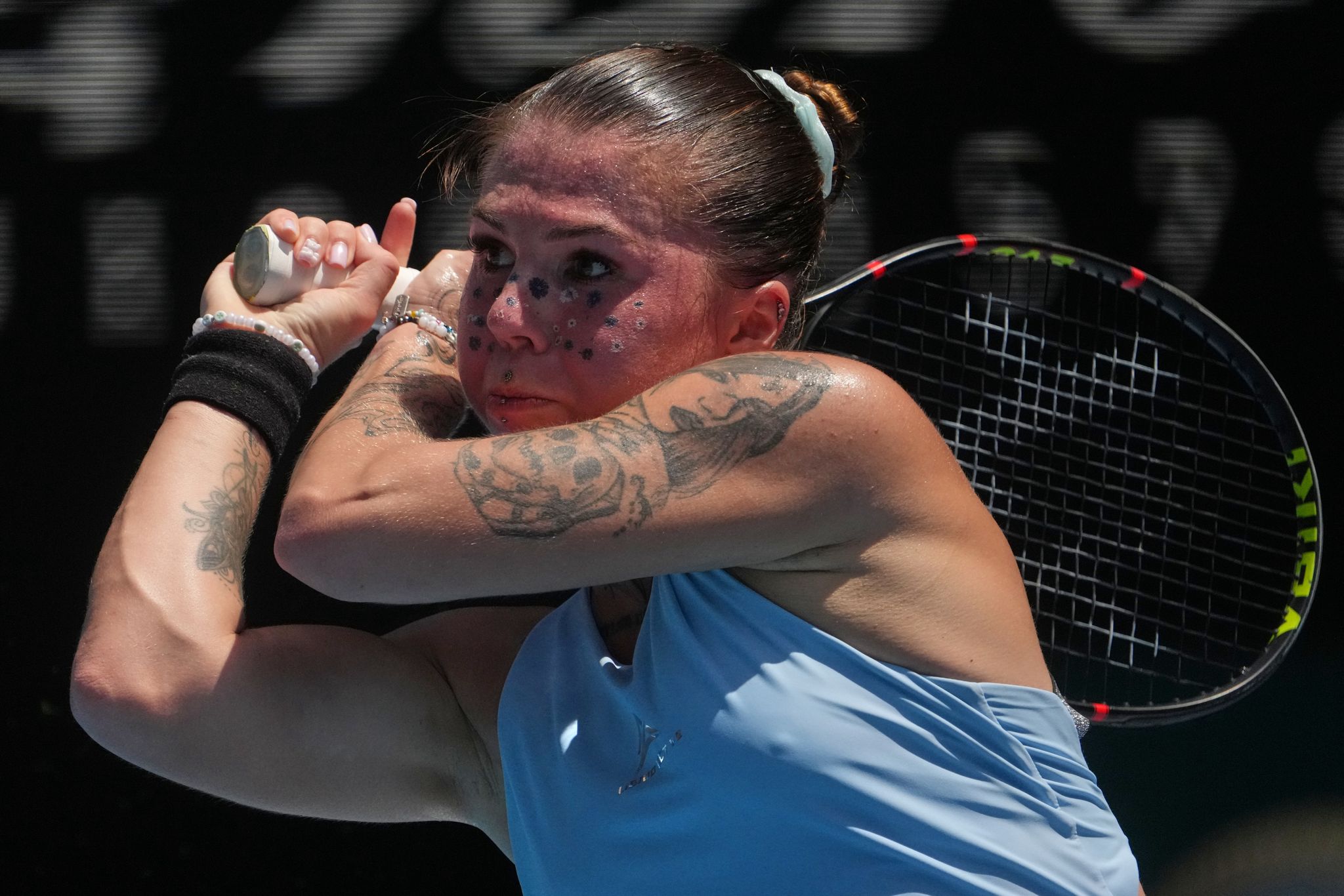
The designs around Oliynykova’s eyes and cheeks are temporary face tattoos. She has said that she removes them with cleansing oil after matches and that they have no deeper fixed meaning. The idea started when she found fake face tattoos while shopping at the US Open. She began trying them out, including stars, hearts and flowers.
Their placement stays around the eyes and cheeks, but the color and pattern can change. A design seen at one tournament may be gone at the next. She might wear flowers at one event and stars or hearts at another; the designs wash off after play.
The designs draw the eye to her face, then down to the dark ink along her neck and shoulder. Oliynykova has described the temporary tattoos as something she enjoys wearing.
Why the Australian Open flowers were blue
At the 2026 Australian Open, Oliynykova wore blue flowers across her face. In press-conference material and sports coverage, she explained that the flowers matched her blue dress and the court. The color choice was tied to that day’s outfit and setting.
In tournament photos, the blue flowers sit close to her eyes while the darker ink runs down her neck and arms. The color marks a single Australian Open look; her facial designs can change for another match.
How the collection changed across her style
Oliynykova’s own comments describe a collection built for more than one reason. She got her first tattoo at 16, chose the abstract neck design because she liked its appearance, and has said that other tattoos hold memories. Some arm motifs reminded her of traditional Romanian designs. Those details come from her interviews; the photographs show how the larger pieces fit across her body.
Her face designs work differently: stars, hearts and flowers can appear for a match and come off afterward. At the Australian Open, the flowers matched the blue dress and court. That choice changed the look of the day without changing the tattoos on her arms and neck.
Her dark arm and neck tattoos stay with her through a tournament. The face designs can change for the next match; at the Australian Open, blue flowers matched her dress and the court.