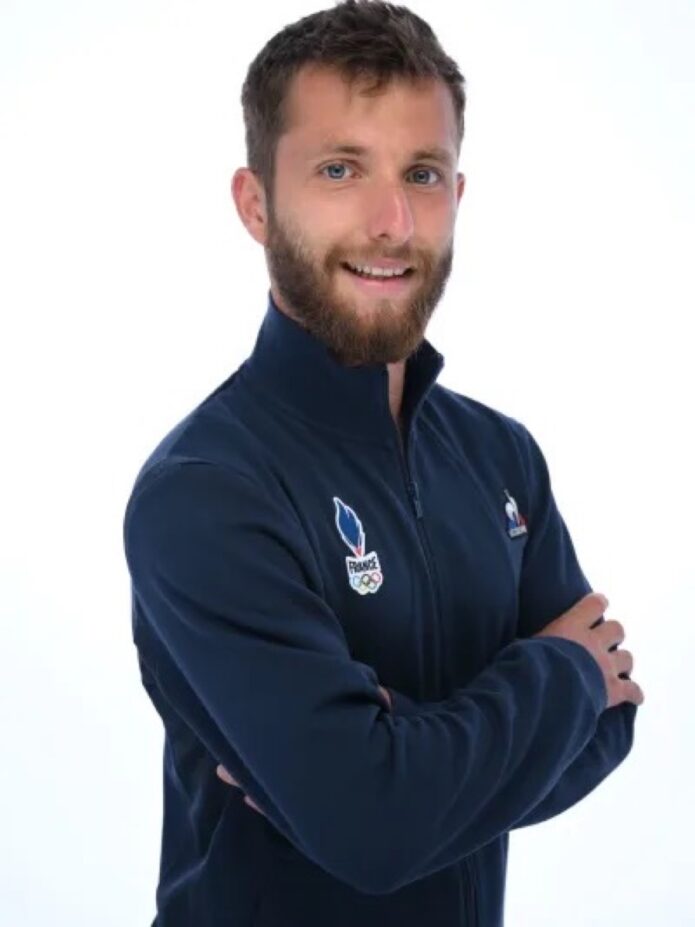
Corentin Moutet’s tattoos are part of the same public identity that makes his tennis so difficult to reduce to a single style. He is a left-handed French player known for changing rhythm, using an underarm serve when the moment invites it and speaking with unusual directness after matches. The ink on his body follows that refusal to be neatly packaged. Published interviews identify a tattoo linked to George Orwell’s 1984, while match photographs show a neck tattoo and several pieces across his arms. The strongest record comes from the combination of his own explanation and photographs in which the designs can be seen on the same identifiable player.
This profile separates what Moutet has explained from what photographs merely show. The number 1984 is documented as a reference to Orwell’s novel, not as a birth year. The visible neck and arm work is real and repeatedly photographed, but every shape does not have a published name. That distinction matters with a heavily tattooed athlete: a clear image can establish placement and appearance without proving a private meaning for every line.
The 1984 tattoo on Moutet’s arm

The most clearly explained Corentin Moutet tattoo is the number 1984. In a tennis MAGAZIN interview, Moutet was asked about the number after it became visible on his body. He said it referred to George Orwell’s novel Nineteen Eighty-Four, adding that he liked the book and saw its science-fiction setting as a reflection of reality. The explanation is straightforward and valuable because it prevents the most obvious mistake: reading 1984 as a birth year or a simple date.
The photograph from the interview shows Moutet in a match setting with the arm tattoo visible against his shirt and wristband. It is not a staged catalogue of every design, but it gives the number a physical context. The tattoo belongs to the player who was speaking about literature, pressure and the emotional side of competition. The published meaning is the Orwell reference, while the wider sleeve remains a visual record rather than a list of invented symbols.
The neck tattoo and the visible sleeve

A separate match photograph makes Moutet’s neck tattoo easy to notice. It sits beneath the hairline and is visible when he turns toward the court, while other designs run down the arm that holds or reaches for the racket. The image confirms that his tattoo collection is not limited to the single number discussed in the interview. It also shows why photography needs to be handled carefully: the neck mark can be seen clearly, but the public sources do not provide a definitive explanation for its subject.
The arm work is denser than one isolated motif. In the available tennis images, black-and-grey shapes appear along the forearm and upper arm, with different pieces revealed as Moutet changes position. The visual record supports descriptions such as a tattooed arm, a visible neck piece and a sleeve-like collection of work. It does not support assigning a story to every shaded patch. His photographed sleeve is extensive, but the confirmed record is intentionally narrower than the full surface of his skin.
The reference to Orwell’s 1984
Orwell’s novel gives the number a literary centre. Moutet’s interview answer connects the tattoo to a book about surveillance, social control and the pressure to accept an imposed version of reality. He did not present the tattoo as a slogan for one political campaign. Instead, he described a book he liked and a relationship between fiction and the world around him. That leaves the meaning personal without making it mysterious.
The detail also fits the way Moutet talks about his career. He has often described himself as emotional and authentic, and he has pushed back against labels that make him a simple bad-boy character. A literary number is more revealing than a generic date because it points to the inner life behind the public performance. Still, the safest account stops where his explanation stops. The tattoo references the novel; the sources do not require a larger theory about every decision he makes on court.
Moutet as a competitor

Moutet’s tennis profile helps explain why the tattoos attract attention without making them the whole story. He is a creative left-hander whose matches can change direction through short angles, changes of pace and improvisation. Opponents cannot always prepare for a conventional pattern because Moutet is willing to alter the expected rhythm. The visible ink reinforces that sense of individuality, but the tennis came first.
This face-visible player portrait is used for identity and setting, not as evidence for a new tattoo meaning. It shows the same athlete in a clean profile image, allowing readers to connect the documented photographs with the person named in the article. The distinction is important. A portrait can confirm who the subject is while leaving tattoo claims to the close or match images that actually show the marks.
Emotion, rap and literary references
Interviews about Moutet often return to the relationship between emotion and performance. He has spoken about the intensity of competition, mistakes that follow him and the need to remain honest about what he feels. He has also discussed rap music and the writing he pursued during periods away from the normal tennis routine. Those interests make the 1984 tattoo feel consistent with his wider self-description, even though consistency is not the same as proof of a hidden intention.
The literary reference can therefore be placed beside his music and his unusual court choices without turning the article into a psychological diagnosis. It is enough to say that Moutet’s public record includes a book-linked number, a visible collection of body art and a player who resists being flattened into a stereotype. The tattoo is one part of that record. It does not explain every outburst, every tactical decision or every stage of his development.
French tennis and the national setting
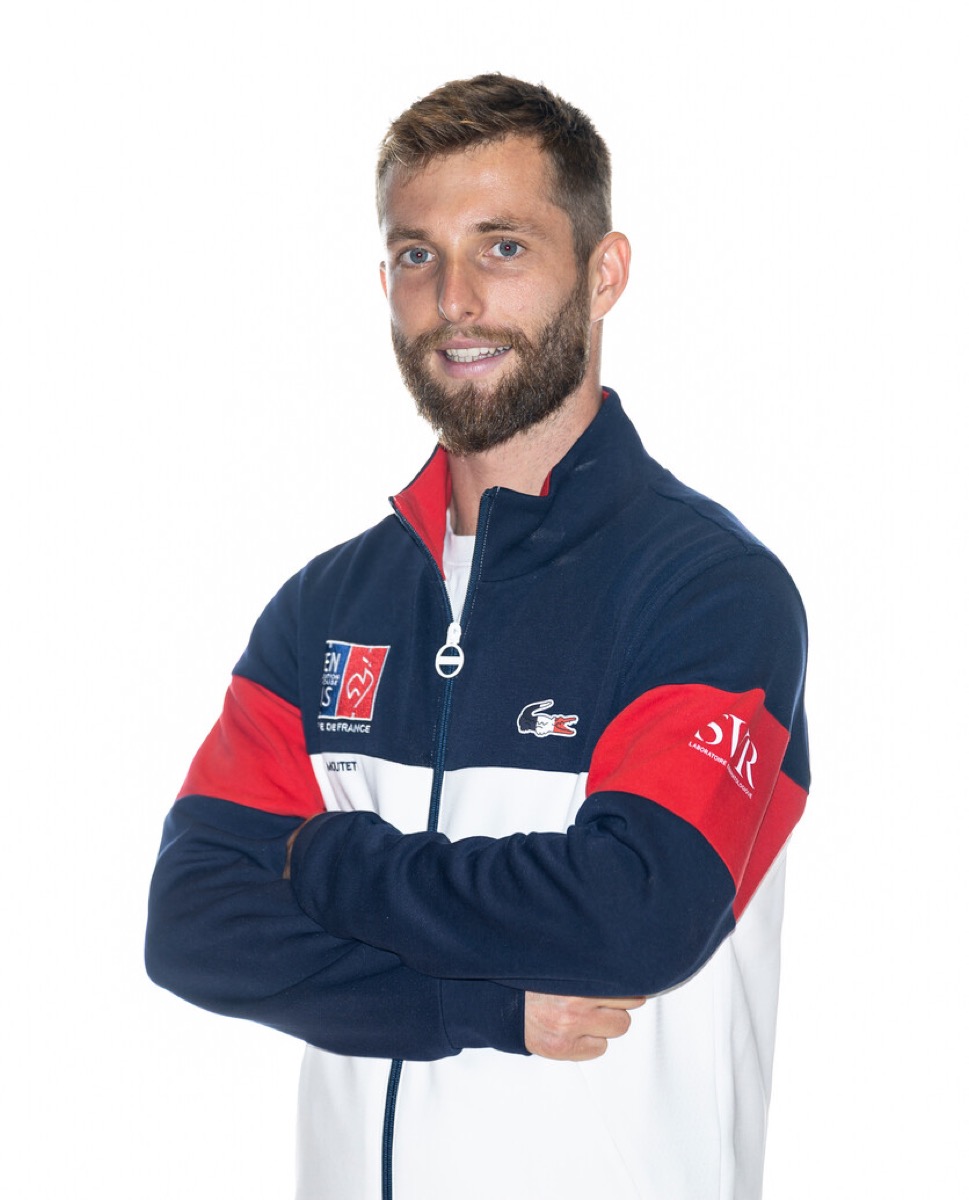
Moutet’s French team portraits provide a second kind of context. The national jacket, the tricolour details and the formal pose place him inside the country’s tennis structure, away from the heightened drama of a singles match. The photograph is a supplemental portrait: it helps identify the player and his national role, but it is not presented as a close-up catalogue of tattoo evidence.
That separation makes the visual story more reliable. One photograph can show the neck or forearm work. Another can show the player’s face and French team identity. A third can place him in the middle of competition. Taken together, they build a sequence around Moutet without asking a generic portrait to prove something it cannot prove. The meaning of 1984 comes from the interview; the national setting comes from the official portrait.
What the match photographs establish
Match photographs establish three useful facts. First, Moutet has visible tattoos on his neck and arms. Second, the marks appear across more than one area, so the collection is broader than a single small design. Third, the appearance changes with the angle of his body, the sleeve of his shirt and the movement of his forearm. These are modest claims, but they are durable because they stay close to what a viewer can actually see.
The images do not automatically establish who designed each piece, when every tattoo was made or what each symbol means. Those details would need a source such as an interview, a tattoo artist’s account or a direct statement from Moutet. The available evidence is strongest on the Orwell reference and on the existence of the visible tattoos. A careful tattoo profile values the confirmed small record over a larger inventory built from guesses.
Reading the photographs without overclaiming

The final portrait in this article is deliberately used as a visual reference rather than a tattoo-specific claim. It shows Moutet’s face, hair and athletic identity clearly, giving the reader a stable point of comparison for the match images. It should not be described as showing the 1984 number or the neck design. Those claims belong to the images and sources mapped to the relevant tattoo sections above.
This approach also explains why a tattoo article can include different kinds of photographs. The two tattoo images carry the evidence. The additional portraits add identity and context, especially when the subject’s body art is partly hidden by competition clothing. They are supplemental rather than substitutes. No generic headshot can replace the need for at least one genuine tattoo photograph, and no close tattoo photograph should be forced to carry biographical claims it cannot support. The evidence stays strongest when each photograph is asked to do one clear job.
A distinctive collection in public view
Corentin Moutet’s ink is memorable because it combines a plainly documented literary reference with a larger photographed collection that remains partly open to interpretation. The number 1984 points to Orwell’s novel. The neck and arm tattoos give his appearance a distinctive visual outline during matches. The rest of the sleeve can be acknowledged without pretending that every line has a known name or meaning.
That balance suits Moutet’s public image. He is a player who makes room for invention, emotion and self-expression, yet the best account of his tattoos is not the loudest one. It is the account that starts with his own explanation, checks the visible designs against credible photographs and leaves uncertain details uncertain. The result is a focused record of a French tennis player whose literary curiosity and individuality are visible both in his game and on his skin.
“I am authentic,” Moutet has said when describing the way he shows emotion. The quote is useful here because the tattoos are not a costume added to a tennis persona. They are part of the same public record: a number tied to a book, a neck design seen in competition and an arm covered with work that photographs reveal in fragments. The documented record is already enough to tell a specific story.
Read the ATP Tour profile of Corentin Moutet for more on the player’s tennis career and tournament context.