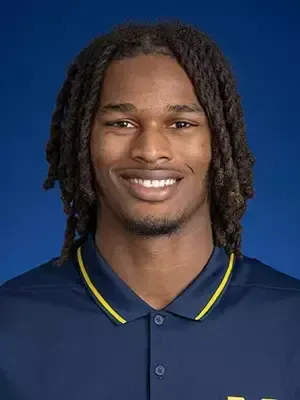
Morez Johnson Jr.’s public tattoo record currently centres on one clear source: an On3 item that reports his championship tattoo and links to a photograph from the 2026 NBA Draft Combine. The inspected image shows Johnson’s face and a visible piece on his forearm while he is identified in the post. Four additional portraits place the player in Michigan and draft context, but they remain supplemental images rather than extra tattoo evidence.
The championship tattoo Morez Johnson Jr. showed at the combine
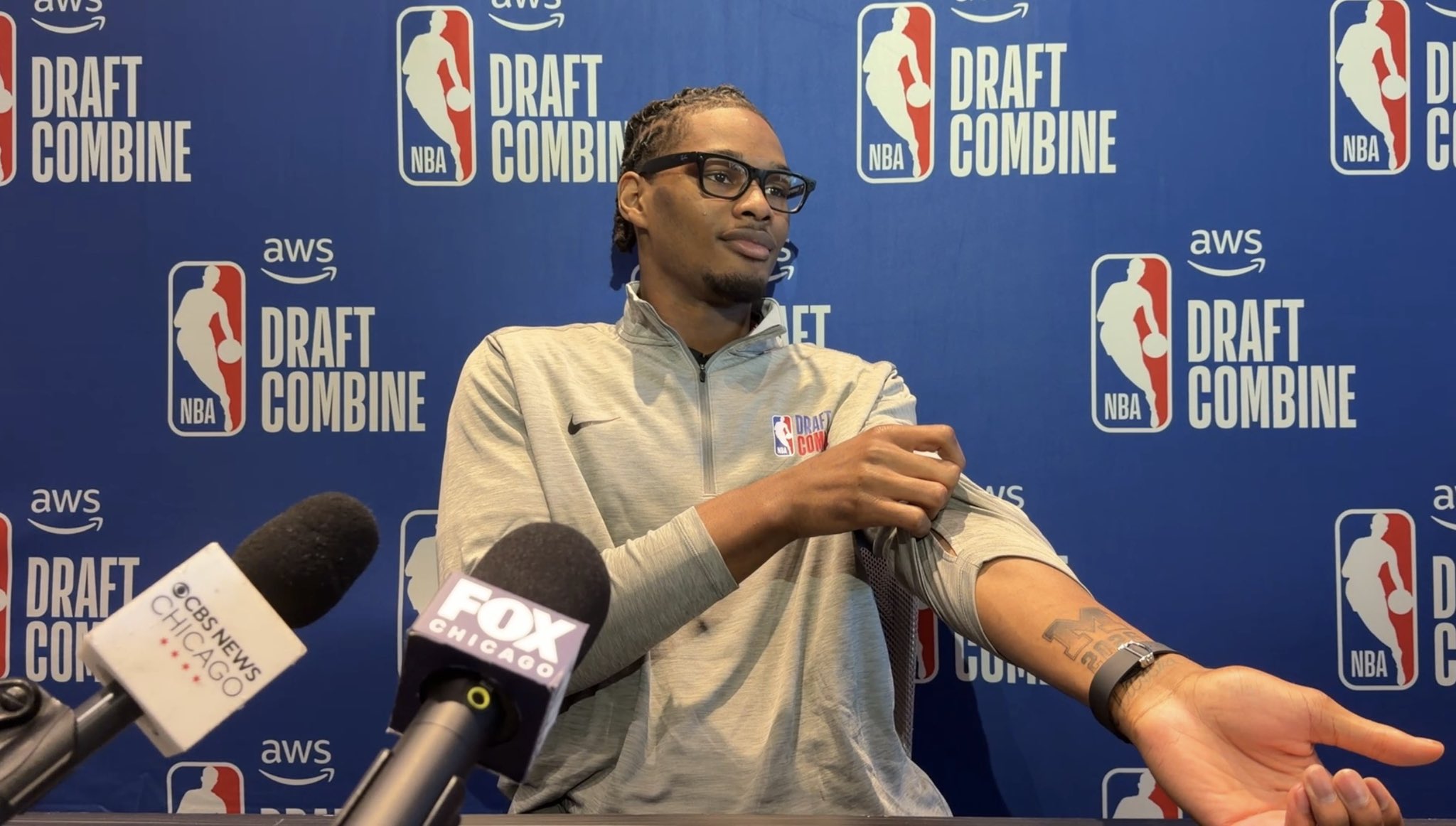
On3’s Michigan news feed reported that Morez Johnson Jr. showed a new tattoo commemorating the Wolverines’ national championship at the 2026 NBA Draft Combine. The accompanying post from The Wolverine’s Clayton Sayfie identifies Johnson, shows his face, and captures a block of ink on his forearm as he speaks with reporters. The source names the tattoo and the photograph puts it on the same person in a recognisable combine setting.
The image does not justify a complete catalogue or a guessed meaning beyond the championship reference in the source. What can be described safely is a dark, geometric-looking composition on the lower arm, visible below the sleeve line while Johnson pulls at his top. The tattoo is part of a public sports moment, but the photograph remains the evidence rather than a reason to invent a private story.
The player in the Michigan record
Johnson arrived at the combine after a season that made his basketball identity easy to place. The official Michigan roster lists him as a forward, gives his height and hometown, and records his role on the 2026 national championship team. That context ties the tattoo report to a specific achievement rather than to an anonymous close-up circulating without a date or subject match.
The Michigan record also helps separate the body-art photograph from the many generic player images that appear in draft coverage. A face-visible roster portrait can confirm who Johnson is, while the On3 item and Sayfie post do the narrower job of documenting the ink. Keeping those roles apart makes the page more accurate and gives each image a clear purpose.
The Michigan season in the record
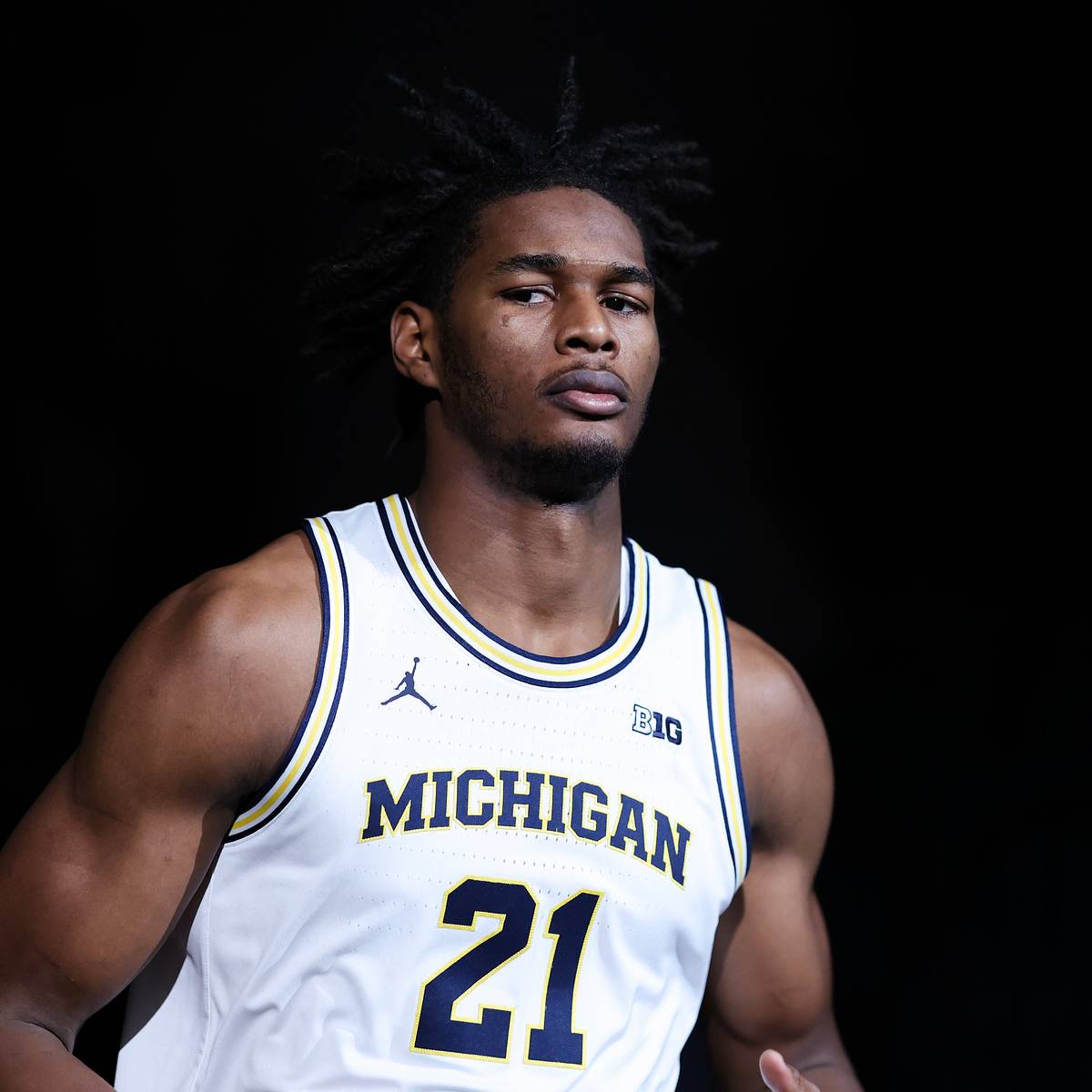
A separate Michigan image shows Johnson in the Wolverines’ white number 21 jersey, with his face and upper body plainly visible. The photo comes from a basketball feature about his play and is included as career context. It does not claim that another tattoo can be read in the frame, and it is not used to enlarge the documented tattoo inventory.
That editorial choice gives readers a clear view of the player behind the headline. Johnson’s public profile moved from Illinois to Michigan, then into the national-title and NBA-draft conversation. A clean sports image gives the article visual variety without turning every exposed arm into supposed tattoo evidence.
The draft-combine setting
The draft-combine portrait gives a second angle on the setting in which the tattoo was reported. Johnson is shown close-up in Michigan colours, looking away from the camera while the NBA Combine branding fills the background. The image confirms the scale and identity of the subject, but the arm is not treated as a second tattoo photograph simply because it belongs to the same day.
This is an important difference between context and proof. The tattoo photograph shows the forearm while Johnson reveals it; the other combine portrait shows the athlete in an interview environment. Used together, the pictures create a coherent article without pretending that a background image reveals more than it actually does.
Morez Johnson Jr. in public view
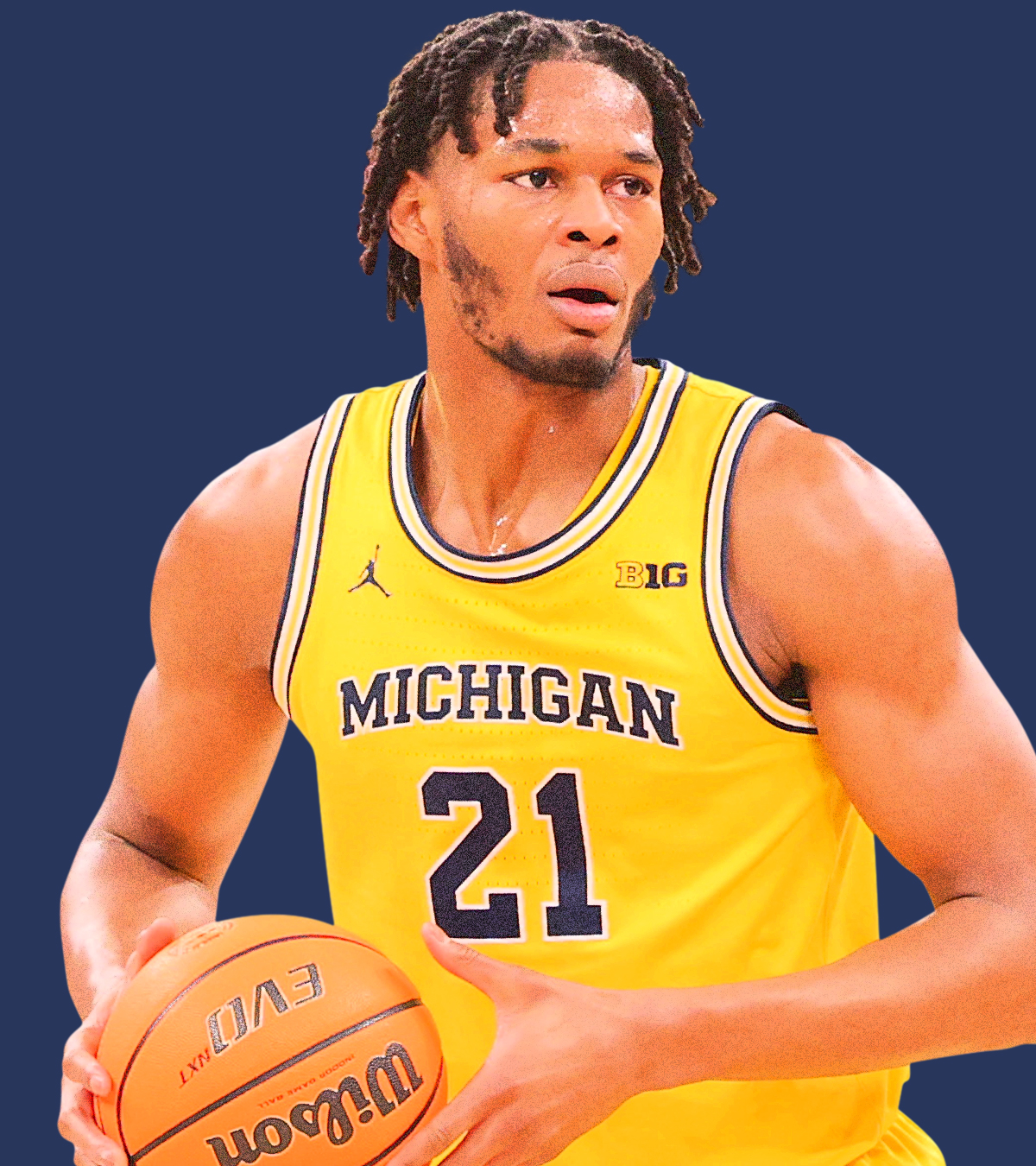
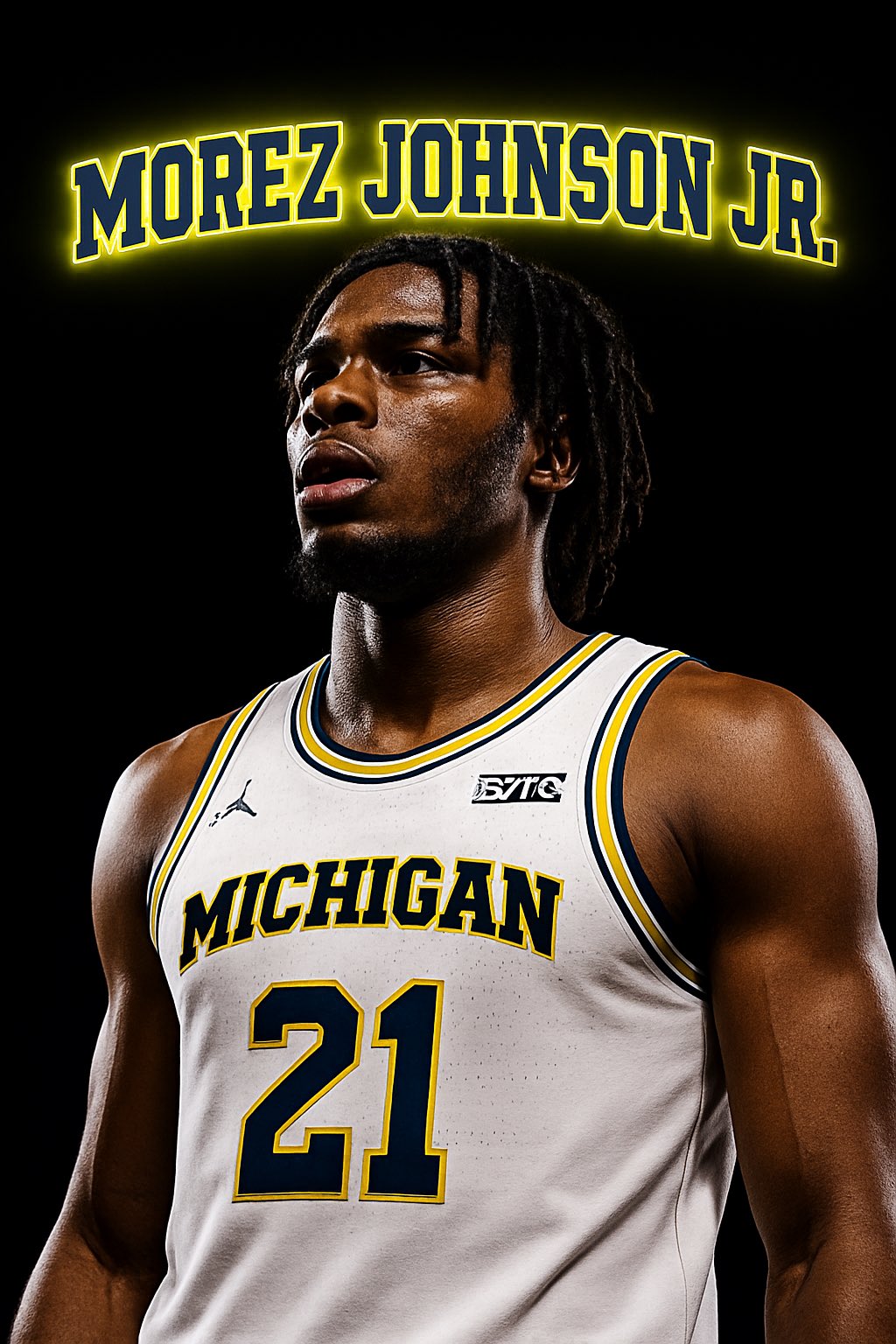
Another face-visible image places Johnson in the visual language of the Michigan program. His braids, expression and number 21 jersey make the subject unmistakable, while the dark studio background keeps attention on the player. It works as a supplemental image because it lets readers recognise Johnson immediately when the article moves from the tattoo report into his playing career.
The image also explains why the tattoo story has a natural editorial angle. The new design was linked to a title-winning chapter, and Johnson’s transition into the NBA draft gives the photograph a clear moment in his public timeline. None of that changes the visible limits of the ink photograph, but it does explain why the reveal was newsworthy.
What the public photograph establishes
The strongest conclusion is deliberately narrow. Morez Johnson Jr. showed a tattoo connected by the source to Michigan’s national championship, and the photograph shows a visible forearm design on the same face and body identified by the report. The exact lettering, artist, session date and full shape are not all published, so the page should not turn a single sports photograph into a definitive tattoo catalogue.
That does not make the image weak. The arm is exposed, the subject is recognisable, and the source provides a reason for the reveal. Those three details are enough to establish genuine visual coverage. The article can describe a dark, block-like composition and its lower-arm placement while leaving any unreadable details alone. Readers get a useful record without being asked to trust a guess.
The report’s wording also gives the tattoo a public context: a national-title celebration at the NBA Combine. That is different from claiming that every design element is a literal logo or that the tattoo carries a private dedication beyond what the source says. The championship connection is sourced; the rest should remain observation or uncertainty.
Why the source boundary matters
Sports coverage produces plenty of images in which an athlete’s arms are visible, but visibility alone is not documentation. A game photograph may show a wrist, a media-day portrait may show a shoulder, and a draft image may catch a forearm for half a second. None of those frames should be used to assign a tattoo unless the design is genuinely visible and the subject match is secure. Here, the On3 report and the linked X post provide the direct tattoo route.
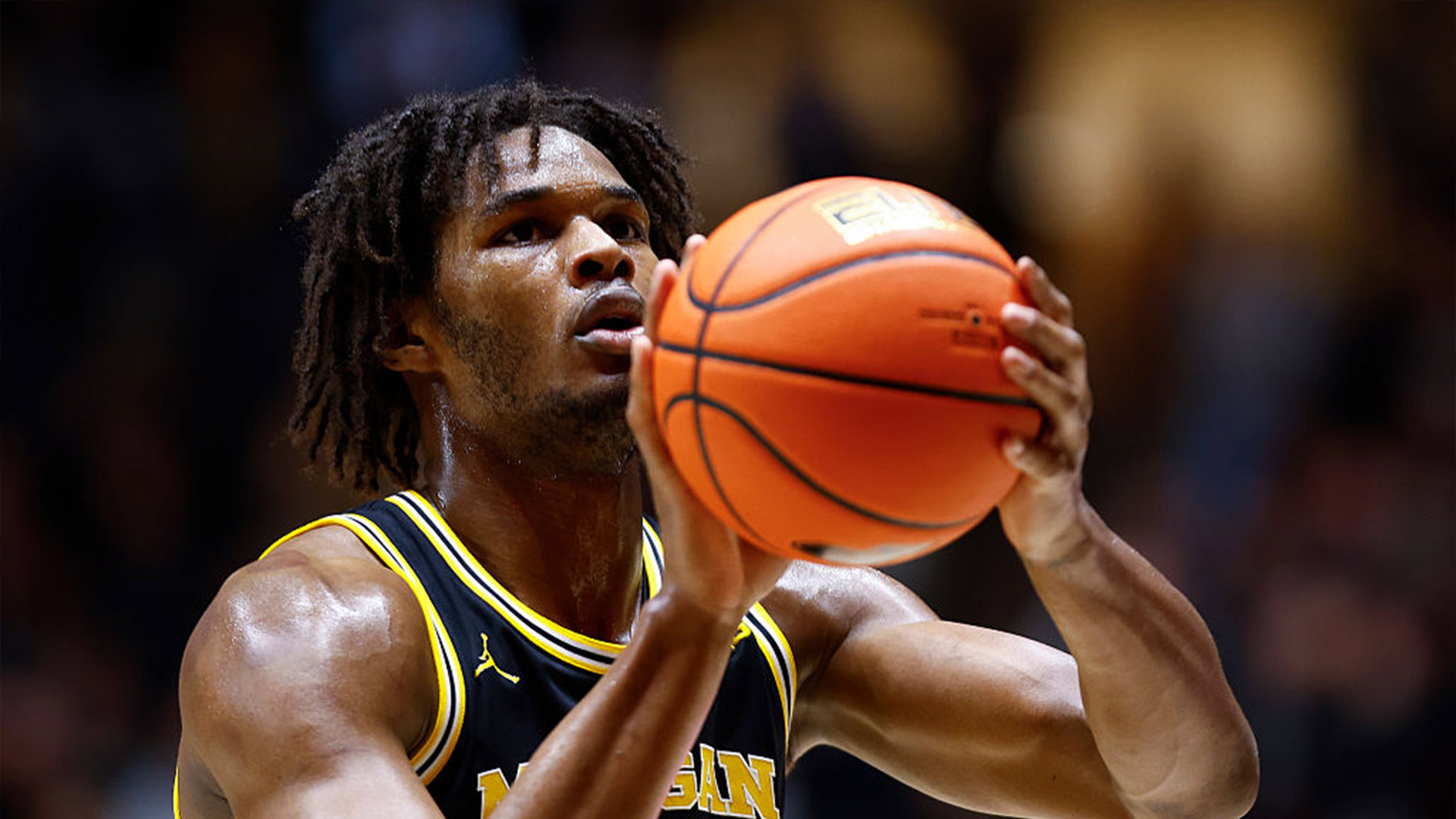
The other images are therefore labelled as portraits. The Michigan roster photo shows the player in an official team setting. The Rutgers feature photo gives a close portrait from his college season. The combine images show the draft environment and face. They help readers follow the person across the story, but they are not substitutes for the one documented tattoo photograph.
That separation is also helpful if more coverage appears later. A future interview could identify the artist, clarify whether the design includes lettering, or show a healed close-up. Those details could be added to the tattoo section with a new source. Until then, the responsible account is the one that records the visible forearm piece and keeps its claims proportional to the evidence.
The season behind the story
Johnson’s 2025-26 season gives the tattoo a clear public timeline. Michigan’s official record describes a national-title team, a deep tournament run and Johnson’s role as a high-level defensive forward. The NBA’s draft profile places him in the same transition, recording his move from college success to a first-round selection by Dallas. Those facts explain the moment around the photograph without adding invented biography.
The design is also a reminder that sports tattoos do not need to be large to carry a strong association. A small or medium forearm piece can mark a season, a team, a place or a group of people. Its practical advantage is that the athlete can show it when he wants and cover it under a sleeve when required. The photograph catches that flexibility in a natural setting rather than a posed studio reveal.
For anyone drawing inspiration from the image, the practical point is to begin with the event that matters and then simplify the idea until it works on skin. A title, date or symbol can be translated into lines that age well. The artist still needs room to work, and the wearer should be comfortable with what the design communicates when the original moment is no longer current.
What remains unknown
The available reporting does not publish a full tattoo inventory for Johnson. It does not name the tattoo artist, specify the exact appointment date, identify every shape in the forearm piece or confirm whether any other tattoos exist elsewhere on his body. The page should keep those gaps visible rather than filling them with social-media speculation.
It is equally important not to confuse a team jersey with tattoo meaning. The Michigan colours, the championship setting and the draft branding establish the surrounding story. They do not prove that the tattoo copies a logo or that it contains a particular word. The photograph can support a visual description, while the source supports the championship connection. That division is enough.
Morez Johnson Jr.’s documented tattoo story is therefore compact but credible: one published sports report, one inspected image of the visible forearm ink, and a set of distinct face-visible portraits that place him in the Michigan-to-NBA transition. If a clearer close-up is published, the record can grow. For now, the best article is the one that shows the genuine tattoo image, labels the portraits honestly and stops where the evidence stops.