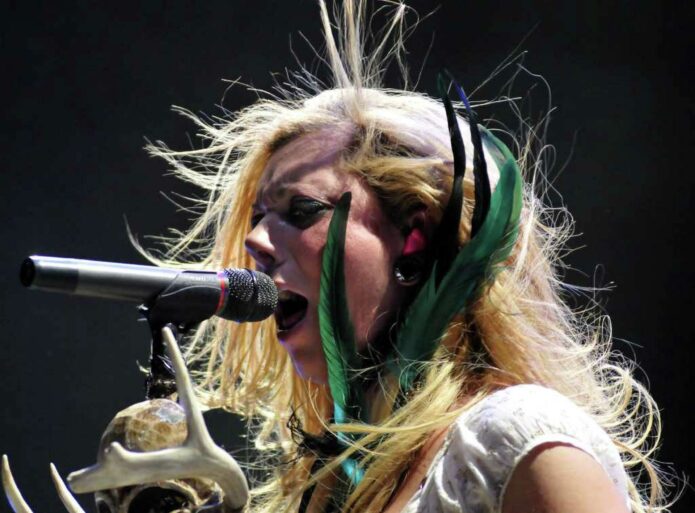
Maria Brink’s tattoos are documented across her hands, arms, neck and legs. The pieces range from a small infinity symbol linked to her son to knuckle lettering, neck symbols, a blue rose, jewel motifs, blackwork and mandalas. Tattoo listings identify many of the designs by name and placement; interviews and performance photographs add some context. The photos also show how the ink looks alongside In This Moment’s costumes and stage lighting. Metalhorizons gives a reason for the infinity symbol; most of the other tattoos are documented by appearance and placement.
Maria Brink’s Infinity Symbol and the Earliest Personal Meaning
Metalhorizons describes an infinity symbol as Brink’s first tattoo. The account says she chose it after becoming a mother so that her bond with her son would still be represented when they were apart. The design is small beside the later arm work, but its reported reason for being there is specific.
Metalhorizons calls the infinity symbol Brink’s first tattoo; the other listings don’t date the lettering, floral color, shaded areas or ornamental shapes. Concert photographs can show that a tattoo was present at a particular performance, but not when it was added.

The Believe Lettering Across Maria Brink’s Knuckles
Steal Her Style and Body Art Guru both list the word believe across Brink’s knuckles. The letters run across her fingers, so they come into focus when she turns her hands toward the camera. During a performance she may be holding a microphone or moving her hands; a photo can show the full word or catch only part of it.
Gloves and camera framing can cover the letters. Steal Her Style and Body Art Guru identify the word and its placement, but neither says when Brink got it or why she chose it.

Neck Symbols, the Heart, and the Diamond Motifs
Tattoo listings describe a heart and diamond grouping at the front and side of Brink’s neck. They identify the shapes and their placement, but stop short of saying what either one means. A familiar symbol can invite guesses; the listings do not confirm them.
In a portrait, the neck tattoos sit close to Brink’s face. Hair, collars, jewelry and stage makeup can hide their edges, while a different angle may bring them into view. They can show even when a sleeve is covered.

Blue Rose, Jewels, and the Ornamental Arm Work
The arm is the most detailed part of Brink’s documented tattoo collection. Steal Her Style identifies a blue rose at her wrist, jewel motifs on the inner forearm and black-ink sleeve work. The blue rose is the clearest patch of color; the jewel motifs add ornament, while the rest of the sleeve includes dark outlines and shading. They are separate elements, even when they appear together in a performance photo.
Body Art Guru also catalogs the jewel motifs separately from the rose and blackwork. Its description points to shapes resembling stones, settings and decorative frames. Beside the blue flower and dark shaded passages, those forms give the arm several distinct textures rather than one uninterrupted field of black ink.
The rose sits at the wrist, and the jewel motifs are on the inner forearm. A photo of Brink’s outer arm may show neither clearly; the view depends on her pose and what the costume leaves uncovered.
Loudwire’s tattoo feature offers another look at the arm ink during In This Moment performances. Concert lighting affects how the colors and outlines come through: red light can warm the skin and make a tattoo look different from one photographed under neutral light. The images place the work in the same frame as the band’s stage presentation, including skull props, red fabrics, gloves and halo-like headpieces.
The rose, jewel motifs and blackwork don’t form one flat patch of ink. In a close view, the floral shape, decorative jewel imagery and denser dark sections can be picked out separately. The available listings don’t say whether those parts were added together or over time.

Mandala Thigh Designs and Writing on the Bicep
Steal Her Style also lists mandala designs on Brink’s thighs and writing on her bicep. The mandalas add a geometric pattern to the record: their repeated lines and balanced shapes differ from the rose and jewel motifs on the arm. The listing does not give a detailed account of their meaning or when they were done.
The bicep writing is another text tattoo, separate from the word across her knuckles. The source identifies its placement but does not provide enough detail to quote or interpret the wording here. The list extends beyond the knuckles and arm: it includes another text tattoo and geometric designs, but gives little detail about either one.

How the Documented Pieces Fit Together
Concert photographs show why the visible record changes from one image to another. A sleeveless top can leave the forearm exposed; a glove may cover the knuckles; a cape, hair or collar can hide part of the bicep or neck. A close crop might show a small section clearly, while a full-stage image makes the same tattoo hard to distinguish. Lighting adds another variable, especially for the blue rose and the dark shading.
The listings name the designs and give their locations. Metalhorizons adds the family connection for the infinity symbol; the concert photos show how the tattoos appear with Brink’s stage clothes and lighting. The images can’t tell us when each piece was done or what she meant by it.
The Visual Record Over Time
The documented set includes the son-linked infinity symbol, “believe” across the knuckles, heart and diamond shapes on the neck, a blue rose at the wrist, jewel motifs and blackwork on the arm, thigh mandalas and writing on the bicep. The sources do not explain every tattoo to the same degree. The infinity symbol has a reported family connection; most of the other entries are descriptions of design and placement.
The photos are snapshots rather than a complete inventory. A tattoo can be clear in one image and hidden in another; a new angle doesn’t mean the design itself is new. The listings and interview account provide the details available, while the meaning of the other pieces remains unreported.