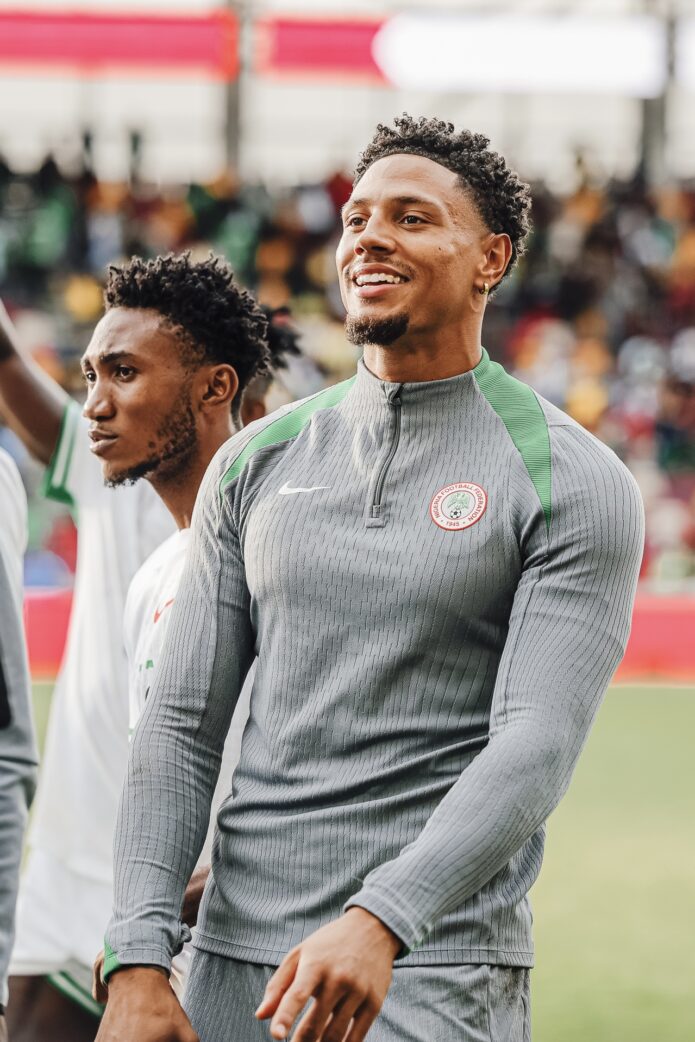
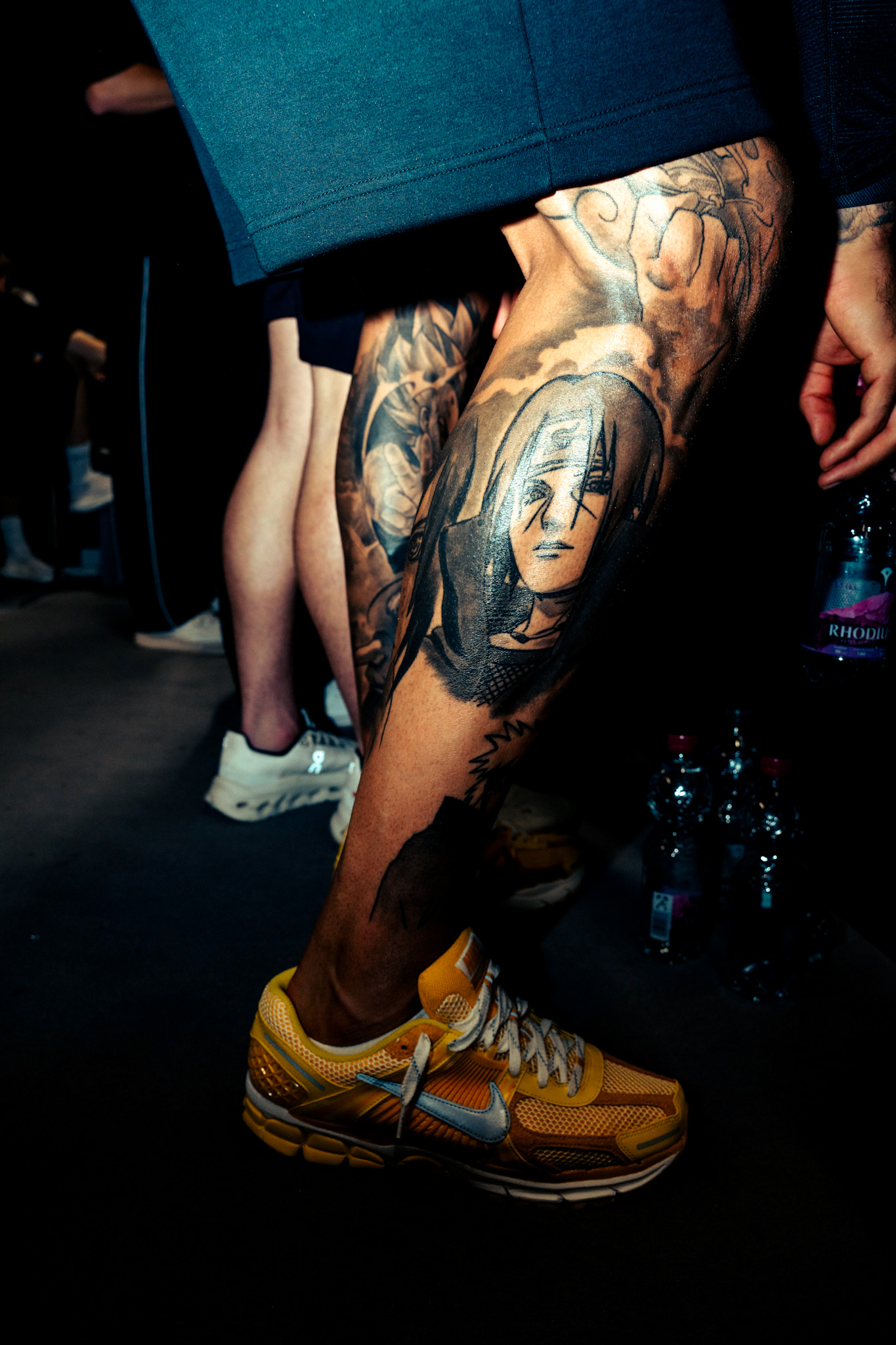
Most match photographs show Maduka Okoye in goalkeeper kit, so they reveal little of his tattoos. Three other images give a clearer look: an official-gallery close-up of an Itachi portrait on his lower leg, a lifestyle photograph with more leg ink visible, and an Udinese profile where a mark sits beside his ear and cheek.
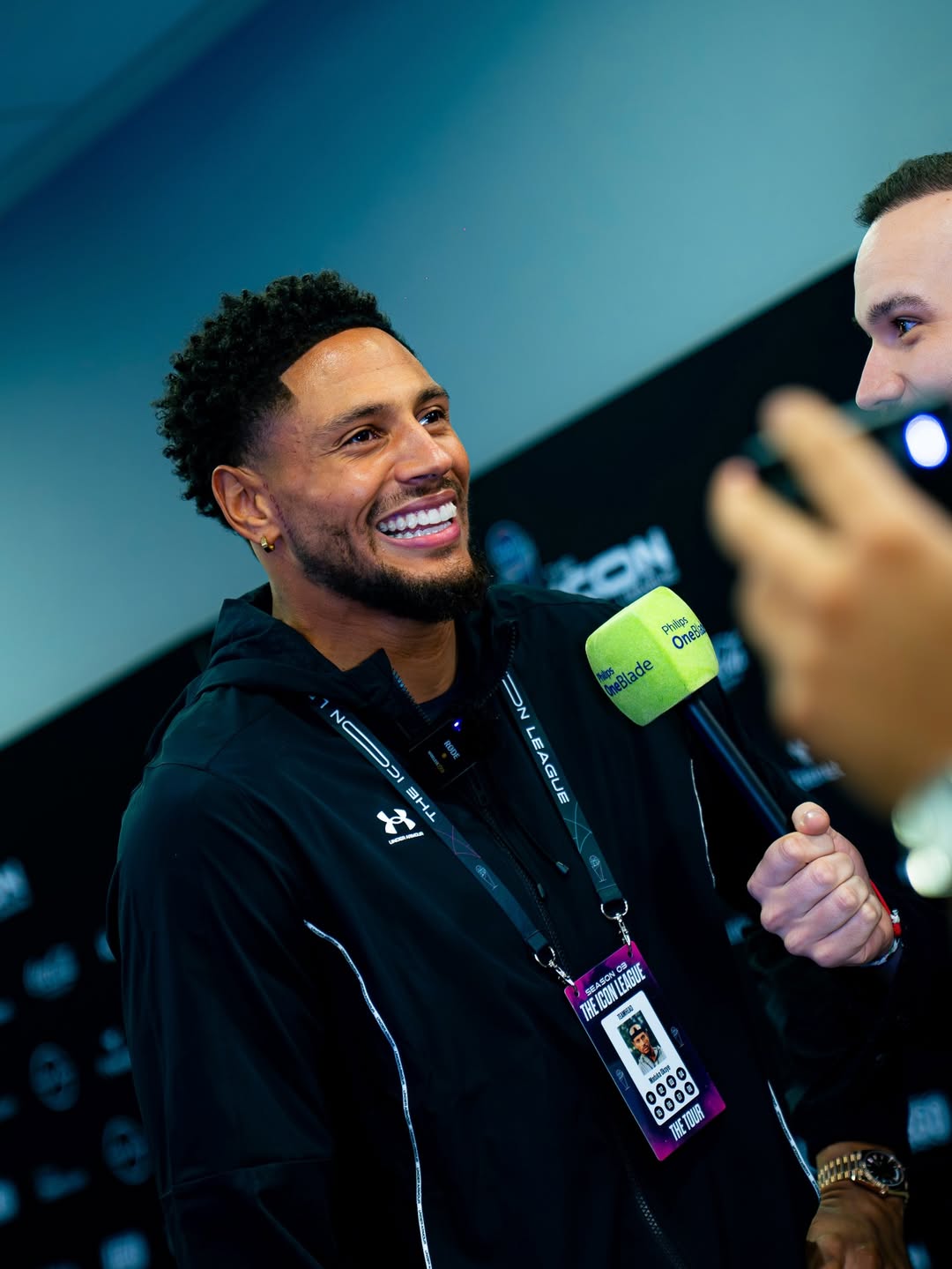
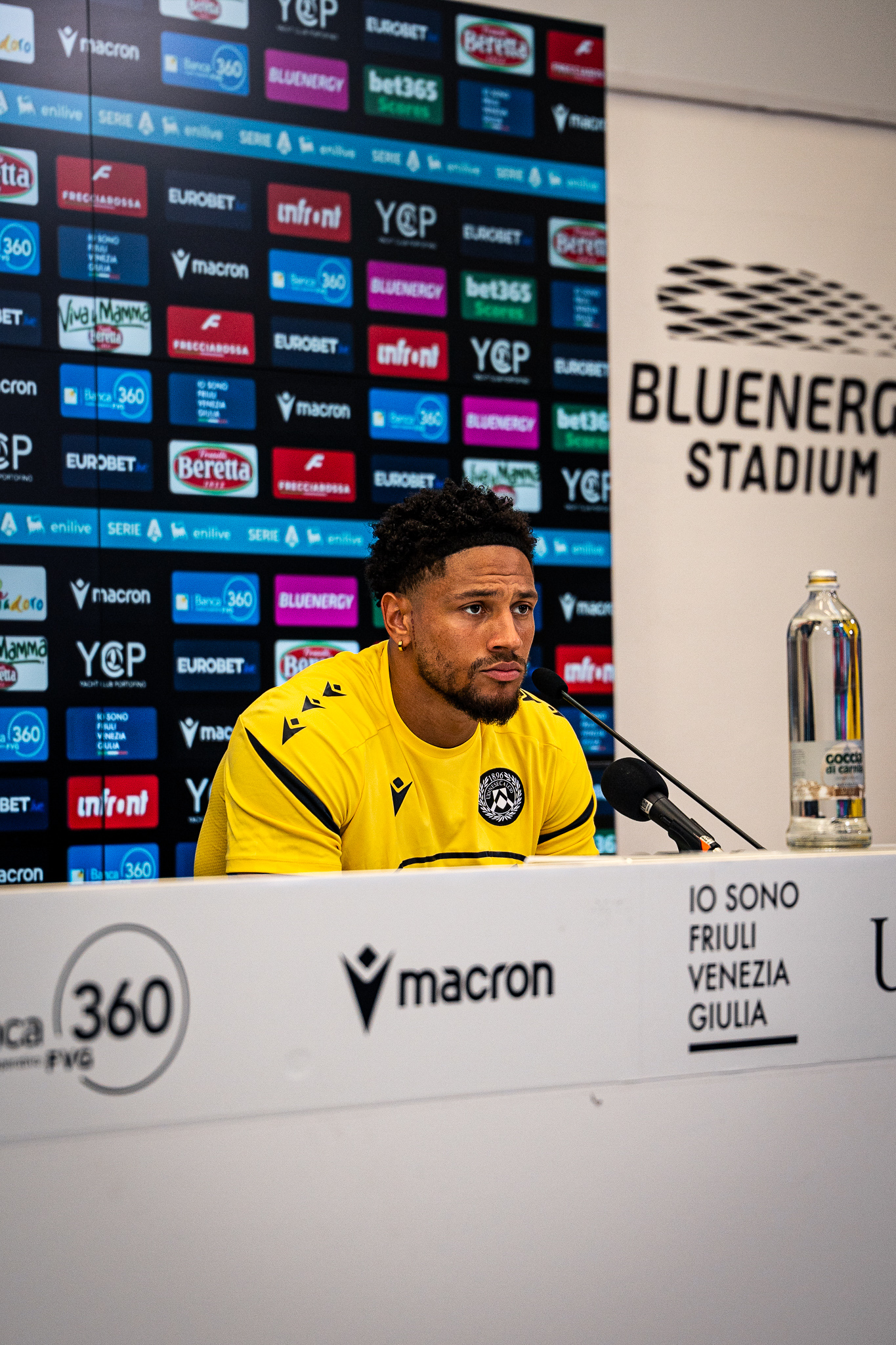
There are also two official portraits in the article, from an Icon League interview and a press conference. They help identify Okoye and place the tattoo photos in context, but they don’t show the tattoos. His official website describes him as a fan of Naruto and One Piece; the gallery itself labels the close-up as “Itachi Tattoo.” Reports also discuss a number 40 chest tattoo and “Oberbilk” on his back. I’ll keep those reports distinct from what the photos show.
The Itachi tattoo on the leg
The official gallery’s “Itachi Tattoo” image is the clearest tattoo photograph. It shows a large anime portrait on Okoye’s lower leg, with the character’s face and hair outlined in dark ink and shaded areas giving the image depth. The framing keeps the portrait central, so its expression and contrast stand out more than the rest of the leg.
The portrait reads mainly in black and grey: pale highlights across the face, fine lines around the features, and heavier dark shading in the hair and along the lower edge. That contrast gives the character more depth than a simple outline would. Other ink is visible higher on the leg, but the photo doesn’t resolve those pieces clearly enough to identify them. It also doesn’t show the whole leg or establish that this is his only tattoo there.
Okoye’s official website says he follows anime, including Naruto and One Piece. That gives some context for the gallery’s label, but it doesn’t explain what the tattoo means to him or connect every other design to anime. The gallery identifies the subject as Itachi; that is the part the source confirms.
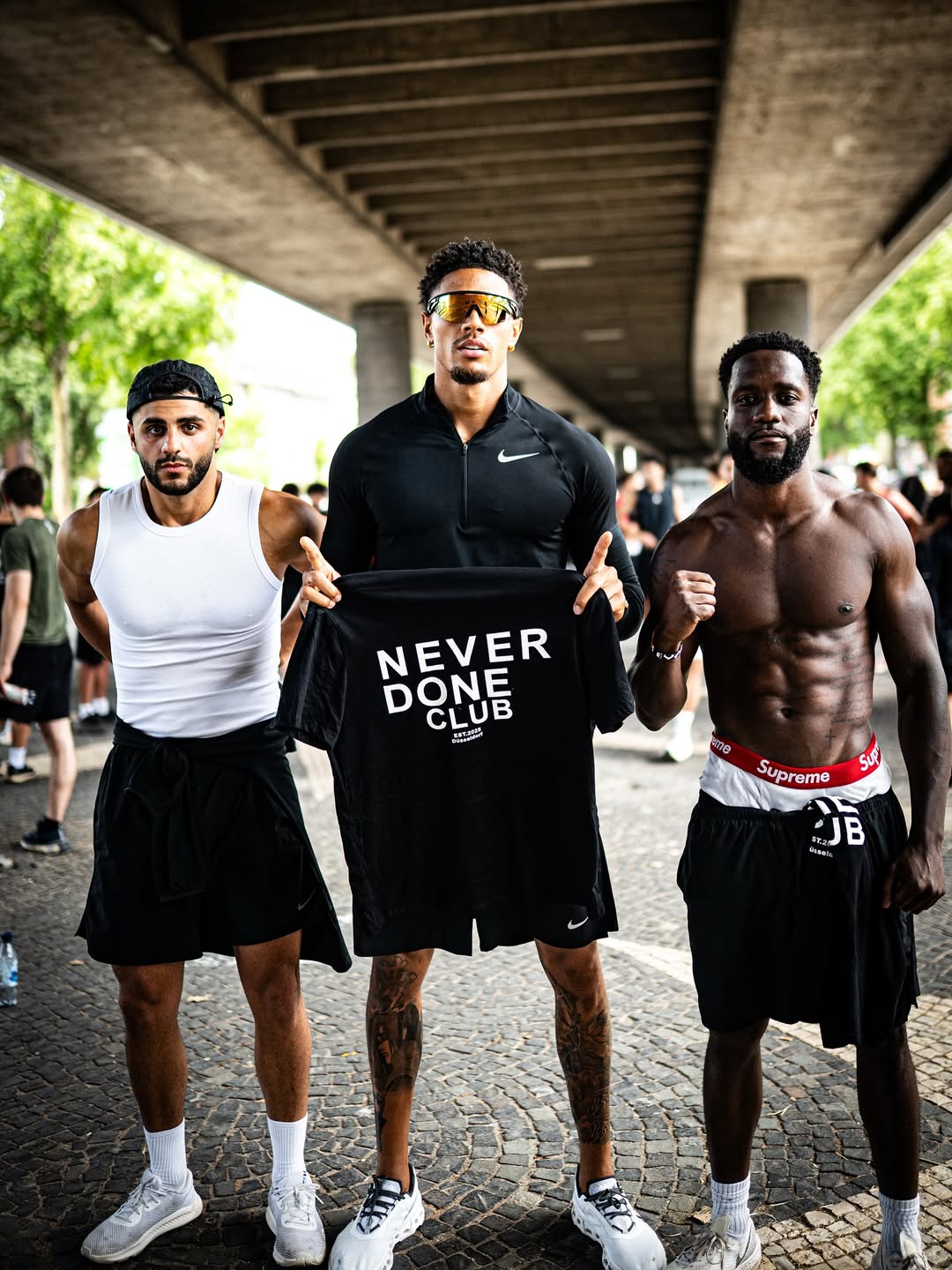
Leg tattoos in the lifestyle frame
The Never Done Club lifestyle photo gives a wider look at Okoye’s legs below his shorts. Unlike the Itachi close-up, this frame isn’t built around one tattoo. It shows more ink in relation to his shorts, socks and stance, making the visible coverage easier to judge even though the details are smaller in the picture.
The two views answer different questions. The gallery image lets you study the character portrait; the lifestyle frame shows that there is other leg ink beyond that single close-up. At this distance the designs read as dark forms against the skin, but their outlines and any color details are too soft to identify. The photograph is useful for placement and scale, not a full catalogue.
Clothing changes what a football photo reveals. Match shorts and long socks can cover much of the lower leg, while a lifestyle image leaves more skin visible. That difference in coverage explains why the same collection can look limited in one setting and more extensive in another.
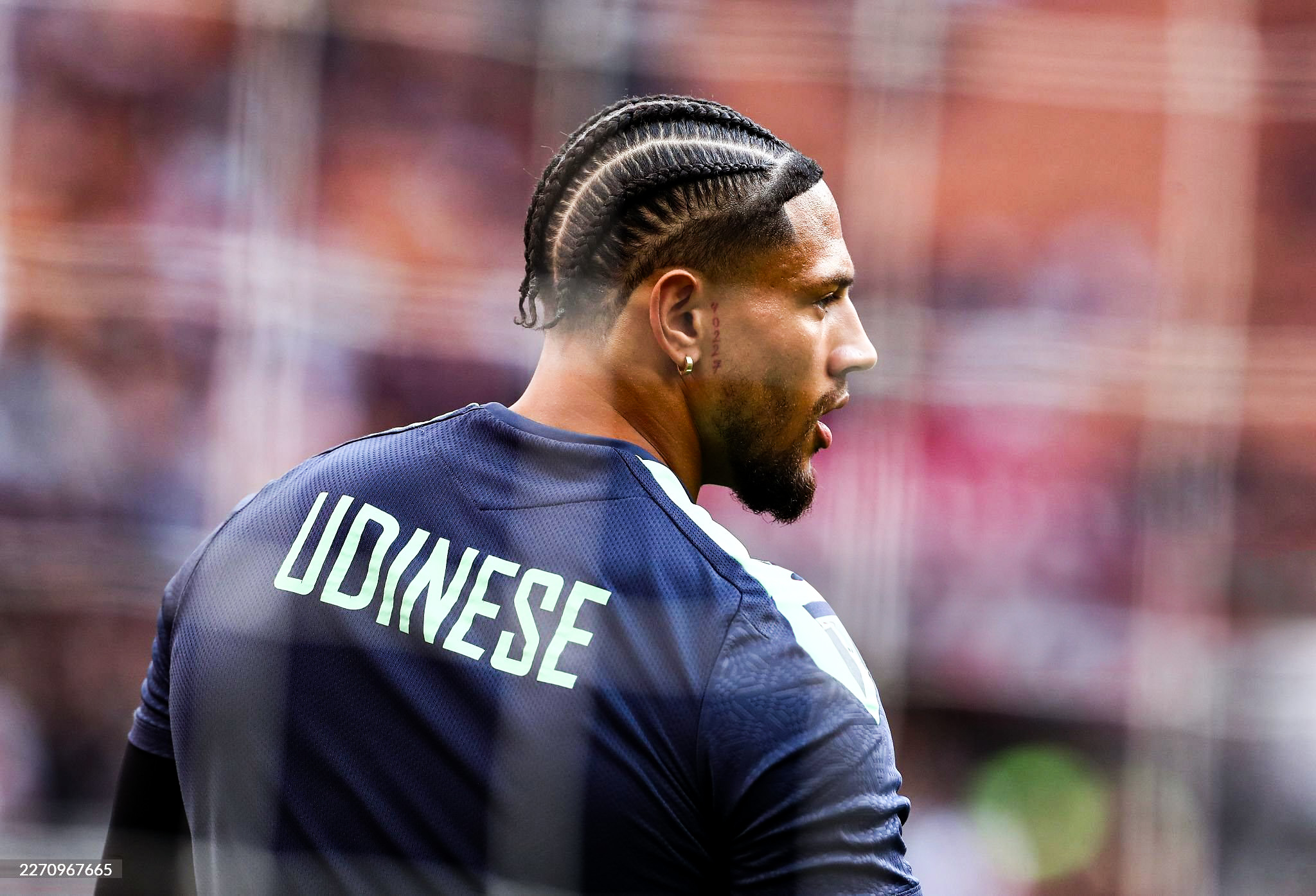
The face-side tattoo in profile
An Udinese matchday photo catches Okoye turned partly away from the camera. A narrow, reddish vertical mark is visible beside his ear and along the cheek. It runs down the side of his face, a very different placement from the larger leg portrait. The image doesn’t make the lettering readable, and his shirt covers the rest of his body.
The profile angle is what makes the mark visible. In a straight-on portrait, the ear and side of the cheek can be hidden; here they face the camera while the blurred stadium background falls away. The image supports a description of its position and orientation, but it does not provide a meaning or a clear reading of any small detail.
Because this is face-side ink, even a small mark changes the overall impression of a portrait. The photograph keeps it visible without making the tattoo the only subject: Okoye is still in a football setting, looking toward the action rather than posing for a close-up.
How the photographs fit together
The tattoo images come from three different settings: the official gallery’s Itachi close-up, a Never Done Club lifestyle frame and an Udinese matchday profile. Each shows a different area, and none repeats the same view. This gives the article a useful range, from detailed leg work to a face-side mark.
Two more images from Okoye’s official gallery sit alongside them. One shows him during an Icon League interview; the other is a press-conference portrait. Both show his face and public profile, but the clothing covers the skin. They add context to the page without being presented as evidence of a tattoo.
The photos also differ in how much detail they offer. The Itachi portrait is close enough to show line and shade; the lifestyle frame includes more of the legs but less detail in each design; the profile photo isolates the facial placement. A change in angle or clothing changes what is visible, not the tattoo itself.
What remains uncertain
The three tattoo photographs show the Itachi portrait, other leg ink and a mark beside the ear and cheek. They don’t establish a complete count, and none shows Okoye’s arms, hands, chest or back clearly. The two official portraits don’t fill those gaps because the clothing covers those areas.
Published reports add two more details. In 2024, the Nigeria Football Federation titled an interview around Okoye’s special number 40 chest tattoo. A 2025 Pulse Sports report described a back tattoo reading “Oberbilk,” the Düsseldorf district where he was born. Those reports are useful context, but neither turns the interview portrait or press-conference image into a photo of his chest or back.
Color and smaller design details are also hard to judge across the available pictures. The Itachi close-up makes its dark outlines and shading visible, while the wider leg and profile shots are less detailed. I can’t confirm a complete palette or read every mark from these images, so I won’t assign a color or meaning where the source doesn’t support it.
How the visual record was assembled
The article draws on Okoye’s official gallery, the Never Done Club lifestyle photograph, the Udinese matchday image, his official profile and published reporting from the NFF and Pulse Sports. The three tattoo-bearing photos were kept separate from the two neutral portraits so readers can tell which images show ink and which only identify him.
The gallery close-up, lifestyle frame and matchday profile each add a different view. Reposts or collages that repeat one of those images don’t add another angle, so they aren’t treated as separate evidence. The selected photos are enough to describe the placements they actually show without stretching them into a complete body map.
What the record says about placement
In the photographs, the most specific landmarks are the lower leg, the area below the shorts and the side of the face beside the ear and cheek. The Itachi portrait occupies a larger patch of skin; the lifestyle frame shows additional coverage in a wider composition; and the profile tattoo is a narrow vertical mark. This is the extent of what the photos establish.
The visual styles vary in scale. The Itachi design uses a character portrait, dark outlines and shaded sections; the lower-leg photo shows more ink but not enough detail to name each motif; and the face-side mark reads as a slim line beside the ear. The images don’t provide a dependable color breakdown. Their contrast and sharpness vary with the photo, so I’m describing the forms rather than guessing at the pigment.
The reports supply meanings and placements that are not shown in the selected tattoo photos: the number 40 on the chest and the word “Oberbilk” on the back. The embedded NFF conversation adds context to the chest tattoo, but the photo sequence remains about the lower leg and face-side mark. Keeping those sources apart makes the guide easier to follow.