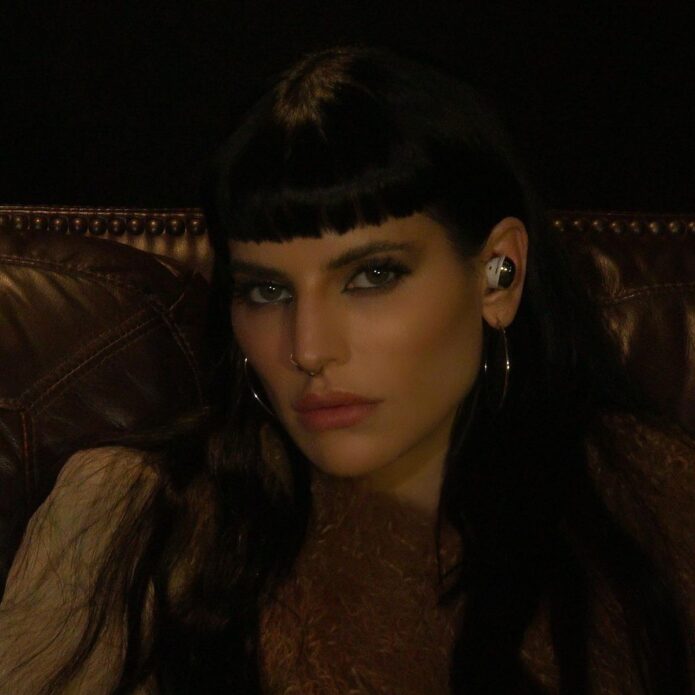
Lilith Czar, who used the name Juliet Simms earlier in her career, has visible tattoos across her arms, wrists and hands. In portraits and stage photos, script, symbols and shaded designs sit beside one another. The collection looks like it grew over time, rather than being planned as one matching sleeve.
Older coverage under the Juliet Simms name records pieces such as the Andy lettering and a snake cover-up. Newer Lilith Czar portraits show that ink as part of her current image. Those sources help with the history, but a photo can only show the design and where it sits. When a meaning hasn’t been confirmed, it’s better to leave it open.
The five images below show her arms and hands in posed portraits and onstage. The lighting and poses make some marks easier to see than others.
The arm tattoos read as a collection of separate chapters
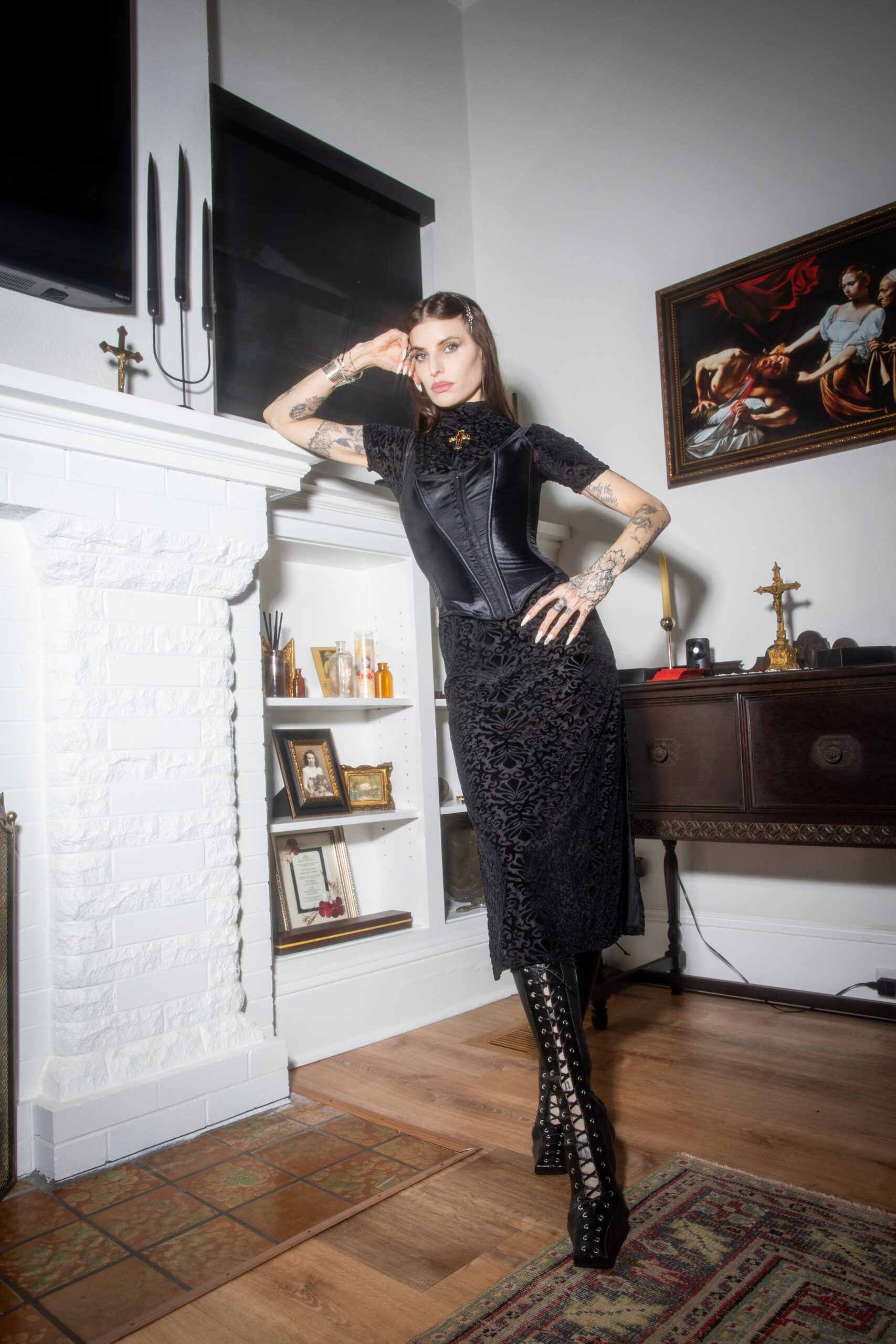
The Pretty Cult portrait shows both arms at once. There is script, shaded artwork and small symbols, but the pieces don’t form one perfectly matched sleeve. The scale changes from upper arm to forearm and hand, and some details soften in the light.
Czar has talked about tattoos as part of her change from Juliet Simms into Lilith Czar. Inked Magazine also described the collection in that context. The photos support a connection between her body art and the new persona; they don’t show that every tattoo was planned around one theme or added at the same time.
Black lines sit beside areas of open skin, so the separate pieces remain visible instead of blending into a solid block. The lettering is easier to follow because there is space around it, even in a smaller image.
Hand and wrist tattoos keep the smallest marks in view

Her hands appear beside her face, at her waist and across her arms, so the smaller tattoos often show up in close portraits. The Pretty Cult photo gives a clear look at lettering and fine marks from the fingers through the wrist and toward the forearm.
Jewelry and nail art can be hard to separate from tattoos in a posed image. Here the sharp focus helps, though the photo still can’t tell us why she chose a particular design. Sometimes the soundest description is just its placement: script on the hand, small marks near the fingers, or lines across the wrist.
Hand ink gets a lot of wear from washing, movement and friction. Czar’s visible pieces have enough contrast to show up when her fingers are spread or held against her face. Their placement gives the collection a rougher edge than a mark hidden under a sleeve.
The close photos also show why scale matters on the hand. A small design needs a clear outline, and its placement should still work when the fingers bend.
Stage photography shows how the ink moves with the performance
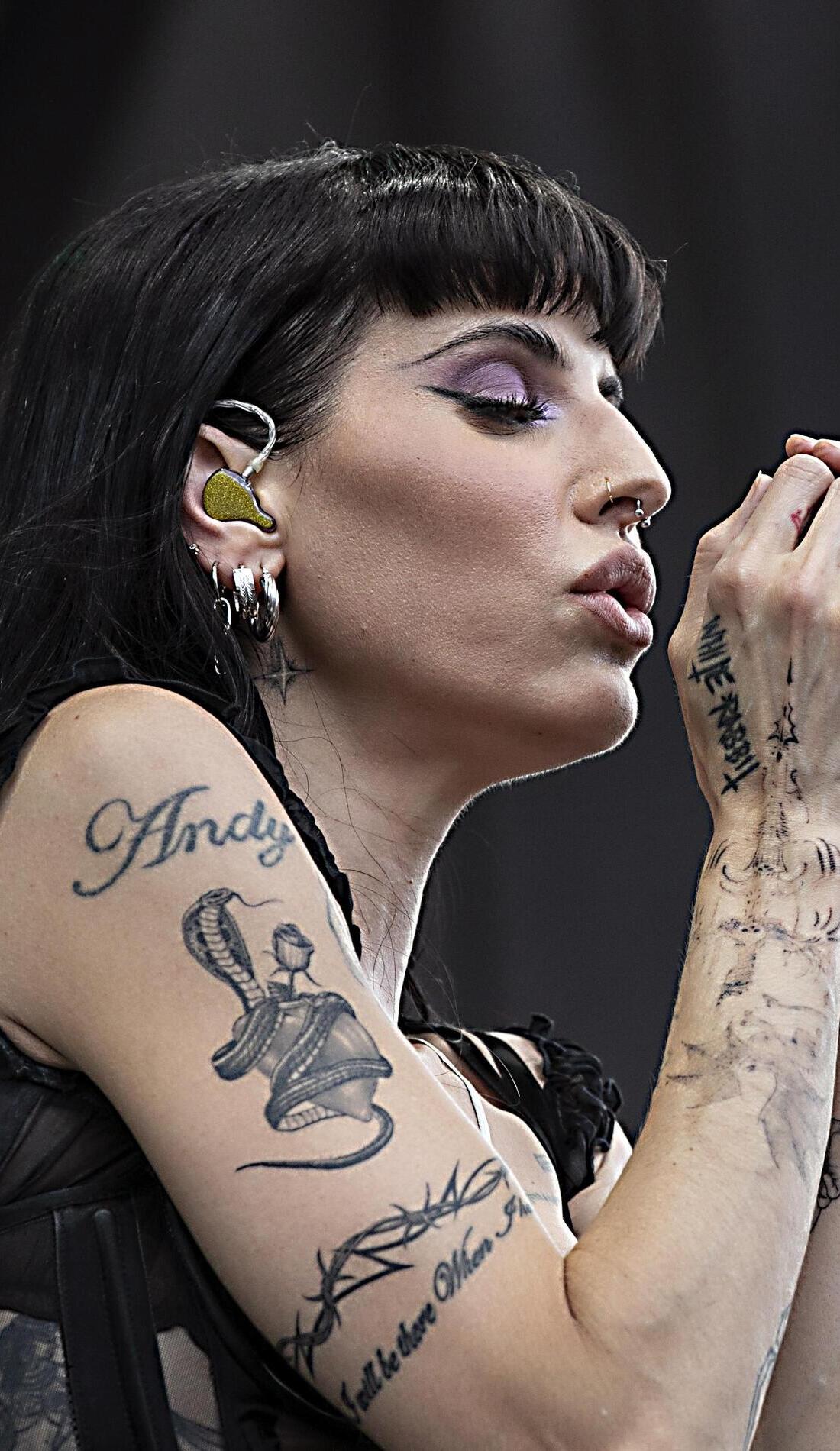
The SeatGeek stage portrait catches Czar mid-performance, with her arm angled toward the camera. The visible lettering, curved lines and darker shapes sit inside the gesture. As her elbow bends and her hand reaches into the light, the designs read differently than they do in a still portrait.
The word Andy is visible on the upper arm, alongside a snake-like design and other ink running toward the forearm. Older coverage under the Juliet Simms name records an Andy tattoo and a snake cover-up, along with pieces connected to her relationships and music. The stage photo shows where the ink is; that reporting supplies some of its history.
Live photos are harder to read. Colored lights can change how black ink looks, and a microphone, hair or moving hand may cover part of a design. This image is useful for seeing how the tattoos appear in performance, while the editorial portraits show finer details.
The larger outlines remain visible as Czar moves, which keeps the arm work prominent onstage.
The Inked portrait connects the tattoos to the Lilith Czar reinvention

Inked Magazine’s portrait puts Czar upside down against a red background, with both forearms and parts of her upper arms in view. Script, symbols and smaller marks are clear against the skin.
The pose is dramatic, but it doesn’t obscure the tattoos. Her arms are close to the camera, and the contrast keeps the lines from turning into a blur. A creative portrait can still be useful reference when the focus is sharp.
Inked described tattoos as part of Czar’s change from Juliet Simms. That gives the collection a place in the story she has discussed publicly, but it doesn’t tell us the meaning of every mark or identify the artist behind each one.
The red background also separates the black and grey details. You can follow the pieces from wrist to elbow, while the limits remain clear: the image shows their appearance, not the private reason for each tattoo.
Finger and hand details add a darker close-up layer
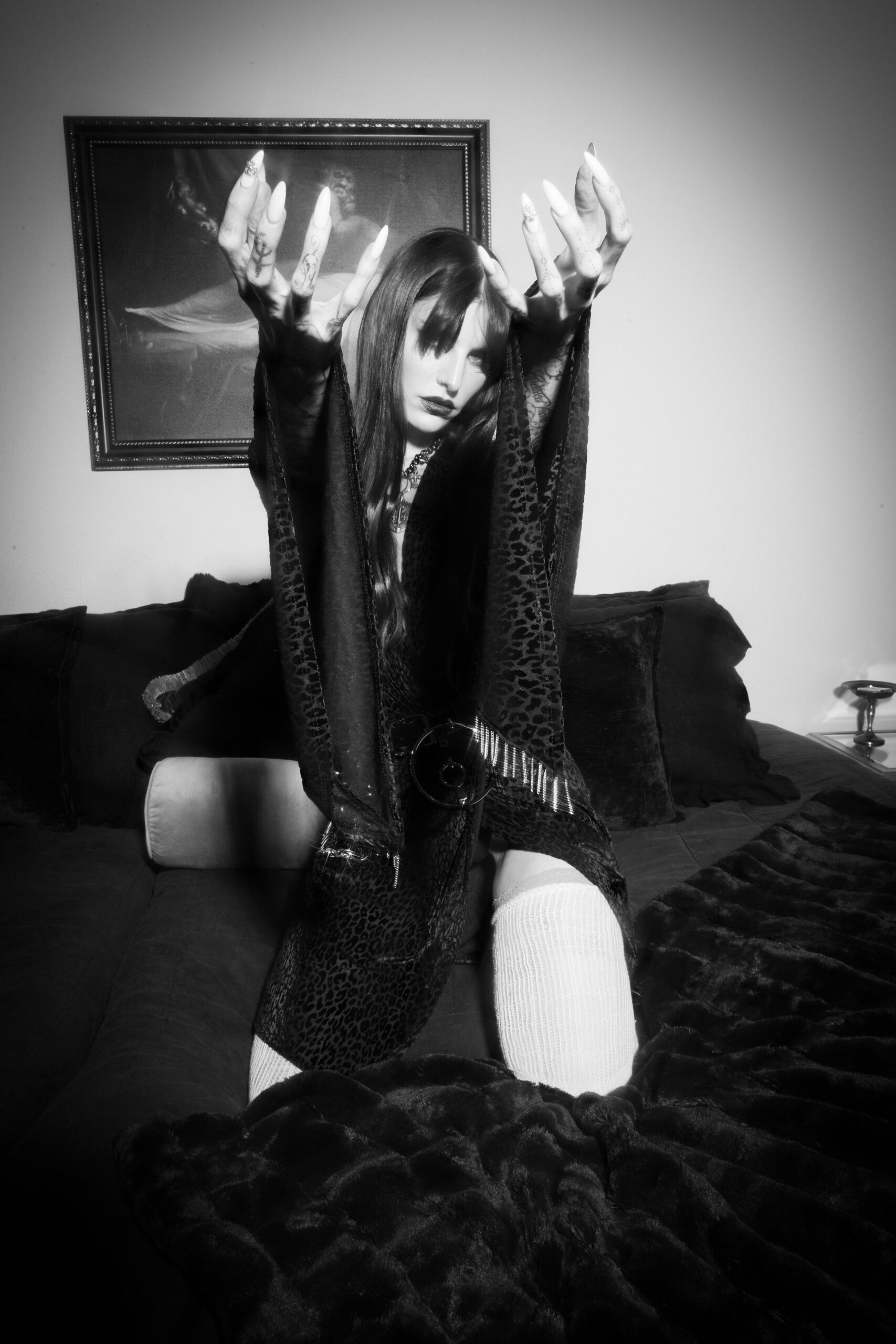
This black-and-white Pretty Cult portrait puts Czar’s hand close to the camera. The finger and hand marks are easier to see than in a full-body shot, and they can be compared with the color portrait above.
Without color, shape and contrast take the lead. The designs look more graphic against her skin and dark clothes. That doesn’t establish that every tattoo is black ink; it shows how much the line and silhouette matter in this photograph.
The marks remain in similar places across the different portraits, which makes them easier to distinguish from shadows or stage styling. The large arm pieces establish the overall look; the smaller finger marks break it up.
For comparison, see the site’s musician tattoo guides. Czar’s hand ink can be described from the photos, while any personal meaning should come from her interviews or an artist’s account.
The clearest details in this set are the arm script, hand marks and the way the tattoos show up onstage. Older Juliet Simms coverage names more pieces, but it doesn’t mean they were all added together or belong to a single new Lilith Czar design.
That earlier record includes a heart and dagger, a panther, a snake, an eagle, the words I carry the fire, a feather, a rose and other lettering. Those designs are part of the history Czar carried from the Juliet Simms years; the photos here don’t date them to one period.
Some pieces have been linked in coverage to music, family, friendship or relationships. Others are designs she worked out with an artist. Inked quoted her describing the tattoos as original and well thought out. That says something about her approach, but it doesn’t supply a public explanation for every symbol.
The photos do different jobs: the portraits show placement and smaller details; the stage shot shows the ink in motion. Together they give a fuller view than a single red-carpet image, without turning the gallery into a catalogue of guesses.
Czar’s body art is a collection that has changed with her. The arms give it its broad shape, the hand tattoos keep appearing in close poses, and the stage photo shows how the designs sit while she performs. Older Juliet Simms pieces add history to the current Lilith Czar look.
If you’re using the photos for ideas, notice how script sits beside shaded work and how hand marks continue toward the forearm. The useful reference is the placement and scale; copying a symbol won’t carry the story that made it hers.
One thought on “Lilith Czar Tattoos: Script, Symbols and Arm Ink”