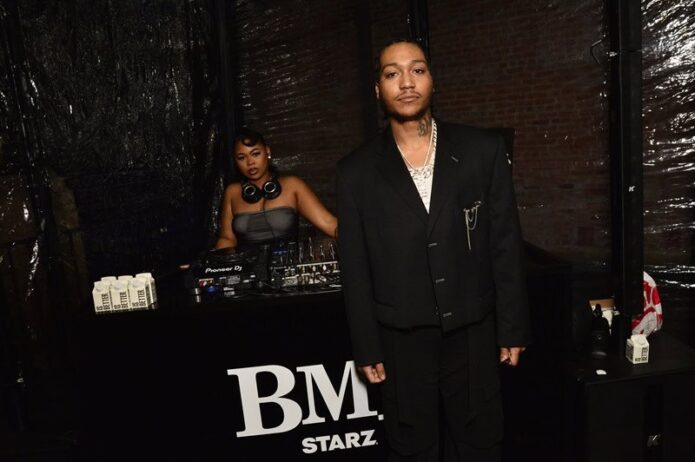
Lil Meech’s tattoo collection is closely tied to family, loyalty and the BMF story, but it goes beyond one famous neck design. Portraits, lettering, symbols and blackwork spread across his upper body. Some tattoos are clear in photos; others make more sense when he explains them. His GQ Tattoo Tour is especially useful because Meech walks through the designs rather than leaving viewers to guess.
The BMF neck tattoo connects Lil Meech to his father’s story
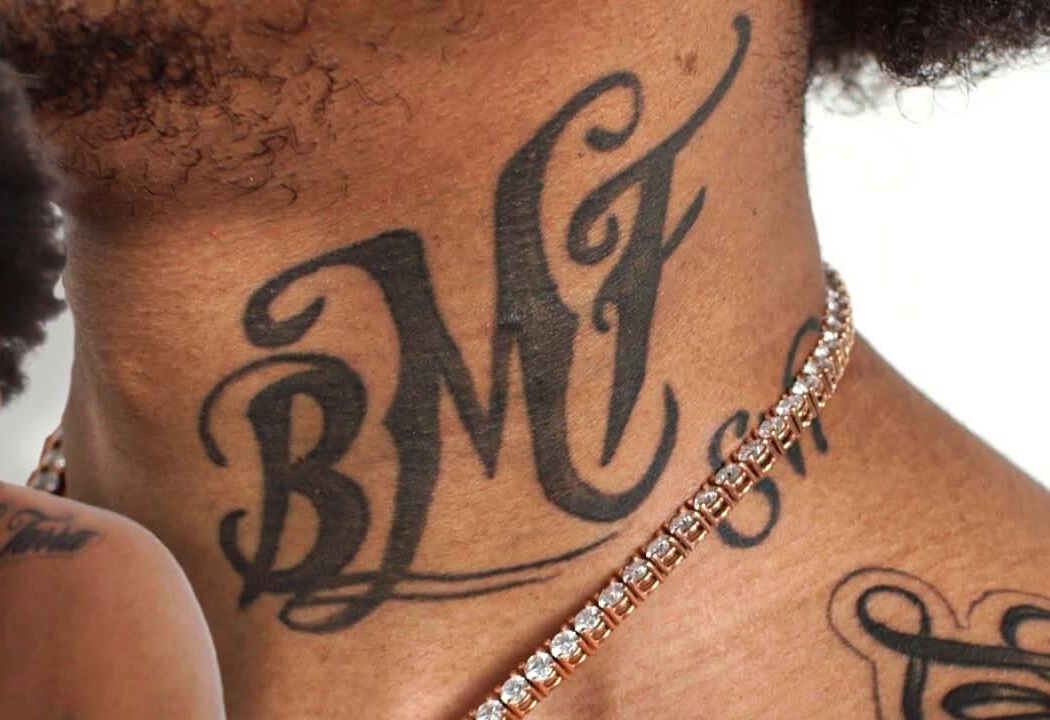
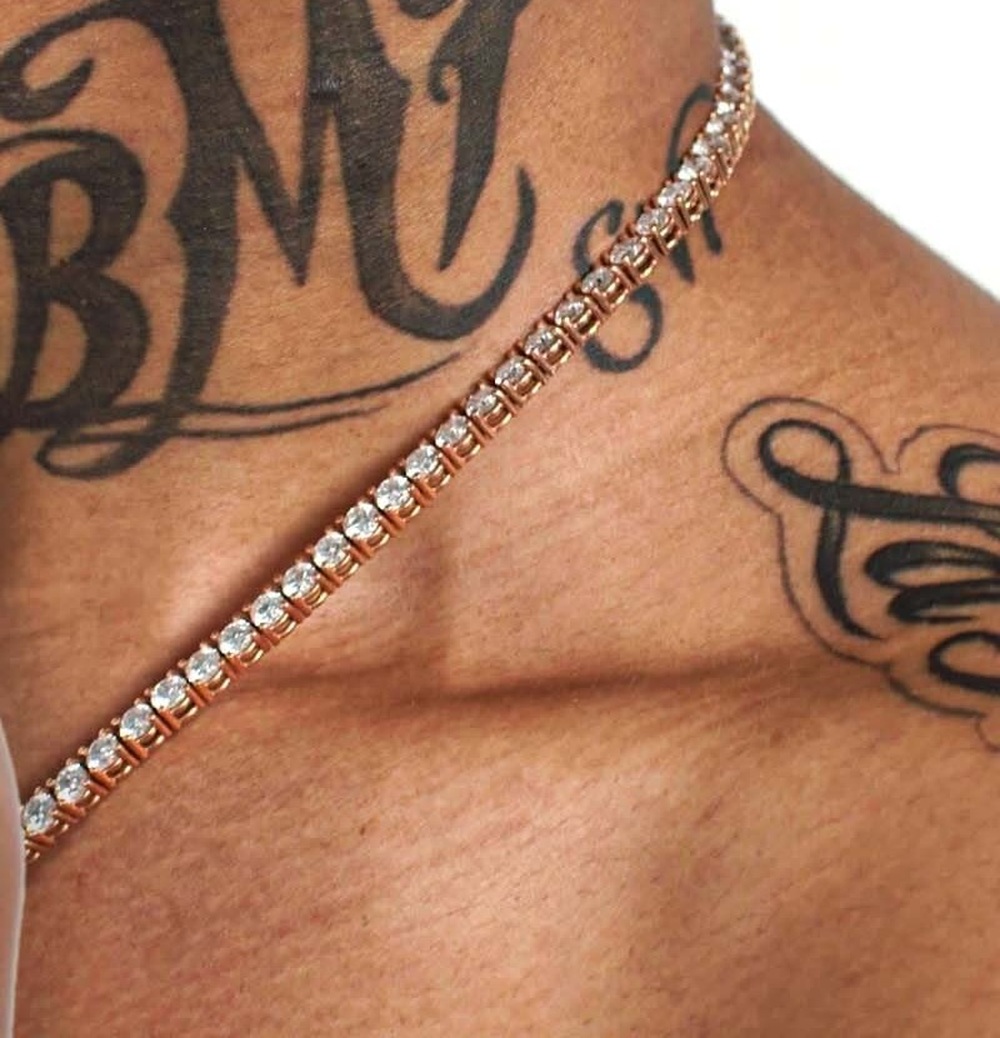
The BMF neck tattoo is the first design many people notice. In GQ’s tattoo tour, Meech says the initials stand for Black Mafia Family, the organisation associated with his father, Demetrius “Big Meech” Flenory. The letters do not require a puzzle-like interpretation: he explains what they mean, and the neck placement makes the connection visible.
He has also said the tattoo became awkward once he started acting. Covering neck ink for a role takes more time and makeup than hiding a design on an arm or shoulder, and Meech has admitted regretting the placement for that practical reason. It is both a proud family reference and a tattoo that can complicate certain jobs.
The heavy lettering is meant to be seen. It sits high enough to show above a shirt collar in some photos and quickly became part of his public image. It also gives the collection an anchor point. Later tattoos may appear beside the BMF letters, but the neck piece remains one of the defining designs.
His mother and Big Meech were his first tattoos
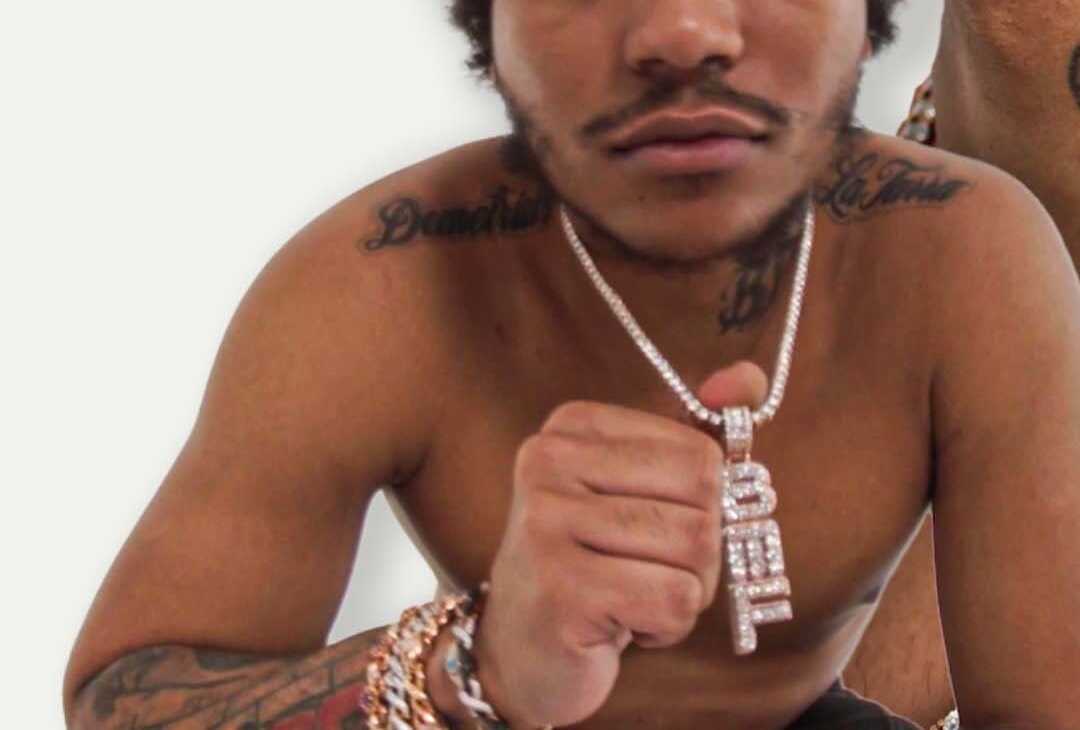
Meech says his first tattoos were for his parents, and he places them around age fifteen or sixteen. They came before he was famous, before the BMF television series and before his family story became a major part of public coverage.
The portraits of his mother and father turn his upper body into a family record. Portraits are demanding tattoos: small differences in the eyes or mouth can change how the likeness reads. In the Tattoo Tour, the faces sit among lettering and other blackwork instead of appearing as isolated flash designs. The surrounding ink makes them feel like part of a personal collection of references.
Meech speaks about his parents with affection, but the photo does not explain every line around the faces. The clearest point is that these are family tributes, and Meech identifies who they represent. There is no need to invent another story for every shadow or decorative mark.
The portraits also show how his style developed. The early designs can look separate from later tattoos because they were added at different times. That does not make the collection a mistake; it shows a teenager beginning with the people closest to him and adding to it as his life and career changed.
The lion and boss of all bosses pieces honour Big Meech
The lion tattoo is one of the collection’s strongest images. Meech says he sees his father as a lion and a king, so the animal is a direct tribute rather than a generic sign of toughness. He has said the tattoo took around six or seven hours, which gives a sense of its scale.
A lion can carry any number of meanings when taken out of context. Meech’s explanation makes this one more specific: it represents his father, Big Meech, and his place in the family story. The image remains a lion, but the personal meaning comes from the way Meech describes his father.
Nearby lettering includes “boss of all bosses,” another phrase he connects with Big Meech. On its own, it sounds grand; here, Meech says it is language he grew up hearing about his father. The words and animal work together while remaining different designs.
The combination gives the upper body a clear rhythm. Portraits draw attention to faces, while the lettering creates longer lines across the skin. A distant photograph cannot show everything: a close crop helps with the words, and a wider view shows how the designs sit together.
Death Before Dishonor and Blood Makes You Related tattoos
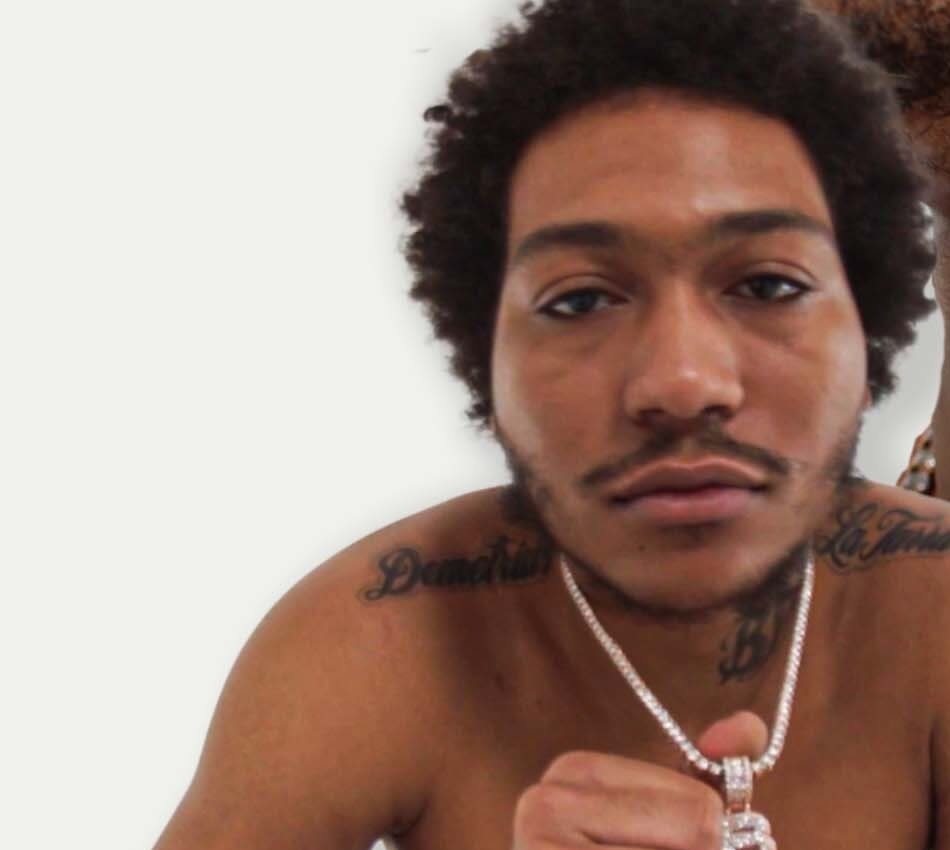
Loyalty is another recurring idea in Lil Meech’s tattoos. In the GQ tour, he points out the words “Death Before Dishonor”, often shortened to DB4D in tattoo coverage. The phrase is blunt and easy to read; its wording already makes the value clear without needing a long symbolic explanation.
Another line reads “blood makes you related, loyalty makes you family.” It sits naturally beside the family portraits and BMF references. The sentence offers another view of family, based on how people treat one another as well as genetics. Meech’s own comments are enough to explain why it matters to him.
These phrases are a good example of reading tattoos from more than one source. The photo shows the wording and approximate placement; Meech provides the context. Neither should be stretched into an explanation of unrelated designs. A readable sentence can stand on its own.
The lettering is bold enough to show in event photos, but smaller details may disappear beneath shadows or jewellery. The close-up image earns its place here: readers can check the letter shapes instead of relying only on a typed transcription.
Zasa Lil Zippo and the tattoos that are harder to cover
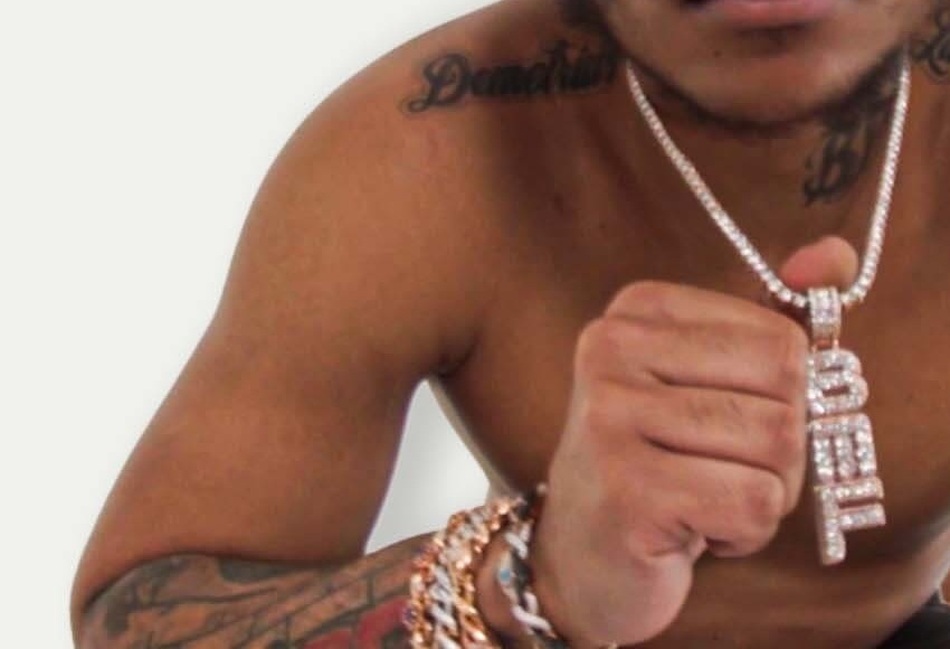
Some of Meech’s more personal labels are small. He discusses “Lil Zippo”, a nickname connected with his father, and “Zasa,” a name associated with Big Meech. These pieces are less immediately striking than BMF on his neck, but add detail to the family story.
Nicknames have a different feel from portraits. A portrait shows a face; a name can be an intimate reference that is now visible to everyone. A wide photograph may establish the lettering, but a closer crop helps readers see its style, spacing and exact position.
Meech also talks about the practical side of tattooing his neck, elbow and side. Some areas are awkward to heal and difficult to cover while working. That does not identify a new tattoo by itself, but it helps explain why his collection looks different in different photos. Skin angle, healing and clothing all affect what the camera captures.
Together, Lil Meech’s tattoos circle around parents, Big Meech, BMF, loyalty and family names. The designs are not interchangeable: the BMF lettering marks a public identity, portraits honour his parents, and the lion and “boss of all bosses” lettering pay tribute to his father in different ways. Loyalty phrases state values, while Lil Zippo and Zasa preserve names connected with his family.
It is best to keep those pieces distinct. Meech has explained many of the central designs, so there is no need to invent symbolism for the rest. The photos show the tattoos and the GQ tour provides context. Different views help readers understand the whole collection.
Small details can be hard to catch in a quick gallery. The neck lettering shifts when Meech turns his head; a chain can cross a portrait; dark clothing can hide the edges of a shoulder piece. A wider frame shows how the tattoos fit together, while close-ups make the words and lines easier to check.
That approach keeps the guide grounded. Meech repeatedly describes his tattoos in terms of family, so it is fair to call them family-centred. But an unclear mark beside a portrait does not need a made-up story. The designs are compelling on their own, and the best photos give readers room to see them clearly.
One thought on “Lil Meech’s Tattoos Carry BMF, Family and Loyalty Stories”