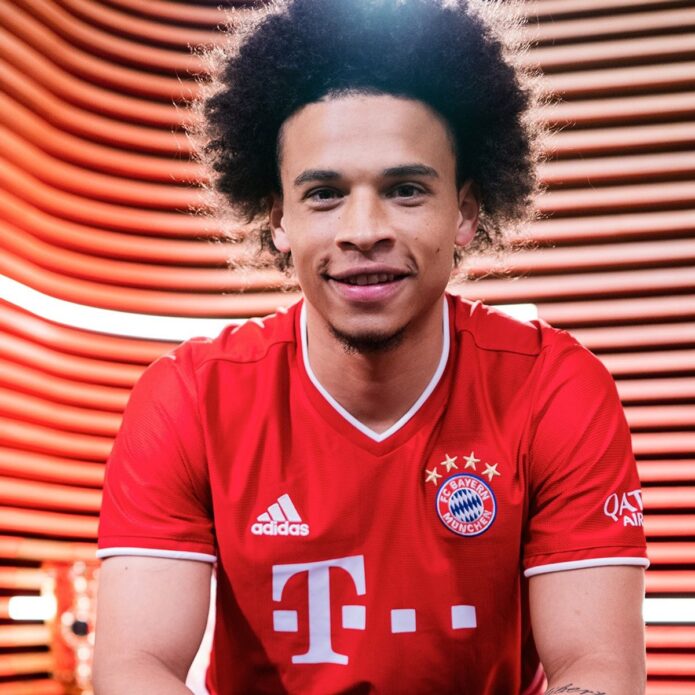
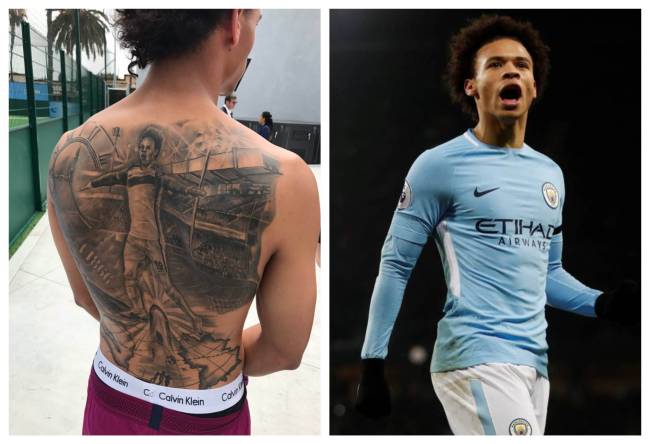
Leroy Sané’s tattoos are hard to miss, but one design gets most of the attention. His enormous back piece shows a football celebration in detail: a stadium, floodlights, a clock and Sané with his arms spread. A shirtless photo of it tends to become a headline.
There’s more to his collection: family words across his chest, Roman numerals on his forearm, French lettering on his upper arm, initials near his wrist and a simple ring on his finger. The back piece is the spectacle; the smaller tattoos are more personal.
Sané has also said he regrets the huge back tattoo. That adds another layer to the story. Ink can hold on to a brilliant moment, but it can also preserve a version of you that no longer feels like you. Here’s what’s been reported about the main pieces.
The huge back tattoo captures Sané’s breakthrough
The full-back design shows Sané celebrating in front of a stadium, arms stretched wide. It recreates his goal for Manchester City against Monaco in the Champions League. With so much detail, it looks more like a sports poster than a small tattoo.
He’s wearing his number 19 shirt, with the stadium and a large clock behind him. There are also a world map and pitch details lower down. The image holds the goal, the crowd and the feeling of a career moving forward in one frame.
Body Art Guru reported that Sané sat for four painful days to get the piece. It was a major project, not a quick appointment between matches, built around a moment that clearly mattered to him at the time.
The goal celebration is the tattoo’s centre
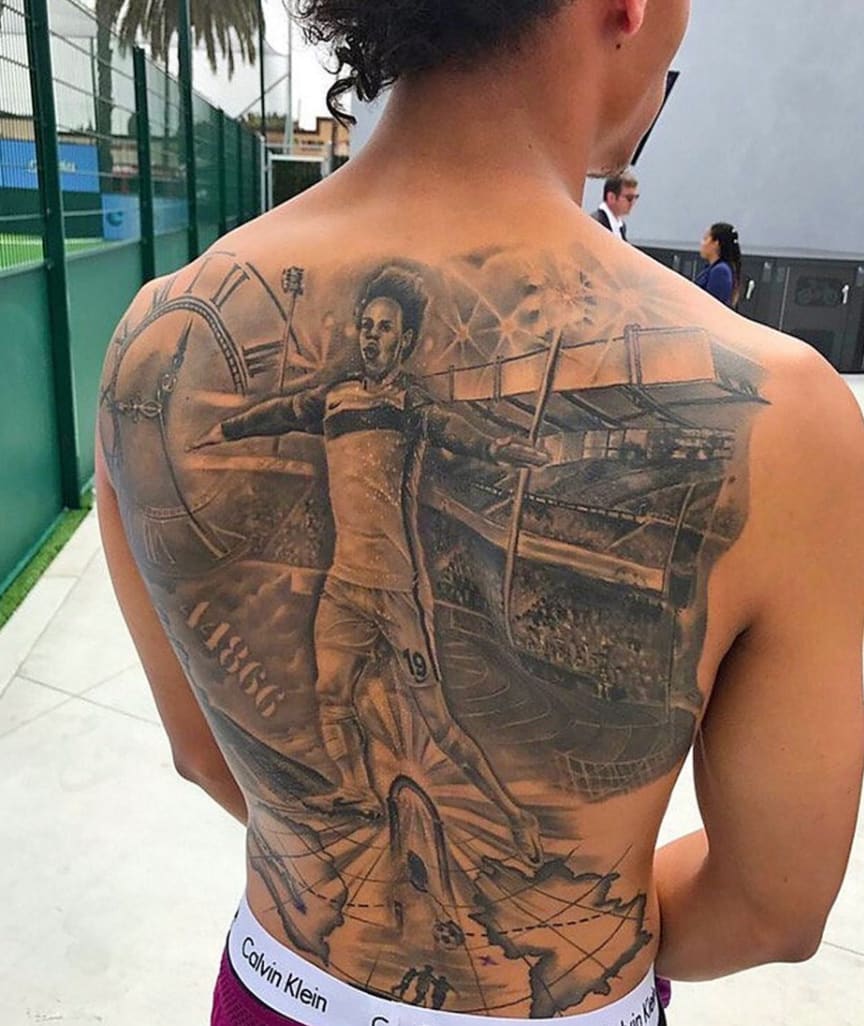
Photos vary, but the central idea is clear: Sané has tattooed himself into one of his own football moments. The figure isn’t generic. It’s him in a celebration fans recognise, with the stadium around him.
That specificity is why the tattoo drew so much attention when it first appeared. Many players choose a trophy, date or club symbol; Sané chose the whole scene, like a photograph from his first major European night made into a back mural.
The tattoo also became part of his public image. The design is loud, though Sané has said he’s more reserved than the flashy stereotype people attach to it. A huge celebration on his back doesn’t tell the whole story of the person wearing it.
The clock and stadium freeze one moment in time
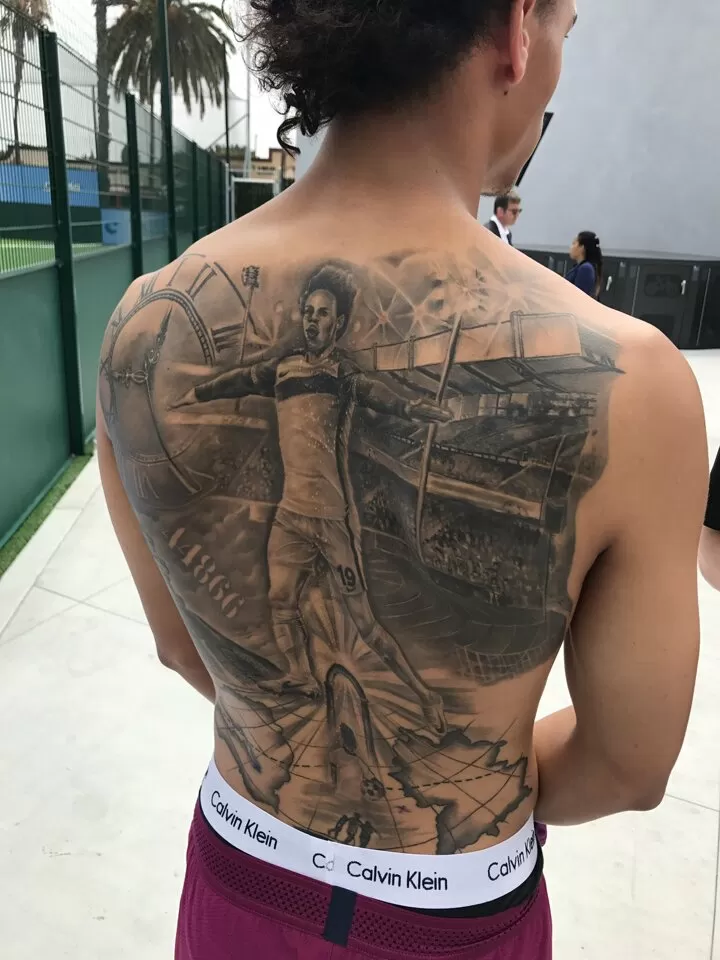
The clock is one of the most striking details. It gives the design a sense of time, fitting for a tattoo built around one exact football moment. The scene is more than a player in a stadium; it’s a memory stopped and saved.
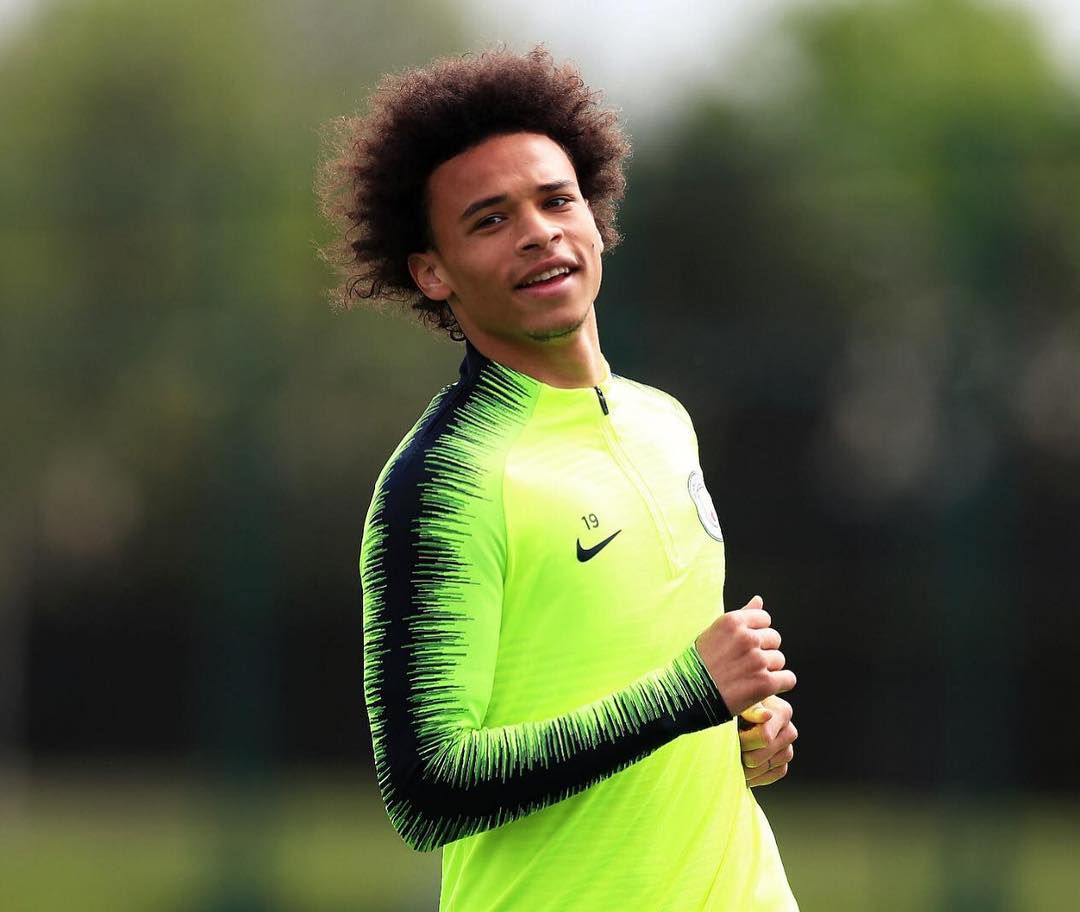
A career keeps moving, of course. Sané left Manchester City for Bayern Munich and went on to new chapters with Germany and club football. The tattoo still points back to the young player he was when he scored that goal.
That doesn’t make the piece meaningless. It shows how much the moment mattered. It also means the tattoo has aged along with him: what once felt like a perfect snapshot can seem more complicated years later.
Shirtless photos show the ink around the back piece
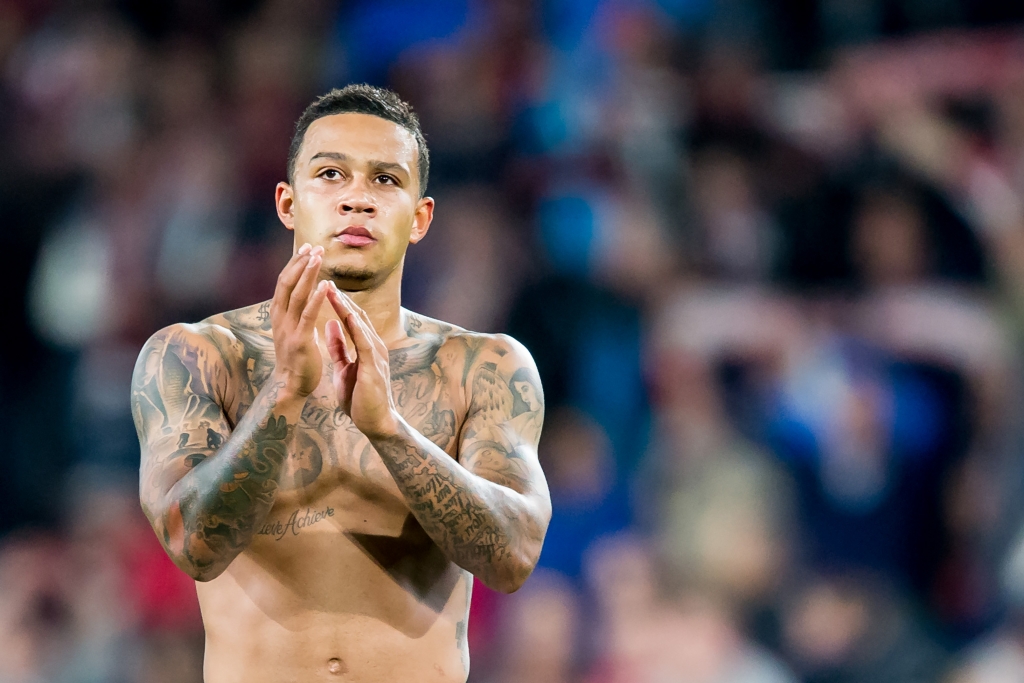
When Sané takes his shirt off, the back tattoo still draws the eye first, but there are smaller designs on his arms and torso. They make the collection feel like more than one giant image.
Action photos don’t always show those pieces clearly. Some are on his arms, some cross his chest, and others sit by his wrists or hands. Close photographs make it easier to tell where each design begins and ends.
Fans see the tattoos in all kinds of settings: celebrations, medical checks, training and holidays. The context changes, but the ink stays visible and has become part of how people recognise him outside a Bayern or Germany shirt.
The family script on his chest is more private
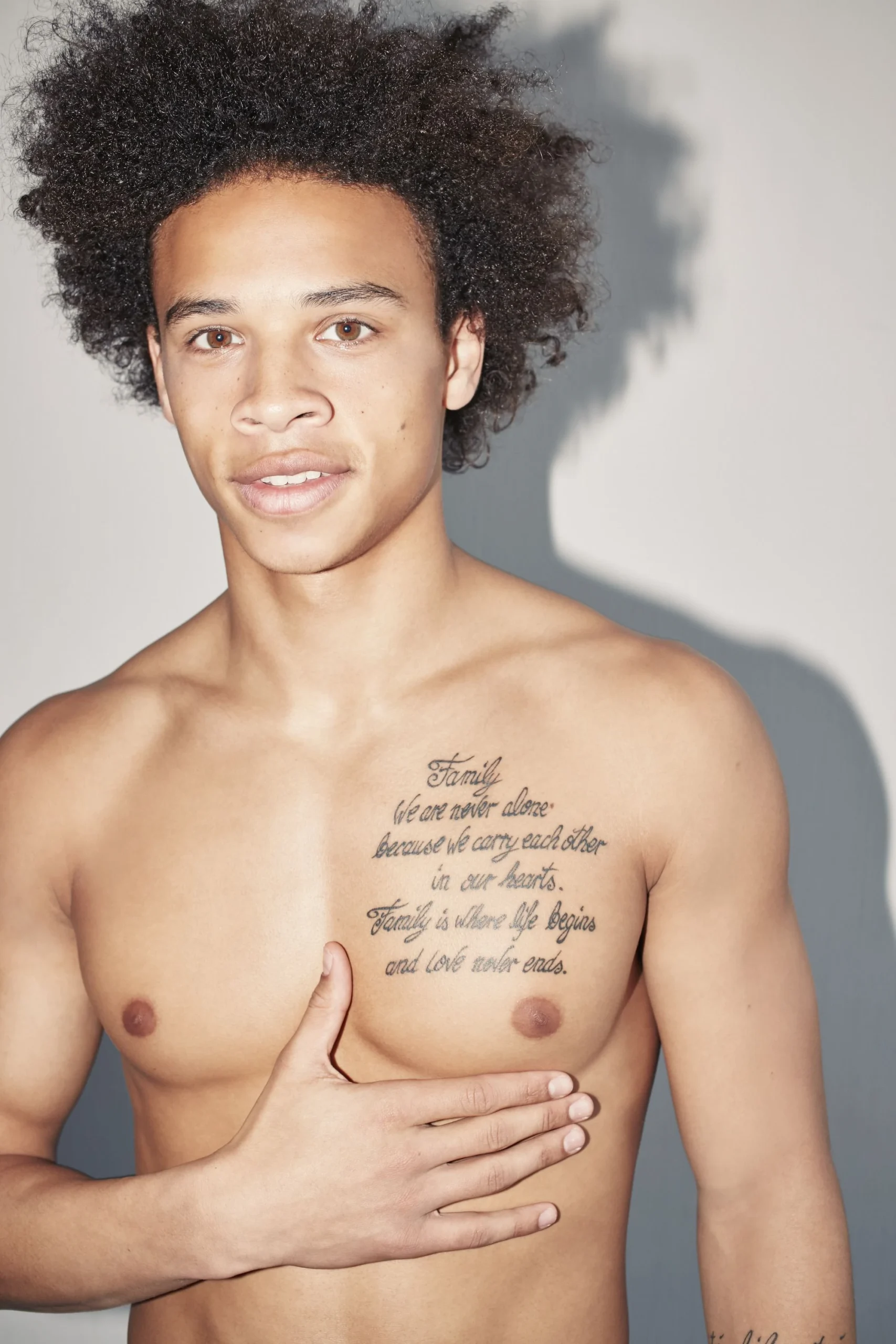
Reports describe a script tattoo on the left side of Sané’s chest that reads: “Family we are never alone because we carry each other in our hearts. Family is where life begins and love never ends.” It’s a long message, but its meaning is direct.
This tattoo is about the people closest to him, not a public achievement. It’s the kind of message that would matter whether or not he were famous, and could stay with him as the rest of his life changes.
The difference between the chest script and the back piece is striking. One marks a Champions League goal in a stadium; the other is about home, support and family. Focusing only on the giant image misses half the story.
Why Sané says he regrets the back tattoo
Sané told Der Spiegel that he regrets the huge back tattoo and felt it helped create a “bling-bling” image around him. He said he was younger when he chose it and would make a different decision now. That’s a candid reaction to such a prominent piece.
Regret doesn’t mean the tattoo was poorly made or that the goal stopped mattering. Sané has changed, and he doesn’t want the loudest design on his body to define him. He sees himself as more down-to-earth than the image suggested.
His view of the tattoo seems to have shifted. In 2017 it could stand for confidence, arrival and the rush of a major European goal. Years later, the same image can look like a permanent choice made by a younger version of himself.
Some of his smaller pieces may have aged differently because they aren’t tied to one club, celebration or season. Family stays family; initials keep their private meaning. The back tattoo is the headline, but the quieter designs add another side to the collection.
The story is a reminder that a tattoo doesn’t have to remain a perfect choice. A player can mark a career high, then grow into someone who would choose differently. The ink stays, but its meaning can change.
Clear photos help show why the collection can’t be judged from one viral image. A match shot may make the back piece look like one dark shape; a closer view reveals the stadium lines, clock and player. The chest script and the smaller wrist and forearm designs tell different stories.
Watch the story behind Sané’s famous back tattoo
The short video below shows the design and the goal celebration it was based on.
2 thoughts on “Leroy Sané’s tattoos: the huge back piece he regrets and the family ink he keeps”