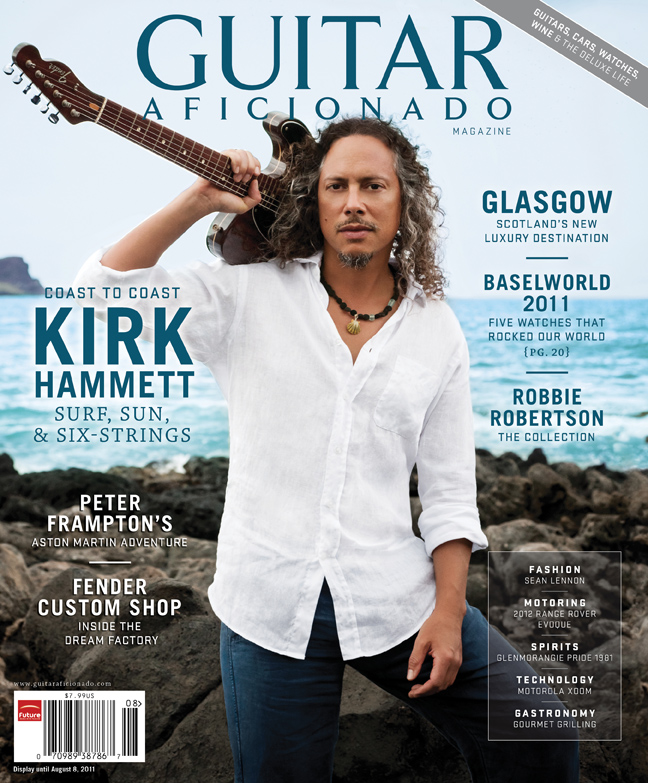
Photographs show Metallica guitarist Kirk Hammett’s tattoos across his chest and stomach from several angles. A water portrait, a studio session, an older magazine image and live-stage shots each catch a different part. The chest work is easier to see in one portrait; the abdomen lettering appears in concert photos.
Alt Press identifies curved lettering around Hammett’s lower abdomen as “Made in SF 11-18-62,” tying it to San Francisco and his November 18, 1962 birth date. The photographs also show separate chest work, including a piece being tattooed. A widely reported story connects Hammett to a matching 666 tattoo with Anthrax guitarist Scott Ian.
The “Made in SF” lettering and the water portrait
Alt Press identifies the curved lettering around Hammett’s navel as “Made in SF 11-18-62.” “SF” points to San Francisco, and the numbers match his birth date. The water portrait shows his face and chest; the lower-abdomen inscription appears in the concert photos later in the article.

In the water photo, dark cursive sits above a shaded chest design. His face and torso appear together in clear daylight, but the crop ends well above the navel. The lettering is too soft to transcribe, and this image does not show the belly tattoo.
The chest lettering and shaded image read as separate pieces, though the photo does not give enough detail to name either one. In the concert composite, the camera drops lower and catches the inscription around his waist.
The chest work and the Amsterdam studio frame
The Amsterdam studio photograph catches Hammett during a tattoo session. An artist’s gloved hands and machine are at work near his upper chest, with a lamp hanging over the area. Existing designs spread across the chest beside the fresh linework. The picture makes the overlap between older and newer pieces visible, although the artist’s arm and equipment cover part of the skin.
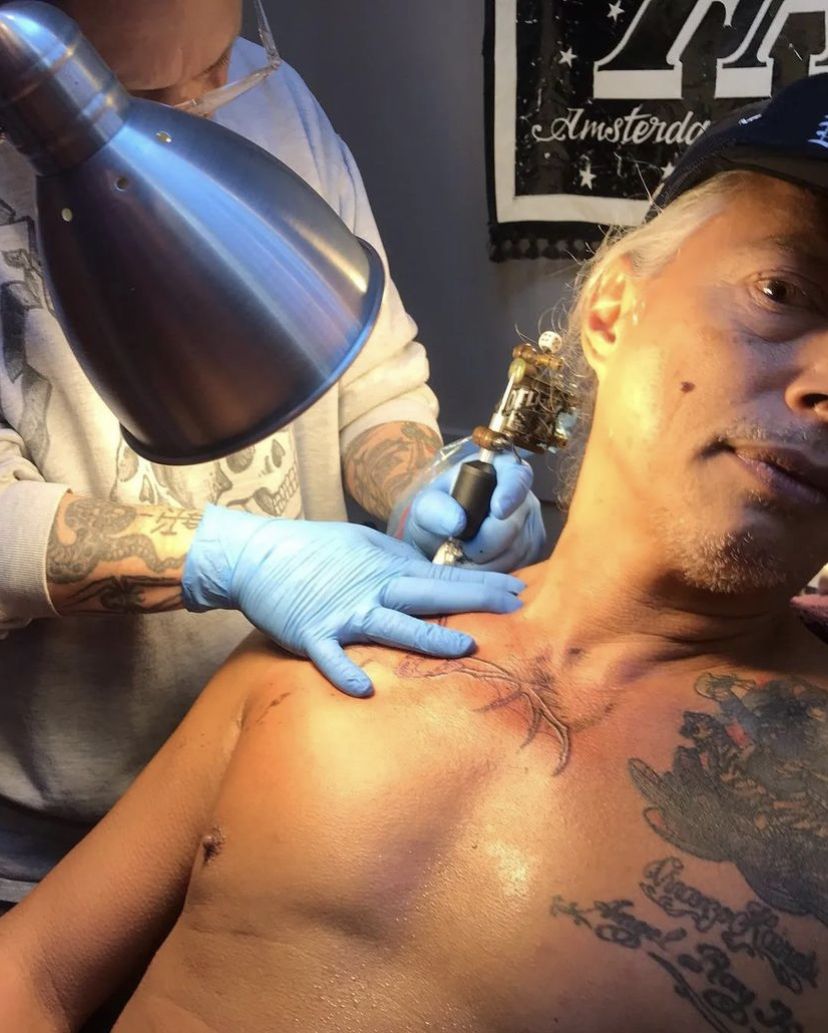
The new design appears as an outline near the collarbone, but the angle and obstruction make its subject hard to identify. Elsewhere, darker shaded imagery is visible across the pectoral area. Fine lines sit beside denser fill, giving the chest a mix of open and heavily shaded areas. The ink reads as dark in this photograph; its lighting does not establish the original pigment or tell us whether every piece uses the same palette.
The lamp catches the fresh lines against older shaded chest work. The image documents the session, but it does not identify the artist, give a date or explain the design.
The early bathroom portrait and the visible waist designs
An older magazine photograph shows Hammett seated with a guitar in a bathroom, his torso and upper legs exposed. It offers a view of the waist that concert clothes usually cover. The print is softer than the later color photographs, and the guitar blocks some of his midsection, so small designs are difficult to make out.
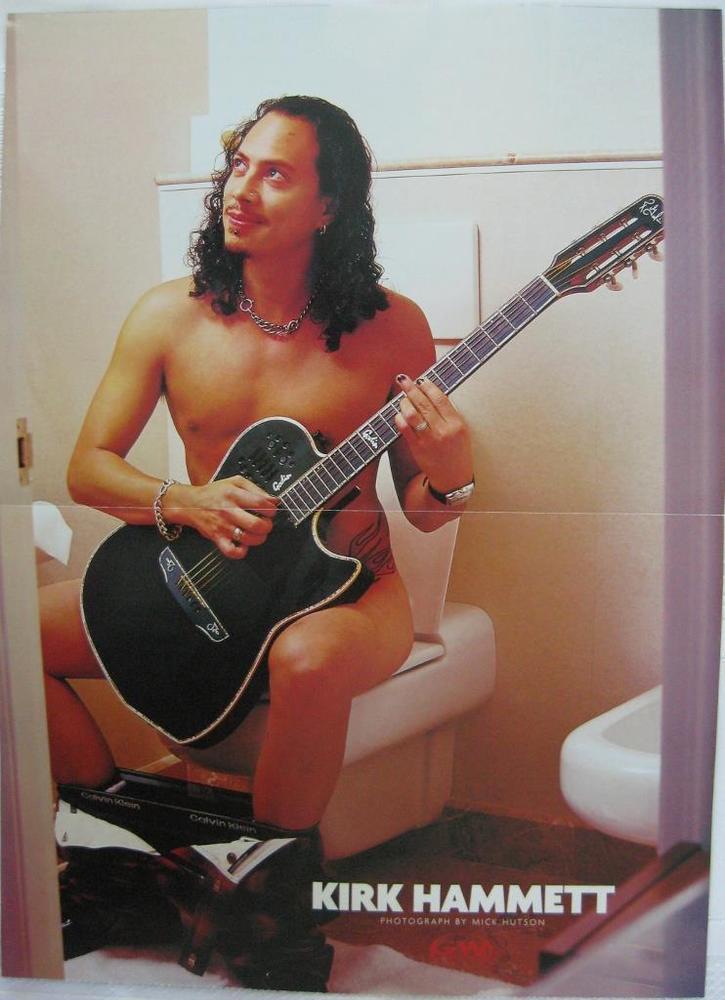
Dark marks are visible around the waist, but the old print and guitar make their shapes difficult to follow. They look like separate pieces rather than one continuous band. The photograph shows tattoo coverage below the chest, in an area usually hidden by stage clothes, but it cannot establish the designs’ colors, dates or meanings.
The live-stage tattoo frames that show the same collection moving
A four-panel stage composite shows Hammett playing shirtless with a guitar. As he moves through the set, the curved lettering near his navel comes into view. The strap and guitar cover parts of his torso from one angle to the next.
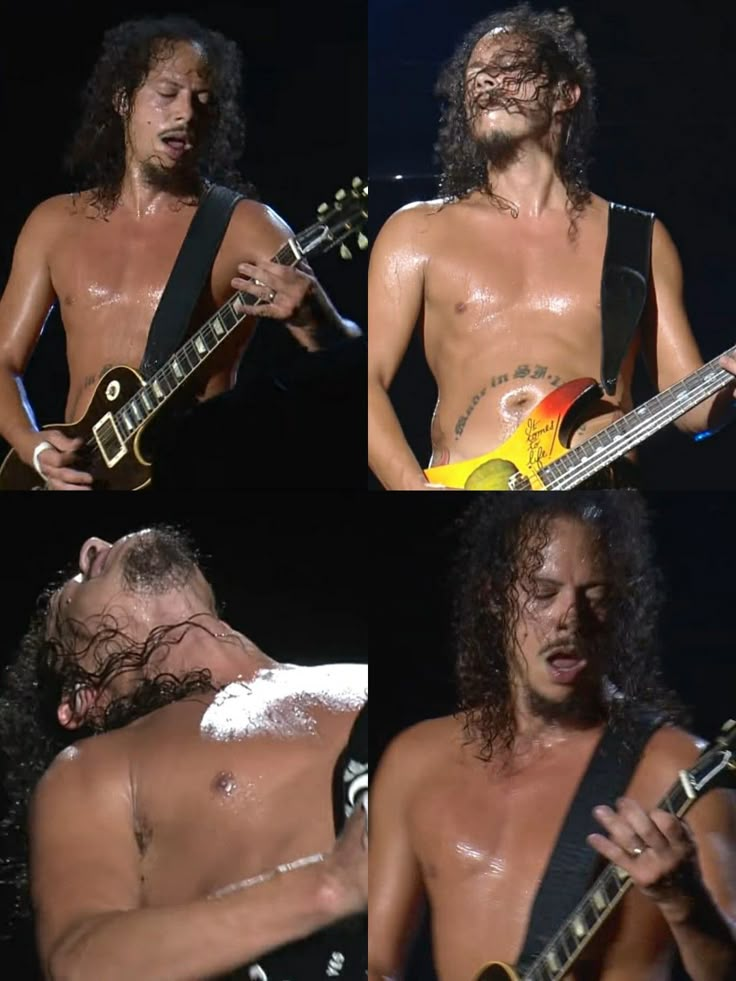
The lettering is clearest in the frame where Hammett leans back. It arcs above the navel, matching Alt Press’s description of the placement, though the low-contrast concert image does not resolve every character. The dark characters stand out against the skin; sweat and stage lights blur the smaller chest details. The other frames show the line bending with his torso as he turns toward the guitar.
The arc sits just above the navel, while the chest work lies higher and covers a broader area. That spacing stays visible as Hammett turns toward the audience.
The musician behind the stage image
A separate studio portrait shows Hammett’s face with a guitar. He is dressed in a leather jacket, and no tattoo is visible in the frame. It serves as a straightforward identity portrait after several images focused on his bare torso, rather than as evidence for another design.
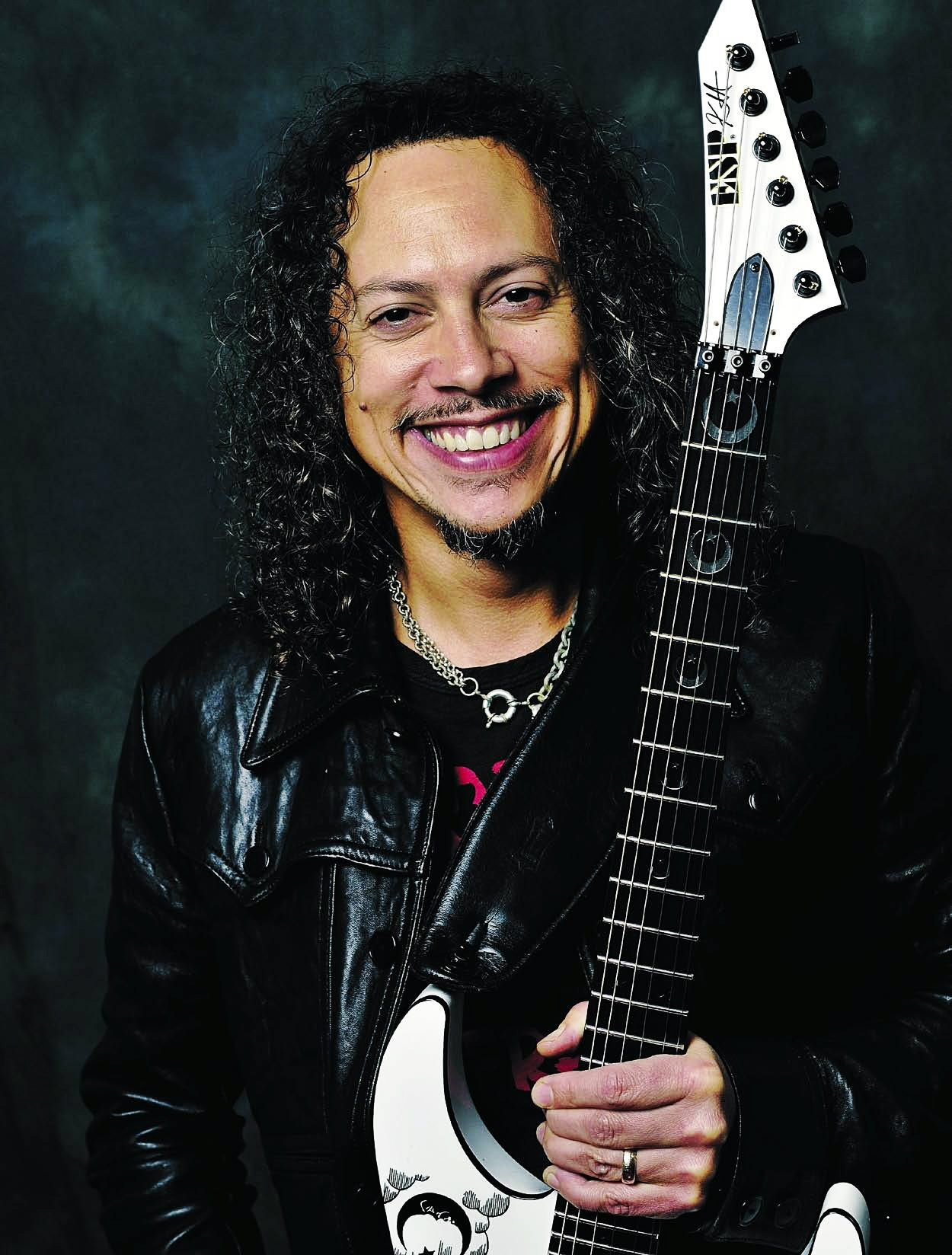
What the record can say with confidence
Alt Press names the lower-abdomen inscription, and the photos show chest pieces and marks around the waist. The set spans an in-progress studio session, an older printed portrait and performance images, so it gives several views of his tattoos without explaining every design.
Blabbermouth attributes the matching 666 tattoo story to photographer Ross Halfin. In Halfin’s account, Hammett insisted on having the number photographed after he and Scott Ian got matching tattoos. Other music outlets have repeated the story. None of the photos here clearly shows the number, so the detail comes from Halfin’s report, not from the image set.
Hammett is also known for his interest in horror films, vintage instruments and heavy-metal theatrics. The reporting does not tie the chest or waist designs to a particular film, character or personal story, so those interests are context rather than confirmed explanations.
How the photographs change the reading
The visible work runs across Hammett’s chest, abdomen and waist. In the color portraits, the chest pieces combine cursive lettering with darker shaded imagery; the stage composite shows a separate curved inscription above the navel. The lettering follows the body’s curve, while the chest designs occupy broader patches of skin. The ink looks dark in these pictures, but their lighting and print quality do not establish the original color of every piece. Bright colors cannot be confirmed from these views because flash, stage lighting and image age alter what the camera captures.
The camera angle changes the apparent coverage: a guitar hides part of his torso onstage, the artist and lamp cover his chest in the studio, and the older bathroom print loses fine detail. That is why a close studio image can show the difference between a fresh outline and older shading while a stage view gives a better sense of how the belly lettering sits on his body. The photos show different areas; the wording and 666 story come from published reporting.
The Gibson conversation behind the images
The Gibson interview gives Hammett room to talk as a guitarist; it does not document his tattoos or explain their meanings. It is a companion to the photographs, not a source for the designs.
Readers comparing musician tattoo profiles can also see 2KBABY Tattoos: Face Ink, Scared 2 Luv and Full-Body Coverage.