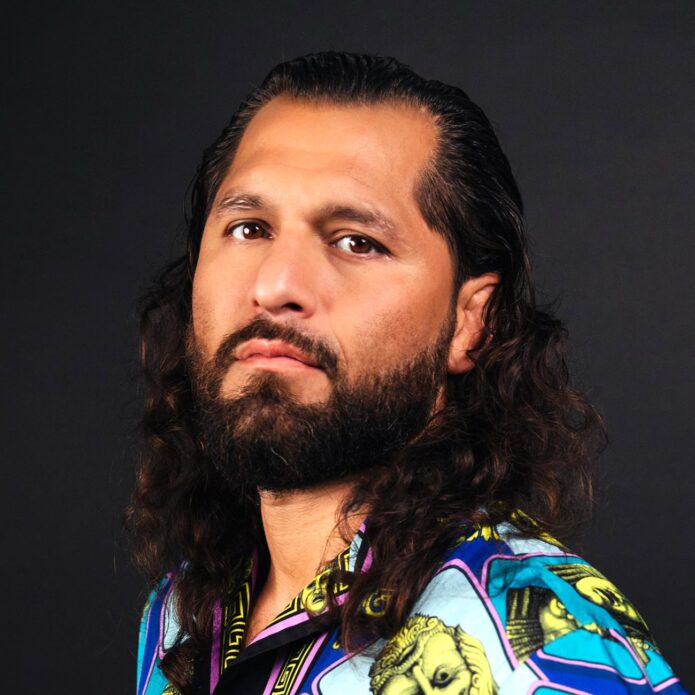
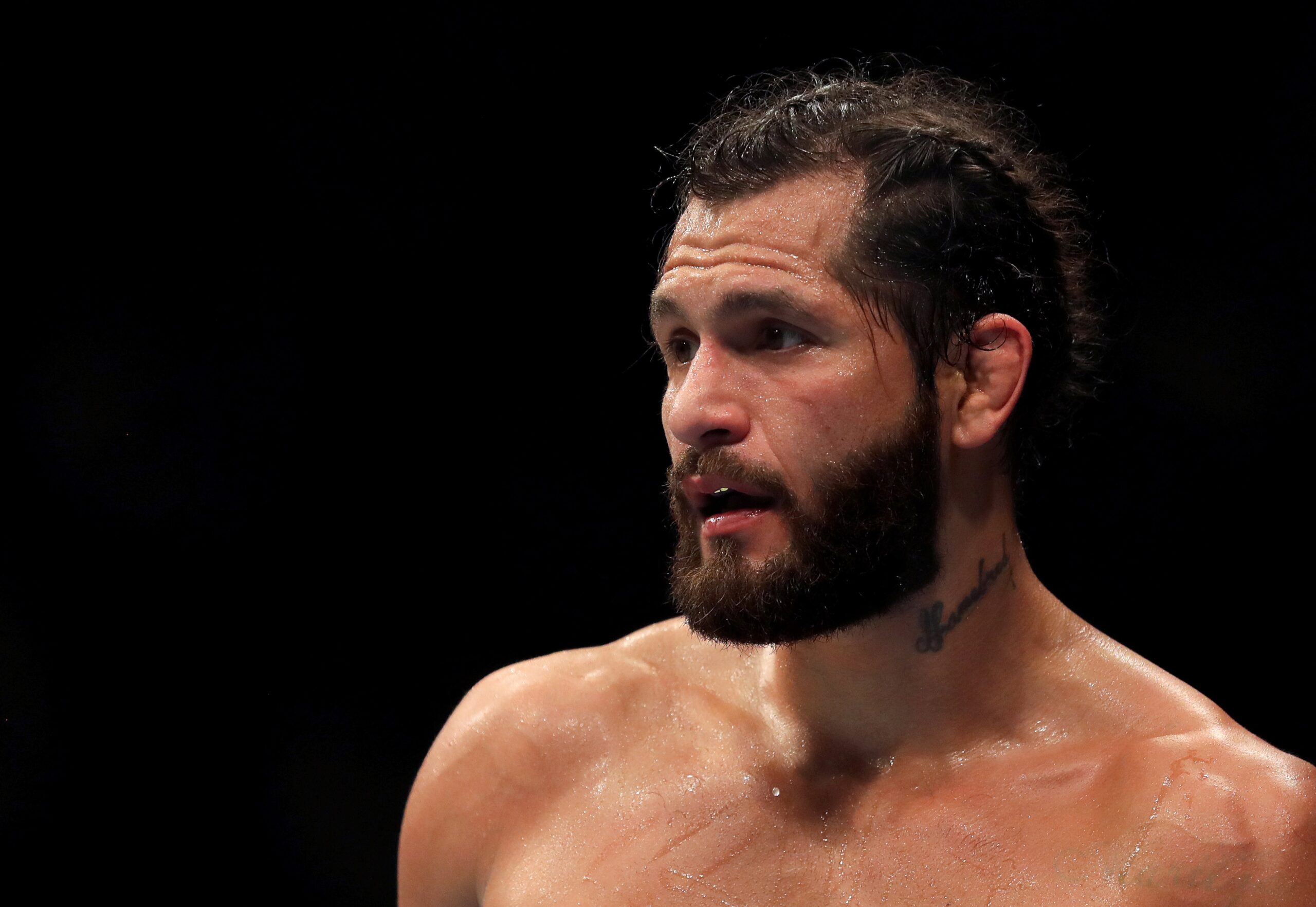
Jorge Masvidal’s tattoos are closely tied to the names, fights and family references that define his public identity. The best-known piece is the cursive “Gamebred” lettering on the left side of his neck. He also has a lipstick mark with his daughter Ava’s name on the inside of his right forearm, and he has shown a shoulder tattoo depicting the flying knee that finished Ben Askren in five seconds.
Masvidal has never presented his ink as a perfectly planned catalogue. In an interview covered by EssentiallySports, he said tattoo pain frustrated him because it had to be endured without the immediate release he associates with fighting. At the same time, he acknowledged that he still saw designs he wanted. That tension helps explain why the visible pieces range from a simple word on the neck to a highly specific fight tribute on the shoulder.
The tattoos are easy to identify in different settings. The neck lettering appears in interviews and cage photographs. The forearm name is visible when his right arm is raised. The flying-knee image appears on the upper left side of his body in the UFC 272 weigh-in photographs. They are not generic filler around a fighter’s physique. Each documented tattoo points back to a person, a nickname or a defining moment.
“Gamebred” is Jorge Masvidal’s signature neck tattoo
The word “Gamebred” is tattooed in script along the left side of Masvidal’s neck. It sits high enough to appear beneath the beard line and becomes particularly clear when he turns his head. The lettering is darker and more compact than the large shoulder design, so it reads first as a name and then as a statement about the fighter who uses it.
Masvidal has explained the nickname in interviews reported by EssentiallySports. He described “game” as the ability to fight through pain and fatigue, while “bred” referred to an animal bred to be game. The tattoo therefore does more than repeat a stage name. It records the definition Masvidal attached to that name and places it on a part of the body that remains visible in almost every close portrait.
The choice of the neck makes the lettering unusually prominent. A chest design can disappear under a shirt and an arm piece can turn away from the camera. The script on Masvidal’s neck stays in frame during a face-to-face interview, a weigh-in or a cage-side photograph. It has become part of the visual shorthand used to identify him as Gamebred.
Published accounts trace the nickname back to Masvidal’s family and to his own explanation of the word. They do not establish that every curve of the script has a separate symbolic meaning. The supported reading is simpler: the tattoo is his nickname, and the nickname describes toughness, endurance and a willingness to keep fighting through discomfort.
The neck lettering changes with Masvidal’s expression
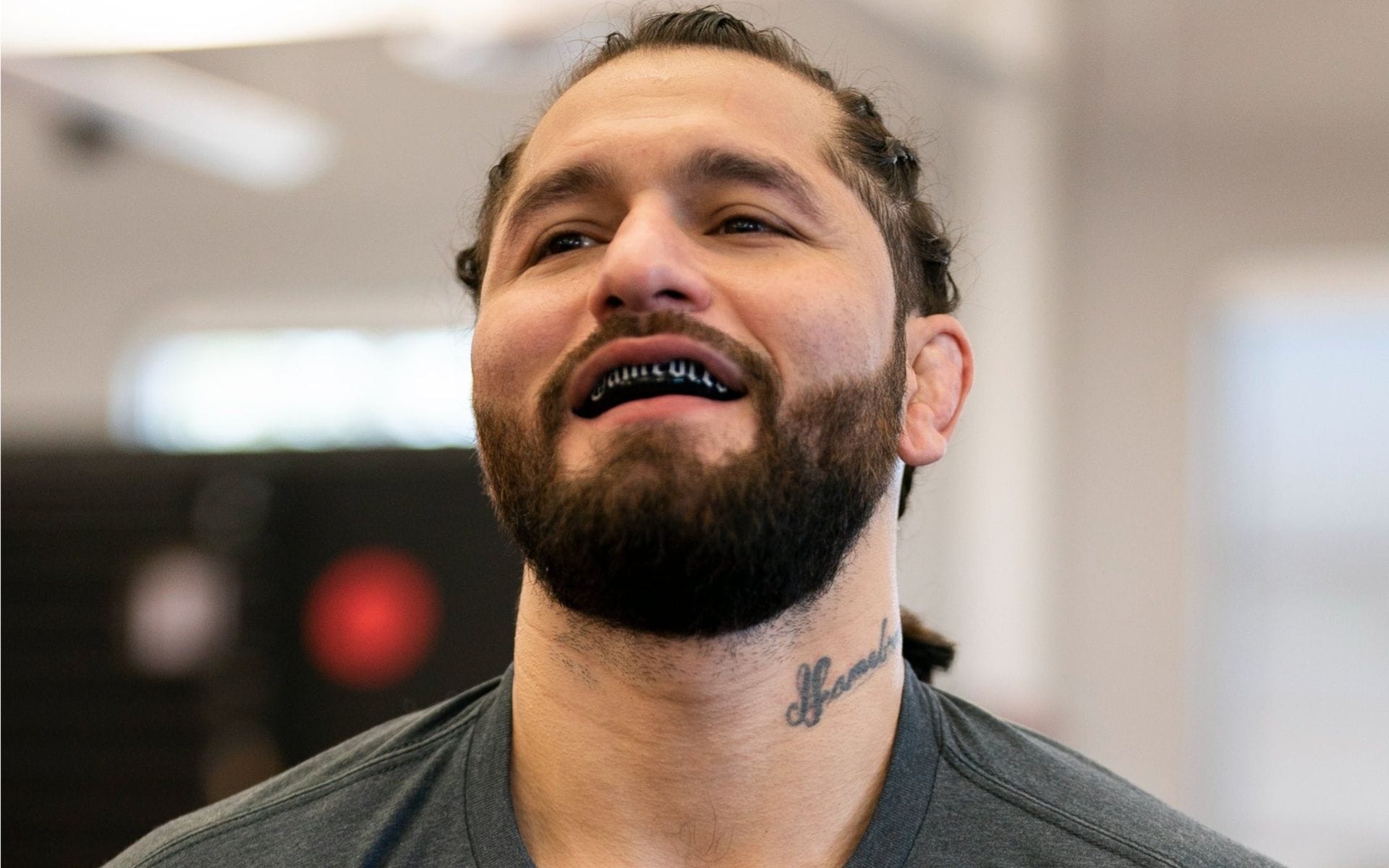
Close portraits show how much the “Gamebred” tattoo depends on movement. When Masvidal looks upward, the lettering stretches along the neck. When he turns sideways, the script becomes a dark edge beneath the beard. The same tattoo can look like a compact emblem in one photograph and a longer handwritten word in another.
That changing visibility is one reason the tattoo has remained so recognisable. It is not hidden in a private area or dependent on a shirtless pose. The word appears whenever Masvidal is speaking directly to a camera. In interview photographs, the face, beard, braided hair and neck script arrive as one consistent portrait.
The images also show that the lettering is separate from the tattoo on the upper torso. The two areas do not form one continuous panel. The neck carries the identity word, while the shoulder and chest carry pictorial elements associated with his fighting career. The separation keeps “Gamebred” readable even when the larger image is partly covered by clothing or equipment.
The neck tattoo functions like a nameplate. It is personal because Masvidal defines the word himself, and public because the lettering is positioned where every close photograph can find it. That combination has made the design one of the clearest examples of a tattoo becoming inseparable from a fighter’s nickname.
Ava’s name appears across a lipstick-mark forearm tattoo
On the inside of Masvidal’s right forearm, the name “AVA” is placed across a red lipstick mark. EssentiallySports identifies the name as his daughter Ava Sofia and describes the image as a symbol of his love for her. The design is smaller and more intimate than the “Gamebred” lettering, but the contrast is what gives it weight within the collection.
The placement matters because the inner forearm is visible when Masvidal raises his hand, gestures or turns his arm toward the camera. The name is not presented as a large public slogan. It appears as a close personal reference carried on the arm, where the lipstick mark gives the lettering a visual frame without turning it into a full sleeve.
Published reporting does not assign an additional meaning to the colour, outline or precise shape of the mark. The supported meaning is the family connection to Ava. That makes the tattoo different from the neck script. “Gamebred” describes Masvidal’s public identity and fighting philosophy; “AVA” identifies a daughter and the affection attached to her name.
Photographs of Masvidal often focus on his face and shoulders, so the forearm tattoo can disappear when his arms are lowered. When the hand is lifted, however, the lettering becomes a small focal point. The design’s scale and placement keep it connected to the person named in it rather than to the spectacle of a fight poster.
The flying-knee tattoo records the Ben Askren knockout
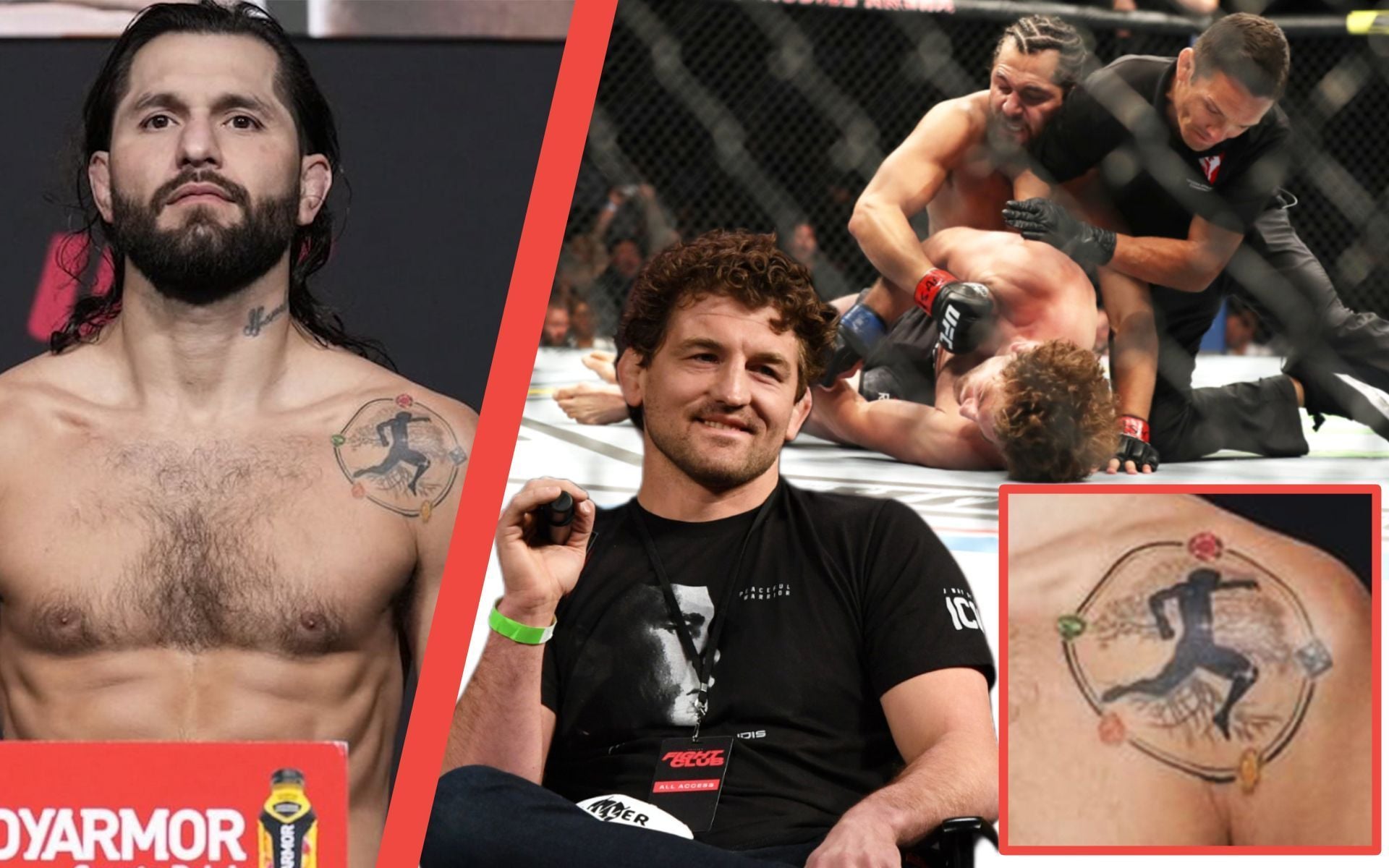
Before UFC 272, Masvidal appeared at the official weigh-in with a new tattoo on the upper left side of his body. Heavy and BJPenn.com described the design as a silhouette of a fighter throwing a flying knee. The image references Masvidal’s five-second knockout of Ben Askren at UFC 239, the fastest knockout in UFC history.
The tattoo is more illustrative than the neck lettering. It shows an action rather than a word, and the circular composition includes coloured details around the central figure. In the published weigh-in photographs, the figure sits on the shoulder and upper chest area, making the placement itself part of the joke and the tribute. The tattoo turns a famous moving moment into a still image on Masvidal’s body.
Askren reacted publicly by calling it “a stupid logo.” That response became part of the tattoo’s documented history because the design was created around a fight that already carried a strong rivalry. Masvidal’s tattoo is therefore not just a celebration of an athletic achievement. It also preserves the opponent, the five-second finish and the public reaction that followed the reveal.
There is some uncertainty in the reporting about whether the weigh-in image showed permanent ink or a temporary design. Heavy described it as a tattoo reveal while also noting that its permanence was unclear at the time. The safe description is that Masvidal displayed a flying-knee tattoo image at the UFC 272 weigh-in, clearly linking the design to the Askren knockout.
Masvidal’s shoulder and neck tattoos read together in fight photographs
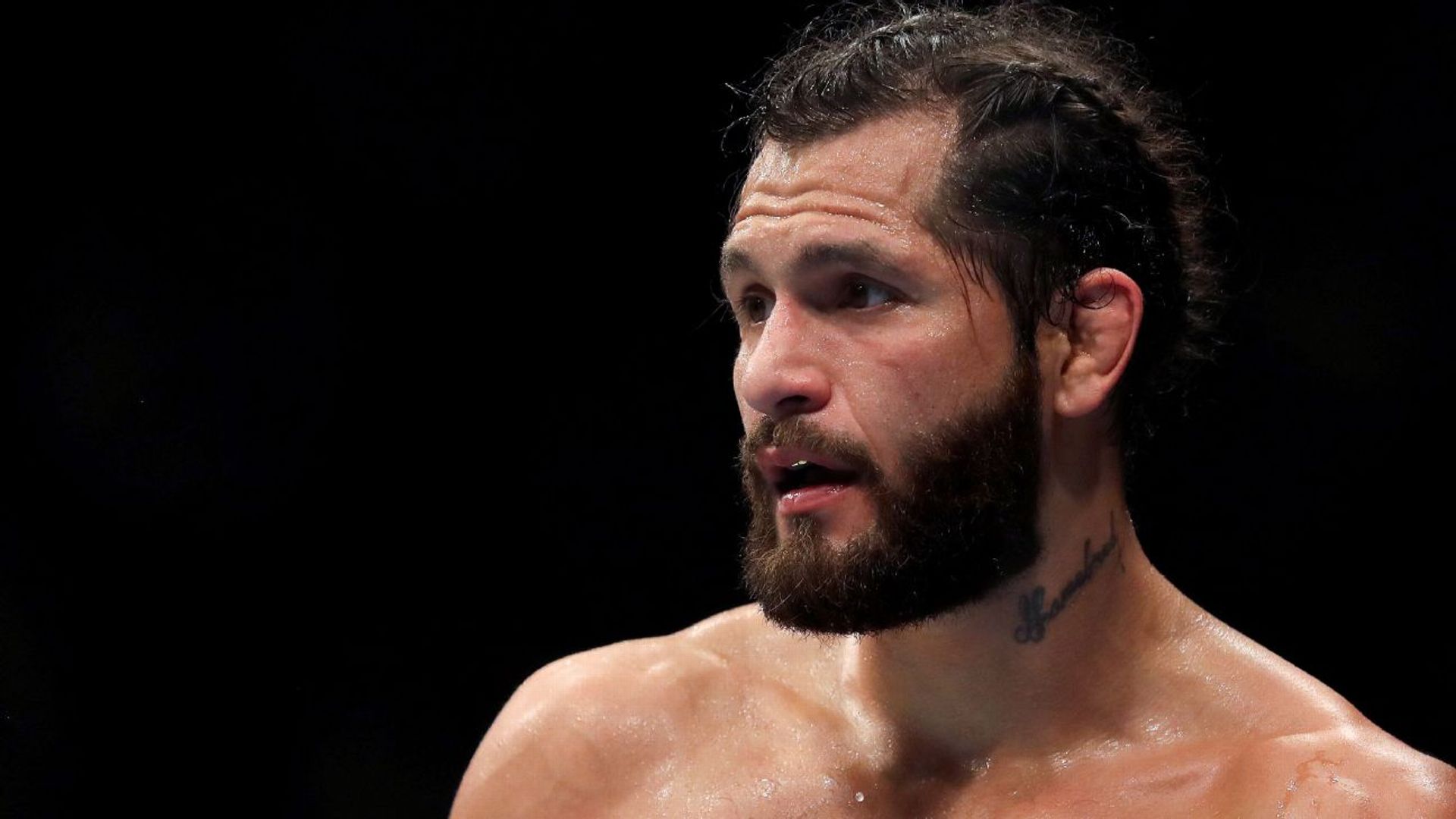
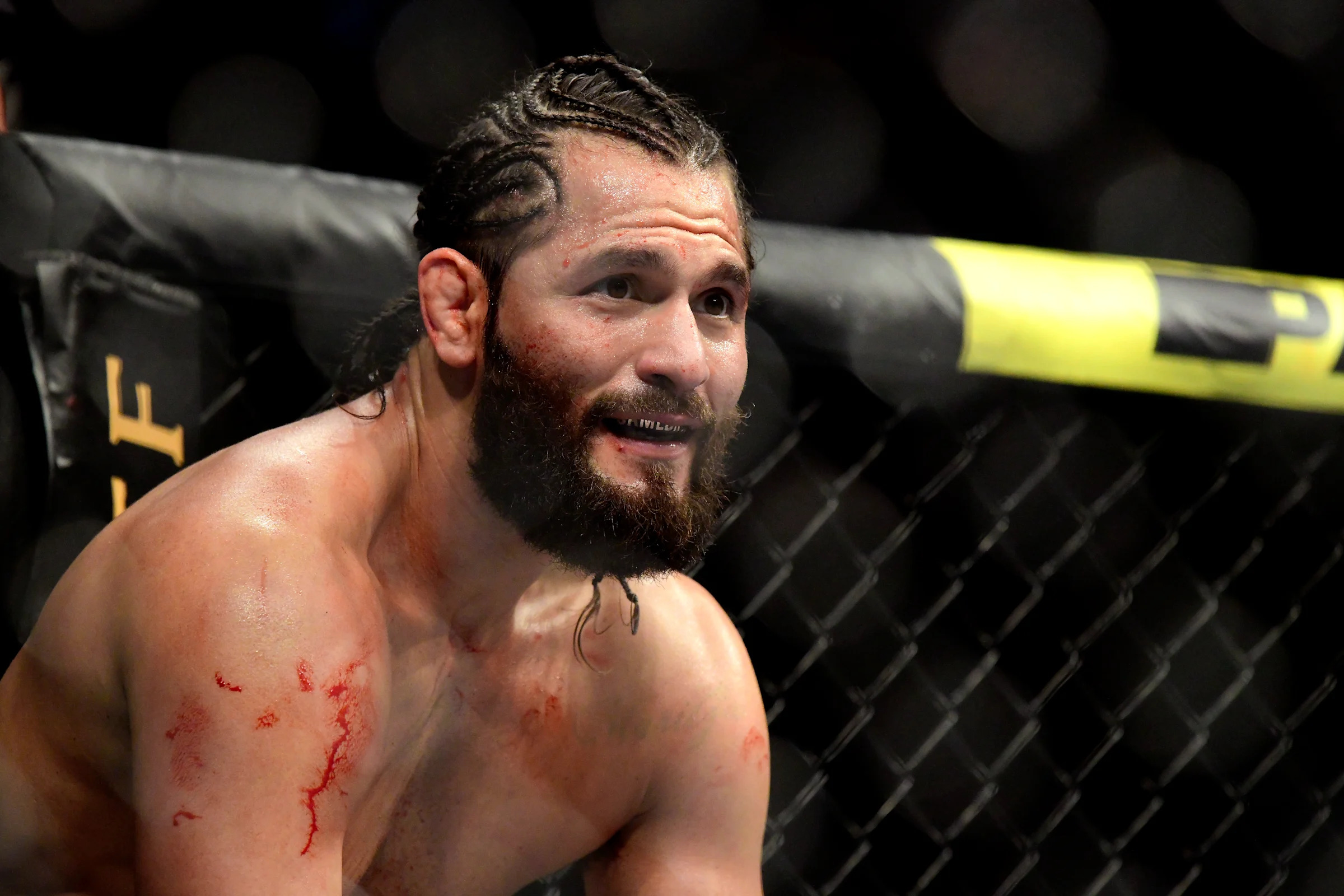
Wider fight photographs show how the shoulder tribute sits beside the neck script. The “Gamebred” lettering is a short dark mark at the throat, while the flying-knee image occupies a broader area on the upper torso. The designs are different in scale, but both are legible because they are placed where a camera can catch them during a weigh-in or interview.
The shoulder tattoo also changes meaning depending on the photograph. In the reveal image it is a new piece associated with the Askren rivalry. In later fight photography it becomes part of Masvidal’s recognisable silhouette, alongside the beard, braids and neck lettering. The tattoo moves from a news event into the permanent visual record of the fighter’s career.
The chest and shoulder images do not establish that Masvidal has a large full-body collection. The available accounts describe a smaller number of notable tattoos, with the neck, forearm and shoulder pieces receiving the clearest documentation. That restraint is worth noting because it keeps the verified designs distinct. The tattoo story is about a few specific marks, not an invented inventory of every shape visible in a low-resolution photograph.
Masvidal’s tattoos therefore combine words, a family name and a fight image. The neck word explains the nickname. The forearm name points to Ava. The shoulder silhouette points to Askren and the record-setting flying knee. Each piece can be described from published reporting and clear images without assigning meanings that Masvidal has not stated.
Family and fighting are the two recurring subjects
Masvidal’s documented ink divides naturally between family references and fight identity. The “Gamebred” tattoo expresses the definition he gives to his nickname. The Ava tattoo places a daughter’s name on his forearm. The flying-knee tattoo preserves a moment that changed the scale of his career.
That division also explains why the tattoos look different. Lettering works for a name that has to remain readable at close range. A lipstick mark frames the family name without overwhelming it. The flying-knee image needs a larger area because the action is recognisable through the position of the body and the shape of the kick.
Masvidal has also spoken frankly about the discomfort of getting tattooed. His comment that tattoo pain “pissed” him off is part of the record around his ink, but it does not cancel the meaning of the designs. The tattoos remain on his neck, forearm and shoulder because the people and moments they represent mattered more than the temporary pain of the session.
The visual record stays close to the documented pieces
The strongest photographs of Jorge Masvidal’s tattoos are the ones that show the actual placement clearly. A close portrait reveals the neck script. A forearm view reveals Ava’s name and the lipstick mark. The weigh-in images reveal the flying-knee tribute. Together, they provide a more reliable account than a long list of unverified symbols.
Masvidal’s tattoos are memorable because they are specific. “Gamebred” is his chosen identity, Ava is a family name, and the flying knee is a precise sporting event. The designs connect the public fighter to the private relationships and career moments that shaped that identity.
That is the consistent thread through the photographs: the ink is not generic decoration detached from Masvidal’s life. The neck script explains the name on the posters. The forearm lettering preserves a family connection. The shoulder image turns a five-second knockout into a permanent reminder of the moment that made him a global UFC star.
Masvidal has discussed his tattoos and the meaning of “Gamebred” in fight-media interviews, including the conversation embedded below.