Jonathan Owens is an American football safety whose public profile is closely linked with Simone Biles, and his tattoos have appeared in several different kinds of coverage. A Sports Illustrated feature used a shirtless selfie to show more of his body art, while PureWow and Promiflash documented a small new initial on his finger. Those sources make it possible to discuss his ink from more than one original photograph.
The most defensible reading is a layered one. The published coverage clearly supports a substantial tattoo presence on the arms and a personal S initial on a finger. It does not provide a complete catalogue of every design, artist, date or meaning. The guide below keeps direct visual observation separate from reported context, so a generic public appearance is not mistaken for a tattoo close-up.
Owens’s face is visible in the featured image and in the two supplemental appearances later in the article. The tattoo-bearing photographs lead the inline sequence: a close hand view, an exposed forearm in a game setting and a published collage that combines identity with the finger detail. The two later frames are clearly supplemental context only.
The S finger initial
The most specific documented design is the small S initial on Owens’s ring finger. In the close-up, the letter is dark and legible against the back of the finger, while Biles’s hand holds his from below. The watch and jewelry help establish that the photograph is a personal moment rather than a detached stock illustration.
PureWow reports that the new finger tattoo represents Simone Biles. Promiflash covered the same gesture as a “love tattoo”, and the published image makes the basic claim visible without requiring a speculative enlargement. The safe description is therefore an S initial with a reported connection to Biles, not an invented account of the lettering style or the tattoo artist.
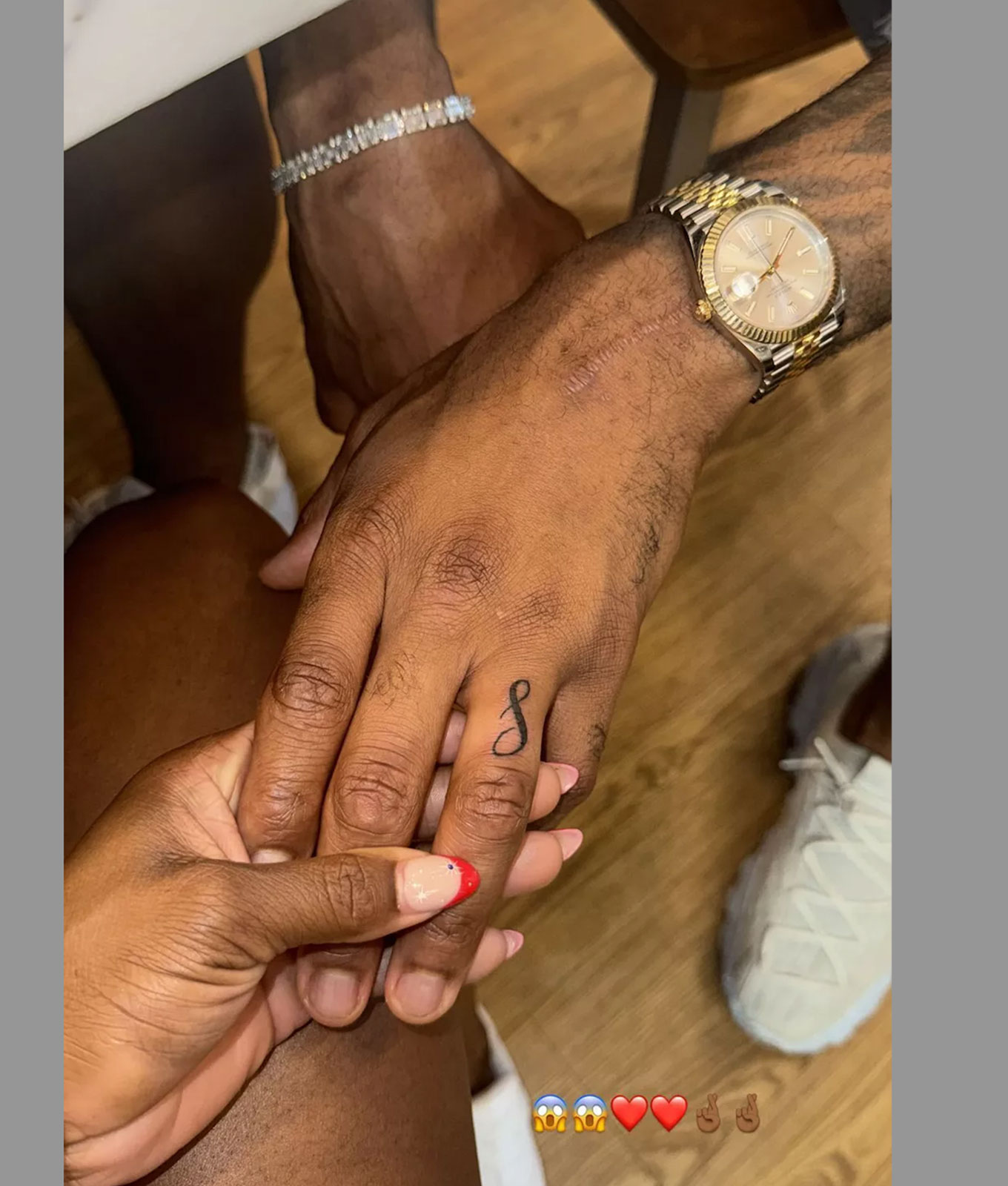
The placement is important. A finger tattoo is smaller and more exposed to daily movement than an upper-arm composition, so it reads as a compact relationship marker. The photo does not establish the exact date of the appointment or whether the couple chose matching designs. It does show that the letter was photographed on Owens’s hand while Biles displayed the moment publicly.
For design reference, the piece demonstrates how a simple initial can carry high personal specificity. The form is minimal, but the placement and context do much of the emotional work. Any recreation should preserve that restraint rather than adding flourishes that are not visible in the documented photograph.
The forearm tattoo visible in the Miami frame
The Sports Illustrated photograph supplies a different kind of evidence. Owens is shown in a football setting with his face visible and tattoo work exposed along the right forearm beneath the short sleeve. The frame does not isolate each symbol, but it clearly establishes a dense tattooed area rather than a single small mark.
A wide game photograph is useful precisely because it preserves scale and body placement. The forearm art sits in relation to the jersey, shoulder and hand, giving readers a better sense of how the ink appears in everyday public clothing. It would be misleading to name every indistinct shape, so the description stays with the tattoo coverage that the pixels actually support.
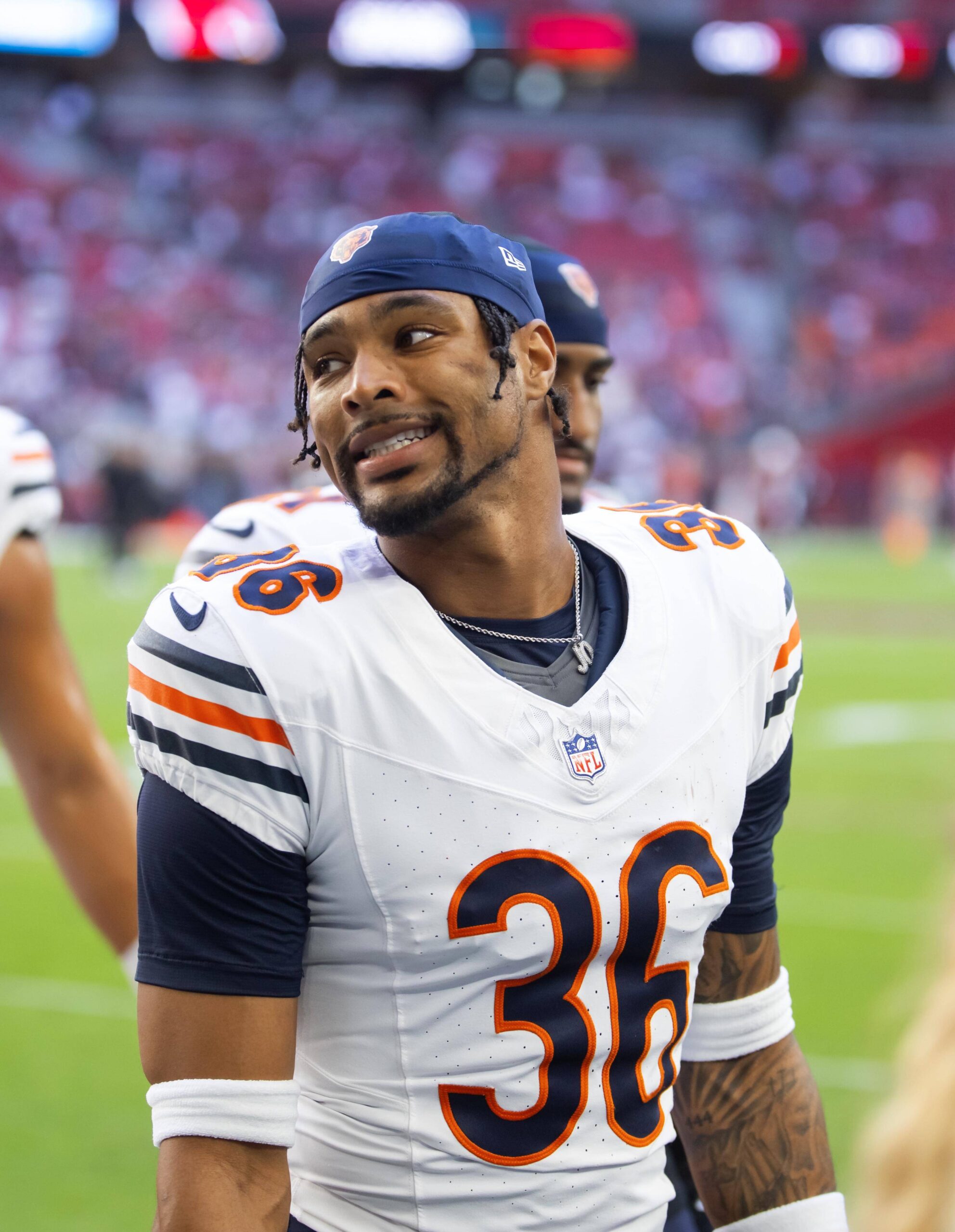
The same visual record also explains why the arm cannot be reduced to the finger initial. The finger design is a small, personal detail; the forearm presents a larger field of work that becomes visible when Owens is playing or posing in short sleeves. They occupy different surfaces and should be treated as separate tattoo evidence.
The photograph also preserves the difference between observation and interpretation. The tattooed forearm is clear. A complete inventory of its motifs, meanings or chronology is not. That boundary makes the image useful for placement and proportion without turning a partial sports photograph into a fictional biography.
The shared frame and close hand detail
Promiflash published a collage that joins a face-visible image of Owens and Biles with a circular close detail of the S initial. It is a distinct editorial asset, not the same file as the vertical hand photograph. The collage therefore serves two purposes at once: it identifies the couple and shows the small design in a readable context.
The close detail repeats the central visual fact that the finger tattoo is an initial placed on Owens’s hand. The larger frame adds relationship context, but it should not be used to claim that the rest of his body is visible. The circular crop is doing the evidentiary work here, while the surrounding picture supplies identity and occasion. The close hand detail is the strongest part of the composition.
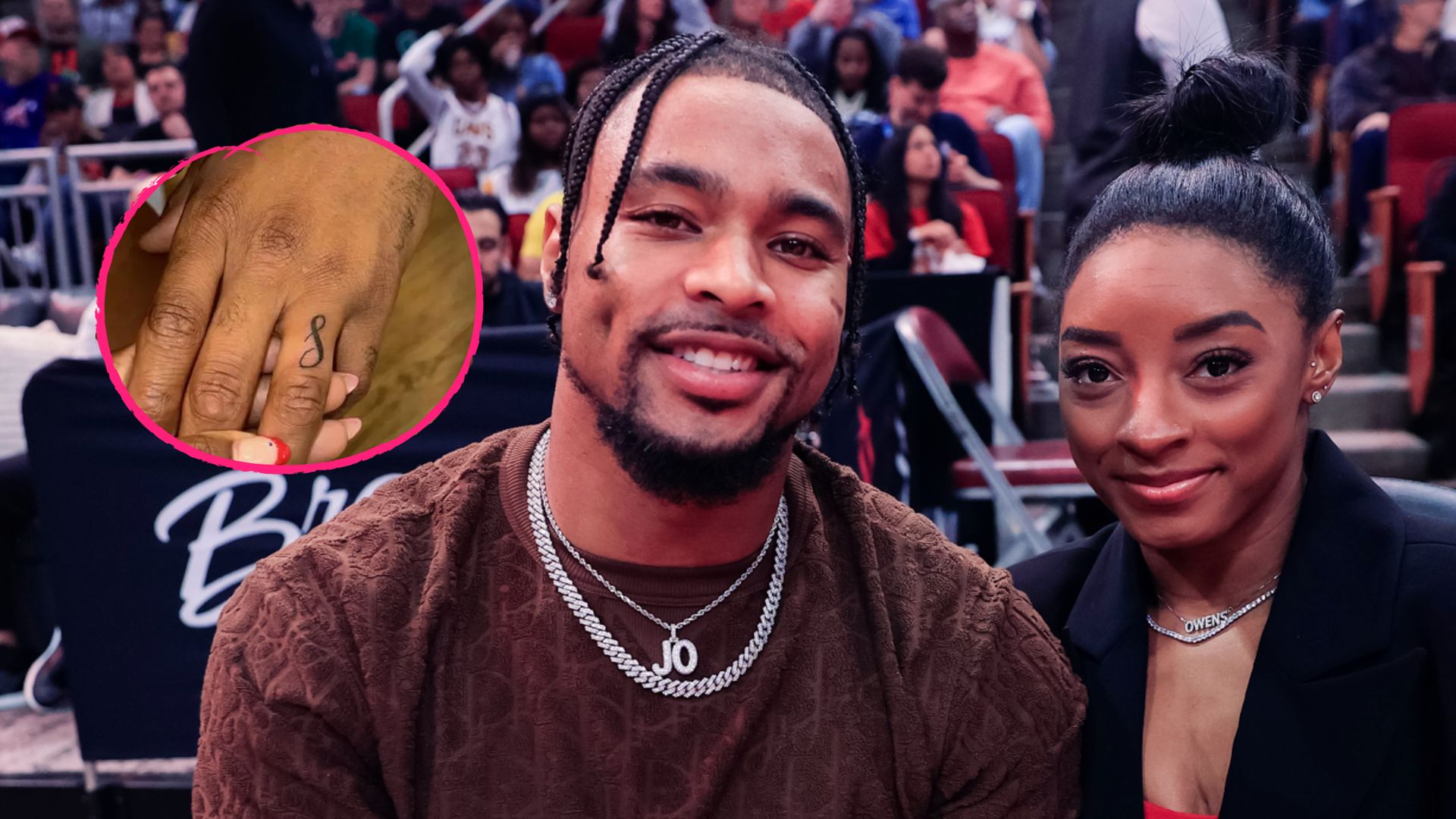
This kind of published composition is common in entertainment coverage, yet it still needs careful labeling. A collage is not a license to treat every portion as an independent photograph. It is one original source asset with two coordinated views, and it is valuable because the close inset is different from both the PureWow hand photograph and the SI forearm frame.
Taken with the other tattoo photographs, the collage supports a modest conclusion: Owens’s public ink record includes a relationship-linked finger initial and more extensive arm coverage. The collage does not prove a full-body list, and it does not replace the direct photographs that show the arm and hand separately.
A game-night frame
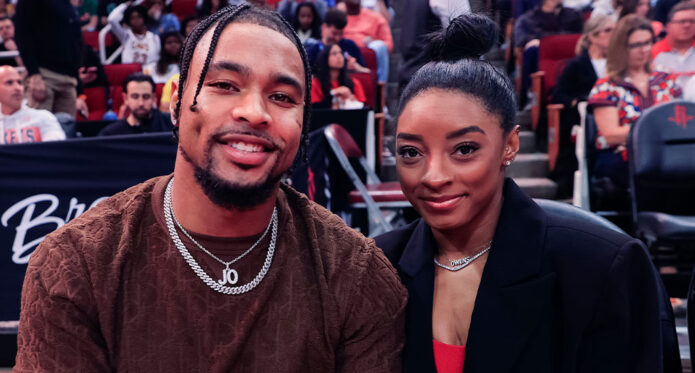
The first supplemental frame places Owens and Biles together at a game. Both faces are clearly visible, and the setting connects the public identity route with the sports and entertainment coverage surrounding the couple. Clothing covers most of Owens’s body, so this photograph is kept separate from the tattoo sections.
That distinction matters for readers. A face-visible portrait can prove who is pictured and provide a useful visual anchor, but it cannot substitute for a tattoo photograph. The tattoo claims on this page come from the close hand view, the exposed forearm and the collage, while this game-night frame is included only to add human context.
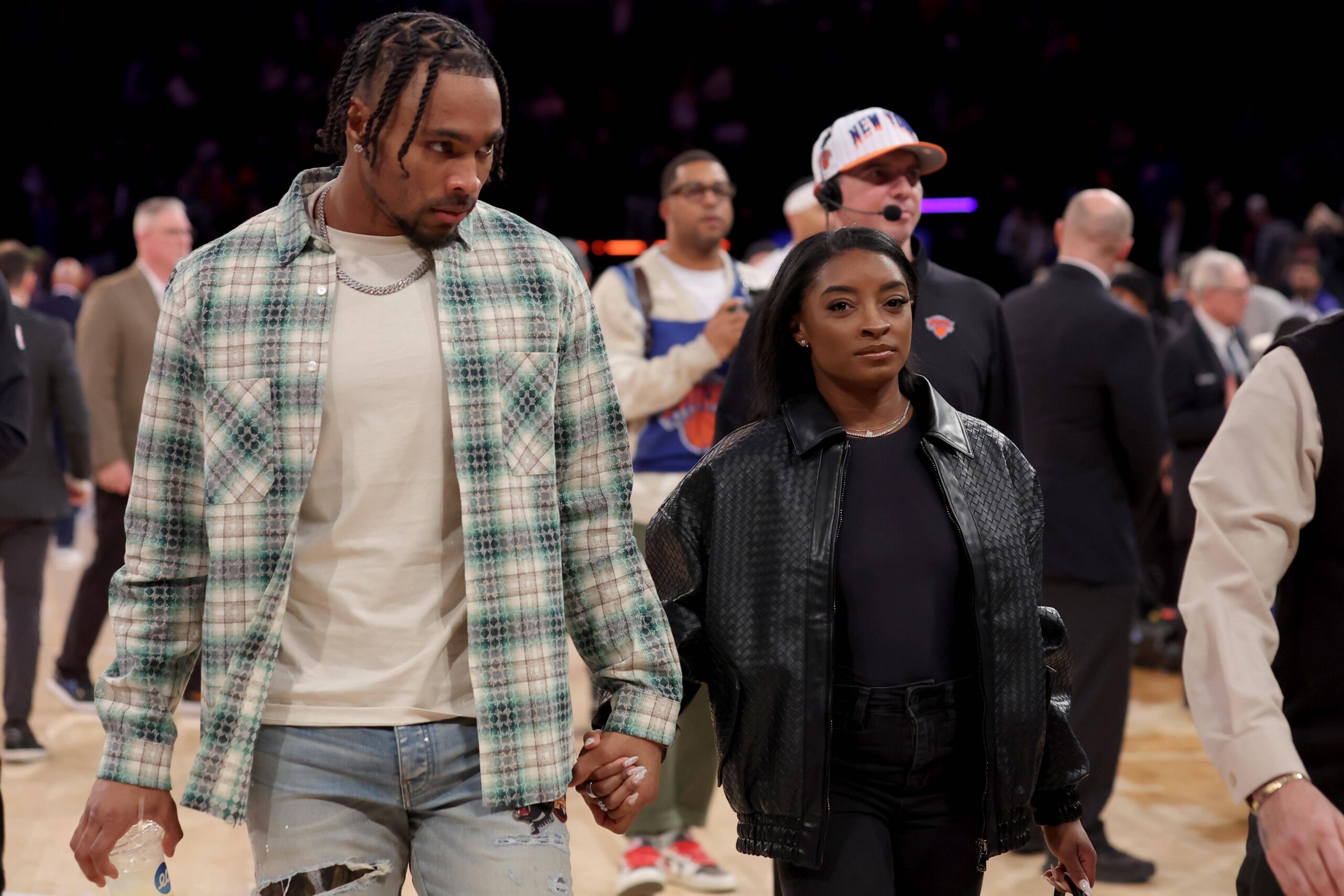
The image also shows how public appearances change what can be documented. Jewelry, a jersey or a jacket may make a small area visible while hiding larger work. A responsible guide records what the photograph exposes and does not infer the unseen parts from reputation alone.
As a supplemental frame, it gives the page a calmer visual pause after the tattoo evidence. The reader can recognize Owens and Biles without being asked to treat a generic couple photograph as proof of a design, placement or meaning.
A second public appearance
The second supplemental photograph comes from a separate SI appearance and shows Owens and Biles walking together in a public venue. It is a different original frame from the game-night image and from the tattoo-bearing SI photograph. The couple’s faces are visible, while the clothing and distance make it unsuitable for detailed tattoo interpretation.
Used carefully, a portrait route helps prevent identity confusion. Jonathan Owens appears in multiple sports and entertainment contexts, and a page about his tattoos should make it clear that the subject is the NFL safety rather than another person in a gallery or repost. This photograph supplies that identity support without being promoted as tattoo evidence.
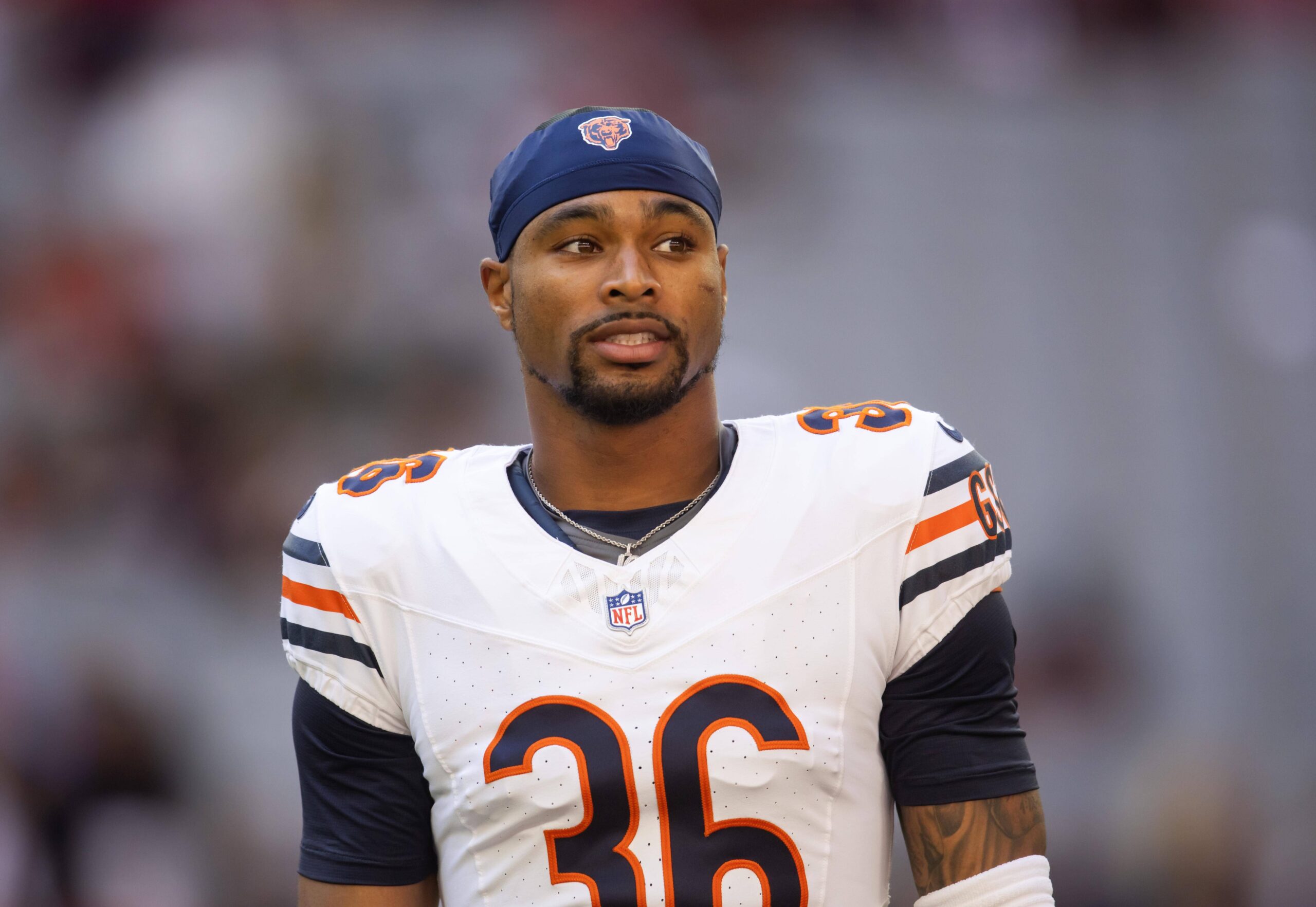
The separation also protects the article’s visual logic. Tattoo-bearing images are mapped to specific claims and placed after explanatory prose. Supplemental portraits appear later under neutral headings, with explicit wording that they add context only. That makes the difference visible in both the writing and the layout.
The published coverage remains partial, but it is not empty. Across the close hand image, the forearm frame and the published collage, Owens’s documented ink has a clear personal detail and a broader arm presence. The two portraits simply show the person attached to that coverage.
What the published record supports
The strongest documented claims are narrow but useful. Owens has a visible S initial on his ring finger, PureWow and Promiflash connect that letter with Simone Biles, and Sports Illustrated shows more extensive tattoo coverage on his forearm. Those claims are supported by distinct photographs and by named editorial reporting rather than by a single recycled portrait.
The record does not justify a complete body map. The SI images show arm coverage, but the available photographs do not resolve every motif. The public articles also do not establish a definitive artist list, appointment timeline or explanation for every mark. A good tattoo guide should leave those questions open instead of filling the gaps with confident-sounding guesses.
That restraint is especially important with personal initials. The S carries an obvious relationship association because the reporting says so, but the photograph itself only establishes the letter, its placement and the moment in which it was shown. The meaning is documented context, not a reason to invent extra symbolism.
How to read the visual evidence
The images work together because each contributes something different. The vertical close-up resolves the finger letter. The sports photograph establishes the scale of the forearm work. The Promiflash collage connects the hand detail with a face-visible relationship frame. The later public appearances identify Owens in other settings, but they remain supplemental and are not counted as tattoo evidence.
This separation also answers a common problem in celebrity tattoo coverage: a generic portrait can be visually attractive while saying almost nothing about ink. The article therefore gives tattoo-bearing originals priority and uses neutral context photographs only after the tattoo search has been exhausted. Readers can see which claims belong to which kind of photograph.
Further photographs could reveal additional designs or clarify the forearm pieces. If a future interview identifies a specific motif, artist or date, that detail should be paired with its own reliable source and a distinct image. Until then, the defensible record is the one visible here: a relationship-linked S initial, documented arm coverage and a separate identity route.