Interviews identify several of Jon Bernthal’s tattoos. The left side of his chest says “Lil Bird,” his nickname for his wife, Erin, as Esquire reported after meeting him at the August Wilson Theatre in 2026. On his wrist is the name of Alma Becker, his former Skidmore teacher; Bernthal told Fresh Air it appears with the Moscow Art Theatre emblem. Backstage has also described a seagull on his hand, inspired by Chekhov’s play. Photos show more lettering across his chest and dark, shaded work on his side, arm, hand and neck. The smaller writing is hard to read, and screen images can mix his own tattoos with designs added for a character.
The “Lil Bird” tattoo documented in 2026
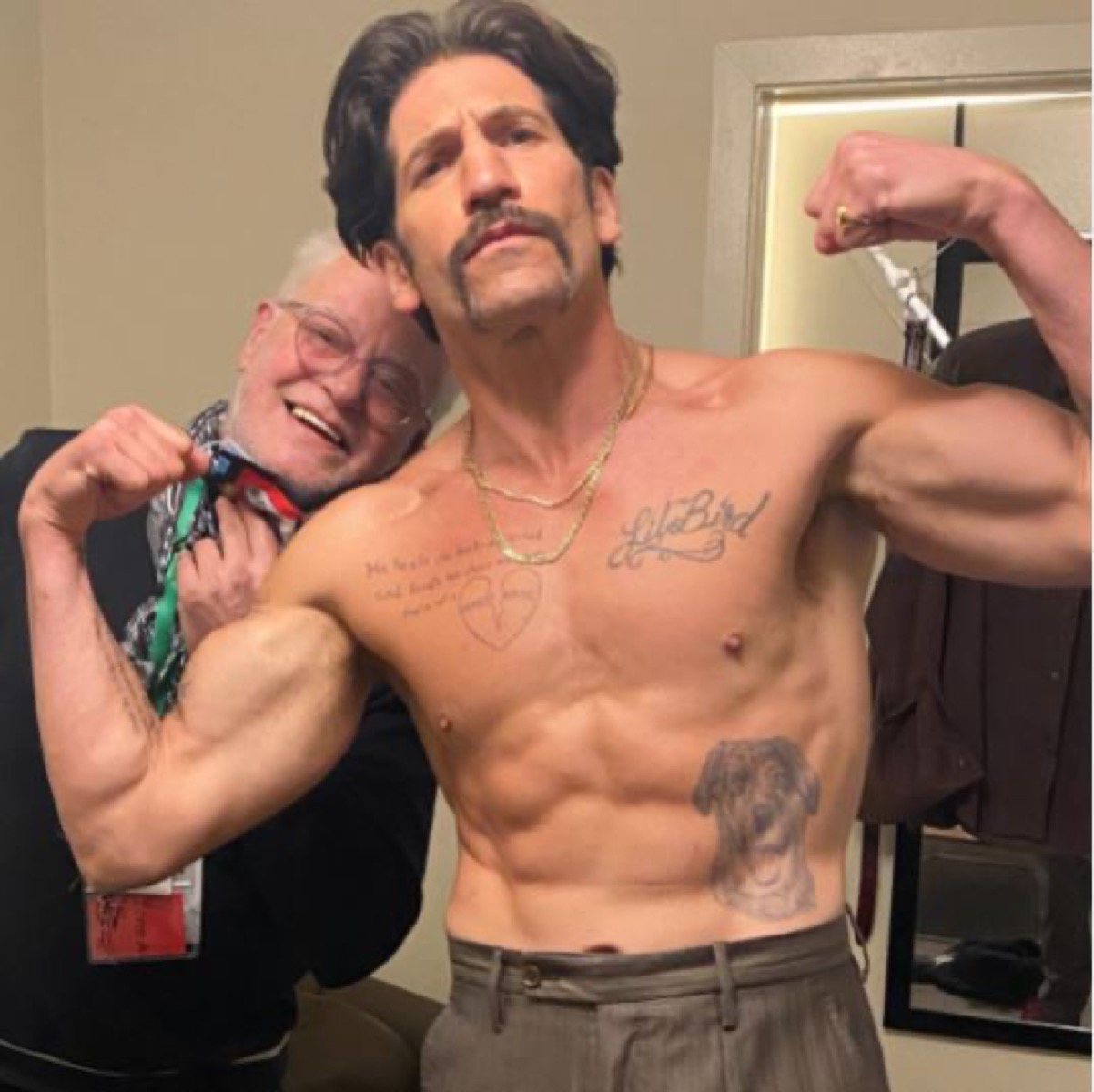
In May 2026, Esquire writer Michael Sebastian met Bernthal at the stage door of the August Wilson Theatre, where he was starring in the Broadway production of Dog Day Afternoon. Bernthal had blue jeans and an orange sweatshirt on. An American flag and the words “We Support the Troops” were printed on the front. He was shirtless beneath it, and a little of the tattoo on his left pectoral showed below the hem. The profile says “Lil Bird” is the nickname he uses for Erin.
The lettering is black cursive with curled strokes around the words. It sits high on the left pectoral and is easy to see in the shirtless photograph; with the sweatshirt in place, only part of it peeks out.
A second chest photo shows several designs together. “Lil Bird” sits on one pectoral; fine lines of script cross the other, with a small outlined heart below. Lower on his side is a dark, shaded portrait. The smaller script is too faint to transcribe from the image, so its wording remains unknown.
The family tattoos behind the visible collection
Alma Becker was Bernthal’s acting teacher at Skidmore College. GQ reports that she encouraged him to pursue acting and study at the Moscow Art Theatre. She also officiated his wedding. In his Fresh Air interview, Bernthal pointed to the tattoo on his wrist and said it includes Becker’s name and the theatre. He spoke about how much her belief in him changed his direction; the name is there for a specific person, not as an unexplained flourish.
GQ’s profile adds a small detail: Bernthal rubbed away the makeup covering the tattoo as he talked about Becker. That moment also shows how tattoos can disappear in a portrait or under camera makeup. Backstage describes a seagull tattoo on his hand, inspired by Anton Chekhov’s The Seagull. Bernthal used the bird to talk about pursuing a dream and staying with it.
Jon Bernthal tattoo portraits from 2026
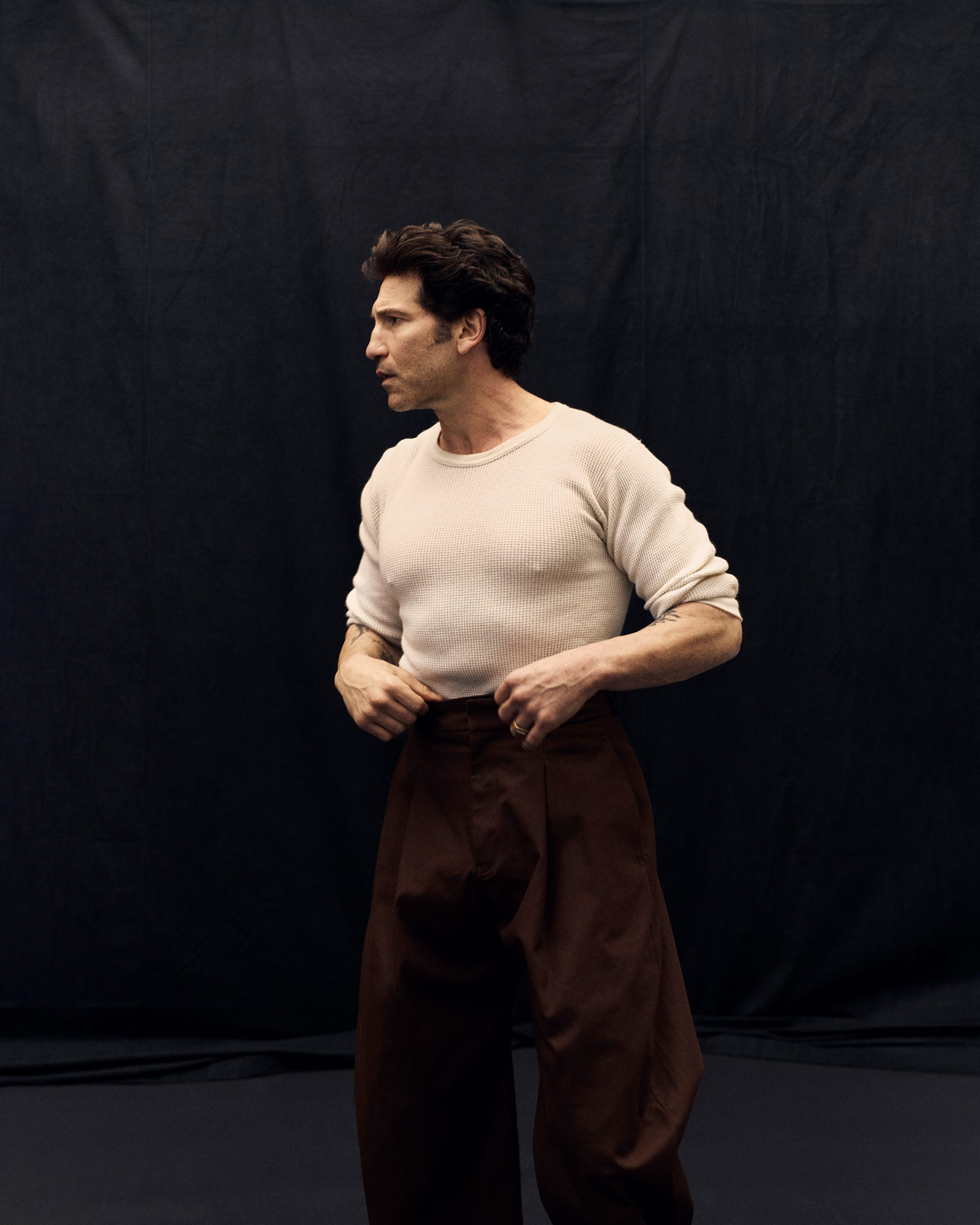
Esquire’s 2026 story places “Lil Bird” at a particular moment: Bernthal outside the theatre before a performance, dressed in an orange hoodie with an American flag on the chest. The tattoo is visible because he is shirtless underneath it and the sweatshirt has shifted. The profile’s other portraits move from full-body frames to close crops, with work clothes, tailored outfits and dark backgrounds. A rolled sleeve can show part of an arm design; a tighter crop may leave only the chest lettering in view.
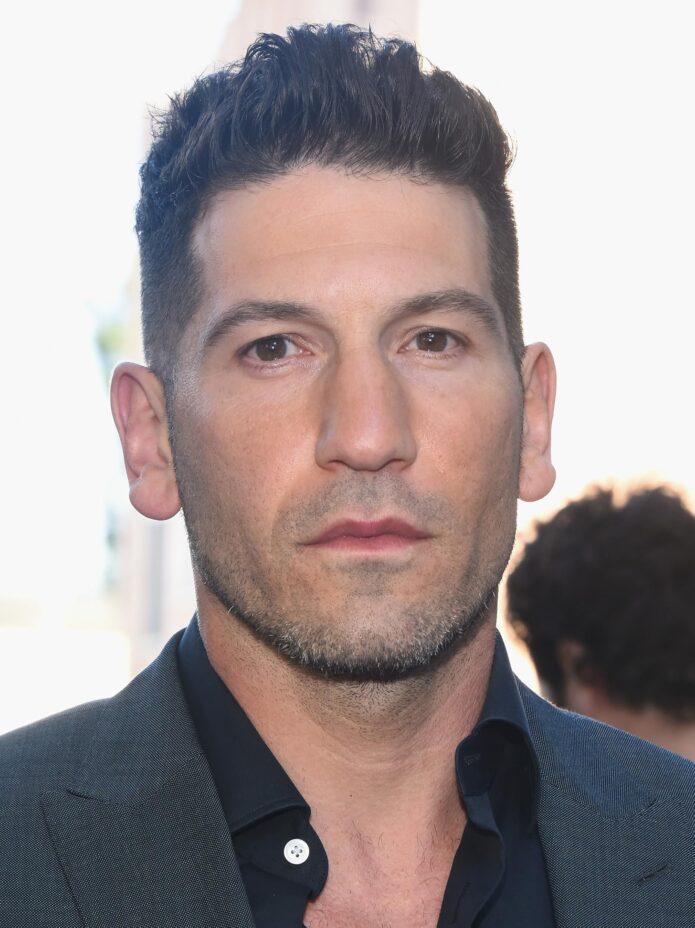
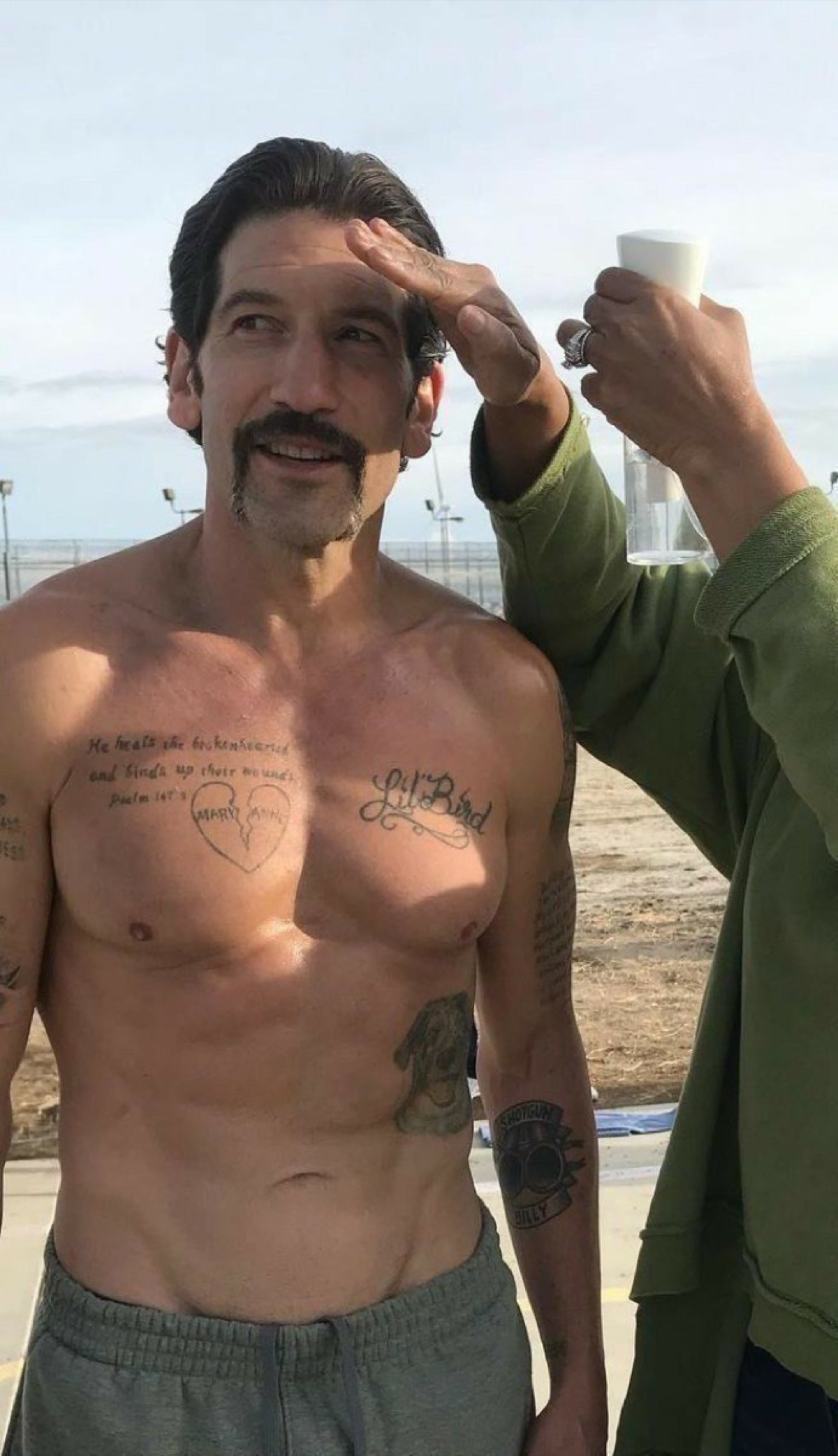
The third photograph here is a brighter, outdoor chest view. Bernthal has a moustache, and the image shows the chest script on both sides, the small heart outline, the shaded piece along his side and the darker coverage on his forearms. Fine text is visible on his fingers, though its size makes it difficult to read. This frame gives a clearer view of how close the chest designs sit to one another than a cropped portrait would. The separate face-visible portrait identifies Bernthal; it does not document a particular tattoo.
Screen tattoos and a changing silhouette
Bernthal has appeared with ink in The Punisher, The Bear, The Walking Dead, Fury, Baby Driver and Shot Caller. Each project gives the camera a different view of him. A costume may cover a wrist or open across the chest; makeup can cover a personal tattoo or add a design for a role. What appears in a film still needs a little context before it can be counted as part of his own collection.
In an interview about Shot Caller, Bernthal told The Independent that the tattoos “don’t come off” while discussing his work on the film and the time he spent around prisoners. He was describing the character work and filming, not confirming that every on-screen design is one of his personal tattoos. GQ’s account of makeup covering the Alma Becker tattoo is another example of the opposite problem: a real tattoo may be hidden before a camera sees it.
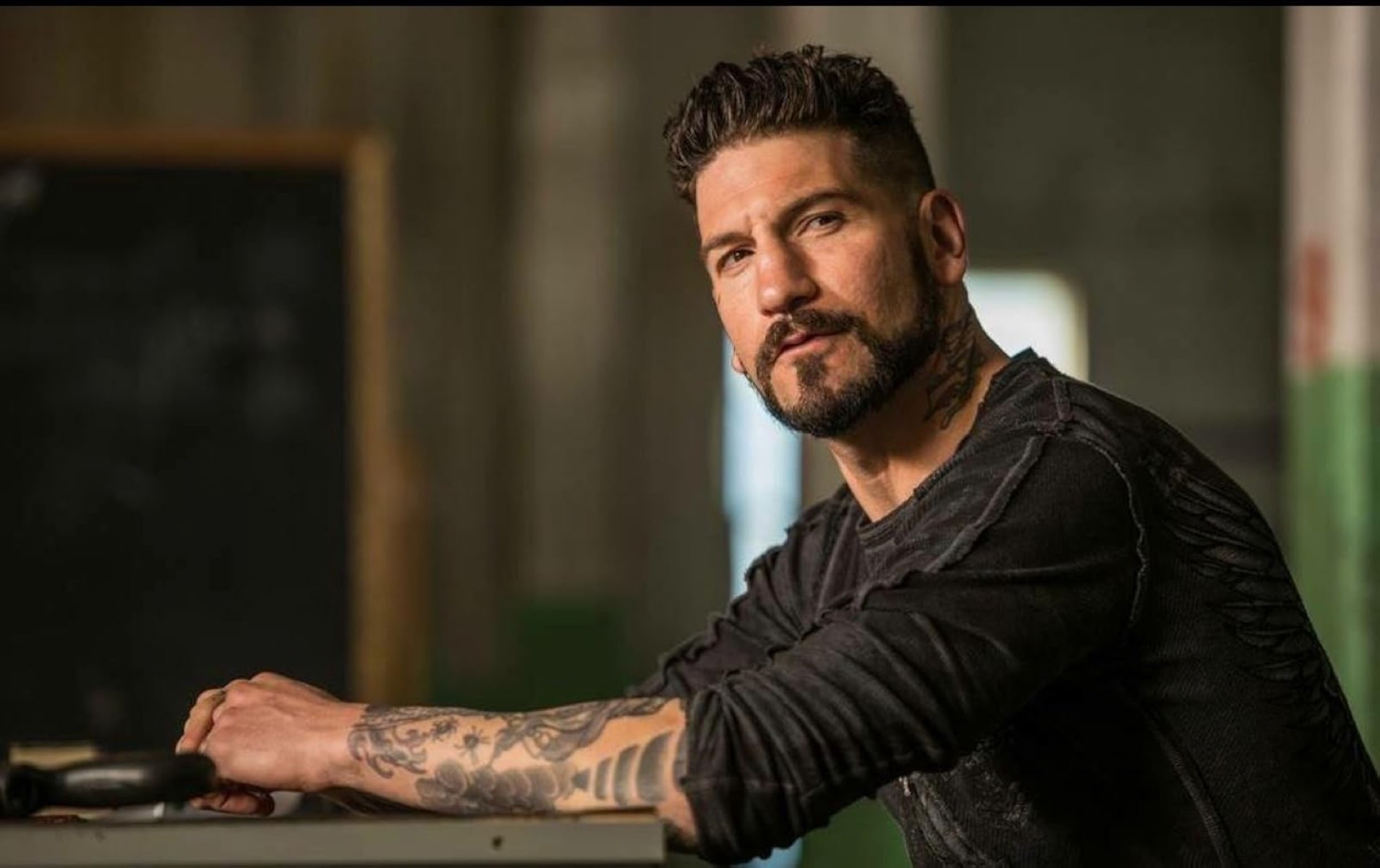
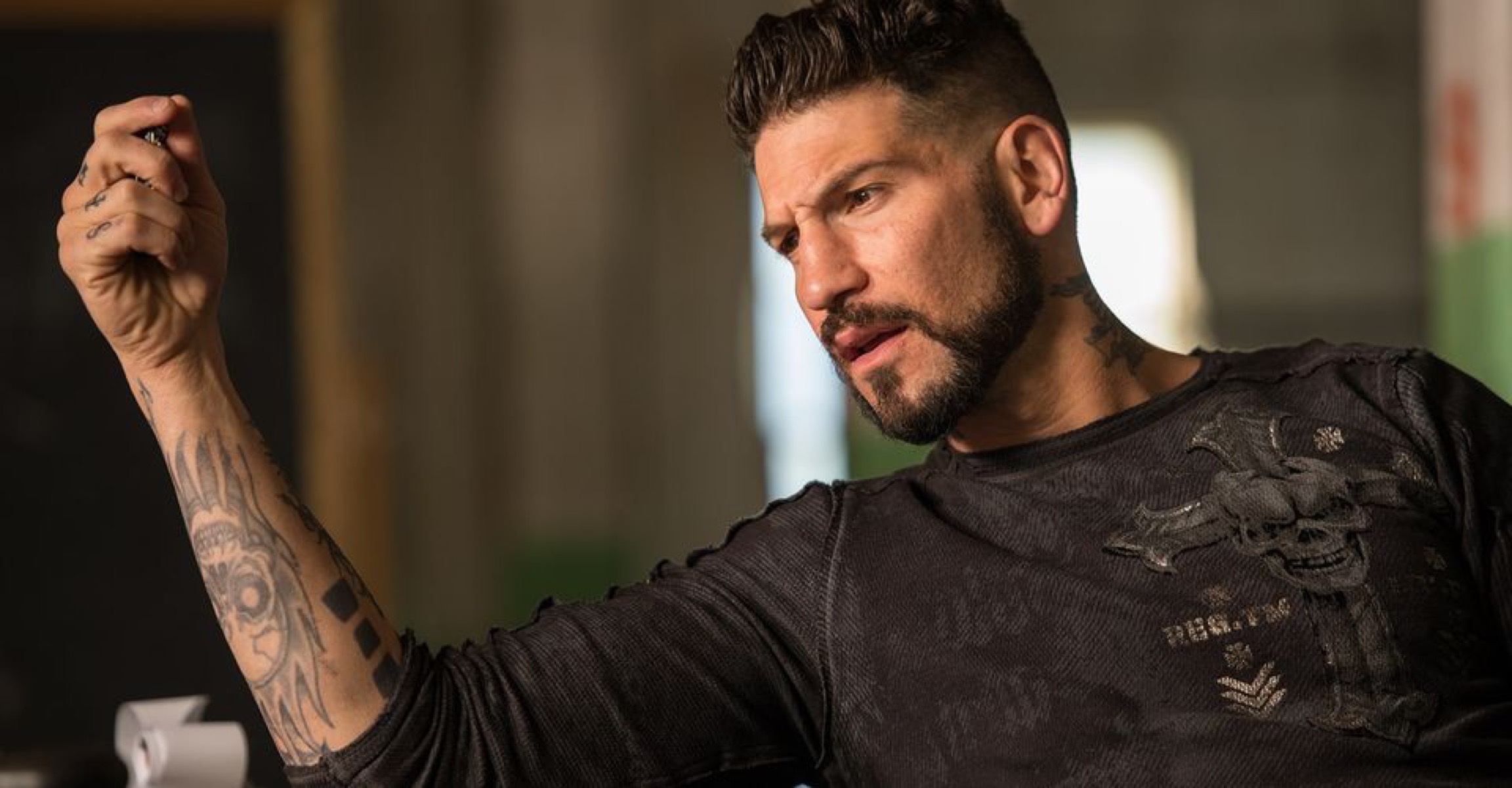
The forearm photo here is dense with black-and-gray work. A large shaded face or eye-like form fills much of the inner arm, with dark blocky shapes and lettering closer to the wrist. Fine marks cross the fingers. A dark tattoo rises along the side of his neck. The shading gives the arm a heavier look than the cursive on his chest. The picture shows the designs’ placement and density, but doesn’t identify the face or explain the smaller marks.
What these tattoos show and hide
The chest and forearm pictures have different light and scale. Bright light separates the thin chest script from the skin, though the small writing still can’t be read. In the arm portrait, softer light and a dark shirt let the gray shading merge into the background; the hand and neck pieces stand out. A tight crop makes one section of an arm look like the entire design. The wider shot shows how the work carries from wrist toward elbow.
Clothing changes the view, too. Esquire caught only part of “Lil Bird” beneath Bernthal’s hoodie; the outdoor photo shows the phrase beside several other chest marks. In a screen still, costume and character makeup may cover or add ink. Comparing images helps identify a tattoo’s location, but a person’s explanation is what gives it a meaning.
The source record around Bernthal
Esquire’s May 2026 profile describes the left-chest “Lil Bird” tattoo and the moment it appeared beneath Bernthal’s orange sweatshirt at the August Wilson Theatre. GQ identifies Alma Becker as his Skidmore mentor and reports that her name is tattooed on his wrist. On Fresh Air, Bernthal says the wrist piece includes the Moscow Art Theatre. Backstage links the seagull on his hand to Chekhov’s play. The Independent’s Shot Caller interview gives context for tattoo continuity during filming.
Together, those sources explain a few designs, not all of them. The chest lettering is too small to read in places, and no interview here identifies the shaded portrait on his side or the larger arm work. Photos are still useful: they show placement, linework and how dark the ink is. The explanations stay with the tattoos the sources actually discuss.
Why the collection feels personal
Erin’s nickname, Becker’s name and the seagull each point to a different part of Bernthal’s life. The first is about his marriage, the second about his acting teacher, and the last about a play that stayed with him.
The styles differ in the pictures. Fine cursive sits high on his chest beside an outlined heart and smaller writing. Lower on his side, the portrait is darker and more heavily shaded. The forearm and neck carry stronger blocks of black and gray, while the hand has fine marks across the fingers. The finer chest writing has personal stories attached; the shaded portrait and forearm designs stand out in the photos without the same kind of public explanation.
The photos show a mix of fine chest lettering and heavier, shaded work on his side and arms. Only some of the designs have a story Bernthal or a profile has put into words.
Sources: Esquire’s 2026 profile, GQ’s profile of Bernthal, Fresh Air, Backstage, and The Independent.
One thought on “Jon Bernthal Tattoos: Lil Bird, Family Names and Screen-Ready Ink”