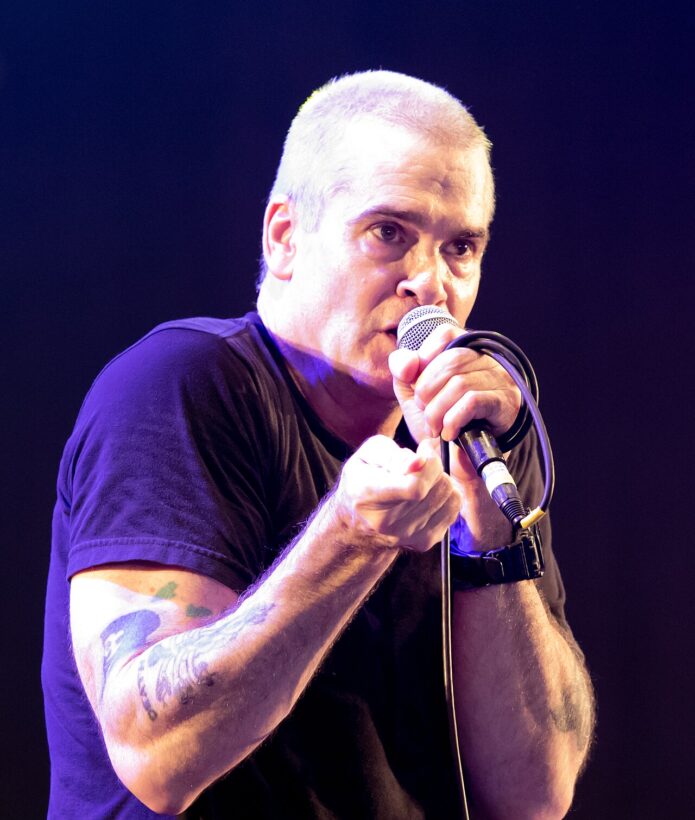
Henry Rollins has never used tattoos as decoration. On him, the ink feels like a personal map of the music, friends, and ideas that stayed with him as life changed. The mostly black-and-grey designs are blunt and direct, much like the voice he developed through Black Flag, Rollins Band, spoken-word tours, and years of writing. This guide sticks to tattoos that are clearly visible or have been discussed in interviews and fan archives, rather than guessing at every blurred mark in a concert photo.
The clearest pieces include the Black Flag bars, the Misfits Crimson Ghost, an Einstürzende Neubauten logo, a portrait of his grandfather, a heart marked “Jamia,” and the larger back piece associated with tattoo artist Rick Spellman. Rollins has described his tattoos as products of a particular era and identity, so the story is as much about memory and time as it is about placement.
The Black Flag Bars Are the Starting Point
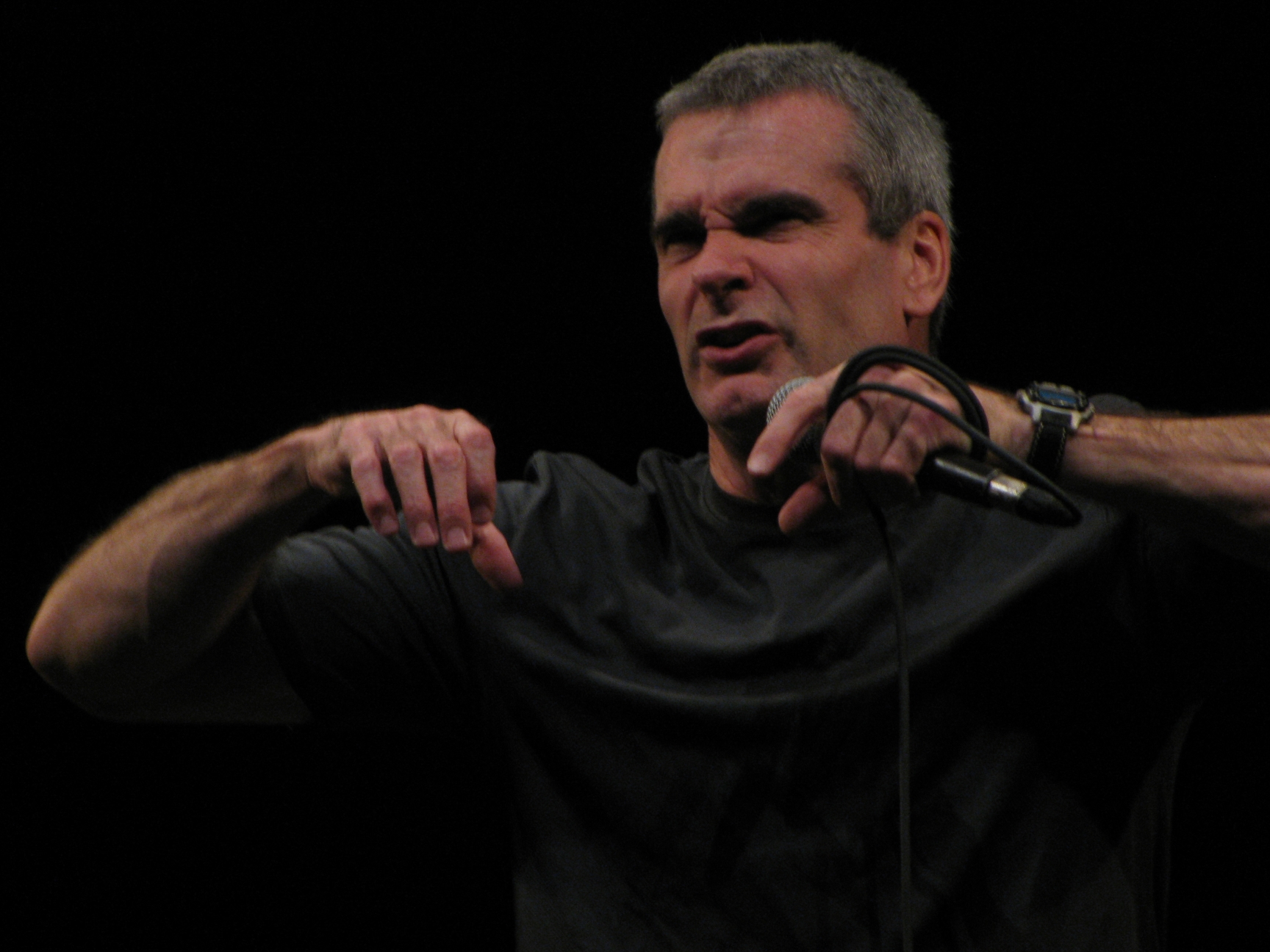
The Black Flag bars are the tattoo most closely tied to Rollins’s public image. Raymond Pettibon’s design became one of punk’s most recognisable symbols, and Rollins carried it from his years in the band into the rest of his life. It sits near the back of his neck, where it can disappear in an ordinary portrait but show clearly when he turns toward the camera or leans forward onstage. It’s a compact design with a long history behind it.
Rollins has talked about getting the bars after the band’s visual language had become part of his world. The tattoo doesn’t claim that he created the artwork; it connects him to the band, a period, and the community around it. In that sense, the bars work almost like a signature. It looks blunt because the memory itself is blunt.
The Misfits Skull Connects Him to Horror Punk
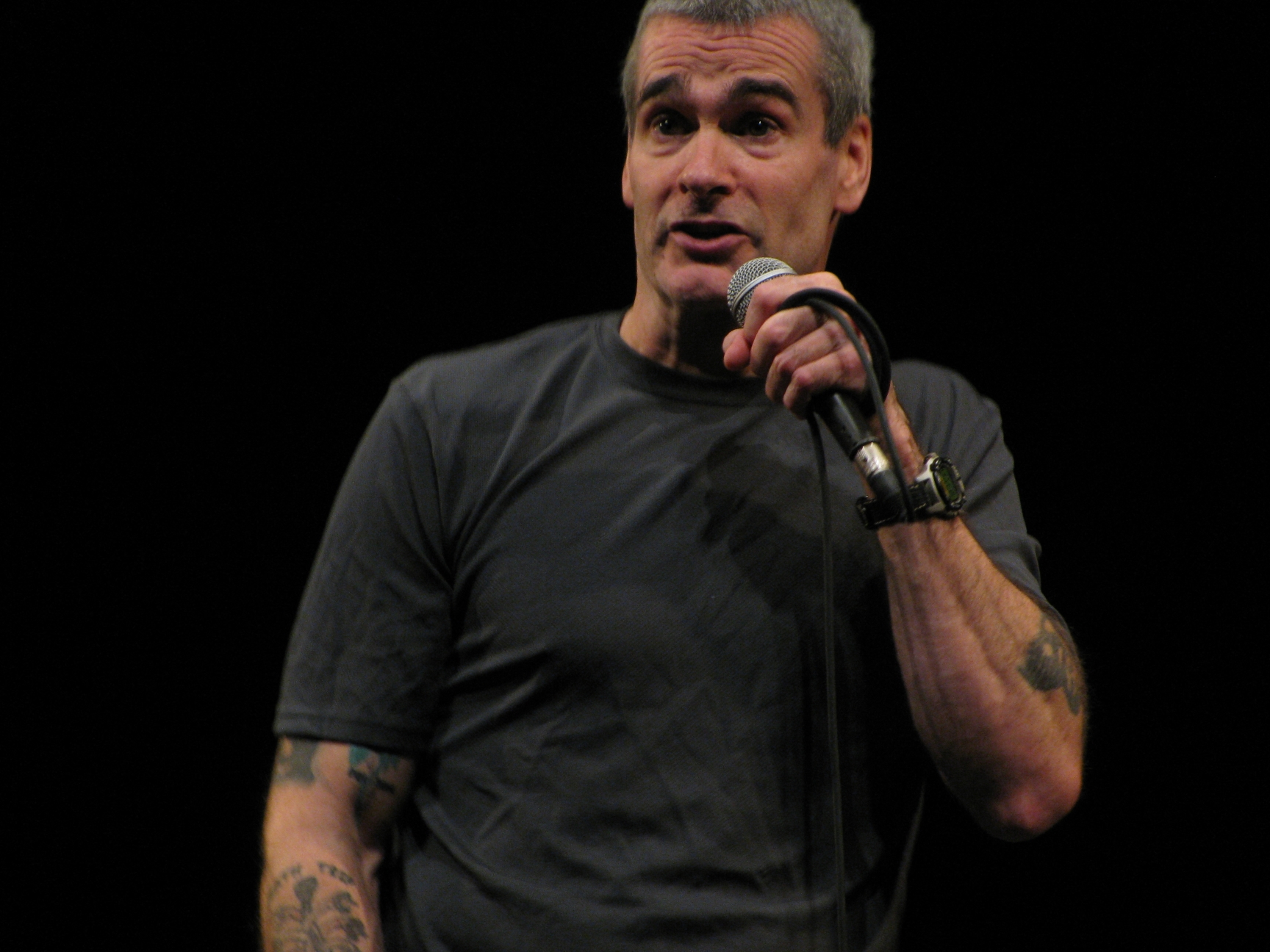
Another often identified design is the Crimson Ghost, the skull mascot of the Misfits. It sits naturally alongside Rollins’s other punk references, with the same mix of menace, theatre, and underground shorthand. It’s also easy to recognise from a stage, which is why it appears so often when fans compare older and newer photos.
The Misfits tattoo isn’t tied to one lyric or album as much as a shared visual language. Horror imagery, stark lines, and a little rebellion all come together in the skull. Rollins’s tattoos aren’t one conventional, colour-filled sleeve; they’re separate statements gathered over decades.
The Einstürzende Neubauten Mark Adds an Industrial Edge
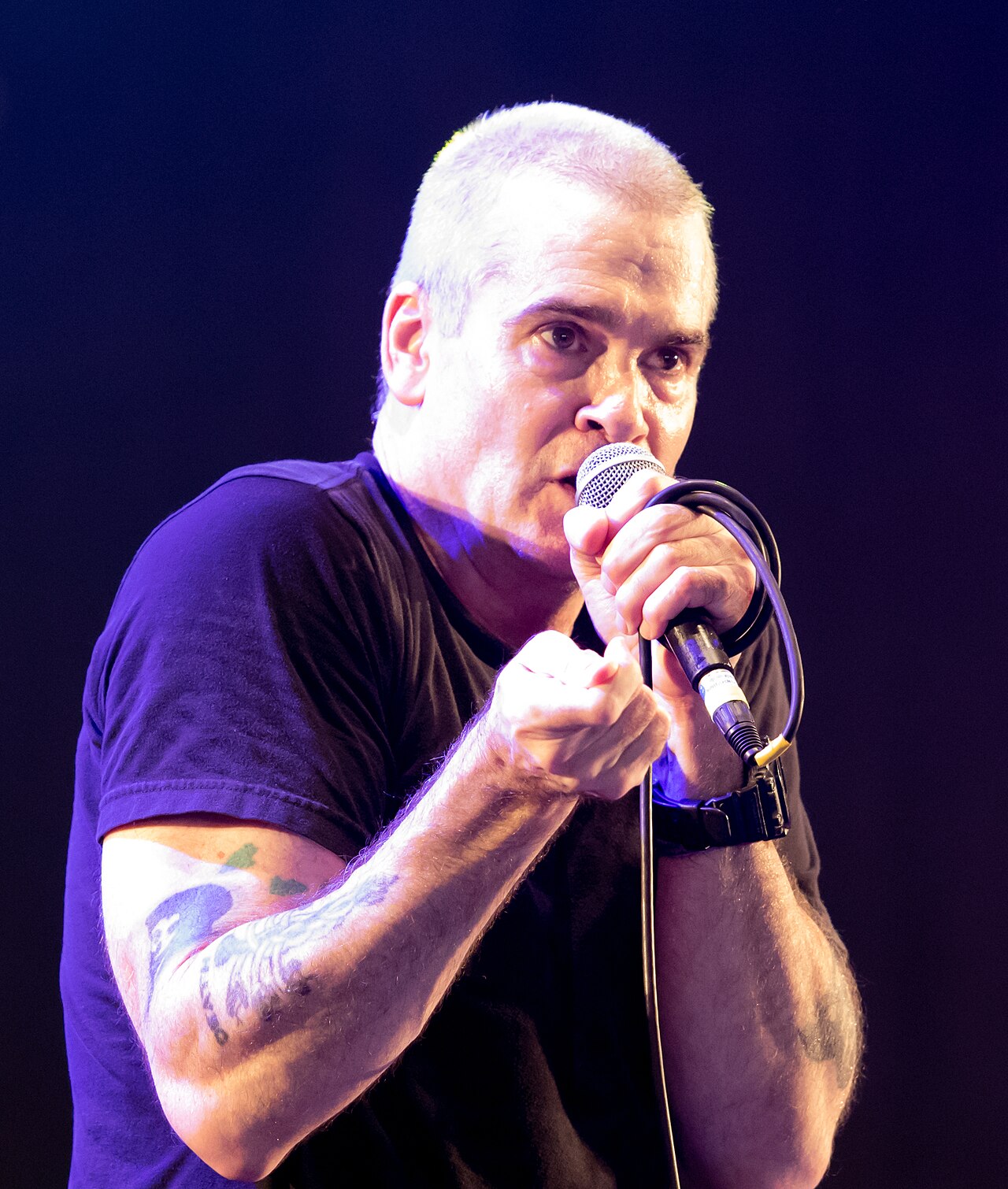
Rollins has also been identified with an Einstürzende Neubauten logo. It fits his interest in noise, industrial music, and artists who push against familiar forms. The mark is usually described as an arm tattoo, adding a different musical reference to a collection otherwise known for American hardcore and punk.
A band logo can be a souvenir, but it can also keep a creative influence close. For Rollins, it points to a broader listening life. Its placement helps, too: arm tattoos show up naturally in performance photos, without every image needing to be staged as a tattoo reveal.
His Grandfather’s Portrait Makes the Collection Personal
Among the most intimate designs is a portrait of Rollins’s grandfather, reported on his left bicep. Portrait tattoos can be hard to identify from a distance, especially under harsh stage lights, but the family connection has been reported often enough to make this one of the stronger entries in the inventory.
The portrait shifts the mood of the collection. Black Flag, the Misfits, and Neubauten are public cultural references; a grandfather is a private relationship carried into public view. It also shows why counting only logos misses the point. Rollins’s tattoos hold music history and family history side by side, without needing to match stylistically.
The Jamia Heart Sits in Plain Sight
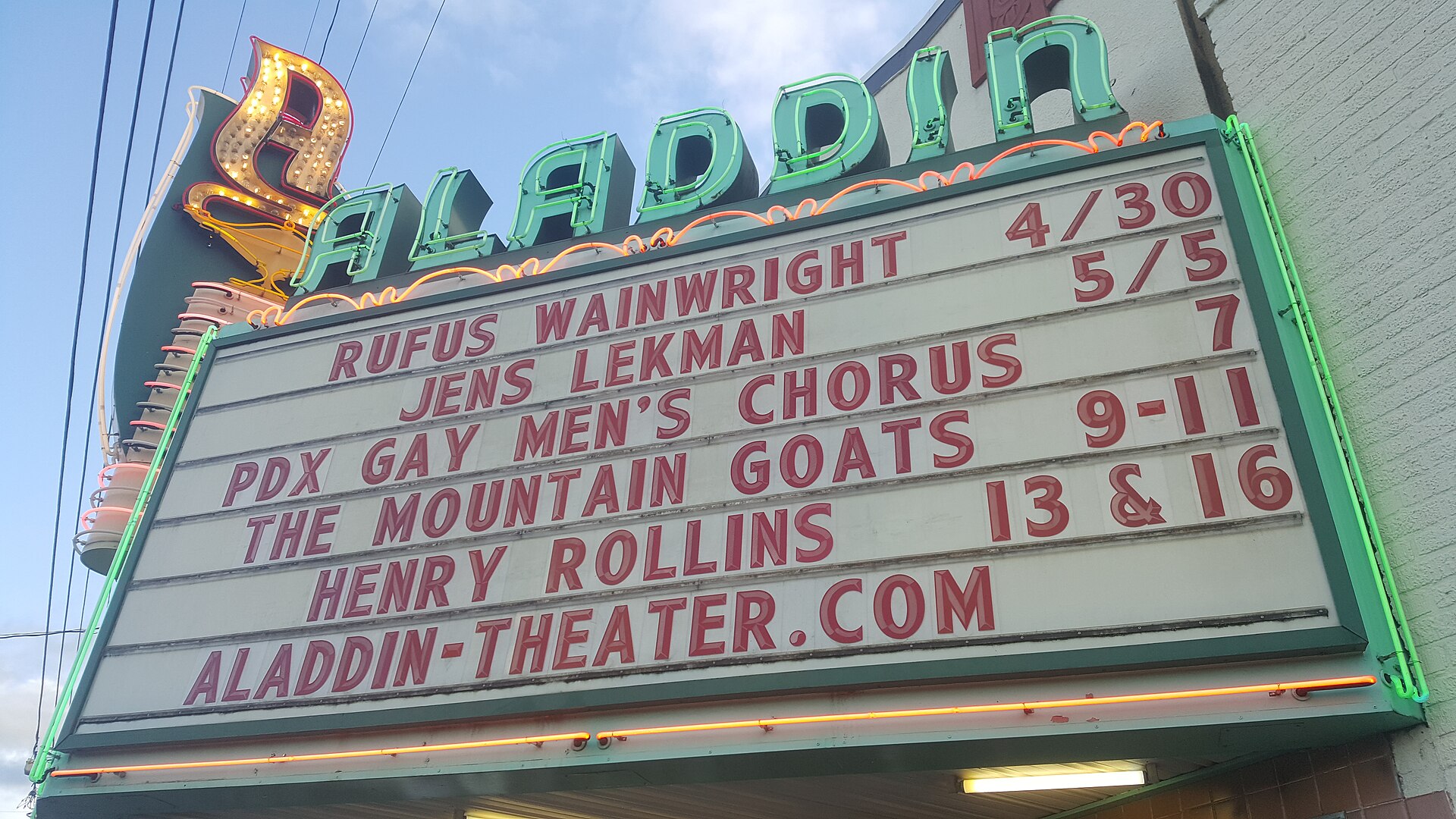
A heart bearing the name Jamia has been identified on Rollins’s right hand. Hand tattoos are direct: they show during conversation, writing, and performances. This one is small next to his back piece, but its placement gives it a strong presence. It’s a name rather than a band symbol, making it one of the collection’s more openly affectionate details.
There’s no need to invent a dramatic backstory. The documented detail is the heart and the name; anything beyond that is speculation. That caution matters because photos can tempt people to fill in gaps. A reliable inventory separates what Rollins has shown from what viewers only think they can make out.
The Large Back Piece Is the Biggest Visual Statement
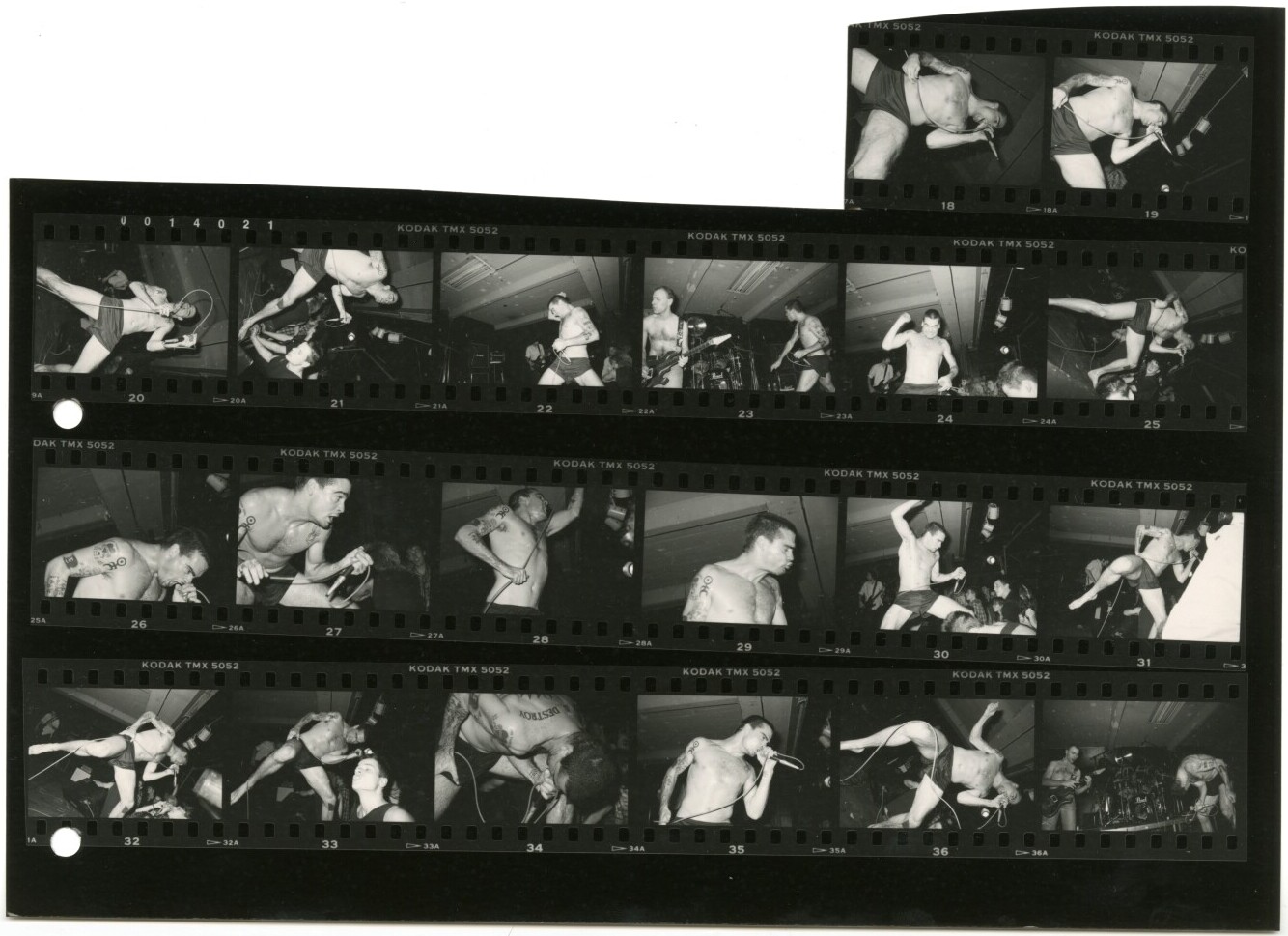
Rollins’s back is often described as a large black-and-grey piece, with a bold sun and the words Search and Destroy appearing in accounts of his tattoos. The work is associated with Rick Spellman, whose style helped shape it. The back is harder to document than an arm because it usually appears only when Rollins is shirtless or turns away from the camera, so different photos show different parts.
The sun gives the piece a central image visible from a distance; the lettering makes it more specific. “Search and Destroy” carries punk’s confrontational energy, but it can also sound like a personal rule: keep moving, keep questioning, don’t settle. The back piece feels like the closest thing Rollins has to a manifesto on skin.
Early and Later Photos Show the Collection Growing
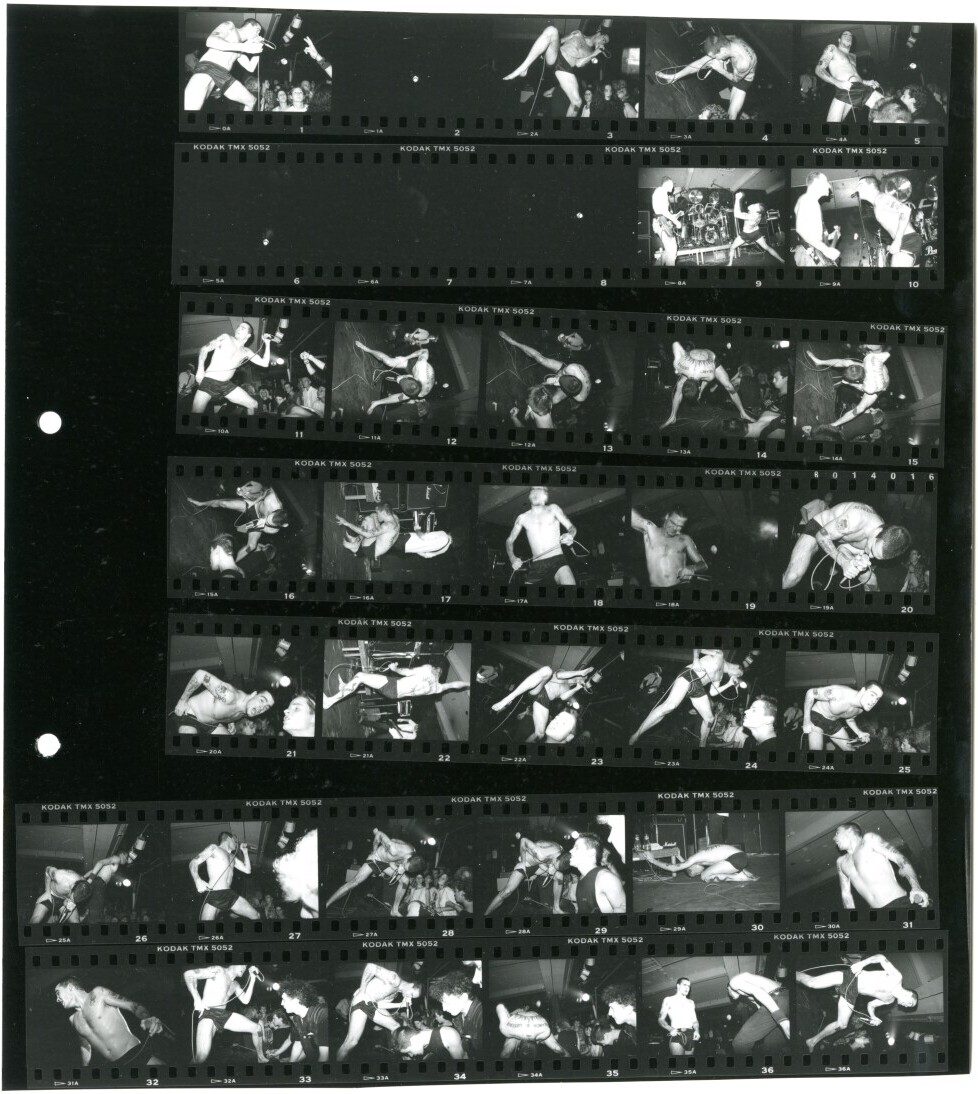
Photos from the 1980s through the 2010s help tell the story because Rollins’s tattoos developed over time instead of arriving as one finished look. Early images show fewer visible marks; later portraits and performances reveal more established work on his arms and back. The change is gradual, as you’d expect from a collection built across a long career.
Concert photography also affects what can be confirmed. A sleeveless stage photo may show the arm logos but hide the back. A spoken-word portrait might show his neck and shoulders while leaving his hands out of frame. That’s why several photos and interviews give stronger evidence than one supposedly definitive image.
What Can Be Confirmed and What Still Needs Caution
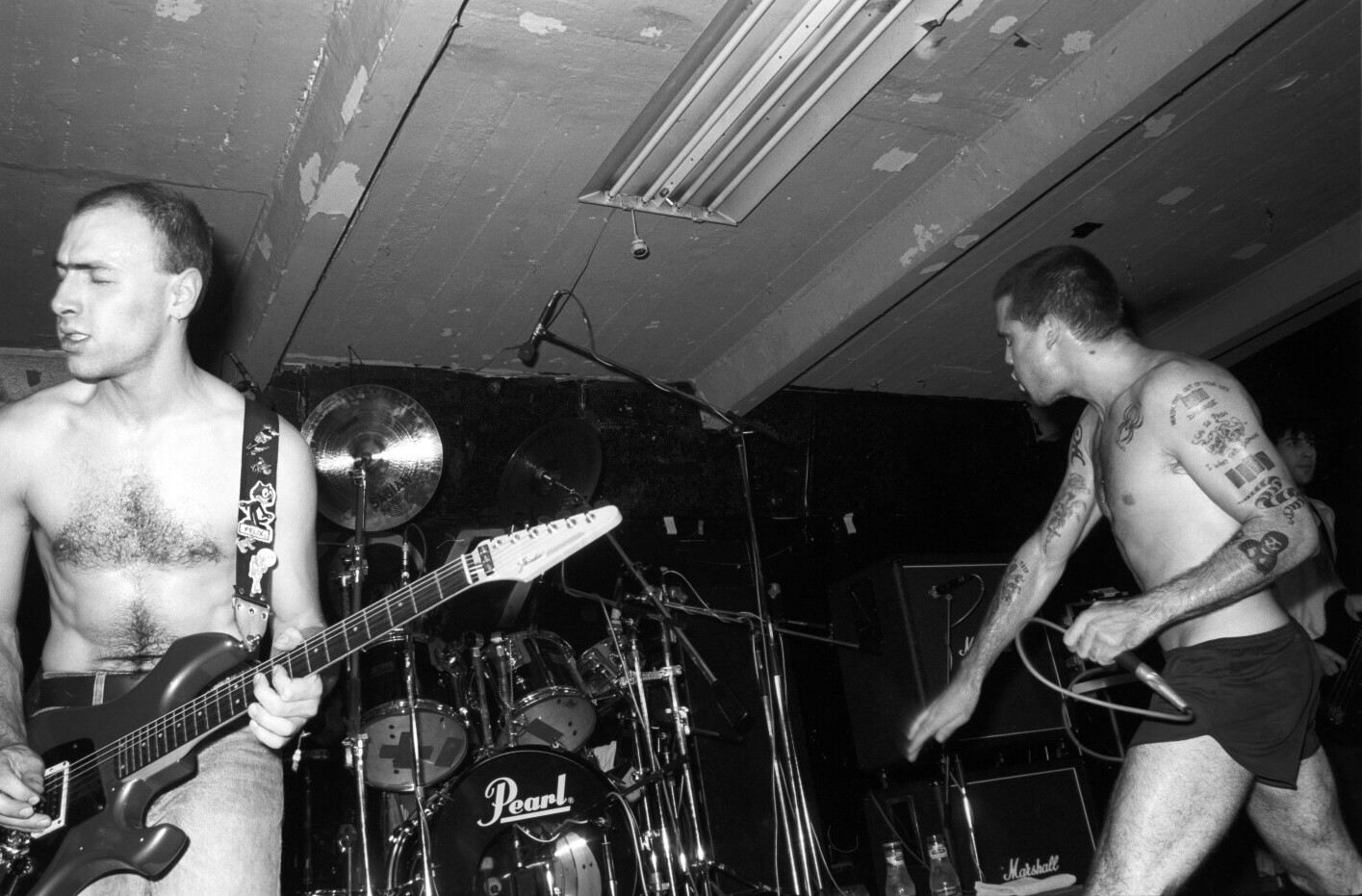
The clearest inventory includes the Black Flag bars, Misfits skull, Einstürzende Neubauten logo, grandfather portrait, Jamia heart, and a substantial back piece often described with a sun and “Search and Destroy.” Smaller marks may appear in photos, but they shouldn’t be listed as fact unless Rollins or a reliable source identifies them.
That balance is part of what makes the collection interesting. Rollins doesn’t seem to treat tattoos as a constantly changing fashion project. They record loyalties, family, influences, and a particular sense of self. The designs are mostly monochrome, a little rough around the edges, and tied to the life he actually lived. For fans, the ink feels like an archive worn on the body.
The record is uneven in a very human way. Some designs are easy to name, some appear only briefly, and some have been explained by Rollins while others remain private. The most useful approach is to keep the confirmed pieces together without turning every shadow in a photograph into another tattoo. That leaves room for the collection to change and still gives readers a grounded account of what can be seen.
When comparing photos, repeated appearances matter more than any one pose. The Black Flag bars and Misfits skull are the clearest punk markers, while the Neubauten symbol and family portrait point beyond the band history. Older images help show how the tattoos sat on his arms before later coverage made the larger work easier to see. A bent arm, flat light, or stage angle can change how a design looks, so this guide sticks to details that can be matched across available photos. The back piece is described carefully for the same reason: it’s a major part of the collection, but not every detail is equally legible in public images. The strongest evidence comes from designs that appear clearly more than once.
That care matters on a tattoo site. Clear placements and details that can be matched across photos are more useful than guesses about blurred shapes.
2 thoughts on “Henry Rollins Keeps His History in Black Ink”