
Gavin McKenna’s large black-and-grey tattoo wraps around his right forearm, bringing together a Yukon cabin, mountains, coordinates, a wolf and a moose. He has said the cabin was built by his grandfather Joe Mason. The coordinates are also tattooed on his mother and sister, while the wolf reflects his clan animal and the moose recalls family hunting memories.
McKenna grew up in Whitehorse and left home young to pursue hockey. The story behind the tattoo is tied to family and the place he came from, not just his career. The photographs show the main elements, and McKenna has explained some of their meaning; the artist and date haven’t been confirmed, so there’s no reason to guess about them.
The forearm tattoo is built around the Yukon
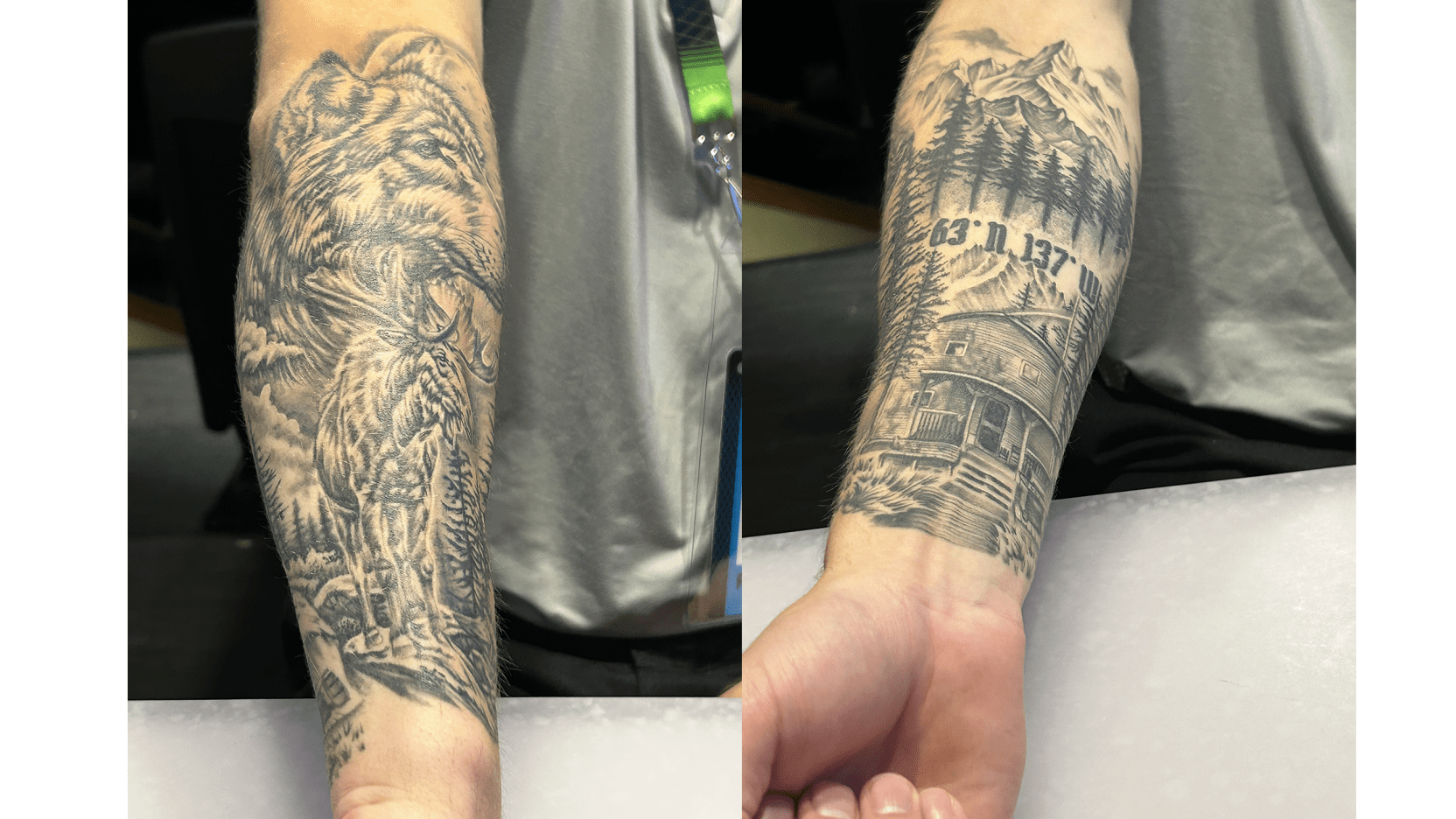
The clearest photo shows the scene wrapping around McKenna’s right forearm. Mountains and trees fill the upper part, with a cabin lower down as the focal point. The artist used soft grey shading and darker tree lines, letting the shape of the arm carry the landscape.
As the forearm turns, different parts of the image come into view. The cabin gives the scene a clear centre, while the mountains and trees lead the eye around the arm. It reads as a memory built from a few connected details rather than a postcard on skin.
A cabin, coordinates and a real sense of home
McKenna said the cabin belonged to his grandfather and was part of his family’s life near Whitehorse. The coordinates in the tattoo are shared by his mother and sister, making the location a family marker as well as a reference to the Yukon.
The numbers sit within the landscape instead of competing with it. They add a specific point of reference without taking attention from the cabin and mountains.
Why the wolf and moose fit the story
McKenna has said the wolf represents his clan animal. The moose connects to family hunting memories and the time he spent outdoors in the Yukon.
Those animals give the piece a different texture from the open mountain shapes. Fur, rock and trees each call for their own shading, but the subjects still belong together: home, landscape and family history. The design stays focused on a few images instead of trying to represent every part of his life.
Family is the part you can’t see at first glance
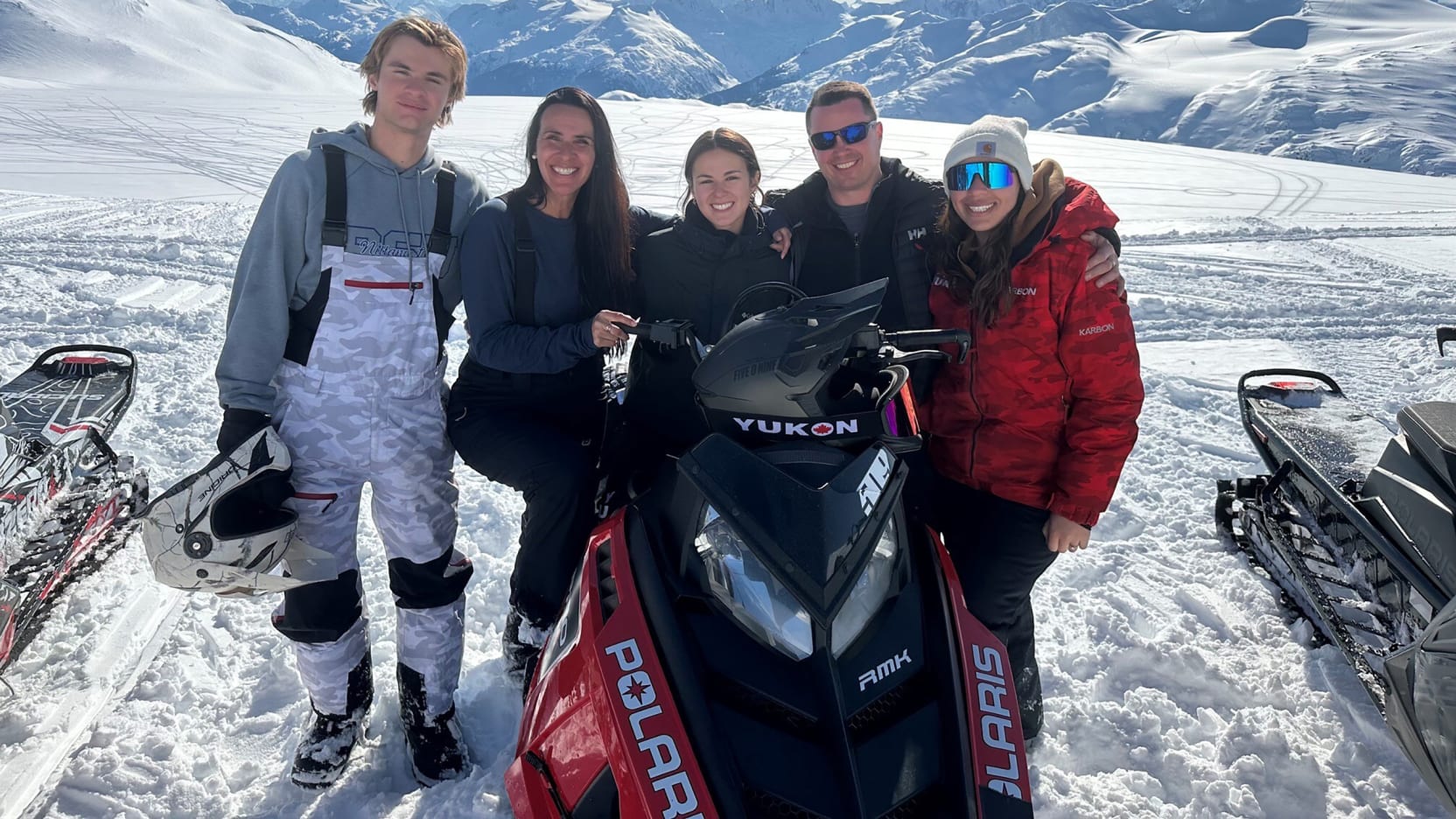
McKenna has spoken about missing ordinary family moments while travelling for hockey and about his grandfather’s resilience. That context makes the tattoo more than a general hometown design. The cabin, coordinates and animals point to relationships and memories that aren’t obvious from the photograph alone.
A name or date can mark a person or moment; a place can carry a wider set of associations. Here, the landscape gives the family story a visual form without spelling out every detail.
Leave some breathing room in the layout

The scene balances detailed areas with quieter mountain shapes and open skin. That space keeps the forearm from reading as one solid block of grey, and gives the smaller details room to stay clear as the tattoo ages.
Fine lines describe the cabin and distant landscape; heavier shading gives the animals more weight. The contrast helps the different parts read together without crowding each other.
A personal choice, not a hockey logo
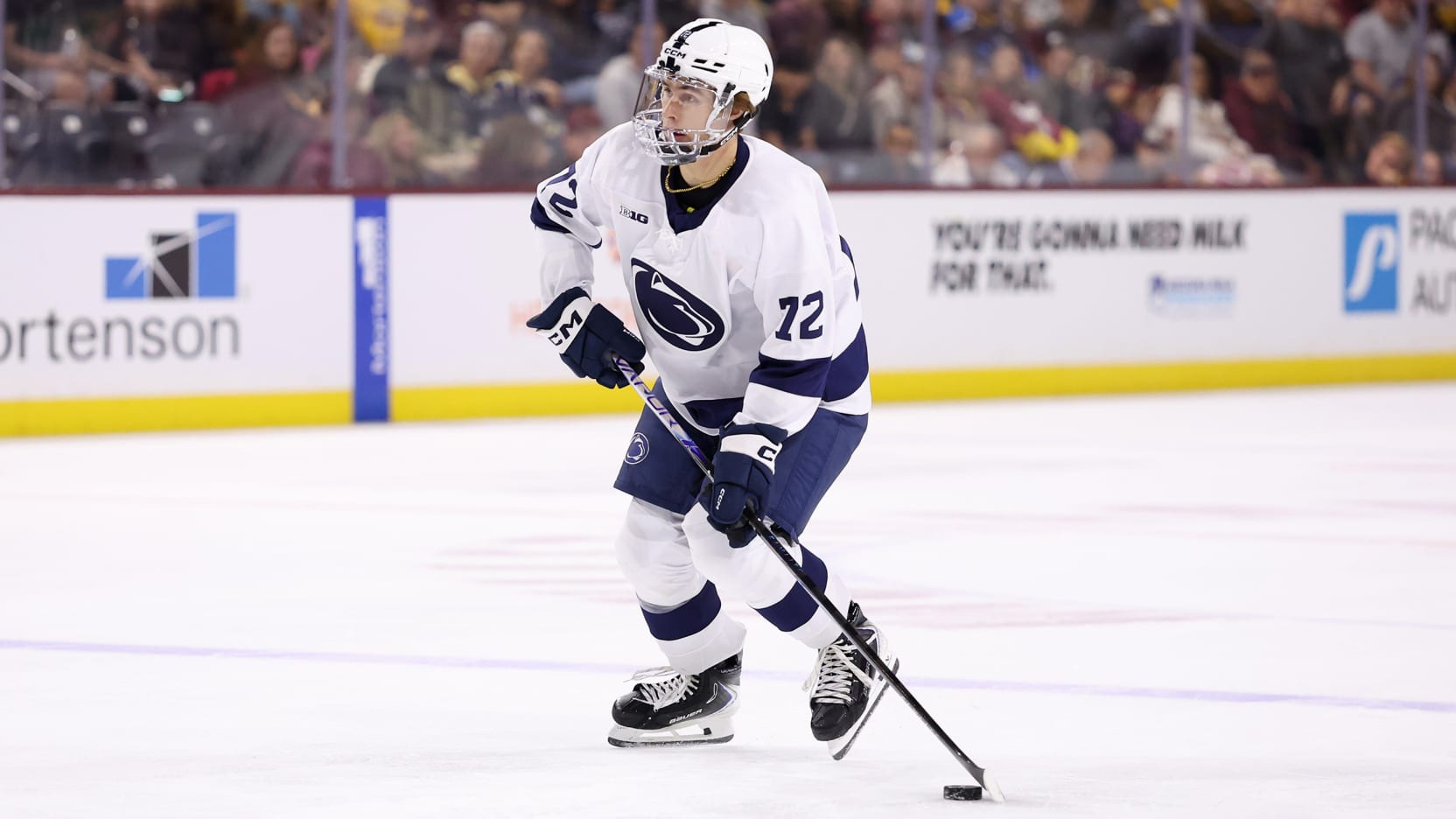
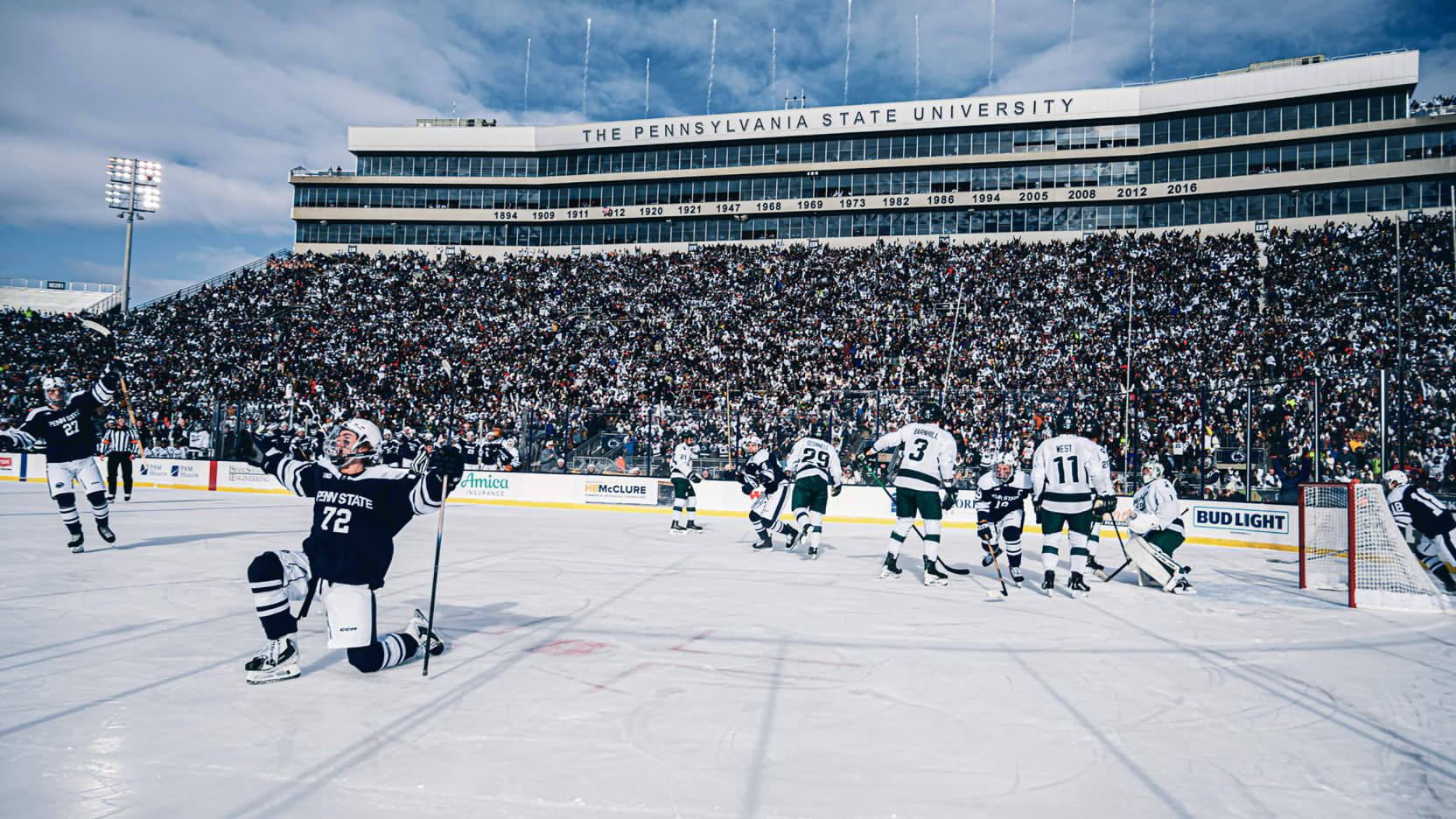
There’s no team crest, jersey number or trophy in the design. Hockey is part of McKenna’s story, but the tattoo centres on his family and home, so its meaning isn’t tied to one stage of his career.
That choice can give a career-related tattoo more staying power. A personal place or family symbol can remain meaningful through changes in work, while team references may feel more tied to a particular moment.
Three ideas that make the reference work
Three choices hold the composition together: the cabin gives the landscape a centre, the design follows the shape of the forearm, and its references all belong to the same story. The exact images can change; what matters is that they connect.
A coastal design might use a family boat and headland; a city piece could combine a familiar building with a local plant or animal. In either case, a few specific details will usually say more than a collage of unrelated references.
How to talk through a landscape commission
Tell the artist where the place is, what you remember about it and which details matter most. Bring clear photographs as references, but leave room for the design to change to fit your skin and the way the forearm moves.
Discuss the wrap, darker areas and open space before the drawing is final. Detailed black-and-grey work may take several sessions, especially when it includes animals, trees and a building. Give the design time to come together instead of rushing toward a finished photo.
The takeaway from McKenna’s story
McKenna’s tattoo connects family and home through a small set of related images. Its meaning comes from details he has explained, including the cabin, shared coordinates, clan animal and family hunting memories. The piece doesn’t need a hockey logo or a long quote to tell that story.
If you’re collecting celebrity tattoo ideas, the useful reference is the way the landscape follows the arm and keeps its symbols connected. For a video about McKenna’s draft-day story and next step in hockey, watch the interview below.