
Gabriel Jesus has tattoos tied to family, football and Brazilian popular culture. Published reports connect designs on his body with his childhood dream of becoming a player, a Racionais MC’s song and characters created by Chespirito.
His career has taken him from Palmeiras to Manchester City and Arsenal, as well as the Brazil national team. The sources describe several tattoos, but the photographs do not establish a complete list or explain every mark.
Gabriel Jesus’s chest tattoos in a goal celebration
A shirtless Manchester City celebration shows Jesus just after scoring, making a phone gesture toward the crowd. Portuguese lettering crosses his upper chest, with additional black-and-grey work on his shoulders and arms.
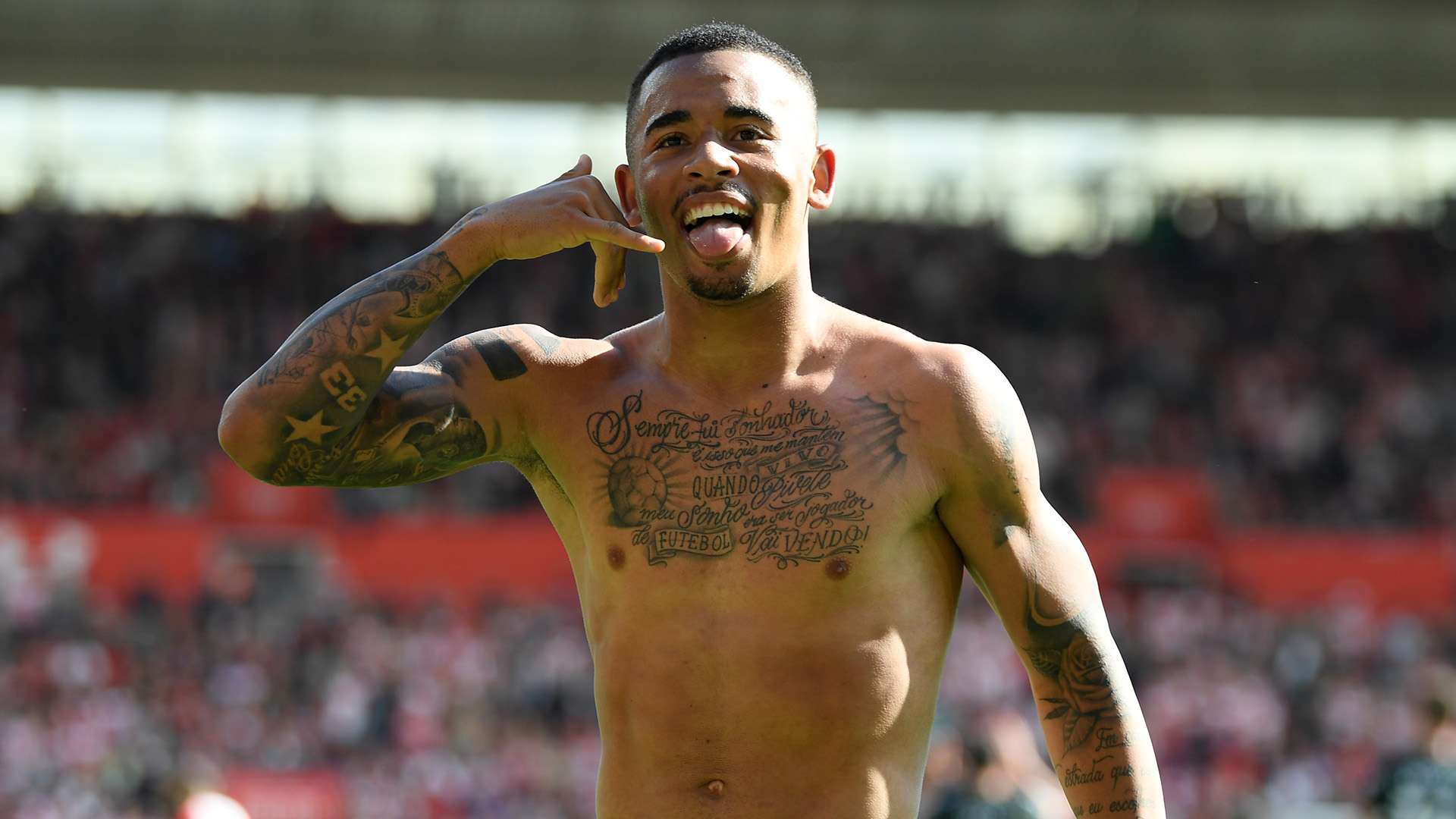
The wide event photo gives a useful view of his chest and arm coverage. Stadium light and movement make fine details hard to read, and the image doesn’t show when each tattoo was added.
The matching childhood-dream tattoo with Neymar
The most clearly explained design is a forearm scene: a boy with a football and Brazil cap looks toward a favela skyline. Reporting by The Guardian and the Premier League connects it with Jesus’s childhood dream of becoming a footballer and his matching tattoo with Neymar.
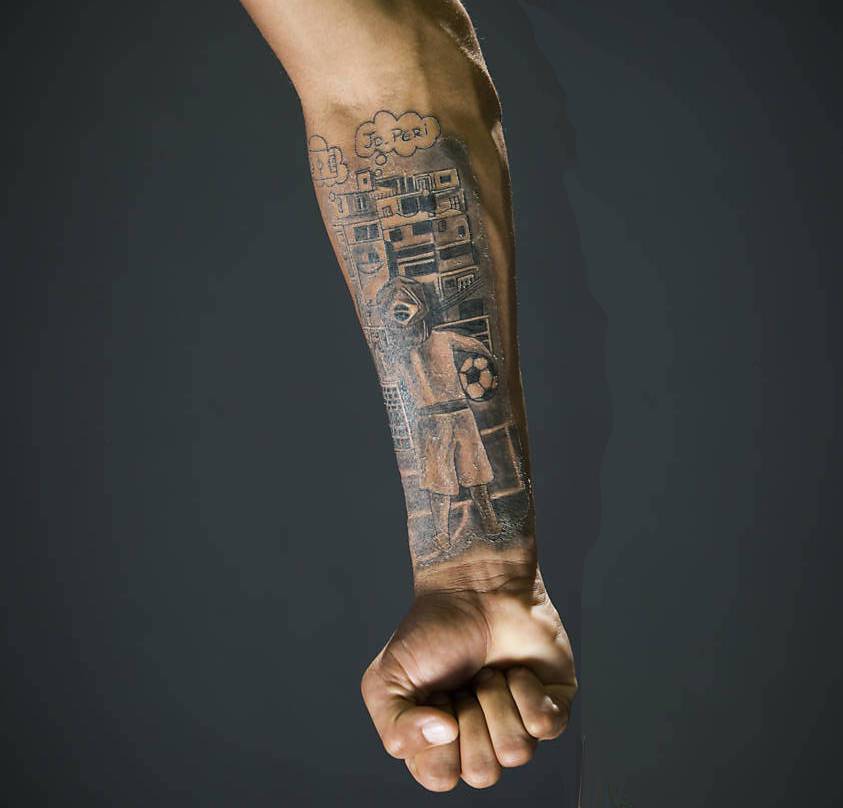
The close-up shows the scene’s main elements but not the rest of the collection. It reads as a small narrative, with the boy, ball, cap and buildings arranged in one composition.
The Chespirito tattoo tribute on the leg
A later leg tattoo pays tribute to three characters associated with Roberto Gómez Bolaños, known as Chespirito: El Chavo del 8, El Chapulín Colorado and Chaparrón Bonaparte. The close-up shows them together in a black-and-grey panel.
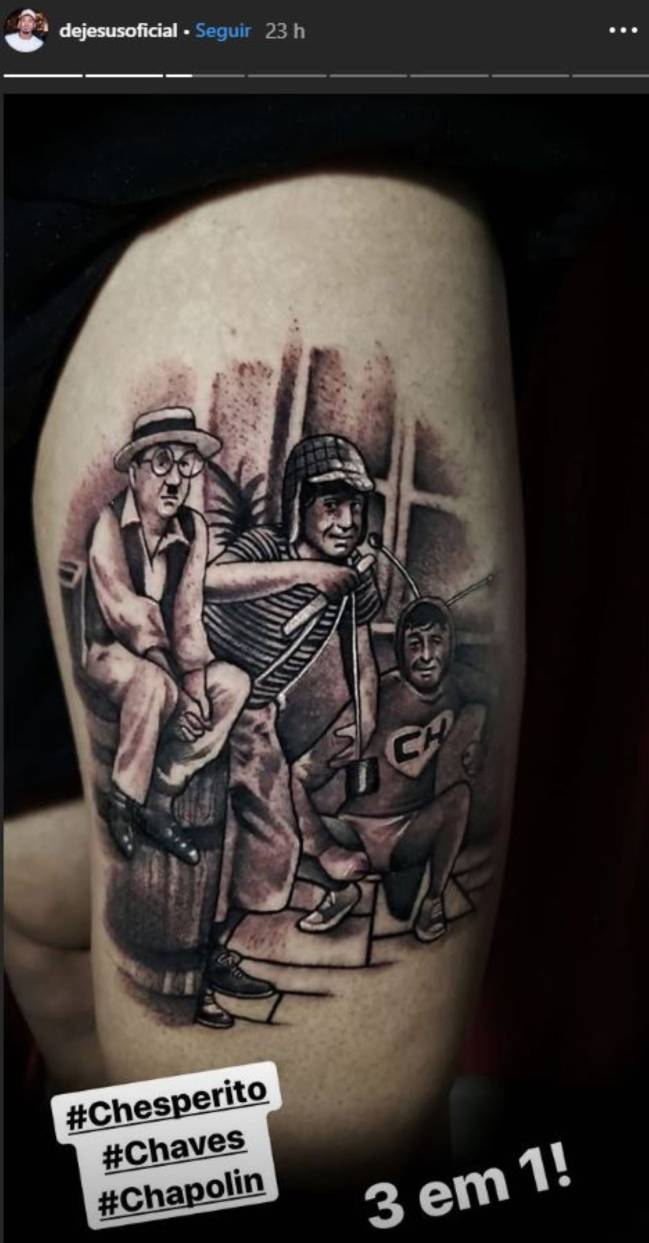
Coverage of Jesus’s public reveal names the characters and connects the design with its artist. That evidence identifies this leg piece; it does not establish dates for the rest of his tattoos.
The Racionais MC’s lyric across the chest
Brazilian sports coverage links another chest tattoo to Racionais MC’s song “A Vida É Desafio.” The photograph shows black lettering across his upper chest, with a football and radiating lines in the design. The report connects the lyric to the dream of becoming a footballer.
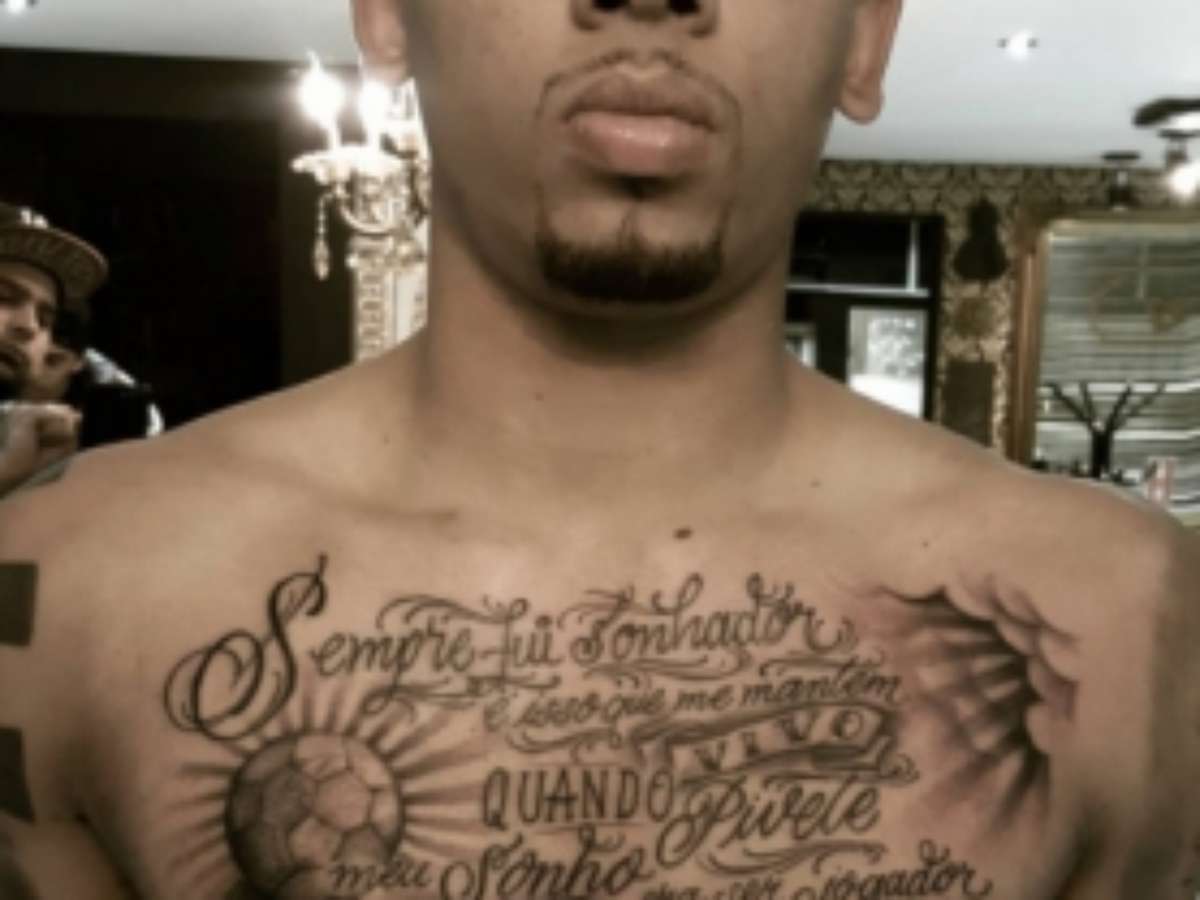
This close view is separate from the goal celebration photo. It focuses on the lyric and its football imagery, while the celebration shows a wider area of his torso and arms.
The matching tattoo appears in a separate visual record
A second original photograph documents the matching boy-and-favela scene associated with Neymar. It shows the same central idea in a separate frame, adding a comparison for placement and scale.

From family to football
The Guardian and BBC identify a portrait tattoo of Jesus’s mother, Vera Lúcia Diniz de Jesus. The Premier League interview gives first-person context for his use of tattoos to record parts of his career. The photos in this article don’t all show the portrait clearly, so its details are best kept to what those sources report.
The documented record brings together family, football ambition, music and television comedy. Each source and photo supports a different part of that account; none offers a verified inventory of every mark.
The visible collection changes with pose and setting
The tattoos look different as the setting and pose change. A shirtless celebration exposes the chest and arms; the forearm close-up isolates the childhood scene; and the studio image makes the leg tribute easier to see. Shirts and movement can hide or distort other details.
For that reason, placement is easier to confirm than chronology. The available photographs show where several pieces sit, but don’t establish when every one was added or reveal every design.
What the documented sources establish
The sources offer a solid but partial record: The Guardian covers the forearm scene and the portrait of his mother; the Premier League interview adds career context; Brazilian reporting identifies the Racionais lyric; and coverage of the reveal names the Chespirito characters. SportBible reports the connection between the matching scene and Neymar.
These accounts support the named designs and their reported context, not a definitive list of all his tattoos. A separate face-visible Arsenal promotional portrait is the featured image; the five inline photos show the tattoo evidence.
A practical reading of the collection
Jesus’s designs span several forms: a small forearm scene, a line of chest text, a leg tribute and a portrait reported by the Guardian and BBC. When studying them, compare body area, scale and how a design reads as the arm bends or the torso turns.
The photos can help with placement and composition, but personal portraits, football references and character art belong to their subjects and artists. Use the images as visual references, not templates to copy.
The clearest conclusion from the archive
The best-supported reading is that several tattoos record specific parts of Jesus’s life, from his mother and childhood ambitions to music and television. The sources name those links where they can; the rest of the collection remains open to his own explanation.