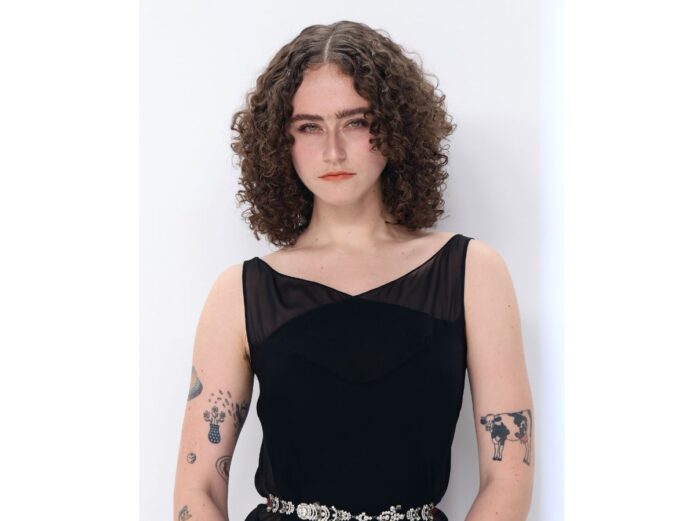
Ella Emhoff’s tattoos range from small, colorful illustrations on her arms to a large shaded swan across her back. Reports place many of the early designs during the 2020 lockdowns; later photographs show how the collection grew from scattered motifs to a full-back composition.
Coverage puts the count at roughly 18 and names several designs, though no source offers a complete inventory. Photos fill in details that written accounts can’t: the size of each piece, its color and how it sits beside the others. The cow and food illustrations read at close range; the swan takes up much of a back view.
The collection at a glance
Recent coverage counts about 18 tattoos across Emhoff’s arms, legs and torso. It names a cow, a flower pot, bacon and eggs, a birthday cake, an apple, a baby deer and a salmon with a flower hanging from its mouth. The designs vary in subject and scale, from small objects to the broad swan piece.
On her arms, the smaller illustrations sit apart from one another, with visible skin between them. That spacing lets the individual shapes read clearly in a portrait. The collection has color and linework at different scales; it doesn’t form one solid block of ink.
Where the first tattoos came from
RadarOnline reported that Emhoff began collecting tattoos during the 2020 lockdowns. The outlet identifies a cow on her left arm, done by a Brooklyn artist in September 2020, as her first. The same report names a blue flower pot, bacon and eggs, a birthday cake, an apple and a baby deer among the later additions.
The timing overlaps with Emhoff’s studies at Parsons School of Design, where she focused on apparel and textiles before graduating in 2021. The record doesn’t say the tattoos came from her coursework. It does place her early collection alongside a period when she was studying materials, clothing and design.
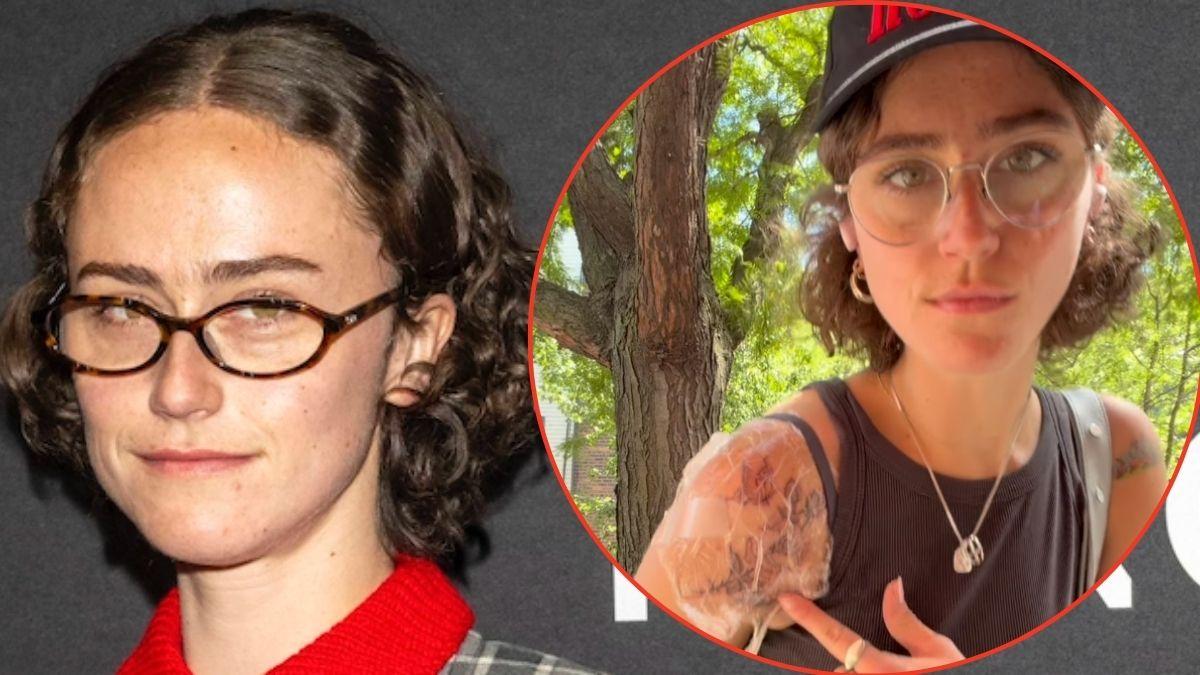
The shoulder portrait gives a close look at the early pieces. Their compact outlines and color keep them legible, even where several designs share the same area of the arm. The surrounding skin leaves a little space around each motif, so the cluster stays easy to read.
The salmon tattoo and self-made pieces
In a 2020 Garage interview, Emhoff said she made some of her own body art during lockdown. Later coverage mentions a dog’s name, a small flower and what she called her first large tattoo: a salmon with a flower hanging from its mouth. That account gives a direct detail about how she approached at least part of the collection.
The salmon joins an ordinary animal with an unexpected floral detail. It stands out among the smaller food and animal designs, though Emhoff hasn’t given it a public meaning in the accounts cited here. The description is specific enough to picture the tattoo without assigning a story to it.
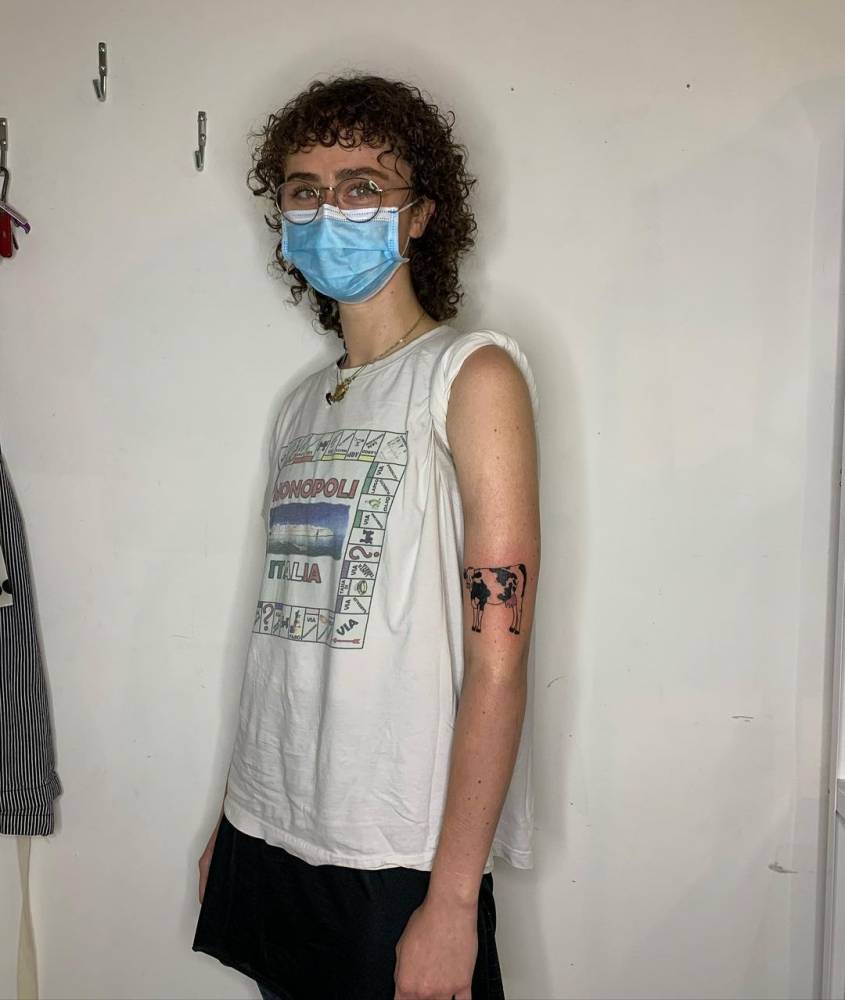
This close portrait shows the cow on her upper arm and the small scale of the surrounding color work. The lines and shapes remain separate rather than blending into a single patch. It’s a useful view of the kind of illustration that makes the earlier tattoos recognizable from one photo to the next.
The swan back piece
Parade credits tattoo artist Ruby May Quilter with Emhoff’s large back piece. The black-and-gray design stretches from the lower back toward the shoulders, with a swan at its center and other forms branching around it. TAG24’s wide photograph shows how much larger this composition is than the arm tattoos.
Parade also reported Emhoff’s caption about feeling lucky to have the piece and joking about the pain with “OUCH.” The sources do not give the swan a personal meaning. What the photograph does show is the composition: a central bird, shaded forms around it and lines that travel across the back rather than stopping at one small spot.
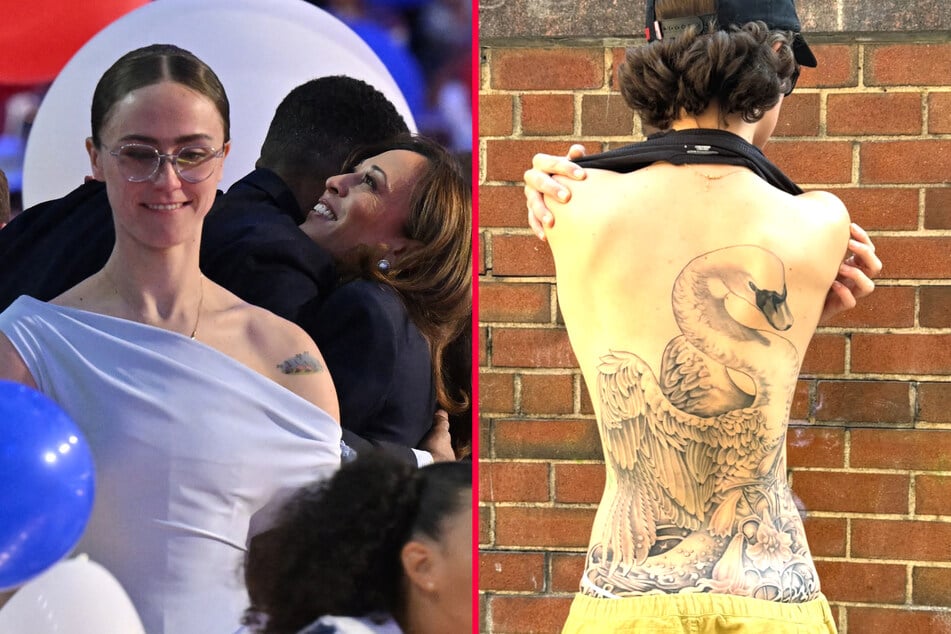
In the wide view, the swan anchors the piece while the surrounding shapes extend toward her shoulders and lower back. The broad framing matters here: a close crop would lose the way the shaded elements connect across the body. The design reads as one large arrangement, unlike the separate arm illustrations.
How the arm designs contrast with the back
The arms carry small, colorful motifs that can be picked out individually. The back piece uses more continuous black-and-gray shading, with its scale and layout visible only in a wider image. That difference gives the collection two distinct kinds of work: scattered illustrations on the arms and a connected composition across the back.
A mirror selfie shows several arm tattoos alongside Emhoff’s face and sleeveless outfit. The image keeps the designs in the context of how she dresses and presents herself, rather than isolating each one for a catalogue. Their spacing is visible there, as are the differences in size between the small motifs.
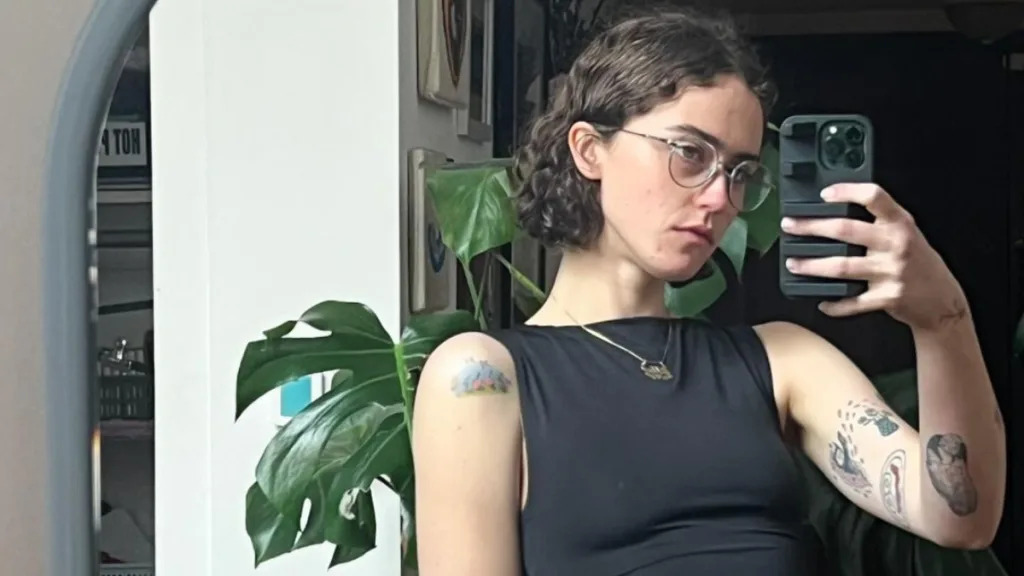
The mirror view makes the arm coverage easier to compare than a single close-up does. The small designs stay visible against a simple sleeveless outfit, while the rest of the frame shows her hair, face and clothes. The tattoos sit within her personal style; the photograph doesn’t need to turn them into a separate statement.
Colorful tattoos, humor and recognizable shapes
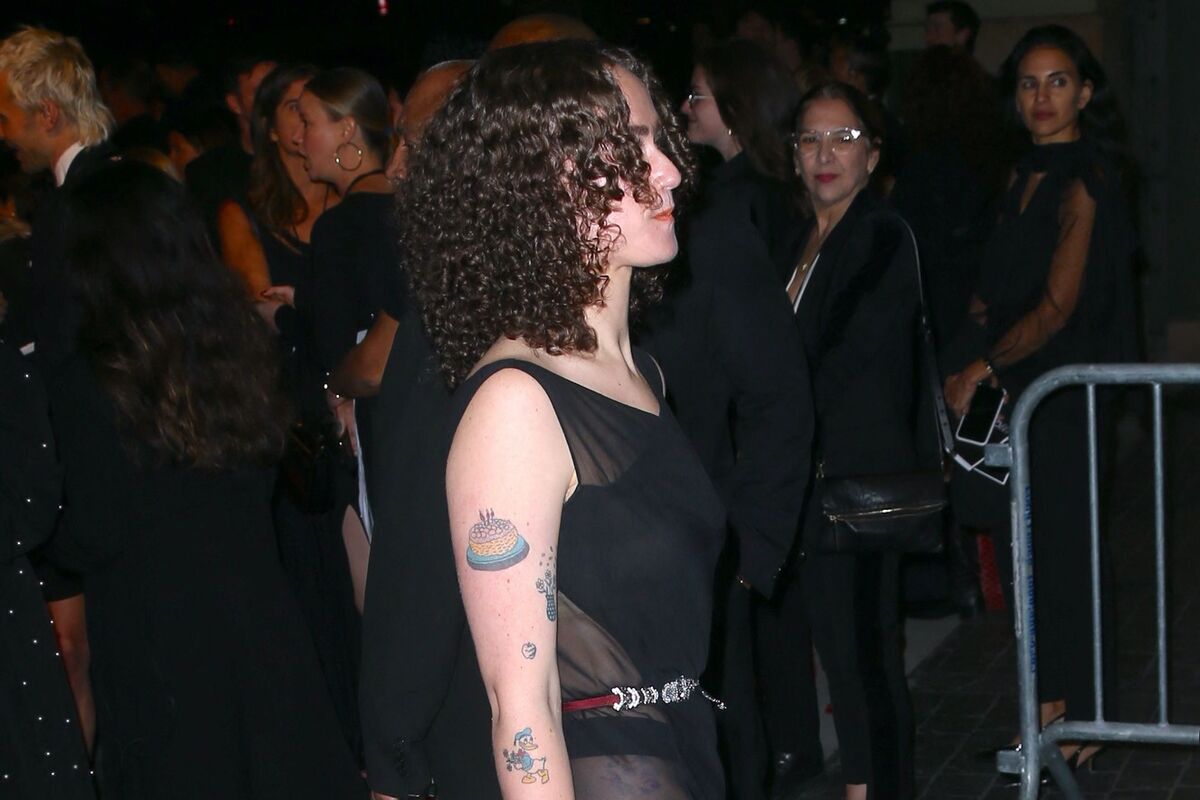
Several of Emhoff’s reported tattoos show familiar subjects: a cow, cake, eggs and bacon, an apple, a flower pot, a baby deer and a Donald Duck figure. The designs have a playful tone that comes through in the images themselves. Bright color helps the smaller motifs hold their shape beside black linework and shaded pieces.
The CFDA event photograph shows a colorful cake above other small tattoos, with more linework continuing down the arm. It captures the collection at a formal fashion event, where the ink remains visible alongside her outfit. The image helps identify the tattoo and its placement; it doesn’t explain why she chose it.
Fashion, art school and the body as a canvas
Emhoff graduated from Parsons School of Design in 2021, studying apparel and textiles. Vogue and the Los Angeles Times covered her design work and knitwear before her public profile grew. She later built Soft Hands around craft and community. That background helps explain why material and image are part of her public work, though it doesn’t establish a direct meaning for any tattoo.
Her modeling work developed alongside her design practice. Vogue reported that she met IMG Models president Ivan Bart before the 2021 inauguration brought wider attention to her style. She later made her runway debut for Proenza Schouler. In fashion photographs, the tattoos remain visible with the clothes and become part of the overall silhouette.
What is documented and what remains visual
Reports document the lockdown-era start, several named designs, an approximate count of 18 and Ruby May Quilter’s credit for the swan piece. They also give a few useful details about timing and Emhoff making some of her own tattoos. Those accounts provide a record for the designs they name, but not a complete map of every mark.
Photographs show the rest: color, placement, outlines and the way the separate pieces sit together. They can’t establish why Emhoff chose each subject or whether a small design refers to a private memory. Keeping the distinction between reported facts and visible detail matters most for tattoos whose meaning she hasn’t discussed.
Why the collection keeps changing
The documented sequence starts with small designs during lockdown, including pieces Emhoff made herself, and includes the later salmon and swan compositions. The images show the range in size: a shoulder cluster, the smaller arm tattoos, and a back piece that fills a much larger area. They don’t date every addition, so the collection can’t be treated as a complete timeline.
The photographs also come from different settings. A close arm portrait shows color and line; a mirror selfie shows several designs together; the back image gives the swan its full scale; and the CFDA frame places the cake tattoo beside formal clothing. Each view adds a different visual detail without showing the entire collection at once.
Closing context for the collection
Emhoff’s tattoos range from lockdown-era illustrations to a broad, shaded swan piece by Ruby May Quilter. Her interviews and the photographs give some firm points about how the collection began and what certain designs look like. The rest is best read from the ink itself: its color, scale, spacing and the contrast between small arm motifs and a large back composition.