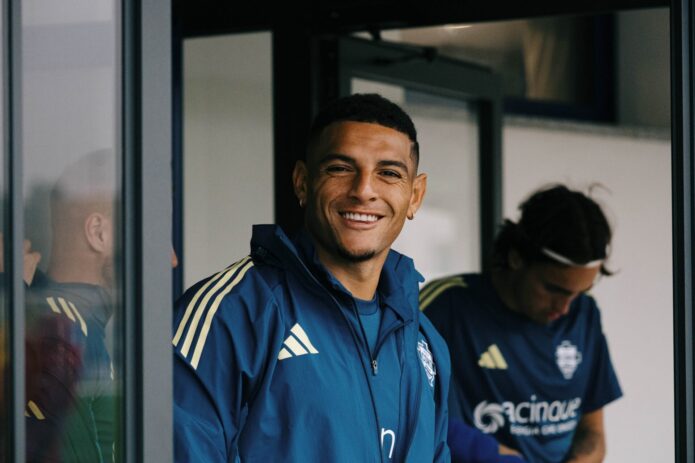
Diego Carlos’s tattoos turn major football moments into a visible record across his arms, calf and upper body. The Brazilian defender has described his ink as a way of remembering and celebrating the experiences that shaped his career. His most documented pieces connect directly to the 2020 Europa League final with Sevilla, Brazil’s Olympic triumph, his family and the values he carries into football.
The strongest evidence comes from Carlos’s own interviews and from photographs that show the tattoos at different distances. A Como 1907 profile records him explaining the Europa League and Olympic tattoos in detail, while an Aston Villa interview identifies a lotus flower, a lion and artwork connected with his children. Match photographs add the visual record: dense arm lettering, shaded forms, a neck design and the trophy tattoo on the right calf.
That combination makes Carlos’s collection easier to understand without treating every visible line as a named design. Some pieces are documented through his words, while others are clearest in photographs. The result is a body of work that joins football memories with family imagery and symbolic designs, especially across the arms and legs.
The Europa League calf tattoo preserves the bicycle kick
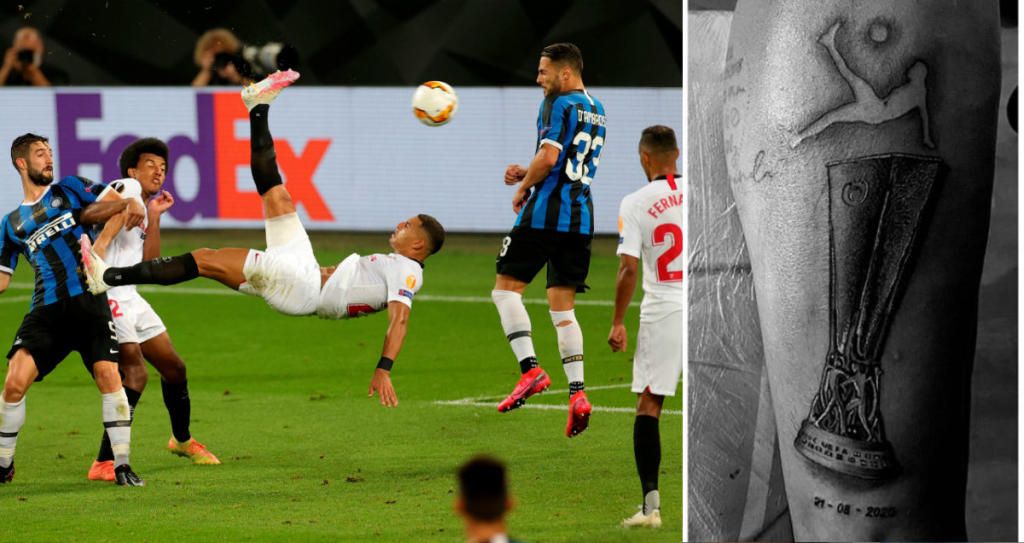
The most specific tattoo in Diego Carlos’s collection sits on his right calf. It combines an image of the Europa League trophy with the outline of a player performing an overhead kick. The design refers to Sevilla’s 2020 final against Inter Milan, when Carlos’s bicycle kick struck Romelu Lukaku and became the decisive moment in a 3–2 victory.
Como’s official interview describes this as Carlos’s first tattoo connected to a title. He said the small figure making the bicycle kick brings the entire match back whenever he looks at it. Contemporary Spanish coverage also records the trophy, the date of the final and the silhouette of the acrobatic movement. The imagery is unusually literal: the tattoo does not merely represent a club or a season, but preserves the exact action that made the night unforgettable.
The photograph shows why the placement matters. The trophy is positioned on the calf, a part of the leg that remains visible when Carlos wears shorts or stands on the touchline. The design reads vertically, with the airborne figure above the cup and small lettering beneath it. The calf tattoo is therefore both a football image and a compact match report, translating the final into a trophy, a date and a single movement.
Arm lettering and shaded work create the collection’s largest visual field
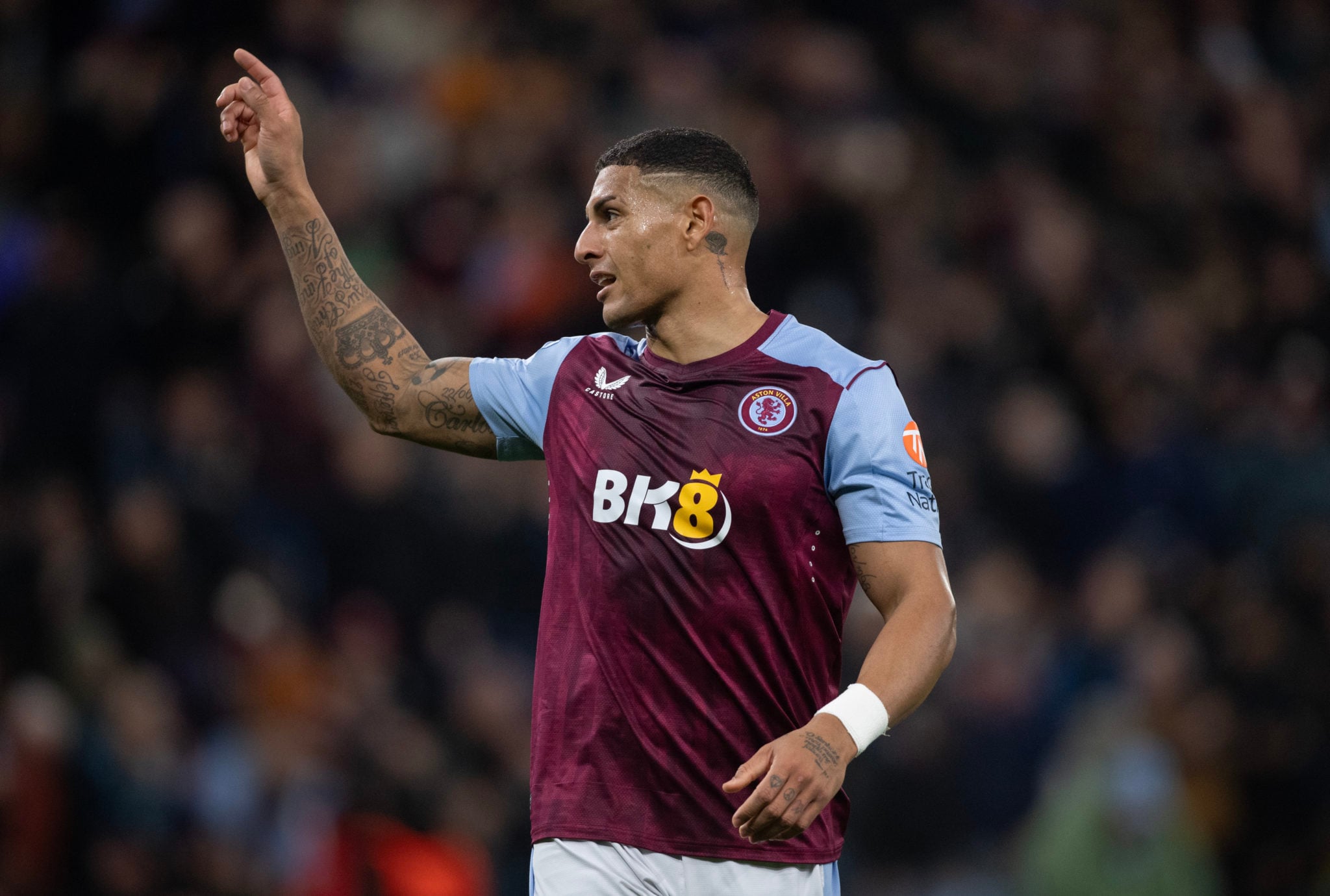
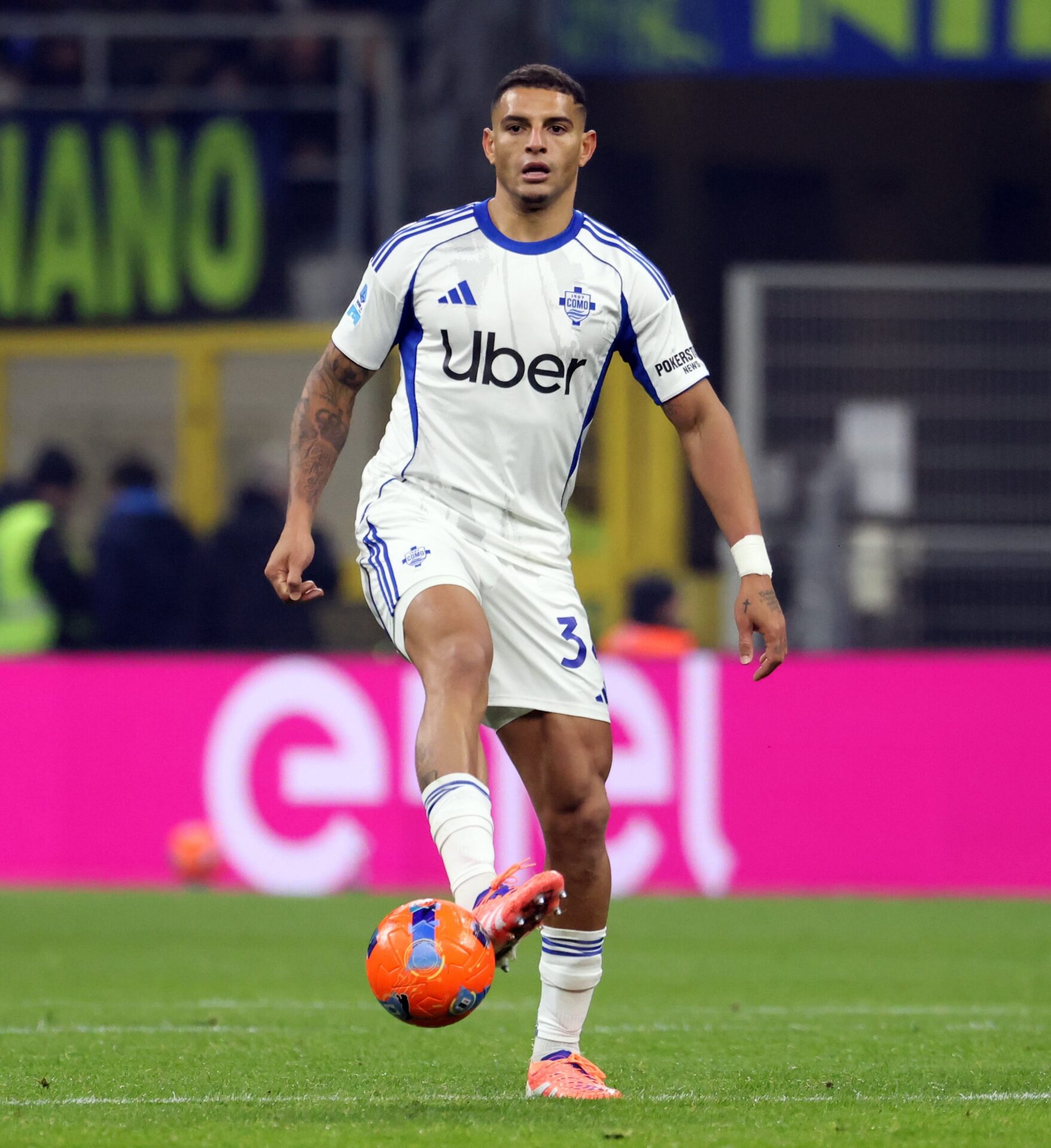
Match photographs show that the trophy tattoo is only one part of a much larger collection. Carlos’s arms carry dense lettering, shaded forms and separate pieces that run from the upper arms toward the wrists. The visible work is not a single flat block of black ink. Different designs keep their own edges, with script and darker images appearing beside open areas of skin.
A photograph from his Sevilla years shows the left arm covered with several layers of tattoo work. Lines of text sit over and around darker imagery, while the forearm becomes more densely filled toward the elbow. The shapes are partly interrupted by the shirt sleeve and the movement of the arm, but the overall pattern is clear. Carlos has built a collection that remains readable from a distance because the lettering and heavy shading create a strong contrast.
The same image also shows why the arm tattoos cannot be reduced to one style. Some areas contain flowing script; other sections are made from compact symbols, dark outlines or portraits. The designs appear to have been added at different times, producing a layered surface rather than a sleeve planned as one continuous composition. Arm coverage is the dominant visual feature of Carlos’s tattooed appearance, but its character comes from the differences between the individual pieces. The collection reads as a timeline rather than a single finished panel.
The neck and hands add smaller tattoos around the main arm pieces
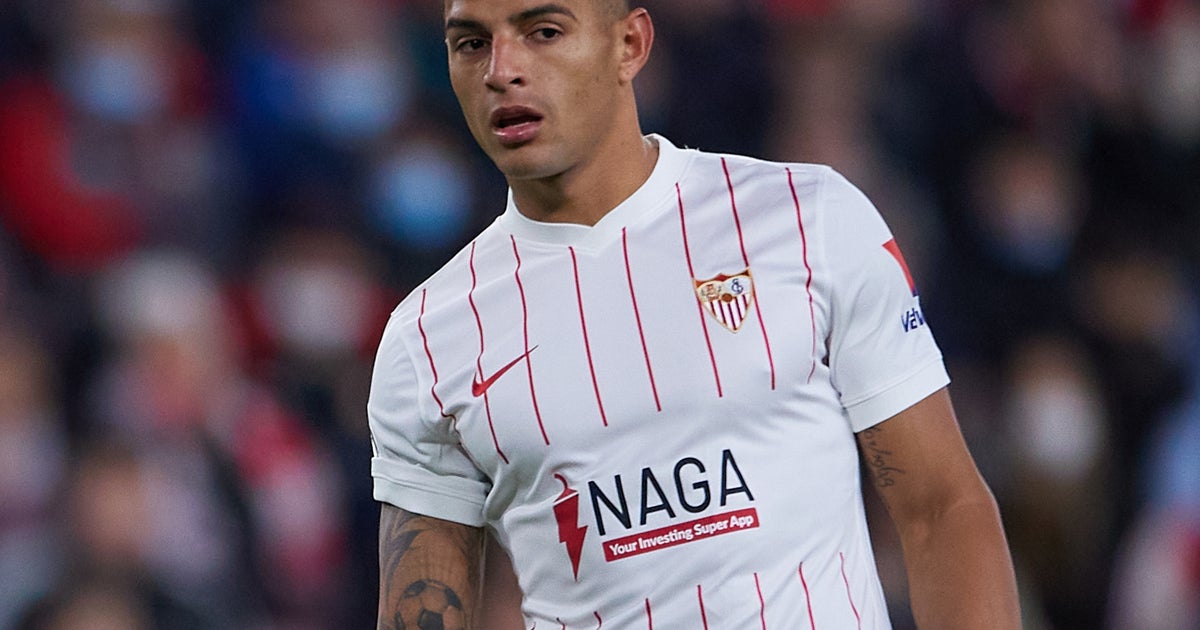
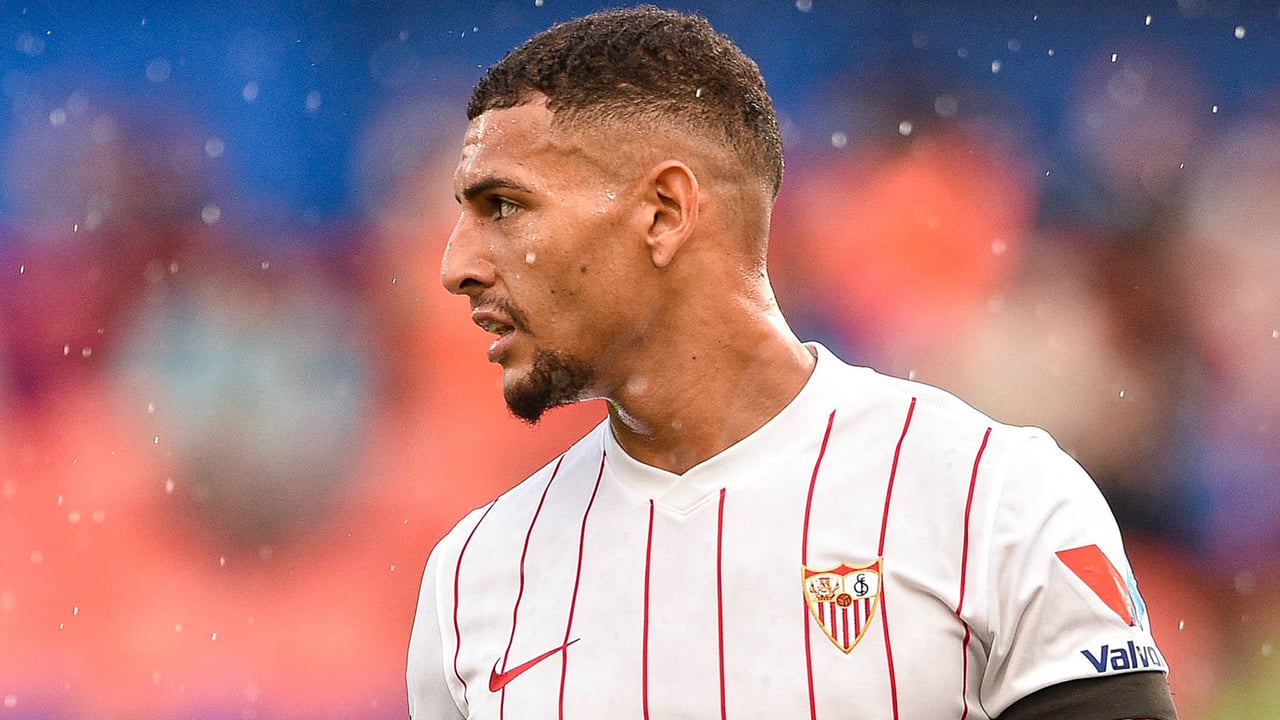
Closer match photographs reveal smaller tattoos that are easy to miss when the arms are moving. Carlos has ink around the neck, on the hands and along the wrists, with the smaller marks sitting beside the larger forearm work. A dark neck design is visible behind the jaw in profile, while the hand tattoos appear as compact symbols and lettering near the fingers.
These placements change the way the larger designs are seen. The ink does not stop at the short-sleeve line or end neatly at the wrist. Instead, smaller marks continue the visual movement from the upper arm down toward the hand. When Carlos raises an arm, the script and shaded forms become a continuous sequence of different scales, moving from broad coverage to much finer details.
The available sources do not identify every hand or neck symbol by name, so the safest description remains visual. The photographs establish the positions and the contrast between the pieces. They also show that Carlos’s collection is distributed across the body rather than concentrated on the single title tattoo that receives the most attention in written coverage.
The lotus flower represents aspiration in Carlos’s tattoo history
One of the clearest explanations in the Aston Villa interview concerns a lotus flower. Carlos said the design represents the idea that aspirations can grow from difficult circumstances and that life can be shaped through effort. The tattoo is part of the wider group of symbols he connects with personal development rather than a specific match.
The lotus is visually different from the football imagery on the calf. Where the Europa League tattoo records a particular date and action, the flower works as a more general emblem. Its meaning is supplied by Carlos himself, not inferred from the outline alone. That distinction matters because the collection includes many visible pieces, yet only some have publicly documented explanations.
In photographs of Carlos on the pitch, the lotus sits among the script and shaded work on his arms. The surrounding tattoos give the flower a denser setting than it would have in isolation. The design becomes one part of a larger arrangement in which family, faith, football and ambition occupy neighboring areas of skin.
Family artwork and the lion sit alongside the football trophies
Carlos’s tattoo record also includes separate artwork celebrating the births of his three children. The Aston Villa interview describes these pieces as part of the collection of images he carries on his limbs. Their exact visual details are not all named in the published account, but their place in the tattoo history is clear: family imagery sits beside the career milestones rather than being treated as an unrelated category.
The same interview identifies a lion representing courage and strength. That symbolism fits the way Carlos talks about his physical and professional life, but the tattoo remains a distinct image rather than a generic statement about football. The lion, lotus and family designs provide a different visual vocabulary from the Europa League trophy and bicycle kick.
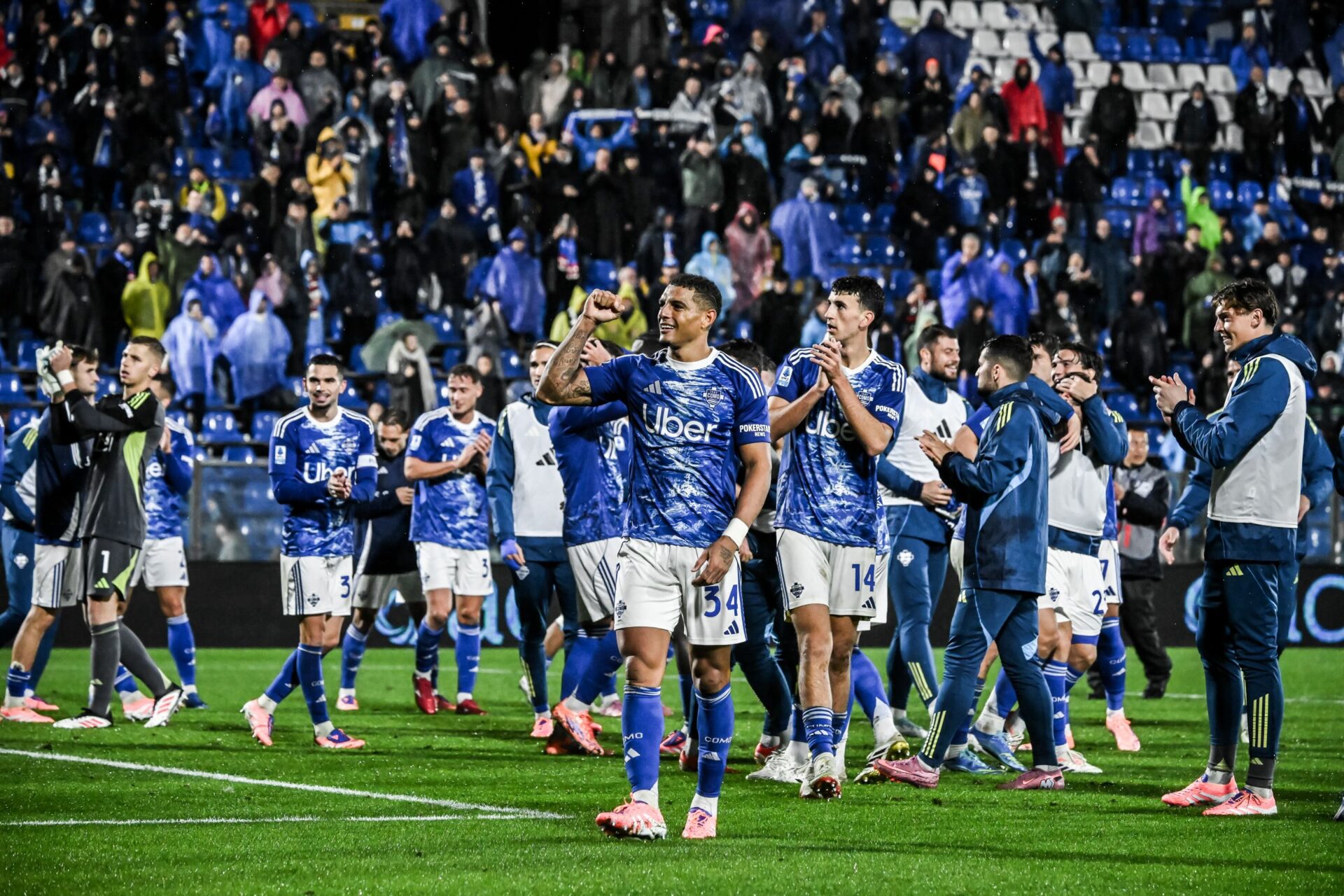
Photographs from his Aston Villa period show the arm tattoos as a layered group. Script crosses the forearm, darker shapes sit higher on the arm, and smaller marks appear around the hand and wrist. The collection’s meaning is carried by several separate images, with the documented explanations linking particular tattoos to a title, a flower, a lion and the births of Carlos’s children.
The Olympic tattoo adds a second title to the collection
After the Europa League tattoo, Carlos told Como 1907 that he also got a tattoo connected with Brazil’s Olympic victory. He described the medal as heavy and beautiful when he first held it, and said that seeing his city celebrate made the achievement significant enough to mark permanently.
The published interview does not provide a complete close-up or a definitive public name for the Olympic design. What it does establish is the reason for the tattoo and its connection to the Tokyo 2020 Games, where Brazil won gold. The piece belongs beside the Europa League tattoo as another title transformed into body art, but the two memories are not identical. One preserves a specific bicycle kick; the other records the emotional weight of an Olympic medal and the celebration that followed.
This distinction keeps the description grounded. The Olympic tattoo can be discussed confidently as a documented part of Carlos’s collection, while its precise shape should not be invented from a distant photograph. His own account supplies the meaning and the event; the available images supply the broader context of the arm and leg work around it.
How the collection keeps career memories visible
Carlos’s explanations give the collection a clear chronological thread. The Europa League tattoo follows the most decisive night of his Sevilla career, the Olympic design follows Brazil’s gold medal, and the family pieces anchor the record in life away from the pitch. The lotus and lion sit between those events as symbols that describe the character he associates with progress and strength.
How the story continues
Viewed together, Carlos’s tattoos form a timeline of football, family and personal symbols. The right-calf trophy preserves Sevilla’s Europa League final and the overhead kick that decided it. The Olympic tattoo marks Brazil’s gold-medal experience. The lotus represents aspiration, the lion represents courage and strength, and separate artwork celebrates his children.
The photographs add the physical structure of the collection. Dense arm lettering and shaded imagery create the largest visible field. Smaller hand, wrist and neck tattoos extend that work beyond the upper arms, while the calf design gives the lower body its most specifically documented football image. The pieces are varied in size and density, but they share the role Carlos assigns to them: keeping important moments present.
There is no complete public inventory of every tattoo on Carlos’s body. The strongest documented facts are the ones attached to his interviews or clearly visible in photographs. His collection is best understood through those confirmed designs and placements: a trophy and bicycle kick on the calf, title and Olympic memories, a lotus, a lion, family artwork, and layered tattoos across the arms, hands and neck.
Diego Carlos’s tattoos are therefore more than a collection of match-day imagery. They preserve the exact movement that changed a final, the medal that reshaped his memory of the Olympics, the family milestones he carries with him and the symbols he associates with strength and aspiration. The visible ink turns those moments into a continuing visual history across his body.