
Denise Richards tattoos are best known for one change: the cursive “Charlie” at her ankle became a colorful fairy after her marriage to Charlie Sheen ended. That before-and-after is the clearest part of the public story. Some sites list more tattoos, but the available photos and coverage return to the ankle design. This guide sticks with what can be tied to Richards: the original name, the cover-up and the way the fairy looks in later public appearances.
The original Charlie tattoo on Denise Richards’ ankle
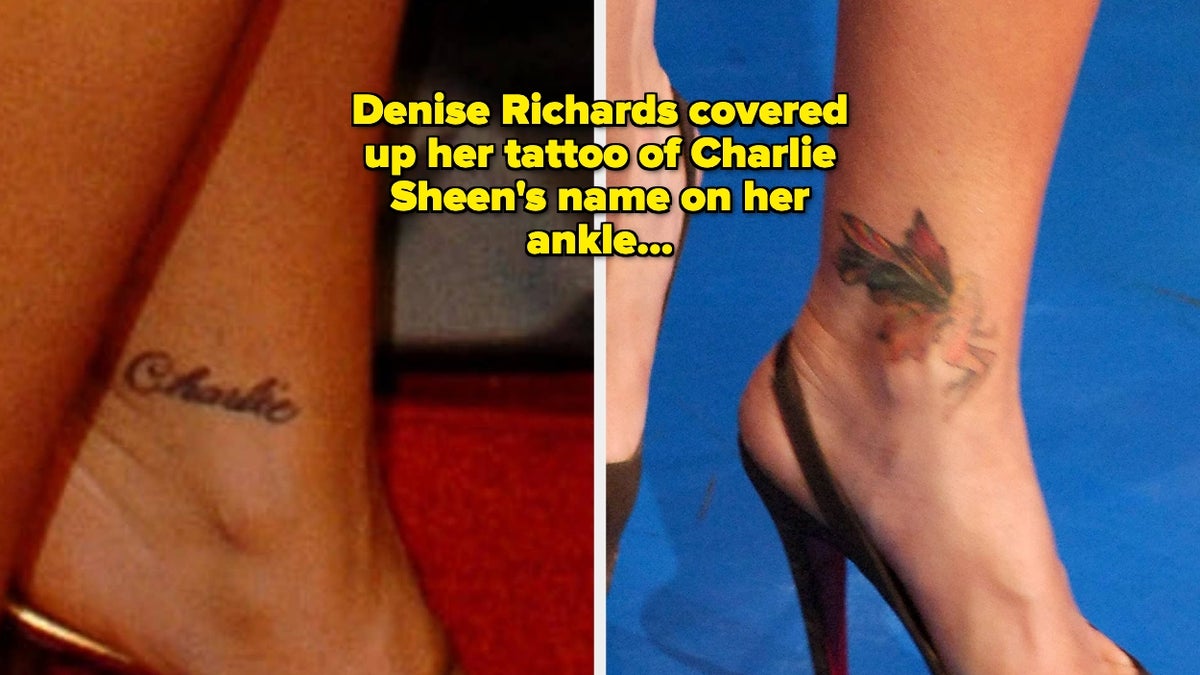
Before the fairy, “Charlie” was written in cursive above Denise’s ankle. She got it for Charlie Sheen; they married in 2002. The small script was easy to see with sandals or red-carpet shoes. The old lettering matters because it explains the design over it: the fairy was made as a cover-up, not as a separate tattoo with no connection to the name.
The colorful fairy cover-up
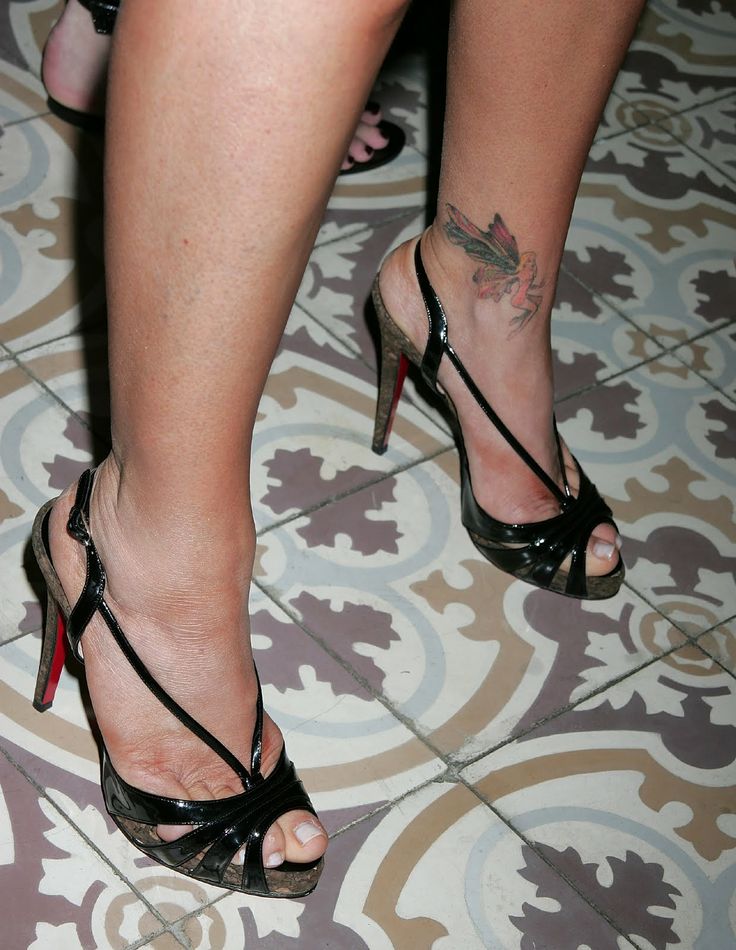
Richards replaced the name with a colorful fairy. The wings and wider shape cover the script, and the color makes the new design stand out from what was underneath. It’s a sharp change from the plain cursive word. The fairy is now the tattoo most people associate with Richards; it appears in gallery photos and red-carpet close-ups of her ankle.
Why the ankle placement made sense
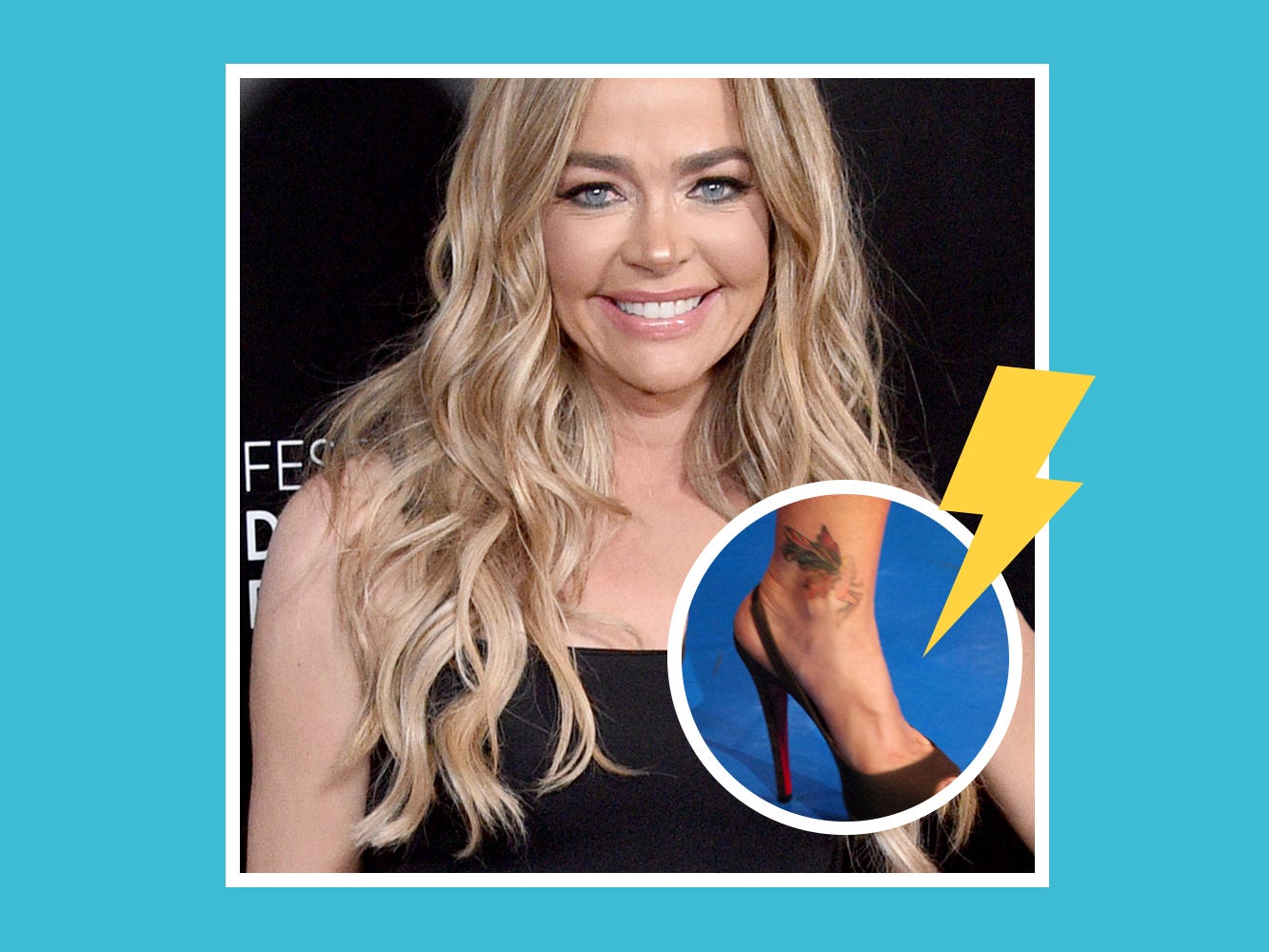
An ankle tattoo is easy to show in sandals or heels and easy to cover with trousers or boots. The fairy is visible in some red-carpet photos and hidden in others, depending on Richards’s shoes and clothes. In clearer pictures, it reads as a finished design rather than a faded patch. A cover-up has two jobs: hide the old ink and leave a new image that looks complete on its own.
The cover-up became a fresh-start story
Richards’s tattoo change is often read as a way to move on from the relationship, though she hasn’t given the fairy one definitive public meaning. The timeline is clear: the Charlie script came first, and the fairy replaced it after the marriage ended. People with a partner’s name tattooed may keep it, remove it or cover it; Richards chose the last of those. The new design changed what people saw first, but it didn’t erase the history underneath. That’s part of what makes a cover-up more than a simple replacement.
What is confirmed and what is not
Richards has one widely documented tattoo story, not a public catalog with a confirmed meaning for every design. Some sites list other tattoos, but photos can be hard to read: an apparent mark may be a shadow or temporary ink. The Charlie script and the fairy are the pieces that can be tied clearly to Richards and to the cover-up. A short account based on those two is more useful than a longer list built on guesses. The ankle tattoo is small, but the before-and-after is easy to recognize.
Watch a tattoo cover-up video
The video below discusses lower-back tattoos often called “tramp stamps,” the kind of old tattoo Richards has joked about moving past.
For more actress tattoo stories, browse the actor tattoo section.