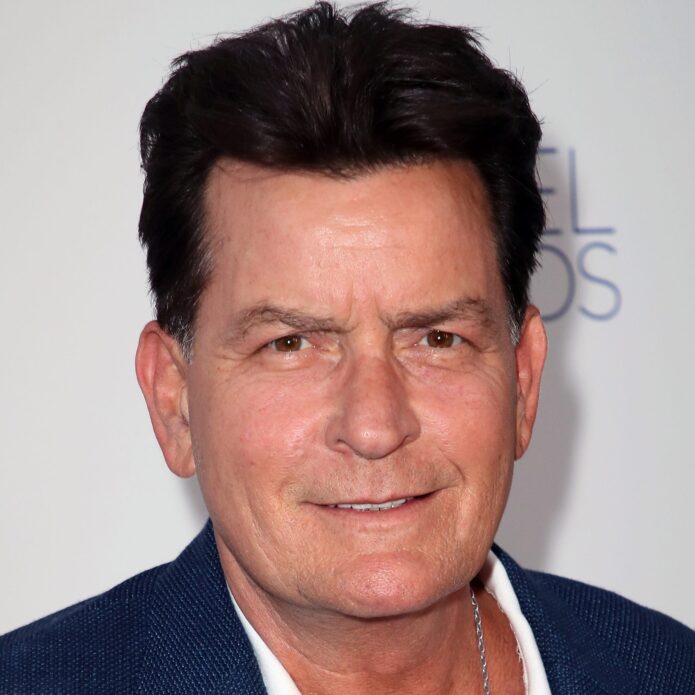
Charlie Sheen’s tattoos have often played out as a side story to his public life. They appear in old red-carpet photos, onstage during the Violent Torpedo of Truth tour and in close-ups where a word on his wrist takes over the frame. The designs are loud, personal and sometimes hard to treat seriously. That was likely part of their appeal when he got them.
Sheen talks about the ink differently now. In a recent interview, he called getting tattoos a terrible, stupid decision and said he has not added any in more than a decade. He has also said some tattoos covered scars from drug use. That changes how the collection reads, though it does not erase what the designs said about the period in which he chose them.
Online lists do not agree on every detail. The pieces seen most often are the Death From Above chest banner, Winning on his wrist, the Cincinnati Reds cover-up, the Charlie Brown design, the cigarette and ashtray, the zipper and eyeball, and a number of smaller jokes and symbols. Here is the clearest account of those tattoos.
Death From Above and the apple drop set the tone
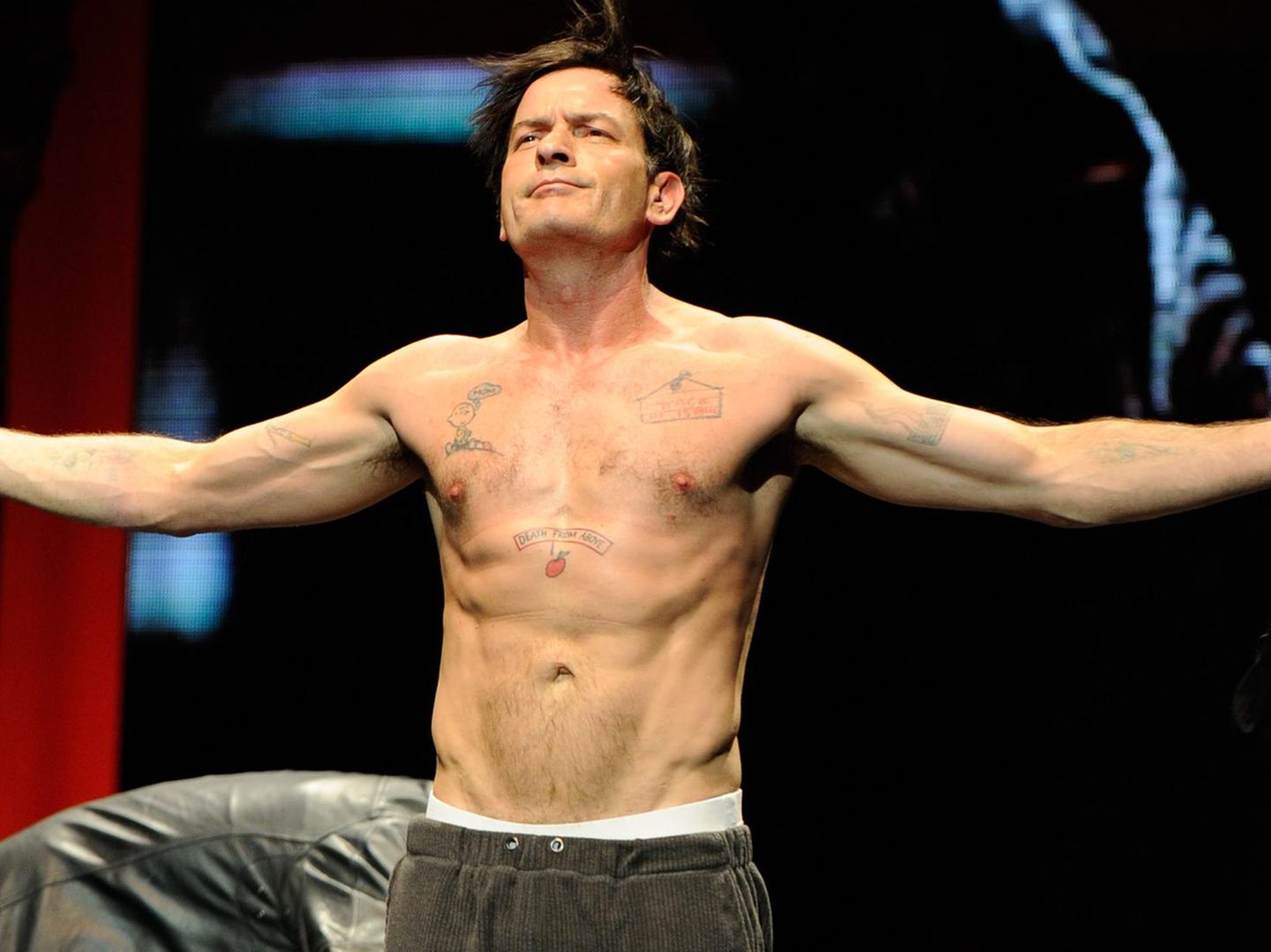
One of Sheen’s most recognisable pieces is the Death From Above banner across his upper chest. The words sit beside an image described as an apple and a falling drop, blending a threat with cartoon logic. It is not minimalist or neatly polished. The design brings together a phrase, a strange image and a little swagger.
Sheen knows how a short phrase can become part of a public character. “Winning” became his catchphrase, while Death From Above feels more like a private slogan that made its way into view. It has the same oversized energy as his stage persona, fixed across his chest.
The placement is hard to miss in shirtless photos. During the 2011 tour, the banner appeared alongside several other tattoos, part of a busy collage rather than a single emblem. It captures the way the collection works: a bold line, an odd image and a punchline that mattered more than visual harmony.
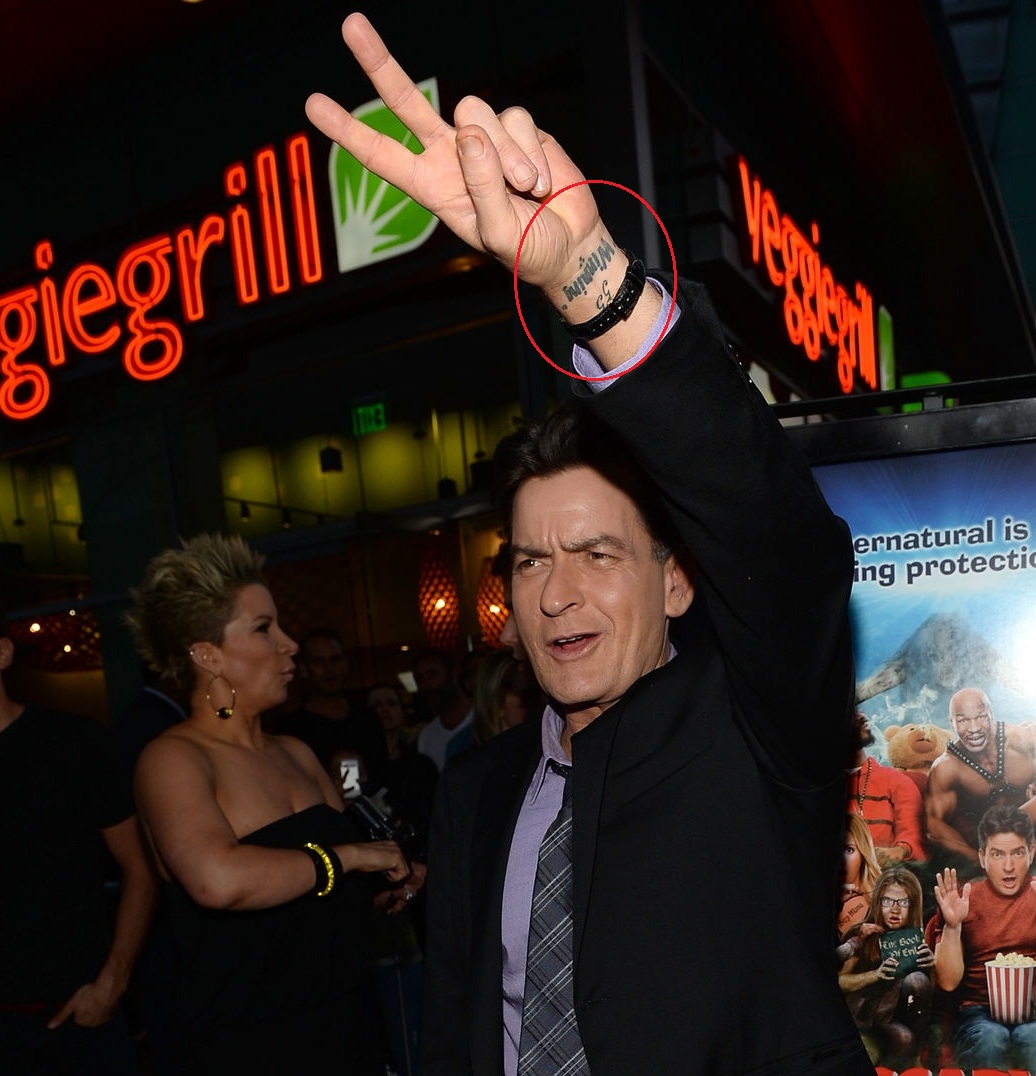
Winning replaced Denise on the wrist
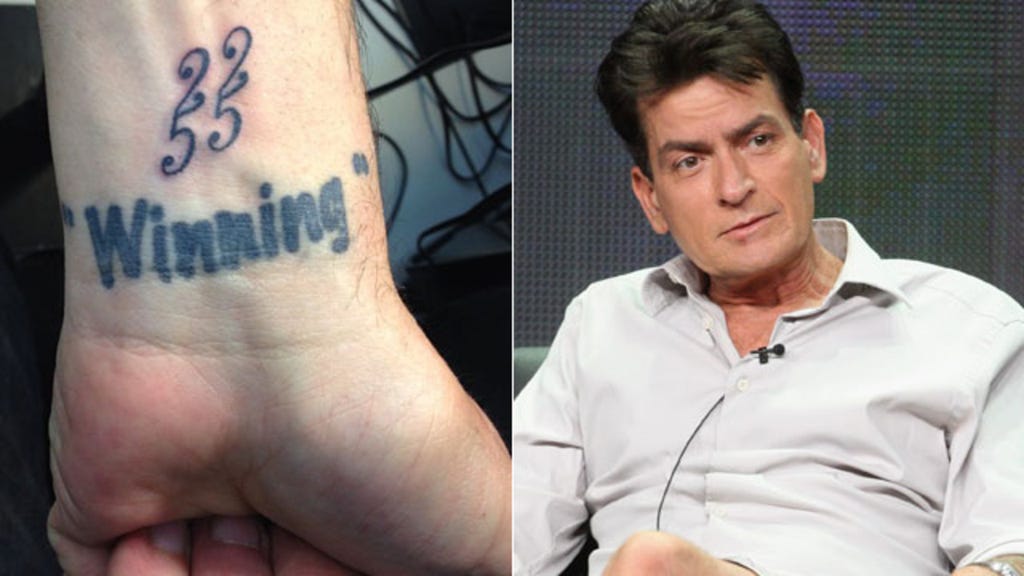
The wrist tattoo most associated with Sheen’s public image is Winning. It used to say “Denise,” referring to Denise Richards; older coverage shows that name was covered or replaced after their relationship ended. The change is a small piece of tattoo history, but it tracks a much bigger public shift.
By 2011, “winning” was everywhere. Sheen said it in interviews, put it on merchandise and built a stage show around the attitude. The word on his wrist made it feel less like a campaign slogan and more like something he could see whenever he looked down.
The lettering is simple, which is why it reads so clearly in photos. The more complicated story is underneath: a relationship reference became a marker of a very public new chapter. Sheen turned a personal change into part of his mythology.
The cigarette and ashtray joke sits on his forearm
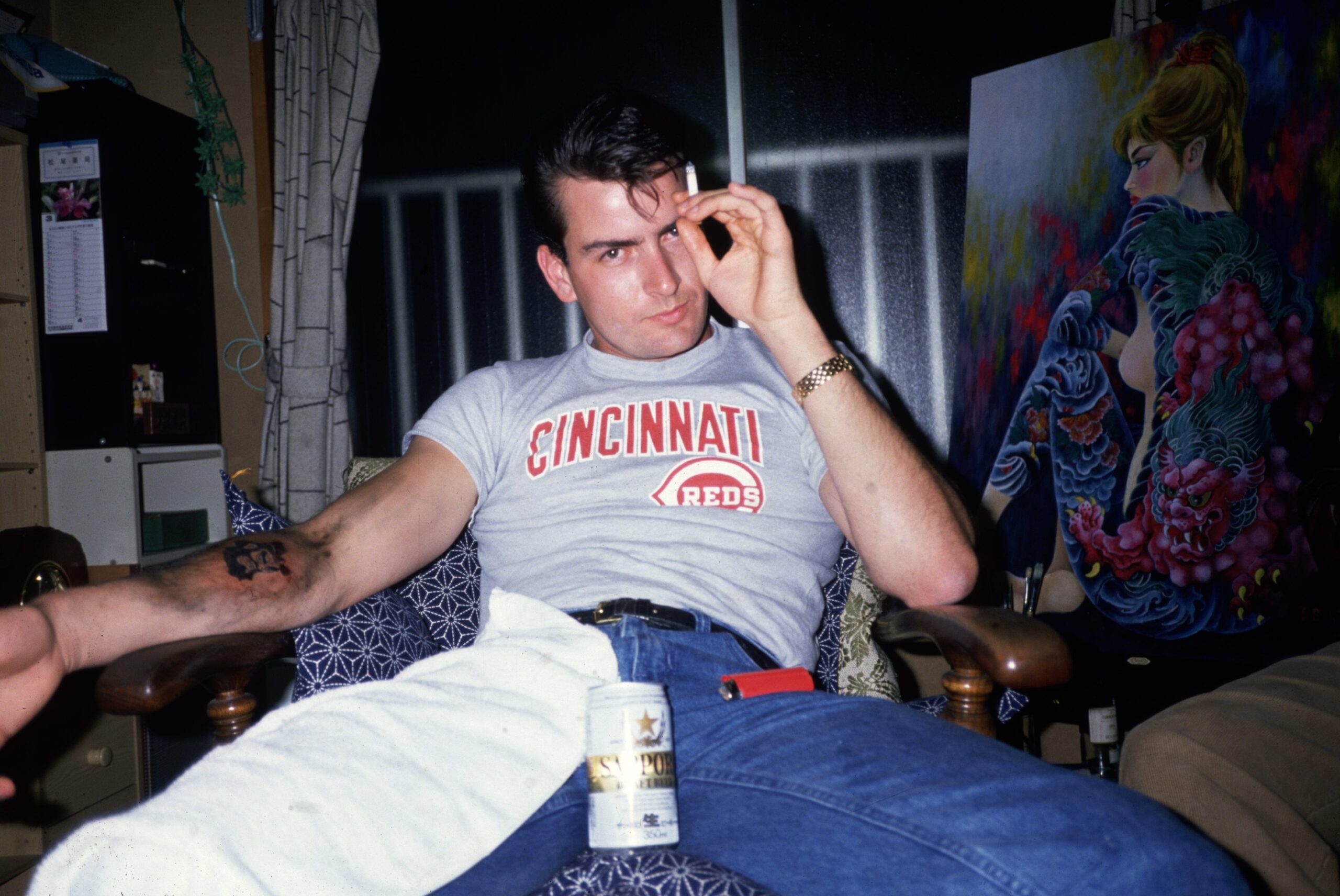
The cigarette and ashtray tattoo is tied to Sheen’s hard-living image. Instead of hiding the habit, the design turns it into a visual joke on his arm, something that could only belong to a particular period of his life.
In photos of Sheen smoking, the real cigarette in his hand and the tattoo sit in the same frame. There is a deliberate absurdity to making a habit permanent, as if the image asks whether the joke will still seem funny years later.
His later comments about sobriety and regret give the piece a different weight. What once read as a punchline is now connected to a chapter he was trying to leave behind. That does not make it meaningless; it makes it a clear record of a mood that did not last forever.
The Cincinnati Reds logo covers an older tattoo
The Cincinnati Reds tattoo has one of the stranger histories in Sheen’s collection. Coverage describes it as a cover-up of an earlier design connected to a Japanese god. The baseball logo is more than a team mark; it also shows that he chose to cover something he no longer wanted.
Cover-ups make the past visible in a different way. People change their minds, a relationship ends, or a symbol stops feeling right. In Sheen’s case, a baseball logo replaced the earlier image, making the change feel both personal and deliberately plain.
The Reds design carries the collection’s mix of sincerity and comedy. A sports logo is straightforward; putting it over a Japanese-inspired design is not an expected choice. It feels like Sheen replacing an image that no longer fit with something familiar to him.
The small C on his wrist is easy to miss
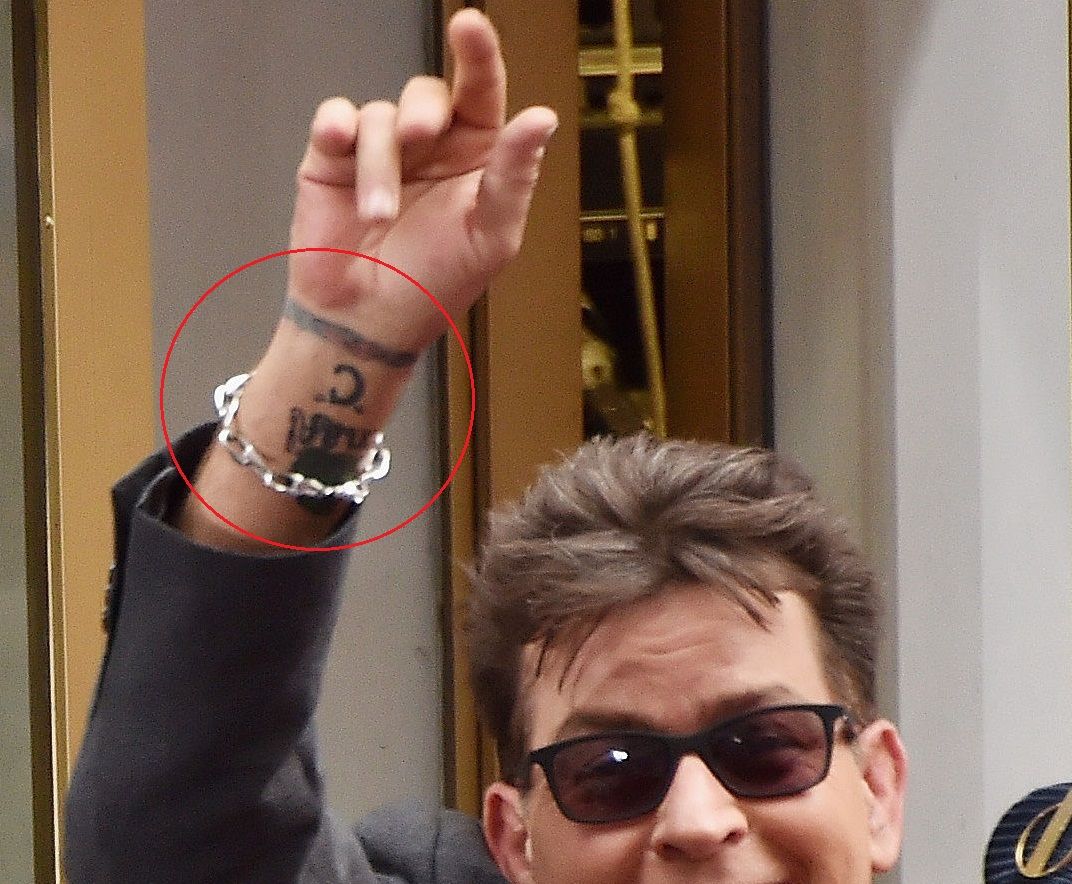
Tattoo galleries often show a bold C followed by a colourful ring on Sheen’s wrist. It does not have the instant recognition of “Winning,” but it gives a glimpse of how varied the collection is. Some designs are not headlines; they sit beside a watch or bracelet and wait for a clear photograph.
The letter has been linked to Charlie, though reports are less consistent about its story than they are for “Winning” or the Reds cover-up. It is safest to describe what is visible without assigning it a grand meaning.
That pattern runs through the collection. Some tattoos come with an obvious story; others only became notable after the person wearing them became famous. The wrist C is recognisable, but still a little mysterious.
Other wrist ink adds to the running joke
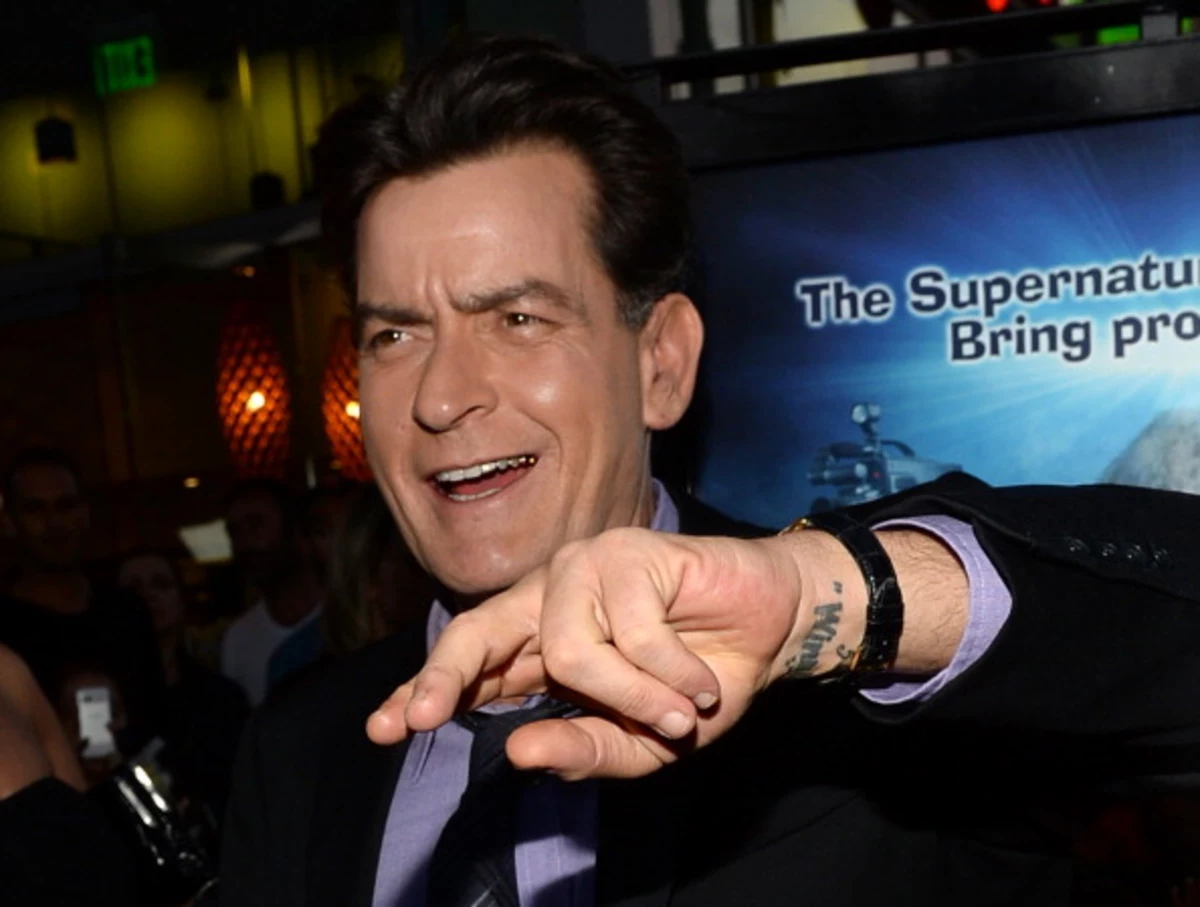
Photos show several more designs around Sheen’s wrists, including words and small symbols beside the larger tattoos. Reported pieces include a 22/55 marking, a shield-like design with the letters “MLBCES,” and other lettering that can be hard to read in every image. Some lists also mention a diaper pin with an S and a small stingray.
Those details are best kept separate from the tattoos that can be identified clearly. A blurry picture can make a shape look like something else, especially when Sheen’s wrist is turned away from the camera. The stronger approach is to name the confirmed words and visible symbols, then mark other details as reported.
What is clear is that Sheen liked tattoos that started a conversation. Wrist designs show when he reaches for a drink, gestures in an interview or waves to a crowd. His ink did not grow into one polished sleeve; it accumulated in separate choices, each adding to the running joke.
The chest and torso hold some of the more surreal pieces. Coverage describes a Charlie Brown figure with a speech bubble saying “MOM,” a zipper opening around an eyeball and a sign that reads Back in 15 minutes. Other descriptions mention a dragon head, a stingray, a burning cigarette and a Snoopy or Peanuts-related image.
The cartoon references keep the collection from looking like a standard tough-guy set of skulls, flames and military symbols. Even when the subject is dark, Sheen often undercuts it with something silly. A cartoon or visual gag lets a tattoo carry meaning without becoming a solemn monument.
Some of these designs are hard to inspect individually because the clearest photos show several tattoos at once. A broad torso shot helps show where the pieces sit, but it cannot confirm every small detail. The overall collection is documented; the exact wording or placement of every minor tattoo is not always clear.
There is a more serious story underneath the jokes. Sheen now describes the tattoos as a permanent record of a time when he was dealing with pain, projecting confidence and trying to control the public story. That can make the collection seem funny and sad at once. The designs belonged to a version of him who has since changed.
His tattoos are not a neat success story, and they were never meant to be. They make a messy timeline of relationships, catchphrases, sports, cigarettes, cartoons and choices that once felt right. “Winning” may be the most famous word, but his regret is now part of the story too. Permanent ink can outlast the version of yourself that chose it.
Watch Charlie Sheen talk about regretting his tattoos
Sheen has spoken directly about his tattoos and why he would not make the same choices today. The video below focuses on the ink and the regret he has attached to it.