
Darshan Raval’s documented tattoos are concentrated around dates, identity and the visual language of his Blue Family. The public photographs reveal a vertical neck inscription, a set of dates across the upper back and a second date collage associated with the singer’s first tattoo. An interview published by Sekhon Family Office records Raval saying that one date marked the point when his reality-show experience ended, while the photographs provide the visible placement and scale. The strongest account stays with what the sources identify and what the images actually show, rather than turning every shadow or accessory into a new design.
Darshan Raval’s documented tattoo record
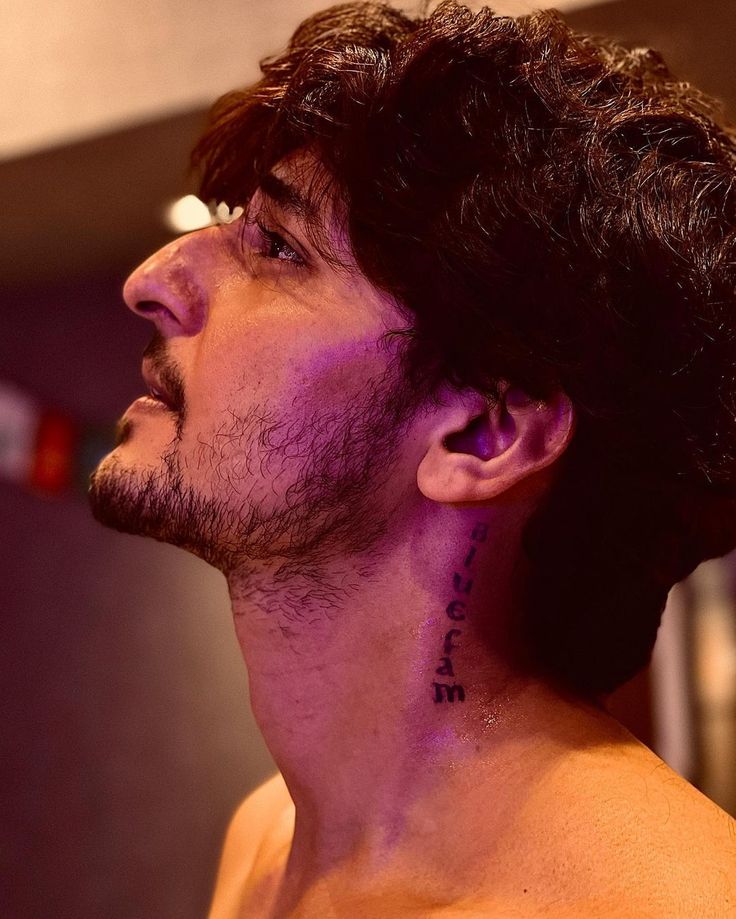
The clearest close photograph shows Raval in side profile with a vertical line of lettering running down the side of his neck. The letters are dark and separated enough to read as a deliberate inscription rather than a decorative blur. The image places the tattoo below the ear and along the neck, where the line remains visible when his head turns. It is a narrow design, but the position gives it a strong presence because it follows the length of the neck instead of spreading across a broad area.
Other photographs reveal the larger record from different angles. The back image reveals three dates arranged horizontally across the upper back, each marked with colored lines. A separate collage presents another view of dated ink and identifies it as Raval’s first tattoo. The dates appear repeatedly in public fan-circulated photographs, while the interview source gives one of them a career connection. The collection is therefore best described as a small group of documented inscriptions and date marks, not as an inventory of every tattoo Raval may have added later.
The vertical neck tattoo and the Blue Family identity

The neck tattoo is the most immediately recognizable piece in the public photographs. It runs vertically behind the ear, with a short line of letters that fan photographs identify as “Bluefam.” The placement connects the design to Raval’s long-running Blue Family identity, the name used for the community around his music. The visible letters are the important fact; a photograph cannot establish every private reason behind the choice, so the description remains close to the inscription and its public association.
Visually, the tattoo has a handwritten or narrow-block quality rather than the heavy shading of a large illustrative piece. Its position makes it easy to miss in a straight-on portrait and obvious in profile. That changing visibility is part of its character. In the purple-lit image, the skin turns toward the camera and the letters become the dominant detail beneath the ear. In the cooler close-up, the same vertical structure is easier to isolate from the hair and jawline. The design works through placement as much as through the word itself.
The three-date tattoo across the upper back

A second documented design sits across the upper back. The photograph shows three date lines placed one beneath another, with colored strokes underlining or separating the numbers. The image circulated from Raval’s own Instagram account and shows the tattoo while he is lifting a dumbbell. That setting is useful because the back is exposed plainly, making the date arrangement and its horizontal spread easier to see than they would be under a shirt.
An interview source records Raval explaining that he has a tattoo of the date when the reality show ended. That statement gives a public meaning to at least one date in the broader group. The photograph itself cannot identify which date carries that explanation without a matching caption, so the article keeps the source-backed career connection separate from the visual description. The three lines remain a clear example of Raval using numbers as a personal timeline rather than as abstract decoration.
The first-tattoo date collage
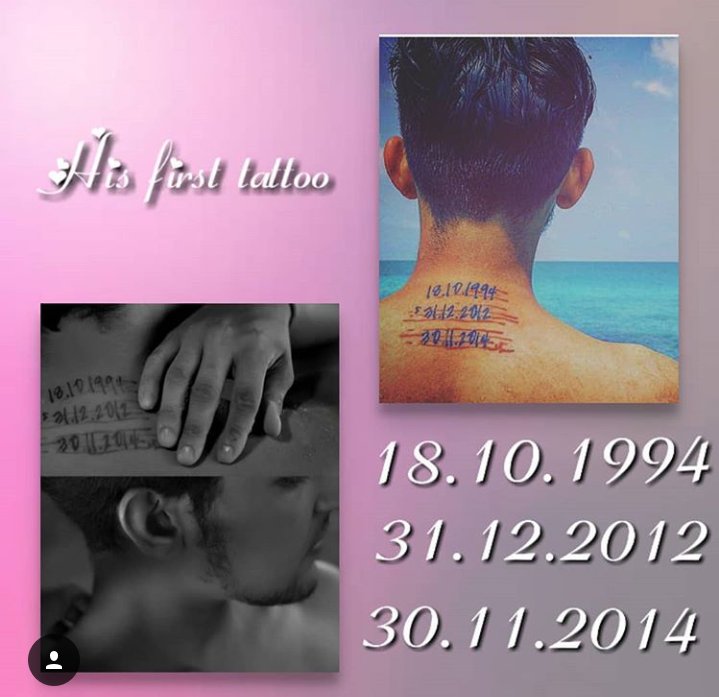
A separate collage shared by a Darshan Raval fan account labels a dated design as his first tattoo. The panels reveal the upper-back or neck area from several stages and angles, including a close view of the number lines and a profile view of the placement. The exact dates differ in how they are transcribed across fan posts, which makes the safest claim about the image its repeated date format and its identification as an early tattoo, not an overconfident reading of every numeral. The collage documents an early date-based piece without proving every numeral’s private meaning.
This distinction matters because the available evidence is not a single archive. One interview discusses the date connected to the end of the show, while fan photographs preserve additional views and captions. The design language stays consistent: dates are written in compact lines and treated as milestones. The collage also makes the scale clear. The tattoo is not a full-back image or a large portrait; it is a narrow band of numbers that follows the upper back and becomes visible when Raval turns away from the camera.
Darshan Raval in public appearances

Published portraits place the tattoos inside Raval’s broader visual identity as a singer. A formal portrait in a peach jacket shows the face, hair and styling without exposing the dated back work. That image is contextual rather than tattoo evidence, but it helps distinguish a separate identity portrait from the close photographs used to document ink. The difference is important: a clean portrait can establish who appears in a post, while the neck and back photographs establish where the tattoos sit.
Raval’s public image changes from performance lighting to fashion portraiture to casual social posts. The tattoos do not appear equally in each setting. The neck inscription emerges in side profile, while the date designs require a turned back or an image captured during exercise. This variation explains why a single generic portrait cannot stand in for tattoo evidence. The designs need the angles that reveal them, and the public meanings need sources that identify the dates rather than guessing from their appearance.
The contextual portrait therefore has a limited but useful role. It keeps the article anchored to the correct person and shows how different the presentation becomes when the camera is not looking for ink. The peach jacket, hair and direct pose belong to Raval’s public style record, while the close neck and back photographs belong to the tattoo record. Keeping those functions separate prevents the identity image from being mistaken for proof of a design that it does not show.
What the photographs do and do not establish
The close images establish three useful facts. First, Raval has a vertical neck inscription visible behind the ear. Second, the upper back carries multiple date lines arranged in a compact group. Third, the first-tattoo collage presents a related dated design as an early piece in his tattoo history. The images also establish that the tattoos are relatively fine and text-led, with color accents visible beneath the back dates. The documented collection is text-led rather than illustration-heavy, with the back dates carrying the strongest visual pattern.
They do not establish a complete count, a complete list of meanings or the private significance of every number. The interview confirms one career milestone, and public fan captions connect the neck lettering with Blue Family identity, but other readings remain uncertain. That restraint is part of an accurate tattoo article. Raval’s tattoos are interesting because the visible marks are specific enough to study while the personal timeline behind them remains partly his own.
The difference between the close views is also useful for understanding the collection’s scale. The neck photograph makes one word-like inscription fill the frame, but the back photograph shows how much more restrained the dated group is when it is seen on the whole body. The color accents beneath the numbers add emphasis without turning the design into a large illustration. The date collage then brings the viewer closer again, preserving the documentary quality of the image while showing the edges of the ink more clearly. Placement changes the emphasis: the neck mark reads as identity lettering, while the back dates read as a compact timeline.
That sequence creates a reliable visual order. First comes the profile view, where the neck identity mark is legible. Then comes the back view, where the numerical group spans the upper back. Finally, the collage supplies a historical frame for the early tattoo record. The public sources do not answer every question, but they do provide enough evidence to describe the placement, shape and repeated role of dates in Raval’s tattoo history without filling the gaps with speculation.
The public meaning of the collection
Across the documented record, dates function as anchors. They turn a career transition into a mark on the back, preserve an early milestone and allow the neck inscription to carry a community identity. The designs are small in physical area but large in narrative use. A date can point to a television chapter, while a short word can point to the fans and music community that followed Raval after that chapter.
The photographs make the collection readable without making it look uniform. The neck piece is vertical and close to the face. The back group is horizontal and numerical. The collage is documentary, showing how the same area looks from different positions. Together, the images support a measured description of Darshan Raval’s documented tattoos: inscriptions and dates tied to public identity, career memory and the early stages of his story as a singer. The visual record is strongest when those confirmed details remain the focus.