
Daniel Muñoz’s tattoos include an “Inmortal” tribute to Andrés Escobar, Atlético Nacional imagery and larger areas of black-and-grey work across his arms, chest and legs. Reports also connect the collection with the Copa Libertadores and his pride in carrying Colombian identity into European football.
A right wing-back from Colombia, Muñoz played for Atlético Nacional, clubs in Belgium and Crystal Palace before his 2026 move to Nottingham Forest. Photographs from those different stages show separate parts of the collection; they don’t provide a full inventory.
The new Forest chapter begins with a visible tattooed arm story
A seated photograph from Muñoz’s Nottingham Forest arrival shows his tattooed forearm and raised leg. El Colombiano placed the image in his first conversations with supporters at the club. The relaxed pose gives a view of both areas without making them look like one continuous design.
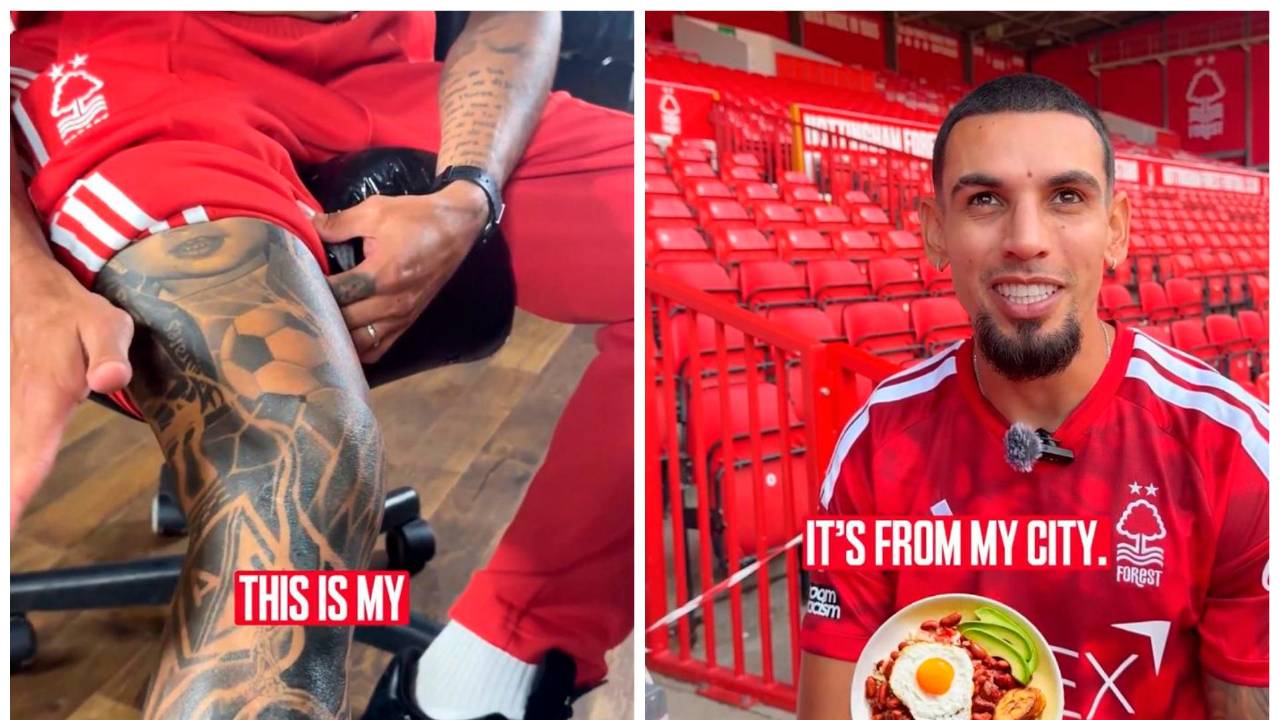
Dark, dense work covers much of the arm, while larger shapes appear on the leg. The photograph establishes their placement; the article relies on reporting for specific meanings.
The arm tribute to Andrés Escobar
Infobae reported that the number 2 and the word “Inmortal” on Muñoz’s left arm honour Andrés Escobar, the Atlético Nacional and Colombia defender murdered in 1994.
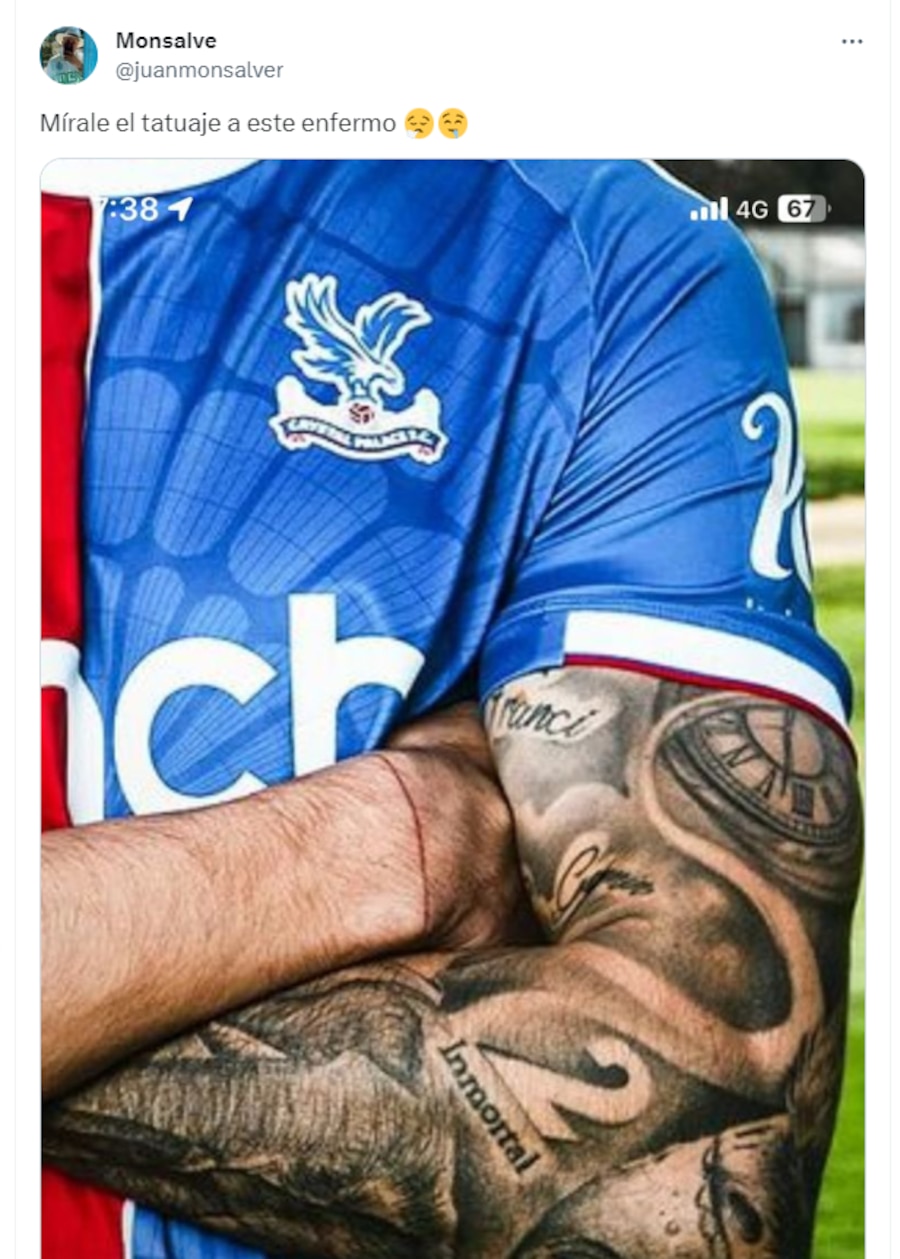
The number and lettering form a compact memorial. The photograph confirms the tattooed arm, while the report supplies the connection to Escobar; other nearby shading is left undescribed.
The Atlético Nacional tattoo moves from club history to body art
Infobae’s 2026 coverage also discussed a tattoo connected with Atlético Nacional. A Forest-era photo shows Muñoz in red with work visible across his torso and leg. The club reference belongs to a team that shaped his career and remains part of his football identity.

The wider frame gives more context than the arm close-up, but it doesn’t identify every line around the club imagery.
The leg tattoo carries the Nacional crest
A separate Superlike photo brings the Atlético Nacional crest on Muñoz’s leg into clear view. Its shield, lettering and club colours make the emblem identifiable. This is a distinct tattoo from the “Inmortal” tribute on his arm.
The close crop makes the crest easy to locate. It also shows why a full-kit photograph can reveal less than a seated or tighter view of the leg.
A tattooed torso view shows the collection as a connected surface
A shirtless image reproduced from a social post shows black-and-grey work across Muñoz’s chest and upper arms. It was shared as a public image, but the available caption doesn’t explain each design.

Here the torso reads as a broad field of connected ink. The photograph supports observations about coverage and spacing, not a private meaning for every mark.
From Medellín roots to European football
Coverage of Muñoz’s Crystal Palace arrival recalled his roots in Amalfi and Medellín and noted the memorial on his arm. Later Colombian reporting on his move to Forest discussed his food, language and pride in where he comes from. Those details help place the tattoos within a career that spans Colombian and European football.
Some designs remain clear in photographs but unexplained by Muñoz or a source. Their placement can still be described without guessing at a meaning.
Why this archive needs several original photographs
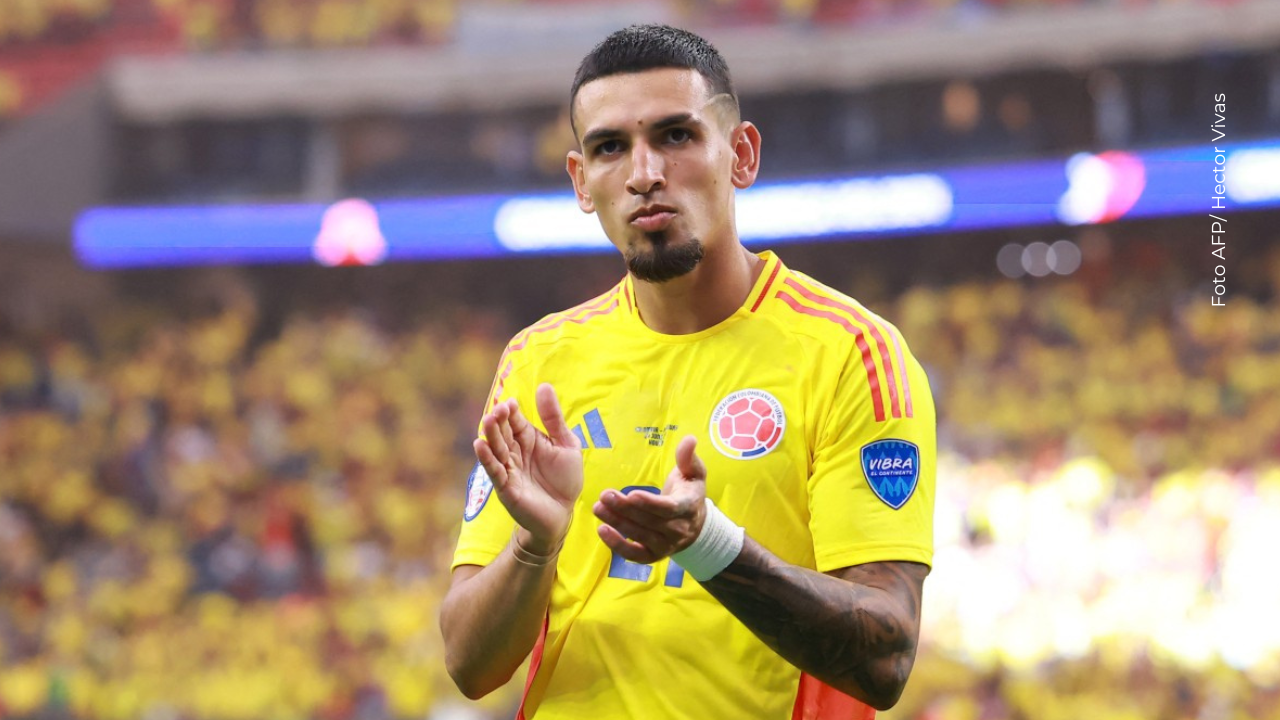
The five photographs answer different questions: El Colombiano shows an arrival pose; Infobae documents the arm tribute and later Forest context; Superlike isolates the Atlético Nacional crest; and a social-post image shows the chest and upper arms. The separate featured Crystal Palace portrait identifies Muñoz but isn’t used as tattoo evidence.
How to read the archive
The arm memorial pairs a short word with a number, while the Nacional crest relies on a strong outline and lettering. The shirtless photo shows how the larger black-and-grey work spans the torso. These are observations about scale and placement. Don’t reproduce another person’s family portrait, club mark or personal symbols without permission.
For a design of your own, decide what the image needs to say and where it will sit. Check how it reads when the arm bends or the torso turns, then consider how light and clothing change what a photograph can show.
What the documented sources establish
Infobae reports the left-arm tribute to Escobar and discusses a later Atlético Nacional tattoo; Superlike’s close photo shows the leg crest; and El Colombiano documents the Forest arrival image. Together, these sources support the named designs and the broader football context.
They don’t establish every tattoo’s history or meaning. The body art is best read as a collection of particular memories and club ties, with some details still undocumented.
The clearest conclusion from Muñoz’s ink
Muñoz’s tattoos connect a memorial to Andrés Escobar and an Atlético Nacional crest with a wider collection built during his football career. The photos show where several designs sit; the available reporting explains only some of them.