
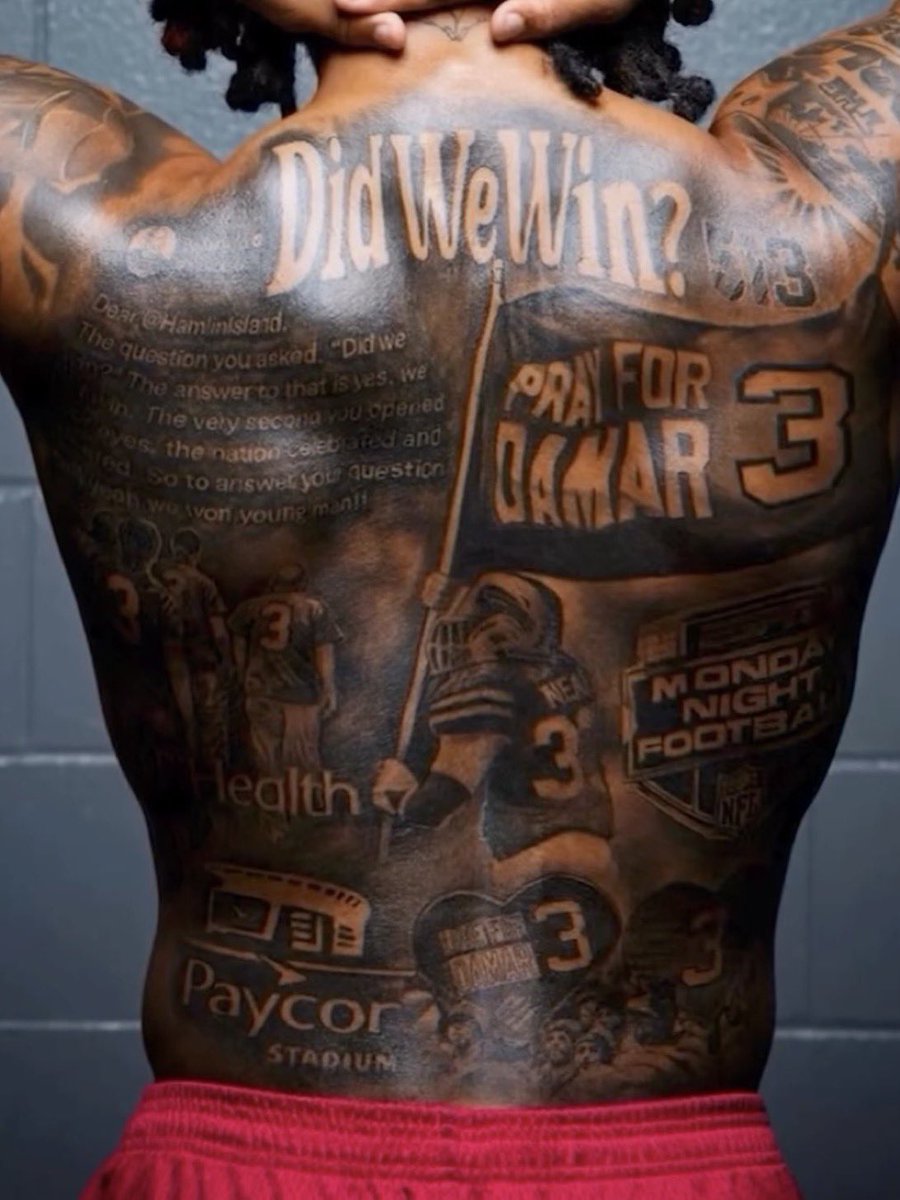
Damar Hamlin’s full-back tattoo is built around a question he reportedly asked after waking in the hospital: “Did we win?” The piece also refers to the Bills-Bengals game in Cincinnati, the medical team who treated him, and the support that followed. Its details point back to one night and the people around it.
The full-back tattoo
Before the game
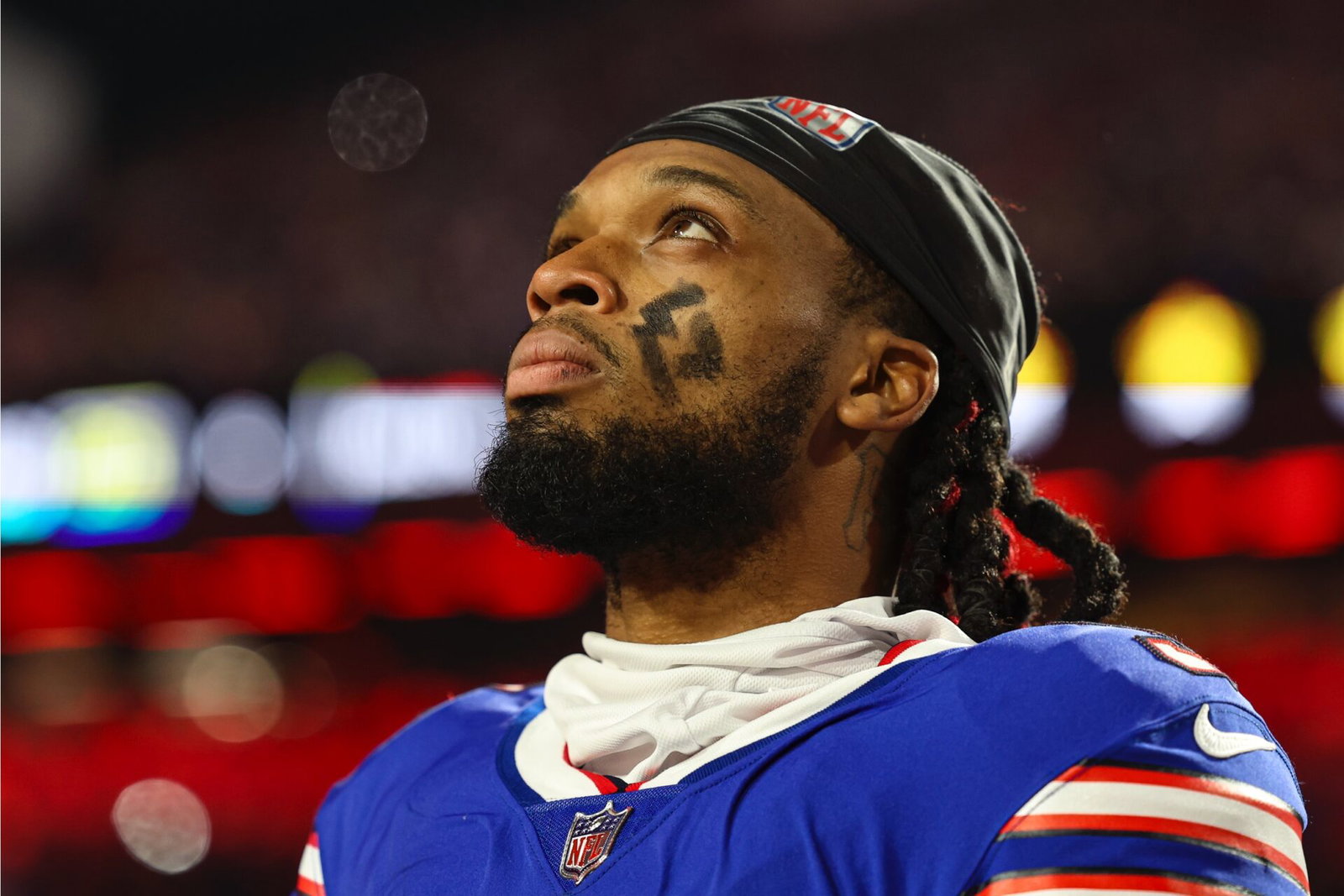
On January 2, 2023, Hamlin collapsed after a tackle during Buffalo’s game in Cincinnati. Medical staff performed CPR on the field, and the game was suspended. Hamlin was taken to the University of Cincinnati Medical Center.
After he regained consciousness, he reportedly asked whether the Bills had won. The game was never finished. Hamlin later returned to football and continued his charitable work through the Chasing M’s Foundation.
The “Did We Win?” centerpiece
The large lettering gives the back piece a clear focal point. It refers to Hamlin’s first question after waking up, and keeps the rest of the images tied to the same event. Around it are football, medical and Cincinnati references.
The words stand out in a dense composition. Figures, symbols and smaller details fill the space around them, turning a short quote into the entry point for a larger story.
Public support
The design also includes “Pray for Damar 3.” “Pray for Damar” appeared on signs, shirts and social media after Hamlin collapsed. The number three is his Bills jersey number, tying that public message to him specifically.
The phrase recalls the support people showed while they waited for news. It sits beside the other references to the game and Hamlin’s recovery.
The Monday Night Football connection
A Monday Night Football reference marks the broadcast during which the collapse happened. It ties the design to that specific game rather than to football in general. The rest of the tattoo adds the details that place the event in Cincinnati and connect it to Hamlin’s recovery.
Paycor Stadium and the 513
Paycor Stadium, the Bengals’ home field, is another location marker. The design also includes 513, the Cincinnati area code. Together, those details point to where the game took place, even though Hamlin played for Buffalo.
The medical team tribute
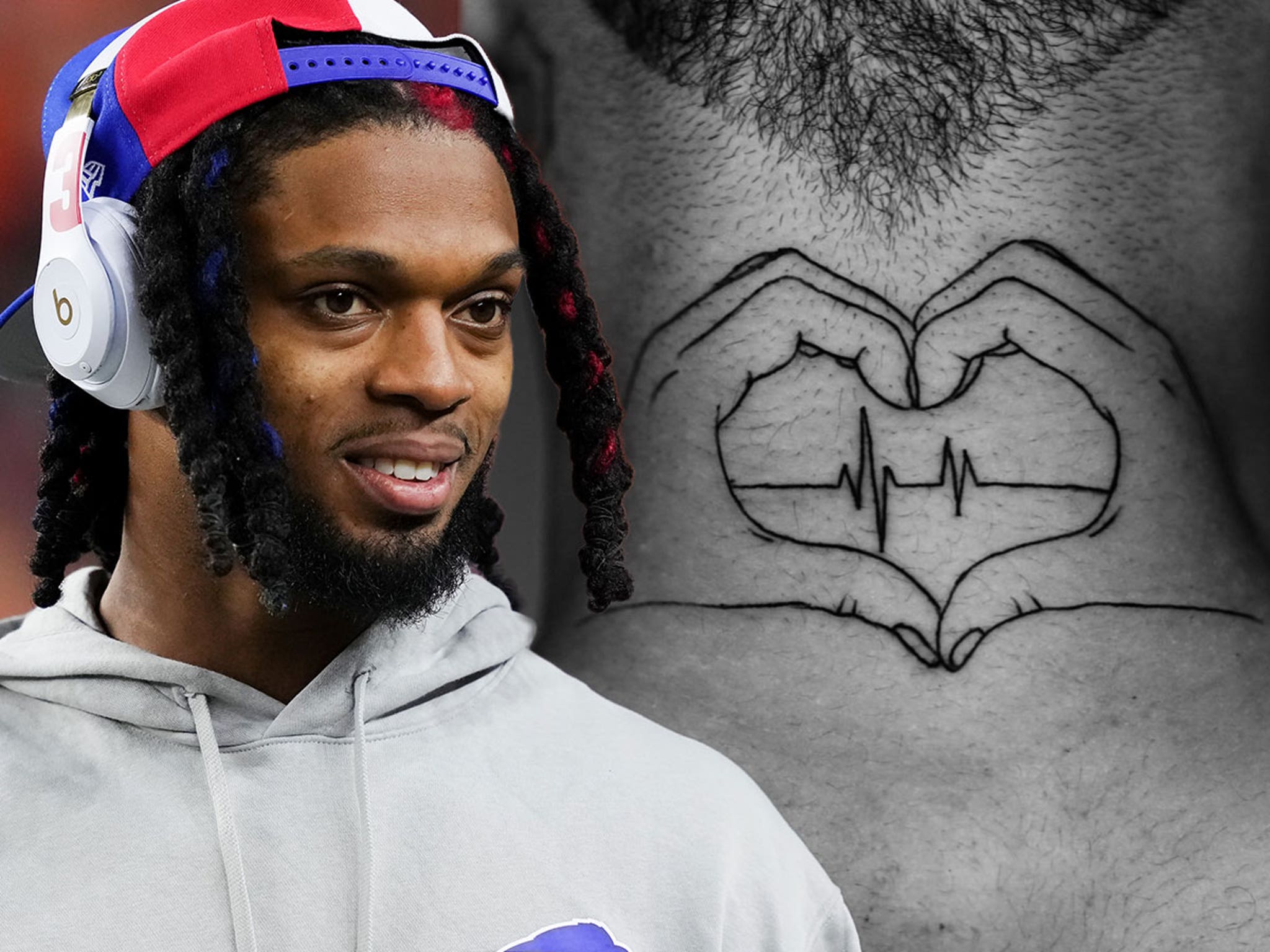
Reports about the piece also point to imagery connected to staff at the UC Medical Center. That reference broadens the story beyond the game: the medical team who treated Hamlin is part of what the tattoo remembers.
Medical and football images share the same large composition. The quoted phrases help anchor it, so the collection of details still reads as one tribute.
Why the canvas mattered
A full back gives the design room for its lettering, figures, stadium references and smaller details. Keeping them in one piece lets the images sit together as a single account of the event.
The back also means Hamlin can choose when to show the tattoo. When revealed, its scale makes clear that this is a major personal story, not a passing reference.
The artist and the scale of the piece
Tattoo artist Ganga has been linked to the piece, and reports say several artists worked on it at the same time. The tattoo’s scale and detail required substantial planning and long sessions.
Some reports also claimed Hamlin was under anesthesia during the process. The circumstances are specific to his session and shouldn’t be treated as a general option or recommendation. The more useful takeaway is how much coordination a large piece like this requires: the lettering, line work, shading and overall layout need to work together.
What makes the piece stand out
The tattoo brings the football setting and the recovery into the same frame. Monday Night Football, Paycor Stadium and 513 locate the event; “Did We Win?” and “Pray for Damar 3” recall Hamlin’s question and the public response; the medical references recognize the people who treated him.
Those details let the piece work at two levels. The large words can be read at a glance, while the stadium and smaller images reward a closer look. The references stay specific to Hamlin’s experience rather than relying on a general comeback slogan.
Ideas to borrow without copying
Hamlin’s design is tied to his own story, but its planning offers a few ideas for a consultation:
- Start with a phrase that belongs to your experience.
- Choose a location or object that makes sense to you, even if it needs context.
- Give the composition one clear focal point and let smaller details support it.
- Leave enough space for lettering and important images to stay readable.
- Plan a large piece as a whole instead of filling the skin with unrelated symbols.
A tattoo doesn’t need to explain every detail to strangers. It needs to make sense to the person wearing it. Hamlin’s is unusually public, but its references come from a moment he lived through.
Final look
Damar Hamlin’s back piece brings together the question “Did We Win?”, the message “Pray for Damar 3,” Cincinnati landmarks, football and medical references. Together they record the game, the support around him and his recovery without reducing the story to one symbol.